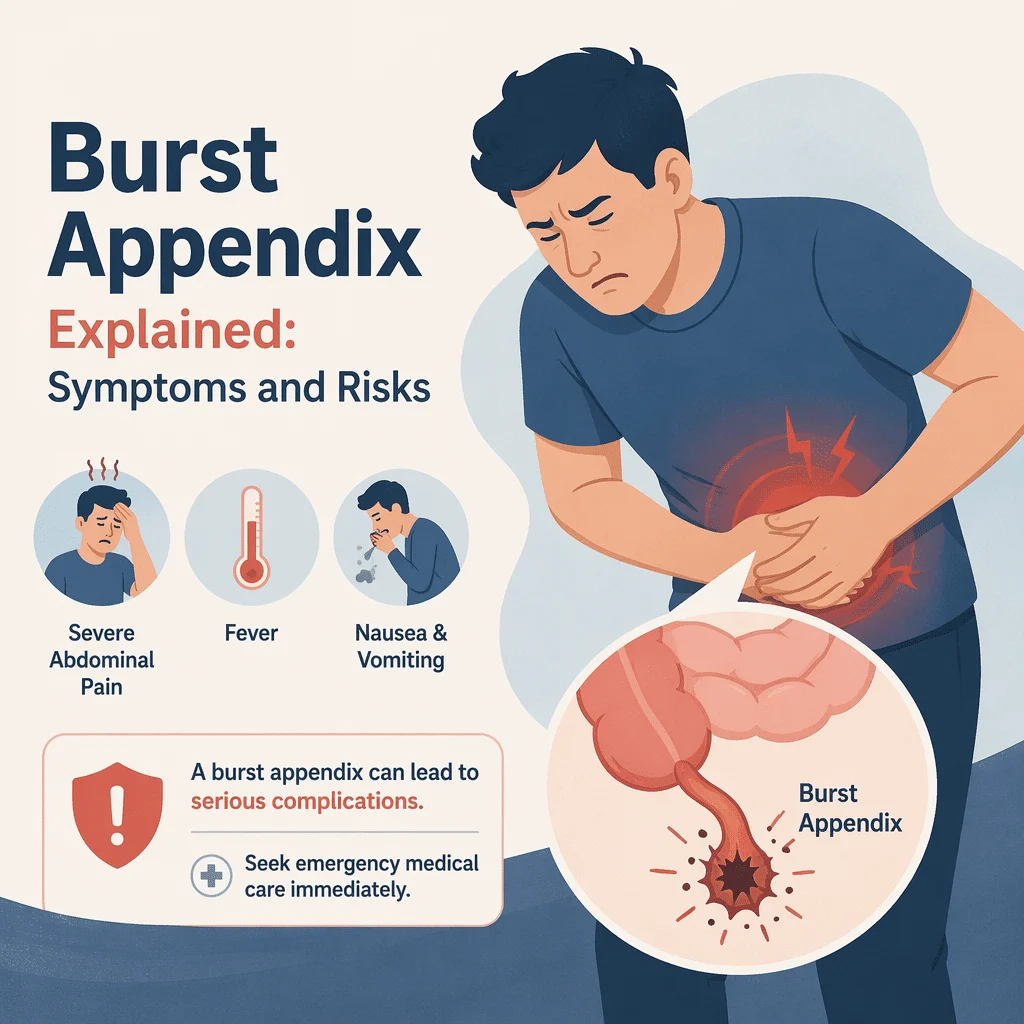
Simptomele apendicelui perforat urmează un tipar care îi surprinde pe mulți: durere care se intensifică timp de o zi sau două, apoi se ameliorează scurt, după care revine mai puternică și se extinde în tot abdomenul. Acea scurtă perioadă de ușurare este cea mai periculoasă parte, deoarece tocmai atunci mulți oameni cred că se fac bine și rămân acasă. Un apendice perforat, numit și apendice rupt sau perforat, reprezintă o urgență chirurgicală.
În acest articol vei afla ce se întâmplă în interiorul abdomenului când apendicele se rupe, care semne indică o perforație mai degrabă decât o apendicită obișnuită, cine tinde să fie diagnosticat târziu, ce pot și ce nu pot arăta analizele de sânge și investigațiile imagistice, și cum arată recuperarea în mod realist.
Ce se întâmplă când apendicele se perforează
Apendicele este o mică pungă în formă de deget, atașată de prima parte a intestinului gros, în partea dreaptă jos a abdomenului. Apendicita începe când deschiderea acestei pungi este blocată, cel mai adesea de materii fecale întărite, țesut limfatic inflamat sau, mai rar, o formațiune. Mucusul și bacteriile se acumulează în spatele blocajului, presiunea crește și peretele se inflamează.
Pe măsură ce presiunea crește, fluxul de sânge către perete este tăiat, țesutul începe să moară și se formează o perforație. Puroiul și bacteriile intestinale se revarsă în spațiul în mod normal steril din jurul organelor. Institutul Național pentru Diabet și Boli Digestive și Renale menționează că apendicita netratată poate duce la peritonită, o infecție a membranei care căptușește cavitatea abdominală, sau la o colecție de puroi delimitată, numită abces. Același principiu se aplică și altor organe cavitare, iar echipa noastră explică și semnele de avertizare ale rupturii vezicii biliare.
Cât de repede poate să se rupă apendicele?
Nu există un numărătoare inversă sigură. Riscul de perforație crește odată cu trecerea orelor de la debutul simptomelor, dar nu apare la un moment fix. Clinica Cleveland menționează că apendicele se poate rupe în aproximativ 36 de ore de la primele simptome, motiv pentru care chirurgii urmăresc de obicei să opereze în cel mult o zi de la diagnostic. Cifrele vehiculate online — 48 sau 72 de ore — sunt generalizări clinice aproximative, nu un cronometru personal, iar unele apendicite perforează mai devreme. Nu încerca să calculezi momentul rupturii: o durere persistentă și agravantă în partea dreaptă justifică o evaluare în aceeași zi, iar durerea care se extinde sau apare însoțită de febră necesită îngrijire de urgență.
Simptomele apendicelui rupt: tiparul care contează
Apendicita clasică începe cu un disconfort vag în jurul buricului sau în abdomenul superior, însoțit de greață și pierderea poftei de mâncare. În câteva ore, durerea migrează în partea dreaptă jos și devine ascuțită, bine localizată. Tusea, mersul pe jos sau o groapă în drum o agravează. Dacă vrei să înțelegi de unde provine durerea în abdomenul inferior, acest ghid acoperă cauzele senzației de arsură în abdomenul inferior.
Ameliorarea care înseamnă contrariul
Când apendicele se rupe în cele din urmă, presiunea din interior este eliberată. Pentru o perioadă scurtă — uneori câteva minute, alteori câteva ore — durerea ascuțită și localizată poate părea cu adevărat mai suportabilă. Nu s-a vindecat nimic: materialul infectat este acum liber în cavitatea abdominală. Această acalmie înșelătoare este cel mai important lucru de înțeles despre simptomele apendicelui rupt, deoarece tocmai în acest moment oamenii renunță să mai meargă la camera de gardă.
Ce urmează: peritonita
Odată ce mucoasa abdomenului se inflamează, tabloul clinic se schimbă. Durerea nu mai este localizată într-un singur punct și se răspândește în tot abdomenul. Peretele abdominal devine rigid, ca o scândură, iar orice mișcare doare, inclusiv tusea și ridicatul în șezut. Febra crește, inima bate repede, iar persoana se simte profund rău într-un mod pe care o simplă tulburare stomacală nu îl poate explica. Vărsăturile pot continua, iar abdomenul se poate umfla pe măsură ce intestinul încetează să mai funcționeze. Acestea sunt semne de urgență.
| Caracteristică | Înainte de perforație | După perforație |
|---|---|---|
| Localizarea durerii | Se mută de la buric spre un singur punct, jos în dreapta | Se ameliorează pentru scurt timp, apoi se răspândește în tot abdomenul |
| Peretele abdominal | Sensibil la apăsare, dar încă moale | Rigid, ca o scândură, contractat la orice atingere |
| Febră | Absentă sau ușoară | Mai ridicată și în creștere, adesea însoțită de frisoane |
| Frecvența cardiacă | De obicei normală | Accelerată, uneori cu tensiune arterială scăzută |
| Starea generală | Stare de rău, dar alert | Vizibil bolnav, epuizat, uneori confuz |
| Ce să faci | Consultație medicală în aceeași zi | Îngrijire de urgență imediat |
Cine are mai multe șanse să ajungă la spital cu apendicele rupt
Perforația nu apare în mod egal la toți. Unele categorii ajung mai târziu la spital deoarece simptomele lor nu seamănă cu apendicita clasică din manual, iar orice întârziere în evaluare implică același risc crescut.
Copiii mici
Copiii mici nu pot localiza durerea cu precizie și prezintă adesea doar iritabilitate, refuz de a mânca, vărsături sau diaree. Un studiu publicat în 2024 privind diagnosticul întârziat la copii a constatat că anumite grupuri sunt identificate sistematic mai târziu și fac perforație mai frecvent — un semnal că un copil care nu se ameliorează merită o reevaluare.
Adulții în vârstă
Răspunsul la febră și durere se atenuează odată cu vârsta, astfel că un adult în vârstă poate avea apendicele perforat cu o temperatură doar ușor crescută și o sensibilitate moderată. O analiză sistematică din 2024 a scalei Alvarado — o listă de criterii care evaluează probabilitatea apendicitei — a concluzionat că aceasta funcționează mai puțin bine la vârstnici, motiv pentru care medicii se bazează mai mult pe imagistică.
Sarcină
Uterul în creștere deplasează apendicele în sus și spre exterior, astfel că durerea apare adesea mai sus decât de obicei și este ușor pusă pe seama altei cauze. Greața și un număr ușor crescut de globule albe sunt normale în sarcină, ceea ce estompează și mai mult semnele. Ecografia este primul test recomandat, iar acest ghid acoperă analizele de sânge efectuate în timpul sarcinii.
Ce pot și ce nu pot arăta analizele de sânge și imagistica
Aceasta este partea sinceră pe care majoritatea paginilor o omit. Nicio analiză de sânge nu confirmă sau infirmă apendicita și nicio analiză de sânge nu dovedește că apendicele s-a rupt.
Globulele albe și CRP
Majoritatea persoanelor cu apendicită au un număr crescut de globule albe, cu predominanța neutrofilelor – celulele de primă intervenție care cresc rapid în infecțiile bacteriene. Proteina C reactivă, eliberată de ficat în prezența inflamației, crește de obicei și ea, atingând valori mai mari după perforarea apendicelui. Ambii markeri sunt utili, dar nespecifici: o infecție urinară, o pneumonie sau o puseu de boală inflamatorie intestinală pot produce aceleași valori. Un număr normal de globule albe nu exclude apendicita, mai ales în primele ore și la adulții în vârstă. Echipa noastră explică și cum să citești o hemogramă completă, cauzele numărului crescut de neutrofile, testul de sânge CRP pentru inflamație, și markrul de infecție procalcitonină.
Ce spun studiile despre markerii individuali
O analiză sistematică din 2023, publicată într-o revistă de medicină de urgență, a examinat markerii individuali din sânge propuși pentru a diferenția o apendicită complicată de una simplă și a concluzionat că niciunul nu este pregătit să fie folosit de unul singur. O meta-analiză din 2024 a constatat că un nivel scăzut de sodiu în sânge este mai frecvent atunci când apendicita este deja complicată: un semnal interesant, dar un singur indiciu printre multe altele, nu un test de sine stătător.
Scoruri clinice și imagistică
Medicii combină istoricul, examenul clinic și rezultatele analizelor în sisteme de scorificare precum scorul Alvarado și scorul AIR, care estimează probabilitatea apendicitei și ghidează decizia de a efectua o investigație imagistică. Ghidurile de imagistică din 2024 ale Infectious Diseases Society of America recomandă ecografia ca primă opțiune la copii și în sarcină, CT pentru majoritatea adulților și RMN ca alternativă fără radiații. Imagistica – nu analizele de sânge – este cea care arată de obicei dacă apendicele este inflamat sau deja perforat. Alte afecțiuni pot imita tabloul clinic îndeaproape, motiv pentru care medicii iau în considerare și simptomele calculilor renali, simptomele pancreatitei și, la femeile de vârstă reproductivă, ce înseamnă dimensiunile unui chist ovarian.
Complicații după perforare
Odată ce bacteriile ajung libere în abdomen, pot urma mai multe complicații, care se suprapun adesea.
- Abces: o colecție de puroi delimitată, situată în apropierea locului unde s-a aflat apendicele, drenată frecvent prin piele sub ghidaj imagistic.
- Peritonită: inflamație generalizată a peritoneului, care provoacă abdomenul rigid și dureros descris mai sus.
- Sepsis: răspunsul copleșitor al organismului la infecție, care afectează tensiunea arterială, funcția renală și respirația.
- Ileus: intestinul se oprește temporar din funcționare, provocând balonare, vărsături și imposibilitatea de a elimina gaze sau scaun.
- Infecție a plăgii: mai frecventă după intervenția chirurgicală pentru un apendice perforat decât după o apendicectomie de rutină.
- Aderențe: bride cicatriciale interne care se formează pe măsură ce abdomenul se vindecă și pot provoca obstrucție intestinală ani mai târziu.
Tratament și ce presupune recuperarea
Tratamentul începe cu perfuzii intravenoase și antibiotice, urmate în majoritatea cazurilor de îndepărtarea apendicelui. Operația este de obicei laparoscopică, prin incizii mici, deși poate fi necesară o intervenție deschisă atunci când infecția este extinsă. Când s-a format un abces mare, unele echipe îl drenează mai întâi și îndepărtează apendicele ulterior, după ce inflamația s-a calmat.
Recuperarea după o ruptură durează mai mult: o spitalizare mai lungă, câteva zile de antibiotice intravenoase, uneori un dren și o revenire mai lentă la alimentație și la activitățile normale. Analizele de sânge se repetă pe parcursul internării pentru a urmări evoluția infecției, iar acest ghid acoperă analizele de sânge recomandate înainte de operație.
Când simptomele unui apendice perforat necesită îngrijire de urgență
Sună la serviciile de urgență sau mergi imediat la camera de gardă dacă durerea abdominală este însoțită de oricare dintre următoarele.
- Durere intensă care s-a ameliorat brusc, apoi a revenit mai puternică sau s-a extins în tot abdomenul
- Un abdomen care pare dur, rigid sau insuportabil la atingere
- Febră cu frisoane, bătăi rapide ale inimii sau senzație de leșin și transpirație rece
- Vărsături repetate, burtă umflată sau absența gazelor și a scaunului
- Durere care te împiedică să stai drept, să tușești sau să mergi normal
- Oricare dintre cele de mai sus la un copil mic, o persoană în vârstă, o femeie însărcinată sau cineva cu sistemul imunitar slăbit
Nu mânca, nu bea și nu lua analgezice sau laxative în timp ce aștepți evaluarea și nu amâna pentru a vedea dacă durerea trece peste noapte.
Cele mai recente progrese științifice
Cercetările privind apendicita au avansat rapid în ultimii ani. Iată ce înseamnă asta în practică.
Antibiotice în loc de operație, doar pentru apendicele neperforat
Mai multe echipe au testat dacă antibioticele singure pot trata apendicita care nu a perforat încă. O meta-analiză din 2024 care a reunit studii randomizate la adulți și un amplu studiu randomizat internațional la copii, publicat în 2025, au arătat că antibioticele funcționează pentru o parte semnificativă dintre pacienți, în timp ce o proporție dintre aceștia au nevoie totuși de operație ulterior. Ce înseamnă asta pentru tine: dacă apendicita este depistată devreme și imagistica nu arată nicio ruptură, poate fi discutată o opțiune non-chirurgicală. Aceasta nu se aplică în cazul unui apendice perforat, unde operația combinată cu antibioticele rămâne standardul.
Utilizarea mai bună a investigațiilor imagistice la copii
O analiză combinată din 2024 a comparat ecografia și CT-ul pentru a diferenția o apendicită simplă de una complicată la copii. CT-ul a oferit răspunsuri mai precise, dar ecografia s-a descurcat suficient de bine pentru a rămâne primul pas logic, deoarece nu folosește radiații. Ce înseamnă asta pentru tine: ecografia ca primă investigație este o alegere deliberată, nu o scurtătură, iar CT-ul sau RMN-ul pot urma atunci când răspunsul nu este clar.
Drenurile după operație: mai puțin utilizate de rutină decât înainte
O analiză Cochrane din 2025 a examinat dacă lăsarea unui dren în abdomen după operația pentru o apendicită complicată previne colecțiile de puroi. Dovezile au fost prea incerte pentru a demonstra un beneficiu clar, iar drenurile pot prelungi spitalizarea. Ce înseamnă asta pentru tine: aceasta rămâne o zonă nesoluționată, care ține mai degrabă de judecata chirurgicală de la caz la caz, decât de o regulă generală.
Glosar de termeni cheie
| Termen | Definiție |
|---|---|
| Apendicectomia | Operația de îndepărtare a apendicelui, realizată fie prin incizii mici (laparoscopic), fie printr-o incizie mai mare. |
| Perforație | O gaură în peretele unui organ. Un apendice perforat este același lucru cu un apendice spart sau rupt. |
| Peritonita | Inflamația și infecția peritoneului, membrana subțire care căptușește interiorul abdomenului și organele sale. |
| Abces | O colecție de puroi înconjurată de țesut. De obicei necesită drenaj, pe lângă tratamentul cu antibiotice. |
| Sepsis | O reacție periculoasă a întregului organism la infecție, care poate afecta tensiunea arterială, respirația și funcționarea organelor. |
| Neutrofile | Cel mai frecvent tip de globulă albă și primul care ajunge la o infecție bacteriană. Numărul lor crește adesea în apendicită. |
| proteina C reactivă (PCR) | O proteină produsă de ficat, ale cărei valori cresc atunci când există inflamație în organism. |
| Scorul Alvarado | O listă de verificare clinică ce combină simptome, constatări din examenul fizic și rezultate ale analizelor de sânge, pentru a estima cât de probabilă este apendicita. |
| Ileus | O oprire temporară a mișcărilor normale ale intestinului, care provoacă balonare și vărsături. |
Întrebări frecvente
Cum știu dacă mi s-a perforat apendicele?
Nu poți confirma asta singur, și tocmai asta contează. Semnele care ar trebui să te îngrijoreze sunt: durere severă în partea dreaptă jos care se ameliorează brusc, apoi revine mai intensă și se extinde, însoțită de febră, bătăi rapide ale inimii și abdomen rigid. Doar o examinare și o investigație imagistică pot diferenția un apendice inflamat de unul perforat, așa că tratează aceste semne ca pe o urgență, nu ca pe ceva de urmărit acasă.
Poate un apendice perforat să se vindece de la sine?
Nu. Odată ce materialul infectat s-a vărsat în abdomen, nu se elimină fără tratament. Uneori organismul izolează infecția într-un abces, ceea ce poate părea o ameliorare, dar acea colecție necesită în continuare antibiotice și, de obicei, drenaj. Peritonita netratată poate evolua spre sepsis.
Un test de sânge normal exclude apendicita?
Nu. Un număr normal de globule albe și o CRP normală fac apendicita mai puțin probabilă, dar nu o exclud, mai ales în primele ore și la adulții în vârstă, la care răspunsul inflamator este mai slab. De aceea, medicii combină istoricul, examinarea clinică, sistemele de scorificare și investigațiile imagistice, în loc să se bazeze pe un singur rezultat. Dacă durerea persistă după un test de sânge liniștitor, întoarce-te și cere o reevaluare.
Cât durează recuperarea după un apendice perforat?
Mai mult decât după o apendicectomie simplă. Mulți pacienți rămân internați câteva zile pentru antibiotice intravenoase, iar revenirea completă la muncă, școală sau activitate fizică durează de obicei săptămâni, nu zile. Recuperarea este și mai lentă dacă a fost necesar drenajul unui abces sau o intervenție chirurgicală deschisă. Echipa ta chirurgicală îți va oferi un calendar estimativ.
Un apendice perforat cauzează probleme mai târziu în viață?
Majoritatea oamenilor se recuperează complet și trăiesc normal fără apendice. O minoritate dezvoltă aderențe — benzi de cicatrice interne care pot provoca ocluzie intestinală la luni sau ani distanță, cu dureri colicative, vărsături și constipație. Durerea abdominală persistentă după operația de apendicită merită investigată.
Surse
- MedlinePlus Medical Encyclopedia, National Library of Medicine — Appendicitis, 2024 — https://medlineplus.gov/ency/article/000256.htm
- National Institute of Diabetes and Digestive and Kidney Diseases (NIDDK) — Appendicitis: symptoms, causes, diagnosis and treatment — https://www.niddk.nih.gov/health-information/digestive-diseases/appendicitis
- Cleveland Clinic — Appendicitis: signs and symptoms, causes, diagnosis and treatment — https://my.clevelandclinic.org/health/diseases/8095-appendicitis
- Sikander B, Rosenberg J, Fonnes S — Individual biomarkers in the blood are not yet applicable in diagnosing complicated appendicitis: a scoping review — American Journal of Emergency Medicine, 2023 — https://pubmed.ncbi.nlm.nih.gov/36842426/
- Bonomo RA, Tamma PD, Abrahamian FM, et al — 2024 clinical practice guideline update by the Infectious Diseases Society of America on complicated intra-abdominal infections: diagnostic imaging of suspected acute appendicitis in adults, children and pregnant people — Clinical Infectious Diseases, 2024 — https://pubmed.ncbi.nlm.nih.gov/38963819/
- Badlis M, Amari K, Alkheshi M, et al — Ultrasound and computed tomography in differentiating between simple and complicated appendicitis in pediatric patients — Pediatric Surgery International, 2024 — https://pubmed.ncbi.nlm.nih.gov/39520568/
- Shi H, Shen L — Hyponatremia as a predictor of complicated appendicitis: a systematic review and meta-analysis — Biomarkers in Medicine, 2024 — https://pubmed.ncbi.nlm.nih.gov/39360637/
- Trinidad S, Parrado R, Gavulic A, et al — Characterizing inequities in pediatric appendicitis delayed diagnosis and perforation — Journal of Pediatric Clinical Practice, 2024 — https://pubmed.ncbi.nlm.nih.gov/38827485/
- Dominguez-Torres LC, Vega-Pena NV — Diagnostic utility of the Alvarado scale in older adults with suspected acute appendicitis — Cirugia y Cirujanos, 2024 — https://pubmed.ncbi.nlm.nih.gov/38782393/
- Brucchi F, Bracchetti G, Fugazzola P, et al — A meta-analysis and trial sequential analysis comparing nonoperative versus operative management for uncomplicated appendicitis — World Journal of Emergency Surgery, 2024 — https://pubmed.ncbi.nlm.nih.gov/38218862/
- St Peter SD, Noel-MacDonnell JR, Hall NJ, et al — Appendicectomy versus antibiotics for acute uncomplicated appendicitis in children: an open-label, international, multicentre, randomised, non-inferiority trial — The Lancet, 2025 — https://pubmed.ncbi.nlm.nih.gov/39826968/
- Tang Y, Liu J, Bai G, et al — Abdominal drainage to prevent intraperitoneal abscess after appendectomy for complicated appendicitis — Cochrane Database of Systematic Reviews, 2025 — https://pubmed.ncbi.nlm.nih.gov/40214287/
Lectură suplimentară
- Valori crescute ale CRP: cauze, simptome și tratamente
- Hemoleucogramă vs. biochimie: ce măsoară fiecare analiză de sânge
- Infecție urinară: simptome și cauze
- Vărsături cu bilă: cauze, simptome și tratamente
- Colica la adulți: tipuri, cauze și semne de alarmă
Înțelege-ți rezultatele analizelor cu AI DiagMe
Suspiciunea de apendicită se stabilește la urgențe, nu pe un site web, însă analizele de laborator asociate te însoțesc adesea și acasă. AI DiagMe te ajută să înțelegi rezultate precum hemoleucograma completă, numărul de neutrofile, proteina C reactivă și procalcitonina, explicat pe înțelesul tău și în context. Este conceput pentru a te ajuta să înțelegi ce înseamnă valorile tale și ce întrebări să pui mai departe. Nu pune diagnostice și nu înlocuiește medicul sau îngrijirea de urgență.
Obține interpretarea rezultatelor în câteva minute