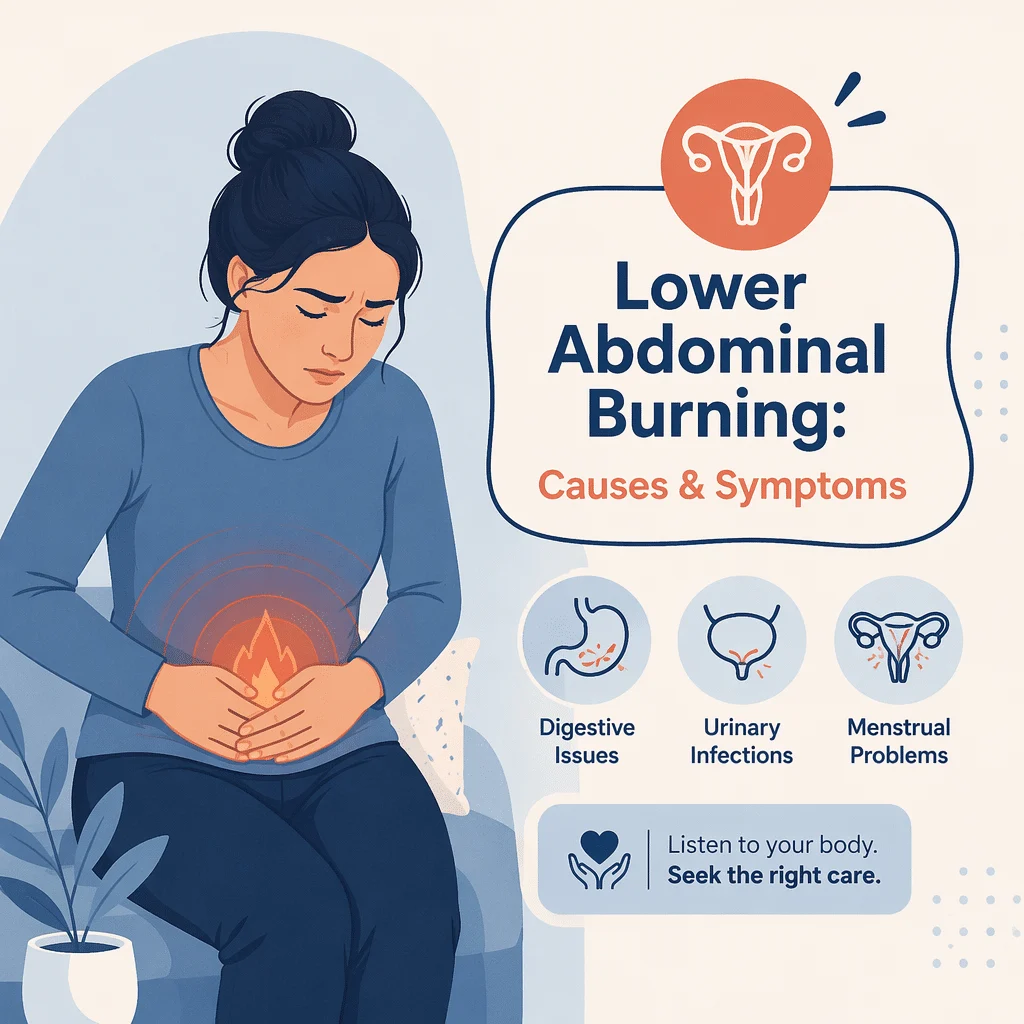
O senzație de arsură în abdomenul inferior poate semăna cu o căldură intensă, o înțepătură, o iritație sau o durere fierbinte sub buric. Poate proveni de la vezica urinară, intestin, organele reproductive, peretele abdominal sau nervii care îl traversează.
În acest articol vei afla ce semnalează de obicei senzația de arsură, de ce localizarea exactă îngustează mai puțin posibilitățile decât te-ai aștepta, care afecțiuni o provoacă cel mai frecvent, care dintre ele sunt urgențe reale și cum le diferențiază un medic.
Citește caseta de mai jos înainte de orice altceva. Mai multe cauze ale durerii abdominale inferioare sunt critice din punct de vedere al timpului, iar nici un articol și nici un test făcut acasă nu le poate exclude.
Semne de alarmă: când durerea abdominală inferioară este o urgență
⚠️ Sarcină ectopică. Durerea abdominală inferioară la orice persoană care ar putea fi însărcinată reprezintă o urgență medicală până la excluderea acestei posibilități, mai ales dacă este însoțită de absența sau modificarea menstruației, sângerare vaginală, durere la vârful umărului, amețeală sau leșin. Un test de sarcină negativ făcut acasă nu o exclude atunci când simptomele corespund. Mergi la urgențe în aceeași zi.
⚠️ Apendicită. Durerea care începe în jurul buricului și se mută în partea dreaptă jos, care se agravează în câteva ore, însoțită de greață, febră sau durere la mișcare ori la tuse, necesită evaluare urgentă.
⚠️ Torsiunea ovariană. Durerea pelvină bruscă, severă, pe o singură parte, adesea însoțită de vărsături, este o urgență. Ovarul poate rămâne fără aport de sânge în câteva ore.
⚠️ Torsiunea testiculară. La bărbați, durerea bruscă și severă la nivelul unui testicul sau al inghinei poate fi resimțită în abdomenul inferior. Este critică din punct de vedere al timpului și necesită îngrijire de urgență imediat.
Solicită îngrijire urgentă și în cazul: febrei însoțite de durere abdominală; imposibilității de a urina deloc; sângelui în urină sau scaun; scaunelor negre și gudronate; unui abdomen care pare rigid sau ca o scândură; durerii disproporționate față de ce se poate vedea sau simți; vărsăturilor persistente; sau durerii însoțite de leșin ori colaps.
În primele ore, aceste afecțiuni se suprapun în mare măsură cu cele inofensive. Tocmai de aceea nu pot fi diferențiate acasă.
Ce înseamnă de obicei senzația de arsură în abdomenul inferior
Senzația de arsură este raportată de obicei atunci când mucoasa unui organ cavitar este inflamată, când urina sau acidul irită o suprafață sensibilă sau când este implicat un nerv. Aceasta acoperă un spectru larg de posibilități.
Vezica urinară este o sursă frecventă de durere, deoarece mucoasa sa este bogat inervată cu nervi senzoriali. Intestinul produce mai des crampe, deși un segment destins sau inflamat poate provoca și senzație de arsură. Nervii care intră în peretele abdominal pot genera o bandă de arsură de-a lungul unui fâșii de piele, nu în profunzime.
Organele interne împart, de asemenea, căile nervoase cu pielea pe o suprafață largă. De aceea, apendicita începe adesea cu o durere vagă în jurul buricului, înainte de a se localiza în dreapta, iar un calcul în ureter poate fi simțit în zona inghinală sau la nivelul testiculului. Localizarea durerii este un indiciu, nu un diagnostic.
Momentul apariției și simptomele însoțitoare contează mai mult decât termenul pe care îl folosești. Arsura care apare doar la urinare indică ceva cu totul diferit față de arsura care se ameliorează după un scaun sau care apare la mijlocul ciclului și durează o zi.
Cauze urinare ale senzației de arsură în abdomenul inferior
Infecția de vezică urinară și cistita
A infecție urinară care afectează vezica urinară reprezintă una dintre cele mai frecvente cauze ale senzației de arsură în abdomenul inferior. Institutul Național pentru Diabet și Boli Digestive și Renale menționează arsura la urinare, nevoia frecventă de a urina și durerea sau disconfortul în abdomenul inferior ca simptome principale. Urina poate părea tulbure sau poate avea un miros puternic.
Febra, durerea în spate sau în flanc, frisoanele și starea generală de rău sugerează că infecția a ajuns la rinichi, ceea ce reprezintă o situație diferită și mai gravă.
De obicei, primul pas este analiza unei probe de urină. O bandă reactivă (dipstick) caută celule albe și nitrați, iar imaginea mai completă se obține printr-un buletin de sumar de urină. Orice sânge în urină necesită interpretarea unui medic.
Cistita interstițială și sindromul de durere vezicală
Unele persoane prezintă durere persistentă la nivelul vezicii, presiune și urinare frecventă, fără ca vreo infecție să fie vreodată depistată. Aceasta este cistita interstițială, numită și sindromul de durere vezicală. Senzația de arsură este cronică, nu bruscă, se agravează adesea pe măsură ce vezica se umple și poate ceda ușor după urinare. Culturi de urină repetate negative în prezența simptomelor persistente sunt un element comun, iar diagnosticul se pune prin excludere atentă, nu printr-un singur test.
Calculi renali care migrează în ureterul inferior
Un calcul care se deplasează de la rinichi spre vezică provoacă valuri severe de durere ce pornesc din flanc și coboară spre abdomenul inferior și zona inghinală. În apropierea vezicii, poate imita exact o infecție: arsură la urinare, urgență și frecvență crescută, adesea însoțite de greață, vărsături și sânge în urină. Pietre la rinichi trebuie evaluat de un medic, nu așteptat să treacă de la sine acasă.
Cauze digestive
Afecțiunile intestinale provoacă rareori arsură la urinare, ceea ce reprezintă un criteriu util de diferențiere timpurie.
Sindromul de intestin iritabil și constipația
Sindromul intestinului iritabil produc crampe sau senzație de arsură legate de tranzitul intestinal: durere care cedează după defecație sau care se modifică pe măsură ce scaunul devine mai moale sau mai dur. Constipația singură poate destinde suficient colonul stâng pentru a provoca o durere surdă persistentă în abdomenul inferior.
Gastroenterita și diverticulita
Gastroenterita provoacă crampe, diaree, greață și uneori febră, timp de câteva zile. Diverticulita este diferită: inflamarea unor mici pungi din peretele colonului, care cauzează în mod clasic durere în cadranul inferior stâng, însoțită de febră și modificări ale tranzitului intestinal. NIDDK menționează că această durere este de obicei severă. Necesită evaluare medicală, nu așteptare.
Bolile inflamatorii intestinale și boala celiacă
Boala Crohn și colita ulcerativă provoacă inflamație care duce la dureri în abdomenul inferior, urgență, diaree, sânge în scaun, pierdere în greutate și oboseală. Medicii măsoară adesea calprotectina fecală, un marker fecal care ajută la diferențierea inflamației intestinale de sindromul de intestin iritabil. Boala celiacă poate provoca, de asemenea, balonare și modificări ale tranzitului intestinal și se investighează prin analize de sânge înainte de orice schimbare a dietei, deoarece eliminarea glutenului înainte de testare face aceste analize nesigure.
Cauze ginecologice
Organele reproductive se află direct în spatele și lângă vezica urinară, astfel că durerea provenită de la acestea este adesea resimțită ca o arsură în abdomenul inferior sau în zona pelviană.
Durerea de ovulație
Mittelschmerz este o durere unilaterală în abdomenul inferior care apare în jurul mijlocului ciclului menstrual, când este eliberat un ovul. Durează câteva ore până la una-două zile și dispare de la sine. Problema este că un prim episod seamănă foarte mult cu debutul a ceva grav, motiv pentru care o durere bruscă și intensă pe o singură parte merită totuși evaluată.
Chisturile ovariene
O chistul ovarian poate provoca o durere surdă, presiune sau balonare pe o parte, iar un chist care se rupe poate cauza o durere ascuțită bruscă. Un chist mare crește, de asemenea, riscul de torsiune ovariană.
Endometrioză
Endometrioză este țesut similar cu mucoasa uterină care crește în afara uterului. Provoacă dureri pelviene adesea mai intense în jurul menstruației, dureri în timpul actului sexual și simptome la nivelul vezicii urinare sau intestinului, care sunt confundate ani de zile cu cistita sau sindromul de intestin iritabil. Diagnosticul este frecvent întârziat, iar un examen clinic sau o ecografie normală nu o exclud.
Boală inflamatorie pelvină
Boala inflamatorie pelvină este o infecție a organelor reproductive superioare, cel mai adesea apărută după o infecție cu transmitere sexuală. Biroul SUA pentru Sănătatea Femeilor menționează durerea în abdomenul inferior ca cel mai frecvent simptom, alături de febră, secreții neobișnuite, dureri în timpul actului sexual, dureri la urinare și sângerări neregulate. Poate fi și ușoară sau silențioasă, iar netratată crește riscul viitor de sarcină ectopică și infertilitate.
Hernie, perete abdominal și cauze nervoase
O hernie inghinală apare atunci când un țesut iese printr-un punct slab din zona inghinală. Se manifestă adesea ca o umflătură vizibilă când stai în picioare, tușești sau faci efort, care dispare când te întinzi, însoțită de o senzație de greutate sau arsură. O hernie care devine dură, dureroasă și nu poate fi împinsă înapoi, mai ales dacă apare și vărsătură, poate fi strangulată și necesită îngrijire de urgență.
Durerea peretelui abdominal este ușor de trecut cu vederea. Durerea care provine din peretele abdominal rămâne într-un punct mic, bine delimitat, și devine adesea mai intensă când mușchii abdominali sunt contractați, în timp ce durerea din interior tinde să se atenueze. Acesta este principiul din spatele testului Carnett. Ridicatul de greutăți, tusea și cicatricile chirurgicale recente sunt factori declanșatori frecvenți.
Senzația de arsură de origine nervoasă reprezintă un alt tipar. Iritarea unor nervi precum nervul ilioinghinal poate provoca o senzație de arsură în bandă de-a lungul abdomenului inferior sau zonei inghinale, uneori însoțită de modificări ale sensibilității pielii. Herpesul zoster produce o durere arzătoare în bandă pe o parte a corpului, care poate precede erupția cutanată cu câteva zile.
Cauzele care necesită intervenție urgentă și de ce nu pot fi excluse acasă
Patru afecțiuni domină capătul urgent al acestui simptom și niciuna nu poate fi identificată sau exclusă în mod sigur fără o evaluare clinică.
Sarcina ectopică este o sarcină care se implantează în afara cavității uterine, de obicei într-o trompă uterină, și reprezintă principala cauză de deces matern în primul trimestru de sarcină. Simptomele sale timpurii sunt durerea pelvină și sângerarea vaginală ușoară, care sunt totodată simptomele multor afecțiuni inofensive. MedlinePlus recomandă să soliciți îngrijire medicală imediat dacă ai dureri abdominale, dureri în umăr, sângerare vaginală sau te simți amețită ori pe punctul de a leșina în timpul sarcinii timpurii, și precizează clar că nu poate fi diagnosticată fără analize de sânge și ecografie. Testele urinare de sarcină efectuate acasă pot da rezultate fals negative foarte devreme sau când nivelul hormonilor este scăzut, deci un rezultat negativ nu închide problema.
Apendicita debutează clasic cu o durere vagă în zona centrală a abdomenului, care migrează spre cadranul inferior drept în decurs de câteva ore. NIDDK menționează că durerea se agravează de obicei la mișcare, respirații profunde, tuse sau strănut și că unele persoane, în special copiii, nu prezintă niciunul dintre simptomele tipice. Nu există niciun test care să poată fi efectuat acasă.
Torsiunea ovariană apare când un ovar se răsucește pe ligamentele sale și își întrerupe propria circulație sanguină, manifestându-se prin durere pelvină severă și bruscă pe o singură parte, adesea însoțită de vărsături. Întârzierea intervenției riscă pierderea ovarului.
Torsiunea testiculară este echivalentul masculin și este și mai urgentă din punct de vedere al timpului. Durerea apare brusc și este severă la nivelul testiculului sau scrotului și iradiază frecvent spre abdomenul inferior sau inghinal, putând fi confundată cu o problemă stomacală. Orice bărbat cu durere testiculară sau inghinală bruscă și severă are nevoie de evaluare de urgență imediat.
Tiparul în toate cele patru cazuri este același: tabloul inițial este neremarcabil, fereastra pentru un rezultat bun este scurtă, iar informațiile decisive vin dintr-un examen clinic, un test de sânge sau urină și o ecografie, nu din simptome.
| Tiparul pe care îl observi | Ce indică de obicei | Ce să faci |
|---|---|---|
| Senzație de arsură la urinare, cu urgență și frecvență crescută | Infecție urinară sau un calcul situat lângă vezică | Consultați un medic în una-două zile; mai devreme dacă există febră, durere în flanc sau sânge în urină |
| Durere în partea stângă jos, cu febră și modificarea tranzitului intestinal | Diverticulita este explicația clasică | Consultație medicală în aceeași zi |
| Durere pelvină sau testiculară unilaterală bruscă și severă, adesea însoțită de vărsături | Posibilă torsiune ovariană sau testiculară | Îngrijire de urgență imediat |
| Orice durere abdominală inferioară la o persoană care ar putea fi însărcinată | Sarcina ectopică trebuie exclusă în primul rând | Urgență în aceeași zi, chiar dacă un test de acasă a fost negativ |
| Crampe sau senzație de arsură care se ameliorează după defecare | Mai tipic pentru sindromul de intestin iritabil sau constipație | Consultație de rutină; urgentă dacă există sângerare, scădere în greutate sau febră |
| Durere centrală care se deplasează spre dreapta jos în câteva ore, agravată de tuse | Sugestiv pentru apendicită | Evaluare urgentă, nu aștepta până a doua zi |
Ce face efectiv un clinician
Anamneza acoperă locul unde a apărut durerea și unde se află acum, cât de repede s-a instalat, ce o ameliorează sau agravează, simptomele urinare și intestinale, istoricul menstrual și sexual, precum și intervențiile chirurgicale anterioare. Ordinea cronologică contează: durerea apărută înaintea vărsăturilor este interpretată diferit față de vărsăturile apărute primele.
Examenul clinic verifică sensibilitatea în fiecare cadran, apărarea musculară și semnul de iritație peritoneală, zona inghinală pentru hernie și, acolo unde este relevant, scrotul.
Testele răspund la întrebări specifice, nu aruncă o plasă largă. Testul sumar de urină cu bandelete detectează infecția și sângele. Testul de sarcină se efectuează oricărei persoane care ar putea fi însărcinată și nu este opțional. Analizele de sânge pot include hemoleucogramă completă, proteina C reactivă și funcția renală. Imagistica începe de obicei cu ecografia, în special pentru problemele pelvine și testiculare, urmată de CT atunci când tabloul clinic indică o problemă intestinală. În sarcina timpurie, ecografia este corelată cu nivelurile cantitative de hCG din sânge, uneori repetate după 48 de ore.
Când să soliciți îngrijire urgentă
Mergi imediat la camera de gardă dacă ai durere pelviană sau testiculară severă și bruscă pe o singură parte, durere în abdomenul inferior cu orice posibilitate de sarcină, abdomen rigid, leșin, vărsături persistente, imposibilitatea de a urina, scaune negre și gudronate sau durere care se intensifică rapid.
Programează-te în aceeași zi sau a doua zi dacă ai senzație de arsură la urinare însoțită de febră sau durere de spate, durere pe partea stângă cu febră, o umflătură nouă și sensibilă la nivelul inghinei sau durere care se agravează constant de mai mult de o zi.
Fă o programare de rutină dacă ai senzație de arsură sau crampe prezente de câteva săptămâni fără semne de alarmă, durere pelviană ciclică sau simptome care revin în mod repetat. Durerea pelviană persistentă care a fost ignorată anterior merită totuși investigată, deoarece diagnosticul întârziat este bine documentat în cazul endometriozei.
Cele mai recente progrese științifice în diagnosticarea durerii în abdomenul inferior
Cercetările din 2023 încoace s-au concentrat mai puțin pe tratamente noi și mai mult pe cât de rapid și de sigur pot fi identificate aceste afecțiuni. Conform PubMed, următoarele descoperiri ajută la înțelegerea modului în care medicii investighează aceste cazuri.
O analiză din 2024 privind sarcina ectopică, publicată în Nature Reviews Disease Primers de Chong și colaboratori, a confirmat că diagnosticul neinvaziv se bazează în continuare pe ecografia transvaginală combinată cu beta-hCG seric, hormonul de sarcină măsurat în sânge. Ce înseamnă asta pentru tine: o sarcină ectopică este identificată prin combinarea unei ecografii interne cu un test de sânge, nu pe baza simptomelor și nici a unui test de sarcină urinar de acasă. DOI: 10.1038/s41572-024-00579-x
O analiză din 2024 din medicina de urgență, realizată de Jeffers, Koyfman și Long în American Journal of Emergency Medicine, a raportat că mulți pacienți cu sarcină ectopică confirmată nu au niciun factor de risc identificabil și că ecografia este necesară indiferent de nivelul hCG. Ce înseamnă asta pentru tine: absența factorilor de risc clasici nu te pune la adăpost, iar o singură valoare a hormonului nu este suficientă pentru a închide cazul. DOI: 10.1016/j.ajem.2024.09.005
O analiză sistematică din 2024 realizată de Tomlinson și colaboratori în Clinical Microbiology and Infection a evaluat testele rapide la punctul de îngrijire pentru infecțiile urinare și a constatat că nu există suficiente dovezi pentru a susține utilizarea lor de rutină. Ce înseamnă asta pentru tine: testele rapide pentru infecțiile vezicii urinare nu înlocuiesc încă evaluarea unui medic și cultura de laborator. DOI: 10.1016/j.cmi.2023.10.005
O analiză din 2025 privind endometrioza, publicată în JAMA de As-Sanie și colaboratori, a raportat că diagnosticul este de obicei întârziat cu cinci până la doisprezece ani, că majoritatea pacientelor consultă trei sau mai mulți medici înainte de a primi un diagnostic și că un examen clinic normal și imagistică normală nu exclud boala. Ce înseamnă asta pentru tine: dacă durerea pelvină revine în mod repetat, un rezultat liniștitor la ecografie nu înseamnă că investigațiile s-au încheiat. DOI: 10.1001/jama.2025.2975
O analiză sistematică din 2023 realizată de Issaiy și colaboratori în World Journal of Emergency Surgery a examinat modele de învățare automată care sprijină diagnosticul apendicitei acute și a constatat că acestea egalau sau depășeau adesea sistemele tradiționale de scoruri clinice, menționând totodată că majoritatea studiilor prezentau un risc de părtinire. Ce înseamnă asta pentru tine: astfel de instrumente pot ajuta echipele de urgență să decidă mai rapid cine are nevoie de o investigație imagistică, dar sunt auxiliare pentru medici, nu un înlocuitor pentru consultul medical. DOI: 10.1186/s13017-023-00527-2
Glosar de termeni cheie
| Termen | Definiție |
|---|---|
| Sarcina ectopică | O sarcină care se implantează în afara cavității uterine, cel mai frecvent într-o trompă uterină. Reprezintă o urgență medicală. |
| hCG | Gonadotropina corionică umană, hormonul sarcinii. Este detectată prin teste de urină și măsurată cu precizie în sânge. |
| Cistita | Inflamația vezicii urinare, cel mai frecvent cauzată de o infecție bacteriană. |
| Cistită interstițială | Durere, presiune și urinare frecventă la nivelul vezicii urinare, persistente pe termen lung, fără a se identifica o infecție. Se mai numește și sindromul durerii vezicale. |
| Ureter | Tubul îngust care transportă urina de la rinichi până la vezica urinară. Un calcul blocat în acest tub provoacă dureri severe. |
| Diverticulita | Inflamarea sau infectarea unor mici pungi formate în peretele colonului, care provoacă în mod tipic durere în partea stângă jos a abdomenului, însoțită de febră. |
| Mittelschmerz | Durere abdominală inferioară unilaterală care apare în jurul ovulației, la mijlocul ciclului menstrual. |
| Torsiunea ovariană | Răsucirea ovarului pe ligamentele sale de susținere, care îi taie circulația sanguină. O urgență medicală. |
| Testul Carnett | O manevră de examinare care ajută la diferențierea durerii provenite din peretele abdominal de durerea cu origine intraabdominală. |
| Calprotectină fecală | Un marker de inflamație intestinală determinat din materii fecale, folosit pentru a diferenția boala inflamatorie intestinală de sindromul intestinului iritabil. |
Întrebări frecvente
Când este durerea abdominală inferioară o urgență?
Tratează situația ca pe o urgență dacă durerea este bruscă și intensă pe o parte, dacă există posibilitatea să fii însărcinată, dacă abdomenul tău este rigid, dacă leșini sau simți că ești pe punctul de a leșina, dacă nu poți urina deloc, dacă vomiți persistent sau dacă ai scaune negre, gudronoase ori cu sânge vizibil. Febra combinată cu durerea abdominală necesită, de asemenea, o evaluare în aceeași zi. Un alt semn de alarmă este durerea care se intensifică în câteva ore în loc să se amelioreze. Aceste semne nu îți spun ce este în neregulă, dar îți spun că răspunsul trebuie căutat în persoană și rapid, nu urmărit acasă.
Poate o senzație de arsură în abdomenul inferior să fie un semn de sarcină?
Senzațiile ușoare de întindere sau crampe sunt frecvent raportate în primele săptămâni de sarcină, însă o arsură în partea joasă a abdomenului nu este un semn de sarcină în niciun sens. Aspectul cu adevărat important este altul: dacă există posibilitatea să fii însărcinată și ai dureri în abdomenul inferior, o sarcină ectopică trebuie exclusă înainte de orice altă evaluare. Acest lucru necesită un test de sânge și o ecografie. Un test de sarcină negativ pe urină, făcut acasă, nu este concludent, deoarece nivelul hormonilor poate fi prea scăzut pentru a fi detectat foarte devreme sau în cazul unei sarcini implantate anormal. Solicită o evaluare în aceeași zi.
Cum știu dacă arsura mea este o infecție urinară sau altceva?
Adesea nu poți ști doar din simptome, și acesta este răspunsul sincer. Arsura specifică la urinare, însoțită de nevoia urgentă și frecventă de a urina, sugerează mai degrabă o infecție a vezicii urinare, dar un calcul aflat lângă vezică poate produce un tablou identic, la fel și boala inflamatorie pelvină. Un test de urină este cel care le diferențiază, iar o urocultură identifică dacă sunt prezente bacterii. Dacă arsura este însoțită de febră, durere în spate sau în flanc, frisoane, sânge în urină sau dacă ești însărcinată, nu aștepta să afli. Mergi la o evaluare.
De ce mă arde abdomenul inferior, dar doar uneori?
Arsura intermitentă are de obicei un factor declanșator care merită observat. Durerea care apare la mijlocul ciclului și durează o zi sau cam atât sugerează ovulația. Durerea legată de menstruație sugerează o cauză ginecologică, precum endometrioza. Durerea care se ameliorează după defecare indică o problemă intestinală. Durerea care apare doar la urinare indică tractul urinar. Durerea care apare după ridicarea de greutăți sau efort fizic și poate fi localizată cu un singur deget sugerează peretele abdominal. Notarea simplă a momentului în care apare și a ceea ce se întâmplă în acel context îi oferă medicului mult mai multe informații decât simpla descriere a senzației.
Este periculos să aștepți să vezi dacă arsura din abdomenul inferior dispare de la sine?
Depinde în totalitate de simptomele care o însoțesc. O arsură ușoară, fără febră, fără sângerare, fără vărsături și fără posibilitatea unei sarcini poate fi evaluată de un medic în una-două zile. Însă câteva cauze grave au o fereastră de tratament de doar câteva ore, iar la debut pot părea inofensive. Dacă se aplică vreunul dintre semnalele de alarmă menționate mai sus, așteptarea devine riscul, nu opțiunea sigură. Atunci când nu ești sigură dacă ceva reprezintă un semnal de alarmă, această nesiguranță este în sine un motiv pentru a fi evaluată.
Pot bărbații să aibă arsuri în abdomenul inferior din cauza unei afecțiuni urgente?
Da. Infecțiile vezicii urinare, calculii renali, apendicita, diverticulita, herniile și problemele peretelui abdominal apar și la bărbați. Inflamația prostatei poate cauza arsură pelvină și durere la urinare. Cea mai frecvent ratată afecțiune este torsiunea testiculară, deoarece durerea poate fi resimțită în abdomenul inferior sau în zona inghinală, nu în mod evident la nivelul scrotului, iar rușinea întârzie prezentarea la medic. Durerea testiculară, scrotală sau inghinală bruscă și intensă la un bărbat de orice vârstă este o urgență și trebuie evaluată imediat.
Surse
- National Institute of Diabetes and Digestive and Kidney Diseases — Infecție a vezicii urinare (infecție a tractului urinar) la adulți
- National Institute of Diabetes and Digestive and Kidney Diseases — Simptome și cauze ale apendicitei
- National Institute of Diabetes and Digestive and Kidney Diseases — Boala diverticulară
- MedlinePlus, US National Library of Medicine — Sarcina ectopică
- US Office on Women’s Health — Boala Inflamatorie Pelvină
- Chong KY, de Waard L, Oza M, van Wely M, Jurkovic D, Memtsa M, Woolner A, Mol BW. Ectopic pregnancy. Nature Reviews Disease Primers. 2024;10(1):94
- Jeffers K, Koyfman A, Long B. Updates in emergency medicine: Ectopic pregnancy. American Journal of Emergency Medicine. 2024;85:90-97
- Tomlinson E, Jones HE, James R, Cooper C, Stokes C, Begum S, Watson J, Hay AD, Ward M, Thom H, Whiting P. Clinical effectiveness of point of care tests for diagnosing urinary tract infection: a systematic review. Clinical Microbiology and Infection. 2024;30(2):197-205
- As-Sanie S, Mackenzie SC, Morrison L, Schrepf A, Zondervan KT, Horne AW, Missmer SA. Endometriosis: A Review. JAMA. 2025;334(1):64-78
- Issaiy M, Zarei D, Saghazadeh A. Artificial Intelligence and Acute Appendicitis: A Systematic Review of Diagnostic and Prognostic Models. World Journal of Emergency Surgery. 2023;18(1):59
Lectură suplimentară
- Ghid test de sarcină: acuratețe și interpretare
- CRP: markorul de inflamație proteina C reactivă
- Analize de sânge în sarcină
- Boala Crohn: înțelegere, tratament și viață cu această afecțiune
- Vezică urinară destinsă: simptome, cauze și tratamente
Înțelege-ți rezultatele analizelor cu AI DiagMe
Dacă un medic investighează durerea în abdomenul inferior, s-ar putea să pleci cu un test de urină, markeri inflamatori, o hemogramă completă sau un test de sarcină din sânge — și adesea cu foarte puține explicații despre ce înseamnă cifrele respective.
AI DiagMe te ajută să înțelegi acele rezultate în limbaj simplu, odată ce le ai. Nu îți pune un diagnostic, nu îți triază simptomele și nu este destinat urgențelor. Dacă ai vreunul dintre semnalele de alarmă descrise mai sus, solicită îngrijire medicală imediat.
Obține interpretarea rezultatelor în câteva minute