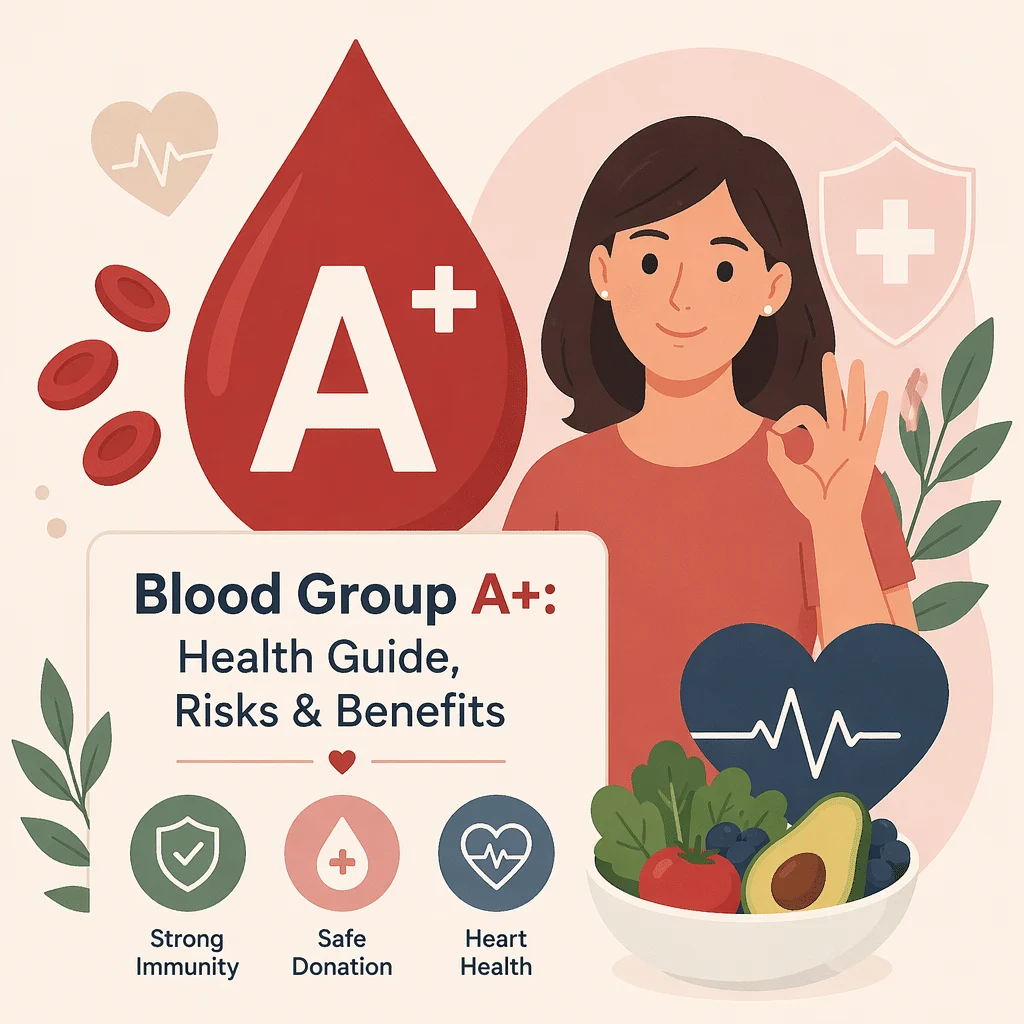
Grupa sanguină A pozitiv, scrisă de obicei A+, înseamnă că globulele tale roșii poartă antigenul A împreună cu proteina Rh D. Este același tip ABO ca A negativ, dar cu un status Rh pozitiv, iar această combinație face din A+ una dintre cele mai frecvente grupe sanguine din lume. Acest ghid se concentrează pe ce adaugă partea „pozitiv", în termeni simpli: de ce A+ este atât de frecventă, cui poți dona sânge și de la cine poți primi, de ce donațiile A+ sunt la mare căutare și vestea liniștitoare despre A+ și sarcină. Pentru noțiunile de bază despre ABO pe care le au toate persoanele cu grupa A — cum se formează antigenul A și legăturile sale cu coagularea sau cancerul — consultă ghidul nostru dedicat grupa sanguină A. Iar dacă statusul tău Rh este negativ, grupa sanguină A negativ ghidul este scris pentru tine.
Ce înseamnă grupa sanguină A pozitiv (A+)
Grupa sanguină A pozitiv combină două sisteme sanguine. Din sistemul ABO, globulele tale roșii poartă antigenul A — un marker de suprafață pe care corpul tău îl recunoaște ca propriu — iar plasma ta conține anticorpi anti-B. Din Sistemul Rh, porți și proteina Rh D, care este ceea ce înregistrează semnul plus.
Efectul practic al faptului că ești Rh pozitiv este opusul celui de a fi Rh negativ. Deoarece ai deja proteina Rh D, sistemul tău imunitar o tratează ca pe ceva normal, deci nu vei forma anticorpi împotriva sângelui Rh pozitiv. Această singură diferență explică de ce A+ se comportă mai flexibil decât A− în transfuzii și este mai liniștitor în sarcină, după cum explică secțiunile de mai jos.
Pe scurt, A+ este un tip ABO frecvent (A) asociat cu statusul Rh mai comun (pozitiv). Partea A definește tipul din punct de vedere chimic, în timp ce partea pozitiv menține regulile practice simple.
De ce A pozitiv este una dintre cele mai frecvente grupe sanguine
A+ este răspândită. În Statele Unite, este a doua cea mai frecventă grupă sanguină după O pozitiv și este întâlnită la aproximativ o treime din populație, conform Crucii Roșii Americane. Este, de asemenea, frecventă în multe populații europene și asiatice, deși frecvențele exacte variază în funcție de regiune și origine.
A fi o grupă frecventă aduce avantaje reale, de zi cu zi. Sângele compatibil este mai ușor de găsit atunci când ai nevoie de el, stocurile spitalicești de A+ sunt de obicei consistente, iar potrivirea este rareori o problemă. Față de un tip mai rar, cum ar fi tipul B negativ sau o grupă Rh negativ rară, pacienții cu A+ așteaptă rareori după o potrivire. Centrele de transfuzie urmăresc în continuare îndeaproape frecvențele grupelor sanguine, astfel încât oferta să țină pasul cu numeroșii primitori A+ care pot avea nevoie de transfuzii.
Pentru tine ca individ, un grup comun înseamnă în principal liniște. Dacă ai vreodată nevoie de globule roșii, o potrivire este de obicei ușor de găsit, ceea ce nu este întotdeauna cazul persoanelor cu grupe rare, care pot necesita unități procurate special. Știind unde se situează A pozitiv pe acest spectru ajută să explici de ce campaniile de donare de sânge invită atât de des donatorii A pozitiv, chiar și atunci când stocurile generale par satisfăcătoare.
Cui poate dona și de la cine poate primi A pozitiv
Determinarea grupei sanguine este baza unei transfuzii sigure, iar faptul că ești Rh-pozitiv îți lărgește opțiunile ca primitor. Poți accepta globule roșii Rh-pozitive sau Rh-negative și poți accepta antigenul A sau niciunul.
| Direcția globulelor roșii | Grupa sanguină A pozitiv (A+) |
|---|---|
| Poate primi globule roșii de la | A+, A−, O+, O− |
| Poate dona globule roșii la | A+, AB+ |
Câteva aspecte fac aceste reguli mai clare. Ca primitor, A+ poate apela la patru tipuri de donatori, ceea ce este util în perioadele de deficit, iar în caz de urgență pacienții A+ pot primi O+ sau O negativ globule roșii. Ca donator, globulele tale roșii pot merge la primitorii A+ și AB pozitiv dar nu la pacienții Rh-negativi, deoarece adăugarea proteinei Rh D i-ar putea determina să formeze anticorpi.
Mai merită știute două lucruri. Compatibilitatea plasmei funcționează în sens invers față de globulele roșii, astfel că fiecare component sanguin este potrivit separat. Iar înainte de orice transfuzie, laboratorul efectuează o probă de compatibilitate și un screening de anticorpi pentru a confirma compatibilitatea — același pas de tipizare și screening inclus în mod obișnuit în analize de sânge înainte de operație.
Merită clarificată o concepție greșită frecventă. Faptul că ești un grup comun și ușor de potrivit nu face din A pozitiv un donator universal. Acest rol îi revine globulelor roșii O negativ, care nu poartă nici antigenul A, nici B, nici proteina Rh D. A pozitiv este flexibil mai ales ca primitor, deoarece un sistem imunitar Rh-pozitiv tolerează proteina Rh D și acceptă astfel atât globule roșii Rh-pozitive, cât și Rh-negative. Ca donator, A pozitiv trebuie totuși să respecte regulile antigenice și poate ajunge doar la pacienții A pozitiv și AB pozitiv.
A pozitiv vs. A negativ — privire de ansamblu
Singura diferență dintre aceste două grupe este semnul Rh, dar acesta schimbă regulile practice. Acest rezumat arată unde diferă A+ și A−, iar detaliile complete pentru tipul negativ le poți citi în grupa sanguină A negativ ghid.
| Caracteristică | A pozitiv (A+) | A negativ (A−) |
|---|---|---|
| Cât de frecvent în Statele Unite | Una dintre cele mai frecvente, aproximativ o treime din populație | Rar întâlnit, în jur de 6% |
| Poate primi globule roșii de la | A+, A−, O+, O− | A−, O− |
| Poate dona globule roșii la | A+, AB+ | A+, A−, AB+, AB− |
| Risc Rh în sarcină | Nu prezintă risc de incompatibilitate Rh din cauza propriei grupe | Poate necesita anti-D dacă bebelușul este Rh-pozitiv |
Concluzia este că A+ este grupa mai flexibilă de primit și mai abundentă de furnizat, în timp ce A− este mai rară și implică considerațiile legate de sarcina Rh tratate în ghidul său propriu.
Valoarea donațiilor de sânge A pozitiv
Deoarece A+ este atât de frecvent, este și unul dintre tipurile pe care spitalele îl transfuzează cel mai des. Pacienții obișnuiți au nevoie de sânge obișnuit, astfel că donațiile regulate de A+ mențin stocurile necesare pentru operații, traumatisme, tratamentul cancerului și nașteri. Donarea de sânge A+ are un impact sigur și continuu tocmai pentru că cererea nu scade niciodată cu adevărat.
Este util să știi unde poate ajunge donația ta. Globulele roșii A+ pot fi transfuzate pacienților A+ și AB+, care reprezintă o mare parte din populație, dar nu pot fi administrate persoanelor Rh-negative sau celor cu grupa O și B. De aceea, centrele de transfuzie nu pot înlocui pur și simplu un tip cu altul și de aceea continuă să încurajeze donatorii A+ să doneze regulat. Dacă ești eligibil(ă), donarea este o modalitate simplă de a pune la treabă o grupă frecventă și mereu solicitată.
Donarea nu se limitează doar la sângele integral. În funcție de centru și de eligibilitatea ta, poți dona globule roșii, plasmă sau trombocite, fiecare ajutând pacienți diferiți. Deoarece A pozitiv se află pe ambele laturi ale ecuației — atât ca grup mare de donatori, cât și ca grup mare de primitori — centrele se bazează pe donatorii A pozitiv care donează regulat pentru a menține echilibrul. O singură programare de câteva ori pe an este suficientă pentru a contribui constant la stocul local.
A pozitiv și sarcina: partea liniștitoare
Pentru persoanele cu grupa A+, sarcina este de obicei cea mai liniștitoare parte a poveștii. Cunoscuta problemă Rh din sarcină apare doar atunci când mama este Rh-negativă și bebelușul este Rh-pozitiv. Deoarece o mamă A+ este deja Rh-pozitivă, ea nu va forma anticorpi anti-D împotriva unui bebeluș Rh-pozitiv, astfel că injecția cu anti-D (imunoglobulină Rh) nu este necesară în ceea ce privește statusul ei Rh.
Asta nu înseamnă că determinarea grupei sanguine este omisă. Îngrijirea prenatală timpurie înregistrează în continuare grupa ta ABO și Rh și include un screening de anticorpi, care verifică prezența oricăror anticorpi mai puțin frecvenți ce ar putea conta. Poți vedea cum se integrează aceasta în restul analizelor tale în prezentarea noastră despre analize de sânge din timpul sarcinii. Incompatibilitatea ABO, o problemă separată și de obicei ușoară, este cel mai relevantă atunci când mama are grupa O, astfel că pentru o mamă cu grupa A rareori provoacă mai mult decât un icter neonatal ușor, dacă apare.
Screeningul de rutină pentru anticorpi rămâne valoros și dintr-un alt motiv. În cazuri rare, o transfuzie anterioară sau o sarcină pot lăsa în urmă anticorpi împotriva unor antigene eritrocitare mai puțin comune, iar screeningul este cel care îi detectează, astfel încât echipa medicală să poată monitoriza situația corespunzător. Merită să știi și că grupa de sânge a bebelușului tău nu trebuie să fie identică cu a ta. Bebelușii moștenesc o grupă de la ambii părinți, iar o sarcină sănătoasă nu depinde de faptul că mama și copilul au aceeași grupă ABO sau același factor Rh.
Există o situație în care statutul tău A+ indică altceva. Dacă ești A+ și partenerul tău este Rh-negativ, atunci părintele Rh-negativ este cel care ar putea necesita îngrijire legată de Rh în timpul sarcinii. În acest caz, ghidul nostru grupa sanguină A negativ și ghidul Sistemul Rh explică exact la ce să te aștepți.
Faptul că ești A pozitiv îți afectează sănătatea?
Este util să separi cele două componente ale grupei tale. Asocierile cu anumite boli despre care oamenii citesc în legătură cu grupa A — cum ar fi o ușoară diferență în tendința de coagulare sau în riscul de cancer gastric și pancreatic — provin din antigenul A al sistemului ABO, nu din factorul Rh. Ele sunt comune tuturor persoanelor cu grupa A, inclusiv celor A negativ, și poți găsi detalii echilibrate în ghidul nostru despre grupa sanguină A.
Faptul că ești Rh-pozitiv în sine nu este asociat cu nicio boală. Importanța sa ține de transfuzii și sarcină, nu de sănătatea ta de zi cu zi. Ideea populară a unei diete speciale în funcție de grupa de sânge nu este susținută de dovezi solide, și asta se aplică la A+ la fel ca la orice altă grupă.
În practică, sănătatea ta este influențată mult mai mult de vârstă, istoricul familial, tensiunea arterială, alimentație, activitate fizică și alți markeri de laborator decât de orice etichetă legată de grupa de sânge. A pozitiv nu este un diagnostic și nu este un motiv de îngrijorare.
Cum trăiești cu grupa de sânge A pozitiv
Faptul că știi că ești A+ este util mai ales în urgențe și în sarcină, iar câteva obiceiuri simple te ajută să valorifici la maximum această informație.
Păstrează o evidență a grupei tale. Poartă un card cu grupa de sânge sau adaugă A pozitiv la ID-ul medical de pe telefon — acest lucru poate accelera deciziile dacă ai vreodată nevoie de îngrijire urgentă. Reține că un hemoleucogramă completă nu îți arată grupa ABO și Rh, deoarece numără celulele în loc să identifice antigenele, astfel că grupa ta trebuie confirmată printr-un test dedicat de determinare a grupei sanguine. Poți vedea ce presupune acesta în prezentarea noastră despre procesul analizei de sânge.
Ia în considerare donarea de sânge, deoarece A+ este mereu solicitat. Dacă ești însărcinată sau plănuiești o sarcină, comunică-i medicului tău grupa de sânge, astfel încât acesta să o înregistreze și să efectueze screeningul de rutină pentru anticorpi. Acești pași simpli fac ca informațiile tale să fie disponibile exact atunci când sunt utile.
Dacă călătorești des, poate fi liniștitor să îți cunoști grupa de sânge din timp, deoarece sistemele de evidență și disponibilitatea sângelui diferă de la un loc la altul. Nimic din toate acestea nu îți cere să îți schimbi modul de viață. Înseamnă pur și simplu că o informație medicală esențială este pregătită înainte ca cineva să aibă nevoie de ea.
Când contează că ești de tip A pozitiv
În viața de zi cu zi, A+ nu necesită niciun tratament special și nicio schimbare a stilului de viață. Grupa ta de sânge devine importantă în câteva situații clare, iar cunoașterea lor te ajută să acționezi la momentul potrivit.
Spune echipei medicale că ești A pozitiv înainte de orice intervenție chirurgicală planificată sau transfuzie și la prima consultație prenatală. În timpul sau după o transfuzie, solicită ajutor imediat dacă apar semne de reacție, cum ar fi febră, frisoane, urină închisă la culoare, dureri de spate sau în piept ori dificultăți bruște de respirație, și alertează personalul medical pentru a opri transfuzia. Unele simptome necesită întotdeauna atenție promptă, indiferent de grupa de sânge. În afara acestor momente, cea mai bună abordare este aceeași pentru toată lumea: concentrează-te pe factorii dovedit că îți protejează sănătatea și lasă echipa medicală să combine grupa ta de sânge cu întregul tău tablou medical.
Glosar
| Termen | Definiție |
|---|---|
| Antigenul A | Markerul de suprafață de pe globulele roșii care definește componenta A a grupei sanguine A pozitiv. |
| Sistemul de grupe sanguine ABO | Principalul sistem de clasificare a grupelor sanguine care împarte oamenii în A, B, AB sau O. |
| Testul de screening al anticorpilor | Un test de sânge care verifică plasma pentru anticorpi ce ar putea afecta transfuzia sau sarcina. |
| Anticorpi anti-B | Proteine din plasma sângelui de grupă A care reacționează împotriva globulelor roșii ce poartă antigenul B. |
| Testul de compatibilitate (crossmatch) | Un test de laborator care amestecă sângele donatorului cu cel al primitorului pentru a confirma compatibilitatea. |
| Antigenul Rh D | Proteina de pe globulele roșii a cărei prezență face sângele Rh-pozitiv, ca în cazul grupei A pozitiv. |
| Rh-pozitiv | Prezența proteinei Rh D pe globulele tale roșii, notată cu semnul plus în A+. |
| Donator universal | Tipul de globule roșii O negativ care poate fi administrat în siguranță atunci când grupa de sânge a primitorului nu este cunoscută. |
Întrebări frecvente
Este A pozitiv cea mai frecventă grupă de sânge?
Nu chiar. În Statele Unite, O pozitiv este în general cea mai frecventă grupă, iar A pozitiv ocupă de obicei locul al doilea, fiind întâlnit la aproximativ o treime din populație. Frecvențele variază în funcție de regiune și origine etnică, astfel că ierarhia exactă diferă în întreaga lume. Ceea ce contează în practică este că A+ este cu adevărat frecventă, ceea ce înseamnă că sângele compatibil este de obicei mai ușor de găsit, iar stocurile din spitale tind să fie constante. Această abundență reprezintă unul dintre avantajele discrete ale grupei A pozitiv, chiar dacă nu este cea mai frecventă grupă în ansamblu.
Poate o persoană A pozitiv dona globule roșii unei persoane A negativ?
Nu. Globulele roșii A pozitiv poartă proteina Rh D, iar administrarea lor unei persoane Rh-negative ar putea determina sistemul imunitar al acesteia să formeze anticorpi anti-D, lucru important pentru transfuziile și sarcinile viitoare. Globulele roșii A pozitiv sunt administrate primitorilor A pozitiv și AB pozitiv. Aceasta este imaginea în oglindă a situației primitorului: pacienții A pozitiv pot primi sânge de la patru grupe, inclusiv A negativ și O negativ, dar ca donatori, compatibilitatea lor este limitată la primitorii Rh-pozitivi care pot accepta antigenul A.
Mamele cu grupa A pozitivă au nevoie de injecția anti-D în sarcină?
Nu. Injecția anti-D, numită și imunoglobulină Rh, este pentru mamele Rh-negative, deoarece problema Rh în sarcină apare doar când mama este Rh-negativă și bebelușul este Rh-pozitiv. O mamă cu grupa A pozitivă este deja Rh-pozitivă, deci nu va forma anticorpi anti-D împotriva unui bebeluș Rh-pozitiv. Îngrijirea prenatală înregistrează în continuare grupa ta sanguină și efectuează un screening de rutină al anticorpilor pentru a depista eventualii anticorpi mai puțin comuni, dar injecția standard Rh nu face parte din îngrijirea ta din acest motiv.
Doi părinți cu grupa A pozitivă pot avea un copil cu grupa A negativă?
Da. Statutul Rh-negativ este recesiv, deci un copil este Rh-negativ doar dacă moștenește o copie Rh nefuncțională de la ambii părinți. Doi părinți cu grupa A pozitivă pot purta fiecare câte o copie Rh-negativă ascunsă fără a fi ei înșiși Rh-negativi, și pot transmite ambele copii unui copil, care ar putea fi astfel A negativ. Aceiași părinți ar putea avea și un copil cu grupa O, dacă fiecare poartă o copie O ascunsă. Grupa sanguină vizibilă nu reflectă toate genele pe care le poartă un părinte, deci aceste rezultate sunt perfect normale.
Este bine sau rău să ai grupa sanguină A pozitivă?
Nici una, nici alta. Grupa A pozitivă este pur și simplu o grupă sanguină comună, iar faptul că este frecventă are avantaje practice, cum ar fi compatibilitatea mai ușoară și disponibilitatea sigură în spitale. Nu implică nicio problemă de sănătate specială, iar eventualele asocieri modeste legate de grupa A provin din componenta ABO a grupei tale, nu din factorul Rh. Nu există nimic la grupa A pozitivă care să necesite tratament și nu este necesară o dietă specială. Cel mai util este să te concentrezi pe factori de sănătate dovedit eficienți, cum ar fi alimentația, activitatea fizică și gestionarea oricăror afecțiuni existente.
De ce am nevoie de un test de sânge dacă știu deja că am grupa A pozitivă?
Deoarece spitalele confirmă grupa sanguină dintr-o probă proaspătă înainte de transfuzie, în loc să se bazeze pe un card sau pe memorie, dat fiind că consecințele unei incompatibilități sunt grave. Un test de determinare a grupei sanguine include și un screening de anticorpi și, atunci când se planifică o transfuzie, o probă de compatibilitate pentru a verifica dacă sângele donatorului specific este sigur pentru tine. Chiar și pentru o grupă comună și bine compatibilă precum A pozitiv, această verificare este un pas de siguranță de rutină care te protejează în timpul intervențiilor chirurgicale, urgențelor și îngrijirii prenatale.
Surse
- Crucea Roșie Americană — Grupele sanguine explicate: A, B, AB și O
- American Society of Hematology — Siguranța transfuziilor și compatibilitatea sanguină
- MedlinePlus (NIH) — Panoul prenatal
Lectură suplimentară
- Grupa sanguină A: Caracteristici, riscuri pentru sănătate și ce înseamnă grupa ta
- Grupa sanguină A Negativ (A−): Sarcină, transfuzie și donare
- Grupe sanguine explicate: tipuri, riscuri și testare
- Înțelegerea sistemului Rh: Cauze și riscuri
- Grupa sanguină O: semnificație, riscuri și beneficii
Înțelege-ți rezultatele analizelor cu AI DiagMe
Grupa ta sanguină este doar o linie dintr-un buletin de analize, iar restul poate părea la fel de greu de înțeles. Dacă rezultatele tale includ lucruri precum grupa ABO și Rh, un test de anticorpi sau o hemogramă completă, AI DiagMe le poate traduce într-un limbaj simplu și în pași clari de urmat. Instrumentul te ajută să înțelegi ce înseamnă valorile tale, astfel încât să poți purta o conversație mai încrezătoare cu medicul tău. Îți sprijină înțelegerea și nu înlocuiește judecata medicului tău și nici nu oferă un diagnostic.
➡️ Obține interpretarea rezultatelor în câteva minute