

























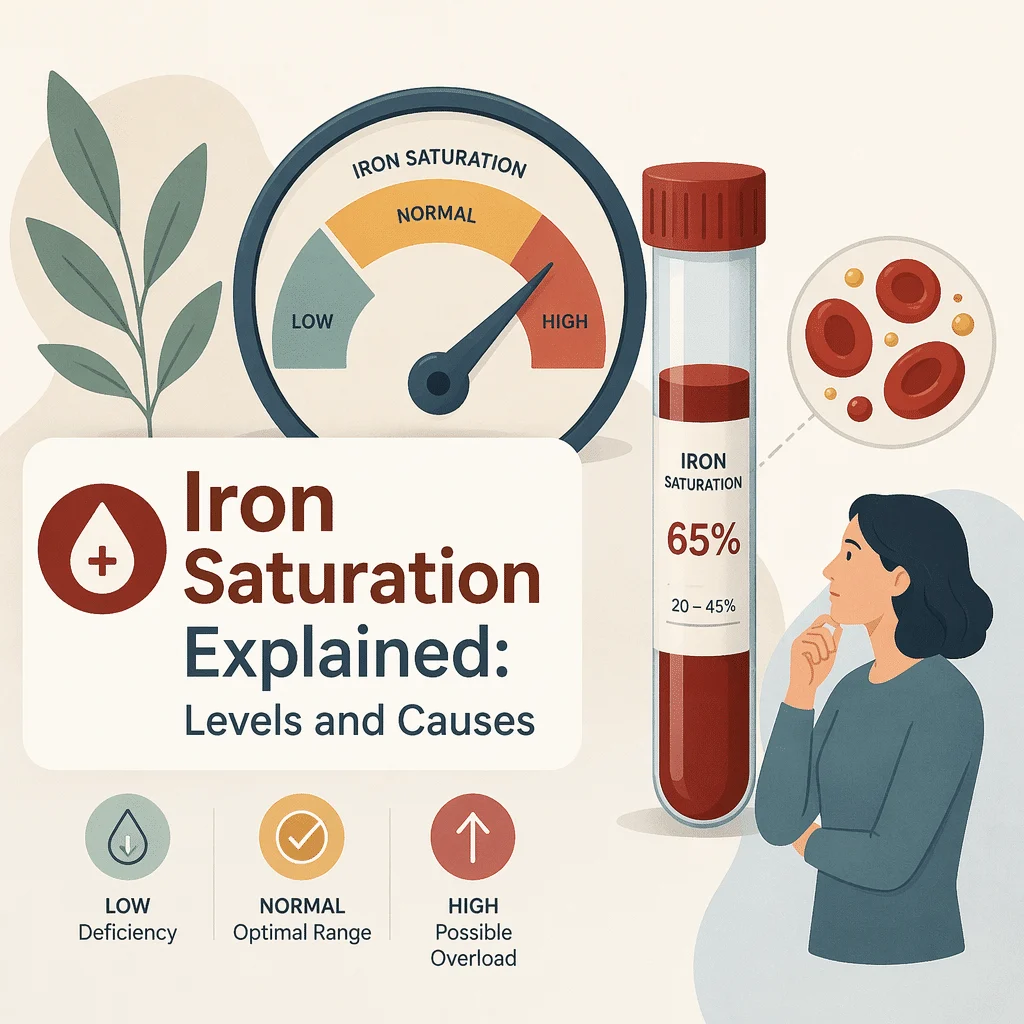
Saturația fierului este procentul din panelul de fier care îți arată cât din capacitatea sângelui tău de a transporta fierul este efectiv utilizată. Mai este notată și ca saturația transferinei sau TSAT și se calculează, nu se măsoară direct — de aceea poate varia mai mult decât te-ai aștepta.
În acest articol vei afla ce reprezintă de fapt acest procent, cum se obține din alte două valori de laborator, de ce ora din zi și ultima masă îl pot influența, la ce indică un rezultat scăzut și unul crescut, cum se interpretează saturația și feritina împreună ca un tipar și ce se întâmplă de obicei după ce apare o valoare anormală în buletinul tău.
Ce măsoară de fapt saturația fierului
Fierul nu circulă liber în sângele tău. El călătorește legat de o proteină transportoare numită transferină, iar fiecare moleculă de transferină are un număr mic de locuri de legare pe care fierul le poate ocupa. Dacă vrei imaginea completă a acestei proteine transportoare, ghidul nostru despre analiza de sânge pentru transferină explică ce este, de ce un nivel crescut semnalează de obicei un deficit de fier și ce îl scade.
Saturația fierului răspunde la o singură întrebare despre acest sistem: din toate locurile disponibile pe transferină pentru transportul fierului, câte sunt ocupate în acest moment?
O saturație de 30% înseamnă că aproximativ trei din zece locuri sunt ocupate. O saturație de 8% înseamnă că transportorii sunt aproape goi, iar țesuturile care au nevoie de fier — în special măduva osoasă care produce globule roșii — sunt privite de resursele necesare. O saturație de 65% înseamnă că transportorii sunt neobișnuit de plini, iar o parte din fier poate circula fără un loc disponibil, ceea ce este starea care dăunează organelor de-a lungul anilor.
Cum se calculează procentul
Laboratoarele nu măsoară saturația printr-un test propriu. O calculează din două rezultate pe care le vei vedea de obicei tipărite deasupra ei, pe același panel.
Primul este fier seric, cantitatea de fier care circulă în sângele tău în momentul recoltării. Al doilea este capacitatea totală de legare a fierului, sau CTLF, care reprezintă câte locuri de transport există în total.
Formula este pur și simplu fierul seric împărțit la CTLF (capacitatea totală de legare a fierului), înmulțit cu 100. Unele laboratoare folosesc în calcul capacitatea nesaturată de legare a fierului (UIBC), dar rezultatul este același procent.
Acest lucru contează mai mult decât pare. Deoarece saturația este un raport între două măsurători separate, orice modificare a uneia dintre ele influențează procentul. Un rezultat al fierului seric care variază dintr-un motiv inofensiv va antrena și saturația, chiar dacă statusul tău real al fierului nu s-a schimbat deloc.
Intervalul de referință obișnuit și de ce o singură determinare poate fi imprecisă
Majoritatea laboratoarelor plasează intervalul de referință pentru adulți undeva între 20% și 50%. Propriul tău buletin de analize poate indica 15%–45% sau 20%–55%, în funcție de analizorul folosit și de populația pe care laboratorul a utilizat-o pentru a stabili intervalul.
Compară întotdeauna valoarea ta cu intervalul tipărit pe propriul buletin de analize. Bărbații tind să se situeze puțin mai sus în interval față de femeile pre-menopauză, iar valorile de referință pentru copii diferă din nou.
Aspectul cu adevărat important – și cel pe care majoritatea articolelor îl omit – este că un singur rezultat al saturației fierului poate varia considerabil.
Ora din zi, alimentația și suplimentele recente
Fierul seric urmează un ritm zilnic. Ghidul MedlinePlus privind testele pentru fier al Bibliotecii Naționale de Medicină precizează că nivelul fierului din sânge variază pe parcursul zilei și poate fi mai ridicat dimineața, motiv pentru care medicii solicită adesea o probă recoltată a jeun, dimineața.
Deoarece saturația se calculează pe baza fierului seric, această variație zilnică se reflectă direct în procentaj. Două probe recoltate de la aceeași persoană în aceeași zi pot diferi suficient de mult pentru ca un rezultat să treacă din interiorul intervalului normal în afara lui.
Alimentația produce același efect pe o perioadă mai scurtă. O masă bogată în fier – și mai ales un supliment de fier sau un multivitamin care conține fier, luat în orele dinaintea recoltării – poate crește brusc fierul seric și poate genera o saturație care pare îngrijorător de mare, dar reflectă doar ce conținea tableta.
Acesta este unul dintre cele mai frecvente motive pentru care un rezultat crescut se dovedește a fi fără semnificație. Dacă iei fier sub orice formă, spune-i medicului care îți solicită testul.
O boală acută sau o inflamație acționează în sens invers, scăzând temporar fierul seric și, implicit, saturația – lucru util de reținut atunci când interpretezi o valoare scăzută obținută în timpul unui puseu.
Cum interpretezi o saturație scăzută a fierului
O saturație scăzută arată că transportorii sunt aproape goi. Prin ea însăși, nu spune de ce.
Simptomele care însoțesc adesea un rezultat scăzut includ oboseală care nu dispare după somn, dificultăți de respirație la urcat scările sau la efort ușor, paloare, palpitații, unghii fragile, căderea părului și dificultăți de concentrare. Mulți oameni cu o saturație ușor scăzută se simt complet bine.
Deficitul real de fier: cea mai frecventă explicație
Majoritatea saturațiilor scăzute se datorează unui deficit real de fier în organism. Pierderea de sânge este cauza obișnuită: menstruații abundente sau prelungite, sângerări la nivelul tractului digestiv, donare frecventă de sânge sau pierderi în jurul unei intervenții chirurgicale.
Aportul și absorbția contează și ele. Sarcina și alăptarea cresc semnificativ necesarul de fier. Boala celiacă, bolile inflamatorii intestinale, unele intervenții chirurgicale gastrice și medicamentele antiacide luate pe termen lung reduc cantitatea de fier alimentar care se absoarbe.
Când deficiența de fier durează suficient de mult pentru a afecta producția de globule roșii, de obicei și alți markeri se modifică odată cu ea: hemoglobina scade, iar pe hemoleucogramă completă globulele roșii devin adesea mai mici decât în mod normal. Articolul nostru despre simptomele, cauzele și testele pentru anemie explică această evoluție; modelul opus, în care celulele devin mai mari, este tratat în ghidul nostru despre valori crescute ale MCV.
Este esențial de reținut că o saturație scăzută nu este un motiv pentru a începe administrarea de fier pe cont propriu. Fierul luat pe baza unei presupuneri greșite poate fi cu adevărat dăunător pentru oricine are de fapt un exces de fier, iar fierul administrat inutil provoacă frecvent constipație, greață și dureri de stomac fără niciun beneficiu. Cauza deficienței, în special o pierdere de sânge inexplicabilă, este cea care trebuie identificată, iar numai un medic poate decide dacă, cum și pentru cât timp să trateze.
Deficiența funcțională de fier: fier care există, dar nu poate fi mobilizat
În inflamația cronică, boala cronică de rinichi, insuficiența cardiacă, cancer și infecțiile de lungă durată, organismul blochează în mod deliberat fierul în interiorul celulelor de depozitare. Rezervele pot fi perfect adecvate sau chiar generoase, dar fierul nu poate fi eliberat în sânge suficient de repede pentru a satisface necesarul. Aceasta se numește deficiență funcțională de fier.
Semnul caracteristic este o saturație scăzută alături de o ferritină normală sau crescută, nu scăzută. Deoarece feritina crește și ea în mod independent în contextul inflamației, un marker inflamator precum CRP este adesea măsurat în același timp pentru a ajuta la interpretarea tabloului clinic.
Distincția nu este pur teoretică. Deficiența adevărată și cea funcțională sunt tratate diferit, iar calea prin ambele trece pe la medic, nu pe la raftul cu suplimente.
Interpretarea unei saturații crescute a transferinei
O saturație ridicată este cel mai util semnal precoce al supraîncărcării cu fier — tocmai de aceea este inclusă în panou.
În practica curentă, o saturație măsurată a jeun de peste aproximativ 45% la un adult este punctul de la care majoritatea medicilor încep să caute o cauză. Este un semnal pentru evaluare, nu un diagnostic, iar pragul pentru a considera ceva hemocromotoză biochimică este considerabil mai ridicat: sursa capitolul GeneReviews despre hemochromatoza HFE descrie o saturație a transferinei a jeun de cel puțin 60% la bărbați sau cel puțin 50% la femei, constatată în două sau mai multe ocazii, cu alte cauze excluse.
Remarcă cele două aspecte pe care pacienții le trec aproape întotdeauna cu vederea: a jeun și la mai mult de o ocazie.
Întrebarea despre hemocromotoză, abordată calm
Hemocromatoza ereditară este o afecțiune moștenită în care intestinul absoarbe mai mult fier decât are nevoie organismul, an după an. Potrivit Centrelor pentru Controlul și Prevenirea Bolilor din SUA, aceasta este mai frecventă la persoanele cu ascendență din Europa de Nord, bărbații tind să dezvolte complicații mai devreme decât femeile, iar majoritatea persoanelor care poartă modificările genetice relevante nu dezvoltă niciodată simptome sau complicații.
Supraîncărcarea cu fier netratată merită luată în serios, deoarece fierul care se acumulează în ficat, inimă, pancreas și articulații provoacă leziuni ireversibile. Totodată, o singură valoare crescută a saturației fierului este departe de a reprezenta un diagnostic. Majoritatea saturațiilor crescute nu sunt cauzate de hemocromatoză, iar chiar și dintre persoanele care poartă două copii ale principalei variante genetice, doar o minoritate dezvoltă vreodată o supraîncărcare cu fier suficient de severă pentru a provoca boală.
Acolo unde este prezentă, este una dintre afecțiunile cel mai bine tratabile din medicină. Tratamentul standard constă în recoltarea periodică de sânge, care reduce direct depozitele de fier din organism, iar ghidul nostru despre tratamente pentru hemocromatoză explică în detaliu ce presupune acest lucru.
Rezultate crescute fără legătură cu genetica
Suplimentele de fier, fie prescrise, fie cumpărate fără rețetă, cresc fierul seric și, prin urmare, saturația; o doză luată cu puțin timp înainte de recoltarea sângelui poate face acest lucru în mod dramatic. Transfuziile repetate de sânge aduc fier pe care organismul nu îl poate elimina. Fierul administrat intravenos în scop terapeutic produce același efect, dar într-un interval de timp mai scurt.
Bolile hepatice reprezintă o altă cauză frecventă. Celulele hepatice deteriorate eliberează fierul stocat în sânge, iar atât boala hepatică alcoolică, cât și steatoza hepatică sunt asociate cu markeri crescuți ai fierului, astfel că teste ale funcției hepatice sunt verificate de obicei în același timp.
De ce saturația se interpretează întotdeauna împreună cu feritina
Saturația și feritină răspund la întrebări diferite. Saturația descrie fierul aflat în tranzit în momentul de față. Feritina estimează cât fier se află în depozit.
Interpretate împreună, ele formează tipare mult mai informative decât fiecare în parte. Tabelul de mai jos prezintă combinațiile pe care medicii le întâlnesc cel mai frecvent. Este o hartă a raționamentului clinic, nu un instrument de autodiagnosticare.
| Saturația fierului | Feritină | Tabloul probabil | Pasul următor obișnuit |
|---|---|---|---|
| Scăzut | Scăzut | Deficit real de fier: depozitele sunt goale și aportul este insuficient | Se caută cauza, în special pierderea de sânge; se verifică hemoleucograma; tratamentul este stabilit de medic |
| Scăzut | Normală sau crescută | Deficit funcțional de fier: depozitele există, dar fierul nu poate fi mobilizat, de obicei în context inflamator sau în boala renală | Se verifică markerii inflamatori și funcția renală; afecțiunea de bază este tratată cu prioritate |
| Crescută | Crescută | Posibilă supraîncărcare cu fier, inclusiv hemocromatoză ereditară, supraîncărcare transfuzională cu fier sau boală hepatică | Se repetă recoltarea à jeun, se efectuează teste hepatice și testare genetică dacă tiparul persistă |
| Crescută | Normal | Adesea o doză recentă de fier, o probă recoltată fără post sau un stadiu incipient de supraîncărcare cu fier înainte ca depozitele să crească | Repetă proba a jeun după ce întrerupi suplimentele cu fier, la recomandarea medicului |
| Normal | Scăzut | Deficit de fier incipient sau în curs de instalare: depozitele scad înainte ca transportul să fie afectat | Evaluare clinică, istoricul alimentar și menstrual, monitorizare în timp |
Feritina crește în inflamație indiferent de statusul fierului. Articolele noastre despre feritină scăzută și valorile crescute ale feritinei explică ce o modifică în fiecare direcție.
Ce se întâmplă de obicei în continuare
Atât pentru un rezultat scăzut, cât și pentru unul crescut, primul pas este aproape întotdeauna același: repetă corect testul.
De obicei, asta înseamnă o probă recoltată dimineața, a jeun, când nu ești acut bolnav, cu orice supliment care conține fier întrerupt în prealabil, dacă medicul tău îți recomandă acest lucru. O proporție surprinzătoare de saturații anormale se normalizează liniștit la acest pas.
O saturație persistent scăzută duce la căutarea cauzei: hemoleucogramă completă, feritină, întrebări despre menstruație și tranzit intestinal și, acolo unde este relevant, investigarea tractului digestiv. Tratamentul este ales ulterior, în funcție de ceea ce se descoperă.
O saturație persistent ridicată conduce la dozarea feritinei, teste hepatice și o discuție despre alcool, suplimente, transfuzii și istoricul familial. Acolo unde tabloul clinic indică această direcție, testarea genetică pentru variantele HFE confirmă sau exclude hemocromatoza ereditară, iar imagistica este uneori folosită pentru a estima cât fier conține ficatul.
Când să mergi la medic pentru saturația fierului
Orice rezultat în afara intervalului de referință al laboratorului tău merită o discuție, chiar dacă te simți bine. Unele combinații merită o discuție mai urgentă.
Semne de alarmă care necesită evaluare medicală
- Dureri articulare, în special la nivelul articulațiilor degetelor sau genunchilor, însoțite de oboseală și o saturație a fierului crescută
- Piele care a căpătat o nuanță bronzată, cenușie sau metalică
- Un diagnostic nou de diabet sau un nivel al glicemiei din ce în ce mai greu de controlat, alături de o saturație crescută
- Semne care indică afectare hepatică: durere sub coastele drepte, îngălbenirea ochilor sau a pielii, distensie abdominală sau analize hepatice anormale
- Un părinte, frate, soră sau copil despre care se știe că are hemocromatoză ereditară, indiferent de propriul tău rezultat
- Oboseală profundă cu dificultăți de respirație, durere în piept, amețeli sau palpitații, împreună cu o saturație foarte scăzută, ceea ce necesită evaluare promptă
Durerea în piept, leșinul sau dificultățile severe de respirație sunt motive pentru a solicita îngrijire urgentă, nu pentru a aștepta o programare.
Aduce întregul panel de analize, nu doar saturația. Profilul complet al panou de investigații ale fierului îi spune medicului tău mult mai mult decât o singură valoare din el.
Cele mai recente progrese științifice în testarea saturației fierului
Conform cercetărilor indexate în PubMed, lucrările recente s-au concentrat mai puțin pe teste noi și mai mult pe unde ar trebui să se situeze pragurile pentru acest test deja consacrat.
Un studiu retrospectiv din 2024, publicat în Clinical Biochemistry de Lou și colaboratori, a analizat peste 23.000 de persoane care au efectuat testare genetică HFE în Atlantic Canada. Concluzia: saturația transferinei a fost cel mai bun marker sanguin individual pentru identificarea persoanelor care poartă două copii ale variantei C282Y, depășind atât feritina, cât și enzima hepatică ALT. Ce înseamnă asta pentru tine: saturația ta are un rol diagnostic real în acel panou, iar o valoare normală face hemocromatoza ereditară mult mai puțin probabilă.
Un studiu de cohortă bazat pe populație, publicat în 2024 în Liver International de Schaefer și colaboratorii, a urmărit persoane din Tirol, Austria, care fuseseră genotipate pentru varianta C282Y. Ce s-a descoperit: dintre cei care purtau două copii ale acestei variante, doar o minoritate cu vârsta de până la 60 de ani prezenta efectiv supraîncărcare cu fier, iar marea majoritate nu arăta niciun semn de cicatrizare hepatică, deși speranța de viață era măsurabil mai scurtă față de grupurile de control potrivite. Ce înseamnă asta pentru tine: a purta genotipul nu este același lucru cu a avea boala, tocmai de aceea o saturație crescută declanșează o evaluare, nu un diagnostic.
O analiză transversală publicată în 2024 în JAMA Network Open de Barton și colaboratorii a comparat trei definiții ale deficienței de fier la peste 62.000 de femei investigate în Statele Unite și Canada. Ce s-a descoperit: în funcție de definiția utilizată, inclusiv una care combina o saturație a transferinei sub 10% cu o ferritină scăzută, prevalența măsurată varia de mai multe ori. Ce înseamnă asta pentru tine: dacă ești sau nu considerată cu deficit de fier poate depinde de pragul folosit de laboratorul tău, motiv pentru care rezultatele sunt interpretate în context, nu după un simplu tabel.
Un studiu de registru publicat în 2025 în JACC: Heart Failure de Lindberg și colaboratorii a evaluat patru definiții ale deficienței de fier la peste 20.000 de pacienți cu insuficiență cardiacă. Ce s-a descoperit: definirea acesteia printr-o saturație a transferinei sub 20% a identificat mai fiabil grupul cu cele mai severe simptome și rezultate clinice nefavorabile, comparativ cu definițiile bazate pe ferritină. Ce înseamnă asta pentru tine: saturația pare să surprindă ceva ce ferritina nu reușește, ceea ce explică parțial de ce medicii nu se bazează exclusiv pe rezervele de fier.
Direcția de evoluție este clară. Saturația fierului este tratată ca un indicator mai informativ decât era considerat cândva, iar nimic din acestea nu schimbă sfatul de bază: un rezultat anormal este punctul de plecare pentru o discuție clinică.
Întrebări frecvente despre saturația fierului
Ce înseamnă o saturație a fierului crescută în analizele mele?
Înseamnă că mai multe locuri de legare ale transferinei tale erau ocupate de fier decât se așteaptă laboratorul. Cele mai frecvente explicații sunt un supliment recent cu fier sau o probă recoltată fără post alimentar, urmate de boli hepatice, transfuzii repetate și, mai rar, hemocromatoză ereditară. În sine, este un semnal de investigat, nu un diagnostic. Medicul tău va repeta de obicei testul pe o probă recoltată dimineața, pe nemâncate, și va analiza și feritina în același timp, înainte de a decide dacă mai este nevoie de alte investigații.
Trebuie să fiu pe nemâncate pentru un test de saturație a fierului?
De multe ori, da. Deoarece fierul seric crește după masă și este în mod natural mai ridicat dimineața, mulți medici cer o probă recoltată dimineața, pe nemâncate, pentru ca rezultatul calculat să nu fie distorsionat. MedlinePlus menționează că uneori se solicită un post de 12 ore și că testul se face de obicei dimineața. Urmează instrucțiunile de pe formularul de recoltare în loc să presupui, și spune-i persoanei care îți recoltează proba dacă ai mâncat, ai luat un supliment sau ai primit o perfuzie recent.
Ar trebui să iau fier dacă saturația mea este scăzută?
Nu pe cont propriu. O saturație scăzută îți spune că fierul este insuficient în sânge, dar nu îți spune de ce, iar cauza este cea care determină răspunsul potrivit. Începerea tratamentului cu fier fără a cunoaște cauza poate întârzia descoperirea unei sângerări care necesită atenție, iar fierul administrat cuiva care este de fapt supraîncărcat este dăunător. Fierul luat inutil provoacă și constipație, greață și dureri de stomac fără niciun beneficiu. Du rezultatul la medicul tău și lasă decizia să urmeze diagnosticului.
Poate saturația mea să fie normală în timp ce am totuși deficit de fier?
Da. Depozitele de fier scad de obicei înainte ca transportul să fie afectat, astfel că feritina scade adesea în timp ce saturația se află încă în intervalul de referință. Această etapă timpurie este frecventă la persoanele cu menstruații abundente sau cu o dietă pe bază de plante, care se simt obosite, dar par bine la o analiză de rutină. Acesta este principalul motiv pentru care feritina și saturația se solicită împreună, nu una în locul celeilalte, și de ce medicul interpretează tiparul în ansamblu, nu o singură valoare.
Cât de diferite pot fi două rezultate obținute în aceeași săptămână?
Mai diferite decât se așteaptă majoritatea oamenilor. Fierul seric variază pe parcursul zilei, crește după o masă bogată în fier sau după un supliment și scade în timpul unei infecții sau inflamații, iar fiecare dintre aceste modificări se reflectă în procentul calculat. Un rezultat care trece de la puțin în interiorul intervalului la puțin în afara lui, sau invers, este complet obișnuit. De aceea, o saturație anormală este de obicei confirmată pe o a doua probă, recoltată în condiții corespunzătoare, înainte de a se lua orice altă decizie.
Sarcina sau o menstruație abundentă pot influența rezultatul?
Ambele pot. Sarcina crește semnificativ necesarul de fier și volumul sanguin se extinde, astfel că saturația scade frecvent pe măsură ce sarcina avansează, chiar și atunci când totul este în regulă. Sângerările menstruale abundente sau prelungite reprezintă una dintre cele mai frecvente cauze ale unei saturații cu adevărat scăzute la femeile de vârstă reproductivă. Niciuna dintre situații nu se gestionează de una singură: fierul în sarcină, în special, este monitorizat și prescris de echipa care te îngrijește, deoarece atât cantitatea prea mică, cât și cea prea mare prezintă riscuri.
Glosar de termeni cheie
| Termen | Definiție |
|---|---|
| Saturația transferinei (TSAT) | Procentul din situsurile de legare a fierului de pe transferină care sunt în prezent ocupate de fier. |
| Transferina | Proteina din sânge care transportă fierul din intestin și din globulele roșii reciclate către țesuturile care au nevoie de el. |
| Fier seric | Cantitatea de fier care circulă în sânge în momentul în care a fost recoltat eșantionul. |
| CTLF | Capacitatea totală de legare a fierului (CTLF): o măsură a cantității de fier pe care proteinele transportoare din sânge ar putea-o reține în total. |
| Feritină | O proteină de stocare al cărei nivel sanguin reflectă cantitatea de fier pe care organismul o are în rezervă. |
| Deficit funcțional de fier | O stare în care rezervele de fier există, dar nu pot fi eliberate suficient de rapid pentru a satisface necesarul, de obicei în cursul inflamației sau al bolii renale. |
| Supraîncărcare cu fier | Acumularea excesului de fier în organe precum ficatul, inima și pancreasul, care poate provoca leziuni permanente. |
| Hemocromatoza ereditară | O afecțiune ereditară în care intestinul absoarbe mai mult fier decât are nevoie organismul, pe parcursul mai multor ani. |
| C282Y | Cea mai frecventă variantă a genei HFE asociată cu hemocromatoza ereditară la persoanele de origine nord-europeană. |
| Flebotomia terapeutică | Recoltarea programată a unui volum măsurat de sânge, utilizată pentru a reduce fierul din organism în cazul supraîncărcării cu fier confirmate. |
Surse
- MedlinePlus, National Library of Medicine. Iron Tests
- National Institute of Diabetes and Digestive and Kidney Diseases. Diagnosis of Hemochromatosis
- Centers for Disease Control and Prevention. About Hereditary Hemochromatosis
- Barton JC, Edwards CQ, Acton RT. HFE Hemochromatosis. GeneReviews, National Center for Biotechnology Information
- Lou A, Elnenaei MO, Zhu J, et al. Re-evaluating the utility of iron indices in hereditary hemochromatosis genotyping: a retrospective study. Clinical Biochemistry, 2024
- Schaefer B, Pammer LM, Pfeifer B, et al. Penetrance, cancer incidence and survival in HFE haemochromatosis: a population-based cohort study. Liver International, 2024
- Barton JC, Wiener HW, Barton JC, Acton RT. Prevalence of iron deficiency using 3 definitions among women in the US and Canada. JAMA Network Open, 2024
- Lindberg F, Cabrera CC, Benson L, et al. Iron deficiency definitions in heart failure across ejection fraction phenotypes. JACC: Heart Failure, 2025
Rezumatele studiilor au fost identificate prin PubMed.
Lectură suplimentară
- Profilul fierului: ce îți spune fiecare marker
- Transferina în analize: de ce valorile crescute indică de obicei un deficit de fier
- Tratamentele hemocromatozei: un ghid practic
- VEM scăzut: cauze, simptome și tratamente
- Feritina crescută: cauze, simptome și riscuri
Înțelege-ți rezultatele analizelor cu AI DiagMe
Saturația fierului are sens doar alături de feritină, fierul seric și CTLF, iar citirea celor patru valori împreună este exact locul unde majoritatea oamenilor se blochează. AI DiagMe transformă acele cifre în limbaj simplu și te ajută să ajungi la consultație cu întrebări mai bune. Te ajută să îți înțelegi rezultatele; nu pune diagnostice și nu îl înlocuiește pe medicul tău.
Obține interpretarea rezultatelor în câteva minute