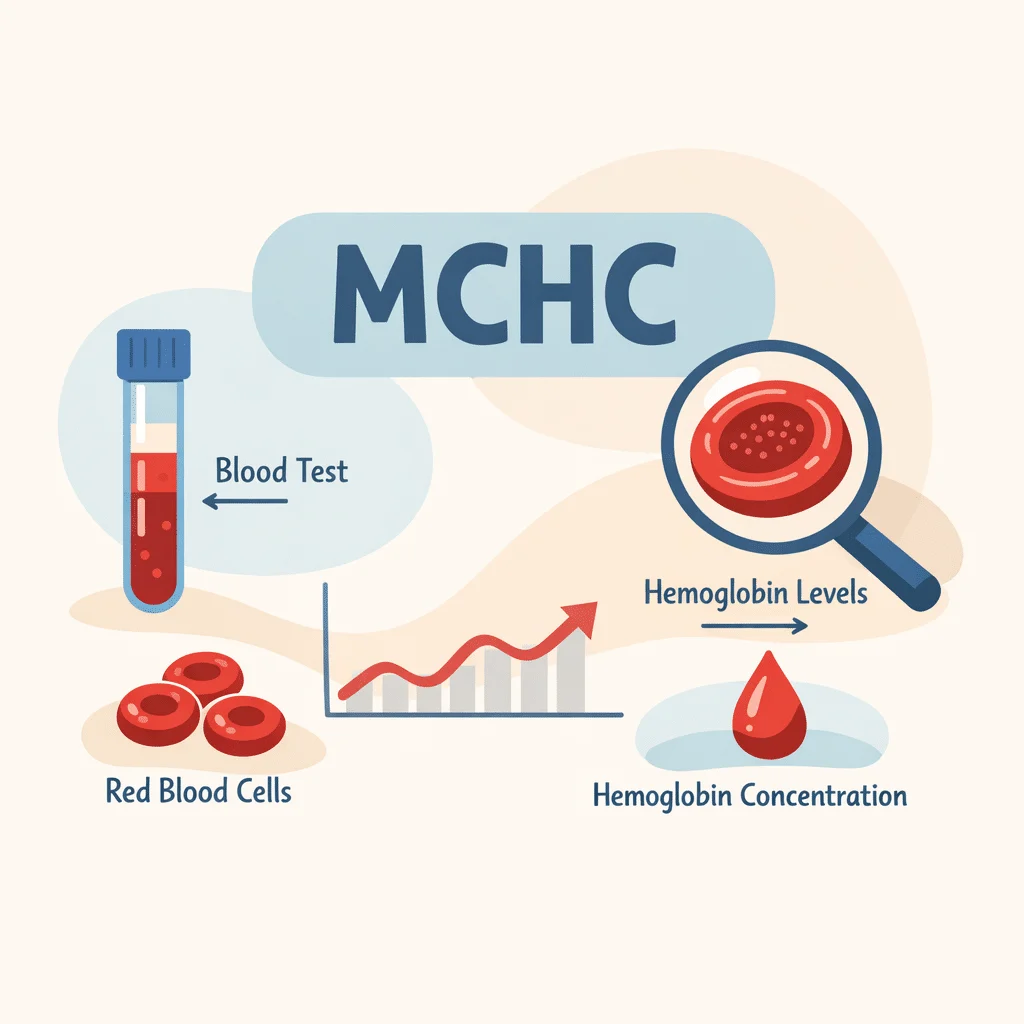
Analiza MCHC măsoară concentrația medie de hemoglobină din interiorul globulelor roșii, una dintre valorile standard raportate în hemoleucogramă (HLG). Hemoglobina este proteina bogată în fier care transportă oxigenul din plămâni către restul corpului, iar MCHC îți arată cât de dens este împachetată aceasta în fiecare celulă, nu câte celule ai. În acest articol vei afla ce măsoară MCHC, care sunt valorile normale, ce pot însemna rezultatele scăzute sau crescute și când merită să discuți un rezultat cu medicul tău.
Ce măsoară analiza MCHC?
MCHC este abrevierea pentru concentrația medie de hemoglobină corpusculară. Se calculează pe baza altor două valori din hemoleucogramă — hemoglobina și hematocritul (procentul din volumul sanguin ocupat de globulele roșii) — și nu se măsoară direct. Rezultatul reflectă densitatea hemoglobinei dintr-o globulă roșie medie, nu cantitatea totală de hemoglobină din sânge.
O modalitate simplă de a-ți imagina: dacă globulele roșii sunt camioane de livrare care transportă oxigen, hemoglobina este marfa. MCHC îți spune cât de încărcat este, în medie, fiecare camion. Un MCHC scăzut înseamnă că celulele sunt subîncărcate față de dimensiunea lor, în timp ce un MCHC crescut înseamnă că sunt neobișnuit de concentrate. Ambele tipare pot indica cauze diferite, de aceea medicii analizează rareori MCHC izolat.
Laboratoarele raportează MCHC deoarece ajută la clasificarea tipului de anemie (o lipsă de globule roșii sănătoase sau de hemoglobină) pe care o poate avea o persoană. Combinat cu MCV (dimensiunea medie a globulelor roșii) și MCH (cantitatea medie de hemoglobină per celulă), MCHC ajută la identificarea dacă o anemie este legată de fier, genetică, inflamație cronică sau o altă cauză.
Valorile normale ale MCHC și cum să-ți citești rezultatul
Intervalul de referință standard pentru testul MCHC din sânge este, de obicei, între 32 și 36 grame pe decilitru (g/dL), uneori exprimat ca 320 până la 360 grame pe litru (g/L). Valorile pot varia ușor de la un laborator la altul, în funcție de analizorul și metodele utilizate, așa că întotdeauna compară rezultatul tău cu intervalul tipărit pe propriul raport.
Iată un exemplu de hemogramă completă care arată unde se situează MCHC alături de celelalte valori ale globulelor roșii.
| Parametru | Rezultat | Interval normal | Unitate |
|---|---|---|---|
| Globule roșii | 4.8 | 4.2-5.6 | 10¹²/L |
| Hemoglobină | 14.5 | 12.0-16.0 | g/dL |
| Hematocrit | 42 | 37-47 | % |
| VEM | 87.5 | 80-100 | fL |
| HEM (hemoglobina eritrocitară medie) | 30.2 | 27-32 | pg |
| MCHC | 34.5 | 32-36 | g/dL |
În acest exemplu, valoarea MCHC de 34,5 g/dL se încadrează confortabil în interval. Laboratoarele marchează adesea valorile în afara intervalului cu culoare, un asterisc sau o săgeată. Intervalele de referință provin din studii statistice realizate pe populații mari și sănătoase, astfel că pot varia ușor în funcție de echipamentul utilizat și de caracteristicile demografice ale grupului de referință. O hemogramă completă pune MCHC în context alături de celelalte rezultate ale globulelor roșii, iar ghidul nostru despre cum să citești o hemogramă completă explică fiecare valoare din acel panou.
Ce poate însemna un MCHC scăzut
O valoare MCHC scăzută, numită hipocromie, înseamnă că globulele roșii conțin mai puțină hemoglobină decât ar fi normal față de dimensiunea lor. Cea mai frecventă cauză este anemia feriprivă (prin deficit de fier). Fără suficient fier, măduva osoasă nu poate produce cantități normale de hemoglobină, astfel că produce globule roșii mai mici (microcitare) și mai palide (hipocrome) decât de obicei. Simptomele tipice includ oboseală, paloarea pielii și senzație de lipsă de aer, deși cazurile ușoare pot să nu provoace niciun simptom vizibil.
Talasemiile, un grup de afecțiuni ereditare care perturbă producția lanțurilor de globină ce alcătuiesc hemoglobina, reprezintă o altă cauză recunoscută a MCHC scăzut. Pierderea cronică de sânge, unele boli cronice și, mai rar, anumite expuneri toxice pot, de asemenea, să scadă această valoare. Deoarece un MCHC scăzut în sine nu explică de ce s-a produs, medicii efectuează de obicei investigații suplimentare. Ghidul dedicat al acestui site despre cauzele, simptomele și opțiunile de tratament pentru MCHC scăzut acoperă în detaliu această cale de investigare, inclusiv testele pentru fier și abordările terapeutice, mult mai aprofundat decât poate face această prezentare generală.
Ce poate însemna un MCHC crescut
O valoare MCHC crescută, sau hipercromie, înseamnă că concentrația de hemoglobină din interiorul globulelor roșii este mai mare decât normalul. Acest tipar este mai puțin frecvent decât un rezultat scăzut și tinde să indice un număr mai restrâns de cauze.
Sferocitoza ereditară, o afecțiune genetică în care globulele roșii au formă sferică în loc de discul aplatizat obișnuit, este o cauză clasică: forma anormală concentrează hemoglobina într-un volum celular mai mic, crescând MCHC. Deshidratarea semnificativă poate crește temporar MCHC, deoarece un volum plasmatic mai mic concentrează tot ce se află în sânge, inclusiv hemoglobina din interiorul globulelor roșii; de obicei, aceasta se normalizează odată ce aportul de lichide revine la normal. Anemia hemolitică autoimună, în care sistemul imunitar distruge prematur globulele roșii, poate produce uneori o valoare MCHC fals crescută pe analizoarele automate de laborator, nu o creștere reală — acesta este unul dintre motivele pentru care rezultatele neobișnuite sunt uneori reverificiate înainte de a se lua o decizie.
MCHC scăzut versus crescut — privire de ansamblu
Deoarece cele două direcții indică explicații foarte diferite, este util să le compari una lângă alta înainte de a decide ce să întrebi medicul tău.
| Caracteristică | MCHC scăzut (hipocromie) | MCHC crescut (hipercromie) |
|---|---|---|
| Interval tipic | Sub aproximativ 32 g/dL | Peste aproximativ 36 g/dL |
| Cea mai frecventă cauză | Anemia feriprivă (prin deficit de fier) | Deshidratare sau sferocitoză ereditară |
| Alte cauze posibile | Talasemie, pierdere cronică de sânge, unele boli cronice | Anemie hemolitică autoimună, interferențe de laborator |
| Dimensiunea asociată a globulelor roșii (MCV) | Adesea mici (microcitare) | Adesea normale sau mici |
| Pasul următor tipic | Teste ale fierului, număr de reticulocite | Evaluarea hidratării, frotiu de sânge, retestare |
Ce influențează MCHC și cum îl interpretează medicii
MCHC este rareori analizat izolat în luarea deciziilor clinice. Medicii îl citesc împreună cu MCV, MCH, hemoglobina și hematocritul, deoarece aceeași valoare MCHC poate însemna lucruri diferite în funcție de ce arată ceilalți parametri. De exemplu, un MCHC scăzut asociat cu un MCV scăzut sugerează puternic deficiența de fier sau talasemia, în timp ce un MCHC scăzut cu un MCV normal sau crescut indică un mecanism diferit. Ghidurile noastre despre cauzele și tratamentul MCV scăzut și valorile crescute ale MCV și cauzele lor explică cum dimensiunea celulelor completează imaginea pe care MCHC singur nu o poate oferi.
Concentrația hemoglobinei în globulele roșii este legată și de cât de bine primesc oxigen țesuturile. Când această concentrație scade, organismul poate declanșa ajustări metabolice care afectează în timp inima, plămânii și creierul. Din anii 1930, când MCHC a fost definit pentru prima dată, rolul său a evoluat de la un calcul secundar la un element central în clasificarea anemiei, în special pentru a distinge anemiile legate de fier de alte tipuri.
Un exemplu practic: cineva cu un MCHC persistent crescut consultă medicul și află că motivul este o deshidratare ușoară cronică. După ce adoptă obiceiuri mai bune de hidratare, MCHC-ul se normalizează în câteva săptămâni. Acest lucru ilustrează de ce un MCHC anormal merită o discuție cu un medic, nu o autodiagnosticare, deoarece același număr poate reflecta ceva la fel de simplu ca aportul de lichide sau ceva care necesită investigații suplimentare.
Când să mergi la medic pentru rezultatul tău MCHC
Majoritatea valorilor MCHC ușor anormale, izolate, nu reprezintă urgențe și sunt adesea reverificiate înainte de a se lua vreo măsură. Totuși, unele situații necesită atenție medicală promptă, fără a mai aștepta.
- MCHC-ul tău este sub aproximativ 30 g/dL sau peste aproximativ 38 g/dL, ceea ce majoritatea laboratoarelor consideră o abatere mai semnificativă.
- Observi o schimbare rapidă între două analize consecutive, nu o variație ușoară și stabilă.
- MCHC-ul anormal apare împreună cu simptome precum oboseală persistentă, paloarea pielii, dificultăți de respirație, amețeli sau palpitații.
- Ai antecedente familiale de boală hematologică ereditară, cum ar fi talasemia sau sferocitoza ereditară, iar rezultatul tău nu are o explicație clară.
- Medicul tău a semnalat în mod specific rezultatul sau ți-a cerut să programezi o consultație de urmărire.
În schimb, un rezultat doar ușor în afara intervalului normal, fără simptome și fără o tendință îngrijorătoare, este adesea pur și simplu monitorizat printr-un test repetat peste câteva luni. Tabelul de mai jos rezumă recomandările generale de urmărire în funcție de amploarea abaterii; sfatul medicului tău are întotdeauna prioritate.
| Nivelul MCHC | Urmărire recomandată |
|---|---|
| Normal (32-36 g/dL) | Discutat în cadrul unui control anual de rutină |
| Ușor scăzut (30-31,9 g/dL) | Monitorizare; se recomandă un test de urmărire la 3-6 luni |
| Foarte scăzut (sub 30 g/dL) | Consultație medicală promptă pentru investigarea cauzei |
| Ușor crescut (36,1-38 g/dL) | Monitorizare; se recomandă un test de urmărire la 3-6 luni |
| Semnificativ crescut (peste 38 g/dL) | Consultație medicală promptă pentru investigarea cauzei |
Obiceiuri de viață și alimentare care susțin un MCHC sănătos
În funcție de direcția în care tinde să evolueze MCHC-ul tău, câteva obiceiuri zilnice pot susține rezultate mai bune, alături de orice tratament recomandat de medicul tău.
Pentru valorile cu tendință scăzută, creșterea aportului de alimente bogate în fier — precum carnea slabă, carnea de pasăre, peștele, lintea și spanacul — poate fi de ajutor. Combinarea surselor vegetale de fier cu vitamina C, găsită în citrice și ardei, îmbunătățește absorbția fierului. Un aport adecvat de vitamina B12 și folat din produse lactate, ouă și legume cu frunze verzi susține și producția sănătoasă de globule roșii, deoarece ambii nutrienți joacă un rol în procesul de maturare. Ghidul nostru pentru interpretarea unui panou de investigații ale fierului explică modul în care feritina, fierul seric și markerii asociați funcționează împreună atunci când se suspectează o deficiență de fier, iar articolul despre cauzele și tratamentul feritinei scăzute acoperă în detaliu aspectul legat de depozitarea fierului în organism.
Pentru valorile care tind să fie ridicate, hidratarea corespunzătoare prin consumul suficient de apă pe parcursul zilei este cel mai direct mod de acțiune, deoarece deshidratarea este o cauză frecventă și reversibilă a MCHC crescut. Limitarea consumului de alcool, care poate afecta sănătatea globulelor roșii, și menținerea unei diete echilibrate, combinată cu activitate fizică regulată și moderată, completează o abordare rațională. Niciunul dintre acești pași nu înlocuiește evaluarea medicală atunci când un rezultat este semnificativ anormal sau persistent.
Cele mai recente progrese științifice
Cercetările privind MCHC continuă să rafineze modul în care laboratoarele îl utilizează alături de tehnologiile de testare mai noi. O analiză din 2024 publicată în International Journal of Laboratory Hematology a examinat modul în care este diagnosticată sferocitoza ereditară și a constatat că MCHC, împreună cu MCV și lărgimea distribuției eritrocitare (RDW, o măsură a variației dimensiunii globulelor roșii), s-a numărat printre primii parametri eritrocitari folosiți pentru a semnala această afecțiune ereditară. Ce înseamnă asta pentru tine: dacă MCHC-ul tău este crescut și se suspectează sferocitoză ereditară, medicul tău poate apela și la valori mai noi generate de analizoare, care nu erau disponibile când MCHC a fost introdus pentru prima dată, oferind o imagine mai completă decât ar putea oferi vreodată MCHC singur. Aceasta este o analiză a metodelor de diagnostic existente, nu un studiu controlat, deci descrie cele mai bune practici actuale mai degrabă decât un singur studiu definitiv, dar reflectă un consens larg al experților privind modul în care aceste teste sunt combinate în practică.
Separat, un raport de caz din 2024 publicat în revista Clinical Laboratory a descris doi pacienți ale căror valori MCHC păreau anormal de ridicate din cauza interferenței provocate de aglutinarea la rece (o aglomerare a globulelor roșii legată de temperatură) și de conținutul de lipide din proba de sânge, și nu din cauza unei creșteri reale a concentrației de hemoglobină. După corectarea interferenței în laborator, valorile MCHC ale ambilor pacienți au revenit la normal și au corespuns tabloului clinic real. Ce înseamnă asta pentru tine: un rezultat MCHC neașteptat de ridicat, mai ales dacă nu se potrivește cu simptomele tale, poate reflecta uneori un artefact tehnic de laborator, și nu o modificare reală a sângelui tău — tocmai de aceea medicii repetă adesea un rezultat neobișnuit înainte de a trage concluzii. Această constatare provine dintr-o serie mică de cazuri, nu dintr-un studiu amplu, deci ilustrează o capcană cunoscută, dar rară, și nu modul în care ar trebui interpretate majoritatea rezultatelor.
Un rezultat MCHC este mai ușor de înțeles atunci când este citit alături de valori corelate, precum hemoglobina, MCV și analizele de fier, și când înțelegi ce reprezintă de fapt intervalul normal de pe propriul tău buletin de analize. Instrumentele care parcurg o hemogramă completă, un rezultat al hemoglobinei sau un panel de fier pas cu pas te pot ajuta să pregătești întrebări mai bune înainte de următoarea consultație, să înțelegi ce determină o valoare anormală și să știi când un rezultat precum MCHC scăzut sau crescut necesită atenție medicală promptă, nu doar monitorizare de rutină. Niciunul dintre aceste resurse nu pune un diagnostic și nu înlocuiește judecata medicului tău, dar pot face conversația cu medicul tău mai productivă.
Înțelege-ți rezultatele analizelor cu AI DiagMe
Obține interpretarea rezultatelor în câteva minute
Glosar
| Termen | Definiție |
|---|---|
| MCHC (concentrația medie a hemoglobinei corpusculare) | Concentrația medie de hemoglobină din interiorul unui globul roșu, calculată pe baza hemoglobinei și a hematocritului. |
| Hemoglobină | Proteina bogată în fier din globulele roșii care transportă oxigenul de la plămâni către restul corpului. |
| Hematocrit | Procentul din volumul sanguin reprezentat de globulele roșii. |
| VEM (volumul eritrocitar mediu) | Dimensiunea medie a unui globul roșu, folosită adesea împreună cu MCHC pentru clasificarea anemiei. |
| Hipocromie | Termen care desemnează globulele roșii cu o concentrație de hemoglobină mai mică decât normalul, corespunzând unui MCHC scăzut. |
| Hipercromie | Termen care desemnează globulele roșii cu o concentrație de hemoglobină mai mare decât normalul, corespunzând unui MCHC crescut. |
| Talasemia | Un grup de afecțiuni ereditare care reduc producția normală a lanțurilor globinice ale hemoglobinei. |
| Sferocitoză ereditară | O afecțiune genetică în care globulele roșii au formă sferică în loc de disc, ceea ce duce adesea la creșterea MCHC. |
| Hemoleucogramă completă (HLG) | Un test de sânge de rutină care măsoară globulele roșii, globulele albe, trombocitele și valorile asociate, inclusiv MCHC. |
| Interval de referință | Intervalul de valori considerate normale pentru o populație sănătoasă, stabilit de fiecare laborator în parte. |
Întrebări frecvente
Ce înseamnă dacă rezultatul MCHC din analizele de sânge este scăzut?
Un rezultat scăzut al MCHC în analizele de sânge înseamnă de obicei că globulele tale roșii conțin mai puțină hemoglobină decât ar fi normal pentru dimensiunea lor, un aspect numit hipocromie. Cea mai frecventă cauză este anemia feriprivă (prin deficit de fier), deoarece fierul insuficient limitează cantitatea de hemoglobină pe care măduva osoasă o poate „împacheta" în fiecare celulă. Alte cauze posibile includ talasemia și pierderea cronică de sânge. Un singur rezultat scăzut este adesea urmat de investigații ale metabolismului fierului pentru a identifica cauza exactă, așa că merită să discuți această constatare cu medicul tău, fără să tragi concluzii alarmante.
Ce înseamnă dacă MCHC este crescut în analizele de sânge?
Un rezultat crescut al MCHC în analizele de sânge înseamnă că globulele roșii transportă mai multă hemoglobină pe unitate de volum decât în mod normal, un aspect cunoscut sub numele de hipercromie. Explicațiile frecvente includ deshidratarea, care concentrează temporar componentele sângelui, și sferocitoza ereditară, o afecțiune genetică ce afectează forma globulelor roșii. Uneori, interferențele de laborator pot produce o valoare fals crescută. Deoarece cauzele pot varia de la simple la mai complexe, un rezultat neașteptat de mare este de obicei reverificat sau investigat suplimentar, înainte de a se lua orice decizie.
Ce nivel al MCHC este considerat periculos de mare sau de mic?
Majoritatea laboratoarelor consideră că un MCHC sub aproximativ 30 g/dL sau peste aproximativ 38 g/dL reprezintă o abatere mai semnificativă, care necesită atenție medicală promptă, față de abaterile ușoare care sunt pur și simplu monitorizate. Aceste praguri sunt orientative și nu reprezintă limite fixe, deoarece ceea ce este îngrijorător depinde și de simptomele tale, de celelalte valori din hemogramă și de cât de rapid s-a modificat această valoare. Intervalul de referință al propriului tău laborator și interpretarea medicului tău asupra întregii imagini contează mai mult decât orice valoare izolată.
Poate fi MCHC crescut în același timp cu un MCV scăzut?
Da, această combinație poate apărea, cel mai clasic în sferocitoza ereditară, unde globulele roșii sunt mai mici decât media (MCV scăzut), dar sunt dense în hemoglobină față de dimensiunea lor (MCHC crescut), deoarece forma sferică reduce volumul celulei mai mult decât reduce conținutul de hemoglobină. Această asociere reprezintă un indiciu diagnostic util tocmai pentru că diferă de modelul mai frecvent al MCHC scăzut cu MCV scăzut, întâlnit în deficitul de fier. Dacă analizele tale arată această combinație, medicul tău va examina cu atenție frotiul de sânge și va lua în considerare investigații suplimentare țintite.
Cum diferă MCHC de MCH și MCV?
Toți trei sunt indici ai globulelor roșii raportați în hemoleucogramă (CBC), dar măsoară lucruri diferite. MCV reprezintă dimensiunea medie a unui globul roșu. MCH este cantitatea medie de hemoglobină dintr-un singur globul roșu, exprimată ca greutate. MCHC este concentrația hemoglobinei în raport cu volumul celulei, exprimată ca hemoglobină pe unitate de volum celular. Deoarece MCHC combină informații atât din hemoglobină, cât și din hematocrit, poate evidenția uneori tipare pe care MCV sau MCH singure nu le-ar detecta — de aceea medicii analizează de obicei toți trei împreună, nu doar unul singur.
Se modifică MCHC în timpul sarcinii?
MCHC poate varia ușor în timpul sarcinii, în principal pentru că volumul sanguin crește considerabil, în timp ce producția de globule roșii crește mai modest, ceea ce poate influența valorile asociate. Necesarul de fier crește și el în sarcină, astfel că un MCHC scăzut prin deficit de fier este o constatare relativ frecventă, urmărită de medici la consultațiile prenatale de rutină. Deoarece sarcina afectează simultan mai mulți parametri din hemoleucogramă, medicul obstetrician interpretează de obicei MCHC împreună cu hemoglobina, MCV și analizele de fier, nu izolat.
Surse
- Hemoleucograma completă (CBC) — MedlinePlus, National Library of Medicine (NIH) — https://medlineplus.gov/lab-tests/complete-blood-count-cbc/
- Anemie — MedlinePlus, National Library of Medicine (NIH) — https://medlineplus.gov/anemia.html
- Anemie: Simptome și cauze — Mayo Clinic — https://www.mayoclinic.org/diseases-conditions/anemia/symptoms-causes/syc-20351360
- Polizzi A, Dicembre LP, Failla C, et al. — Prezentare generală a diagnosticului sferocitозei ereditare — International Journal of Laboratory Hematology, 2024 — https://doi.org/10.1111/ijlh.14376
- Li G, Lu M, Wang Q, Lu T — Două cazuri de creștere falsă a MCHC — Clinical Laboratory, 2024 — https://doi.org/10.7754/Clin.Lab.2024.240212