Um resultado de A1c na faixa de pré-diabetes fica em uma posição incômoda: alto o suficiente para acender um alerta, mas não alto o suficiente para ser chamado de diabetes. Nos Estados Unidos, essa zona cinzenta vai de 5,7% a 6,4%, e uma grande parcela dos adultos se encontra nela sem saber. Em 21 de agosto de 2026, o especialista em diabetes John Anderson, MD, ex-presidente de Medicina e Ciência da American Diabetes Association, argumentou no The American Journal of Managed Care que a atenção primária continua perdendo essa janela de oportunidade. Ele destacou um ponto que muda a forma como o número deve ser interpretado: o risco cardiovascular começa a se acumular durante o pré-diabetes, antes que alguém ultrapasse o limiar diagnóstico formal. Neste artigo, você vai entender o que isso significa para um resultado que talvez já esteja no seu laudo, e quais valores merecem uma segunda olhada.
O que o A1c de pré-diabetes realmente mede
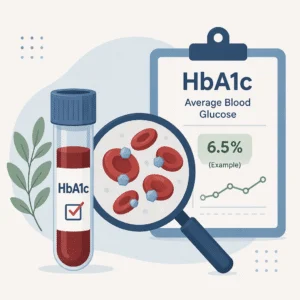
O exame de A1c indica a porcentagem da sua hemoglobina que está com açúcar ligado a ela. Como as hemácias vivem cerca de três meses, o valor reflete uma média, e não uma medição pontual. É por isso que uma leitura elevada após um fim de semana de excessos não caracteriza um A1c de pré-diabetes — e por isso o resultado é mais difícil de manipular do que uma medição isolada.
Os Centers for Disease Control and Prevention (CDC) definem a faixa de pré-diabetes entre 5,7% e 6,4%, sendo que 6,5% ou mais indica diabetes. Um check-up de rotina costuma incluir também a exame de glicemia em jejum e, nesse caso, a zona cinzenta vai de 100 a 125 mg/dL. Os dois exames podem apresentar resultados discordantes, o que é normal: eles medem coisas diferentes em períodos de tempo diferentes. Seu laudo também pode trazer um resultado do exame de HbA1c expresso em porcentagem, e alguns laboratórios fornecem uma tabela de conversão do A1c para que você veja a glicose média equivalente.
Por que o relógio do risco começa antes de 6,5%
O modelo mental mais comum trata 6,5% como um interruptor: abaixo desse valor, nada a fazer; acima, uma doença instalada. O quadro clínico, porém, é menos simples. Os vasos sanguíneos não consultam esse limiar. O dano acompanha o próprio nível de glicose, por isso o prejuízo se acumula gradualmente ao longo de toda a zona cinzenta, e não se ativa de repente em um ponto de corte.
Este é o conteúdo do comentário de agosto de 2026. Anderson observou que os médicos atendem esses pacientes com frequência e dispõem de ferramentas de rastreamento bem estabelecidas, mas a janela de prevenção muitas vezes é deixada passar. Sua posição prática é que um resultado na zona cinzenta deve motivar uma ação, e não uma anotação para repetir o exame no ano seguinte. Não existe medicamento aprovado especificamente para o pré-diabetes, mas as evidências sobre mudanças no estilo de vida são sólidas: perder de 5% a 7% do peso corporal pode retardar significativamente o surgimento do diabetes tipo 2.
Os números que definem a zona cinzenta
Os valores de referência variam um pouco entre laboratórios e países. A tabela abaixo mostra os valores mais usados nos Estados Unidos, para que você possa localizar o seu próprio resultado.
| Teste | Normal | Zona cinzenta | Faixa do diabetes |
|---|---|---|---|
| A1c | Abaixo de 5,7% | 5.7% a 6.4% | 6,5% ou acima |
| Glicemia em jejum | Abaixo de 100 mg/dL | De 100 a 125 mg/dL | 126 mg/dL ou acima |
| Teste de tolerância à glicose | Abaixo de 140 mg/dL | De 140 a 199 mg/dL | 200 mg/dL ou acima |
A posição dentro da faixa importa. Um resultado de 5,8% e um resultado de 6,4% recebem o mesmo rótulo, mas não têm o mesmo prognóstico. Vale a pena saber onde você está, não apenas em qual categoria você se encaixa.
Últimos avanços científicos
Três estudos recentes ajudam a responder a pergunta que a maioria das pessoas realmente faz: um resultado na zona cinzenta define alguma coisa?
O pré-diabetes não é uma via de mão única
Uma análise combinada de 2025 publicada no The Lancet Global Health acompanhou mais de 76.000 pessoas em 19 coortes de longa duração (uma coorte é um grupo monitorado ao longo do tempo). Em cerca de dez anos, aproximadamente uma em cada oito pessoas com pré-diabetes desenvolveu diabetes tipo 2, enquanto mais de um terço voltou a ter glicemia normal. No entanto, entre aquelas cuja glicemia de jejum estava no topo da zona cinzenta, a chance de retornar ao normal foi consideravelmente menor. O que isso significa para você: o rótulo sozinho não determina o seu caminho, mas o ponto em que você se encontra dentro da faixa muda as probabilidades.
Voltar ao normal reduz o risco pela metade, aproximadamente
Um estudo de 2025 publicado na Diabetologia reuniu dados de coortes nos Estados Unidos, na Austrália e na Ásia. Pessoas com pré-diabetes cuja glicemia voltou ao normal tiveram aproximadamente metade da chance de desenvolver diabetes tipo 2 mais tarde, em comparação com aquelas que permaneceram na zona cinzenta. A redução foi maior em pessoas que também tinham peso saudável, pressão arterial normal e não fumavam. O que isso significa para você: os outros valores que acompanham o seu resultado de glicose — e não apenas o resultado em si — ajudam a determinar o que acontece a seguir.
O número não é a conquista; a mudança por trás dele é
Um estudo de 2023 publicado no JAMA Network Open acompanhou quase 46.000 adultos com pré-diabetes por uma mediana de oito anos. O retorno dos valores à normalidade, por si só, não foi associado a uma maior longevidade. Entre as pessoas fisicamente ativas, porém, esse retorno esteve associado a um menor risco de morte durante o acompanhamento. Trata-se de um estudo observacional em uma única população, portanto indica uma associação, não uma prova de causalidade. O que isso significa para você: foque no hábito, não no número do exame, porque é o hábito que parece trazer o benefício.
O que fazer com um resultado na zona cinzenta
Uma hemoglobina glicada na faixa de pré-diabetes é uma informação, não um diagnóstico de doença. Três passos tornam esse resultado útil. Primeiro, confirme: um único valor pode variar, e os médicos normalmente repetem a medição antes de tirar conclusões. Segundo, olhe para o quadro completo, não apenas para o futuro. Como o risco é tanto cardiovascular quanto metabólico, a mesma consulta costuma incluir um perfil lipídico completo, e a pressão arterial também deve ser avaliada. Os médicos às vezes acrescentam um exame de sangue para insulina, e alguns laudos incluem um Pontuação de resistência à insulina HOMA-IR.
Terceiro, aja enquanto a janela está aberta. Perda de peso moderada e sustentada e atividade física regular continuam sendo as medidas com maior respaldo científico, e ambas foram o fio condutor nos estudos mencionados acima. O risco metabólico também está relacionado ao fígado, razão pela qual muitos leitores buscam informações em um guia sobre exames de sangue para gordura no fígado. Quem se deparar com um laudo desconhecido pode consultar resultados de exames de sangue alterados antes da próxima consulta.
Glossário
| Prazo | Definição |
|---|---|
| Pré-diabetes | Glicemia acima do normal, mas abaixo do nível usado para diagnosticar diabetes tipo 2. |
| A1c (HbA1c) | A proporção de hemoglobina com açúcar ligado, que reflete a média da glicemia nos últimos três meses aproximadamente. |
| Glicemia em jejum | Glicemia medida após várias horas sem comer, geralmente logo pela manhã. |
| Teste de tolerância à glicose | Exame que mede a glicemia duas horas após a ingestão de uma solução açucarada padronizada. |
| Resistência à insulina | Estado em que as células musculares, do tecido adiposo e do fígado respondem mal à insulina, elevando a glicemia. |
| Normoglicemia | Termo médico para glicemia dentro da faixa normal. |
| Estudo de coorte | Pesquisa que acompanha um grupo definido de pessoas ao longo do tempo para observar o que acontece com elas. |
| Risco cardiovascular | A probabilidade geral de desenvolver doenças do coração ou dos vasos sanguíneos, como infarto ou AVC. |
Perguntas frequentes
Uma hemoglobina glicada de 5,7% na faixa de pré-diabetes é grave?
Esse valor está bem no limite inferior da zona cinza, portanto é um sinal de atenção, não um alarme. Vale a pena confirmar com um novo exame e avaliar junto com sua glicemia em jejum, peso, pressão arterial e colesterol. A maioria das pessoas com 5,7% ainda tem bastante espaço para agir, e as pesquisas indicam que retornar à faixa normal é um resultado realista para quem está nessa extremidade da escala.
O pré-diabetes pode desaparecer?
Com frequência, sim. Em uma grande análise combinada, mais de um terço das pessoas com pré-diabetes voltou aos níveis normais de açúcar no sangue em cerca de dez anos — o que foi mais comum do que progredir para o diabetes. A perda de peso sustentada e a prática regular de atividade física foram os fatores mais consistentemente associados a essa reversão. A reversão é menos provável para quem está no topo da faixa.
O que é mais confiável, a hemoglobina glicada (HbA1c) ou a glicemia em jejum?
Nenhum dos dois substitui o outro. A HbA1c reflete aproximadamente três meses e não exige jejum, enquanto a glicemia em jejum registra um único momento pela manhã e é mais sensível a mudanças recentes. Os dois podem apresentar resultados discordantes, e os médicos os analisam em conjunto. Certas condições que afetam os glóbulos vermelhos, como a anemia, podem distorcer o resultado da HbA1c — o que é um dos motivos pelos quais um segundo exame costuma ser solicitado.
Preciso tomar medicamento para o pré-diabetes?
Nenhum medicamento é aprovado especificamente para tratar o pré-diabetes. O manejo padrão foca em peso, atividade física, alimentação e controle da pressão arterial e do colesterol. Alguns médicos discutem o uso de medicamentos para pessoas com risco particularmente elevado, mas essa é uma decisão individual tomada em consulta — não uma etapa de rotina — e não substitui as mudanças no estilo de vida.
Com que frequência um resultado na zona cinza deve ser reavaliado?
Repetir o exame anualmente é uma abordagem comum para quem tem um resultado confirmado na zona cinza, embora seu médico possa sugerir um intervalo diferente com base nos seus fatores de risco e em quão alto dentro da faixa está o seu valor. O objetivo de repetir o exame é observar a tendência ao longo do tempo, o que é mais informativo do que qualquer medição isolada.
O pré-diabetes realmente afeta o coração?
O risco cardiovascular parece se desenvolver já durante a fase de pré-diabetes, e não apenas a partir do diagnóstico de diabetes — esse foi o argumento enfatizado no comentário de agosto de 2026. É por isso que os médicos avaliam o colesterol e a pressão arterial junto com a glicose quando um resultado cai na zona cinza, em vez de tratá-lo como um achado puramente metabólico.
Fontes
- Centers for Disease Control and Prevention — Exame de HbA1c para Diabetes e Pré-Diabetes — cdc.gov
- National Institute of Diabetes and Digestive and Kidney Diseases (NIH) — Insulin Resistance and Prediabetes — niddk.nih.gov
- Anderson JE, Steinzor P — O papel da atenção primária na prevenção do diabetes — The American Journal of Managed Care, 21 de agosto de 2026 — ajmc.com
- Davoodian N, et al. — Transições do pré-diabetes para normoglicemia ou diabetes tipo 2 e fatores de risco associados: uma análise agrupada em nível individual de 19 estudos de coorte prospectivos — The Lancet Global Health, 2025 — consensus.app
- Davoodian N, et al. — Regressão do pré-diabetes para normoglicemia e o papel dos fatores de risco cardiometabólico no risco subsequente de desenvolver diabetes tipo 2 — Diabetologia, 2025 — consensus.app
- Cao Z, et al. — Risco de morte associado à reversão do pré-diabetes para normoglicemia e o papel dos fatores de risco modificáveis — JAMA Network Open, 2023 — consensus.app
Leitura complementar
- Exames de sangue para diabetes: glicose, HbA1c e insulina explicados
- Diabetes: sintomas, causas, diagnóstico e tratamento
- Como interpretar os resultados dos seus exames de sangue
- Índice de colesterol: o que ele realmente indica
- Lipoproteína a: entendendo seu risco cardiovascular
Entenda os resultados dos seus exames com o AI DiagMe.
Um resultado na zona cinzenta raramente aparece sozinho. Ele faz mais sentido quando analisado junto com sua glicemia em jejum, colesterol e pressão arterial, que juntos explicam muito mais do que qualquer valor isolado. O AI DiagMe traduz cada resultado em linguagem simples para que você consiga identificar o padrão e preparar perguntas mais precisas para a sua consulta. Ele ajuda você a entender seus exames; não faz diagnósticos e não substitui o seu médico.
Obtenha a interpretação dos seus resultados em minutos.