Erectile dysfunction causes are rarely confined to the bedroom: they often begin in the blood vessels, the metabolism, or the hormone system that supports an erection. Erectile dysfunction, or ED, means trouble getting or keeping an erection firm enough for sex on a recurring basis. Because a reliable erection depends on healthy arteries, intact nerves, and balanced hormones, persistent difficulty can be the first visible sign of a treatable problem elsewhere in the body. In this article you’ll learn what drives ED, how doctors group the underlying causes, which routine laboratory markers can help illuminate them, when symptoms should prompt a medical visit, and what recent research says about exercise, medication, and the heart connection.
What is erectile dysfunction?
An erection is a vascular event. Sexual arousal signals the arteries of the penis to widen, blood flows in, and a network of valves traps it to maintain rigidity. When any link in that chain falters, the result can be ED. The National Institute of Diabetes and Digestive and Kidney Diseases describes the typical pattern as getting an erection only sometimes, getting one that does not last long enough for sex, or being unable to get one at all. Occasional difficulty is normal and is usually tied to stress, fatigue, or alcohol. ED becomes a clinical concern when the problem is consistent over weeks or months, which is when identifying erectile dysfunction causes becomes useful.
The condition is common and becomes more frequent with age, although it is not an inevitable part of getting older. Cleveland Clinic notes that ED is the most common sexual problem men report to clinicians and that the chance of experiencing it rises alongside other health conditions. Importantly, ED is highly treatable once its driver is identified.
What causes erectile dysfunction?
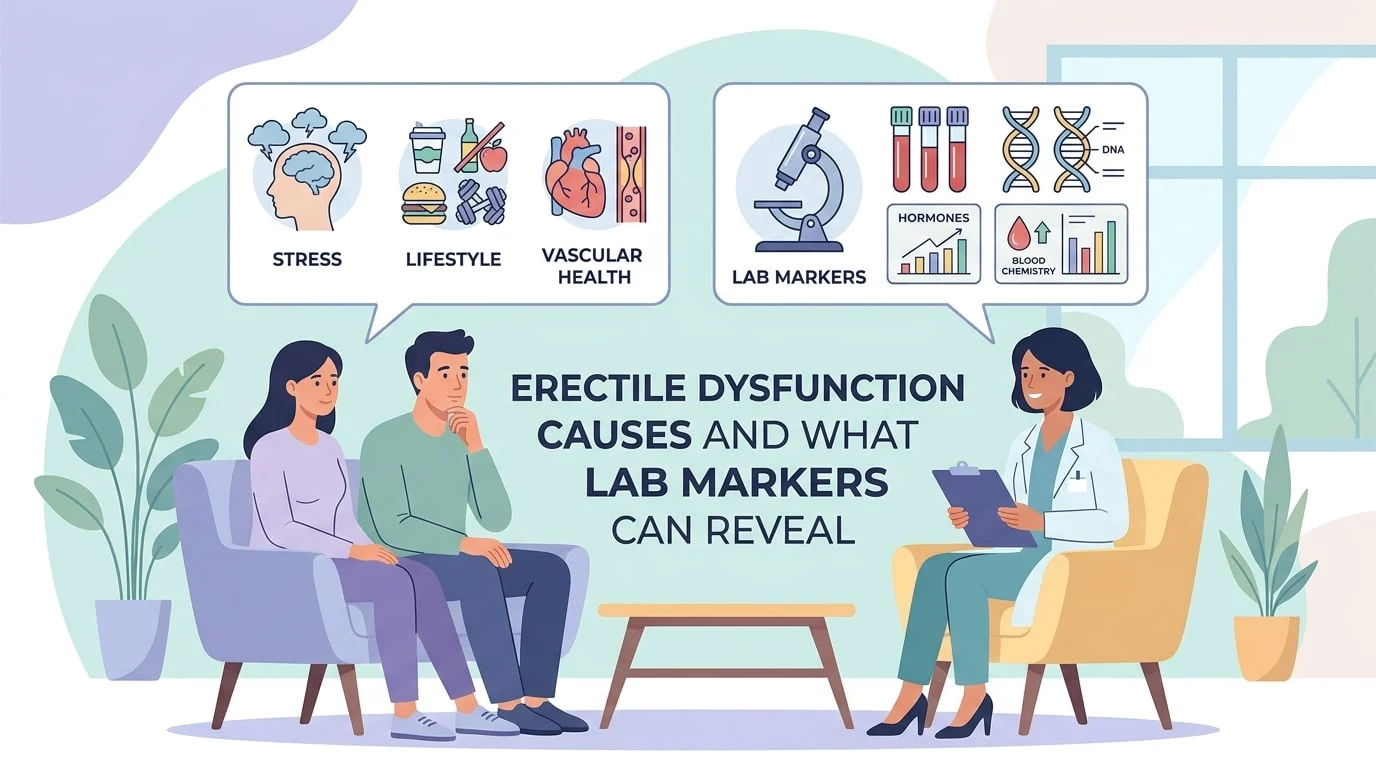
Clinicians usually sort the causes of ED into a few overlapping categories. Many men have more than one contributing factor at the same time, which is why a single fix does not always resolve the problem. Understanding the main erectile dysfunction causes is the first step toward effective treatment.
Vascular and cardiovascular causes
Problems with blood flow are the most common driver. Atherosclerosis, high blood pressure, and high cholesterol can narrow or stiffen the small arteries that feed the penis. Readers can review a detailed explainer on high blood pressure, and a companion page covers high cholesterol. Because those penile arteries are narrower than the coronary arteries of the heart, they often show trouble first. This is why ED is sometimes described as a window onto the circulatory system, and why a new erection problem can warrant a look at overall cardiovascular health.
Metabolic causes, including diabetes
Diabetes is one of the strongest risk factors for ED because sustained high blood sugar damages both blood vessels and the nerves that trigger an erection. Obesity and the cluster of findings known as metabolic syndrome compound the effect. A companion article reviews diabetes causes and symptoms, and men who want to understand their blood sugar picture can consult a guide to the diabetes blood test.
Hormonal causes
Testosterone supports sexual desire and helps blood vessels relax. Low testosterone can therefore reduce libido and contribute to ED, though it is a less common sole cause than vascular disease. Men with persistent symptoms can read about low testosterone in men. Thyroid imbalance, both underactive and overactive, can also affect erectile function. When hormones are suspected, a clinician may order a male hormone panel.
Neurological causes
Conditions that interrupt the nerve signals between the brain and the penis, such as multiple sclerosis, spinal cord injury, stroke, or damage from pelvic surgery, can cause ED even when blood flow is normal.
Medications and substances
ED is a recognized side effect of many common drugs, including certain antidepressants, blood pressure medicines, diuretics, and antihistamines, as well as alcohol, tobacco, and recreational drugs. The NIDDK lists these among the conditions and exposures that can trigger or worsen ED.
Psychological causes
Anxiety, depression, stress, and relationship strain can cause ED or amplify a physical cause. Mind and body usually act together, and performance anxiety can keep a problem going after its original trigger has resolved.
Erectile dysfunction causes and the lab markers that can help
ED is often the first noticeable clue to a systemic or metabolic condition that ordinary blood work can illuminate. Laboratory results do not diagnose ED on their own, but they help a clinician identify treatable contributors. The table below maps common erectile dysfunction causes to the routine markers a doctor may consider. It is educational and does not replace a medical evaluation.
| Underlying category | Examples | Relevant lab markers |
|---|---|---|
| Cardiovascular | Atherosclerosis, high blood pressure, high cholesterol | Total cholesterol, LDL, HDL, triglycerides, cholesterol ratio |
| Metabolic and diabetes | Type 2 diabetes, prediabetes, metabolic syndrome | Fasting glucose, HbA1c |
| Hormonal, low testosterone | Testosterone deficiency, hypogonadism | Total testosterone, free testosterone, SHBG |
| Thyroid | Hypothyroidism, hyperthyroidism | TSH, and free T4 if indicated |
| Medication related | Some antidepressants, antihypertensives, diuretics | No single marker; medication review with a clinician |
| Psychological | Anxiety, depression, stress | No single marker; clinical assessment |
The lipid panel is the standard way to assess cardiovascular risk. Readers can explore a primer on the cholesterol ratio, and a separate guide covers low HDL cholesterol. To gauge blood sugar, clinicians rely on glucose levels and on HbA1c, which reflects average glucose over roughly three months; an explainer covers the HbA1c normal range.
For hormones, useful reading includes an overview of testosterone as an essential blood marker, a guide to high testosterone in men, and an explainer on sex hormone-binding globulin. Thyroid status is checked through normal thyroid levels. Men curious about how these numbers fit together can also consult guidance on how to read blood test results.
When to see a doctor
ED is common and treatable, and a clinician can identify the cause and the right approach. Consider scheduling a visit if any of the following apply.
- Erection difficulty persists for several weeks or recurs regularly.
- You have diabetes, high blood pressure, high cholesterol, or known heart disease.
- ED appears together with chest discomfort, breathlessness, or reduced exercise tolerance, which warrants prompt medical attention.
- You notice low sex drive, fatigue, or mood changes that may point to a hormone issue.
- ED began after starting a new medication.
- The problem is straining your relationship or affecting your mental health.
Seek emergency care for an erection that is painful and lasts longer than a few hours, a condition called priapism that needs urgent treatment. Cleveland Clinic outlines this warning sign and the tests a provider may order, including a lipid panel, thyroid tests, and a testosterone test.
How is erectile dysfunction treated?
Treatment starts with the underlying cause, because addressing the specific erectile dysfunction causes at work gives the best results. Managing blood pressure, cholesterol, and blood sugar, losing excess weight, stopping smoking, and moderating alcohol can all improve erectile function and overall health. Oral medications known as PDE5 inhibitors, such as sildenafil and tadalafil, are a common first-line option. According to mechanism data curated in the ChEMBL database, sildenafil works by inhibiting the enzyme phosphodiesterase type 5A, which helps relax penile blood vessels and improve blood flow during arousal.
These medicines require a prescription and are not suitable for everyone, particularly men taking nitrates, so a clinician decides whether they are appropriate. Other options include vacuum devices, injectable medications, testosterone therapy when deficiency is confirmed, and surgical implants. MedlinePlus emphasizes that telling a doctor about ED matters because it can be a sign of treatable health problems.
Latest scientific advances
Research continues to refine how clinicians view ED, especially its link to the heart and the role of lifestyle. According to PubMed, a 2025 review in Sexual Medicine Reviews described ED as an independent risk factor and prognostic marker for cardiovascular disease, sharing mechanisms such as endothelial dysfunction, oxidative stress, and inflammation, and acting as a sentinel marker for otherwise silent coronary artery disease (An et al., 2025, DOI). A related editorial in JACC Advances framed ED as a potential early marker of cardiovascular disease (Cortese et al., 2023, DOI). These are narrative and review-level analyses rather than single experiments, but they reinforce a consistent message: an erection problem can be an early prompt to check cardiovascular health.
According to PubMed, a 2023 systematic review and meta-analysis of 11 randomized controlled trials in The Journal of Sexual Medicine found that aerobic exercise improved erectile function, with a mean gain of 2.8 points on the validated IIEF-EF scale and larger benefits in men with more severe ED (Khera et al., 2023, DOI).
Evidence for low-intensity shockwave therapy is less settled. A 2025 Cochrane systematic review of 21 randomized trials covering 1,357 men concluded that the therapy may produce only a small short-term improvement in erectile function that may not be clinically important, rating the certainty of evidence as low and noting that several studies were funded by device makers (Ergun et al., 2025, DOI). These findings describe group averages from research settings and are not treatment advice; decisions belong with a qualified clinician.
Glossary
| Term | Definition |
|---|---|
| Erectile dysfunction (ED) | Recurring difficulty getting or keeping an erection firm enough for sex. |
| Endothelial dysfunction | Impaired function of the inner lining of blood vessels, which limits their ability to widen and is shared by ED and heart disease. |
| Atherosclerosis | Buildup of plaque that narrows and stiffens arteries, reducing blood flow. |
| PDE5 inhibitor | A class of oral medicines, including sildenafil and tadalafil, that improve penile blood flow. |
| Testosterone | The main male sex hormone, which supports libido and helps blood vessels relax. |
| SHBG | Sex hormone-binding globulin, a protein that binds testosterone and influences how much is biologically available. |
| HbA1c | A blood marker reflecting average blood glucose over about three months. |
| Lipid panel | A blood test measuring cholesterol and triglycerides to assess cardiovascular risk. |
| IIEF-EF | A validated questionnaire score used in research to measure erectile function. |
| Priapism | A prolonged, often painful erection that is a medical emergency. |
Frequently asked questions
What causes erectile dysfunction?
Common erectile dysfunction causes include reduced blood flow, nerve problems, hormone imbalance, certain medications, psychological factors, or a combination. Vascular causes such as atherosclerosis, high blood pressure, and high cholesterol are the most common, and diabetes is a major contributor. The NIDDK groups these into diseases, medicines, emotional issues, and lifestyle behaviors.
Can erectile dysfunction be cured?
It depends on the cause. ED driven by lifestyle, medications, or a hormone or metabolic imbalance can often improve substantially or resolve once that factor is treated. Other cases are managed effectively with ongoing treatment. Cleveland Clinic describes ED as a very treatable condition with a good outlook.
Can ED be caused by low testosterone?
Low testosterone can reduce sexual desire and contribute to ED, but it is a less frequent sole cause than vascular disease. A clinician can check testosterone with a blood test and decide whether hormone-related treatment is appropriate. Symptoms such as low libido, fatigue, and mood changes may prompt that testing.
Is erectile dysfunction permanent?
Often it is not. Many men improve with treatment of the underlying cause, lifestyle changes, or medication. Some causes, such as significant nerve damage, may be longer lasting, but effective management options still exist. A medical evaluation clarifies the outlook in each individual case.
Can lifestyle changes help?
Yes. Regular aerobic exercise, weight management, a heart-healthy diet, stopping smoking, and limiting alcohol can improve erectile function and cardiovascular health. Randomized research summarized above found measurable benefit from aerobic exercise, particularly in men with more severe ED.
When should ED prompt a doctor visit?
See a clinician when ED is persistent, when it accompanies cardiovascular risk factors or symptoms, when it follows a new medication, or when it affects your wellbeing. MedlinePlus stresses that ED can signal underlying problems such as blocked blood vessels or nerve damage from diabetes, so it is worth raising with a doctor.
Sources
- National Institute of Diabetes and Digestive and Kidney Diseases. Symptoms and Causes of Erectile Dysfunction. niddk.nih.gov
- Cleveland Clinic. Erectile Dysfunction: Causes, Diagnosis and Treatment. my.clevelandclinic.org
- MedlinePlus, National Library of Medicine. Erectile Dysfunction. medlineplus.gov
- An J, Xiang B, Peng J, Li D. Understanding the erectile dysfunction-cardiovascular disease connection. Sexual Medicine Reviews, 2025. DOI
- Cortese F, Costantino MF, Luzi G. Can We Consider Erectile Dysfunction as an Early Marker of Cardiovascular Disease? JACC Advances, 2023. DOI
- Khera M, Bhattacharyya S, Miller LE. Effect of aerobic exercise on erectile function. The Journal of Sexual Medicine, 2023. DOI
- Ergun O, Kim K, Kim MH, et al. Low-intensity shockwave therapy for erectile dysfunction. Cochrane Database of Systematic Reviews, 2025. DOI
Further reading
- testosterone as an essential blood marker
- diabetes causes, symptoms, and treatments
- glucose levels explained
- the cholesterol ratio explained
- how to read blood test results
Understand your lab results with AI DiagMe
An ED workup often includes a handful of routine blood tests: testosterone to check male hormone levels, fasting glucose and HbA1c to assess blood sugar, a lipid panel to gauge cholesterol, and TSH to screen the thyroid. AI DiagMe turns those numbers into clear, plain-language explanations so you can see what each marker means in context. It is built to help you understand your results, not to diagnose a condition, and it does not replace your doctor.
Get your results interpreted in minutes