









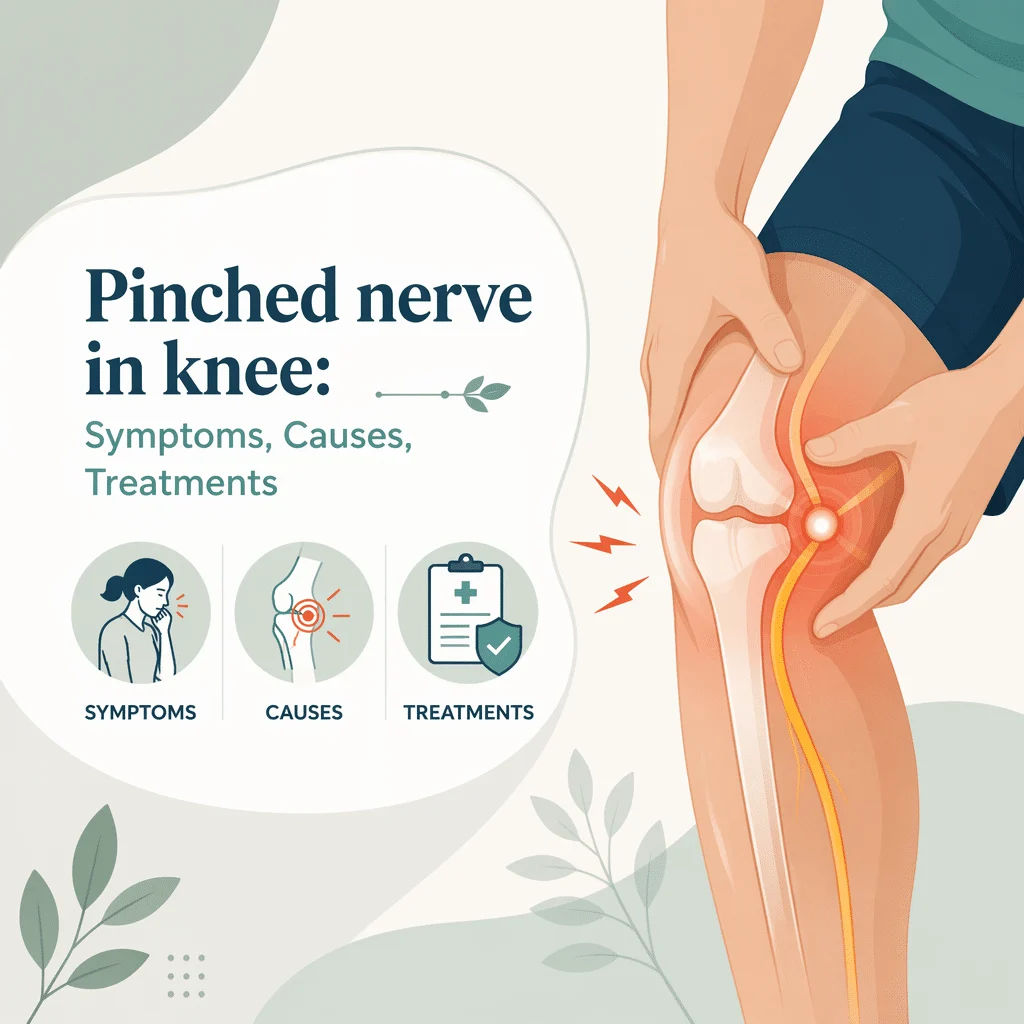
Een beknelde zenuw in de knie ontstaat wanneer omliggend weefsel druk uitoefent op een van de zenuwen rondom het gewricht — meestal de nervus peroneus communis aan de buitenkant van de knie. Die druk verstoort de signalen die de zenuw doorgeeft, wat kan leiden tot gevoelloosheid, tintelingen, brandende pijn of spierkracht in het onderbeen en de voet. Omdat deze zenuw vlak onder de huid ligt, ter hoogte van de bovenkant van het scheenbeen, is hij verrassend gemakkelijk samen te drukken: door uw benen over elkaar te slaan, lang te knielen of een strakke brace te dragen. In dit artikel leest u hoe een beknelde zenuw in de knie aanvoelt, wat de oorzaken zijn, hoe artsen de diagnose stellen en welke behandelingen helpen bij herstel. U leert ook de waarschuwingssignalen herkennen — zoals voetdrop — die aangeven dat u snel een arts moet raadplegen in plaats van af te wachten.
Wat is een beknelde zenuw in de knie?
Een zenuw lijkt een beetje op een elektrische kabel die berichten doorgeeft tussen je hersenen en je lichaam. Wanneer omliggend weefsel op die kabel drukt, raken de berichten verstoord. Dit is wat mensen bedoelen met een beknelde zenuw in de knie: aanhoudende druk op een zenuw nabij het gewricht die het gevoel, de beweging of beide verstoort. De druk kan afkomstig zijn van gezwollen zacht weefsel, een cyste, een botverandering, een blessure of simpelweg een ongemakkelijke houding die te lang is aangehouden.
De knie is een druk kruispunt waar verschillende zenuwen dicht langs bot- en gewrichtsstructuren lopen. Niet elke pijn rondom de knie is een zenuwprobleem, en het is nuttig om de andere veelvoorkomende oorzaken van kniepijn voordat je ervan uitgaat dat een zenuw betrokken is. Een beknelde zenuw valt op omdat die doorgaans gevoelloosheid, tintelingen of zwakte veroorzaakt, en niet alleen pijn.
De nervus peroneus communis (fibularis)
De zenuw die het vaakst wordt aangetast rond de knie is de nervus peroneus communis, ook wel de kuitbeenzenuw genoemd. Deze zenuw vertakt zich vanuit de grotere heupzenuw (nervus ischiadicus) en loopt langs de buitenkant van de knie, precies over een benig uitsteeksel bovenaan het scheenbeen, het zogenaamde fibulakopje. Op dat punt ligt de zenuw vlak onder de huid, met nauwelijks beschermend weefsel eromheen. Specialisten die fibulaire neuropathie bestuderen, wijzen erop dat deze oppervlakkige ligging precies de reden is waarom de zenuw zo kwetsbaar is voor druk, en dat verborgen cysten in de zenuw een steeds vaker herkende oorzaak zijn wanneer er geen duidelijke verklaring is. Deze zenuw stuurt de spieren aan die de voet optillen en zorgt voor gevoel aan de buitenkant van het onderbeen en de bovenkant van de voet, wat verklaart waarom problemen hier juist in die gebieden merkbaar zijn.
Veelvoorkomende symptomen van een beknelde zenuw in de knie
De klachten hangen af van hoeveel druk er op de zenuw staat en hoe lang dat al het geval is. Bij lichte gevallen kan er alleen een voorbijgaand tintelend gevoel optreden, terwijl sterkere of langdurige druk de spieren kan aantasten die de zenuw aanstuurt. De meeste mensen merken een of meer van het volgende:
- Gevoelloosheid of een tintelend, 'slapend' gevoel aan de buitenkant van het onderbeen en de bovenkant van de voet
- Scherpe, schietende of brandende pijn aan de buitenkant van de knie
- Een zwak of zwaar gevoel in de voet en enkel
- Moeite met het optillen van de voorzijde van de voet, ook wel voetheffersparese genoemd
- Struikelen, blijven haken met de tenen of een klappend geluid wanneer de voet de grond raakt tijdens het lopen
Voetval is het symptoom dat artsen het meeste zorgen baart. Het betekent dat de zenuw niet langer voldoende signalen stuurt naar de spieren die de voet optillen, waardoor de tenen over de grond slepen. Als de gevoelloosheid zich ook naar uw tenen uitbreidt, kunt u onze gids raadplegen over een gevoelloze grote teen. Zenuwirritatie iets lager kan ook leiden tot gevoelloosheid in de hiel.
Symptomen en wat ze kunnen betekenen
De onderstaande tabel koppelt veelvoorkomende klachten aan de structuren die mogelijk betrokken zijn. Het is een hulpmiddel om te begrijpen wat er speelt, geen manier om uzelf een diagnose te stellen.
| Symptoom | Waar het op zou kunnen wijzen |
|---|---|
| Tintelend gevoel aan de buitenkant van het onderbeen en de bovenkant van de voet | Druk op de nervus peroneus communis ter hoogte van het fibulakopje |
| Brandende of scherpe pijn rondom de buitenkant van de knie | Prikkeling van de peroneus-zenuw of het omliggende zachte weefsel |
| Moeite met optillen van de voet (voetval) | Significantere aantasting van de peroneus-zenuw die snel beoordeeld moet worden |
| Zwakte bij het naar buiten draaien van de voet | Verminderde motorische signalen via de peroneus-zenuw |
| Pijn die begint in de onderrug en uitstraalt naar het been | Een zenuwprobleem hoger in het been, zoals ischias, in plaats van in de knie zelf |
| Een zachte bult of zwelling achter de knie | Een bakercyste of ganglioncyste die op de zenuw drukt |
Wat veroorzaakt een beknelde zenuw in de knie?
De meeste oorzaken vallen in een paar categorieën: externe druk, letsel of een operatie, een zwelling zoals een cyste, en zenuwproblemen die eigenlijk elders beginnen. Vaak spelen meerdere factoren tegelijk een rol.
Druk en houding
Omdat de peroneuzenuw zo dicht aan de oppervlakte ligt, kan alledaagse druk al voldoende zijn om die te prikkelen. Gewoonlijk benen over elkaar slaan is een klassieke trigger: de bovenste knie drukt de zenuw van het onderste been tegen het bot. Lang knielen of hurken, een strakke gips of beenbeugel, strakke laarzen, of langdurige operaties en ziekenhuisopnames waarbij het been tegen een harde rand rust, kunnen de zenuw op dezelfde manier samendrukken.
Letsel, operatie en zwellingen
Een directe klap op de buitenkant van de knie, een breuk nabij het fibulahoofd, een ernstig verstuikte knie of een knieoperatie kunnen de zenuw kneuzen of uitrekken. Littekenweefsel dat na een blessure of operatie ontstaat, kan de zenuw ook vastzetten. Een veelvoorkomende verborgen oorzaak is een met vocht gevulde zak die op de zenuw drukt, zoals een bakercyste achter de knie of een ganglioncyste die zelfs in de zenuw zelf kan groeien. Deze zwellingen kunnen zich langzaam ontwikkelen, waardoor de klachten geleidelijk over weken of maanden toenemen.
Gewichtsverlies en uitstralende zenuwproblemen
De peroneuszenuw is normaal gesproken beschermd door een klein vetlaagje. Aanzienlijk gewichtsverlies kan dit laagje dunner maken en de zenuw kwetsbaarder voor druk, wat verklaart waarom sommige mensen klachten krijgen na flink afvallen. Diabetes vormt een extra risicofactor, omdat een hoge bloedsuiker zenuwen kwetsbaarder en gevoeliger voor beknelling kan maken; het is nuttig om de basisprincipes te begrijpen van diabetes en zenuwgezondheid. Tot slot begint wat aanvoelt als een zenuwprobleem in de knie soms in de onderrug. Wanneer een spinale zenuwwortel wordt samengedrukt, kunnen pijn en gevoelloosheid langs het been omlaag trekken en zich nabij de knie nestelen. Dat uitstralende patroon is ischias, en je kunt er meer over lezen in onze gids over ischias en ischias-zenuwpijn. Een beknelde zenuw in de knie is eigenlijk één voorbeeld van een bredere groep aandoeningen; voor het grotere geheel kun je ook ons overzicht bekijken van zenuwbeknellingsyndroom.
Hoe wordt een beknelde zenuw in de knie vastgesteld?
De diagnose begint meestal met een gesprek en een lichamelijk onderzoek. De arts vraagt wanneer de klachten zijn begonnen, wat ze beter of slechter maakt, en of je onlangs bent afgevallen, een blessure hebt gehad of langere tijd met je been tegen iets hards hebt gezeten. Tijdens het onderzoek kan de arts tikken op de fibulakop om te kijken of dat tintelingen oproept, de kracht testen van de spieren die je voet optillen, en de gevoeligheid aan het scheenbeen en de voet controleren.
Zenuwgeleidingsonderzoek en EMG
Om te bevestigen dat de peroneuszenuw de oorzaak is en om de beknelling te lokaliseren, gebruiken artsen vaak twee aanvullende onderzoeken. Een zenuwgeleidingsonderzoek meet hoe snel en krachtig elektrische signalen door de zenuw reizen, terwijl elektromyografie, ofwel EMG, nagaat hoe de spieren reageren. Samen kunnen ze aantonen of de zenuw bekneld is ter hoogte van de fibulakop en in welke mate, wat de behandeling helpt sturen.
Beeldvorming
Beeldvorming is gericht op het vinden van een lichamelijke oorzaak. Echografie en MRI kunnen een cyste, littekenweefsel of een gezwel aan het licht brengen dat op de zenuw drukt, en onderzoeken naar beknelling van zenuwen in de onderste ledematen beschrijven beide als waardevolle hulpmiddelen om de exacte locatie en oorzaak van het probleem te vinden. Röntgenfoto's kunnen worden toegevoegd om een breuk of botverandering nabij het gewricht te controleren. Als een algemene oorzaak zoals diabetes wordt vermoed, kan uw arts ook bloedonderzoek aanvragen om uw bloedglucosewaarden.
Behandelingsmogelijkheden bij een beknelde zenuw in de knie
De juiste behandeling hangt af van de oorzaak en van de mate waarin de zenuw is aangedaan. Goed nieuws: de meeste gevallen die ontstaan door eenvoudige druk verbeteren zodra de druk wordt weggenomen en de zenuw de tijd krijgt om te herstellen.
Conservatieve behandeling
De eerste behandeling is meestal niet-chirurgisch en is gericht op het ontlasten van de zenuw. Veelgebruikte stappen zijn:
- Het afleren van gewoonten die de zenuw samendrukken, zoals de benen over elkaar slaan of langdurig knielen
- De buitenkant van de knie opvullen of een gips of brace aanpassen die op het gebied drukt
- Fysiotherapie om de spieren rondom de enkel te versterken en het gewricht soepel te houden
- Een enkel-voetorthese, ook wel AFO genoemd, die de voet in een veilige stand houdt wanneer er sprake is van voetval
- Kortdurende pijnstilling en, in sommige gevallen, een corticosteroïdinjectie om ontstekingen te verminderen
- De onderliggende oorzaak behandelen, bijvoorbeeld een cyste draineren of de bloedsuiker onder controle brengen
Herstel van een zenuwletsel verloopt langzaam, omdat zenuwen geleidelijk genezen. Veel mensen verbeteren in de loop van enkele weken tot een paar maanden zodra de drukbron is weggenomen.
Wanneer ingrepen of een operatie helpen
Een operatie wordt overwogen wanneer er een duidelijke structurele oorzaak wordt gevonden, zoals een cyste of littekenweefsel, of wanneer de zenuw niet vanzelf herstelt en de spierzwakte aanhoudt. Een veelvoorkomende ingreep is decompressie, waarbij een chirurg de druk op de zenuw verlicht. Het verwijderen van een cyste die op de zenuw drukt, kan de klachten ook oplossen. Uw behandelteam weegt mee hoe lang de zenuw al bekneld is en hoe ernstig de zwakte is bij de beslissing of een operatie waarschijnlijk zal helpen.
Zelfzorg en preventie
Eenvoudige gewoonten beschermen de peroneuszenuw en verkleinen de kans op een terugkerend probleem. Probeer te vermijden dat u langdurig met gekruiste benen zit, en neem pauzes bij langdurig knielen of hurken. Als u een brace, gips of hoge laarzen draagt, zorg er dan voor dat deze niet in de buitenkant van de knie drukken. Sterke spieren rondom uw heupen, knieën en enkels helpen het gewricht en uw looppatroon te ondersteunen. Als u bewust gewicht verliest, streef dan naar een geleidelijk tempo en meld nieuwe tintelingen of zwakte in de voet aan uw arts. Voor mensen met diabetes is een stabiele bloedsuikerregeling een van de beste manieren om de zenuwen gezond te houden.
Wanneer moet je een arts raadplegen?
Veel milde gevallen verdwijnen met rust en kleine aanpassingen, maar sommige klachten vragen om snelle aandacht. Neem contact op met een zorgverlener als u een van de volgende verschijnselen opmerkt:
- Moeite met het optillen van de voorzijde van je voet, of je tenen die blijven haken en slepen tijdens het lopen
- Zwakte in de voet of enkel die erger wordt in plaats van beter
- Gevoelloosheid of tintelingen die zich uitbreiden, aanhouden of u belemmeren in dagelijkse activiteiten
- Klachten die optreden na een ernstig knieletsel, breuk of operatie
- Een groeiende zwelling achter of naast de knie
- Gevoelloosheid, tintelingen of zwakte in beide benen, of verlies van controle over blaas of darmen — dit vereist dringende medische zorg
Voetdrop en snel verslechterende zwakte zijn de duidelijkste signalen om snel gezien te worden. Hoe eerder de druk op een beknelde zenuw wordt verlicht, hoe groter de kans op volledig herstel.
Recente wetenschappelijke ontwikkelingen
Het onderzoek naar problemen met de peroneuszenuw ter hoogte van de knie is bescheiden maar gestaag, en een aantal recente bevindingen is de moeite waard om te kennen. Dit is wat ze in alledaagse termen betekenen.
Snel gewichtsverlies en nieuwere afslankmiddelen
Een studie uit 2025 van de Mayo Clinic, gepubliceerd in het tijdschrift Neurology, onderzocht mensen die GLP-1-receptoragonisten gebruikten — de nieuwere afslankmiddelen en diabetesmedicijnen zoals semaglutide. Daaruit bleek dat mensen die snel afvielen met deze middelen iets vaker een peroneusneuropathie ontwikkelden, dat wil zeggen een prikkeling van de zenuw die om de buitenkant van de knie loopt en de voet optilt. Wat dit voor jou betekent: afvallen is doorgaans goed voor je gewrichten, maar het vetlaagje dat deze zenuw beschermt kan dunner worden naarmate je afvalt, waardoor de zenuw kwetsbaarder wordt. Als je tijdens het afvallen nieuwe tintelingen of een zwakke voet opmerkt, bespreek dat dan met je arts in plaats van af te wachten.
Een minder ingrijpende optie tussen rust en een operatie
Een expertreview uit 2025 in het tijdschrift Muscle and Nerve beschreef een techniek genaamd echogeleide hydrodissectie, waarbij een arts echografie gebruikt om een kleine hoeveelheid vloeistof rondom een beknelde zenuw te brengen en deze los te maken van het weefsel dat erop drukt. De auteurs noemen peroneusneuropathie als een van de aandoeningen die in bepaalde gevallen op deze behandeling kunnen reageren. Wat dit voor jou betekent: voor sommige mensen bestaat er mogelijk een tussenstap tussen afwachten en een operatie, al is het bewijs nog beperkt en is dit niet voor iedereen geschikt.
Wanneer een operatie nodig is, speelt het tijdstip een belangrijke rol
Een studie uit 2024 in het tijdschrift Cureus volgde mensen die een operatie ondergingen om de druk op de nervus peroneus communis te verlichten. De meesten herstelden spierkracht, en degenen die eerder geopereerd werden en een lager lichaamsgewicht hadden, hadden meer kans om het normale gevoel terug te krijgen. Wat dit voor u betekent: als een zenuw maandenlang samengedrukt blijft, kan het herstel minder volledig zijn. Het is daarom de moeite waard om hardnekkige klachten vroeg te laten onderzoeken in plaats van ermee te blijven leven.
Woordenlijst met belangrijke termen
| Termijn | Definitie |
|---|---|
| Nervus peroneus communis (kuitbeenzenuw) | De zenuw die om de buitenkant van de knie loopt, gevoel geeft aan de buitenkant van het scheenbeen en de bovenkant van de voet, en helpt bij het optillen van de voet. |
| Fibulakop | Het benige uitsteeksel bovenaan het buitenste scheenbeen, waar de peroneuszenuw dicht aan de oppervlakte ligt. |
| Voetheffersverlamming | Moeite met het optillen van de voorzijde van de voet, waardoor de tenen over de grond slepen tijdens het lopen. |
| Zenuwgeleidingsonderzoek | Een test die meet hoe snel en sterk elektrische signalen langs een zenuw reizen. |
| Elektromyografie (EMG) | Een test die de elektrische activiteit van spieren registreert om te zien hoe goed de zenuw deze bereikt. |
| Bakercyste | Een met vocht gevulde zwelling achter de knie die druk kan uitoefenen op nabijgelegen zenuwen. |
| Ganglioncyste | Een met vocht gevulde zwelling die zich kan vormen nabij een gewricht of zelfs binnenin een zenuw. |
| Neuropathie | Een algemene term voor zenuwschade of zenuwirritatie die het gevoel of de beweging beïnvloedt. |
| Ischias | Pijn, gevoelloosheid of zwakte die vanuit een beknelde zenuw in de onderrug langs het been uitstraalt. |
| Decompressie | Een operatie waarbij de druk op een beknelde zenuw wordt verlicht. |
Veelgestelde vragen
Hoe weet ik of mijn kniepijn door een beknelde zenuw wordt veroorzaakt?
Pijn alleen komt voor bij veel knieproblemen, maar een beknelde zenuw veroorzaakt meestal ook gevoelloosheid, tintelingen of een 'slapend' gevoel aan de buitenkant van het scheenbeen en de bovenkant van de voet, en soms zwakte bij het optillen van de voet. Als uw belangrijkste klacht een diepe, zeurende pijn of stijfheid is zonder die zenuwsensaties, is een andere oorzaak zoals artritis of een bandletsel waarschijnlijker. Een arts kan dit uitzoeken met een lichamelijk onderzoek en, indien nodig, zenuwonderzoek.
Hoe lang duurt het voordat een beknelde zenuw in de knie herstelt?
Dat hangt af van de oorzaak en hoe sterk de zenuw is samengedrukt. Als het probleem ontstaat door eenvoudige druk die vroeg wordt weggenomen, merken veel mensen verbetering binnen enkele weken tot een paar maanden, omdat zenuwen langzaam herstellen. Als de zenuw langdurig sterk is samengedrukt of als er een cyste bij betrokken is, kan het herstel langer duren en is mogelijk een ingreep nodig. Aanhoudende of verslechterende zwakte moet worden onderzocht in plaats van afgewacht.
Wat zijn de beste thuisremedies voor zenuwpijn in de knie?
De meest nuttige stappen thuis zijn gericht op het wegnemen van druk op de zenuw: vermijd het over elkaar slaan van de benen, beperk langdurig knielen en bescherm de buitenkant van de knie met een kussen als die tegen harde oppervlakken rust. Voorzichtig stretchen, de enkel- en beenspieren actief houden en kortdurend gebruik van pijnstillers zonder recept kunnen de klachten verlichten. Thuiszorg werkt het best bij milde gevallen; als u voetheffersverlamming of uitbreidende gevoelloosheid heeft, raadpleeg dan een arts in plaats van op zelfzorg te vertrouwen.
Kan een beknelde zenuw in de knie ontstaan na een val of knievervanging?
Ja. Een directe val op de buitenkant van de knie, een breuk nabij de kop van het kuitbeen of de zwelling en houding bij een knieoperatie kunnen de peroneuszenuw allemaal irriteren of samendrukken. Klachten kunnen kort na het voorval optreden of geleidelijk ontstaan naarmate littekenweefsel zich vormt. Als na een blessure of operatie nieuwe gevoelloosheid of zwakte in de voet optreedt, vertel dit dan aan uw behandelteam zodat de zenuw kan worden onderzocht.
Is een beknelde zenuw in de knie hetzelfde als ischias?
Niet precies, hoewel ze vergelijkbaar kunnen aanvoelen. Een beknelde zenuw in de knie betreft een zenuw nabij het gewricht, meestal de nervus peroneus communis. Ischias begint hoger, wanneer een zenuwwortel in de onderrug wordt samengedrukt, waarna de pijn langs het been uitstraalt. Omdat de twee aandoeningen elkaar nabij de knie kunnen overlappen, onderzoeken artsen het volledige verloop van de zenuw om te bepalen waar de druk werkelijk zit.
Kan een beknelde zenuw in de knie blijvende schade veroorzaken?
De meeste gevallen herstellen, vooral wanneer de druk vroeg wordt weggenomen. Een zenuw die langdurig bekneld blijft, kan echter zijn functie verliezen, en het herstel kan dan trager of onvolledig zijn. Daarom moet toenemende spierzwakte of voetheffersverlamming snel worden onderzocht. Vroeg ingrijpen geeft de zenuw de beste kans om volledig te herstellen.
Bronnen
- Johns Hopkins Medicine — Peroneal Nerve Injury — hopkinsmedicine.org
- Mayo Clinic — Voetheffersverlamming: symptomen en oorzaken — mayoclinic.org
- MedlinePlus, U.S. National Library of Medicine — Disfunctie van de nervus peroneus communis — medlineplus.gov
- Benstead TJ — Fibular (peroneal) neuropathy — Handbook of Clinical Neurology, 2024 — doi.org/10.1016/B978-0-323-90108-6.00008-9
- Triplett JD, et al. — GLP-1RA-Associated Diabetic Lumbosacral Radiculoplexus and Common Fibular Neuropathies: A Case-Control Evaluation — Neurology, 2025 — doi.org/10.1212/WNL.0000000000213916
- King JD, et al. — Outcomes of Common Peroneal Nerve Decompression — Cureus, 2024 — doi.org/10.7759/cureus.68526
- Colorado B, et al. — Ultrasound-Guided Nerve Hydrodissection for Peripheral Entrapment Neuropathies — Muscle and Nerve, 2025 — doi.org/10.1002/mus.28471
- Kumar S, et al. — Nerve entrapment syndromes of the lower limb: a pictorial review — Insights into Imaging, 2023 — doi.org/10.1186/s13244-023-01514-6
Verder lezen
- Ischias: symptomen, oorzaken en verlichting
- Zenuwbeklemming uitgelegd
- Kniepijn: oorzaken en behandelingen
- Beknelde zenuw bij het schouderblad
- Diabetes: oorzaken, symptomen en behandelingen
Begrijp uw laboratoriumresultaten met AI DiagMe.
Een beknelde zenuw in de knie is meestal een mechanisch probleem, maar gevoelloosheid en tintelingen kunnen ook verband houden met aandoeningen die zichtbaar zijn in uw bloedonderzoek, zoals diabetes of een vitaminegebrek. AI DiagMe helpt u tests te begrijpen zoals bloedglucosewaarden, uw gemiddelde bloedsuiker over drie maanden, laag vitamine B12-gehalte, en een volledig bloedbeeld in begrijpelijke taal. Het is bedoeld om u te helpen uw uitslagen te begrijpen, niet om een diagnose te stellen of uw arts te vervangen, zodat u betere vragen kunt stellen bij uw volgende bezoek.
Ontvang binnen enkele minuten een interpretatie van uw resultaten.