




































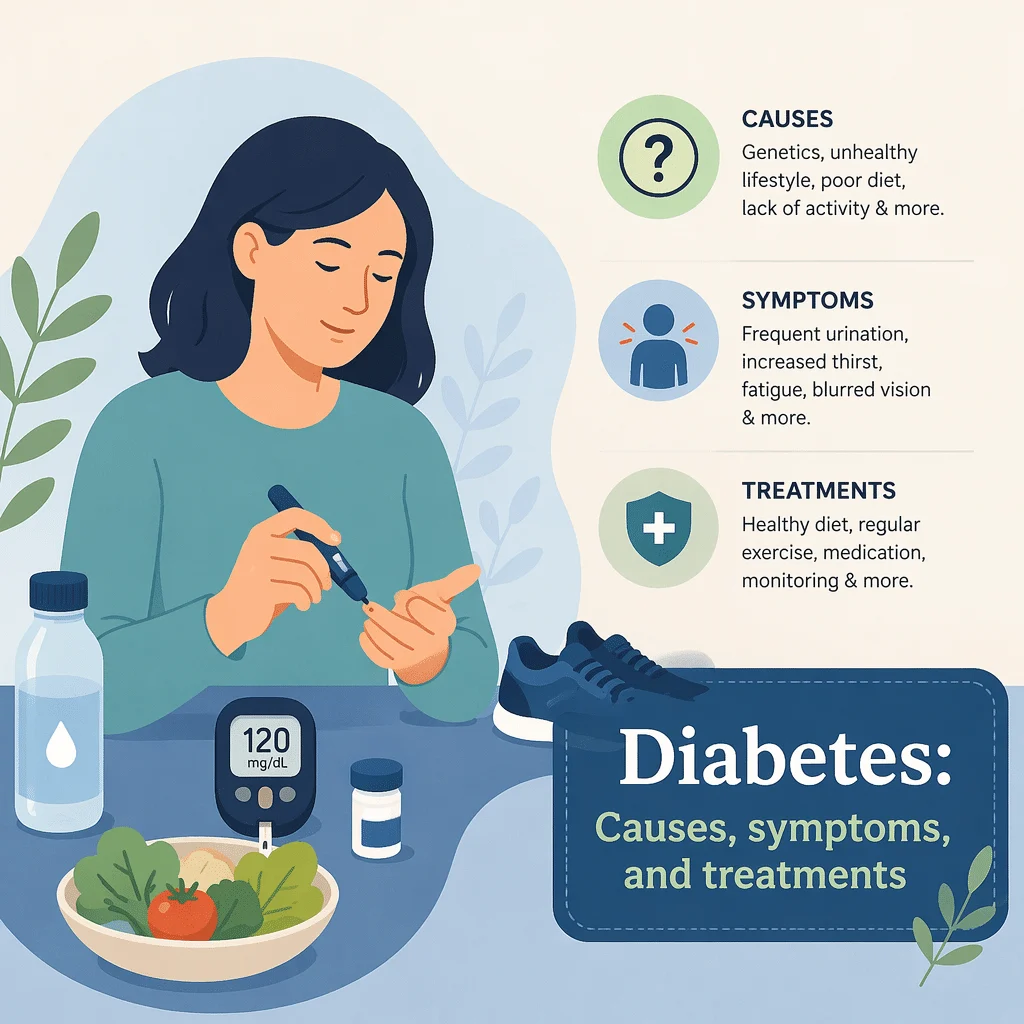
Diabetes is een chronische aandoening die verandert hoe uw lichaam voedsel omzet in energie, en treft inmiddels honderden miljoenen mensen wereldwijd. Bij diabetes stapelt glucose (bloedsuiker) zich op in uw bloedbaan, omdat uw lichaam onvoldoende insuline aanmaakt of deze niet goed kan gebruiken. Na verloop van jaren kan een ongecontroleerde hoge bloedsuiker stilletjes de hartfunctie, nieren, ogen en zenuwen belasten. Het geruststellende is dat diabetes meetbaar, opvolgbaar en goed beheersbaar is met de juiste informatie en bloedonderzoeken. In dit artikel leest u wat diabetes is, welke hoofdtypen er zijn, wat de oorzaken en symptomen zijn, hoe de diagnose wordt gesteld met bloedtests, welke behandelingen de bloedsuiker binnen de normale waarden houden, en welke nieuwste wetenschappelijke ontwikkelingen de zorg van vandaag vormgeven.
Wat is diabetes?
Diabetes, voluit diabetes mellitus, is een groep aandoeningen die worden gekenmerkt door aanhoudend hoge bloedsuiker. Je lichaam breekt voedsel af tot glucose, dat via het bloed door je lichaam reist en je cellen van energie voorziet. Een hormoon dat insuline heet, aangemaakt door de alvleesklier, werkt als een sleutel die glucose uit het bloed naar de cellen laat stromen. Bij diabetes werkt dat systeem niet goed: de alvleesklier maakt te weinig insuline, of het lichaam reageert er niet meer goed op. Glucose blijft dan in het bloed zitten in plaats van je cellen te voeden.
Artsen onderscheiden een aantal hoofdtypen diabetes, en dat onderscheid is bepalend voor de behandeling.
Type 1 diabetes
Diabetes type 1 is een auto-immuunziekte, wat betekent dat het immuunsysteem per vergissing de insulineproducerende cellen in de alvleesklier aanvalt en vernietigt. Mensen met type 1 maken weinig of geen insuline aan en hebben dagelijks insuline nodig om te overleven. De ziekte ontstaat vaak in de kindertijd of vroege volwassenheid, maar kan op elke leeftijd beginnen. Type 1 is minder vaak voor dan type 2.
Type 2 diabetes
Diabetes type 2 is verreweg de meest voorkomende vorm. Hierbij maakt het lichaam nog wel insuline aan, in ieder geval in het begin, maar reageren de cellen er slecht op — een probleem dat insulineresistentie heet. Na verloop van tijd kan de alvleesklier de vraag niet meer bijhouden en stijgt de bloedsuiker. Type 2 ontwikkelt zich geleidelijk en hangt nauw samen met overgewicht, weinig beweging en erfelijke aanleg. Het verschil tussen type 1 en type 2 diabetes begrijpen helpt verklaren waarom de behandelingen van elkaar verschillen.
Zwangerschapsdiabetes
Zwangerschapsdiabetes ontstaat tijdens de zwangerschap bij mensen die daarvoor geen diabetes hadden. Zwangerschapshormonen kunnen de insulineresistentie verhogen, waardoor de bloedsuiker stijgt. Na de bevalling verdwijnt het meestal vanzelf, maar het vergroot het risico op diabetes type 2 later in het leven — zowel voor de moeder als voor het kind — dus vervolgonderzoek is belangrijk.
Prediabetes
Prediabetes betekent dat de bloedsuiker hoger is dan normaal, maar nog niet hoog genoeg voor de diagnose diabetes. Het is een waarschuwingsfase, geen eindvonnis: met aanpassingen in leefstijl kunnen veel mensen met prediabetes diabetes type 2 voorkomen of uitstellen. Omdat prediabetes zelden klachten geeft, zijn routinematige bloedtests de belangrijkste manier om het op te sporen.
Wat veroorzaakt diabetes en wie loopt risico?
De oorzaken van diabetes hangen af van het type. Type 1 ontstaat door een auto-immuunproces dat onderzoekers koppelen aan een combinatie van erfelijke en omgevingsfactoren; voeding of leefstijl spelen daarbij geen rol. Type 2 en zwangerschapsdiabetes worden voornamelijk veroorzaakt door insulineresistentie, die wordt beïnvloed door erfelijke aanleg, lichaamsgewicht en dagelijkse gewoonten.
Verschillende factoren verhogen het risico op diabetes type 2:
- Diabetes in de familie, bij een ouder of broer of zus
- Overgewicht, vooral rond de buik
- Weinig lichaamsbeweging
- Leeftijd van 35 jaar en ouder, hoewel het ook steeds vaker voorkomt bij jongeren
- Hoge bloeddruk of afwijkende cholesterolwaarden
- Een voorgeschiedenis van zwangerschapsdiabetes of polycysteus-ovariumsyndroom
- Bepaalde etnische achtergronden met een hoger gedocumenteerd risico, volgens de CDC
Een veelgehoorde misvatting is dat suiker eten rechtstreeks diabetes veroorzaakt. Suiker op zich veroorzaakt geen type 1, en hoewel een voeding met veel suikerhoudende dranken en calorieën bijdraagt aan gewichtstoename en een hoger risico op type 2, ligt het eigenlijke probleem in de manier waarop het lichaam alle koolhydraten verwerkt — niet suiker alleen.
Wat zijn de symptomen en waarschuwingssignalen?
De symptomen van diabetes ontstaan doordat de bloedsuiker te lang te hoog blijft. Bij type 1 kunnen ze snel optreden, binnen dagen of weken; bij type 2 ontwikkelen ze zich zo geleidelijk dat veel mensen jarenlang niets merken. Het herkennen van de vroege waarschuwingssignalen van diabetes kan leiden tot eerder testen en behandelen.
- Toegenomen dorst en een droge mond
- Vaak moeten plassen, ook 's nachts
- Onverklaarbaar gewichtsverlies, vaker kenmerkend voor type 1
- Aanhoudende honger en vermoeidheid
- Wazig zicht
- Langzaam genezende wonden of frequente infecties
- Tintelingen of gevoelloosheid in de handen of voeten
Omdat deze signalen kunnen lijken op gewone vermoeidheid, is de duidelijkste volgende stap om uw bloedglucosewaarden.
Wanneer moet je een arts raadplegen?
Maak een afspraak bij de dokter als u aanhoudende dorst, frequent plassen, onverklaarbaar gewichtsverlies of langdurige vermoeidheid opmerkt. Zoek direct spoedhulp bij waarschuwingssignalen van gevaarlijk hoge bloedsuiker, zoals braken, diep of snel ademen, fruitige adem, verwardheid of ernstige slaperigheid. Dit kunnen tekenen zijn van diabetische ketoacidose, een medische noodsituatie die onmiddellijke behandeling vereist.
Hoe wordt diabetes vastgesteld?
Diabetes wordt vastgesteld met bloedonderzoek dat meet hoeveel glucose er in uw bloed zit — niet op basis van symptomen alleen. Tijdens een routinecontrole, of nadat er waarschuwingssignalen zijn opgetreden, kan uw arts bloedtesten bij diabetes. De meeste tests zijn eenvoudige bloedafnames. Bij sommige is ook vasten voor een bloedtestvereist. Nuchter zijn zorgt ervoor dat de uitslag uw basiswaarde weergeeft en niet een recente maaltijd.
De vier standaardtests zijn de HbA1c (ook wel A1C genoemd), die de gemiddelde bloedsuiker over ongeveer drie maanden weergeeft; de nuchtere bloedglucosetest, afgenomen na minimaal acht uur zonder eten; de orale glucosetolerantietest, waarbij de bloedsuiker twee uur na het drinken van een suikerhoudende drank wordt gemeten; en de willekeurige bloedglucosetest, die op elk moment kan worden afgenomen wanneer er symptomen aanwezig zijn. Artsen bevestigen een diagnose doorgaans met een herhalingstest op een andere dag.
De American Diabetes Association en het National Institute of Diabetes and Digestive and Kidney Diseases definiëren diabetes en prediabetes aan de hand van de onderstaande grenswaarden.
| Test | Normaal | Prediabetes | Diabetes |
|---|---|---|---|
| A1C (HbA1c) | Onder 5,7% | 5.7% tot 6.4% | 6.5% of hoger |
| Nuchtere bloedglucose | Onder 100 mg/dL | 100 tot 125 mg/dL | 126 mg/dL of hoger |
| Orale glucosetolerantietest (2 uur) | Onder 140 mg/dL | 140 tot 199 mg/dL | 200 mg/dL of hoger |
| Willekeurige plasmaglucosewaarde | Niet alleen gebruikt | Niet alleen gebruikt | 200 mg/dL of hoger met klachten |
Hoe lees je labresultaten bij diabetes
Een diagnose is slechts het begin. Goed leven met diabetes betekent dat je verschillende waarden in de gaten houdt die laten zien hoe de bloedsuiker zich ontwikkelt en of dit andere organen beïnvloedt. De tabel hieronder legt de meest voorkomende waarden in begrijpelijke taal uit. Om ze samen te bekijken in plaats van afzonderlijk, laden veel mensen hun uitslagen op in een tool die labresultaten in hun geheel leest.
| Marker | Wat het meet | Waarom het belangrijk is bij diabetes |
|---|---|---|
| HbA1c | Gemiddelde bloedsuikerspiegel over een periode van ongeveer drie maanden | Bevestigt de diagnose en volgt de langetermijnregulatie |
| Nuchtere bloedglucose | Bloedsuiker na acht of meer uur zonder eten | Een veelgebruikte eerste screeningstest |
| C-peptide | Hoeveel insuline de alvleesklier nog aanmaakt | Helpt onderscheid te maken tussen type 1 en type 2 |
| Albumine-creatinineratio in urine | Kleine hoeveelheden eiwit die in de urine lekken | Een vroeg teken van diabetische nierschade |
| eGFR en creatinine | Hoe goed de nieren afvalstoffen filteren | Volgt de nierfunctie in de loop van de tijd |
| Lipidenpanel | Cholesterol en triglyceriden | Geeft een beeld van het risico op hartziekten, dat bij diabetes vaak verhoogd is |
Als de werking van je alvleesklier in twijfel wordt getrokken, laten artsen soms een C-peptide testbepalen. Als de nieren extra aandacht nodig hebben, volgt je behandelteam een nierfunctiepanel. Om het hartrisico te beoordelen, laten veel artsen ook een volledig lipidenprofielbepalen. Bij veel controles wordt ook een uitgebreid metabolisch panelafgenomen, waarbij glucose samen met nier- en leverwaarden in één bloedafname wordt gemeten.
Behandeling en dagelijks beheer
De behandeling is erop gericht de bloedsuiker binnen een gezond bereik te houden, klachten te verlichten en complicaties te voorkomen. Het plan hangt af van het type diabetes, maar in de meeste gevallen zijn er drie pijlers: leefstijl, medicatie en, voor sommigen, insuline.
Leefstijl als basis
Bij type 2 diabetes en prediabetes doen voedingskeuzes en beweging veel van het werk. Een gevarieerd voedingspatroon met minder geraffineerde koolhydraten en suikerhoudende dranken, regelmatige lichaamsbeweging, voldoende slaap en een stabiel gewicht verbeteren allemaal hoe het lichaam insuline gebruikt. Zelfs een bescheiden, volgehouden gewichtsverlies kan de bloedsuiker merkbaar verlagen.
Medicijnen
Wanneer leefstijl alleen niet voldoende is, helpen verschillende soorten medicijnen. Metformine is vaak het eerste orale geneesmiddel bij type 2 diabetes. Nieuwere opties, die in het gedeelte over ontwikkelingen hieronder worden besproken, verlagen zowel de bloedsuiker als het gewicht. Deze medicijnen worden afgestemd op jouw bloedsuikerpatroon, andere gezondheidsproblemen en persoonlijke doelen, dus de juiste keuze verschilt van persoon tot persoon.
Insulinetherapie
Mensen met diabetes type 1 hebben levenslang insuline nodig, omdat hun lichaam dit niet meer aanmaakt. Sommige mensen met type 2 gebruiken ook insuline wanneer andere behandelingen de bloedsuiker niet voldoende onder controle kunnen houden. Insuline wordt toegediend via een injectie of een pomp, en de doses worden aangepast op basis van voeding, lichaamsbeweging en glucosewaarden.
Complicaties en controle
De reden waarom bloedsuikerregulatie zo belangrijk is, is dat langdurig verhoogde glucose bloedvaten en zenuwen beschadigt. Veelvoorkomende complicaties zijn hart- en vaatziekten, nierziekte, zenuwschade (ook wel neuropathie genoemd) en oogschade die retinopathie heet en het gezichtsvermogen kan bedreigen. Voetproblemen en slecht helende wonden komen ook vaker voor.
Goed nieuws: zorgvuldige controle verlaagt deze risico's aanzienlijk. Naast het thuis meten van uw glucosewaarden onderzoekt uw zorgteam de ogen en voeten, houdt het nierfunctiemarkers in de gaten en volgt het uw hemoglobine A1c-waarden. Nauwkeurige uitslagen vereisen vaak dat u nuchter bent vóór een bloedtest, dus volg de instructies van uw laboratorium. Vroegtijdig veranderingen opsporen geeft u en uw zorgteam de tijd om het plan bij te stellen voordat kleine problemen grote worden.
Leven met diabetes
Een diagnose is een startpunt, niet het einde van een vol leven. Miljoenen mensen leven al tientallen jaren met deze aandoening terwijl ze werken, reizen en sporten. De sleutels zijn een vaste routine, inzicht in uw eigen waarden en een ondersteunend zorgteam. Leren uw uitslagen te begrijpen zet angst om in actie: als u weet wat een stijgend A1C of een bloedsuiker buiten het normale bereik betekent, kunt u rustig en tijdig reageren. Ook uw emotionele gezondheid is belangrijk, want stress en uitputting kunnen de bloedsuiker en motivatie beïnvloeden.
Nieuwste wetenschappelijke ontwikkelingen bij diabetes
De diabeteszorg is de afgelopen jaren snel veranderd. Hier zijn vijf ontwikkelingen van 2023 tot 2026, in begrijpelijke taal uitgelegd, met wat elk ervan voor u kan betekenen.
Wekelijkse injecties die bloedsuiker en gewicht verlagen
Een groep geneesmiddelen die GLP-1-receptoragonisten worden genoemd (ze bootsen een darmhormoon na dat helpt de bloedsuiker en eetlust te reguleren) kunnen zowel de bloedsuiker verlagen als veel mensen helpen af te vallen. Volgens PubMed bleek uit een grote analyse van 76 onderzoeken dat deze middelen de langetermijnsuikermarker betrouwbaar verlagen, en een dubbelwerkende variant genaamd tirzepatide, die tegelijkertijd twee hormoonroutes activeert, verlaagde deze het meest, zoals gerapporteerd door Yao en collega's (DOI) en bevestigd in een directe vergelijkende analyse door Karagiannis en collega's (DOI). Wat dit voor u betekent: voor veel mensen met diabetes type 2 kan één wekelijkse injectie nu zowel de bloedsuiker als het gewicht aanpakken, maar of dit bij u past, bespreekt u het beste met uw arts.
Medicijnen die ook het hart en de nieren beschermen
Sommige van deze medicijnen doen meer dan alleen de bloedsuiker verlagen. Op basis van artikelen uit PubMed bleek uit een niergerichte studie dat semaglutide het risico op ernstige nier- en hartproblemen verminderde bij mensen met diabetes type 2 en chronische nierziekte, zoals gerapporteerd door Mann en collega's (DOI). Wat dit voor u betekent: bij de keuze van een behandeling kan bescherming van de organen nu meewegen, niet alleen de bloedsuikerwaarden — zeker als uw nieren al onder druk staan.
Continue glucosemeters helpen ook bij diabetes type 2, niet alleen type 1
Een continue glucosemeter is een kleine draagbare sensor die dag en nacht de glucosewaarde meet, zodat u trends ziet in plaats van losse momentopnames. Volgens PubMed bleek uit een overzicht van studies bij diabetes type 2 dat deze sensoren de regulatie bescheiden verbeterden en de 'tijd in bereik' verhoogden — dat wil zeggen het deel van de dag dat de glucosewaarde binnen een gezond bereik blijft — zoals gerapporteerd door Jancev en collega's (DOI). Wat dit voor u betekent: een sensor kan patronen aan het licht brengen die een paar vingerprikmetingen missen, zodat u en uw arts voeding, beweging en medicatie beter kunnen afstemmen.
Aanzienlijk gewichtsverlies kan diabetes type 2 in remissie brengen
Remissie betekent dat de bloedsuiker terugkeert naar een niet-diabetisch niveau zonder bloedsuikerverlagende medicijnen. Op basis van artikelen uit PubMed vond een overzichtsstudie een duidelijk dosis-responsverband: hoe meer gewicht mensen verloren, hoe groter de kans dat hun diabetes type 2 in remissie ging, zoals gerapporteerd door Kanbour en collega's (DOI). Aanvullend onderzoek legt uit dat diabetes type 2 nauw samenhangt met vet dat is opgeslagen in de lever en de alvleesklier, wat door gewichtsverlies kan worden teruggedraaid, zoals beschreven door Taylor (DOI). Wat dit voor u betekent: voor sommige mensen is diabetes type 2 niet per se blijvend, al is remissie niet gegarandeerd en kan die verdwijnen als het gewicht terugkeert — elk plan dient daarom onder begeleiding van een arts te worden uitgevoerd.
Diabetes type 1 uitstellen voordat het begint
Voor diabetes type 1 is preventie nu in zicht. Volgens PubMed kan een immuunbehandeling genaamd teplizumab het ontstaan van type 1 uitstellen bij mensen met een hoog risico die worden geïdentificeerd via bloedtests op auto-antilichamen — vroege immuunmarkers — en screeningsprogramma's worden uitgebreid, zoals beoordeeld door Ziegler en collega's (DOI). Wat dit voor u betekent: familieleden van iemand met type 1 kunnen baat hebben bij vroege screening, omdat het eerder ontdekken van risico de deur opent naar nieuwere, ziektemodificerende behandelopties.
Glossarium
| Termijn | Definitie |
|---|---|
| Insuline | Een hormoon van de alvleesklier dat glucose vanuit het bloed de cellen in laat gaan voor energie. |
| Insulineresistentie | Een toestand waarbij cellen slecht reageren op insuline, een kernkenmerk van type 2 diabetes. |
| HbA1c (A1C) | Een bloedtest die de gemiddelde bloedsuiker over ongeveer drie maanden weergeeft. |
| Nuchtere bloedglucose | Bloedsuiker gemeten na minimaal acht uur zonder eten. |
| Orale glucosetolerantietest | Een test die de bloedsuiker meet twee uur na het drinken van een suikerhoudende drank. |
| Prediabetes | Bloedsuiker die hoger is dan normaal, maar nog niet in het diabetesbereik valt. |
| C-peptide | Een stof die samen met insuline wordt afgegeven en aangeeft hoeveel insuline het lichaam aanmaakt. |
| Continue glucosemeter | Een draagbare sensor die de glucosewaarden continu meet, dag en nacht. |
| Diabetische ketoacidose | Een gevaarlijke complicatie van een zeer hoge bloedsuiker die spoedeisende zorg vereist. |
Veelgestelde vragen
Wat zijn de vroege waarschuwingssignalen van diabetes?
De meest voorkomende vroege tekenen zijn toegenomen dorst, frequent urineren, vermoeidheid, wazig zien en langzaam genezende wondjes. Bij type 1 kunnen ze binnen dagen of weken optreden, terwijl ze bij type 2 vaak zo geleidelijk ontstaan dat mensen ze over het hoofd zien. Omdat de symptomen gemakkelijk te missen zijn, is een bloedtest de meest betrouwbare manier om zekerheid te krijgen. Als deze tekenen herkenbaar klinken, vraag dan uw arts naar screening.
Wat is een normale bloedsuikerspiegel?
Voor de meeste volwassenen zonder diabetes geldt een nuchtere bloedsuiker onder de 100 mg/dL als normaal, en een HbA1c onder de 5,7% valt binnen het normale bereik. Waarden tussen die normale grenswaarden en de diabetesdrempels vallen in het prediabetesbereik. De streefwaarden kunnen verschillen voor mensen die al diabetes hebben, dus bespreek uw persoonlijke doelen met uw behandelteam in plaats van uzelf te vergelijken met één enkel getal.
Wat is het verschil tussen type 1 en type 2 diabetes?
Bij type 1 diabetes vernietigt het immuunsysteem de insulineproducerende cellen, waardoor het lichaam weinig of geen insuline aanmaakt en dagelijks insuline nodig heeft. Bij type 2 diabetes maakt het lichaam nog wel insuline aan, maar gebruikt het die slecht; dit type hangt sterk samen met gewicht, lichaamsbeweging en erfelijke aanleg. Type 1 begint meestal op jongere leeftijd en verloopt snel, terwijl type 2 langzaam ontstaat, vaak op volwassen leeftijd. Een C-peptidetest kan artsen helpen de twee typen van elkaar te onderscheiden.
Kan type 2 diabetes worden teruggedraaid of genezen?
Er is geen permanente genezing, maar diabetes type 2 kan in remissie gaan, wat betekent dat de bloedsuiker terugkeert naar een niet-diabetisch niveau zonder bloedsuikerverlagende medicatie. Aanzienlijk en aanhoudend gewichtsverlies vergroot de kans op remissie, en hoe meer gewicht er verloren gaat, hoe groter die kans. Remissie is niet gegarandeerd en kan verdwijnen als het gewicht terugkeert, dus elke aanpak moet worden gepland en begeleid door een zorgverlener.
Veroorzaakt het eten van te veel suiker diabetes?
Suiker alleen veroorzaakt niet rechtstreeks diabetes. Type 1 is een auto-immuunziekte die niets met voeding te maken heeft. Bij type 2 draagt een voeding met veel suikerhoudende dranken en te veel calorieën bij aan gewichtstoename en een hoger risico, maar de kern van het probleem is hoe het lichaam omgaat met alle koolhydraten en insuline. Een evenwichtige voeding en regelmatige beweging verlagen het risico meer dan alleen suiker vermijden.
Welke bloedtests worden gebruikt om diabetes vast te stellen?
Artsen gebruiken voornamelijk vier tests: de HbA1c, de nuchtere bloedglucosetest, de orale glucosetolerantietest en de willekeurige bloedglucosetest die wordt afgenomen wanneer er klachten zijn. Een diagnose wordt doorgaans bevestigd met een herhalingstest op een tweede dag. Uw zorgverlener kiest de test op basis van uw situatie, en voor sommige tests moet u nuchter zijn voor een betrouwbaar resultaat.
Bronnen
- Centers for Disease Control and Prevention — Diabetes Basics — cdc.gov
- National Institute of Diabetes and Digestive and Kidney Diseases (NIH) — Diabetes Tests and Diagnosis — niddk.nih.gov
- American Diabetes Association — Diagnosis — diabetes.org
- Yao H, et al. — Comparative effectiveness of GLP-1 receptor agonists on glycaemic control, body weight, and lipid profile for type 2 diabetes: systematic review and network meta-analysis — BMJ, 2024 — doi.org/10.1136/bmj-2023-076410
- Karagiannis T, et al. — Subcutaneously administered tirzepatide vs semaglutide for adults with type 2 diabetes: a systematic review and network meta-analysis — Diabetologia, 2024 — doi.org/10.1007/s00125-024-06144-1
- Jancev M, et al. — Continuous glucose monitoring in adults with type 2 diabetes: a systematic review and meta-analysis — Diabetologia, 2024 — doi.org/10.1007/s00125-024-06107-6
- Mann JFE, et al. — Effects of semaglutide with and without SGLT2 inhibitor use in type 2 diabetes and chronic kidney disease (FLOW trial) — Nature Medicine, 2024 — doi.org/10.1038/s41591-024-03133-0
- Kanbour S, et al. — Impact of bodyweight loss on type 2 diabetes remission: a systematic review and meta-regression analysis — The Lancet Diabetes and Endocrinology, 2025 — doi.org/10.1016/S2213-8587(24)00346-2
- Taylor R — Understanding the cause of type 2 diabetes — The Lancet Diabetes and Endocrinology, 2024 — doi.org/10.1016/S2213-8587(24)00157-8
- Ziegler AG, et al. — The future of type 1 diabetes therapy — The Lancet, 2025 — doi.org/10.1016/S0140-6736(25)01438-2
Verder lezen
- Fructosamine: Wat het meet en hoe u uw waarden kunt aflezen
- Urinecreatininegehalte: Richtlijnen en interpretatie
- De cholesterolratio uitgelegd: betekenis en risico's
- Inzicht in normale triglycerideniveaus en -waarden
- PCOS: Symptomen, Oorzaken, Diagnose en Tests
Begrijp uw laboratoriumresultaten met AI DiagMe.
Diabetes is makkelijker te beheersen als je de cijfers erachter begrijpt. AI DiagMe helpt je uitkomsten zoals HbA1c, nuchtere bloedglucose en een volledig lipidenprofiel te begrijpen door ze in context te lezen en in gewone taal uit te leggen wat ze betekenen. Het is bedoeld om je te helpen je uitslagen te begrijpen en betere vragen voor te bereiden voor je afspraak. Het stelt geen diagnose en vervangt je arts niet.
Ontvang binnen enkele minuten een interpretatie van uw resultaten.