






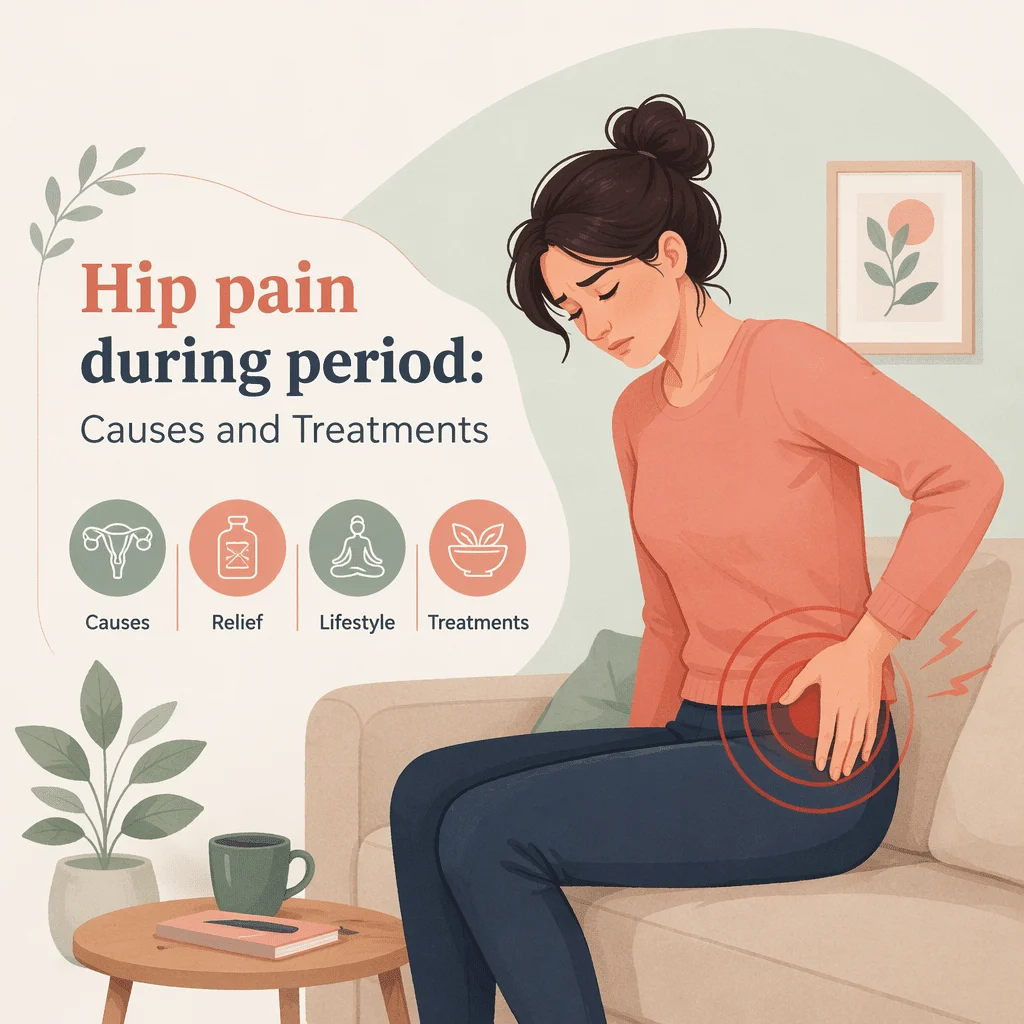
Heuppijn tijdens je menstruatie is een veelvoorkomend en meestal onschuldig onderdeel van de menstruatiecyclus, ook al kan het verontrustend voelen wanneer een zeurende pijn vanuit je onderbuik naar een of beide heupen uitstraalt. Voor veel mensen trekt dezelfde golf van lichaamsstoffen die krampen veroorzaakt ook aan de onderrug, billen en dijen, waardoor de heup een paar dagen per maand een onverwachte pijnplek wordt. Meestal verdwijnt het ongemak zodra het bloeden afneemt. Soms wijst het echter op een aandoening die het waard is om te laten onderzoeken, zoals endometriose, die vaak jarenlang over het hoofd wordt gezien. In dit artikel lees je waarom je menstruatie je heupen pijn kan doen, wat doorgaans helpt en welke duidelijke signalen aangeven dat het tijd is om naar de dokter te gaan.
Is heuppijn tijdens je menstruatie normaal?
Milde, cyclische heup- en bekkenpijn is heel normaal. Pijn is het meest voorkomende klacht die mensen over hun menstruatie melden, en die blijft vaak niet netjes in de onderbuik. Het heupgewricht ligt dicht bij de baarmoeder, de bekkenbotten en de zenuwen die pijnsignalen van de menstruatie doorgeven, waardoor krampen zich regelmatig laten voelen in de heup, lies of buitenkant van het bovenbeen. Wanneer de pijn een voorspelbaar patroon volgt — kort voor of tijdens het bloeden begint en binnen een paar dagen verdwijnt — weerspiegelt dit doorgaans een gewone menstruatiefysiologie en geen heupprobleem.
Wat niet normaal is, is pijn die je leven steeds meer beheerst. Ongemak dat je verhindert te werken, slapen of bewegen, dat cyclus na cyclus erger wordt, of dat aanhoudt als je niet bloedt, verdient een goede beoordeling. Het doel van deze gids is je te helpen onderscheid te maken tussen de alledaagse vorm van heuppijn tijdens de menstruatie en de variant die nader onderzoek vereist — zonder echte klachten te bagatelliseren of onnodig alarm te slaan.
Waarom je menstruatie heuppijn veroorzaakt
Heuppijn tijdens je menstruatie heeft zelden één enkele oorzaak. Het komt meestal voort uit een combinatie van chemische processen, hormonen en spiermechanica die samen een rol spelen in de dagen rondom je menstruatie.
Prostaglandinen en uitstralende pijn
Elke maand maakt het baarmoederslijmvlies prostaglandinen aan — hormoonachtige stoffen die de baarmoederspier laten samentrekken zodat het slijmvlies kan loslaten. Hogere prostaglandinespiegels leiden tot sterkere samentrekkingen en meer ontstekingsreactie, wat verklaart waarom de ene menstruatie veel pijnlijker is dan de andere. Omdat de baarmoeder dezelfde zenuwbanen deelt als de onderrug, heupen en dijen, kan de hersenen deze signalen verkeerd interpreteren en de pijn in de heup plaatsen. Dit heet uitstralende pijn, en het verklaart waarom krampen zo vaak naar buiten uitstralen. Dezelfde prostaglandinen kunnen ook diarree tijdens je menstruatieveroorzaken — een teken dat deze stoffen meer beïnvloeden dan alleen de baarmoeder.
Hormonen, ligamenten en pijngevoeligheid
Oestrogeen en progesteron stijgen en dalen gedurende de hele cyclus, en ze doen meer dan alleen de bloeding regelen. Deze hormonen beïnvloeden hoe soepel je ligamenten aanvoelen en hoe gevoelig je zenuwstelsel is voor pijn. In de dagen voor en tijdens je menstruatie kunnen wisselende hormoonspiegels de gewrichten van het bekken minder stabiel laten voelen en je pijndrempel verlagen, waardoor een kleine belasting al als een flinke pijn aanvoelt. Dezelfde verschuivingen in ligamenten en hormonen spelen ook een rol bij de overgang en de menopauze, wanneer cyclische pijnklachten soms van patroon veranderen.
Spierspanning en de bekkenbodem
Pijn zorgt ervoor dat spieren zich aanspannen en verkrampen. Wanneer je baarmoeder samentrekt, spannen de spieren van de onderbuik, heupen en bekkenbodem zich vaak mee aan, en die spanning kan aan de heup en onderrug trekken. Mensen die lang zitten, strakke heupbuigers hebben of intensief sporten, merken dit sneller, omdat al verkorte spieren eerder protesteren. In sommige gevallen lijkt de spanning — ook al is de oorzaak de menstruatiecyclus en geen blessure — op hamstringkrampen.
Veelvoorkomende oorzaken van heuppijn tijdens de menstruatie
Bij de meeste mensen verklaren gewone menstruatieklachten de pijn. Deze zijn normaal, te verwachten en doorgaans thuis goed te behandelen.
Primaire dysmenorroe
Primaire dysmenorroe is de medische term voor gewone menstruatiekrampen die niet door een andere aandoening worden veroorzaakt. Ze beginnen doorgaans een dag voor of bij het begin van het bloeden, zijn het hevigst op de eerste dag of twee, en nemen af naarmate je menstruatie ten einde loopt. De pijn zit in de onderbuik, maar straalt vaak uit naar de heupen, de onderrug en de binnenkant van de dijen. Primaire dysmenorroe wordt voornamelijk veroorzaakt door prostaglandinen en reageert doorgaans goed op warmte, beweging en ontstekingsremmende pijnstillers.
PMS en de luteale fase
Premenstrueel syndroom, of PMS, is de verzamelnaam voor de lichamelijke en emotionele klachten die optreden in de luteale fase, de week of zo vóór het bloeden. Een opgeblazen gevoel, gevoelige borsten, stemmingswisselingen en spierpijn zijn veelvoorkomende klachten, en bij sommige mensen nestelt die pijn zich in de heupen en de onderrug. Omdat PMS begint vóór je menstruatie, is heuppijn die een paar dagen eerder opkomt vaak terug te voeren op dit premenstruele venster en niet op het bloeden zelf.
Uitstralende krampen
Uitstralende krampen zijn het alledaagse gevolg van de eerder beschreven gedeelde zenuwbanen. Sterke baarmoedercontracties sturen pijn naar buiten via gedeelde paden, waardoor de heup, bil of dij pijn doet terwijl er niets mis is met het gewricht. Dit soort pijn volgt doorgaans je zwaarste bloeddagen en neemt af naarmate het bloeden minder wordt — een geruststellend patroon.
Aandoeningen die heuppijn kunnen verergeren of aanhoudend maken
Soms is heuppijn tijdens de menstruatie heviger, langduriger of meer aan één kant dan gewone krampen. Als dat het geval is, kan een onderliggende aandoening de pijn versterken. Geen van deze aandoeningen kan op basis van klachten alleen worden vastgesteld, maar het herkennen van de patronen helpt je te bepalen wanneer je medische hulp moet zoeken.
Endometriose
Endometriose is een aandoening waarbij weefsel dat lijkt op het baarmoederslijmvlies buiten de baarmoeder groeit, vaak op de bekkenwand, de eierstokken of de ligamenten die het bekken ondersteunen. Het treft ongeveer één op de tien vrouwen in de vruchtbare leeftijd en wordt vaak te laat herkend — veel mensen wachten jaren op een diagnose. De pijn is vaak hevig, kan beginnen vóór het bloeden, kan in de loop van de tijd erger worden, en kan gepaard gaan met pijn bij seks, darm- of blaasklachten, of moeite om zwanger te worden. Als jouw heup- en bekkenpijn bij dit beeld past, is het de moeite waard om te lezen hoe artsen endometriose.
Adenomyose
Adenomyose ontstaat wanneer weefsel dat lijkt op het baarmoederslijmvlies in de spierlaag van de baarmoeder groeit. Het veroorzaakt doorgaans zware, pijnlijke menstruaties en een gevoelige, opgezette onderbuik, en komt vaker voor na je 35e of na een bevalling. De diepe, zeurende pijn kan uitstralen naar de heupen en de onderrug.
Bekkenontsteking (PID)
Bekkenontsteking, ook wel PID (pelvic inflammatory disease) genoemd, is een infectie van de voortplantingsorganen, meestal veroorzaakt door seksueel overdraagbare bacteriën. Het kan pijn in het bekken en de heupen veroorzaken, en waarschuwingssignalen zijn onder meer koorts, ongewone vaginale afscheiding en pijn tijdens seks. PID vereist snelle medische behandeling om blijvende schade te voorkomen, dus wacht nooit af bij deze klachten.
Problemen met het sacro-iliacale gewricht en de bekkengordelregio
De sacro-iliacale gewrichten verbinden je wervelkolom met je bekken, en ze kunnen opspelen wanneer hormonen de omliggende ligamenten rondom je menstruatie losser maken. Dit veroorzaakt eenzijdige heup- of bilpijn die erger wordt bij staan, traplopen of omdraaien in bed. Een uitstralend patroon naar het been kan ook lijken op ischias, waardoor het gemakkelijk is om bekkengordelklachten te verwarren met een zenuwprobleem.
Heup- en eierstokgerelateerde oorzaken
Niet elke pijn die tijdens je menstruatie op zijn hevigst is, komt van de baarmoeder. Heupgewrichtsproblemen zoals een labrumscheur of vroege artrose veroorzaken lies- of buitenste heuppijn die meestal ook buiten je menstruatie aanwezig is. Ovariumcysten kunnen ook cyclische, eenzijdige bekkenpijn veroorzaken. Omdat deze patronen overlappen met menstruatieklachten, kan een arts ook PCOS.
| Mogelijke oorzaak | Typische kenmerken om op te letten |
|---|---|
| Primaire dysmenorroe (gewone menstruatiekrampen) | Pijn die een dag voor of bij het begin van de bloeding begint, binnen één tot drie dagen afneemt en reageert op warmte en ontstekingsremmende pijnstillers; geen pijn tussen de menstruaties door |
| Uitstralende krampen door prostaglandinen | Een zeurende pijn die vanuit de onderbuik uitstraalt naar de heupen, de onderrug en de dijen; volgt de dagen met de hevigste bloeding |
| Endometriose | Hevige pijn die al voor de bloeding kan beginnen en elke cyclus langer aanhoudt, met pijn tijdens seks, darm- of blaaspijn, of moeite met zwanger worden |
| Adenomyose | Zware, pijnlijke menstruaties met een opgezette, gevoelige onderbuik, vaak na je 35e of na een bevalling |
| Bekkenontsteking (PID) | Bekken- en heuppijn met koorts, ongewone afscheiding of pijn tijdens seks; vereist snelle medische hulp |
| Sacro-iliacale of bekkengordelklachten | Eenzijdige heup- of bilpijn die erger wordt bij staan, traplopen of omdraaien in bed, en opvlamt wanneer de ligamenten losser worden |
| Heupgewricht- of eierstokgerelateerde oorzaak | Lies- of buitenste heuppijn met klikken of stijfheid, of eenzijdige bekkenpijn, die ook buiten de menstruatie aanwezig is |
Hoe je heuppijn tijdens je menstruatie kunt verlichten
De meeste heuppijn tijdens de menstruatie reageert goed op eenvoudige, goedkope zelfzorg. Het doel is om ontstekingen te kalmeren, gespannen spieren te ontspannen en het bekken in beweging te houden. Als één aanpak niet helpt, werkt een combinatie van meerdere methoden meestal beter dan op één enkel middel te vertrouwen.
Warmte en rust
Warmte is een van de meest betrouwbare huismiddelen. Een warmtekussen of een warm bad ontspant de baarmoeder en de omliggende heup- en rugspieren. Onderzoek suggereert dat warmte krampen ongeveer even goed kan verlichten als gewone pijnstillers. Rust is ook belangrijk, maar volledig stilliggen kan het bekken verstijven. Wissel daarom lichte activiteit af met rustmomenten in plaats van de hele dag plat te liggen.
Zacht bewegen en stretchen
Lichte beweging verbetert de doorbloeding en stimuleert de aanmaak van natuurlijke pijnstillende stoffen. Wandelen, rustig fietsen en stretchoefeningen die de heupen en onderrug openen — zoals een ondersteunde kindhouding of een langzame figure-four stretch — kunnen de spieren losmaken die krampen veroorzaken. Beweeg binnen je comfortzone en stop als een stretch de pijn verergert.
Pijnstillers
Vrij verkrijgbare ontstekingsremmers zoals ibuprofen of naproxen werken in op de prostaglandinen die krampen veroorzaken, waardoor ze voor veel mensen de eerste keuze zijn. Ze werken het best als je ze inneemt bij de eerste tekenen van pijn, nog voordat de pijn op zijn hevigst is. Wie maag-, nier- of bloedingsproblemen heeft, of zwanger is, raadpleegt het best eerst een apotheker of arts voordat hij of zij ze regelmatig gebruikt.
Beweging, slaap en dagelijkse gewoonten
Wat je tussen je menstruaties door doet, bepaalt mede hoe de volgende verloopt. Regelmatig bewegen, voldoende en regelmatig slapen, stressbeheersing en goed hydrateren hangen allemaal samen met minder menstruatiepijn op de lange termijn. Sommige mensen merken ook dat ze op hun pijnlijkste dagen minder last hebben als ze langdurig ononderbroken zitten vermijden, zodat de heupen niet verstijven. Deze aanpassingen lossen een ernstige aandoening niet op, maar ze geven gewone krampen minder kans om op te spelen.
Wanneer heuppijn tijdens je menstruatie medische aandacht verdient
Zelfzorg helpt bij de meeste cyclische pijnen, maar bepaalde signalen zijn een reden om een afspraak te maken in plaats van nog een maand af te wachten. Neem contact op met een zorgverlener als je een van de volgende dingen opmerkt:
- Pijn die ernstig is, of die van cyclus tot cyclus erger wordt
- Heup- of bekkenpijn die aanhoudt buiten je menstruatie om
- Krampen die niet meer reageren op vrij verkrijgbare pijnstillers
- Pijn met koorts, ongewone vaginale afscheiding of pijn tijdens seks
- Zeer hevig bloedverlies, grote stolsels of bloedverlies tussen menstruaties in
- Pijn in combinatie met moeite om zwanger te worden
- Nieuwe, eenzijdige heuppijn met klikken, vastzetten of 'wegvallen' van het gewricht
Geen van deze signalen betekent automatisch dat er iets ernstig aan de hand is, maar elk ervan verdient een professioneel oordeel. Vroeg onderzoek laten doen is vooral belangrijk bij aandoeningen zoals endometriose, waarbij een tijdige diagnose jaren van vermijdbare pijn kan voorkomen.
Welke tests en onderzoeken kunnen helpen
Er is geen enkele bloedtest die heuppijn tijdens de menstruatie diagnosticeert, omdat de oorzaak vaak mechanisch of hormonaal is en niet iets wat een labwaarde kan aantonen. In plaats daarvan vormt een arts een volledig beeld op basis van je klachtengeschiedenis, een lichamelijk onderzoek en gerichte tests. Begrijpen wat die tests meten, kan het proces minder ondoorzichtig maken.
Afhankelijk van je klachten kan je arts een vrouwelijk hormoonpanel aanvragen om te zien hoe je geslachtshormonen zich gedurende de cyclus gedragen. Als je menstruaties hevig zijn, controleert een volledig bloedbeeld of het bloedverlies tot bloedarmoede heeft geleid. Wanneer infectie of ontsteking een mogelijke oorzaak is, kan een bloedtest C-reactief proteïnemeten, een marker die stijgt bij ontsteking in het lichaam. Beeldvorming zoals een bekkenecho of MRI wordt toegevoegd wanneer een structurele oorzaak zoals endometriose, adenomyose, een cyste of een heupprobleem moet worden uitgesloten of bevestigd. Het doel van testen is niet om je een label te geven, maar om de juiste verklaring te koppelen aan jouw pijn.
Recente wetenschappelijke ontwikkelingen
Onderzoek van de afgelopen jaren heeft onze kennis over het verlichten van menstruatie- en bekkenpijn aangescherpt. Dit is wat recente hoogwaardige overzichtsstudies hebben gevonden, in begrijpelijke taal, en wat elke bevinding voor jou kan betekenen.
Bewegen helpt echt bij menstruatiepijn. Een netwerkmeta-analyse uit 2024 — een studie die veel onderzoeken samenvoegt en vergelijkt — keek naar 49 studies over bewegen bij primaire dysmenorroe en stelde vast dat elk type beweging dat werd onderzocht de menstruatiepijn verminderde, met merkbare voordelen na ongeveer vier tot acht weken. Wat dit voor jou betekent: een vaste routine van wandelen, stretchen of krachttraining tussen je menstruaties door is een erkende behandeling, niet zomaar algemeen welzijnsadvies, en het is de moeite waard om ruim vóór je volgende cyclus te beginnen.
Gember kan voor sommige mensen even goed werken als gangbare pijnstillers. Een systematische review en meta-analyse uit 2024 stelde vast dat gember de intensiteit en duur van menstruatiepijn sterker verminderde dan een placebo, en in de onderzochte studies ongeveer even goed presteerde als ontstekingsremmende middelen. Wat dit voor jou betekent: gember is een redelijke optie om te bespreken als je geen standaard pijnstillers kunt innemen, al merkten de onderzoekers op dat de studies klein waren en van wisselende kwaliteit — het is dus een veelbelovende aanvulling, maar nog geen bewezen vervanging.
Zink wordt onderzocht als eenvoudig supplement tegen krampen. Een review uit 2024 van zes gerandomiseerde onderzoeken meldde dat zinksupplementen menstruatiepijn verminderden in vergelijking met een placebo en over het algemeen goed werden verdragen, waarbij langer gebruik gepaard ging met meer verlichting. Wat dit voor jou betekent: zink kan ooit deel uitmaken van de standaardbehandeling van krampen, maar het bewijs is nog pril, en supplementen gebruik je het best in overleg met een arts in plaats van op eigen houtje.
Bij endometriosepijn zijn hormonale behandelingen de beste optie. Een netwerkmeta-analyse uit 2025 in een toonaangevend tijdschrift voor verloskunde en gynaecologie vergeleek medicijnen voor bekkenpijn door endometriose in 31 onderzoeken met ongeveer 8.600 patiënten. Daaruit bleek dat hormonale opties, zoals gecombineerde anticonceptiepillen en nieuwere geneesmiddelen, het meest effectief waren in het verminderen van pijn. Wat dit voor jou betekent: als endometriose de oorzaak is van jouw heup- en bekkenpijn, bestaan er effectieve medische behandelingen, en een specialist kan helpen de juiste keuze te maken voor jouw situatie. Dit zijn onderzoekssamenvatingen, geen persoonlijk medisch advies; behandelkeuzes bespreek je altijd met je eigen arts.
Woordenlijst met belangrijke termen
| Termijn | Definitie |
|---|---|
| Prostaglandinen | Hormoonachtige stoffen die door het baarmoederslijmvlies worden vrijgegeven en de spiersamentrekkingen en ontstekingen veroorzaken die ten grondslag liggen aan menstruatiekrampen. |
| Primaire dysmenorroe | Gewone menstruatiekrampen die niet door een andere aandoening worden veroorzaakt, meestal aangedreven door prostaglandinen. |
| Uitstralende pijn | Pijn die je voelt in een bepaald gebied, zoals de heup, terwijl de werkelijke bron, zoals de baarmoeder, dezelfde zenuwbanen deelt. |
| Endometriose | Een aandoening waarbij weefsel dat lijkt op het baarmoederslijmvlies buiten de baarmoeder groeit, wat vaak ernstige bekkenpijn veroorzaakt. |
| Adenomyose | Een aandoening waarbij baarmoederslijmvliesweefsel in de spierwand van de baarmoeder groeit, wat zware en pijnlijke menstruaties veroorzaakt. |
| Bekkenontsteking (PID) | Een infectie van de voortplantingsorganen, vaak veroorzaakt door seksueel overdraagbare bacteriën, die snel behandeld moet worden. |
| Sacro-iliacaal gewricht | Het gewricht dat de wervelkolom met het bekken verbindt; dit kan opvlammen en eenzijdige heup- of bilpijn veroorzaken. |
| Luteale fase | Het deel van de cyclus na de eisprong en vóór de menstruatie, wanneer premenstruele klachten vaak optreden. |
| NSAID's | Niet-steroïdale ontstekingsremmers, zoals ibuprofen, die pijn verlichten door prostaglandinen te verlagen. |
Veelgestelde vragen
Is heuppijn tijdens je menstruatie normaal?
Ja, lichte heup- en bekkenpijn rondom je menstruatie is normaal en meestal onschuldig. Het komt vaak door prostaglandinen en uitstralende pijn, niet door een heupprobleem, en verdwijnt doorgaans binnen een dag of twee als het bloeden afneemt. Pijn is een reden om een arts te raadplegen als ze hevig is, elke cyclus erger wordt, of aanhoudt buiten je menstruatie om.
Hoe kan ik heuppijn tijdens mijn menstruatie verlichten?
Begin met warmte op je onderbuik, heup of rug, lichte beweging en heupstretchoefeningen, en een vrij verkrijgbaar ontstekingsremmer zoals ibuprofen bij de eerste pijntekenen. Regelmatig bewegen, goed slapen en voldoende drinken tussen je menstruaties door helpen de pijn op de lange termijn te verminderen. Als zelfzorg de pijn niet meer onder controle houdt, vraag dan een arts naar andere mogelijkheden.
Waarom voel ik heuppijn aan slechts één kant tijdens mijn menstruatie?
Eenzijdige menstruatieheuppijn kan normaal zijn, omdat krampen niet altijd gelijkmatig uitstralen. Het kan ook komen door een sacro-iliacale of bekkengordelblessure, een ovariumcyste of een heupgewrichtsprobleem aan die kant. Als de pijn altijd aan dezelfde kant zit, hevig is of langer aanhoudt dan je menstruatie, is het de moeite waard om dit te laten onderzoeken om de exacte oorzaak te achterhalen.
Kan heuppijn vóór mijn menstruatie een teken van zwangerschap zijn?
Een vroege zwangerschap en de premenstruele fase hebben overlappende klachten, dus heup- of bekkenpijn alleen kan ze niet van elkaar onderscheiden. Een uitblijvende menstruatie, misselijkheid of gevoelige borsten kunnen de vraag oproepen, maar alleen een zwangerschapstest kan dit bevestigen. Als je menstruatie uitblijft en je mogelijk zwanger bent, doe dan een test en bespreek de vervolgstappen met je arts.
Wordt heuppijn tijdens de menstruatie erger in de perimenopauze?
Het kan veranderen. In de perimenopauze schommelen de hormoonspiegels grilliger, wat het patroon van krampen en gewrichtspijn van cyclus tot cyclus kan beïnvloeden. Sommige mensen merken meer heup- en rugklachten, terwijl anderen juist verlichting ervaren. Nieuwe, hevige of aanhoudende pijn tijdens deze overgangsperiode verdient nog steeds een beoordeling, in plaats van te worden afgedaan als een normaal onderdeel van het ouder worden.
Wanneer wijst menstruatieheuppijn op endometriose?
Endometriose is waarschijnlijker als de pijn hevig is, al voor het bloeden begint, in de loop van de tijd erger wordt, of gepaard gaat met pijnlijke seks, darm- of blaaspijn, of moeite om zwanger te worden. Heuppijn op zichzelf bevestigt het niet, maar dit patroon is een sterke reden om een beoordeling te zoeken. Omdat endometriose vaak laat wordt vastgesteld, kan het vroeg aankaarten bij een arts een groot verschil maken.
Bronnen
- Cleveland Clinic — Dysmenorroe: Menstruatiekrampen, oorzaken en behandelingen — clevelandclinic.org
- Mayo Clinic — Menstruatiepijn: Symptomen en oorzaken — mayoclinic.org
- Office on Women’s Health, U.S. Department of Health and Human Services — Problemen met de menstruatie — womenshealth.gov
- Zheng Q, et al. — Vergelijkende effectiviteit van beweeginterventies bij primaire dysmenorroe: een systematische review en netwerk-meta-analyse — BMC Women’s Health, 2024 — doi.org/10.1186/s12905-024-03453-w
- Moshfeghinia R, et al. — Gember bij pijnbestrijding van primaire dysmenorroe: een systematische review en meta-analyse — Journal of Integrative and Complementary Medicine, 2024 — doi.org/10.1089/jicm.2023.0799
- Hsu TJ, et al. — Effectiviteit van zinksuppletie bij de behandeling van primaire dysmenorroe: een systematische review en meta-analyse — Nutrients, 2024 — doi.org/10.3390/nu16234116
- Kou L, et al. — Farmacologische interventies bij endometriose-gerelateerde pijn: een systematische review en meta-analyse — Obstetrics and Gynecology, 2025 — doi.org/10.1097/AOG.0000000000005923
Verder lezen
- Volledig bloedbeeld: hoe lees je je resultaten?
- Ovariumcyste: grootte, oorzaken, symptomen en risico's
- Nachtzweten voor je menstruatie: oorzaken en behandelingen
- Bloedarmoede: symptomen, oorzaken en tests
- Magnesiumtekort: symptomen, oorzaken en behandelingen
Begrijp uw laboratoriumresultaten met AI DiagMe.
Heuppijn rondom de menstruatie heeft meestal te maken met hormonen en spieren, en niet met één specifieke laboratoriumwaarde. Toch kan bloedonderzoek helpen om aandoeningen uit te sluiten die vergelijkbare klachten veroorzaken of verergeren. Als uw arts een vrouwelijk hormonenpanel aanvraagt, een volledig bloedbeeld om bloedarmoede door hevig bloedverlies op te sporen, of een C-reactief proteïne-test om ontstekingen te onderzoeken, kan AI DiagMe die uitslagen omzetten in begrijpelijke taal die u echt iets zegt. Het helpt u te begrijpen wat uw waarden betekenen en welke vragen u daarna kunt stellen. AI DiagMe stelt geen diagnose en vervangt uw arts nooit.
Ontvang binnen enkele minuten een interpretatie van uw resultaten.