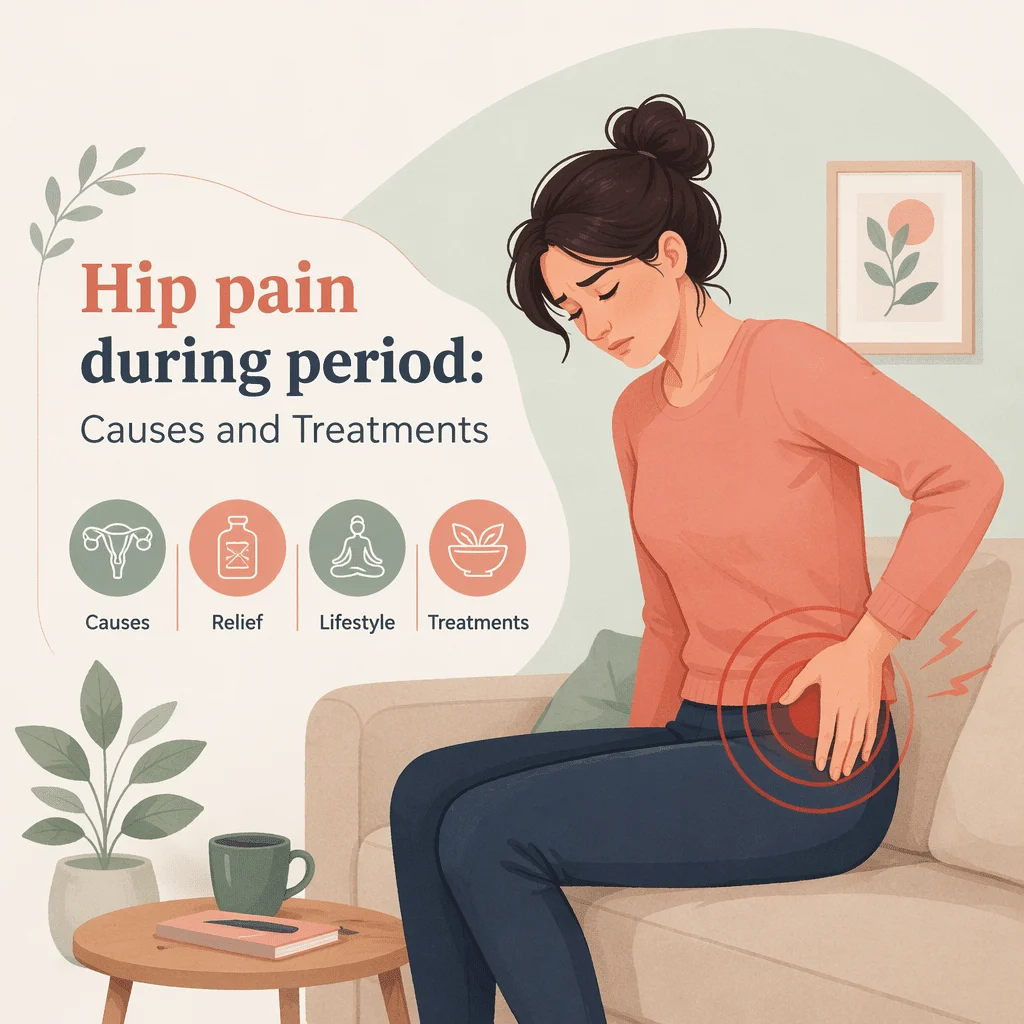
Durerea de șold în timpul menstruației este o parte comună și de obicei inofensivă a ciclului menstrual, chiar dacă poate părea îngrijorătoare atunci când o durere surdă se extinde din abdomenul inferior spre unul sau ambii șolduri. Pentru multe persoane, același val de schimbări chimice din organism care provoacă crampele trage și de zona lombară, fese și coapse, astfel că șoldul devine un punct dureros neașteptat timp de o zi sau două în fiecare lună. De cele mai multe ori, disconfortul dispare pe măsură ce sângerarea se liniștește. Uneori, însă, poate indica o afecțiune care merită investigată, cum ar fi endometrioza, care trece adesea neobservată ani de zile. În acest articol vei afla de ce menstruația poate face șoldurile să doară, ce ajută de obicei și care sunt semnele clare că e timpul să mergi la medic.
Este normală durerea de șold în timpul menstruației?
O durere ușoară și ciclică la nivelul șoldului și pelvisului este foarte normală. Durerea este cea mai frecventă problemă raportată în legătură cu menstruația și adesea nu rămâne strict în abdomenul inferior. Articulația șoldului se află aproape de uter, de oasele pelviene și de nervii care transmit semnalele durerii menstruale, astfel că crampele se simt frecvent în șold, inghinal sau pe fața externă a coapsei. Când durerea urmează un ritm previzibil — apărând cu puțin înainte sau în timpul sângerării și diminuându-se în câteva zile — ea reflectă de obicei fiziologia menstruală normală, nu o problemă a șoldului.
Ceea ce nu este normal este durerea care îți preia treptat controlul vieții. Disconfortul care te împiedică să lucrezi, să dormi sau să te miști, care se agravează de la un ciclu la altul sau care persistă și atunci când nu ai menstruație merită o evaluare serioasă. Scopul acestui ghid este să te ajute să deosebești durerea de șold obișnuită din timpul menstruației de cea care necesită o consultație medicală, fără a ignora simptomele reale sau a te alarma inutil.
De ce îți provoacă menstruația durere de șold
Durerea de șold din timpul menstruației are rareori o singură cauză. De obicei apare dintr-o combinație de factori chimici, hormonali și musculari care acționează împreună în zilele din jurul ciclului.
Prostaglandinele și durerea iradiată
În fiecare lună, mucoasa uterului eliberează prostaglandine, substanțe chimice asemănătoare hormonilor care determină contracția mușchiului uterin pentru a elimina mucoasa. Nivelurile mai ridicate de prostaglandine înseamnă contracții mai puternice și o inflamație mai mare, de aceea unele menstruații sunt mult mai dureroase decât altele. Deoarece uterul împarte căile nervoase cu zona lombară, șoldurile și coapsele, creierul poate interpreta greșit aceste semnale și poate localiza durerea la nivelul șoldului. Aceasta se numește durere iradiată și explică de ce crampele radiază atât de des spre exterior. Aceleași prostaglandine pot provoca și diaree în timpul menstruației, un alt semn că aceste substanțe afectează mai mult decât uterul.
Hormoni, ligamente și sensibilitate la durere
Estrogenul și progesteronul cresc și scad pe parcursul ciclului, iar rolul lor depășește simpla reglare a sângerării. Acești hormoni influențează cât de relaxate se simt ligamentele tale și cât de sensibil este sistemul tău nervos la durere. În zilele dinaintea și din timpul menstruației, variațiile hormonale pot face articulațiile pelvisului să se simtă mai puțin stabile și pot scădea pragul durerii, astfel încât un efort mic este resimțit ca o durere mai mare. Aceleași modificări ale ligamentelor și hormonilor caracterizează și perimenopauza și menopauza, când durerile ciclice își schimbă uneori tiparul.
Tensiunea musculară și planșeul pelvin
Durerea determină mușchii să se contracte și să se tensioneze. Când uterul are crampe, mușchii abdomenului inferior, ai șoldurilor și ai planșeului pelvin se tensionează adesea ca răspuns, iar această tensiune poate trage de șold și de zona lombară. Persoanele care stau mult timp jos, care au flexorii șoldului contractați sau care fac antrenamente intense pot observa acest lucru mai frecvent, deoarece mușchii deja scurtați reacționează mai repede. În unele cazuri, chiar dacă factorul declanșator este ciclul menstrual și nu o leziune, tensiunea imită crampele la ischiogambieri.
Factori frecvenți care contribuie la durerea de șold în timpul menstruației
Pentru majoritatea oamenilor, afecțiunile menstruale obișnuite explică durerea. Acestea sunt frecvente, așteptate și, în general, pot fi gestionate acasă.
Dismenoreea primară
Dismenoreea primară este denumirea medicală pentru crampele menstruale obișnuite care nu sunt cauzate de o altă boală. De obicei, apare cu o zi înainte sau odată cu începerea sângerării, atinge intensitatea maximă în prima zi sau două și se ameliorează pe măsură ce menstruația se apropie de sfârșit. Durerea se simte în abdomenul inferior, dar se extinde frecvent spre șolduri, zona lombară și fața internă a coapselor. Dismenoreea primară este cauzată în principal de prostaglandine și răspunde de obicei bine la căldură, mișcare și analgezice antiinflamatoare.
SPM și faza luteală
Sindromul premenstrual, sau SPM, descrie grupul de simptome fizice și emoționale care apar în faza luteală, adică în săptămâna sau cam așa ceva dinaintea sângerării. Balonarea, sensibilitatea sânilor, schimbările de dispoziție și durerile corporale sunt frecvente, iar unele persoane simt că această durere se instalează în șolduri și zona lombară. Deoarece SPM apare înainte de menstruație, durerea de șold care se instalează cu câteva zile mai devreme este adesea legată de această fereastră premenstruală, nu de sângerarea în sine.
Crampele iradiate
Crampele iradiate sunt rezultatul obișnuit al partajării căilor nervoase descrise anterior. Contracțiile uterine puternice transmit durerea spre exterior prin căi comune, astfel că șoldul, fesa sau coapsa dor, chiar dacă articulația în sine nu are nimic. Acest tip de durere tinde să coincidă cu zilele de flux menstrual abundent și să se atenueze pe măsură ce fluxul scade, ceea ce este un semn liniștitor.
Afecțiuni care pot agrava sau prelungi durerea de șold
Uneori, durerea de șold asociată menstruației este mai intensă, mai prelungită sau mai localizată pe o parte decât crampele obișnuite. Când se întâmplă asta, o afecțiune subiacentă poate amplifica durerea. Niciuna dintre acestea nu poate fi diagnosticată doar pe baza simptomelor, dar cunoașterea tiparelor te ajută să decizi când să consulți un medic.
Endometrioză
Endometrioza este o afecțiune în care țesut similar cu mucoasa uterină crește în afara uterului, adesea pe peretele pelvin, ovare sau ligamentele care susțin pelvisul. Afectează aproximativ una din zece femei de vârstă reproductivă și este frecvent subdiagnosticată, multe persoane așteptând ani întregi pentru un răspuns. Durerea este adesea severă, poate apărea înainte de sângerare, se poate agrava în timp și poate fi însoțită de durere în timpul actului sexual, dureri intestinale sau vezicale ori dificultăți în a rămâne însărcinată. Dacă durerea ta de șold și pelviană corespunde acestui tablou, merită să afli cum diagnostichează și tratează medicii endometrioză.
Adenomioza
Adenomioza apare atunci când țesut similar celui endometrial crește în peretele muscular al uterului. Tinde să cauzeze menstruații abundente și dureroase, precum și un abdomen inferior sensibil și balonat, și este mai frecventă după vârsta de 35 de ani sau după naștere. Durerea profundă, apăsătoare poate iradia spre șolduri și zona lombară.
Boală inflamatorie pelvină
Boala inflamatorie pelvină, sau BIP, este o infecție a organelor reproductive, de obicei cauzată de bacterii transmise pe cale sexuală. Poate provoca dureri pelviene și la nivelul șoldurilor, iar semnele de alarmă includ febră, secreții vaginale neobișnuite și durere în timpul actului sexual. BIP necesită tratament medical prompt pentru a preveni leziuni permanente, așa că aceste simptome nu trebuie ignorate.
Probleme sacroiliace și ale centurii pelviene
Articulațiile sacroiliace leagă coloana vertebrală de pelvis și se pot inflama atunci când hormonii relaxează ligamentele din jur în perioada menstruației. Aceasta produce durere pe o singură parte, la nivelul șoldului sau al fesei, care se agravează la stat în picioare, urcat pe scări sau la întoarcerea în pat. Un tipar de iradiere în jos pe picior poate semăna și cu sciatică, astfel că este ușor să confunzi o tensiune a centurii pelviene cu o problemă nervoasă.
Cauze legate de șold și ovare
Nu orice durere care se intensifică în timpul menstruației provine de la uter. Problemele articulației șoldului, cum ar fi o ruptură de labrum sau osteoartrita incipientă, cauzează durere la nivelul inghinei sau al șoldului extern, care de obicei este prezentă și în afara menstruației. Chisturile ovariene pot provoca, de asemenea, durere pelvină ciclică, pe o singură parte. Deoarece aceste tipare se suprapun cu simptomele menstruale, un medic poate evalua și SOP (Sindromul ovarelor polichistice).
| Cauză posibilă | Semne tipice de urmărit |
|---|---|
| Dismenoreea primară (crampe obișnuite) | Durere surdă care apare cu o zi înainte sau odată cu sângerarea, se ameliorează în una până la trei zile și răspunde la căldură și antiinflamatoare; fără durere între menstruații |
| Crampe iradiate cauzate de prostaglandine | Durere surdă care se extinde din abdomenul inferior spre șolduri, zona lombară și coapse; urmărește zilele cu flux menstrual abundent |
| Endometrioză | Durere severă care poate apărea înainte de sângerare și durează mai mult cu fiecare ciclu, însoțită de durere în timpul actului sexual, durere intestinală sau vezicală ori dificultăți de concepere |
| Adenomioza | Menstruații abundente și dureroase cu abdomen inferior balonat și sensibil, adesea după vârsta de 35 de ani sau după naștere |
| Boală inflamatorie pelvină | Durere pelvină și la nivelul șoldurilor cu febră, secreții neobișnuite sau durere în timpul actului sexual; necesită îngrijire promptă |
| Tensiune sacroiliacă sau a centurii pelviene | Durere pe o singură parte, la nivelul șoldului sau al fesei, care se agravează la stat în picioare, urcat pe scări sau la întoarcerea în pat, apărând când ligamentele se relaxează |
| Cauză legată de articulația șoldului sau de ovare | Durere la nivelul inghinei sau al șoldului extern cu clicuri sau rigiditate, ori durere pelvină pe o singură parte, prezentă și în afara menstruației |
Cum să ameliorezi durerea de șold în timpul menstruației
Majoritatea durerilor de șold din timpul menstruației răspund bine la îngrijire personală simplă și accesibilă. Scopul este să calmezi inflamația, să relaxezi mușchii tensionați și să menții mobilitatea pelvisului. Dacă o singură metodă nu ajută, combinarea câtorva funcționează de obicei mai bine decât să te bazezi pe un singur remediu.
Căldura și odihna
Căldura este unul dintre cele mai sigure remedii casnice. O pernă termică sau o baie caldă relaxează uterul și mușchii din jurul șoldului și spatelui, iar studiile sugerează că căldura poate ameliora crampele la fel de eficient ca analgezicele obișnuite. Odihna contează și ea, dar imobilitatea totală poate rigidiza pelvisul, așa că alternează activitatea ușoară cu pauzele, în loc să stai întins toată ziua.
Mișcare ușoară și stretching
Mișcarea ușoară îmbunătățește circulația sângelui și stimulează eliberarea substanțelor naturale cu efect analgezic. Mersul pe jos, ciclismul lejer și exercițiile de stretching care deschid șoldurile și zona lombară — cum ar fi poziția copilului cu sprijin sau întinderea lentă în formă de patru — pot relaxa mușchii care se contractă din cauza crampelor. Mișcă-te în limitele confortului și oprește-te dacă un exercițiu intensifică durerea.
Analgezice
Antiinflamatoarele nesteroidiene disponibile fără prescripție medicală, cum ar fi ibuprofenul sau naproxenul, acționează asupra prostaglandinelor care provoacă crampele, ceea ce le face o primă opțiune pentru multe persoane. Funcționează cel mai bine când sunt luate la primele semne de durere, nu după ce aceasta atinge intensitatea maximă. Persoanele cu probleme gastrice, renale sau de coagulare, precum și cele însărcinate, ar trebui să consulte un farmacist sau un medic înainte de a le folosi regulat.
Exercițiu fizic, somn și obiceiuri zilnice
Obiceiurile dintre menstruații influențează cum te vei simți la următoarea. Exercițiul fizic regulat, somnul odihnitor, gestionarea stresului și hidratarea adecvată sunt asociate cu dureri menstruale mai ușoare în timp. Unele persoane observă, de asemenea, că evitarea statului prelungit pe scaun în zilele cu dureri mai intense împiedică rigidizarea șoldurilor. Aceste schimbări nu vor elimina o afecțiune serioasă, dar reduc șansele ca durerile obișnuite să se agraveze.
Când durerea de șold din timpul menstruației necesită o consultație medicală
Îngrijirea personală rezolvă majoritatea durerilor ciclice, dar anumite semne indică faptul că ar trebui să faci o programare în loc să mai aștepți o lună. Contactează un medic dacă observi oricare dintre următoarele:
- Durere severă sau care se agravează progresiv de la un ciclu la altul
- Durere de șold sau pelviană care persistă și în afara menstruației
- Crampe pe care analgezicele fără prescripție nu le mai controlează
- Durere însoțită de febră, secreții vaginale neobișnuite sau durere în timpul actului sexual
- Sângerare foarte abundentă, cheaguri mari sau sângerare între menstruații
- Durere asociată cu dificultăți în a rămâne însărcinată
- Durere nouă, pe o singură parte a șoldului, însoțită de clicuri, blocaje sau cedarea articulației
Niciunul dintre acestea nu înseamnă automat că ceva este grav, dar fiecare merită o opinie profesională. Evaluarea timpurie este deosebit de importantă pentru afecțiuni precum endometrioza, unde un diagnostic la timp poate scuti ani de durere evitabilă.
Ce analize și controale pot ajuta
Nu există o singură analiză de sânge care să diagnosticheze durerea de șold legată de menstruație, deoarece cauza este adesea mecanică sau hormonală, nu ceva ce un număr de laborator poate semnala. În schimb, medicul construiește tabloul clinic pornind de la istoricul tău, un examen fizic și analize țintite. Înțelegerea a ceea ce măsoară aceste analize poate face procesul să pară mai puțin misterios.
În funcție de simptomele tale, medicul poate recomanda o panel hormonal feminin pentru a vedea cum se comportă hormonii tăi reproductivi de-a lungul ciclului. Dacă menstruațiile sunt abundente, o hemogramă completă verifică dacă pierderea de sânge a dus la anemie. Când există suspiciunea unei infecții sau inflamații, o analiză de sânge poate măsura proteina C reactivă, un marker care crește în prezența inflamației în organism. Investigații imagistice precum ecografia pelvină sau RMN-ul sunt adăugate atunci când trebuie exclusă sau confirmată o cauză structurală, cum ar fi endometrioza, adenomioza, un chist sau o problemă de șold. Scopul analizelor nu este să te eticheteze, ci să găsească explicația potrivită pentru durerea ta.
Cele mai recente progrese științifice
Cercetările din ultimii câțiva ani au clarificat ce știm despre ameliorarea durerii menstruale și pelvine. Iată ce au descoperit recenziile recente de înaltă calitate, în termeni simpli, și ce ar putea însemna fiecare concluzie pentru tine.
Exercițiile fizice ajută cu adevărat în cazul durerii menstruale. O meta-analiză de rețea din 2024 — un studiu care reunește și compară mai multe studii clinice — a analizat 49 de studii despre exerciții fizice pentru dismenoreea primară și a constatat că fiecare tip de exercițiu testat a redus durerea menstruală, cu beneficii vizibile după aproximativ patru până la opt săptămâni. Ce înseamnă asta pentru tine: o rutină constantă de mers pe jos, stretching sau exerciții de forță între menstruații reprezintă un tratament legitim, nu doar un sfat general de wellness, și merită să o începi cu mult înainte de următorul ciclu.
Ghimbirul poate funcționa la fel de bine ca analgezicele obișnuite pentru unele persoane. O recenzie sistematică și meta-analiză din 2024 a constatat că ghimbirul a redus intensitatea și durata durerii menstruale mai mult decât placebo și a avut rezultate comparabile cu medicamentele antiinflamatoare în studiile analizate. Ce înseamnă asta pentru tine: ghimbirul este o opțiune rezonabilă de discutat dacă nu poți lua analgezice standard, deși cercetătorii au menționat că studiile au fost mici și de calitate inegală, deci este mai degrabă un supliment promițător decât un înlocuitor dovedit.
Zincul este studiat ca un supliment simplu pentru crampe. O analiză din 2024 a șase studii randomizate a raportat că suplimentele de zinc au redus durerea menstruală față de placebo și au fost în general bine tolerate, utilizarea mai îndelungată fiind asociată cu o ameliorare mai mare. Ce înseamnă asta pentru tine: zincul ar putea deveni cândva parte din îngrijirea de rutină a crampelor, dar dovezile sunt încă la început, iar suplimentele sunt cel mai bine folosite cu îndrumarea unui medic, nu din proprie inițiativă.
Pentru durerea cauzată de endometrioză, tratamentele hormonale sunt în frunte. O meta-analiză de rețea din 2025, publicată într-o revistă importantă de obstetrică și ginecologie, a comparat medicamentele pentru durerea pelvină legată de endometrioză în 31 de studii și aproximativ 8.600 de paciente, concluzionând că opțiunile hormonale, cum ar fi pilulele contraceptive combinate și medicamentele mai noi, au fost cele mai eficiente în reducerea durerii. Ce înseamnă asta pentru tine: dacă endometrioza este cauza durerii tale de șold și pelvine, există tratamente medicale eficiente, iar un specialist te poate ajuta să găsești varianta potrivită pentru situația ta. Acestea sunt rezumate ale cercetărilor, nu sfaturi medicale personale, iar deciziile de tratament aparțin discuției cu medicul tău.
Glosar de termeni cheie
| Termen | Definiție |
|---|---|
| Prostaglandine | Substanțe chimice asemănătoare hormonilor, eliberate de mucoasa uterină, care declanșează contracțiile musculare și inflamația responsabile de crampele menstruale. |
| Dismenoreea primară | Crampe menstruale obișnuite care nu sunt cauzate de o altă boală, de obicei determinate de prostaglandine. |
| Durere iradiată | Durere resimțită într-o zonă, cum ar fi șoldul, atunci când sursa reală, cum ar fi uterul, împarte căile nervoase cu aceasta. |
| Endometrioză | O afecțiune în care țesut similar mucoasei uterine crește în afara uterului, cauzând adesea dureri pelvine severe. |
| Adenomioza | O afecțiune în care țesutul mucoasei uterine crește în peretele muscular al uterului, provocând menstruații abundente și dureroase. |
| Boală inflamatorie pelvină | O infecție a organelor reproductive, adesea cauzată de bacterii transmise sexual, care necesită tratament prompt. |
| Articulația sacroiliacă | Articulația care leagă coloana vertebrală de pelvis, care se poate inflama și provoca durere unilaterală la șold sau fesă. |
| Faza luteală | Partea ciclului de după ovulație și înainte de menstruație, când apar adesea simptomele premenstruale. |
| AINS | Antiinflamatoare nesteroidiene, cum ar fi ibuprofenul, care ameliorează durerea prin reducerea prostaglandinelor. |
Întrebări frecvente
Este normală durerea de șold în timpul menstruației?
Da, o durere ușoară la șold și în zona pelviană în jurul menstruației este frecventă și de obicei inofensivă. Apare adesea din cauza prostaglandinelor și a durerii iradiate, nu a unei probleme la șold, și tinde să dispară în una-două zile, pe măsură ce sângerarea se stabilizează. Durerea devine un motiv de consultație medicală atunci când este severă, se agravează cu fiecare ciclu sau persistă în afara perioadei menstruale.
Cum pot ameliora durerea de șold în timpul menstruației?
Începe cu căldură aplicată pe abdomenul inferior, șold sau spate, mișcare ușoară și stretching pentru șold, și un antiinflamator fără prescripție, cum ar fi ibuprofenul, luat la primele semne de durere. Exercițiile fizice regulate, somnul bun și hidratarea corespunzătoare între menstruații ajută, de asemenea, la reducerea durerii în timp. Dacă îngrijirea la domiciliu nu mai ține durerea sub control, discută cu un medic despre alte opțiuni.
De ce simt durere de șold doar pe o parte în timpul menstruației?
Durerea de șold pe o singură parte în timpul menstruației poate fi normală, deoarece crampele nu se răspândesc întotdeauna uniform. Poate proveni și dintr-o tensiune sacroiliacă sau pelviană, un chist ovarian sau o problemă a articulației șoldului de acea parte. Dacă durerea apare mereu pe aceeași parte, este severă sau persistă după menstruație, merită să o investighezi pentru a afla cauza exactă.
Poate durerea de șold înainte de menstruație să fie un semn de sarcină?
Sarcina timpurie și faza premenstruală au simptome comune, așa că o durere la șold sau în zona pelviană singură nu poate face diferența. Absența menstruației, greața sau sensibilitatea sânilor pot ridica întrebarea, dar doar un test de sarcină poate confirma. Dacă menstruația întârzie și există posibilitatea să fii însărcinată, fă un test și consultă medicul pentru pașii următori.
Se agravează durerea de șold în timpul menstruației la perimenopauză?
Se poate schimba. În perimenopauză, nivelurile hormonale fluctuează mai imprevizibil, ceea ce poate modifica tiparele crampelor și durerile articulare de la un ciclu la altul. Unele persoane observă mai mult disconfort la șold și spate, în timp ce altele constată că se ameliorează. O durere nouă, severă sau persistentă în această perioadă de tranziție merită totuși evaluată, nu ignorată ca parte normală a îmbătrânirii.
Când indică durerea de șold în timpul menstruației endometrioză?
Endometrioza este mai probabilă atunci când durerea este severă, apare înainte de sângerare, se agravează în timp sau este însoțită de durere în timpul actului sexual, dureri intestinale sau vezicale ori dificultăți în a rămâne însărcinată. Durerea de șold în sine nu o confirmă, dar acest tipar este un motiv serios pentru a solicita o evaluare. Deoarece endometrioza este adesea diagnosticată târziu, menționarea ei din timp unui medic poate face o diferență reală.
Surse
- Cleveland Clinic — Dismenoree: Crampe menstruale, cauze și tratamente — clevelandclinic.org
- Mayo Clinic — Crampe menstruale: Simptome și cauze — mayoclinic.org
- Office on Women’s Health, U.S. Department of Health and Human Services — Probleme menstruale — womenshealth.gov
- Zheng Q, et al. — Eficacitatea comparativă a intervențiilor prin exerciții fizice pentru dismenoreea primară: o revizuire sistematică și meta-analiză în rețea — BMC Women’s Health, 2024 — doi.org/10.1186/s12905-024-03453-w
- Moshfeghinia R, et al. — Ghimbirul în managementul durerii în dismenoreea primară: o revizuire sistematică și meta-analiză — Journal of Integrative and Complementary Medicine, 2024 — doi.org/10.1089/jicm.2023.0799
- Hsu TJ, et al. — Eficacitatea suplimentării cu zinc în managementul dismenoreei primare: o revizuire sistematică și meta-analiză — Nutrients, 2024 — doi.org/10.3390/nu16234116
- Kou L, et al. — Intervenții farmacologice pentru durerea asociată endometriozei: o revizuire sistematică și meta-analiză — Obstetrics and Gynecology, 2025 — doi.org/10.1097/AOG.0000000000005923
Lectură suplimentară
- Hemoleucograma completă: cum să-ți citești rezultatele
- Dimensiunea, cauzele, simptomele și riscurile chistului ovarian
- Transpirații nocturne înainte de menstruație: cauze și tratamente
- Anemia: simptome, cauze și analize
- Deficiența de magneziu: simptome, cauze și tratamente
Înțelege-ți rezultatele analizelor cu AI DiagMe
Durerea de șold legată de menstruație este de obicei cauzată de hormoni și de mușchi, nu de o singură valoare din analize, dar analizele de sânge pot ajuta la excluderea afecțiunilor care o mimează sau o agravează. Dacă medicul tău îți recomandă un panel hormonal feminin, o hemoleucogramă completă pentru a verifica anemia cauzată de sângerări abundente sau un test de proteină C reactivă pentru a detecta inflamația, AI DiagMe poate transforma acele rezultate într-un limbaj clar, pe care îl poți folosi cu adevărat. Te ajută să înțelegi ce înseamnă valorile tale și ce întrebări să pui mai departe. Nu îți pune un diagnostic și nu înlocuiește niciodată medicul tău.
Obține interpretarea rezultatelor în câteva minute