Protein C deficiency is a condition that raises the risk of abnormal blood clots because the body has too little of a natural anticoagulant protein, or the protein it has does not work properly. It can be inherited from birth or acquired later in life through conditions such as liver disease or certain medications. This guide explains what protein C does, how to read a low or high result on your lab report, what causes a deficiency, and why the timing of testing matters. You will also find a plain-language summary of recent research and a clear list of warning signs that call for prompt medical attention.
What is protein C and why does it matter?
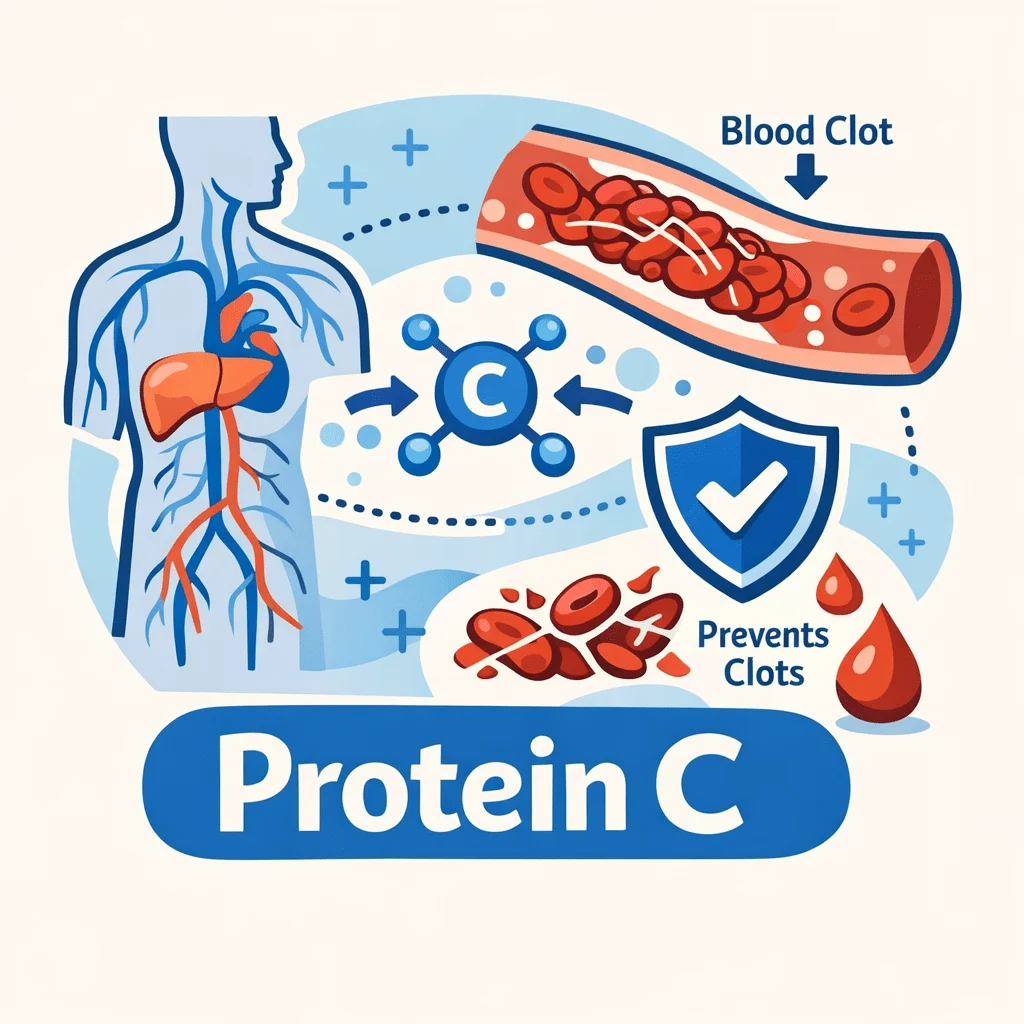
Protein C is a small protein made by the liver that circulates in your blood in an inactive form. When your body needs to keep clotting under control, it converts protein C into its active form, called activated protein C (APC). This active protein then blocks two other clotting factors, factor Va and factor VIIIa, which slows down the clotting cascade. In simple terms, protein C works as a brake that keeps your blood clotting system from going too far.
This braking action matters because clotting is a balancing act. Your body needs to form clots to stop bleeding after an injury, but it also needs to prevent clots from forming inside intact blood vessels. Protein C is one of several natural anticoagulants, alongside protein S and antithrombin, that keep this balance in check. A doctor typically orders a protein C test after an unexplained or recurrent blood clot, or when a close relative has a known clotting disorder.
How to read your protein C test result
Your lab report usually lists protein C as a percentage of normal activity, alongside the laboratory’s reference range. A typical adult reference range runs from about 70% to 140%, though this varies by laboratory and method, so always compare your number to the range printed on your own report rather than a number found online.
Some labs report two separate values: protein C activity, which measures how well the protein functions, and protein C antigen, which measures how much protein is present regardless of function. Ordering both helps distinguish the two inherited forms of deficiency, described in the next section. A result flagged with an “L,” a downward arrow, or red text usually signals a value below the reference range.
| Protein C activity level | General category |
|---|---|
| Above 70% | Typically within the normal reference range |
| 50% to 70% | Mild deficiency; often followed with periodic monitoring |
| 30% to 50% | Moderate deficiency; usually evaluated by a specialist |
| Below 30% | Severe deficiency; requires close hematology follow-up |
These bands are general guides, not fixed cutoffs, and your own laboratory’s reference range always takes priority. A single low result also does not confirm a permanent deficiency, since several everyday situations can temporarily lower the level, which the next section explains.
Why timing and medications affect your result
Protein C testing has a practical quirk that trips up many patients: the result can be misleading if drawn at the wrong time. Testing during or shortly after an acute blood clot can show a falsely low level, because the clotting event itself temporarily consumes clotting-related proteins. For this reason, doctors usually prefer to test at least a few weeks after the clot has been treated and the patient is clinically stable.
Anticoagulant medications complicate the picture further. Warfarin lowers protein C production because the protein needs vitamin K to function, so testing while on warfarin can show an artificially low result even in someone with normal underlying protein C. Direct oral anticoagulants can also interfere with some functional assays. Because of this, a doctor investigating a possible hereditary deficiency will often wait until anticoagulant therapy has been paused or completed, under medical supervision, before drawing a diagnostic sample.
Pregnancy is another situation that shifts results, since protein C levels often stay stable or rise slightly during pregnancy to help balance the naturally higher clotting tendency of that period. A result taken during pregnancy is therefore interpreted with that context in mind.
Protein C deficiency: inherited and acquired forms
Protein C deficiency falls into two broad categories depending on whether it is present from birth or develops later from another medical condition.
Hereditary protein C deficiency
Hereditary deficiency is caused by a mutation in the PROC gene, which carries the instructions for making protein C. According to MedlinePlus Genetics, a service of the National Library of Medicine, this condition is inherited in an autosomal dominant pattern, meaning a single altered gene copy is usually enough to cause a mild deficiency, while inheriting two altered copies causes a much more severe form. Mild hereditary protein C deficiency affects roughly 1 in 500 people in the general population, though most never develop a clot.
Geneticists split hereditary deficiency into two types. Type I involves a straightforward shortage of protein C, so both the activity and antigen levels are low together. Type II involves a normal amount of protein that does not function correctly, so the antigen level looks normal while the activity level is reduced. This is why doctors sometimes order both tests rather than activity alone.
Acquired protein C deficiency
An acquired deficiency develops because of another condition rather than a gene change, and it usually improves once the underlying cause is treated. Common triggers include:
- Severe liver disease, since the liver manufactures protein C.
- Vitamin K deficiency, because protein C production depends on vitamin K.
- Disseminated intravascular coagulation (DIC), a serious condition that rapidly uses up clotting proteins throughout the body.
- Warfarin therapy, particularly in the first days of treatment.
- Severe infection or sepsis, and the period immediately following major surgery.
Warfarin-induced skin necrosis: a critical safety issue
One specific consequence of protein C’s biology deserves its own explanation because it is a recognized medical emergency. Warfarin blocks the recycling of vitamin K, which lowers several clotting factors over time, but protein C has an unusually short half-life and falls faster than the clotting factors that promote clot formation. In the first one to three days of warfarin treatment, this creates a brief window where clotting activity can actually increase before it decreases, a paradox sometimes called warfarin-induced hypercoagulability.
In people who already have an undiagnosed protein C deficiency, this window can trigger small clots in the tiny blood vessels of the skin, leading to painful red or purple patches, most often on the thighs, buttocks, or breasts, that can progress to tissue death if untreated. This is called warfarin-induced skin necrosis. According to Cleveland Clinic, this complication is rare, and clinicians reduce the risk by starting a fast-acting anticoagulant such as heparin alongside warfarin and continuing it until the warfarin has taken full effect, a practice known as bridging.
If you or a family member starts warfarin and notices new, painful skin discoloration in the first week of treatment, this needs urgent medical evaluation rather than a routine follow-up call.
Conditions linked to abnormal protein C
Beyond deficiency, a few related conditions are worth knowing about, since they are frequently discussed alongside protein C in a thrombophilia workup.
Activated protein C resistance
In this condition, protein C is present at a normal level and activates normally, but the clotting factors it targets resist its braking effect. The most common cause is a mutation in the factor V gene, known as factor V Leiden, which changes the shape of factor Va so that activated protein C cannot inactivate it efficiently. This is one of the more common inherited clotting risk factors, particularly in people of European descent.
High protein C levels
An elevated protein C level is far less common than a deficiency and is usually not a concern on its own. It can appear during acute inflammation, as part of the body’s compensatory response, or in association with certain medications. Unlike a low level, a high result is not typically linked to a specific bleeding or clotting disease and often requires no treatment.
When to see a doctor
Protein C deficiency itself is usually silent until a clot forms, so recognizing the symptoms of a clot is more urgent than watching the number on a lab report. Seek emergency care immediately for any of the following:
- Sudden swelling, pain, warmth, or redness in one leg or arm, which can signal a deep vein thrombosis.
- Sudden shortness of breath, sharp chest pain that worsens with breathing, or coughing up blood, which can signal a pulmonary embolism.
- New, painful, spreading skin discoloration during the first days of starting warfarin.
- Sudden weakness on one side of the body, trouble speaking, or vision changes, which can signal a stroke.
Contact your doctor promptly, though not necessarily as an emergency, if you have a family history of clotting disorders and are planning pregnancy, starting hormonal birth control, or scheduling major surgery, since these situations may call for testing or preventive measures ahead of time.
Managing a confirmed deficiency
Management is individualized and depends on the severity of the deficiency and whether you have already had a clot. Many people with a mild, asymptomatic deficiency need no daily treatment at all, only closer attention during high-risk periods such as surgery, pregnancy, or long periods of immobility. People who have already had a clot are more likely to need longer-term anticoagulant therapy, with the choice of medication and duration set by a hematologist.
Lifestyle measures support this medical care without replacing it. Staying active, avoiding long periods of sitting, not smoking, and maintaining a healthy weight can all help reduce overall clotting risk. If you take an anticoagulant, keep your vitamin K intake consistent from day to day rather than avoiding it altogether, since sudden swings in vitamin K intake can affect how well the medication works.
Latest scientific advances
Research on protein C deficiency has continued to refine how doctors think about testing and treatment choices. A 2023 communication from the International Society on Thrombosis and Haemostasis (ISTH) reviewed the evidence on using direct oral anticoagulants, a newer and more convenient class of blood thinner, in people with severe inherited clotting disorders, including protein C deficiency. The available evidence, drawn mostly from smaller cohort studies rather than large randomized trials, suggested that direct oral anticoagulants work about as well as older medications like warfarin for most patients, though the group cautioned that data remain limited for the most severe cases. What this means for you: if you or a family member has protein C deficiency and your doctor recommends a direct oral anticoagulant instead of warfarin, that choice is supported by the current evidence for most situations, though your hematologist will still weigh your individual severity before deciding.
A 2023 review in the journal Hematology, published through the American Society of Hematology’s education program, examined common pitfalls in thrombophilia testing generally, and specifically described a rare form of protein C deficiency that can be missed by the most common laboratory method, because that particular method does not capture every way the protein can malfunction. This finding, based on expert case observations rather than a large trial, is an early, still-developing piece of evidence, but it reinforces why interpretation always belongs with a specialist who can choose the right test and account for its limitations, rather than relying on a single lab value in isolation.
Beyond specific findings, thrombophilia specialists have also emphasized in recent literature that protein C deficiency appears to raise the risk of clots in the veins, such as DVT and pulmonary embolism, much more clearly than it raises the risk of clots in the arteries, such as those behind a heart attack or stroke. This distinction is still being refined as larger population studies become available, but it already shapes how doctors counsel patients: a protein C result mainly informs vein-clot risk, and other risk factors are weighed separately for artery-related disease.
Glossary
| Term | Definition |
|---|---|
| Activated protein C (APC) | The active form of protein C that blocks clotting factors Va and VIIIa to slow the clotting cascade. |
| Anticoagulant | A substance, natural or medicinal, that slows or prevents blood clotting. |
| Deep vein thrombosis (DVT) | A blood clot that forms in a deep vein, most often in the leg. |
| Disseminated intravascular coagulation (DIC) | A serious condition in which widespread clotting throughout the body uses up clotting proteins, raising both clotting and bleeding risk. |
| Factor V Leiden | A common gene variant that makes clotting factor V resistant to activated protein C, raising clot risk. |
| PROC gene | The gene that carries the instructions for making protein C; mutations here cause hereditary deficiency. |
| Pulmonary embolism (PE) | A blockage in a lung artery, usually caused by a clot that traveled from a deep vein. |
| Thrombophilia | A general term for any condition, inherited or acquired, that increases the tendency to form blood clots. |
| Warfarin-induced skin necrosis | A rare, serious complication in the first days of warfarin treatment where skin tissue dies due to small clots, more likely in undiagnosed protein C deficiency. |
Frequently asked questions
Is protein C deficiency the same as protein S deficiency?
No, though the two are closely related and often tested together. Protein C is the primary anticoagulant enzyme, while protein S acts as its cofactor, helping activated protein C work more efficiently. A person can have either deficiency alone or both together, and each is linked independently to a higher risk of venous clots. Doctors investigating unexplained thrombosis commonly order both tests as part of the same thrombophilia panel.
Can protein C deficiency cause a miscarriage?
Protein C deficiency has been studied as one possible contributor to pregnancy complications, including recurrent miscarriage, likely related to small clots affecting the placenta. However, the relationship is not fully established for every case, and many pregnancies in people with a known deficiency proceed without complications, especially with monitoring. If you have a diagnosed deficiency and are pregnant or planning pregnancy, discuss a monitoring plan with a hematologist or maternal-fetal medicine specialist.
Does protein C deficiency ever go away?
A hereditary deficiency caused by a PROC gene mutation is lifelong, since it reflects your genetic makeup rather than a temporary state. An acquired deficiency caused by liver disease, vitamin K deficiency, or a medication effect can improve or resolve once the underlying cause is treated. This is one reason your doctor may recommend retesting after an acute illness or medication change, rather than accepting a single result as final.
What foods should I avoid with protein C deficiency?
There is no specific diet required for protein C deficiency itself. The main dietary consideration applies only if you are taking warfarin, since this medication depends on a stable vitamin K intake to work predictably. In that case, the goal is consistency, not avoidance: eating leafy greens and other vitamin K sources in a steady pattern rather than swinging between very low and very high intake. Ask your care team before making major diet changes if you are on any anticoagulant.
Is genetic testing necessary to diagnose protein C deficiency?
Genetic testing is not required to make the diagnosis, which is usually based on repeated low protein C activity and antigen levels on standard blood tests. Genetic testing for a PROC mutation can be useful in specific situations, such as confirming the cause in someone with a strong family history, clarifying results in a family member of a known carrier, or distinguishing a hereditary form from a temporary, acquired one. Your hematologist can advise whether it adds value in your specific case.
Can I exercise normally with protein C deficiency?
Yes, regular physical activity is generally encouraged rather than restricted, since staying active helps blood flow well and supports overall vascular health. The main precaution relates to prolonged immobility rather than exercise itself: long flights, extended bed rest, or sitting still for many hours are the situations that raise clotting risk, not moderate or vigorous activity. If you are planning an activity with a high injury risk while on an anticoagulant, discuss precautions with your doctor beforehand.
Protein C deficiency sits within a broader picture of how well your blood clots, and understanding one marker in isolation rarely tells the full story. Interpreting a coagulation result such as protein C alongside related markers like protein S levels, antithrombin III activity, and a D-dimer clot marker gives a clearer, more complete picture than any single number. AI DiagMe reads your uploaded lab report and explains each of these values in plain language, helping you understand what your results show, not diagnosing you or replacing your doctor.
Understand your lab results with AI DiagMe
Get your results interpreted in minutes
Sources
- Protein C Deficiency — MedlinePlus Genetics, National Library of Medicine (NIH)
- Protein C Deficiency: What Is It, Causes, Symptoms and Treatment — Cleveland Clinic
- About Venous Thromboembolism (Blood Clots) — CDC
- Chiasakul and Bauer, The dos, don’ts, and nuances of thrombophilia testing, Hematology Am Soc Hematol Educ Program, 2023 (DOI)
- Kovac et al., The use of direct oral anticoagulants in the secondary prevention of venous thromboembolism in patients with severe thrombophilia: communication from the ISTH SSC Subcommittee, Journal of Thrombosis and Haemostasis, 2024 (DOI)
Further reading
- Protein S test results: Understanding your levels and their significance
- Coagulation panel explained: PT, PTT, INR, and D-dimer
- Vitamin K: Understand and act on your results
- Pulmonary embolism: symptoms, tests, treatment
- How to read your blood test results: a complete guide