



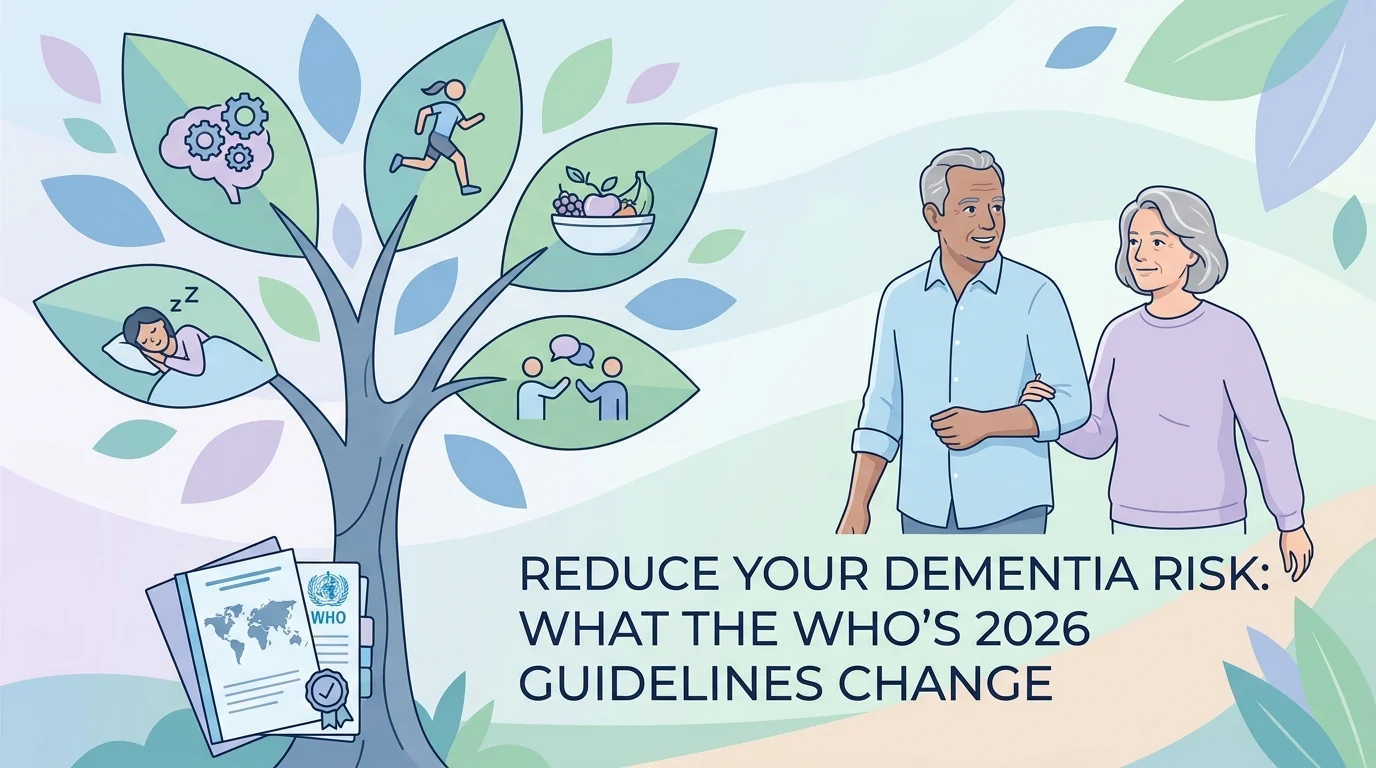
Maailman terveysjärjestö WHO julkaisi 15. heinäkuuta 2026 toisen painoksen ohjeistaan kognitiivisen heikentymisen ja dementian riskin vähentämiseksi – ja pääviesti on rohkaiseva: dementiariskiä voi pienentää, sillä jopa 45 % tapauksista maailmanlaajuisesti voitaisiin viivästyttää tai ehkäistä. Suuri osa tästä mahdollisuudesta perustuu arkisiin terveystekijöihin, jotka näkyvät suoraan laboratoriovastauksistasi – kolesterolisi, verensokerisi ja verenpaineesi. Tässä artikkelissa kerromme, mitä uudet WHO:n ohjeet muuttivat, mitkä verikokeet seuraavat niitä riskitekijöitä, joihin voit itse vaikuttaa, ja miksi ohjeet kehottavat sinua testaamaan ennen kuin turvaudut lisäravinteisiin.
Mitä WHO:n uudet dementiaohjeet todella sanovat
Toinen painos päivittää WHO:n vuonna 2019 antamia suosituksia ja kokoaa yhteen vuosien uuden tutkimusnäytön. Se pitää kiinni keskeisestä ajatuksesta, että dementia ei ole pelkästään iän tai perimän kysymys, ja korostaa, että tavallisten terveysongelmien hallinta koko elämän ajan voi pienentää riskiä. Ensimmäistä kertaa mukaan on otettu myös ympäristötekijät – kuten ilmansaasteille altistumisen vähentäminen – ja ohjeet suosivat yksilöllisiä, monivaiheisia ehkäisysuunnitelmia yksittäisten pikaratkaisujen sijaan. Paljon siteerattu "jopa 45 %" tarkoittaa, että lähes puolet dementiatapauksista liittyy tekijöihin, joihin voidaan periaatteessa vaikuttaa. Jos aihe on sinulle uusi, voi olla hyödyllistä tutustua ensin dementian eri tyyppeihin.
Dementian riskitekijät, jotka voidaan mitata verikokeella
Useat WHO:n korostamat riskitekijät ovat sellaisia, jotka rutiinikoe tai yksinkertainen verenpaineen mittaus voi paljastaa kauan ennen kuin muistiongelmia ilmaantuu. Pitämällä ne terveellisellä tasolla suojaat sydäntäsi ja – kasvavan tutkimusnäytön mukaan – myös aivoasi. Alla oleva taulukko näyttää tärkeimmät tekijät ja sen, miten niitä seurataan.
| Riskitekijä | Miten se mitataan | Miksi se on tärkeää aivoillesi |
|---|---|---|
| Korkea verenpaine | Verenpaineen mittaus (kaksi lukua) | Kohonnut verenpaine keski-iässä on yksi vahvimmista muutettavissa olevista riskitekijöistä |
| Korkea verensokeri tai diabetes | Paastoarvo verensokerista ja HbA1c | Pitkäaikaisesti korkea verensokeri on yhteydessä suurempaan dementiariskiin |
| Korkea LDL-kolesteroli | Lipidiprofiili (LDL, HDL, triglyseridit) | Keski-iän LDL-kolesteroli on vaatimattomasti yhteydessä dementiaan vuosia myöhemmin |
| Matala B12-vitamiini tai D-vitamiini | Vitamiini- ja ravinnepaneeli | Todellisen puutostilan korjaaminen tukee hermoston ja aivojen terveyttä |
| Krooninen tulehdus | Merkkiaineet kuten CRP | Pitkäkestoinen tulehdus saattaa edistää kognitiivista heikentymistä |
Nämä ovat tavallisia kokeita, joita sinulla saattaa jo olla tallessa. Lukujen tarkempaa tulkintaa varten lue lipidipaneelioppaammme, tarkista kolesterolisuhtees, ymmärrä verensokeritasosi, tutustu A1C-muunnostaulukkoomme ja lue verenpaineoppaammme. Jos verensokeri on päähuolenaiheesi, voit myös lukea diabetesoppaammme.
Ravintolisät: miksi WHO suosittelee testaamaan ensin
Yksi uusien suositusten selkeimmistä viesteistä koskee sitä, mitä ei kannata tehdä. WHO ei suosittele B-vitamiinin, E-vitamiinin, monivitamiinien tai omega-3-lisien ottamista pelkästään dementian ehkäisemiseksi, ellei verikoe osoita todellista puutosta. Yksinkertaisesti sanottuna: ravintolisästä on hyötyä vain silloin, kun sinulla on aito puutos – muuten se lisää kuluja, ei suojaa. Siksi on järkevää tarkistaa tasosi ensin: yksinkertainen verikoe voi paljastaa, onko B12-vitamiinisi tai D-vitamiinisi matala, ennen kuin ostat pillereitä, joista ei ehkä ole mitään hyötyä. Katso, mitä ravitsemuksellinen tarkistus kattaa: tutustu vitamiini- ja ravintopaneeliimme, opi tunnistamaan matalan B12-vitamiinin merkit ja tulkitse D-vitamiinin verikoearvosi.
Mitä uusin tutkimus lisää
WHO:n suositukset perustuvat laajaan tuoreeseen tutkimusnäyttöön. Muutamat löydökset auttavat selittämään, miksi edellä mainitut laboratorioarvot ovat tärkeitä – muistaen kuitenkin, että suurin osa tästä näytöstä osoittaa yhteyksiä, ei syy-seuraussuhteita.
Vuoden 2024 katsaus The Lancet Healthy Longevity -lehdessä koosti kymmeniä tutkimuksia ja havaitsi, että muutamat yleiset tekijät – kuten korkea verenpaine, kuulon heikkeneminen, liikkumattomuus ja ylipaino – selittävät suuren osan dementiatapauksia; yhdessä tarkasteltuna joukko arkisia riskitekijöitä liittyi noin puoleen tapauksista. Mitä tämä tarkoittaa sinulle: mikään yksittäinen muutos ei ole ihmelääke, mutta useiden terveellisten tapojen yhdistäminen tuottaa todellisia tuloksia.
Vuoden 2025 sairaalarekisterien analyysi havaitsi, että henkilöillä, joiden LDL-kolesteroli (ns. "paha" kolesteroli) oli matala – alle 70 mg/dL – esiintyi noin neljänneksen vähemmän dementiatapauksia kuin niillä, joiden LDL oli korkea, yli 130 mg/dL; statiineja käyttävillä havaittiin lisäksi pieni lisähyöty. Mitä tämä tarkoittaa sinulle: tavallisessa lipidipaneelissa jo näkyvä LDL-arvo saattaa olla merkityksellinen aivoterveytesi kannalta, ei vain sydämesi. Tämä ei ole syy muuttaa lääkitystäsi omatoimisesti – siitä kannattaa keskustella lääkärisi kanssa.
Erillinen vuoden 2024 katsaus osoitti, että aivohalvauksella, dementialla ja myöhäisiän masennuksella on samat muutettavissa olevat riskitekijät – muun muassa verenpaine, verensokeri, kolesteroli ja munuaisten terveys. Mitä tämä tarkoittaa sinulle: yksi sydänterveellinen elintapa, jota seurataan muutamalla tutulla verikokeella, tuottaa hyötyä monella eri tavalla kerralla. Lukijoille, jotka ovat kiinnostuneita uudemmista diagnostisista välineistä, selitämme myös p-tau217-verikokeen.
Milloin keskustella lääkärin kanssa
Ennaltaehkäisy toimii parhaiten, kun tiedät lähtötilanteesi. Terveystarkastuksen varaaminen on kannattavaa, jos verenpainettasi, verensokeriasi tai kolesteroliasi ei ole koskaan mitattu aikuisiällä, jos suvussasi esiintyy dementiaa ja haluat lähtötason mittauksen, tai jos sinä tai lähipiirisi huomaatte muistimuutoksia. Lääkäri voi määrätä oikeat kokeet ja – yhtä tärkeää – tulkita ne asiayhteydessä. Yksi varoitus WHO:lta ja vuoden 2026 Alzheimer’s Association International Conference -kokouksen asiantuntijoilta: Alzheimerin taudin veribiomerkkikokeita ei ole tarkoitettu väestötason seulontaan, eivätkä ne korvaa kattavaa lääketieteellistä arviota.
Sanasto
| Termi | Määritelmä |
|---|---|
| Dementia | Yläkäsite pysyvälle muistin ja ajattelun heikentymiselle, joka häiritsee päivittäistä elämää. |
| Muutettavissa oleva riskitekijä | Riskitekijä, johon voit itse vaikuttaa, kuten verenpaine – toisin kuin ikä tai perimä. |
| LDL-kolesteroli | "Paha" kolesteroli; korkeat tasot voivat kertyä verisuonten seinämiin. |
| HbA1c | Verikoe, joka kertoo keskimääräisen verensokerisi noin kolmen kuukauden ajalta. |
| Lipidipaneeli | Verikoe, joka mittaa kolesterolin ja triglyseridit. |
| Homokysteiini | Veressä esiintyvä aminohappo; korkeiden tasojen on yhdistetty verisuoni- ja aivoongelmiin. |
| Kognitiivinen heikentyminen | Muistin, tarkkaavaisuuden tai ajattelunopeuden asteittainen heikkeneminen. |
| Väestöön kohdistuva osuus | Se osuus väestön tapauksista, jotka voitaisiin mahdollisesti välttää, jos tietty riskitekijä poistettaisiin. |
Usein kysytyt kysymykset
Voitko todella pienentää dementiariskiäsi?
Et voi taata, ettet koskaan sairastuisi dementiaan, mutta WHO arvioi, että jopa 45 % tapauksista maailmanlaajuisesti liittyy tekijöihin, joihin voit itse vaikuttaa. Elintavat, kuten liikunnallinen aktiivisuus, kuulon suojaaminen, tupakoimattomuus sekä verenpaineen, verensokerin ja kolesterolin hallinta, ovat hyväksi sydämellesi ja voivat hyödyttää myös aivojasi.
Mitkä verikokeet ovat tärkeitä dementiariskin kannalta?
Hyödyllisimmät arkiset kokeet ovat lipidiprofiili kolesterolin mittaamiseksi, paastoverensokeri ja HbA1c verensokerin seurantaan sekä verenpaineen mittaus. Vitamiini- ja ravitsemuspaneeli voidaan lisätä, jos sinulla on oireita tai lääkärisi epäilee puutostilaa. Nämä kokeet eivät diagnosoi dementiaa – ne seuraavat riskitekijöitä, joihin voit vaikuttaa.
Nostaako korkea kolesteroli dementiariskiä?
Tutkimukset viittaavat siihen, että korkea LDL-kolesteroli keski-iässä on vaatimattomasti yhteydessä suurempaan dementian riskiin vuosia myöhemmin, ja että matalampi LDL liittyy harvempiin tapauksiin. Näyttö osoittaa yhteyden eikä vahvistettua syy-seuraussuhdetta, mutta kolesterolin hallintaa suositellaan jo sydänterveyden vuoksi.
Pitäisikö minun ottaa lisäravinteita dementian ehkäisemiseksi?
WHO neuvoo olemaan ottamatta B-vitamiini-, E-vitamiini-, monivitamiini- tai omega-3-lisäravinteita pelkästään dementian ehkäisemiseksi, ellei testi osoita puutosta. Järkevä askel on tarkistaa tasosi ensin ja ottaa lisäravinteita vain, jos ne ovat todella alhaiset.
Aiheuttaako diabetes dementiaa?
Diabetes ja pitkäaikainen korkea verensokeri ovat tunnettuja kognitiivisen heikentymisen ja dementian riskitekijöitä. Verensokerin pitäminen terveellisellä tasolla ruokavalion, liikunnan ja tarvittaessa lääkityksen avulla voi auttaa pienentämään tätä riskiä, vaikka se ei ole tae.
Missä iässä minun pitäisi aloittaa?
WHO suosittelee koko elämänkaaren kattavaa lähestymistapaa. Keski-ikä — 40- ja 50-vuotiaana — on erityisen tärkeä ajanjakso verenpaineen, kolesterolin ja verensokerin kannalta, mutta muutosten tekeminen aivojen terveyden tukemiseksi on harvoin liian aikaista tai liian myöhäistä.
Lähteet
- Maailman terveysjärjestö (WHO). Kognitiivisen heikentymisen ja dementian riskin vähentäminen: WHO:n ohjeet, toinen painos, 2026. who.int
- National Institute on Aging (NIH). Alzheimerin taudin ehkäiseminen: Mitä tiedämme? nia.nih.gov
- Alzheimers.gov (NIA/NIH). Voinko ehkäistä dementian? alzheimers.gov
- Stephan BCM, et al. Population attributable fractions of modifiable risk factors for dementia: a systematic review and meta-analysis. The Lancet Healthy Longevity, 2024. doi.org
- Modifiable risk factors for stroke, dementia and late-life depression: a systematic review and DALY-weighted analysis. Journal of Neurology, Neurosurgery & Psychiatry, 2024. doi.org
- Lee M, et al. Low-density lipoprotein cholesterol levels and risk of incident dementia. Journal of Neurology, Neurosurgery & Psychiatry, 2025. consensus.app
Lisälukemista
- Korkea kolesteroli: ymmärrä, ehkäise ja toimi
- Laajennettu lipidipaneeli
- Alzheimer-verikoe perusterveydenhuollossa
- Matalan HDL-kolesterolin ymmärtäminen
- Tarvitsetko todella kattavan verikokeen
Ymmärrä laboratoriotuloksiasi tekoälyn DiagMen avulla
Verenpaineesi, verensokerisi ja kolesterolisi kuuluvat harvoihin dementian riskitekijöihin, joita voit mitata ja joihin voit vaikuttaa — mutta numeroiden sivu on vaikea lukea yksin. AI DiagMe muuttaa lipidipaneelin, HbA1c:n tai vitamiinipaneelin selkeiksi, helposti ymmärrettäviksi selityksiksi, jotta näet tilanteesi ja tiedät, mistä kannattaa puhua lääkärisi kanssa. Se auttaa sinua ymmärtämään tuloksesi; se ei diagnosoi dementiaa eikä korvaa lääkärin neuvoja.
Tulkitse tuloksesi muutamassa minuutissa