









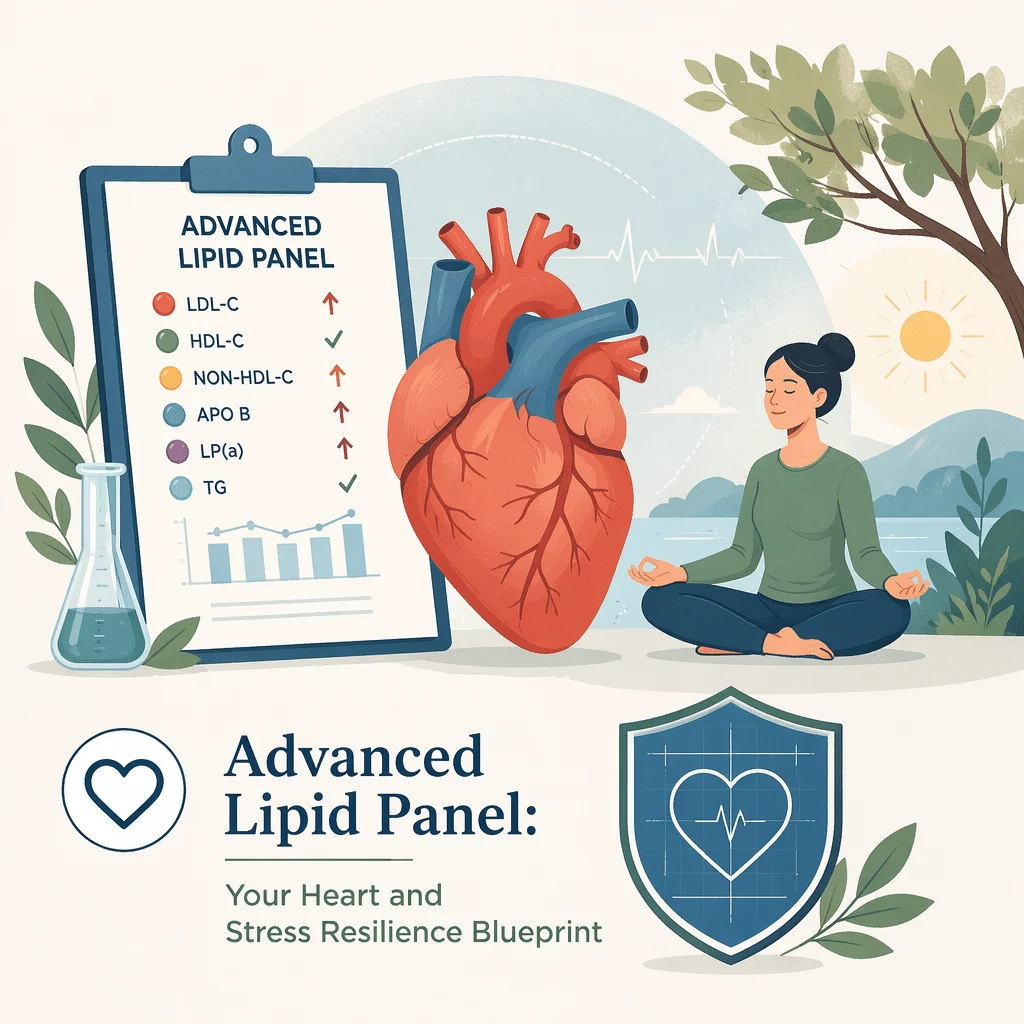
Laajennettu lipidiprofiili menee tavallista kolesterolitestiä pidemmälle mittaamalla ne merkkiaineet, jotka liittyvät tiiviimmin valtimoplakin muodostumiseen ja sydänkohtauksiin: apolipoproteiini B (ApoB), lipoproteiini(a), LDL-hiukkasmäärä ja muut. Siinä missä peruslipidiprofiili arvioi, kuinka paljon kolesterolia veressäsi on, laajennettu lipidiprofiili kertoo, kuinka monta haitallista hiukkasta on läsnä ja millaisia ne ovat. Tämä lisätieto voi paljastaa riskin henkilöillä, joiden tavalliset kolesteroliarvot näyttävät hyviltä. Tässä artikkelissa opit, mitä profiili mittaa, miten se eroaa rutiinitestistä, kenelle siitä on hyötyä ja miten tuloksia luetaan.
Mitä laajennettu lipidiprofiili mittaa
Tavallinen lipidiprofiili ilmoittaa kokonaiskolesterolin, LDL-kolesterolin (LDL-K), HDL-kolesterolin ja triglyseridit. Laajennettu lipidiprofiili sisältää nämä ja lisää merkkiaineita, jotka kuvaavat hiukkasmäärää, hiukkastyyppiä ja perinnöllistä riskiä. Tarkka valikoima vaihtelee laboratorioittain, mutta keskeiset lisäykset ovat yhtenäiset.
| Merkki | Mitä se lisää tavallisen kolesterolitestin päälle |
|---|---|
| ApoB | Suora laskelma aterogeenisistä (plakkia muodostavista) hiukkasista |
| Lipoproteiini(a) | Perinnöllinen riski, jota rutiinitesti ei näytä |
| LDL-hiukkasmäärä (LDL-P) | LDL-hiukkasten kokonaismäärä, joka voi olla korkea, vaikka LDL-K näyttäisi normaalilta |
| Pienet tiheät LDL-hiukkaset | Pienempi, valtimoihin helpommin tunkeutuva LDL-alafraktio |
| Non-HDL-K | Kolesteroli kaikissa aterogeenisissä hiukkasissa yhteensä |
| ApoA1 ja suhteet | Suojaava puoli sekä haitallisten ja suojaavien hiukkasten välinen tasapaino |
Miten se eroaa tavallisesta lipidiprofiilista
Ero on hiukkasten ja kolesterolimassan välillä. Tavallinen lipidiprofiili mittaa hiukkastesi sisältämän kolesterolin ja arvioi sitten LDL-K:n kaavalla. Tämä toimii hyvin useimmille ihmisille, mutta voi johtaa harhaan, kun hiukkaset ovat pieniä ja tiheitä tai kun triglyseridit ovat korkeat – silloin sama LDL-K-arvo voi piilottaa hyvin erilaiset hiukkasmäärät. Laajennettu testaus mittaa hiukkasia suoremmin, mikä tarkentaa kuvaa juuri näissä tilanteissa. Nähdäksesi lähtötason, jolle laajennettu testaus rakentuu, tutustu tavalliseen lipidipaneeli.
Keskeiset merkkiaineet yksitellen
ApoB: hiukkasmäärä
Jokainen aterogeeninen hiukkanen sisältää yhden ApoB-molekyylin, joten ApoB mittaa suorimmin, kuinka monta plakin muodostumiseen osallistuvaa hiukkasta sinulla on. Monet lipidilääkärit pitävät sitä tärkeimpänä yksittäisenä lukuna laajassa lipidipaneelissa. Koska se ansaitsee perusteellisen selityksen, käymme tavoitteet ja tulkinnan läpi erillisessä oppaassa aiheesta ApoB-testin.
Lipoproteiini(a): perinnöllinen merkkiaine
Lipoproteiini(a), lyhennettynä Lp(a), on LDL:n kaltainen hiukkanen, jonka taso määräytyy pitkälti geeniesi mukaan ja pysyy melko vakaana koko elämän ajan. Korkea Lp(a) lisää sydän- ja aivohalvausriskiä muista arvoistasi riippumatta, minkä vuoksi suositukset kehottavat mittaamaan sen ainakin kerran aikuisiällä. Jos suvussasi esiintyy korkeaa Lp(a):ta, kysy lipoproteiini(a)-seulonnasta.
LDL-hiukkasmäärä ja pienet tiheät LDL-hiukkaset
LDL-hiukkasmäärä (LDL-P) laskee LDL-hiukkaset suoraan, ja pienet tiheät LDL-hiukkaset kertovat alatyypistä, joka todennäköisimmin tunkeutuu valtimoiden seinämiin. Kun LDL-P on korkea mutta LDL-C vaikuttaa normaalilta, tätä ristiriitaa kutsutaan diskordanssiksi, ja se viittaa piilevään riskiin. Tämä on juuri se syy, miksi laajennettua testausta tehdään.
ApoA1 ja suhteet
ApoA1 sijaitsee suojaavissa HDL-hiukkasissa, joten se kuvastaa tasapainon hyödyllistä puolta. Haitallisten ja suojaavien jakeiden vertailu tai kolesterolisuhdelukeminen tuo lisää tietoa, jota yksittäinen luku ei pysty antamaan. Ihmiset, joilla esiintyy myös matala HDL-kolesteroli hyötyvät usein eniten tästä laajemmasta näkökulmasta.
Kenen kannattaa harkita laajennettua lipiditutkimusta?
Laajennettu lipidipaneeli on hyödyllisin silloin, kun tavallinen tutkimus jättää kysymyksiä avoimiksi. Lääkärisi saattaa suositella sitä, jos sinulla on:
- Diabetes, prediabetes, metabolinen oireyhtymä tai insuliiniresistenssi
- Korkeat triglyseridit tai normaali LDL-C, joka vaikuttaa ristiriitaiselta riskiisi nähden
- Oma tai suvun historia varhaisesta sydänkohtauksesta tai aivohalvauksesta
- Todettu sydän- ja verisuonisairaus, jota hoidat aktiivisesti
- Epävarmuus siitä, pitäisikö hoito aloittaa tai tehostaa
Vuoden 2026 ACC/AHA dyslipidemiaohjeet tukevat näiden lisätestien valikoivaa käyttöä. Ne suosittelevat Lp(a):n mittaamista ainakin kerran sekä ApoB:n käyttämistä riskin tarkentamiseen ja hoidon ohjaamiseen henkilöillä, joilla on sydän-munuais-metabolinen oireyhtymä, tyypin 2 diabetes, korkeat triglyseridit tai todettu sydänsairaus ja jotka ovat jo saavuttaneet LDL-C- ja ei-HDL-C-tavoitteensa.
Laajennetun lipidipaneelin tulkitseminen
Lue paneeli toisiinsa liittyvien vihjeiden kokonaisuutena eikä yksittäisinä lukuina. Usein kaikkein merkittävin signaali on ristiriita: hiukkasien määrää kuvaava arvo, kuten ApoB tai LDL-P, on korkeampi kuin kolesteroliarvot antaisivat ymmärtää. Alla mainitut tavoitearvot ovat yleisesti käytettyjä viitearvoja, mutta omat tavoitteesi riippuvat kokonaisriskistäsi ja ne kannattaa asettaa yhdessä lääkärisi kanssa.
| Merkki | Yleisesti käytetty tavoitearvo tai hälytysraja |
|---|---|
| ApoB | Usein ihanteellinen alle 80 mg/dl; 130 mg/dl tai enemmän on korkea |
| Lipoproteiini(a) | Korkea 50 mg/dl tai enemmän (noin 125 nmol/l) |
| LDL-hiukkasten lukumäärä | Vertaa LDL-C-arvoon ristiriidan havaitsemiseksi |
| Non-HDL-K | Alle 130 mg/dl useimmille aikuisille, matalampi suuremmalla riskillä |
Paasto, kustannukset ja testin suorittaminen
Laajennettu lipidipaneeli tehdään yhdellä verinäytteellä. Paastoa ei yleensä vaadita, mutta jotkin laboratoriot pyytävät 12 tunnin paastoa, kun triglyseridejä tai täyttä lipidiprofiilia mitataan – noudata siis laboratoriokohtaisia ohjeita. Laajennettu testaus maksaa enemmän kuin peruslipidipaneeli eikä vakuutus kata sitä aina, joten hinta ja korvattavuus kannattaa selvittää etukäteen ja keskustella lääkärisi kanssa siitä, mitkä lisäarvot ovat tilanteessasi tarpeellisia.
Uusimmat tieteelliset edistysaskeleet
Tutkimus tarkentaa jatkuvasti sitä, miten nämä lisäarvot parantavat riskin arviointia. Tässä on yhteenveto viimeisimmistä löydöksistä selkokielellä.
Vuoden 2025 tutkimuksessa verrattiin tavanomaisia ja laajennettuja lipidiarvoja sekä tulehdusmerkkiaineita henkilöillä, joilla oli tai ei ollut sepelvaltimotauti. Mallit, joihin lisättiin laajennettuja arvoja – kuten pienet tiheät LDL-hiukkaset, lipoproteiini(a) ja yksityiskohtainen HDL-hiukkasanalyysi – ennustivat sairautta paremmin kuin pelkkiin tavallisiin kolesteroliarvoihin perustuvat mallit. Käytännössä lisätiedot auttoivat tunnistamaan suuren riskin henkilöt, joiden tavalliset arvot näyttivät vain lievästi poikkeavilta. Nämä ovat tutkimustuloksia, jotka kaipaavat vielä vahvistusta laajemmissa ryhmissä, mutta ne tukevat ajatusta siitä, miksi hiukkastasoinen testaus voi olla tärkeää.
Vuoden 2025 analyysissä, jossa seurattiin yli 41 000 aikuista UK Biobankissa (suuri pitkäaikaisseurantakohortti), havaittiin, että kun ApoB ja LDL-hiukkasten lukumäärä antoivat ristiriitaisen tuloksen, ApoB ennusti sydänkohtauksia ja valtimotukkoja paremmin – ja riski kasvoi jo pienilläkin eroavaisuuksilla. Sinulle tämä tarkoittaa sitä, että hiukkasten lukumäärän mittaaminen pelkän kolesterolin sijaan voi paljastaa riskin, jonka tavallinen lipidipaneeli jättäisi huomaamatta.
Nämä uudemmat tulokset rakentuvat pitkäaikaiselle laboratoriotutkimuksen konsensukselle, jonka mukaan non-HDL-kolesteroli, ApoB ja LDL-hiukkasten lukumäärä tarkentavat riskinarviointia ristiriita-analyysin avulla – erityisesti henkilöillä, joilla on korkeat triglyseridit tai hyvin matala LDL-kolesteroli. Käytännön johtopäätös on johdonmukainen: laajennettu testaus on arvokkain silloin, kun tavanomainen kuva on epäselvä.
Sanasto
- Laajennettu lipidiprofiili: laajennettu verikoe, joka täydentää tavanomaista kolesterolitestiä hiukkas- ja perinnöllisen riskin markkereilla.
- ApoB (apolipoproteiini B): proteiini jokaisessa aterogeenisessä hiukkasessa; suora mittaus hiukkasten lukumäärästä.
- Lipoproteiini(a): perinnöllinen, LDL:n kaltainen hiukkanen, joka lisää itsenäistä sydän- ja verisuoniriskiä.
- LDL-hiukkasten lukumäärä (LDL-P): veressä olevien LDL-hiukkasten kokonaismäärä.
- Pienet tiheät LDL-hiukkaset: pienempi ja tiheämpi LDL-alatyyppi, joka tunkeutuu todennäköisemmin valtimoiden seinämiin.
- Non-HDL-kolesteroli: kokonaiskolesteroli vähennettynä HDL:llä, kattaa kaikki aterogeeniset hiukkaset.
- ApoA1: suojaavien HDL-hiukkasten tärkein proteiini.
- Ristiriita: epäsuhta kolesterolimassan ja hiukkasten lukumäärän välillä.
Usein kysytyt kysymykset
Mikä on laajennettu lipidiprofiili? Se on laajennettu kolesterolitestaus, joka lisää markkereita – kuten ApoB:n, lipoproteiini(a):n ja LDL-hiukkasten lukumäärän – antaakseen kattavamman kuvan sydänriskistä kuin tavanomainen testi.
Miten se eroaa tavanomaisesta lipidiprofiilista? Tavanomainen testi arvioi hiukkasten kuljettaman kolesterolin määrän, kun taas laajennettu testi mittaa hiukkasten lukumäärän ja tyypin – mikä voi paljastaa riskin, jota kolesteroliarvot eivät näytä.
Pitääkö olla syömättä ennen testiä? Usein ei, mutta jotkin laboratoriot pyytävät 12 tunnin paastoa, kun triglyseridejä tai täydellistä lipidiprofiilia mitataan. Noudata laboratoriosi antamia ohjeita.
Paljonko se maksaa? Se maksaa enemmän kuin peruslipidiprofiili ja korvattavuus vaihtelee, joten tarkista hinta ja vakuutusturvasi ennen testiä.
Voiko lipoproteiini(a):ta alentaa? Lp(a) on pääosin geneettinen eikä muutu juuri lainkaan elintapamuutoksilla, joten huomio kohdistuu yleensä muiden riskitekijöiden hyvään hallintaan. Uusia kohdennettuja hoitoja tutkitaan parhaillaan.
Entä jos tavanomaiset arvoni ovat normaalit? Laajennettu testi voi silti paljastaa piilevän riskin – erityisesti korkean ApoB:n, korkean Lp(a):n tai suuren hiukkasmäärän – henkilöillä, joiden rutiinitesti näyttää normaalilta.
Lisälukemista
- ApoB-testi: tärkein yksittäinen arvo
- Tavanomainen lipidiprofiili selitettynä
- Lipoproteiini(a)-seulonta
- Apolipoproteiini A1 ja suojaavat hiukkaset
- Korkea kolesteroli: ymmärrä, ehkäise, toimi
Lähteet
- American College of Cardiology / American Heart Association. 2026 Guideline for the Management of Dyslipidemia (lehdistötiedote), 2026. https://newsroom.heart.org/news/accaha-issue-updated-guideline-for-managing-lipids-cholesterol
- Cleveland Clinic. Apo B Test. https://my.clevelandclinic.org/health/diagnostics/24992-apolipoprotein-b-test
- Devaraj S, Semaan JR, Jialal I. Biochemistry, Apolipoprotein B. StatPearls, NIH National Library of Medicine, 2023. https://www.ncbi.nlm.nih.gov/books/NBK538139/
- Langlois MR, et al. Quantifying Atherogenic Lipoproteins: EAS-EFLM Consensus Statement. Clinical Chemistry, 2018. https://consensus.app/papers/details/d00ab47984df5a5b941c198fdd1eb065/
- Stock E, et al. HDL Particles, Inflammation, and Coronary Heart Disease Risk. Nutrients, 2025. https://consensus.app/papers/details/d85453427e575146859d80f3c0e0c721/
- Epstein E, et al. Apolipoprotein B outperforms LDL particle number as a marker of cardiovascular risk in the UK Biobank. Eur J Prev Cardiol, 2025. https://consensus.app/papers/details/4b787ca8162d5dbe969b3f334d8ead3a/
Ymmärrä laboratoriotuloksiasi tekoälyn DiagMen avulla
Laaja lipidipaneeli tuottaa paljon lukuja, ja niiden merkitys piilee siinä, miten ne sopivat yhteen. AI DiagMe lukee lähettämäsi raportin ja selittää, mitä ApoB-, lipoproteiini(a)-, hiukkasmaärä- ja kolesteroliarvosi saattavat merkitä sydämellesi – selkeällä kielellä, jotta voit valmistautua kohdennettuihin kysymyksiin lääkärillesi. Se auttaa sinua ymmärtämään tuloksesi; se ei diagnosoi sairautta eikä korvaa lääkäriäsi.
Tulkitse tuloksesi muutamassa minuutissa