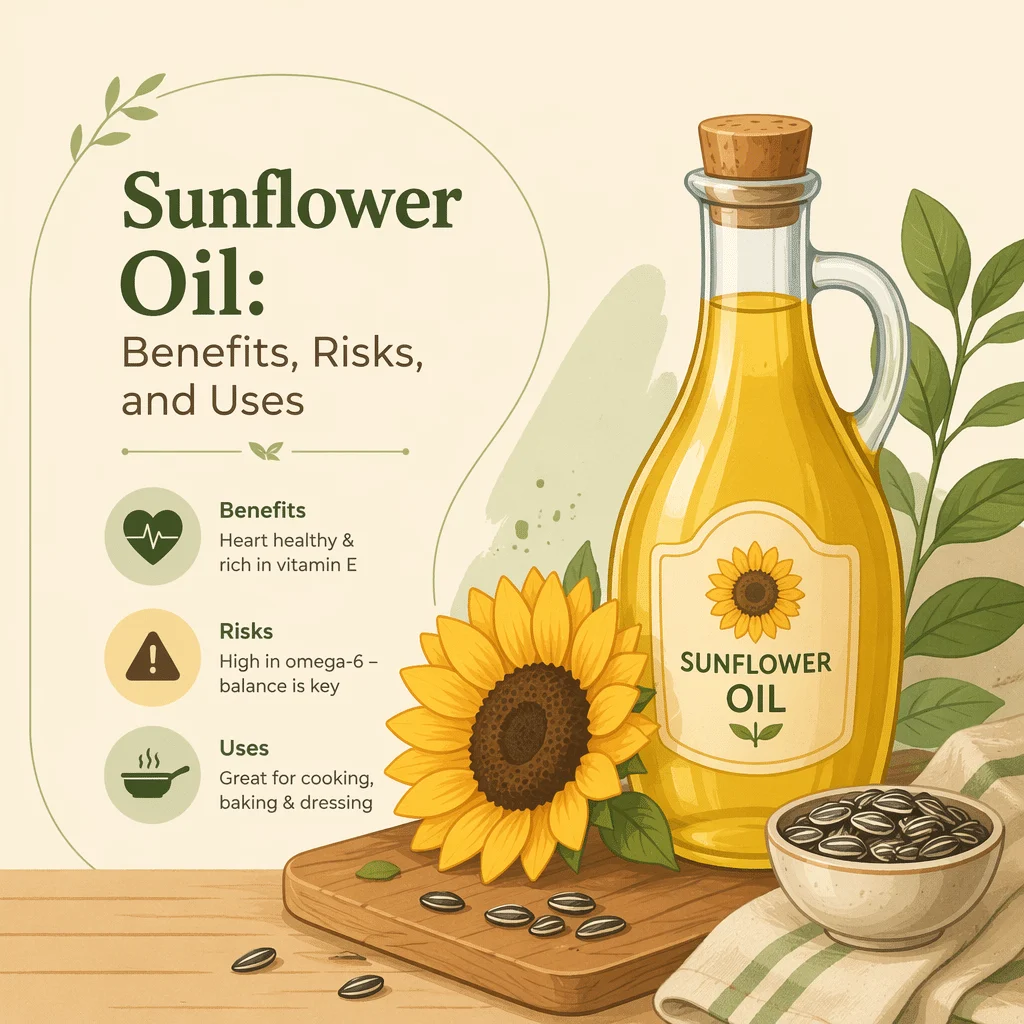
Puține ingrediente de bucătărie stârnesc atâtea dezbateri online ca acesta. Caută beneficiile uleiului de floarea-soarelui și vei găsi pagini care promit o piele mai frumoasă, o inimă mai sănătoasă și o inflamație redusă, alături de videoclipuri care numesc același produs un ulei vegetal toxic. Ambele tabere exagerează față de ce arată dovezile. Uleiul de floarea-soarelui este o grăsime de gătit larg utilizată, cu un profil nutrițional interesant și câteva limitări reale. Nu este nici măcar un singur produs: sticla etichetată „ulei de floarea-soarelui" din dulapul tău poate avea o compoziție în grăsimi foarte diferită față de cea cumpărată de vecinul tău. În acest articol vei afla ce separă principalele tipuri, ce beneficii ale uleiului de floarea-soarelui sunt susținute de cercetările actuale, cum interacționează uleiul cu rezultatele tale de colesterol și trigliceride și unde se situează cu adevărat dezbaterea despre omega-6.
Ce este uleiul de floarea-soarelui și de ce nu este un singur produs
Uleiul de floarea-soarelui este presat din semințele plantei Helianthus annuus, floarea-soarelui comună. De-a lungul câtorva decenii, amelioratorii de plante au modificat deliberat compoziția în acizi grași a culturii, pentru a face uleiul mai stabil la gătit și pentru producția alimentară industrială. Rezultatul este că mai multe uleiuri cu adevărat diferite ajung pe rafturile magazinelor sub aceleași trei cuvinte de pe etichetă, iar majoritatea discuțiilor despre beneficiile uleiului de floarea-soarelui ignoră complet acest fapt.
Grăsimea din orice ulei vegetal este un amestec de acizi grași saturați, mononesaturați și polinesaturați. În uleiul de floarea-soarelui, doi domină. Acidul linoleic este o grăsime polinesaturată omega-6 pe care organismul nu o poate produce singur. Acidul oleic este o grăsime mononesaturată, același acid care alcătuiește cea mai mare parte din uleiul de măsline. Ceea ce diferă între soiuri este raportul dintre cei doi: uleiul de floarea-soarelui tradițional este bogat în acid linoleic, soiurile noi high-oleic inversează aproape complet acest echilibru, iar tipul mid-oleic se situează între ele. Uleiul de floarea-soarelui este, de asemenea, una dintre sursele alimentare mai concentrate de vitamina E.
Rafinat și presat la rece nu înseamnă același lucru
Majoritatea uleiurilor de floarea-soarelui din supermarket sunt rafinate. Rafinarea elimină acizii grași liberi, pigmenții și compușii aromatici, rezultând un ulei cu gust neutru, de culoare deschisă, care suportă mai bine căldura și se păstrează mai mult timp. Uleiul de floarea-soarelui presat la rece sau virgin este extras mecanic, fără căldură ridicată sau solvenți chimici, păstrând astfel mai mult din aroma și culoarea semințelor. Este și mai puțin stabil, mai potrivit pentru dressinguri decât pentru gătit la temperaturi înalte. Rafinarea nu este un semn de calitate slabă, ci o alegere de procesare cu avantaje și dezavantaje.
Bogat în acid linoleic, mediu oleic și bogat în acid oleic: diferența care contează cel mai mult
Tipul de ulei de floarea-soarelui pe care îl cumperi îi schimbă profilul de acizi grași mult mai mult decât orice altă variabilă, inclusiv prețul, brandul sau originea. Tabelul de mai jos rezumă diferențele.
| Tip | Grăsimea dominantă | Cel mai potrivit pentru | Ce înseamnă pentru tine |
|---|---|---|---|
| Tradițional (bogat în acid linoleic) | Acid linoleic, o grăsime polinesaturată omega-6 | Dressinguri, copt, sotare ușoară | Cea mai polinesaturată variantă și cea mai predispusă la oxidare la căldură prelungită |
| Mediu oleic (vândut adesea ca NuSun) | Acid oleic, cu o proporție semnificativă de acid linoleic | Gătit casnic general, prăjit comercial | Un profil de compromis obținut prin selecție, destinat în principal producătorilor alimentari, nu cumpărătorilor |
| Bogat în acid oleic | Acid oleic, o grăsime mononesaturată | Prăjit, copt la cuptor, produse care necesită un termen de valabilitate lung | Singurul ulei de floarea-soarelui care poate purta mențiunea de sănătate calificată FDA pentru acidul oleic |
| Presat la rece (orice cultivar) | Depinde de varietatea de semințe folosită | Dressinguri, sosuri pentru dip, finisarea unui preparat | Păstrează aroma și culoarea, dar suportă mai puțin bine căldura și depozitarea îndelungată |
Eticheta specifică rareori acest lucru. În Statele Unite, uleiul de floarea-soarelui bogat în acid oleic este de obicei identificat ca atare, deoarece producătorii îl aleg deliberat și doresc să consemneze avantajul termenului de valabilitate. O sticlă pe care scrie pur și simplu ulei de floarea-soarelui este mai probabil să fie un produs tradițional, bogat în acid linoleic sau mediu oleic. Când acest lucru contează pentru tine, lista de ingrediente și pagina de produs a producătorului sunt mai de încredere decât eticheta de pe față.
Beneficiile uleiului de floarea-soarelui susținute de dovezi reale
Dacă lăsăm la o parte limbajul de tip „superaliment", beneficiile uleiului de floarea-soarelui care rezistă unui examen atent se reduc la trei puncte bine fundamentate.
Prima este substituția. Uleiul de floarea-soarelui este o modalitate practică de a reduce grăsimile saturate în gătit, iar acest schimb — nu uleiul în sine — este cel care produce un efect măsurabil. MedlinePlus, serviciul de informații pentru pacienți al Bibliotecii Naționale de Medicină, menționează uleiul de floarea-soarelui printre sursele comune de grăsimi polinesaturate și subliniază explicit: eliminarea grăsimilor saturate este de aproximativ două ori mai eficientă în reducerea colesterolului din sânge decât simpla adăugare a mai multor grăsimi polinesaturate. Adăugarea uleiului de floarea-soarelui peste o dietă neschimbată nu reprezintă intervenția care a fost studiată.
A doua privește vitamina E, tratată în secțiunea dedicată de mai jos, unde uleiul de floarea-soarelui este un contributor alimentar cu adevărat notabil.
A treia se aplică doar unui singur tip. Administrația pentru Alimente și Medicamente din SUA (FDA) a analizat o mențiune de sănătate calificată pentru uleiurile bogate în acid oleic, inclusiv uleiul de floarea-soarelui cu conținut ridicat de acid oleic, asociind un aport zilnic de aproximativ o lingură și jumătate, adică aproximativ 20 de grame, cu o posibilă reducere a riscului de boală coronariană, atunci când înlocuiește grăsimile cu un conținut mai ridicat de grăsimi saturate. Două condiții sunt esențiale: uleiul trebuie să conțină cel puțin 70% acid oleic per porție, ceea ce exclude complet uleiul tradițional de floarea-soarelui, iar FDA clasifică dovezile drept susținătoare, dar nu concludente — un nivel deliberat mai scăzut față de standardul său pentru acordul științific deplin. Acesta este un rezultat real, formulat cu prudență, și ar trebui prezentat la fel de prudent.
O amplă meta-analiză sistematică doză-răspuns din 2023, publicată în Critical Reviews in Food Science and Nutrition, care a adunat date din 165 de cohorte și studii clinice, a adoptat un ton similar: dovezile, privite în ansamblu, oferă un sprijin modest recomandărilor actuale de a înlocui grăsimile saturate cu grăsimi polinesaturate. Sprijinul modest nu este o garanție și nicio sticlă de ulei nu îl poate oferi singură.
Ce face uleiul de floarea-soarelui profilului tău lipidic
Aici o întrebare despre uleiurile de gătit devine o întrebare de laborator. Dacă vrei să vezi efectul oricărei modificări a grăsimilor din dietă, analizele de sânge care îl evidențiază sunt cele pe care majoritatea oamenilor le au deja în dosar. AI DiagMe publică un ghid complet care acoperă panoul lipidic standard.
Cel mai consistent rezultat din cercetarea în nutriție este că înlocuirea grăsimilor saturate cu grăsimi polinesaturate tinde să scadă colesterolul LDL — fracțiunea cel mai strâns legată de plăcile arteriale. Amploarea acestei modificări depinde de ce anume este înlocuit și în ce cantitate, nu de proprietăți speciale ale uleiului. Un articol separat detaliază valorile normale ale colesterolului LDL, iar altul explică cauzele colesterolului HDL scăzut.
Un studiu randomizat publicat în Atherosclerosis în 2024 este deosebit de relevant aici, deoarece grupul cu acid linoleic a folosit specific ulei de floarea-soarelui. Pe un eșantion de 118 bărbați, dietele îmbogățite fie cu grăsimi omega-3 vegetale, fie cu omega-6 au scăzut modest lipoproteina(a), dar au influențat diferiți alți parametri lipidici în direcții diferite, inclusiv colesterolul LDL, colesterolul non-HDL și apolipoproteina B. Uleiurile nu sunt pârghii interschimbabile, iar o singură valoare rareori reflectă complet efectul unei modificări alimentare. Un articol dedicat acoperă valorile normale ale trigliceridelor, iar altul explică raportul colesterolului.
Două precauții sunt necesare aici. Trigliceridele răspund mult mai mult la alcool, carbohidrați rafinați și calorii totale decât la tipul de ulei folosit la gătit, astfel că a da vina pe uleiul de floarea-soarelui sau a-l credita pentru un rezultat al trigliceridelor este de obicei o concluzie greșită. Și deoarece colesterolul circulă pe particule, nu dizolvat liber, unii clinicieni preferă numărarea particulelor. Un ghid separat explică testul de sânge ApoB.
Este uleiul de floarea-soarelui inflamator? Despre ce este cu adevărat dezbaterea omega-6
Îngrijorarea sună astfel: acidul linoleic poate fi transformat în organism în acid arahidonic, un precursor al mai multor molecule de semnalizare implicate în inflamație. Prin urmare, argumentul susține că consumul mai mare de grăsimi omega-6 ar trebui să crească inflamația. Este o ipoteză rezonabilă din punct de vedere mecanistic și exact tipul care trebuie testat.
Ori de câte ori a fost testat direct, predicția nu s-a confirmat în mare parte. O perspectivă din 2024 publicată în British Journal of Nutrition, scrisă de un grup de cercetători în domeniul lipidelor care au analizat dovezile din studii clinice, a concluzionat că creșterea aportului de grăsimi polinesaturate omega-6 nu crește markerii inflamației sau ai stresului oxidativ în studiile clinice controlate. Acesta este cel mai direct răspuns disponibil la întrebarea pe care oamenii și-o pun.
Imaginea nu este totuși uniform liniștitoare. O analiză din 2025 publicată în European Journal of Preventive Cardiology, care a combinat date individuale din trei cohorte mari pe termen lung cu o meta-analiză actualizată, a constatat că nivelurile circulante de acid linoleic au fost asociate cu un risc mai scăzut de accident vascular cerebral, în timp ce mai mulți acizi grași omega-6 derivați din acesta au indicat în sens opus pentru boala coronariană. Cu alte cuvinte, omega-6 nu este o singură substanță care se comportă uniform, iar nivelurile din sânge reflectă procesarea proprie a organismului, nu doar ceea ce s-a consumat.
Urmează două consecințe practice. Cadrul popular al raportului omega-6 față de omega-3 este mai puțin solid decât sugerează încrederea cu care este prezentat; majoritatea recenziilor majore subliniază importanța unui aport suficient de omega-3, nu evitarea omega-6. Și dacă inflamația te îngrijorează, aceasta poate fi măsurată, nu dedusă dintr-o listă de cumpărături. Pentru a vedea cum se face asta în practică, citește ghidul despre proteina C reactivă.
Vitamina E: nutrientul pe care uleiul de floarea-soarelui îl oferă cu adevărat
Afirmația rezistă la o analiză atentă. Conform Oficiului pentru Suplimente Alimentare al Institutelor Naționale de Sănătate din SUA, doza zilnică recomandată de vitamina E este de 15 miligrame pe zi pentru toți cei cu vârsta de 14 ani și peste, iar alfa-tocoferolul este singura formă recunoscută ca satisfăcând necesarul uman. O lingură de ulei de floarea-soarelui furnizează aproximativ 5,6 miligrame, plasând-o printre sursele alimentare cotidiene mai consistente.
Contextul pune lucrurile în perspectivă. Aceeași sursă NIH precizează că deficiența propriu-zisă de vitamina E este rară și că simptomele clare ale deficienței nu au fost observate la persoane altfel sănătoase care consumă cantități relativ mici de vitamina E din alimentație. O deficiență cu semnificație clinică apare în principal în afecțiunile care afectează absorbția grăsimilor, cum ar fi fibroza chistică sau boala Crohn, deoarece vitamina E are nevoie de grăsimi alimentare pentru a fi absorbită. Statusul se evaluează prin măsurarea alfa-tocoferolului seric, iar AI DiagMe publică un ghid despre analizele de sânge pentru vitamina E.
Nimic din toate acestea nu face din vitamina E un motiv să bei ulei de floarea-soarelui cu lingura. Aporturile mai mari din alimente nu sunt asociate cu beneficii la persoanele sănătoase, iar suplimentarea în doze mari este o problemă separată, cu propriile riscuri.
Gătitul cu ulei de floarea-soarelui: căldură, reutilizare și depozitare
Fiecare ulei are o temperatură la care începe să se degradeze și să fumege, iar acest punct depinde de profilul acizilor grași, de gradul de rafinare și de cât de mult a mai fost folosit uleiul. Uleiul de floarea-soarelui rafinat tolerează căldura mai bine decât cel presat la rece, iar cel bogat în acid oleic mai bine decât cel bogat în acid linoleic, deoarece grăsimile mononesaturate sunt mai puțin reactive chimic decât cele polinesaturate. Această ierarhie este mai utilă decât orice temperatură publicată, deoarece valorile reale variază între loturi și metode de testare.
Ceea ce contează într-o bucătărie de acasă este mai simplu decât sugerează graficele punctelor de fum. Încălzirea oricărui ulei până când fumegă îl degradează și produce compuși pe care mai bine nu i-ai consuma, așa că regula practică este să menții tigaia sub acel prag. Refolosirea repetată a uleiului de prăjit accelerează aceeași degradare; uleiul care s-a întunecat, s-a îngroșat sau a căpătat un miros înțepător, asemănător vopselei, ar trebui aruncat, nu strecurat și refolosit. Și deoarece uleiurile polinesaturate se oxidează la contactul cu aerul, lumina și căldura, uleiul de floarea-soarelui se păstrează cel mai bine sigilat, într-un dulap răcoros, nu lângă aragaz.
Riscuri, alergie și când să consulți un medic
Uleiul de floarea-soarelui nu este un aliment cu risc ridicat, dar câteva aspecte merită o tratare corectă, nu simple asigurări generale, și ar trebui incluse în orice prezentare onestă a beneficiilor și dezavantajelor uleiului de floarea-soarelui.
Alergia este rară, dar reală. Alergia la semințe de floarea-soarelui este documentată și, deși uleiurile foarte rafinate conțin foarte puțin reziduu proteic din semințe, uleiurile nerafinate rețin mai mult. Oricine are o alergie cunoscută la semințe de floarea-soarelui ar trebui să trateze uleiul nerafinat cu precauție și să discute cu un alergolog, în loc să experimenteze. Un medic poate recomanda un test de sânge pentru alergii când istoricul este neclar.
Densitatea calorică se aplică și aici, ca în cazul oricărui ulei. Toate uleiurile culinare sunt grăsime pură și printre cele mai bogate în energie din bucătărie, motiv pentru care metoda de gătit contează adesea mai mult decât alegerea uleiului.
Pancreasul merită și el menționat. Nivelurile foarte ridicate de trigliceride pot declanșa pancreatită, iar persoanelor cu astfel de antecedente li se oferă de obicei recomandări dietetice specifice privind grăsimile, nu sfaturi generale. Dacă te regăsești în această situație, este util să înțelegi ce înseamnă nivelul lipazei înainte de următoarea consultație.
Discută cu un medic sau cu un dietetician autorizat despre creșterea aportului de grăsimi dacă te regăsești în oricare dintre situațiile de mai jos:
- Ai primit un diagnostic de colesterol ridicat, trigliceride mari sau altă tulburare lipidică, ori urmezi un tratament cu medicamente pentru scăderea lipidelor.
- Ai boli cardiovasculare stabilite, diabet sau boală cronică de rinichi.
- Ai antecedente personale sau familiale de pancreatită sau un nivel foarte ridicat de trigliceride înregistrat anterior.
- Ai o afecțiune care afectează absorbția grăsimilor, cum ar fi fibroza chistică sau boala Crohn.
- Ai o alergie cunoscută la semințe sau nuci și nu ești sigur(ă) ce uleiuri sunt sigure pentru tine.
- Plănuiești o schimbare semnificativă a alimentației și vrei ca valorile de dinainte și de după să fie măsurate corespunzător.
Cele mai recente progrese științifice
Cercetările privind uleiurile de gătit au evoluat vizibil între 2023 și 2026, în mare parte ca răspuns la dezbaterea publică despre uleiurile din semințe. Iată ce s-a schimbat, pe înțelesul tuturor, pentru cei care cântăresc beneficiile uleiului de floarea-soarelui față de avertismente.
Cercetătorii au luat în serios acuzațiile la adresa uleiurilor din semințe și le-au analizat în mod formal. O recenzie narativă din 2025, publicată în Nutrition Reviews, a examinat dacă uleiurile din semințe sunt responsabile de bolile cardiometabolice și cronice și nu a găsit dovezi care să susțină varianta extremă a acestei afirmații, menționând totodată că o mare parte din cercetările de bază sunt observaționale și că discuția publică a depășit cu mult dovezile disponibile. Ce înseamnă asta pentru tine: verdictele categorice de pe internet, în ambele direcții, nu sunt susținute de o literatură științifică consolidată.
Calitatea generală a dovezilor a fost evaluată, nu presupusă. O recenzie umbrelă din 2024, publicată în Advances in Nutrition, a adunat 48 de studii care acoperă peste 200 de meta-analize despre uleiurile vegetale comestibile și a evaluat cât de fiabile sunt concluziile fiecăruia. Mesajul central: certitudinea dovezilor privind uleiurile de gătit variază de la moderată până la foarte scăzută, în funcție de rezultatul analizat. Ce înseamnă asta pentru tine: oricine citează o cifră spectaculoasă despre un ulei de gătit citează aproape sigur din capătul mai slab al acestui spectru.
Întrebarea despre omega-6 a primit un răspuns mai nuanțat. Analiza din 2025 publicată în European Journal of Preventive Cardiology, menționată anterior, a arătat că niveluri mai ridicate de acid linoleic circulant au fost asociate cu un risc mai scăzut de accident vascular cerebral, în timp ce mai mulți acizi grași pe care organismul îi produce din acesta au indicat o direcție mai puțin favorabilă pentru bolile coronariene. Ce înseamnă asta pentru tine: a trata toate grăsimile omega-6 ca pe un singur vinovat, sau ca pe un singur erou, nu corespunde cu ceea ce arată măsurătorile.
În final, uleiul de floarea-soarelui în sine a fost testat într-un cadru controlat. Studiul Atherosclerosis din 2024 a utilizat uleiul de floarea-soarelui ca sursă de omega-6 și a constatat o reducere modestă a lipoproteinei(a), un marker de risc cardiovascular parțial ereditar, alături de modificări mixte ale altor valori lipidice. Ce înseamnă asta pentru tine: modificările grăsimilor din dietă influențează simultan mai multe valori de laborator, în direcții diferite — de aceea este mai util să citești un panou complet decât să te fixezi pe o singură linie din el.
Niciunul dintre aceste rezultate nu demonstrează că vreun ulei de gătit previne sau tratează vreo boală și niciunul nu înlocuiește sfatul medical individual.
Glosar
| Termen | Definiție |
|---|---|
| Acidul linoleic | Principalul acid gras polinesaturat omega-6 din uleiul de floarea-soarelui tradițional. Organismul nu îl poate produce, deci trebuie obținut din alimentație. |
| Acidul oleic | Un acid gras mononesaturat care predomină în uleiul de măsline și în uleiul de floarea-soarelui cu conținut ridicat de oleic. Este mai stabil la căldură decât acidul linoleic. |
| Grăsime polinesaturată | O grăsime cu mai multe duble legături în lanțul său. Rămâne lichidă la rece și se oxidează mai ușor decât alte grăsimi. |
| Grăsime mononesaturată | O grăsime cu o singură dublă legătură. Este în general mai stabilă la gătit și la depozitare. |
| Ulei de floarea-soarelui cu conținut ridicat de oleic | Un soi obținut prin selecție astfel încât acidul oleic să înlocuiască cea mai mare parte a acidului linoleic, oferind o durată de valabilitate mai lungă și o toleranță mai bună la căldură. |
| Alfa-tocoferol | Forma de vitamina E recunoscută ca satisfăcând necesarul uman și cea măsurată printr-un test de sânge. |
| Punctul de fum | Temperatura la care un ulei începe să fumege vizibil și să se degradeze. Scade pe măsură ce uleiul este refolosit. |
| Râncezirea | Degradarea care apare atunci când grăsimea reacționează cu oxigenul, lumina sau căldura, producând mirosuri și arome neplăcute. |
| Apolipoproteina B (ApoB) | O proteină prezentă pe fiecare particulă purtătoare de colesterol care poate pătrunde în peretele arterial, reflectând astfel numărul de particule. |
| Lipoproteina(a) | O particulă care transportă colesterolul, al cărei nivel este în mare parte ereditar și care se măsoară ca marker suplimentar de risc cardiovascular. |
Întrebări frecvente
Este uleiul de floarea-soarelui mai sănătos decât uleiul de măsline?
Nu există dovezi care să justifice un verdict clar în favoarea unuia sau altuia pentru gătitul de zi cu zi. Uleiul de măsline extravirgin a fost studiat mai pe larg, în special în cadrul tiparelor alimentare mediteraneene, și conține compuși vegetali pe care uleiurile rafinate îi pierd. Uleiul de floarea-soarelui cu conținut ridicat de oleic are un profil de acizi grași mai apropiat de cel al uleiului de măsline decât uleiul de floarea-soarelui tradițional. În practică, ambele sunt alegeri rezonabile, iar ceea ce înlocuiești contează mai mult decât pe care dintre cele două îl alegi.
Ce ulei de floarea-soarelui este cel mai bun pentru prăjit?
Uleiul de floarea-soarelui cu conținut ridicat de acid oleic este opțiunea mai stabilă la temperaturi de prăjire, deoarece grăsimile mononesaturate rezistă mai bine degradării cauzate de căldură decât grăsimile polinesaturate. Uleiul rafinat se comportă mai bine în acest sens decât cel presat la rece. Indiferent de cel pe care îl folosești, să menții uleiul sub punctul de fum și să nu îl refolosești de mai multe ori contează mai mult decât eticheta.
Uleiul de floarea-soarelui crește colesterolul?
Folosit ca înlocuitor al grăsimilor bogate în grăsimi saturate, uleiul de floarea-soarelui este mai degrabă asociat cu o ușoară scădere a colesterolului LDL decât cu o creștere. Folosit în plus față de o dietă altfel neschimbată, adaugă în principal calorii. Niciun ulei de gătit nu modifică singur profilul lipidic, iar o singură analiză de sânge efectuată după câteva zile de schimbare a alimentației nu va arăta o tendință clară.
Câtă vitamina E conține uleiul de floarea-soarelui?
National Institutes of Health menționează că o lingură de ulei de floarea-soarelui furnizează aproximativ 5,6 miligrame de vitamina E, față de doza zilnică recomandată de 15 miligrame pentru adulți. Aceasta îl face un contributor important la aportul zilnic, nu o sursă completă, și nu înseamnă că mai mult ulei este mai bine.
Poate uleiul de floarea-soarelui provoca o reacție alergică?
Da, deși este rar. Alergia la semințe de floarea-soarelui există și a fost documentată în literatura medicală. Uleiurile foarte rafinate conțin foarte puține proteine reziduale din semințe, deci au mai puține șanse să declanșeze o reacție față de uleiurile presate la rece sau nerafinate. Oricine are o alergie cunoscută la semințe de floarea-soarelui ar trebui să întrebe un alergolog ce forme sunt sigure, în loc să testeze acasă.
Ar trebui să evit uleiul de floarea-soarelui dacă am trigliceridele ridicate?
Nu neapărat, și nu singur. Nivelul trigliceridelor răspunde cel mai puternic la alcool, carbohidrați rafinați, aportul caloric total și greutatea corporală, tipul de ulei de gătit jucând un rol mai mic. Dacă ai trigliceridele ridicate, pasul util este o discuție cu medicul tău despre obiceiurile tale alimentare în ansamblu, nu înlocuirea unui ulei cu altul.
Surse
- US Food and Drug Administration — FDA Completes Review of Qualified Health Claim Petition for Oleic Acid and the Risk of Coronary Heart Disease, 2018 — fda.gov
- National Institutes of Health, Office of Dietary Supplements — Vitamin E: Fact Sheet for Health Professionals, 2021 — ods.od.nih.gov
- MedlinePlus, US National Library of Medicine — Facts about polyunsaturated fats, 2024 — medlineplus.gov
- Jayedi A, et al. — Dietary intake, biomarkers and supplementation of fatty acids and risk of coronary events: a systematic review and dose-response meta-analysis of randomized controlled trials and prospective observational studies — Critical Reviews in Food Science and Nutrition, 2023 — doi.org/10.1080/10408398.2023.2251583
- Petersen KS, Maki KC, Calder PC, et al. — Perspective on the health effects of unsaturated fatty acids and commonly consumed plant oils high in unsaturated fat — British Journal of Nutrition, 2024 — doi.org/10.1017/S0007114524002459
- Shi F, et al. — Asocierea acizilor grași circulanți cu riscul bolilor cardiovasculare: analiza datelor individuale din trei cohorte prospective mari și meta-analiză actualizată — European Journal of Preventive Cardiology, 2025 — doi.org/10.1093/eurjpc/zwae315
- Lee K, Kurniawan K. — Sunt uleiurile din semințe vinovate de bolile cardiometabolice și cronice? O analiză narativă — Nutrition Reviews, 2025 — doi.org/10.1093/nutrit/nuae205
- Nuotio P, et al. — Acizii alfa-linolenic n-3 și linoleic n-6 din dietă reduc modest concentrația serică de lipoproteină(a), dar influențează diferit alte caracteristici aterogene ale lipoproteinelor: un studiu randomizat — Atherosclerosis, 2024 — doi.org/10.1016/j.atherosclerosis.2024.117562
- Voon PT, et al. — Efectele asupra sănătății ale diferitelor uleiuri vegetale comestibile: o analiză umbrelă — Advances in Nutrition, 2024 — doi.org/10.1016/j.advnut.2024.100276
Lectură suplimentară
- Colesterol ridicat: înțelege, previne, acționează
- Trigliceride mari: cauze, riscuri și cum le gestionezi
- Profilul lipidic avansat și cine are nevoie de el
- Cum să-ți citești rezultatele analizelor de sânge
- Postul înainte de un test de sânge: reguli și timp de așteptare
Înțelege-ți rezultatele analizelor cu AI DiagMe
Să schimbi uleiul din bucătărie e simplu. Să știi dacă schimbarea a avut vreun efect este mult mai greu — iar răspunsul se găsește în analizele tale de sânge, nu pe eticheta sticlei. Un profil lipidic care include colesterolul total, LDL, HDL și trigliceridele, nivelul de vitamina E și un marker inflamator precum proteina C reactivă îți oferă o imagine cu mult mai utilă decât orice regulă dietetică generală. AI DiagMe te ajută să înțelegi ce înseamnă aceste valori, pe înțelesul tău; nu îți pune un diagnostic și nu înlocuiește medicul tău.
Obține interpretarea rezultatelor în câteva minute