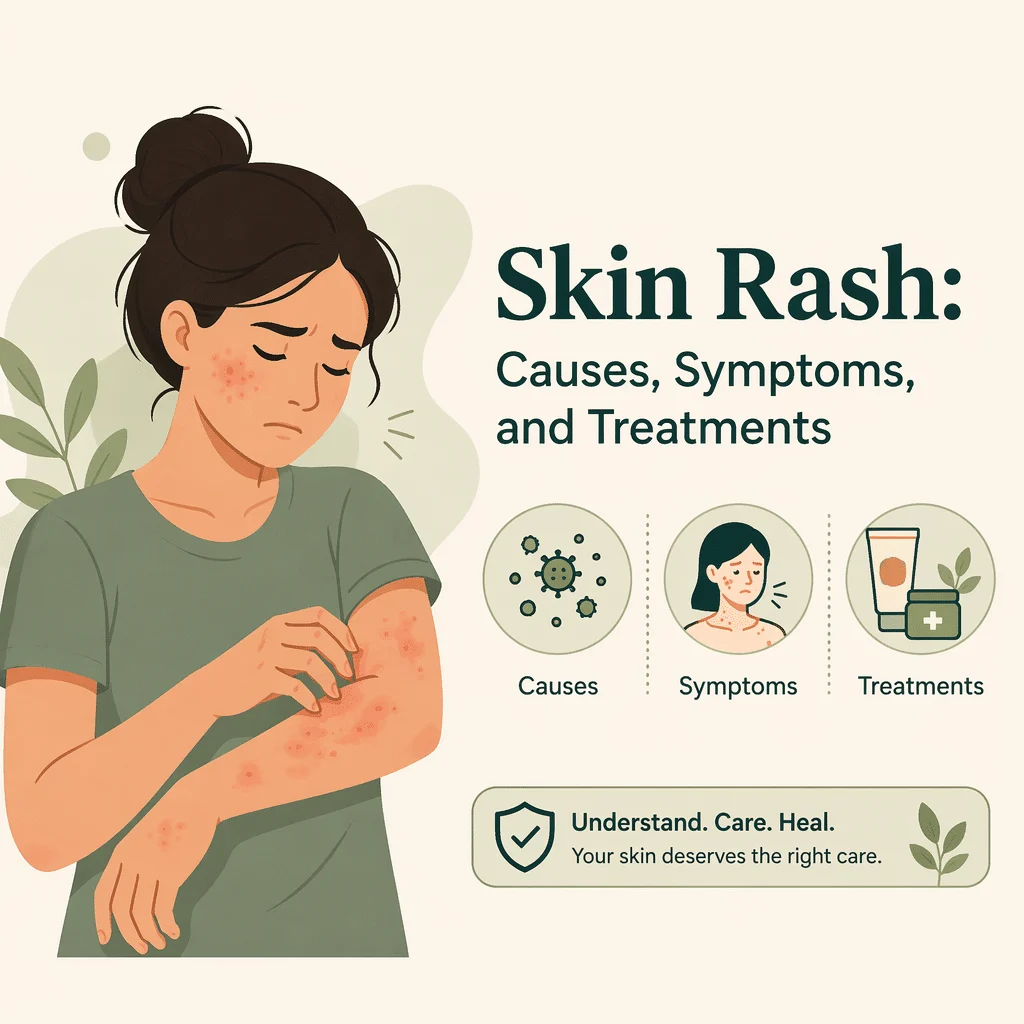
O erupție cutanată reprezintă orice modificare a culorii, texturii sau suprafeței pielii care se extinde dincolo de un singur punct, iar în cele mai multe cazuri cauza se dovedește a fi benignă și autolimitată. Ceea ce îngrijorează oamenii nu este, de obicei, erupția în sine, ci faptul că nu știu în ce categorie se încadrează. O erupție extinsă poate fi o reacție alergică, o infecție virală, o acutizare a unei afecțiuni cutanate cronice sau, mult mai rar, primul semn vizibil al unei boli care necesită îngrijire în aceeași zi.
În acest articol vei învăța cum să îți situezi propria erupție în funcție de aspectul și comportamentul ei, ce combinații de simptome înseamnă că nu trebuie să aștepți și ce analize de sânge poate recomanda un medic atunci când cauza nu este evidentă. Acest ghid acoperă erupțiile difuze, adică cele care se extind pe o zonă largă sau pe tot corpul, nu un singur punct izolat.
Ce înseamnă o erupție cutanată difuză
Medicii abordează problemele cutanate prin două întrebări foarte diferite. Prima este ce reprezintă un singur punct: un aluniță, o pată închisă la culoare, o leziune care și-a schimbat forma sau culoarea. A doua este de ce reacționează pielea pe o zonă întreagă în același timp. Acest ghid răspunde la a doua întrebare. Dacă îngrijorarea ta privește un punct pigmentat izolat, nu o erupție în extindere, biblioteca noastră oferă o comparație dedicată între o keratoză seboreică și un melanom, iar acea evaluare urmează reguli complet diferite.
Descrierea precisă a unei erupții cutanate difuze este mai utilă decât fotografierea ei. Patru caracteristici au cea mai mare greutate diagnostică: cum arată fiecare leziune în parte, cum sunt distribuite pe corp, cât de repede au apărut și ce alte simptome simți. O erupție roz plată diferă de una formată din bășici ridicate, care diferă la rândul ei de una formată din vezicule cu lichid.
Vocabularul este simplu odată înțeles. O maculă este o pată plată pe care o poți vedea, dar nu o poți simți la atingere. O papulă este o mică proeminență ridicată. O placă este o zonă ridicată mai lată decât este de groasă. O urticarie este o umflătură care apare și dispare în câteva ore. O veziculă este o mică băşică plină cu lichid clar, iar o pustulă este una plină cu puroi.
Trei întrebări care clasifică majoritatea erupțiilor cutanate
Înainte de a numi o afecțiune, este util să răspunzi la trei întrebări care separă situațiile obișnuite de cele urgente. Acestea sunt aproape de ceea ce un medic de urgență întreabă în primul minut al evaluării.
Dispare la apăsare?
Apasă ferm un pahar transparent pe erupție și privește prin el. Majoritatea erupțiilor apar din cauza vaselor de sânge dilatate, astfel că culoarea se estompează sub presiune și revine când ridici paharul. Această estompare se numește albire la apăsare și este un semn liniștitor. O erupție care își păstrează culoarea sub pahar este non-albicioasă la apăsare, ceea ce înseamnă că sângele a ieșit din vase în piele. Punctele mici non-albicioase se numesc peteșii, iar petele mai mari se numesc purpură. Niciuna dintre acestea nu trebuie urmărită acasă.
Apar vezicule sau se descuamează pielea?
Veziculele ridică nivelul de îngrijorare, mai ales când afectează buzele, gura, ochii sau organele genitale. Pielea care se desprinde în lambouri sau care doare mai degrabă decât mănâncă indică un grup restrâns de reacții severe, nu o erupție obișnuită.
Există febră?
O erupție însoțită de febră înseamnă de obicei că pielea reflectă ce se întâmplă în restul corpului. Multe dintre aceste combinații sunt boli virale obișnuite care se rezolvă de la sine. Câteva nu sunt, iar diferența se vede de regulă în cât de rău se simte persoana în general, nu doar în aspectul erupției.
| Întreabă-te | Ce sugerează | Pasul următor rezonabil |
|---|---|---|
| Culoarea dispare sub un pahar transparent | Se potrivește majorității erupțiilor obișnuite: urticarie, eczeme, erupții virale, reacții medicamentoase comune | Consultație de rutină dacă persistă, se extinde sau reapare frecvent |
| Culoarea rămâne sub pahar | Sângele a ieșit în piele sub formă de peteșii sau purpură | Evaluare în aceeași zi și îngrijire de urgență dacă există și febră |
| Sunt prezente vezicule sau pielea se descuamează | Adesea minor dacă este mic și localizat, îngrijorător dacă este extins | Îngrijire de urgență dacă sunt afectate gura, ochii sau organele genitale |
| Febra însoțește erupția | Frecvent un virus obișnuit, uneori o infecție bacteriană sau o reacție medicamentoasă severă | Consultă urgent un medic dacă ai febră mare sau te simți foarte rău |
| Pielea doare mai degrabă decât mâncărime | Durerea disproporționată sugerează o infecție profundă sau o reacție severă | Îngrijire de urgență în aceeași zi |
Erupții cutanate difuze frecvente, clasificate după aspect
Bășici ridicate și pruriginoase care se deplasează: urticarie
Urticaria, numită și urticarie, se manifestă prin papule reliefate care provoacă mâncărime intensă, adesea cu centrul palid și margini neregulate. Caracteristica lor definitorie este mobilitatea: o papulă individuală dispare de obicei în decurs de o zi, în timp ce altele noi apar în alte zone. Unele persoane dezvoltă și o umflătură mai profundă a buzelor sau a pleoapelor, cunoscută sub numele de angioedem. Urticaria acută apare frecvent după o infecție, în urma consumului unui aliment sau a unui medicament. Când papulele continuă să reapară timp de mai mult de șase săptămâni fără un factor declanșator identificabil, afecțiunea se numește urticarie cronică spontană.
Pete uscate, scuamoase și pruriginoase: eczema
Eczema, numită și dermatită atopică, produce pete uscate, aspre și extrem de pruriginoase, care apar de obicei pe fața interioară a coatelor, pe spatele genunchilor, pe gât și pe mâini. Tinde să fie ereditară și apare adesea alături de astm și rinită alergică; se agravează și se ameliorează pe parcursul anilor, în loc să apară o singură dată și să dispară. Biblioteca noastră acoperă eczemă și dermatită atopică.
Plăci bine delimitate cu scuame argintii: psoriazis
Psoriazisul creează plăci îngroșate cu margini bine delimitate și scuame alb-argintii, clasic pe coate, genunchi, zona lombară și scalp. La multe persoane provoacă mai puțină mâncărime decât eczema, dar este mai persistent și mai vizibil, fiind determinat de o inflamație mediată imunologic, nu de un iritant extern. Biblioteca noastră detaliază simptomele și factorii declanșatori ai psoriazisului.
O erupție apărută doar acolo unde ceva a atins pielea: dermatita de contact
Când marginile unei erupții urmăresc conturul unui curea de ceas, al unui colier, al unui elastic de pantaloni sau al zonei acoperite de o cremă nouă, dermatita de contact este explicația probabilă. Două mecanisme o produc: iritarea directă cauzată de o substanță agresivă și o reacție alergică întârziată care apare la una până la trei zile după expunere. Nichelul, parfumurile, conservanții din cosmetice și plantele precum iedera otrăvitoare sunt vinovații obișnuiți.
O erupție simetrică și extinsă, apărută la câteva zile după începerea unui medicament nou: erupție medicamentoasă
Cea mai frecventă erupție medicamentoasă este descrisă ca morbiliformă, adică asemănătoare cu rujeola: pete mici roz care se contopesc în plăci, apărând inițial pe trunchi și extinzându-se simetric spre membre, de obicei la patru până la paisprezece zile după începerea unui medicament nou. Majoritatea acestor erupții sunt incomode, dar nu periculoase. O minoritate reprezintă primul semn al unei reacții severe, motiv pentru care data exactă la care ai început orice medicament nou contează atât de mult pentru medicul care te evaluează.
O erupție însoțită de febră: infecții
Exantemele virale, adică erupțiile cutanate extinse cauzate de un virus, reprezintă cea mai frecventă combinație erupție-febră, în special la copii. Rujeola, rubeola, parvovirusul și mulți viruși respiratori obișnuiți le pot provoca. Cauzele bacteriene, precum scarlatina, conferă pielii o textură caracteristică, asemănătoare hârtiei abrazive. O infecție care merită recunoscută separat produce o bandă dureroasă de vezicule pe o singură parte a corpului, iar biblioteca noastră acoperă simptomele și testele pentru herpes zoster.
Cauze obișnuite care se rezolvă de obicei de la sine
Miliaria (erupția de căldură) apare sub formă de mici coșulețe înțepătoare acolo unde canalele sudoripare sunt blocate — sub elastic, sub sâni sau pe spate — și dispare odată ce pielea se răcorește și se usucă. Infecțiile fungice, cum ar fi tinea (micoza), produc pete în formă de inel cu margini ridicate și scuamoase și un centru mai clar, adesea în pliurile calde ale pielii. Înțepăturile de insecte se grupează pe zonele expuse sau apar în linii, iar sursele din casă sunt ușor de trecut cu vederea. Biblioteca noastră descrie dermatita produsă de gândacul de covor, o reacție la firele de păr ale larvelor, confundată frecvent cu mușcăturile de ploșnițe.
Erupțiile cauzate de soare apar pe zonele neacoperite de îmbrăcăminte, de obicei în câteva ore de la prima expunere intensă a sezonului. Stresul nu creează o boală de piele nouă, dar agravează în mod sigur afecțiunile existente: eczema, psoriazisul și urticaria cronică se acutizează în perioadele de somn insuficient și tensiune prelungită.
Tratamentul pentru aceste cauze obișnuite este în general simplu, iar medicii apelează de regulă la emoliante pentru refacerea barierei cutanate, antihistaminice pentru mâncărimea provocată de histamină și cure scurte de creme cu corticosteroizi topici pentru zonele inflamate. Care dintre acestea se potrivește situației tale, la ce concentrație și pentru cât timp este o decizie care îi revine medicului care te examinează.
Când o erupție cutanată necesită îngrijire urgentă
Majoritatea erupțiilor pot aștepta o consultație de rutină. Un număr mic nu pot, iar aspectul erupției în sine este semnalul de alarmă. Situațiile de mai jos necesită o evaluare de urgență, nu o programare pentru săptămâna viitoare.
- O erupție care nu dispare la presiune, adică peteșii sau purpură care își păstrează culoarea la testul cu paharul — poate semnala o infecție meningococică în sânge sau o scădere a numărului de trombocite.
- Vezicule sau descuamarea pielii care afectează gura, ochii sau organele genitale, în special la câteva zile sau săptămâni după începerea unui medicament nou.
- O erupție cutanată însoțită de febră mare, gât rigid, durere de cap severă sau confuzie.
- Roșeață care se extinde vizibil în câteva ore, cu durere disproporționată față de aspectul pielii.
- Umflarea feței, buzelor sau limbii, respirație șuierătoare sau senzație de strângere în gât — toate acestea pot sugera anafilaxie.
- Orice erupție cutanată nouă și extinsă la o persoană cu sistemul imunitar slăbit, inclusiv la cei care au început recent chimioterapia.
| Erupție cutanată plus acest al doilea simptom | De ce este necesară prezentarea la camera de gardă |
|---|---|
| Gât rigid, durere de cap severă sau confuzie | Ridică posibilitatea meningitei sau a unei infecții în sânge, unde fiecare oră contează |
| Buze sau limbă umflate, respirație șuierătoare, senzație de strângere în gât | Indică anafilaxie, care poate evolua în câteva minute |
| Răni în gură, ochi sau zona genitală după administrarea unui medicament nou | Corespunde sindromului Stevens-Johnson sau necrolizei epidermice toxice |
| Roșeață care se extinde în câteva ore cu durere severă | Sugerează o infecție profundă a țesuturilor moi, nu o erupție superficială |
| Vânătăi ușoare sau sângerare a gingiilor | Sugerează o scădere a trombocitelor care necesită o hemogramă în aceeași zi |
| Chimioterapie sau sistem imunitar slăbit | Apărarea normală a organismului este redusă, astfel că infecțiile se agravează mai repede decât de obicei |
Analize de sânge care pot explica o erupție cutanată persistentă
Nicio analiză de sânge nu poate identifica singură o erupție cutanată. Diagnosticul se pune pe baza aspectului pielii și a istoricului, iar investigațiile de laborator răspund la întrebări specifice atunci când cauza rămâne neclară, erupția persistă sau tot corpul pare afectat.
De obicei, prima investigație este hemoleucograma completă. Aceasta include numărul de trombocite — important atunci când o erupție care nu dispare la presiune ridică suspiciunea unei tendințe de sângerare — și eozinofilele, un tip de globule albe care cresc frecvent în reacțiile alergice și cele cauzate de medicamente. Biblioteca noastră explică cum să citești o hemogramă completă.
Markerii inflamatori oferă o idee despre amploarea procesului, nu despre cauza lui, iar medicul îi interpretează împreună cu examinarea clinică, nu separat. Biblioteca noastră acoperă markorul inflamator CRP.
Când se suspectează o reacție la un medicament, medicii verifică și organele pe care reacțiile severe le pot afecta alături de piele, deoarece implicarea ficatului sau rinichilor schimbă urgența cu care medicamentul trebuie oprit. Biblioteca noastră explică un panel al funcției hepatice.
Testele de alergie au un rol mai limitat decât cred majoritatea pacienților, deoarece un rezultat pozitiv arată sensibilizarea, nu că o anumită substanță a cauzat această erupție specifică. Biblioteca noastră explică testele de alergie din sânge și panelurile IgE. Pentru urticaria care durează mai mult de șase săptămâni, testarea tiroidiană este frecventă, deoarece boala tiroidiană autoimună este o afecțiune asociată recunoscută, iar biblioteca noastră acoperă valorile normale ale tiroidei. Când o erupție cutanată apare împreună cu dureri articulare, se poate adăuga un screening autoimun care include anticorpii antinucleari.
Cele mai recente progrese științifice
Cercetările publicate în ultimii trei ani au schimbat modul în care medicii înțeleg câteva dintre erupțiile cutanate descrise mai sus. Concluziile de mai jos sunt prezentate pe înțelesul tuturor și nu înlocuiesc o consultație față în față.
Erupțiile cutanate severe cauzate de medicamente sunt acum înțelese ca reacții imune greșite cu o componentă genetică
O analiză din 2024 privind reacțiile cutanate adverse severe a concluzionat că aceste erupții apar atunci când celulele imune identifică greșit un medicament ca pe o amenințare și că anumiți markeri genetici moșteniți fac anumite reacții mult mai probabile. Mai multe țări testează acum acești markeri înainte de a prescrie anumite medicamente. Ce înseamnă asta pentru tine: momentul în care ai început un medicament nou este o informație clinică cu adevărat importantă, așa că aduce la consultație data de început și numele oricărui medicament nou. O analiză complementară din 2024 a ajuns la aceeași concluzie în mod specific pentru sindromul Stevens-Johnson, menționând că nu există încă o listă de criterii diagnostice unanim acceptată — acesta este unul dintre motivele pentru care aceste cazuri sunt gestionate în spital, nu telefonic.
Urticaria cronică este de obicei un proces autoimun, nu o alergie alimentară ascunsă
O analiză din 2024 publicată într-o revistă medicală de prestigiu a raportat că urticaria spontană cronică afectează aproximativ o persoană din o sută la nivel mondial și că aproximativ una din cinci dintre acestea are și boală tiroidiană autoimună. Antihistaminicele non-sedative standard oferă o ameliorare semnificativă la aproximativ patru din zece pacienți, iar un tratament cu anticorpi țintit reprezintă al doilea pas recunoscut atunci când acestea nu sunt suficiente. Un articol din 2025 a mers mai departe și a descris subtipuri imune distincte ale afecțiunii, fiecare cu propriul răspuns probabil la tratament. Ce înseamnă asta pentru tine: dacă urticaria ta durează de luni de zile, căutarea intensivă a unei alergii alimentare este de obicei calea greșită, în timp ce o discuție despre testarea tiroidiană este adesea cea potrivită. Aceste subtipuri sunt deocamdată un instrument de cercetare, nu ceva măsurat la fiecare consultație.
Nu orice erupție cu vezicule este periculoasă
O analiză din 2024 privind eritemul multiform — o erupție cu leziuni inelare în formă de țintă, declanșată cel mai adesea de virusul herpesului labial și nu de un medicament — a subliniat cât de important este să fie diferențiată de sindromul Stevens-Johnson. Ce înseamnă asta pentru tine: erupțiile cu vezicule acoperă un spectru real, de la ușoare la critice, iar diferențierea lor este treaba unui medic care poate examina pielea și gura, nu ceva de stabilit după fotografii găsite online.
O erupție care nu dispare la presiune indică adesea o problemă cu trombocitele
O analiză din 2024 despre trombocitopenia imună, o afecțiune în care sistemul imunitar distruge trombocitele mai repede decât le poate înlocui organismul, a descris cum deficitul rezultat se manifestă prin vânătăi ușoare și peteșii punctiforme. Ce înseamnă asta pentru tine: o hemogramă simplă care include numărul de trombocite este un prim pas rapid și informativ atunci când o erupție cutanată nu dispare la presiune. Analiza a mai menționat că relația dintre cât de mult scad trombocitele și cât de intens sângerează pacientul nu este încă pe deplin înțeleasă, astfel că valoarea este interpretată împreună cu simptomele, nu izolat.
Glosar de termeni cheie
| Termen | Definiție |
|---|---|
| Dispariția la presiune | Dispariția culorii unei erupții la apăsare, de exemplu cu un pahar transparent. Majoritatea erupțiilor obișnuite se decolorează la presiune. |
| Peteșii | Puncte roșii sau violacee de mici dimensiuni, cauzate de scurgerea unor cantități mici de sânge sub piele. Nu dispar la apăsare. |
| Purpură | Pete violacee mai mari, care nu dispar la presiune, formate prin același mecanism ca peteșiile, dar pe o suprafață mai extinsă. |
| Papulă urticariană | O papulă umflată și ridicată, unitatea individuală a unei urticarii, care apare și dispare de obicei în decurs de o zi. |
| Angioedem | Umflătură profundă sub piele, cel mai vizibilă la buze și pleoape, care poate însoți urticaria. |
| Exantem | O erupție cutanată extinsă care apare în cadrul unei boli generale, cel mai adesea o infecție virală. |
| Morbiliform | Cu aspect similar rujeolei: pete mici, roz, care se contopesc în plăci mai mari. Aspectul tipic al unei erupții cutanate comune cauzate de medicamente. |
| Eozinofil | Un tip de globulă albă numărată în hemogramă. Nivelul său crește adesea în reacțiile alergice și cele legate de medicamente. |
| Mucoasă | Mucoasa umedă a gurii, ochilor și zonei genitale. Implicarea acestor suprafețe face o erupție considerabil mai gravă. |
Întrebări frecvente
De ce apare o erupție cutanată când sunt stresat?
Stresul nu creează de obicei o boală de piele complet nouă, dar este unul dintre cei mai constanți factori declanșatori ai puseelor afecțiunilor pe care le ai deja. Eczema, psoriazisul și urticaria cronică se agravează în perioadele de somn insuficient, boală și presiune prelungită, parțial din cauza hormonilor de stres care modifică activitatea imunitară, dar și pentru că tendința de a te scărpina crește atunci când ești tensionat. O erupție care apare doar în perioadele stresante și dispare ulterior este de obicei un puseu, nu un diagnostic nou. Dacă durează mai mult de câteva săptămâni sau se extinde, merită o consultație, nu o presupunere.
De ce îmi apare o erupție cutanată la soare?
Erupțiile legate de expunerea la soare apar de obicei pe zonele neacoperite de îmbrăcăminte, cum ar fi pieptul, antebrațele și dosul mâinilor, la câteva ore după prima expunere puternică din sezon. Cea mai frecventă formă este o erupție cu mici proeminențe și mâncărime, care dispare în câteva zile și devine adesea mai puțin supărătoare pe măsură ce pielea se adaptează pe parcursul verii. Unele medicamente fac pielea mult mai sensibilă la soare decât de obicei — merită să verifici acest lucru cu farmacistul tău. O erupție declanșată de soare pe față, însoțită de dureri articulare sau oboseală, este o situație diferită și trebuie evaluată corespunzător.
Cât durează până dispare erupția de căldură?
Erupția de căldură se ameliorează de obicei în câteva zile, odată ce pielea are posibilitatea să se răcorească și să rămână uscată, deoarece problema de bază o reprezintă blocarea glandelor sudoripare, nu o infecție. Hainele largi, un mediu mai răcoros și evitarea cremelor ocluzive groase pe zona afectată ajută la vindecare. Dacă coșurile devin dureroase, se umplu cu puroi sau nu se ameliorează după aproximativ o săptămână, situația s-ar putea fi transformat într-o infecție a pielii și ar trebui consultată de un medic.
De ce se extinde erupția mea cu mâncărime când mă scarpăn?
Scărpinatul deteriorează bariera cutanată și eliberează semnale inflamatorii, ceea ce face ca zona din jur să mâncărime și ea. Acesta este ciclul mâncărime-scărpinat și explică de ce o placă de eczeme se poate extinde în câteva zile fără nicio expunere nouă. În urticarie, scărpinatul sau frecatul intens poate provoca apariția unor noi papule de-a lungul liniei de scărpinat la unele persoane. Răspândirea cu adevărat infecțioasă apare în cazul infecțiilor fungice și al scabiei, astfel că o erupție care continuă să se extindă în ciuda îngrijirii blânde ar trebui examinată, nu tratată prin încercare și eroare.
Când ar trebui să merg la medic pentru o erupție cutanată?
Programează o consultație de rutină pentru orice erupție cutanată care durează mai mult de două săptămâni, revine în mod repetat, îți perturbă somnul sau nu răspunde la îngrijire simplă. Mergi în aceeași zi la urgențe dacă erupția nu dispare la presiunea unui pahar, dacă apar vezicule sau descuamare, dacă afectează gura, ochii sau organele genitale, dacă este însoțită de febră mare, gât rigid sau confuzie, sau dacă apare orice umflătură a feței sau gâtului. Aceste semne contează mai mult decât dimensiunea sau aspectul dramatic al erupției.
Poate apărea o erupție cutanată în timpul sarcinii?
Da, și există mai multe erupții specifice sarcinii, majoritatea cu mâncărime și majoritatea inofensive pentru sarcină în sine. Altele sunt afecțiuni obișnuite care se comportă diferit în timp ce hormonii și volumul de sânge se modifică. Ceea ce face sarcina diferită este că unele manifestări cu mâncărime, în special mâncărimea intensă a palmelor și tălpilor fără o erupție vizibilă, necesită evaluare promptă și analize de sânge. Din acest motiv, orice erupție nouă sau persistentă în sarcină merită semnalată echipei care te urmărește, fără să aștepți să treacă de la sine.
Surse
- MedlinePlus, National Library of Medicine — Rash, Dermatitis, Skin Rash — https://medlineplus.gov/rashes.html
- Centers for Disease Control and Prevention — Meningococcal Disease Symptoms and Complications — https://www.cdc.gov/meningococcal/symptoms/index.html
- Mayo Clinic — Stevens-Johnson Syndrome, Symptoms and Causes — https://www.mayoclinic.org/diseases-conditions/stevens-johnson-syndrome/symptoms-causes/syc-20355936
- Hung SI, Mockenhaupt M, Blumenthal KG, et al. — Severe cutaneous adverse reactions — Nature Reviews Disease Primers, 2024 — https://doi.org/10.1038/s41572-024-00514-0
- Shah H, Parisi R, Mukherjee E, Phillips EJ, Dodiuk-Gad RP — Update on Stevens-Johnson Syndrome and Toxic Epidermal Necrolysis: Diagnosis and Management — American Journal of Clinical Dermatology, 2024 — https://doi.org/10.1007/s40257-024-00889-6
- Kolkhir P, Bonnekoh H, Metz M, Maurer M — Chronic Spontaneous Urticaria: A Review — JAMA, 2024 — https://doi.org/10.1001/jama.2024.15568
- Wong D, Waserman S, Sussman GL — Endotypes of chronic spontaneous urticaria and angioedema — Journal of Allergy and Clinical Immunology, 2025 — https://doi.org/10.1016/j.jaci.2025.04.004
- Kechichian E, Dupin N, Wetter DA, et al. — Erythema multiforme — EClinicalMedicine, 2024 — https://doi.org/10.1016/j.eclinm.2024.102909
- Mititelu A, Onisai MC, Rosca A, Vladareanu AM — Current Understanding of Immune Thrombocytopenia: A Review of Pathogenesis and Treatment Options — International Journal of Molecular Sciences, 2024 — https://doi.org/10.3390/ijms25042163
Lectură suplimentară
- Dermatita spongiotică, simptome și tratamente
- Lupus: cauze, simptome și tratamente
- Panoul autoimun cu testarea ANA explicat
- Panoul funcției renale și cum să-l citești
- Viteza de sedimentare a hematiilor ca marker al inflamației
Înțelege-ți rezultatele analizelor cu AI DiagMe
O erupție cutanată se vede pe piele, dar atunci când persistă sau apare împreună cu febră, dureri articulare sau un medicament nou, răspunsul se găsește adesea și în analizele de sânge. AI DiagMe transformă rezultate precum hemoleucograma completă cu trombocite și eozinofile, un marker de inflamație precum CRP, panouri hepatice și renale, sau testele tiroidiene și de alergie în explicații clare, pe care le poți folosi cu adevărat. Te ajută să înțelegi ce arată valorile tale și care dintre ele merită o întrebare la următoarea consultație. Nu îți diagnostichează erupția și nu înlocuiește medicul care te examinează.
Obține interpretarea rezultatelor în câteva minute