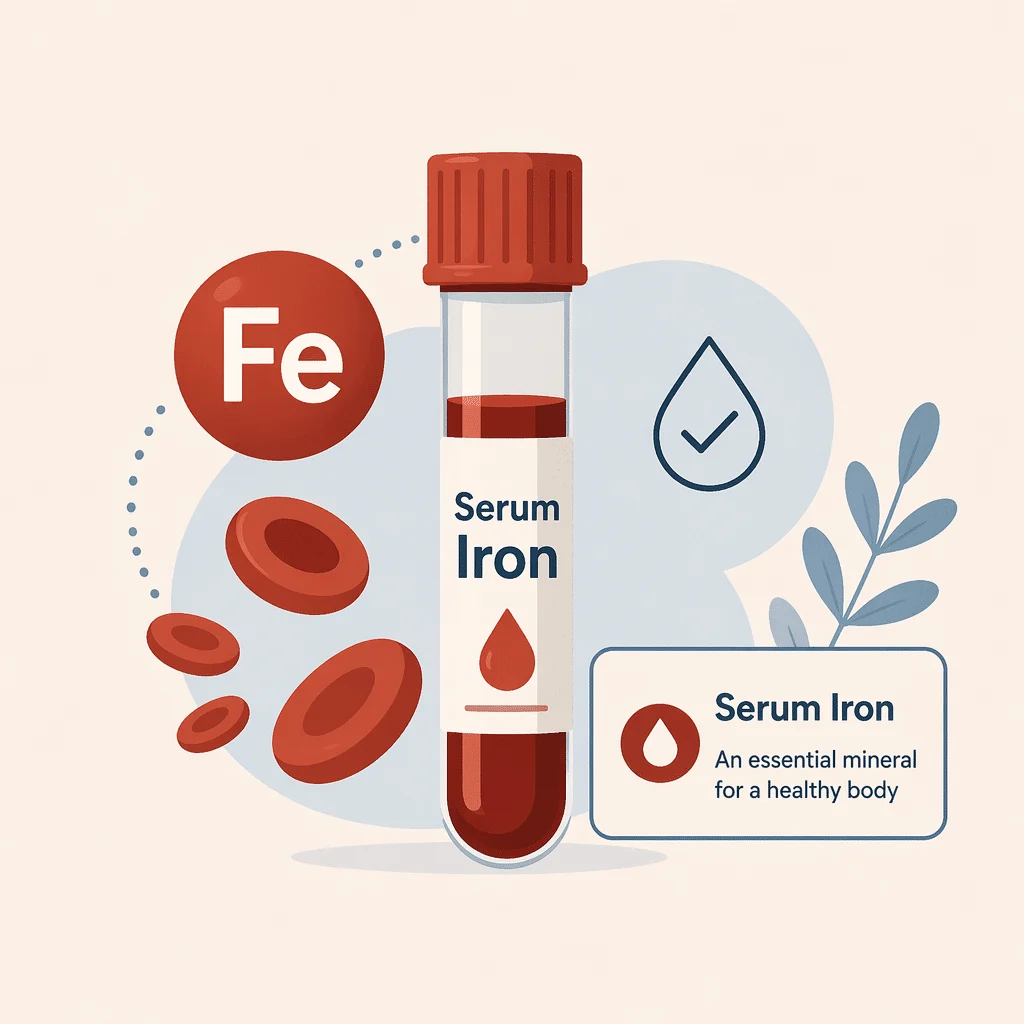
Fierul seric reprezintă cantitatea de fier care circulă liber în sângele tău și apare adesea pe un buletin de analize de rutină, alături de un interval de referință care poate fi greu de interpretat pe cont propriu. Un singur număr spune rareori tot, deoarece fierul seric poate varia în aceeași zi și după masă. Acest articol explică ce măsoară fierul seric, cum arată un interval normal, de ce apar valori ridicate sau scăzute și cum se corelează rezultatul cu feritina, transferina și saturația transferinei. Vei găsi, de asemenea, un tabel clar de interpretare, un scurt glosar și indicații despre când merită să discuți un rezultat cu medicul tău.
Ce măsoară fierul seric (și ce nu măsoară)
Fierul seric, numit uneori sideremie, măsoară fierul transportat în ser, adică în partea lichidă a sângelui tău. Organismul nu poate produce fier, așa că acesta provine în întregime din alimentație: carne roșie, organe, leguminoase și unele legume cu frunze verzi. Odată absorbit de intestin, fierul nu circulă liber. Se leagă de o proteină de transport numită transferina, care acționează ca un vehicul de livrare, ducând fierul către țesuturile care au nevoie de el.
Aceasta este limita principală a testului: fierul seric surprinde doar fierul aflat în tranzit în momentul exact al recoltării sângelui. Nu spune nimic direct despre cât fier ai în rezerve. Cu alte cuvinte, un fier seric normal poate coexista cu rezerve aproape goale, iar o valoare temporar ridicată poate apărea chiar și atunci când stocurile pe termen lung sunt în regulă. De aceea, medicii nu interpretează niciodată fierul seric izolat.
De ce are nevoie organismul de fier
Cea mai mare parte a fierului din organism se află în hemoglobină, proteina din globulele roșii care transportă oxigenul din plămâni către fiecare organ. Când fierul scade, producția de hemoglobină se reduce și țesuturile primesc mai puțin oxigen. Fierul susține, de asemenea, producția de energie în celule, repararea ADN-ului și funcționarea normală a sistemului imunitar. Rezultatul fierului seric este o fereastră spre echilibrul dintre ce consumi, ce folosești și ce ai în rezervă.
Intervalul normal al fierului seric
Intervalele de referință diferă ușor de la un laborator la altul, în funcție de metodele și populațiile de referință folosite. Valorile de mai jos sunt tipice pentru adulți și trebuie citite întotdeauna în raport cu intervalul tipărit pe buletinul tău de analize.
| Grup | Interval obișnuit al fierului seric (µg/dL) | Interval aproximativ (µmol/L) |
|---|---|---|
| Bărbați adulți | 65–175 | 12–31 |
| Femei adulte | 50–170 | 9–30 |
| Valori de referință pentru adulți | 60–170 | 11–30 |
Cea mai frecventă unitate de măsură este micrograme per decilitru (µg/dL). Unele laboratoare, mai ales în afara Statelor Unite, raportează rezultatele în micromoli per litru (µmol/L). Cifrele arată foarte diferit, dar descriu același lucru, așa că verifică ce unitate a folosit laboratorul tău înainte de a compara rezultatele în timp.
Bărbații și femeile au intervale de referință ușor diferite, în principal pentru că pierderile de sânge prin menstruație scad nivelul mediu de fier la femeile de vârstă reproductivă. După menopauză, valorile femeilor tind să se apropie de cele ale bărbaților. Aceasta explică și de ce deficitul de fier este mai frecvent la femeile care menstruează și de ce un rezultat aflat la limita inferioară a intervalului poate avea o semnificație diferită în funcție de etapa vieții tale.
De ce o singură valoare a fierului seric te poate induce în eroare
Fierul seric este una dintre cele mai variabile valori dintr-o analiză de sânge, iar înțelegerea acestei variabilități te ferește de interpretări greșite ale unui singur rezultat.
În primul rând, fierul seric urmează un ritm zilnic. Nivelurile tind să fie cele mai ridicate dimineața și scad pe parcursul după-amiezii și serii. O recoltare de dimineață și una de seară la aceeași persoană sănătoasă pot arăta destul de diferit.
În al doilea rând, alimentele și suplimentele consumate recent modifică rapid valoarea. Chiar și un multivitamin obișnuit care conține o cantitate mică de fier poate crește rezultatul. Din acest motiv, suplimentele orale de fier sunt de obicei oprite cu aproximativ 24 de ore înainte de recoltare, iar aceasta se face adesea pe nemâncate și dimineața.
În al treilea rând, anumite medicamente influențează rezultatul. Contraceptivele orale pot crește fierul seric, în timp ce unele antibiotice și aspirina în doze mari îl pot scădea. Spune întotdeauna medicului care îți solicită analizele tot ce iei.
Din toate aceste motive, fierul seric se interpretează împreună cu trei markeri complementari: feritină (rezervele tale de fier), capacitatea totală de legare a fierului (CTLF) și transferina (capacitatea de transport), și saturația transferinei (procentul din această capacitate care transportă efectiv fier). Împreună, acestea spun o poveste pe care fierul seric singur nu o poate reda.
Cum îți citești rezultatele cu panoul complet al fierului
Gândește-te la panoul fierului ca la patru piese ale unui puzzle. Fierul seric reprezintă fierul aflat în tranzit. Feritina este rezerva stocată. CTLF și transferina arată cât “spațiu de transport” este disponibil. Saturația transferinei arată cât de ocupat este acel spațiu. Combinația acestor markeri indică un tipar mult mai fiabil decât orice valoare luată separat.
Tabelul de mai jos rezumă tiparele clasice. Este un ghid pentru ce înseamnă fiecare combinație sugerează, nu un diagnostic; doar un medic poate confirma cauza după ce îți analizează istoricul complet.
| Tipar | Fier seric | Feritină | CTLF | Saturația transferrinei | Indică adesea |
|---|---|---|---|---|---|
| Deficit de fier | Scăzut | Scăzut | Crescută | Scăzut | Anemia feriprivă (prin deficit de fier) |
| Anemie de inflamație | Scăzut | Normală sau crescută | Scăzut sau normal | Scăzut sau normal | Inflamație cronică sau infecție |
| Supraîncărcare cu fier | Crescută | Crescută | Scăzut | Crescută | Hemocromatoză sau supraîncărcare cu fier |
| Distrugerea globulelor roșii | Crescută | Adesea crescut | Variabil | Crescută | Hemoliză |
Un exemplu practic: un fier seric scăzut, cu feritină scăzută și CTLF crescut, sugerează puternic că organismul rămâne fără rezerve de fier — o imagine întâlnită frecvent alături de o MCV scăzut (globule roșii mici). În schimb, un fier seric scăzut cu feritină normală sau crescută și un CRP (marker al inflamației) ridicat indică nu o lipsă reală de fier, ci mai degrabă inflamația care blochează fierul. Motivul pentru care această interpretare funcționează este că fiecare marker reacționează diferit: rezervele, capacitatea de transport și fierul circulant rareori evoluează în aceeași direcție, cu excepția cazului în care există o cauză reală și consistentă care stă la baza modificărilor.
Când fierul seric este scăzut
Un fier seric scăzut este frecvent și se datorează, de obicei, uneia dintre două situații. Deficiența de fier este, de fapt, cel mai răspândit deficit nutrițional din lume, astfel că o valoare scăzută nu este surprinzătoare în sine; sarcina reală este să înțelegi de ce de ce este scăzut.
Deficiența de fier și anemia feriprivă
În acest caz, organismul pur și simplu nu are suficient fier pentru nevoile sale. Cauzele frecvente includ o alimentație săracă în fier, pierderi de sânge (menstruații abundente sau sângerări în tractul digestiv), un necesar crescut în timpul sarcinii sau absorbție deficitară la nivelul intestinului. Semnele tipice includ oboseală persistentă, paloare, dificultăți de respirație la efort, dureri de cap și unghii sau păr fragil. Medicii confirmă de obicei tabloul clinic cu ajutorul feritinei, saturației transferinei și hemoleucogramei complete. Când rezervele sunt epuizate, feritină scăzută este adesea primul semn, apărând uneori chiar înainte de instalarea anemiei. Ajustarea dietei cu un mic dejun bogat în fier și asocierea fierului cu vitamina C pot susține recuperarea, alături de orice tratament recomandat de medicul tău.
Inflamație cronică
În timpul inflamației — cum ar fi o infecție de lungă durată, artrita reumatoidă sau boala inflamatorie intestinală — organismul reduce deliberat fierul disponibil în sânge ca mecanism de apărare, deoarece mulți germeni au nevoie de fier pentru a se înmulți. Fierul seric scade chiar dacă rezervele pot fi normale sau crescute. Indiciul este că feritina și markerii inflamatori precum CRP rămân normali sau cresc, în loc să scadă. Tratarea afecțiunii de bază — nu suplimentarea cu fier — este cea care corectează acest tipar.
Când fierul seric este crescut
Un fier seric crescut este mai puțin frecvent și indică fie un exces de fier în organism, fie eliberarea fierului în sânge.
Hemocromatoza ereditară
Această afecțiune ereditară determină intestinul să absoarbă mai mult fier decât are nevoie organismul. De-a lungul anilor, fierul se acumulează și poate afecta ficatul, inima și pancreasul. Semnele pot include oboseală marcată, dureri articulare, o nuanță bronzată sau cenușie a pielii și, ulterior, probleme precum diabetul. Un fier seric crescut împreună cu feritină foarte ridicată și o saturație a transferinei mare reprezintă tabloul de laborator tipic, iar un test genetic confirmă diagnosticul. Gestionarea practică, inclusiv scăderea în siguranță a nivelului ridicat de fier, este discutată în ghidul nostru despre hemocromatoză. Un rezultat persistent crescut se reflectă și în valorile crescute ale feritinei.
Distrugerea globulelor roșii (hemoliză)
Când globulele roșii sunt distruse mai repede decât de obicei, fierul din interiorul lor se varsă în sânge și fierul seric crește. Pot apărea îngălbenirea pielii sau a ochilor, urină închisă la culoare și oboseală. Medicii analizează markeri precum haptoglobina, bilirubina și LDH pentru a confirma acest lucru.
Un rezultat „fals" crescut din cauza suplimentelor
Comprimatele de fier luate recent, un multivitamin sau o perfuzie cu fier pot crește brusc fierul seric timp de câteva zile sau săptămâni. De aceea contează atât de mult să oprești fierul oral înainte de test și să menționezi orice perfuzie recentă. Un rezultat crescut cauzat de un supliment nu înseamnă că organismul tău este supraîncărcat cu fier, iar repetarea testului fără aport recent de fier lămurește de obicei confuzia.
Fierul seric în sarcină, copilărie și la vârste înaintate
Necesarul de fier nu este același de-a lungul vieții, astfel că ceea ce reprezintă un fier seric sănătos depinde parțial de cine ești.
Sarcină
Necesarul de fier crește semnificativ în sarcină pentru a susține dezvoltarea bebelușului și creșterea volumului de sânge al mamei. Fierul seric și rezervele scad adesea ca urmare, iar multe echipe medicale verifică statusul fierului cel puțin o dată pe trimestru. O scădere moderată este frecventă și se gestionează de obicei prin dietă și suplimente, fără a fi un motiv de îngrijorare, dar trebuie întotdeauna discutată cu moașa sau medicul tău.
Copii
Sugarii și copiii mici cresc rapid și pot depăși aportul lor de fier, în timp ce adolescenții au nevoi mai mari în perioadele de creștere accelerată și, pentru fete, după debutul menstruației. Valorile de referință pentru copii diferă de cele pentru adulți și se modifică odată cu vârsta, astfel că rezultatul unui copil trebuie interpretat în raport cu valorile pediatrice, nu cu tabelul pentru adulți de mai sus.
Adulții în vârstă
Fierul seric tinde să fie ușor mai scăzut la adulții în vârstă. O valoare scăzută la vârste înaintate nu trebuie pusă pe seama simplei „îmbătrâniri", deoarece poate fi primul semn al unei pierderi lente și ascunse de sânge la nivelul tractului digestiv, care merită investigată corespunzător.
Cum se efectuează testul fierului seric și cum să te pregătești
Testul necesită o mică probă de sânge, prelevată de obicei dintr-o venă a brațului. Deoarece rezultatul variază pe parcursul zilei și după masă, câțiva pași simpli îl fac mai fiabil.
- Fă recoltarea dimineața, dacă este posibil, deoarece nivelurile sunt în mod natural mai ridicate la începutul zilei.
- Ține post înainte de test, dacă medicul tău îți cere acest lucru.
- Oprește suplimentele de fier administrate oral cu aproximativ 24 de ore înainte de test, dacă nu ți s-a indicat altfel.
- Spune-i medicului tău despre toate medicamentele și suplimentele pe care le iei, inclusiv pilula contraceptivă.
- Nu opri niciun medicament prescris fără să verifici mai întâi cu medicul tău.
Aceste măsuri de precauție ajută ca fierul seric să fie comparabil de la un test la altul.
Când să mergi la medic
Majoritatea rezultatelor ușor anormale nu reprezintă o urgență, dar unele situații merită o consultație medicală promptă. Mergi la medic dacă observi:
- Un fier seric foarte scăzut însoțit de simptome puternice, cum ar fi dificultăți de respirație, palpitații sau leșin.
- Un fier seric crescut alături de feritină foarte ridicată, dureri articulare sau oboseală inexplicabilă.
- Antecedente familiale de hemocromatoză, chiar dacă te simți bine.
- Variații mari și inexplicabile între teste repetate.
- Menstruații abundente, sânge în scaun sau scaune negre, care pot semnala o pierdere de sânge în curs.
Adu la consultație toate rezultatele legate de fier, nu doar valoarea fierului seric, pentru ca imaginea de ansamblu să poată fi analizată împreună.
Glosar
| Termen | Semnificație |
|---|---|
| Feritină | O proteină care stochează fierul; reflectă cantitatea de fier păstrată ca rezervă în organism. |
| Hemocromatoză | O afecțiune ereditară în care organismul absoarbe și acumulează prea mult fier în timp. |
| Hemoglobină | Proteina din globulele roșii care transportă oxigenul și conține cea mai mare parte a fierului din organism. |
| Hemoliză | Distrugerea mai rapidă decât normală a globulelor roșii, care eliberează fierul acestora în sânge. |
| Anemia feriprivă (prin deficit de fier) | Anemie cauzată de lipsa fierului, care duce la globule roșii mai puține sau mai mici. |
| Sideremie | Un alt nume pentru nivelul fierului seric, adică fierul măsurat în ser. |
| CTLF (capacitatea totală de legare a fierului) | O măsură a capacității totale a sângelui de a transporta fier prin transferină. |
| Transferina | Proteina care transportă fierul prin sânge până acolo unde este necesar. |
| Saturația transferinei (TSAT) | Procentul de transferină încărcată în prezent cu fier. |
Întrebări frecvente
Care este diferența dintre fierul seric și feritină?
Fierul seric este fierul care circulă prin sângele tău în acest moment și este disponibil pentru utilizare imediată. Feritina este fierul stocat în organism, în principal în ficat. O modalitate simplă de a-ți imagina diferența: fierul seric este banii din portofel, iar feritina este soldul din contul de economii. Cele două pot da rezultate contradictorii, de aceea medicii le analizează pe amândouă. Poți avea o feritină scăzută (rezerve epuizate) chiar și atunci când o singură valoare a fierului seric pare acceptabilă, astfel că markerii de stocare oferă adesea primul semnal de alarmă al unui deficit în curs de instalare.
Analiza fierului seric necesită post alimentar?
De multe ori, da. Fierul seric crește după mese și după administrarea suplimentelor de fier, astfel că mulți medici recomandă recoltarea pe nemâncate, dimineața, când valorile sunt în mod natural mai ridicate. De asemenea, ți se poate cere să întrerupi administrarea fierului oral cu aproximativ 24 de ore înainte. Respectă întotdeauna instrucțiunile specifice ale laboratorului sau medicului tău, deoarece condițiile de pregătire pot varia în funcție de analizele solicitate împreună.
Poți avea anemie cu un nivel normal al fierului seric?
Da. Mai multe tipuri de anemie nu sunt cauzate de lipsa fierului. Anemia asociată inflamației cronice este un exemplu bun: problema nu este cantitatea de fier existentă, ci dacă măduva osoasă îl poate utiliza. Anemiile cauzate de deficitul de vitamina B12 sau de acid folic nu afectează nici ele fierul seric. Tocmai de aceea, un fier seric normal nu exclude anemia, iar hemoleucograma completă și alți markeri sunt de obicei verificați în același timp.
Pot medicamentele să modifice nivelul fierului seric?
Da, pot. Contraceptivele orale pot crește fierul seric, în timp ce aspirina în doze mari și unele antibiotice îl pot scădea. Suplimentele de fier și perfuziile recente cu fier ridică valoarea, uneori timp de câteva săptămâni. Din acest motiv, rezultatul poate fi interpretat greșit dacă medicul tău nu știe ce iei. Fă o listă cu toate medicamentele și suplimentele tale și prezint-o înainte de recoltarea sângelui, și nu opri niciodată din proprie inițiativă un medicament prescris pentru a “curăța” un rezultat.
Fierul seric este același lucru cu saturația transferinei?
Nu. Fierul seric reprezintă cantitatea absolută de fier din sânge. Saturația transferinei este un procent care arată cât din capacitatea ta de transport a fierului este ocupată. Cele două sunt legate, dar răspund la întrebări diferite. O saturație scăzută a transferinei asociată cu un fier seric scăzut sugerează deficit de fier, în timp ce o saturație ridicată cu un fier seric crescut ridică suspiciunea de supraîncărcare cu fier. Interpretate împreună, oferă mai multe informații decât fiecare în parte.
Ce unități de măsură se folosesc pentru fierul seric și diferă ele de la un laborator la altul?
Fierul seric este raportat fie în micrograme pe decilitru (µg/dL), fie în micromoli pe litru (µmol/L). Cele două scale dau valori foarte diferite pentru același sânge, astfel că o valoare care pare alarmant de mare sau de mică poate fi pur și simplu exprimată în cealaltă unitate de măsură. Intervalele de referință variază și ele ușor între laboratoare, din cauza metodelor diferite de analiză. Compară întotdeauna valoarea ta cu intervalul tipărit pe propriul tău buletin de analize și urmărește rezultatele în aceeași unitate de măsură.
Surse
- Testul fierului seric — MedlinePlus (Biblioteca Națională de Medicină a SUA, NIH)
- Anemia feriprivă: diagnostic și tratament — Mayo Clinic
- Anemia feriprivă — NHS
Lectură suplimentară
- Feritina: înțelegerea acestui marker sanguin
- Transferina: rolul său în transportul fierului
- Înțelegerea capacității totale de legare a fierului (TIBC) crescute
- Saturația transferinei explicată: valori și cauze
- Tratamentele hemocromatozei: un ghid practic
Înțelege-ți rezultatele analizelor cu AI DiagMe
Rezultatul fierului tău seric capătă mult mai mult sens atunci când îl citești alături de rezervele de fier (feritina), capacitatea de transport a fierului (transferina și TIBC) și gradul de ocupare al acestei capacități (saturația transferinei). AI DiagMe te ajută să înțelegi aceste valori împreună, în limbaj simplu, astfel încât să ajungi la consultație pregătit să pui întrebările potrivite. Este conceput să te ajute să înțelegi înțelegi rezultatele tale, nu să te diagnosticheze, și nu înlocuiește niciodată judecata medicului tău. Încearcă-l cu următorul tău buletin de analize.
➡️ Obține interpretarea rezultatelor în câteva minute