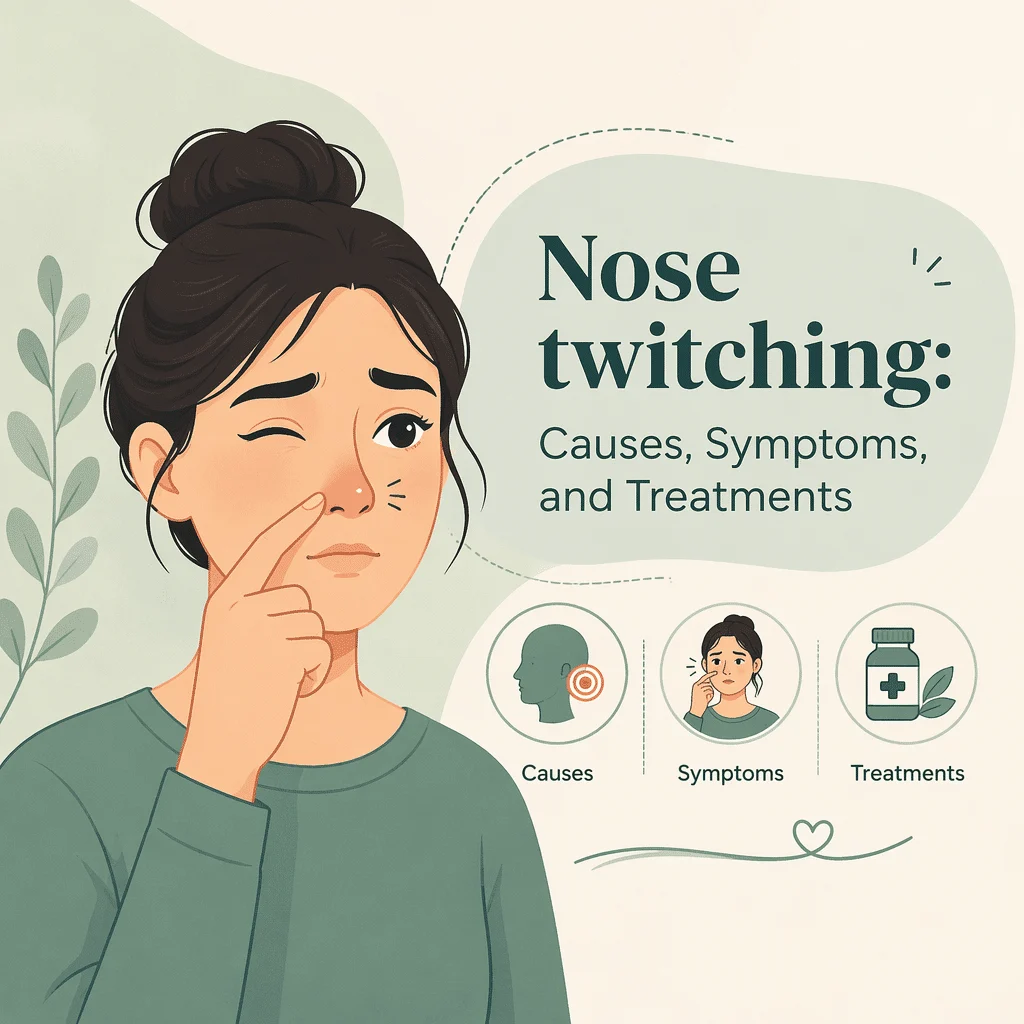
Zvâcnitul nasului este acea mișcare involuntară, ca un fâlfâit, pe care o simți atunci când un mușchi mic de lângă nară sau de-a lungul dosului nasului se contractă de la sine. De cele mai multe ori este inofensiv, trece repede și nu e motiv de îngrijorare, chiar dacă din interior poate părea destul de pronunțat. Aceste mici spasme au de obicei la bază factori obișnuiți din viața de zi cu zi, precum stresul, oboseala, cofeina sau deshidratarea, nu ceva grav. În acest articol vei afla ce este zvâcnitul nasului, care sunt cauzele frecvente și mai puțin frecvente, cum poți să-l calmezi și care sunt semnele de alarmă care indică faptul că merită să consulți un medic.
Ce este, de fapt, zvâcnitul nasului
O zvâcnitură este o contracție scurtă și involuntară a fibrelor musculare, iar când apare în zona nasului implică mușchii mici ai feței care dilată nările, încrețesc dosul nasului sau ridică buza superioară. Medicii numesc aceste mici tremurături spontane fasciculații. Ele apar când un nerv care inervează mușchiul se activează puțin mai mult decât ar trebui, trimițând un mic val de semnale care fac o parte din mușchi să tresară sau să zvâcnească. Deoarece fața are pielea subțire și o rețea densă de nervi, chiar și o zvâcnitură minoră poate părea dramatică pentru tine, deși este aproape invizibilă pentru ceilalți. Pe scurt, zvâcnirea nasului este de obicei o scurtă neînțelegere între un nerv și mușchiul pe care îl controlează.
Aceste mișcări scurte sunt extrem de frecvente. Aproape oricine a experimentat la un moment dat o zvâcnitură facială sau la pleoape, iar pentru majoritatea oamenilor este o neplăcere trecătoare, nu un simptom de boală. Știind că această mișcare este o reacție normală a modului în care nervii și mușchii comunică, te poți simți mult mai liniștit atunci când se întâmplă.
Mușchii din jurul nasului — inclusiv mușchiul nazal, care se întinde de-a lungul dosului nasului, și mușchii ridicători care ridică buza superioară — sunt controlați de nervul facial. O zvâcnitură inofensivă în această zonă este de obicei scurtă, apare și dispare în câteva minute sau ore, afectează o porțiune mică de mușchi și se rezolvă de la sine. Nu slăbește fața, nu se extinde treptat spre obraz și, de regulă, dispare odată ce factorul declanșator — o săptămână stresantă sau prea mult cafea — a trecut.
De ce o zvâcnitură mică pare atât de intensă
Mușchii faciali se atașează direct de piele pentru a putea produce expresii, ceea ce înseamnă că mișcările lor trag de suprafață mai mult decât mușchii aflați adânc în braț sau picior. Această conexiune directă explică de ce o zvâcnitură a nasului poate părea un tremur vizibil, chiar și atunci când oglinda nu arată aproape nimic. Înțelegând acest lucru, poți scăpa de o parte din anxietatea legată de această senzație, deoarece ea rareori corespunde dimensiunii reale a mișcării.
Cauze frecvente și în mare parte inofensive ale zvâcniturii nasului
Marea majoritate a episoadelor de zvâcnitură a nasului au cauze obișnuite și reversibile. Când un nerv este suprastimulat sau un mușchi este obosit, există o probabilitate mai mare să apară contracții involuntare. Factorii declanșatori obișnuiți se suprapun cu cei care provoacă și zvâcnituri ale pleoapei sau buzei.
- Stresul și anxietatea, care cresc nivelul substanțelor stimulatoare din organism și lasă mușchii predispuși la zvâcnituri.
- Oboseala și somnul insuficient, care reduc capacitatea sistemului nervos de a menține semnalele musculare stabile.
- Consumul excesiv de cafeină din cafea, ceai, băuturi energizante sau sucuri carbogazoase, care supraexcită nervii și mușchii.
- Deshidratarea și deficitul de minerale, în special dezechilibrele de magneziu, potasiu, calciu sau sodiu, care modifică modul în care nervii transmit semnalele.
- Oboseala ochilor și a feței cauzată de ecrane, încruntare sau lumină puternică, care suprasolicită mușchii faciali din apropiere.
- Nicotina din țigări sau țigări electronice, un stimulant care poate declanșa zvâcnituri.
- Suprasolicitarea mușchilor faciali după o zi cu multe expresii, râs sau suflat nasul în timpul unei răceli sau al alergiilor.
Aceste cauze au un numitor comun: împing sistemul nervos și muscular, deja solicitat, dincolo de limita sa de confort. Vestea bună este că fiecare dintre ele poate fi, de obicei, corectată. Ghidul nostru explică în detaliu deficitul de magneziu și simptomele sale, iar o simplă analiză de sânge poate verifica rezultatele analizei electroliților tăi dacă suspectezi că un dezechilibru mineral stă la baza zvâcniturilor repetate.
Factori declanșatori frecvenți și ce ajută de obicei
| Factor declanșator frecvent | Ce ajută de obicei |
|---|---|
| Stres sau anxietate | Respirație lentă, pauze și activități relaxante |
| Oboseală sau somn insuficient | Somn regulat și suficient |
| Prea multă cafeină | Mai puține cafele, ceaiuri și băuturi energizante |
| Deshidratare sau deficit de minerale | Apă și o dietă echilibrată; verifică nivelurile dacă problema reapare |
| Oboseala ochilor și a feței | Pauze de la ecran și o compresă caldă |
| Nicotina | Reducerea consumului sau renunțarea |
Când ochiul și nasul zvâcnesc împreună
Este obișnuit să simți o zvâcnitură care pare să se afle între ochi și nas sau să observi că pleoapa și nasul pâlpâie cam în același timp. De obicei, asta se întâmplă pentru că același nerv facial și aceiași factori declanșatori, cum ar fi oboseala sau cafeina, afectează mușchii vecini în același timp. Răcelile și alergiile pot agrava situația, deoarece suflatul repetat al nasului și încruntarea suprasolicită mușchii de pe podul nasului. Zvâcniturile care apar astfel, venind și trecând, sunt aproape întotdeauna benigne.
Cauze mai puțin frecvente care merită cunoscute
Uneori, zvâcniturile din zona nasului sau a feței indică ceva mai mult decât factorii obișnuiți de zi cu zi. Aceste afecțiuni sunt mult mai rare, dar merită recunoscute, deoarece unele dintre ele răspund bine la tratament medical.
Spasmul hemifacial
Spasmul hemifacial este o afecțiune neurologică în care mușchii de pe o parte a feței se contractă involuntar, debutând adesea în zona ochiului și extinzându-se treptat spre obraz, nas și gură, în decurs de luni de zile. Este cauzat de obicei de un vas de sânge care apasă pe nervul facial la locul unde acesta iese din trunchiul cerebral. Spre deosebire de o zvâcnitură inofensivă, tinde să fie persistentă, fixată pe o singură parte și poate continua chiar și în timpul somnului. O prezentare detaliată de la Cleveland Clinic acoperă spasmul hemifacial și tratamentul său.
Ticuri faciale și distonie
Ticurile sunt mișcări rapide și repetate pe care o persoană le poate suprima pentru scurt timp, dar simte nevoia să le efectueze; sunt frecvente în copilărie și dispar adesea cu timpul. Distonia este o tulburare caracterizată prin contracție musculară susținută, care poate trage fața în poziții anormale. Ambele diferă de o simplă zvâcnitură prin tiparul și persistența lor și sunt ușor de recunoscut de către un medic.
Iritarea nervului și cauze neurologice mai rare
Iritarea sau compresia unui nerv facial poate produce zvâcnituri persistente, iar biblioteca noastră acoperă sindrom de compresie nervoasă. Foarte rar, zvâcnirile faciale persistente însoțesc afecțiuni neurologice care afectează nervii și mușchii mai pe larg. Acestea sunt rare, apar de obicei împreună cu alte simptome clare, cum ar fi slăbiciunea musculară, și nu sunt ceva pe care o zvâcnitură izolată și scurtă a nasului le sugerează.
Zvâcnitură benignă sau ceva mai grav?
Majoritatea oamenilor pot distinge o zvâcnitură inofensivă de un semn de alarmă urmărind câteva caracteristici: cât durează, dacă se extinde, dacă rămâne pe o singură parte și dacă apare vreo altă modificare la nivelul feței. Tabelul de mai jos compară o zvâcnitură tipică inofensivă a nasului cu tiparul întâlnit în afecțiunile care necesită o consultație medicală.
| Caracteristică | Zvâcnitură inofensivă | Tipar care merită verificat |
|---|---|---|
| Cât durează | Secunde până la câteva zile, intermitent | Săptămâni până la luni, prezentă constant |
| Dacă se extinde | Rămâne într-un singur loc mic | Se extinde spre obraz, nas și gură |
| Ce parte | Oricare parte, se schimbă | Fixată pe o singură parte a feței |
| În timpul somnului | Se oprește | Poate continua |
| Alte simptome | Niciuna | Slăbiciune, căderea pleoapei, modificări ale vederii sau auzului |
| Factor declanșator evident | Adesea da | De obicei niciuna |
Acesta este un ghid, nu un diagnostic. Dacă zvâcnitul tău corespunde coloanei din dreapta, nu înseamnă că ceva este cu siguranță în neregulă, dar este un motiv întemeiat să faci o programare la medic.
Contează de ce parte a nasului zvâcnești?
Mulți oameni caută semnificația unui zvâcnit pe partea stângă sau dreaptă a nasului, iar unele culturi îi atribuie superstiții. Din punct de vedere medical, partea nu transmite niciun mesaj ascuns. Un zvâcnit inofensiv poate apărea pe partea stângă, pe cea dreaptă, la vârf sau pe dosul nasului și adesea se mută de la un episod la altul, pentru că reflectă pur și simplu care mușchi mic este iritabil în acel moment.
Partea devine interesantă din punct de vedere medical doar într-o situație: când zvâcnitul rămâne fixat pe o singură parte a feței timp de săptămâni și se extinde treptat. Acel tipar fix, unilateral, este semnul distinctiv al spasmului hemifacial, nu al unui simplu tremur de rutină. Deci nu contează dacă este stânga sau dreapta, ci dacă zvâcnitul este trecător și schimbător — ceea ce este liniștitor — sau persistent și fix — ceea ce merită verificat.
Cum să ameliorezi și să oprești zvâcnitul nasului
Deoarece majoritatea zvâcniturilor nasului sunt cauzate de factori legați de stilul de viață, cele mai eficiente remedii sunt simple și gratuite. Acordă câteva zile pentru ca acestea să funcționeze, deoarece mușchii și nervii au nevoie de timp să se calmeze.
- Odihnă și somn: încearcă să dormi suficient și regulat, pentru a lăsa sistemul nervos să se recupereze.
- Hidratează-te: bea suficientă apă pe parcursul zilei, mai ales pe căldură sau după efort fizic; prezentarea noastră generală explică cum gestionează organismul pierderea de lichide și deshidratarea.
- Reduce consumul de cofeină: diminuează cafeaua, ceaiul și băuturile energizante și urmărește dacă zvâcnitul dispare.
- Completează aportul de minerale: o dietă echilibrată susține niveluri stabile de magneziu, potasiu și calciu; nu începe suplimente fără recomandare medicală.
- Gestionează stresul: exercițiile de respirație, mișcarea și pauzele scurte pot reduce tensiunea care alimentează zvâcniturile; articolul nostru explică anxietatea și simptomele ei fizice.
- Relaxează tensiunea facială: odihnește-ți ochii de la ecrane și aplică o compresă caldă pentru a relaxa mușchiul.
- Limitează nicotina: renunțarea la fumat elimină un factor declanșator stimulant frecvent.
Când stresul este ridicat pentru perioade lungi, organismul continuă să elibereze hormonul de stres cortizol, ceea ce poate menține mușchii în tensiune; tratarea cauzei ajută adesea mai mult decât tratarea zvâcniturii în sine.
Cât timp să încerci îngrijirea de sine
Acordă acestor schimbări una până la două săptămâni. Majoritatea zvâcniturilor benigne ale nasului se ameliorează în câteva zile odată ce factorul declanșator este eliminat, iar chiar și cele mai persistente tind să dispară în câteva săptămâni. Notează simplu când apare zvâcnitura și ce ai consumat sau trăit în acea zi — cafea, nopți nedormite sau situații stresante — deoarece tiparul îți arată adesea direct cauza. Dacă nimic nu ajută după două săptămâni sau dacă apar semnele de alarmă menționate mai sus, treci de la îngrijirea de sine la o consultație medicală.
Când să mergi la medic pentru zvâcnitura nasului
O zvâcnitură ocazională a nasului nu necesită aproape niciodată atenție medicală. Totuși, anumite tipare merită verificate — nu pentru că ar fi de obicei grave, ci pentru că un specialist poate confirma cauza și poate oferi tratament atunci când este necesar.
Ia în considerare consultarea unui medic dacă zvâcnitura:
- Se extinde treptat de la nas spre obraz, ochi sau gură.
- Persistă constant mai mult de câteva săptămâni.
- Este fixată pe o singură parte a feței și nu se deplasează.
- Este însoțită de slăbiciune musculară, căderea unui colț al feței sau o expresie asimetrică.
- Este însoțită de modificări ale vederii, auzului, echilibrului sau vorbirii.
- Apare după un traumatism cranian sau nu se ameliorează cu odihnă și hidratare.
Ce poate implica evaluarea medicală
Medicul va începe de obicei cu istoricul tău medical și un examen fizic. În funcție de tabloul clinic, poate solicita analize de sânge pentru a verifica mineralele, funcția tiroidiană sau nivelul vitaminelor, deoarece o tiroidă hiperactivă sau o deficiență pot provoca zvâcnituri; ghidurile noastre acoperă un nivel scăzut al TSH și cauzele acestuia și niveluri scăzute de vitamina B12. Uneori se include și un test al calciului, iar investigații imagistice precum RMN-ul sau un test al nervilor și mușchilor numit electromiografie sunt folosite atunci când se suspectează o cauză neurologică. Pentru majoritatea oamenilor, aceste teste revin cu rezultate liniștitoare și confirmă că zvâcnitura este benignă.
Cele mai recente progrese științifice
Cercetările vizează rareori nasul în mod izolat, deoarece mușchii din jurul acestuia fac parte din grupul mai larg controlat de nervul facial. Prin urmare, cele mai relevante studii recente provin din cercetările despre zvâcniturile faciale și spasmul hemifacial — afecțiunea care stă la baza spasmelor persistente pe o singură parte a feței. Pe baza recenziilor medicale indexate în PubMed, iată ce iese în evidență, explicat pe înțelesul tuturor.
O analiză din 2025 publicată în Journal of Neurology a rezumat modul în care se dezvoltă spasmul hemifacial și cum este tratat. Concluzia principală este că majoritatea cazurilor sunt cauzate de un vas de sânge care apasă ușor pe nervul facial și că scanările RMN de înaltă rezoluție pot acum evidenția acest contact mai fiabil. Ce înseamnă asta pentru tine: dacă o zvâcnitură este persistentă și apare pe o singură parte, medicii au o metodă clară de a căuta o cauză tratabilă, fără a ghici.
O analiză clinică din 2024 a descris semnul distinctiv care separă această afecțiune de o simplă zvâcnitură obișnuită. O zvâcnitură benignă se oprește când te odihnești sau dormi, în timp ce un spasm hemifacial poate continua chiar și în timpul somnului și nu poate fi controlat prin voință. Ce înseamnă asta pentru tine: o întrebare simplă — se oprește când dorm? — este unul dintre cele mai utile indicii pentru a stabili dacă o zvâcnitură este inofensivă.
În final, o analiză chirurgicală din 2025 a examinat decompresia microvasculară, o intervenție care îndepărtează vasul de sânge care comprimă nervul. Aceasta a raportat că procedura ameliorează simptomele la aproximativ opt sau nouă din zece persoane, deși un număr mic dintre ele pot prezenta reapariția zvâcniturii, iar intervenția implică riscuri chirurgicale. Ce înseamnă asta pentru tine: chiar și cauzele mai puțin frecvente ale zvâcniturilor faciale au de obicei tratamente eficiente, astfel că un spasm persistent merită evaluat, nu ignorat. Aceste concluzii se referă specific la spasmul hemifacial și nu se aplică zvâcniturilor scurte și inofensive pe care le trăiesc majoritatea oamenilor.
Glosar de termeni cheie
| Termen | Definiție |
|---|---|
| Fasciculație | O mică contracție involuntară a fibrelor musculare, cauzată de descărcarea spontană a unui nerv. |
| Miokimie | O zvâcnitură musculară fină, ondulată, resimțită cel mai adesea la nivelul pleoapei sau al feței. |
| Mușchiul nazal (nasalis) | Mușchiul de pe dosul nasului care dilată și comprimă nările. |
| Nervul facial | Nervul care controlează mușchii expresiei faciale, inclusiv pe cei din jurul nasului. |
| Spasmul hemifacial | O afecțiune neurologică ce provoacă zvâcnituri involuntare pe o parte a feței. |
| Distonie | O tulburare caracterizată prin contracții musculare involuntare și susținute, care pot răsuci sau trage diferite părți ale corpului. |
| Electroliți | Minerale precum sodiul, potasiul și magneziul care ajută nervii și mușchii să funcționeze corect. |
| Electromiografie (EMG) | Un test care înregistrează activitatea electrică a mușchilor pentru a detecta probleme ale nervilor sau mușchilor. |
Întrebări frecvente
Este normală zvâcnitura nasului?
Da. Zvâcnirea ocazională a nasului este foarte frecventă și aproape întotdeauna inofensivă. De obicei reflectă un factor declanșator temporar, cum ar fi stresul, oboseala, cafeina sau o ușoară deshidratare, și tinde să dispară de la sine în câteva secunde până la câteva zile. Merită atenție doar dacă devine constantă, se extinde pe o parte a feței sau este însoțită de slăbiciune sau căderea unui colț al feței.
Cum pot opri rapid zvâcnirea nasului?
Încearcă să relaxezi zona cu o compresă caldă, să respiri lent de câteva ori și să bei puțină apă. Pe termen scurt, reducerea consumului de cafeină și un somn bun noaptea calmează adesea o zvâcnire activă. Nu există un remediu instant, dar eliminarea factorului declanșator o face de obicei să dispară în câteva ore până la câteva zile.
Poate o deficiență de vitamine sau minerale să cauzeze zvâcnirea nasului?
Se poate. Nivelurile scăzute de magneziu, potasiu sau calciu modifică modul în care se activează nervii și pot provoca zvâcniri musculare, iar un nivel scăzut de vitamina B12 poate afecta și ea nervii. La majoritatea oamenilor, deficiența este ușoară și legată de alimentație. Dacă zvâcnirile sunt frecvente, medicul tău poate verifica aceste valori printr-un simplu test de sânge înainte să iei în considerare vreun supliment.
De ce îmi zvâcnește doar o parte a nasului?
O zvâcnitură izolată pe partea stângă sau dreaptă este normală și nu are nicio semnificație specială; reflectă doar faptul că un mușchi este momentan iritabil. Partea afectată contează din punct de vedere medical doar dacă zvâcnitura rămâne fixată pe o singură parte a feței timp de săptămâni și se extinde treptat — acesta este un motiv pentru a consulta un medic.
Are zvâcnirea nasului o semnificație spirituală?
Unele tradiții atribuie superstiții unui nas care zvâcnește, dar nu există nicio bază medicală sau științifică pentru aceste credințe. O zvâcnire a nasului este un eveniment fizic: un mușchi mic care se contractă pentru că un nerv s-a activat puțin prea mult. Este mult mai util să te uiți la somnul, stresul și consumul de cafeină decât să cauți un semn sau un omen.
Cât durează de obicei o zvâcnire a nasului?
Majoritatea durează de la câteva secunde la câteva minute și pot reveni intermitent pe parcursul unei zile sau două înainte de a dispărea. O zvâcnire benignă se rezolvă de obicei în cel mult câteva săptămâni. Dacă zvâcnirea persistă mai mult de atât sau nu se oprește complet, merită să discuți cu un medic.
Surse
- Cleveland Clinic — Hemifacial Spasm (Face Twitching): Symptoms and Treatment, 2023 — clevelandclinic.org
- MedlinePlus, National Library of Medicine (NIH) — Muscle twitching: Medical Encyclopedia — medlineplus.gov
- Mayo Clinic — Eye twitching: Symptoms — mayoclinic.org
- Jesuthasan A, et al. — Hemifacial spasm: an update on pathophysiology, investigations and management — Journal of Neurology, 2025 — doi.org/10.1007/s00415-025-13220-y
- Walker C. — Unilateral periocular spasm — JAAPA, 2024 — doi.org/10.1097/01.JAA.0000995640.85221.b0
- Okon II, et al. — Microvascular decompression: a contemporary update — BMC Surgery, 2025 — doi.org/10.1186/s12893-025-02762-7
Lectură suplimentară
- Spasm muscular la genunchi: cauze, simptome, tratamente
- Crampe la ischiogambieri: cauze, simptome, tratamente
- Analiza calciului din sânge: panoul osos și mineral
- Apneea în somn: înțelege, diagnostichează și tratează
- TSH: hormonul care îți reglează tiroida
Înțelege-ți rezultatele analizelor cu AI DiagMe
Dacă zvâcnitul nasului apare împreună cu oboseală, crampe sau senzația că ceva nu e în regulă, analizele tale de rutină pot oferi indicii. Nivelurile de minerale și hormoni pot determina nervii și mușchii să tresară, iar teste precum panoul de electroliți, magneziul, funcția tiroidiană sau hemoleucograma completă pot ajuta la clarificarea imaginii de ansamblu. AI DiagMe te ajută să înțelegi ce înseamnă aceste rezultate în limbaj simplu; nu pune diagnostice și nu înlocuiește medicul tău.
Obține interpretarea rezultatelor în câteva minute