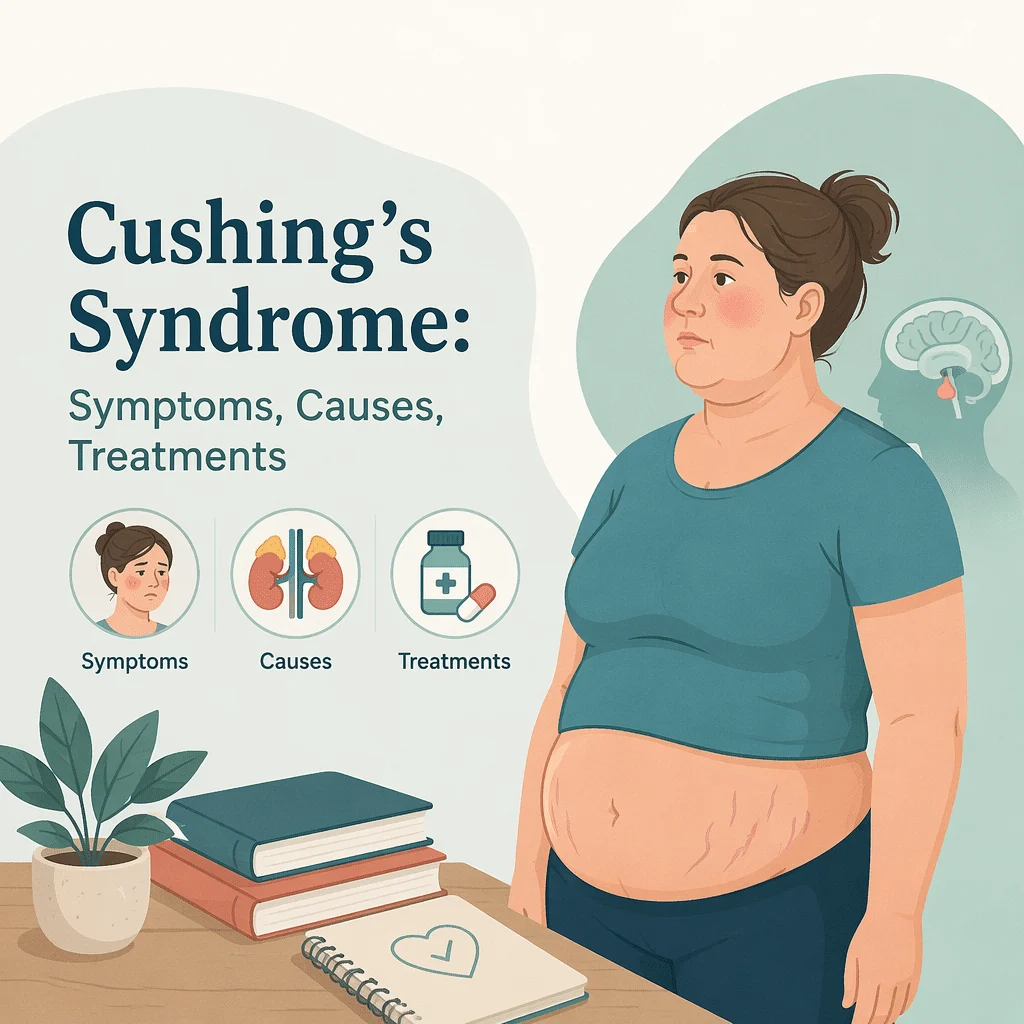
Simptomele sindromului Cushing apar atunci când organismul este expus la prea mult cortizol timp de luni sau ani, iar cel mai frecvent motiv nu este o tumoare: este vorba despre medicamentele cu steroizi luate pentru o altă afecțiune. Acest fapt schimbă modul în care trebuie înțeles întregul tablou clinic. În acest articol vei afla care semne indică cu adevărat un nivel ridicat de cortizol și care sunt prea comune pentru a fi semnificative în sine, ce cauzează această afecțiune și de ce diagnosticul este un proces în etape, bazat pe mai multe analize de laborator, nu pe o singură recoltare de sânge. Un tabel de mai jos prezintă testele de screening, ce implică fiecare și lucrurile obișnuite care pot distorsiona rezultatele — motiv pentru care o singură valoare anormală nu tranșează niciodată problema.
Ce face cortizolul și de ce un exces constant este dăunător
Cortizolul este un hormon produs de glandele suprarenale, două organe mici situate deasupra rinichilor. Urmează un ritm zilnic: cel mai ridicat dimineața devreme, cel mai scăzut în jurul miezului nopții. Menține glicemia stabilă, susține tensiunea arterială, reduce inflamația și ajută organismul să facă față stresului și bolii. În cantități normale, este esențial.
Problemele apar atunci când acest ritm se aplatizează și nivelul rămâne ridicat tot timpul. Excesul prelungit crește glicemia, ridică tensiunea arterială, subțiază pielea și oasele, descompune proteinele musculare, mută grăsimea spre trunchi, față și partea superioară a spatelui și slăbește răspunsul imunitar. Deoarece cortizolul afectează simultan atât de multe sisteme, efectele se acumulează treptat, în decurs de luni. Echipa noastră explică, de asemenea, simptomele și cauzele niveluri ridicate de cortizol.
De ce contează atât de mult momentul în care faci analizele
Pierderea scăderii normale a cortizolului pe timp de noapte este una dintre primele modificări măsurabile, motiv pentru care mai multe teste de screening se efectuează deliberat târziu în noapte, nu dimineața. Un nivel care pare normal la ora 8 dimineața poate fi clar anormal la ora 23. Echipa noastră explorează, de asemenea, legătura dintre burnout și ritmurile cortizolului.
Simptomele sindromului Cushing: care semne sunt cu adevărat relevante pentru diagnostic
Majoritatea listelor de simptome amestecă două grupuri foarte diferite, și de aici începe confuzia. Câteva semne sunt relativ specifice: rare în alte situații și greu de explicat altfel. Restul sunt extrem de frecvente la persoanele care nu au această afecțiune.
Semne care ridică o suspiciune reală
- Vânătăi apărute ușor, fără un traumatism amintit sau cu unul minor, mai ales pe antebrațe.
- Slăbiciune musculară mai pronunțată la nivelul coapselor și umerilor, care îngreunează ridicarea de pe un scaun jos, urcatul scărilor sau ridicarea brațelor deasupra capului.
- Vergeturi late, violacee sau roșiatice, de obicei mai late de un centimetru, pe abdomen, coapse, sâni sau axile.
- Față rotunjită și înroșită, uneori cu pielea suficient de subțire încât vasele mici de sânge să se vadă prin ea.
- O fractură după un traumatism minor sau o subțiere neașteptată a oaselor la o vârstă tânără, descoperită la o investigație imagistică.
- La copii, creștere în greutate însoțită de încetinirea creșterii în înălțime.
Simptome care rareori indică sindromul Cushing prin ele însele
Creșterea în greutate, oboseala, starea depresivă, menstruațiile neregulate, acneea, tensiunea arterială crescută și glicemia ridicată apar în sindromul Cushing, dar și la milioane de persoane care nu au această boală. Luate separat, niciunul nu este un motiv să presupui un exces de cortizol. Devin semnificative atunci când mai multe semne specifice apar împreună, când se agravează rapid sau când sunt însoțite de diabet sau hipertensiune care nu răspund la tratamentul standard. Acest ghid explică semnificația nivelurilor crescute de glucoză în sânge.
Depresia merită o mențiune separată. Tulburările de dispoziție pot ele însele suprasolicita axa hormonului de stres și pot crește cu adevărat nivelul de cortizol fără ca vreun tumor să fie prezent, ceea ce face rezultatele testelor mai greu de interpretat. Biblioteca noastră acoperă și simptomele și tratamentele depresie.
Ce cauzează sindromul Cushing
Medicamentele cu steroizi: cea mai frecventă cauză de departe
Medicamentele glucocorticoide, printre care prednison, prednisolon, dexametazonă și hidrocortizon, sunt prescrise pentru astm, poliartrită reumatoidă, boli inflamatorii intestinale, afecțiuni cutanate, prevenirea rejetului de transplant și multe altele. Administrate în doze suficient de mari pe o perioadă suficient de lungă, reproduc tabloul complet al excesului de cortizol, deoarece acționează asupra organismului la fel cum o face cortizolul. Această formă se numește sindrom Cushing exogen, adică hormonul provine din afara organismului.
Comprimatele sunt sursa obișnuită, dar nu singura. Injecțiile articulare repetate, cremele puternice aplicate pe suprafețe mari sau sub pansamente și corticosteroizii inhalatori în doze mari contribuie toate la expunerea totală. Riscul este mai mare la copiii mici, la persoanele cu funcție renală sau hepatică redusă și la oricine ia și un medicament care încetinește metabolizarea corticosteroizilor, cum ar fi anumite tratamente antifungice sau pentru HIV.
Cauze endogene: când organismul produce prea mult cortizol de la sine
Când niciun steroid extern nu explică tabloul clinic, excesul provine din interior. Aproape toate cazurile de acest fel au trei surse:
- O tumoare hipofizară benignă care secretă prea mult ACTH, hormonul care instruiește glandele suprarenale să elibereze cortizol. Aceasta este cea mai frecventă cauză endogenă.
- O tumoare sau o hiperplazie a uneia sau a ambelor glande suprarenale, care produce cortizol în mod direct și independent de ACTH.
- Producția ectopică de ACTH, în care o tumoare situată în altă parte a organismului — cel mai adesea în plămân — începe să producă ACTH, deși aceasta nu este funcția sa normală.
Echipa noastră explică, de asemenea, rolul hormonului ACTH, și detaliază markerii grupați într-un panoul suprarenal.
Capcana terminologică: boala Cushing nu este același lucru cu sindromul Cushing
Sindromul Cushing este termenul general pentru efectele unui exces prelungit de cortizol, indiferent de sursă. Boala Cushing este o cauză specifică a acestuia: un adenom hipofizar care determină creșterea excesivă a ACTH. Oricine are boala Cushing prezintă și sindromul, dar majoritatea persoanelor cu sindrom nu au boala, deoarece medicamentele reprezintă cauza în cele mai multe cazuri. Cei doi termeni sunt adesea folosiți fără precizie, așa că merită verificat care dintre ei este vizat.
Cum se diagnostichează sindromul Cushing, pas cu pas
Niciun test de sânge unic nu poate diagnostica această afecțiune. Conform unui review din 2026 privind diagnosticul biochimic, evaluarea se desfășoară în etape: se stabilește mai întâi că nivelul de cortizol este cu adevărat crescut, se confirmă acest lucru, apoi se identifică sursa. Sărirea unei etape este cauza atât a alarmelor false, cât și a cazurilor ratate.
Etapa 1: identificarea tuturor corticosteroizilor administrați
Înainte de a solicita orice analiză de laborator, medicul întreabă despre corticosteroizii luați în lunile recente: comprimate, injecții, inhalatoare, spray-uri nazale, picături pentru ochi și creme, precum și orice produs cumpărat fără prescripție medicală sau obținut din altă sursă. Dacă un corticosteroid explică tabloul clinic, pasul următor nu este testarea pentru cauze endogene, ci reevaluarea medicației.
Etapa 2: cele trei teste de screening de primă linie
Se folosesc trei teste, de obicei două dintre ele, fiecare repetat. Ele explorează aspecte diferite ale aceleiași probleme. Cortizolul salivar de la miezul nopții caută dispariția scăderii nocturne normale. Cortizolul liber urinar din 24 de ore măsoară producția totală pe parcursul unei zile. Testul de supresie cu 1 mg dexametazonă overnight verifică dacă sistemul se mai oprește atunci când i se transmite acest lucru.
De ce un singur test de cortizol din sânge, efectuat în timpul zilei, nu este concludent
Cortizolul din sânge variază considerabil pe parcursul zilei în mod normal și crește în caz de boală, durere, anxietate sau chiar o recoltare dificilă. O valoare izolată poate fi ridicată la o persoană sănătoasă și normală la cineva care are această afecțiune, deci nu clarifică nimic de una singură. Echipa noastră explică utilizările practice și limitele unui analiză de sânge pentru cortizol.
| Test de screening | Cum se efectuează | Ce poate influența rezultatul |
|---|---|---|
| Cortizol salivar de noapte târzie | Colectezi salivă acasă, pe un tampon mic, de obicei între orele 23:00 și 24:00, în două nopți separate. | Munca în ture de noapte sau în ture rotative, culcatul foarte târziu, fumatul, mâncatul, băutul sau spălatul pe dinți imediat înainte de recoltarea probei, și sângele în salivă. |
| Cortizol liber urinar pe 24 de ore | Colectezi fiecare picătură de urină timp de 24 de ore complete, într-un recipient de la laborator, de obicei în două zile separate. | O colectare incompletă sau ratată, un aport foarte mare de lichide, funcția renală redusă, sarcina și anumite medicamente. |
| Testul de supresie overnight cu 1 mg dexametazonă | Iei un comprimat de dexametazonă de 1 mg în jurul orei 23:00 și îți recoltezi sânge pentru cortizol în jurul orei 8:00 dimineața următoare. | Estrogenul oral și pilulele contraceptive combinate, sarcina, medicamentele care accelerează sau încetinesc metabolizarea dexametazonei, absorbția deficitară și administrarea tabletei cu întârziere sau deloc. |
| Cortizolul sanguin aleatoriu, dintr-o singură recoltare | O singură probă de sânge recoltată în cadrul unei consultații de rutină în timpul zilei. | Nu este un test de screening pentru această afecțiune. Cortizolul variază pe parcursul zilei și crește în caz de stres, boală sau o recoltare dureroasă, deci o singură valoare nu confirmă nimic. |
Pasul 3: confirmare, apoi identificarea sursei
Un rezultat anormal la screening se repetă mai întâi, deoarece producția de cortizol variază de la săptămână la săptămână, iar unele cazuri sunt cu adevărat ciclice. Odată confirmat excesul, un nivel sanguin de ACTH împarte posibilitățile în două: un ACTH suprimat indică glandele suprarenale, iar un ACTH normal sau crescut indică hipofiza sau o sursă ectopică. Urmează investigațiile imagistice, de obicei un RMN al hipofizei sau un CT al glandelor suprarenale, toracelui și abdomenului.
Imagistica singură nu constituie o dovadă. Leziunile hipofizare mici și benigne sunt frecvente, iar unele adenoame producătoare de ACTH sunt prea mici pentru a fi vizualizate. Atunci când rezultatele imagistice și cele hormonale nu concordă, centrele specializate utilizează cateterizarea sinusurilor petroase inferioare, prin care un cateter măsoară ACTH direct în venele care drenează hipofiza și îl compară cu o venă periferică. Un document de consens comun din 2026 al societăților de endocrinologie coreeană și japoneză a menționat că și grupurile de experți diferă în continuare în privința pragurilor exacte și a secvenței imagistice, motiv pentru care această evaluare trebuie realizată de un endocrinolog.
Diferențierea sindromului Cushing adevărat de o creștere funcțională a cortizolului fără tumoră, numită de mult timp pseudo-Cushing, este cea mai dificilă parte. Stresul sever, diabetul prost controlat, consumul excesiv de alcool, obezitatea, sarcina și depresia pot crește cortizolul fără nicio tumoră. Biblioteca noastră explică și rezultatele unui test de cortizol urinar, și acoperă cauzele cortizolul scăzut dimineața pentru cititorii ale căror valori indică situația inversă.
Opțiuni de tratament, pe scurt
Când cauza este un medicament cu steroizi
Soluția este reducerea steroizilor la doza minimă eficientă, întreruperea lor sau schimbarea tratamentului, întotdeauna sub supravegherea medicului prescriptor. Nu modifica niciodată pe cont propriu un tratament cu steroizi prescris. După săptămâni sau luni de tratament, glandele suprarenale încetează să mai producă cortizol în mod natural, astfel că oprirea bruscă poate lăsa organismul aproape fără cortizol — o stare numită insuficiență suprarenală. Aceasta poate evolua spre o criză suprarenală, cu prăbușirea tensiunii arteriale, vărsături și confuzie, care reprezintă o urgență medicală și poate fi fatală. O analiză din 2024 privind criza suprarenală secundară identifică reducerea sau întreruperea bruscă a dozelor de glucocorticoizi printre principalii factori declanșatori, de aceea reducerea treptată se face deliberat lent.
Când cauza este o tumoare
Intervenția chirurgicală este de obicei prima opțiune: îndepărtarea unui adenom hipofizar pe cale nazală, a glandei suprarenale afectate sau a unei tumori ectopice producătoare de ACTH. Radioterapia hipofizară poate urma atunci când operația nu rezolvă problema sau nu poate fi repetată, iar efectul său se instalează treptat, pe parcursul mai multor luni sau ani.
Medicamente care scad cortizolul
Medicamentele sunt folosite înainte de operație când cortizolul este periculos de ridicat, în timp ce radioterapia își face efectul, sau pe termen lung când intervenția chirurgicală nu este posibilă sau nu a dat rezultate. Unele blochează producția de cortizol în glandele suprarenale, altele reduc secreția de ACTH, iar altele blochează efectul cortizolului la nivelul receptorului său. Toate necesită analize de sânge regulate, deoarece scopul este scăderea cortizolului fără a-l coborî prea mult. Potasiul este monitorizat cu atenție, deoarece excesul de cortizol și mai multe dintre aceste medicamente îl pot reduce. Echipa noastră descrie și mineralele măsurate într-un panelului de electroliți.
Când să mergi la medic
Programează-te la medic fără să aștepți dacă mai multe dintre semnele mai specifice apar împreună: vânătăi care apar ușor, vergeturi late și violacee, slăbiciune la nivelul mușchilor coapselor și umerilor, față rotunjită și înroșită, o fractură după un traumatism minor. Același lucru este valabil dacă tensiunea arterială sau glicemia devine greu de controlat fără un motiv clar, sau dacă un copil ia în greutate în timp ce creșterea în înălțime încetinește.
Excesul de cortizol netratat nu este inofensiv. Crește riscul de boli de inimă, accident vascular cerebral, diabet, osteoporoză, infecții și cheaguri de sânge, iar aceste riscuri scad odată ce excesul este ținut sub control. De aceea, semnele suspecte persistente merită evaluate, nu doar urmărite. Oricine urmează un tratament îndelungat cu steroizi și dezvoltă vărsături severe, amețeli, confuzie sau slăbiciune extremă — mai ales după o doză omisă, o infecție sau o operație — are nevoie urgentă de îngrijire medicală.
Cele mai recente progrese științifice
Cercetările din ultimii trei ani s-au concentrat mai puțin pe simptome noi și mai mult pe îmbunătățirea testelor și a tratamentelor. Iată ce s-a schimbat, pe înțelesul tuturor.
Recomandările de screening se armonizează, treptat
În 2026, societățile de endocrinologie din Coreea și Japonia au publicat un document comun care unifică recomandările naționale pentru diagnosticarea bolii Cushing. Ceea ce a ieșit la iveală este la fel de util ca și ceea ce recomandă: grupurile de experți nu sunt încă de acord asupra valorilor exacte de referință și asupra momentului în care se indică imagistica. Ce înseamnă asta pentru tine: un rezultat la limită într-un laborator poate fi interpretat diferit în altul, iar repetarea testelor este ceva normal, nu un semn că ceva a mers prost.
Testul din salivă de noapte târzie este convenabil, dar nu infailibil
O analiză sistematică — adică un studiu care reunește rezultatele mai multor cercetări anterioare — a comparat testele folosite pentru a diferenția sindromul Cushing adevărat de o creștere a cortizolului cauzată de stres. Testul din salivă s-a dovedit cel mai puțin consistent, în mare parte pentru că laboratoarele folosesc metode și valori de referință diferite. Ce înseamnă asta pentru tine: recoltarea salivei acasă este utilă și ușor de realizat, dar reprezintă un prim filtru, nu un verdict — iar respectarea cu exactitate a instrucțiunilor face o diferență reală.
Depresia și axa cortizolului
O analiză din 2024 a abordat o întrebare cu care medicii se confruntă frecvent: care persoane cu tulburări de dispoziție ar trebui testate pentru exces de cortizol? Depresia în sine activează sistemul hormonilor de stres, astfel că rezultatele pot fi anormale chiar și în absența unei tumori. Autorii recomandă rezervarea screeningului pentru cei care prezintă și semne fizice mai specifice sau a căror depresie nu răspunde la tratamentul standard. Ce înseamnă asta pentru tine: un test de cortizol anormal în prezența depresiei necesită o urmărire atentă, nu un diagnostic imediat.
Mai multe opțiuni medicamentoase când cortizolul nu scade
O analiză practică din 2026 a rezumat medicamentele disponibile în prezent pentru scăderea cortizolului atunci când intervenția chirurgicală nu este o opțiune, inclusiv agenți mai noi precum osilodrostat și levoketoconazol, alături de cei mai vechi. Un studiu amplu din 2026 a testat relacorilantul, care acționează diferit: în loc să reducă cantitatea de cortizol produsă, blochează receptorul pe care acționează cortizolul. Participanții care au continuat tratamentul au avut mai multe șanse să mențină tensiunea arterială sub control față de cei trecuți pe placebo. Ce înseamnă asta pentru tine: opțiunile s-au extins pentru minoritatea de pacienți la care cortizolul nu poate fi normalizat doar prin intervenție chirurgicală, deși acestea rămân tratamente de specialitate care necesită monitorizare atentă.
Se explorează noi tipuri de probe
Cortizolul poate fi măsurat și în păr, unde reflectă expunerea medie pe parcursul săptămânilor sau lunilor, nu doar un moment izolat. O analiză din 2025 descrie cortizolul din păr, cortizolul salivar și amprentarea steroizilor ca adăugiri promițătoare la arsenalul de diagnostic. Ce înseamnă asta pentru tine: deocamdată, acestea sunt instrumente de cercetare și de specialitate, nu analize pe care să le soliciți la o consultație de rutină, deși tocmai de aceea specialiștii se așteaptă ca recoltările repetate de astăzi să devină mai simple în viitor.
Glosar
| Termen | Definiție |
|---|---|
| ACTH (hormonul adrenocorticotrop) | Hormonul hipofizar care transmite glandelor suprarenale semnalul de a elibera cortizol. Măsurarea lui ajută la identificarea sursei unui exces. |
| Glandele suprarenale | Două glande mici situate deasupra rinichilor. Produc cortizol, aldosteron și alți câțiva hormoni. |
| Insuficiență suprarenală | Un deficit de cortizol. Poate apărea după întreruperea bruscă a unui tratament îndelungat cu steroizi și, netratat, poate deveni o urgență medicală. |
| Cortizol | Principalul hormon al stresului. Reglează glicemia, tensiunea arterială și inflamația și urmează în mod normal un ritm zilnic. |
| Boala Cushing | O cauză specifică a sindromului Cushing: o tumoare hipofizară benignă care produce prea mult ACTH. |
| Testul de supresie cu dexametazonă | Un test în care se ia o tabletă de steroid sintetic seara, pentru a verifica dacă organismul oprește propria producție de cortizol până dimineața. |
| ACTH ectopic | ACTH produs de o tumoare situată în afara hipofizei, cel mai adesea la nivelul plămânului. |
| Glucocorticoid | Familia de medicamente steroide care acționează similar cortizolului, inclusiv prednison, prednisolon și dexametazonă. |
| Cateterizarea sinusurilor petroase inferioare | O procedură de specialitate care măsoară ACTH în venele care drenează hipofiza, utilizată atunci când rezultatele imagistice și cele hormonale nu concordă. |
Întrebări frecvente
Poate îngrășarea în sine să indice sindromul Cushing?
Rareori. Creșterea în greutate este unul dintre cele mai nespecifice semne ale acestei afecțiuni, iar marea majoritate a persoanelor care se îngrașă nu au nicio problemă cu cortizolul. Ceea ce ridică suspiciunea este tiparul și simptomele care îl însoțesc: grăsime acumulată pe trunchi, față și ceafă, în timp ce brațele și picioarele devin mai subțiri, împreună cu vânătăi apărute ușor, vergeturi late de culoare violacee sau slăbiciune la nivelul mușchilor coapsei. Dacă creșterea în greutate este singurul tău simptom, testarea cortizolului nu este de obicei primul pas.
Ce alte afecțiuni pot imita sindromul Cushing?
Mai multe. Diabetul zaharat slab controlat, obezitatea cu sindrom metabolic, sindromul ovarelor polichistice, apneea obstructivă în somn netratată, consumul excesiv de alcool, depresia severă, sarcina și stresul fizic cronic pot toate să crească cortizolul sau să imite unele aspecte ale tabloului clinic. Clinicienii grupează formele fără tumoră sub denumirea de hipercortizolism non-neoplazic, uneori numit pseudo-Cushing. Diferențierea lor necesită de obicei teste repetate și, uneori, teste de linia a doua efectuate de un specialist.
Simptomele sunt diferite la femei?
Simptomele principale sunt aceleași, însă femeile pot observa și menstruații neregulate sau absente, păr în exces pe față și pe corp, precum și acnee, deoarece excesul de cortizol perturbă ceilalți hormoni reproductivi. Aceste semne apar frecvent și în alte afecțiuni, în special în sindromul ovarelor polichistice, astfel că au mai multă relevanță atunci când apar împreună cu simptomele mai specifice, cum ar fi vergeturile late violacee sau vânătăile inexplicabile.
Poate un corticosteroid inhalat sau topic să o provoace cu adevărat?
Da, deși mult mai rar decât comprimatele. Dozele mari de steroizi inhalatori, cremele puternice aplicate pe suprafețe mari sau sub pansamente ocluzive și injecțiile articulare repetate contribuie toate la doza totală de steroizi. Riscul este mai mare la copiii mici, la persoanele cu funcție renală sau hepatică redusă și atunci când un alt medicament încetinește metabolizarea steroizilor. De aceea merită să îi spui oricărui medic despre toate produsele cu steroizi pe care le folosești, nu doar despre comprimatele prescrise.
Cât durează recuperarea după tratament?
Recuperarea este treptată și variază de la o persoană la alta. Tensiunea arterială și glicemia se îmbunătățesc adesea în câteva luni, în timp ce modificările feței, calitatea pielii și forța musculară necesită de obicei mai mult timp, uneori un an sau chiar mai mult. Densitatea osoasă se recuperează cel mai lent. După o operație reușită sau după reducerea treptată a corticosteroizilor, producția de cortizol poate rămâne scăzută o perioadă, astfel că tratamentul de substituție și testele periodice de urmărire sunt frecvente în această perioadă.
Surse
- National Institute of Diabetes and Digestive and Kidney Diseases (NIDDK), National Institutes of Health — Cushing’s Syndrome — niddk.nih.gov
- Mayo Clinic — Sindromul Cushing: simptome și cauze — mayoclinic.org
- Cleveland Clinic — Sindromul Cushing: ce este, simptome și tratament — my.clevelandclinic.org
- Asla Q, Urgell E, Terzan S, et al. — Diagnosticul biochimic al hipercortizolismului: când și cum? — Vitamins and Hormones, 2026 — doi.org/10.1016/bs.vh.2026.03.001
- Lee J, Fukuoka H, Park SS, et al. — Consens privind diagnosticul bolii Cushing: o declarație colaborativă a Societății Coreene de Endocrinologie și a Societății Japoneze de Endocrinologie — Endocrinology and Metabolism (Seoul), 2026 — doi.org/10.3803/EnM.2025.2707
- Hinojosa-Amaya JM, Diaz-Gonzalez-Colmenero F, Alvarez-Villalobos NA, et al. — Dilema diferențierii sindromului Cushing de hipercortisolismul non-neoplazic: o revizuire sistematică și meta-analiză — Pituitary, 2024 — doi.org/10.1007/s11102-024-01408-w
- Ferrante E, Simeoli C, Mantovani G, Pivonello R — Cine și cum trebuie investigat pentru hipercortisolism endogen la pacienții cu tulburări de dispoziție — Journal of Endocrinological Investigation, 2024 — doi.org/10.1007/s40618-024-02457-5
- Araujo-Castro M, Lamas C, Nowak E, et al. — Actualizare și recomandări practice privind tratamentul medicamentos al sindromului Cushing — Endocrine Reviews, 2026 — doi.org/10.1210/endrev/bnaf042
- Pivonello R, Arnaldi G, Auchus RJ, et al. — Eficacitatea și siguranța relacorilantului în tratamentul pacienților cu sindrom Cushing (GRACE): un studiu multicentric, de fază 3, randomizat cu retragere — The Lancet Diabetes and Endocrinology, 2026 — doi.org/10.1016/S2213-8587(25)00362-6
- Ferriere A, Tabarin A — Provocări actuale în testarea sindromului Cushing: sânge, salivă, urină sau păr? — Current Opinion in Endocrinology, Diabetes and Obesity, 2025 — doi.org/10.1097/MED.0000000000000923
- Martel-Duguech L, Poirier J, Bourdeau I, Lacroix A — Diagnosticul și managementul crizei adrenale secundare — Reviews in Endocrine and Metabolic Disorders, 2024 — doi.org/10.1007/s11154-024-09877-x
Lectură suplimentară
- Analiza calciului din sânge și panoul osos și mineral
- Analizele de sânge folosite pentru diagnosticarea diabetului
- Tabelul de conversie A1C și glucoza medie
- Nivelurile de DHEA, beneficii și riscuri explicate
- Testosteronul ca marker esențial în analizele de sânge
Înțelege-ți rezultatele analizelor cu AI DiagMe
Sindromul Cushing este una dintre afecțiunile în care rezultatele de laborator spun cel mai mult, și în care un singur număr rareori înseamnă ce pare. AI DiagMe îți citește buletinul de analize și îți explică, pe înțelesul tău, ce măsoară markeri precum cortizolul, ACTH, glicemia și potasiul și cum se leagă între ei. Este conceput să te ajute să îți înțelegi rezultatele și să pregătești întrebări mai bune pentru consultație. Nu pune diagnostice și nu înlocuiește medicul tău.
Obține interpretarea rezultatelor în câteva minute