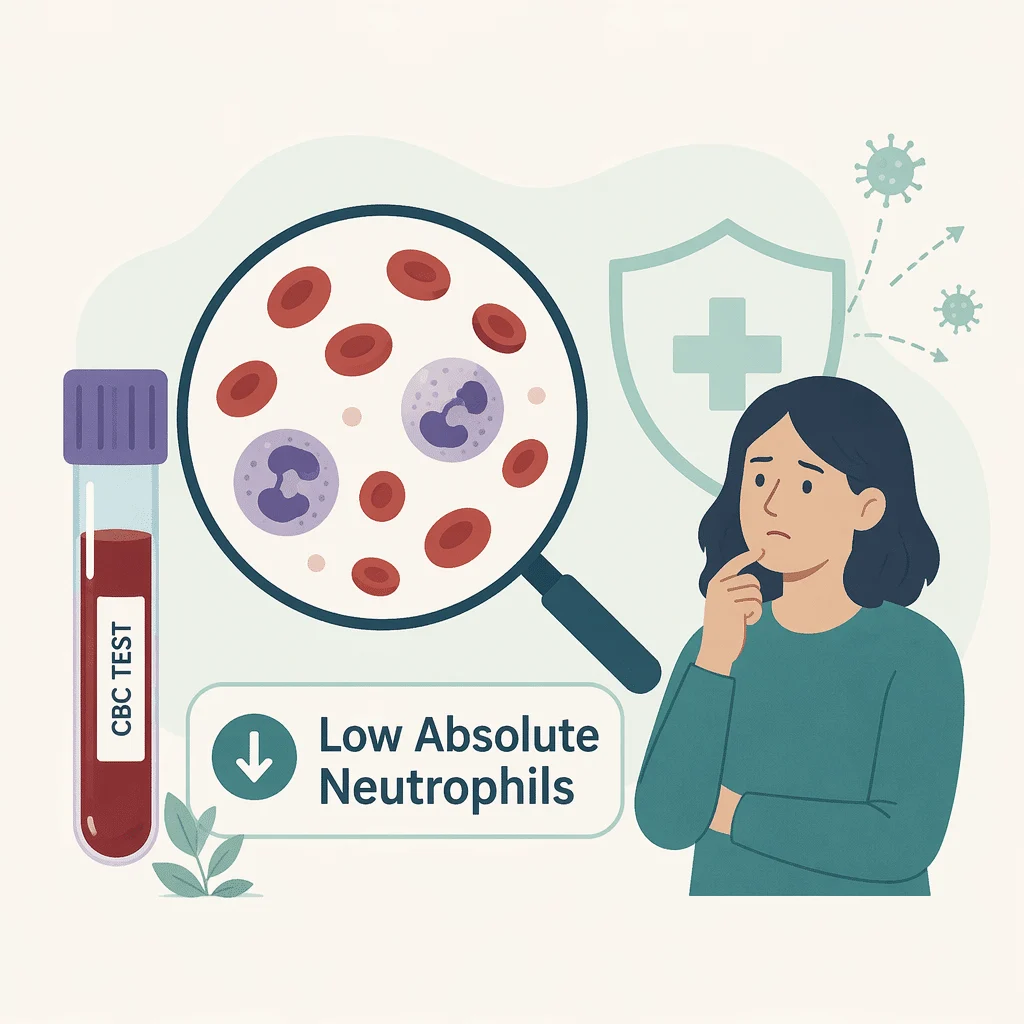
Neutrofilele absolute scăzute înseamnă că sângele tău conține mai puține neutrofile decât valorile normale, iar neutrofilele sunt globulele albe care reprezintă prima linie de apărare a organismului tău împotriva bacteriilor și a altor germeni. Să vezi acest rezultat marcat pe un buletin de analize poate fi alarmant, dar valoarea singură nu spune niciodată întreaga poveste. Acest ghid explică ce înseamnă această valoare, intervalele de referință folosite de medici, cele mai frecvente cauze, semnele de alarmă care necesită acțiune rapidă și pașii practici care îți reduc riscul de infecție. Vei afla, de asemenea, cum se măsoară numărul de neutrofile, când febra devine o urgență și de ce o valoare scăzută este normală pentru unele persoane sănătoase.
Ce înseamnă „neutrofile absolute scăzute" în analizele tale de sânge
Neutrofilele sunt cel mai frecvent tip de globule albe. Măduva osoasă le produce, iar ele circulă prin sânge pentru a găsi și distruge germenii. Numărul absolut de neutrofile, sau NAN, reprezintă numărul efectiv al acestor celule într-un volum determinat de sânge, raportat de obicei per microlitru (µL).
Un rezultat cu neutrofile absolute scăzute înseamnă pur și simplu că NAN se situează sub intervalul de referință al laboratorului. La majoritatea adulților, acest interval începe de la aproximativ 1.500 celule/µL, deși unele laboratoare folosesc 1.800. Un număr sub această limită se numește neutropenie. Cu cât valoarea scade mai mult, cu atât îi este mai greu organismului tău să lupte împotriva infecțiilor.
Această valoare provine dintr-o analiză de sânge de rutină numită hemoleucogramă completă (CBC), care raportează și globulele roșii, trombocitele și numărul total de globule albe. Dacă vrei să înțelegi cum se încadrează hemoleucograma alături de alte analize uzuale, ghidul nostru despre diferența dintre hemoleucogramă și biochimia sângelui explică totul pe înțeles.
Cum se calculează numărul absolut de neutrofile
Laboratorul nu numără neutrofilele una câte una. În schimb, NAN se calculează pornind de la numărul total de globule albe și de la proporția celulelor care sunt neutrofile. Formula înmulțește numărul total de globule albe cu suma procentelor de neutrofile mature și celule bandă (neutrofile tinere), împărțită la 100.
Ca exemplu rapid, dacă numărul tău total de globule albe este de 4.000 celule/µL, iar neutrofilele plus celulele bandă reprezintă 40% din acestea, NAN-ul tău este 4.000 × 0,40 = 1.600 celule/µL, adică exact în intervalul normal. Același procent cu un număr total de 3.000 de globule albe ar da un NAN de 1.200, în zona ușoară. De aceea medicul tău interpretează NAN-ul și nu doar procentul: aceeași proporție de neutrofile poate fi liniștitoare sau scăzută, în funcție de numărul total.
Acest lucru contează pentru că o singură valoare scăzută poate fi înșelătoare. O particularitate de laborator sau de prelevare poate influența rezultatul, motiv pentru care medicii repetă adesea testul înainte de a trage concluzii. Un rezultat scăzut al neutrofilelor se interpretează și diferit față de unul crescut. Dacă raportul tău arată situația inversă, consultă articolul nostru despre neutrofile crescute, iar dacă o altă linie de globule albe pare modificată, ghidul nostru despre limfocite scăzute te poate ajuta.
Intervalele pentru neutrofile absolute scăzute: ușoară, moderată și severă
Medicii clasifică neutropenia în funcție de cât de mult scade numărul, deoarece severitatea determină cât de atent trebuie monitorizat. Tabelul de mai jos prezintă intervalele folosite în majoritatea laboratoarelor pentru adulți și cum se modifică riscul de infecție la fiecare nivel.
| Severitate | NAN (celule/µL) | Risc de infecție | Abordare tipică |
|---|---|---|---|
| Normal | 1.500 sau peste | Valoare de referință | Nu este necesară nicio acțiune |
| Ușor | 1.000 până la 1.500 | Foarte mic sau absent | De obicei, se repetă doar analizele |
| Moderat | 500 până la 1.000 | Mai ridicat | Identificarea cauzei, monitorizare atentă |
| Sever | Sub 500 | Crescută | Îngrijire urgentă; febra este o urgență |
| Profund | Sub 100 | Foarte ridicat | Măsuri de precauție la nivel spitalicesc |
Aceste valori limită sunt utilizate pe scară largă, dar nu sunt absolute, iar pragurile pot varia ușor între laboratoare și populații. Esențial este trendul: riscul de infecție crește brusc odată ce ANC scade sub 500, iar o valoare sub 100 lasă organismul cu o apărare foarte redusă, chiar și față de germeni care în mod normal nu provoacă nicio problemă.
Medicii descriu neutropenia și în funcție de durata acesteia. O acut scădere este de scurtă durată, adesea declanșată de un virus sau de un medicament nou, și tinde să se remită odată ce factorul declanșator dispare. Cronică neutropenia durează trei luni sau mai mult și reflectă mai probabil un proces autoimun, o trăsătură ereditară sau o afecțiune a măduvei osoase. Cât timp a fost prezentă o valoare scăzută este, prin urmare, la fel de important pentru medicul tău ca și cât de scăzută este aceasta — de aceea este util să aduci cu tine rezultatele anterioare ale analizelor.
Cauze frecvente ale unui număr absolut scăzut de neutrofile
Numeroase afecțiuni diferite pot reduce această valoare. Unele încetinesc producția de neutrofile în măduva osoasă, în timp ce altele distrug celulele mai rapid sau le deplasează din sânge în țesuturi. Identificarea cauzei este principalul obiectiv al oricărei investigații.
- Infecțiile. Infecțiile virale sunt o cauză foarte frecventă și de obicei temporară. Valoarea scade adesea în timpul bolii și revine la normal în câteva săptămâni. Infecția bacteriană severă (sepsis) poate, de asemenea, să atragă neutrofilele în țesuturi și să scadă valorile din sânge.
- Medicamentele. Anumite antibiotice, medicamente antiepileptice, antitiroidiene, unele antipsihotice și chimioterapia pot suprima măduva osoasă. Nu opri niciodată un medicament prescris din proprie inițiativă; consultă mai întâi echipa medicală.
- Afecțiunile autoimune. Sistemul imunitar poate ataca din greșeală neutrofilele. Află mai multe despre cum organismul se întoarce împotriva lui însuși în prezentarea noastră despre boală autoimună.
- Afecțiunile măduvei osoase. Anemia aplastică, sindroamele mielodisplazice și unele cancere ale sângelui reduc producția. Acestea afectează adesea și alte linii celulare, astfel că medicul tău poate analiza și număr de trombocite.
- Deficiențele nutriționale. Scăzut vitamina B12, folat, sau cuprul pot reduce fiecare numărul de neutrofile.
- Afecțiunile congenitale. Sindroamele ereditare rare, cum ar fi neutropenia ciclică, provoacă valori cronice scăzute încă de la începutul vieții.
Neutropenia etnică benignă: o valoare scăzută normală pentru unele persoane
O cauză este adesea trecută cu vederea în ghidurile mai scurte: pentru mulți oameni sănătoși, un număr absolut scăzut de neutrofile reprezintă pur și simplu valoarea lor normală de bază. Aceasta se numește neutropenie etnică benignă (NEB) și este cel mai frecvent întâlnit la persoanele de origine africană sau din Orientul Mijlociu. Este legat de o trăsătură genetică inofensivă (varianta Duffy-null) care menține mai mulți neutrofile în țesuturi și în măduva osoasă, în loc să circule prin sânge.
Persoanele cu NEB nu prezintă un risc mai mare de infecție și răspund normal atunci când se îmbolnăvesc. Recunoașterea acestui tipar este importantă, deoarece poate scuti oamenii de analize inutile, îngrijorare și vizite la urgențe. În 2025, criteriile de clasificare utilizate în oncologie au fost revizuite parțial pentru a ține cont de aceste valori de bază normale, mai scăzute. Dacă ai avut întotdeauna un număr ușor scăzut și te simți bine, menționează acest lucru medicului tău.
Simptome și semne de alarmă la care să fii atent
Un număr absolut scăzut de neutrofile, în formă ușoară, nu provoacă adesea niciun simptom, iar mulți oameni îl descoperă doar printr-o analiză de rutină. Pe măsură ce valoarea scade, principala îngrijorare este capacitatea redusă de a lupta împotriva infecțiilor, astfel că simptomele pe care le observi sunt de obicei semne ale unei infecții, nu ale numărului scăzut în sine.
Fii atent la aceste semne de alarmă timpurii:
- Febră sau frisoane
- Durere în gât care persistă sau se agravează
- Infecții repetate ale pielii, gurii, gingiilor sau sinusurilor
- Răni care se vindecă greu sau afte noi în gură
- Tuse sau dificultăți de respirație care apar brusc
- Oboseală severă în timpul unei boli
Deoarece infecția reprezintă riscul real, pragul de la care trebuie să ceri ajutor medical este mai scăzut decât de obicei. Dacă știi că ai un număr scăzut de neutrofile și faci febră, tratează situația ca pe una urgentă, în loc să aștepți să vadă dacă trece.
Când numărul scăzut de neutrofile devine o urgență (neutropenie febrilă)
Febra combinată cu un număr scăzut de neutrofile se numește neutropenie febrilăși reprezintă o urgență medicală. Cu puțini neutrofile disponibili, o infecție se poate răspândi rapid și poate deveni periculoasă înainte ca simptomele evidente să apară. Tratamentul prompt îmbunătățește semnificativ evoluția.
Folosește această listă simplă pentru a decide când să acționezi rapid:
- Măsoară-ți temperatura. O valoare de 38°C (100,4°F) sau mai mare, în contextul unui număr scăzut cunoscut, necesită consultație medicală în aceeași zi.
- Nu aștepta rezultatele unor noi analize. Dacă te simți rău și știi că ai un număr scăzut de neutrofile, mergi acum la medic.
- Sună în avans sau prezintă-te direct. Contactează medicul tău sau mergi la camera de gardă și spune că ai un număr scăzut de neutrofile.
- Ia cu tine informațiile necesare. Ai la tine o listă actualizată cu medicamentele tale și orice chimioterapie sau tratamente recente.
La spital, echipa medicală poate recolta hemoculturi și poate începe tratamentul cu antibiotice imediat, adesea înainte de identificarea exactă a agentului patogen. Această abordare rapidă este standard și este concepută pentru a preveni agravarea infecției.
Cum diagnostichează și investighează medicii un număr scăzut
Punctul de plecare este aproape întotdeauna repetarea hemoleucogramei complete pentru a confirma rezultatul și a exclude o scădere izolată. De acolo, medicul tău construiește o imagine de ansamblu pe baza istoricului tău medical și a câtorva analize țintite.
O evaluare tipică poate include întrebări despre bolile recente, toate medicamentele tale și istoricul familial. Medicii solicită adesea un frotiu de sânge periferic, în care un specialist examinează celulele la microscop. Pot adăuga și analize pentru infecții, inclusiv markeri de inflamație precum proteina C reactivă (PCR) sau procalcitonina, alături de teste pentru markeri autoimuni și niveluri de nutrienți.
Dacă numărul rămâne scăzut sau scade în continuare și o problemă de producție pare probabilă, poate urma un examen al măduvei osoase . Scopul pe tot parcursul este de a diferenția o scădere inofensivă și temporară de o cauză care necesită tratament, astfel că investigațiile sunt adaptate situației tale individuale, nu efectuate toate deodată.
Opțiuni de tratament pentru neutrofile absolute scăzute
Nu există un tratament unic, deoarece planul potrivit depinde în totalitate de cauză și de cât de scăzut este numărul. Primul pas este de obicei să se abordeze ceea ce determină scăderea.
- Tratarea cauzei de bază. Aceasta poate însemna tratarea unei infecții, corectarea unui deficit de vitamine sau, cu îndrumarea medicului tău, oprirea sau înlocuirea unui medicament care suprimă măduva osoasă.
- Factori de creștere. Medicii pot prescrie factorul de stimulare a coloniilor de granulocite (G-CSF), un medicament care stimulează măduva osoasă să producă mai multe neutrofile mai rapid.
- Antibiotice sau antifungice. La pacienții cu risc crescut, acestea sunt folosite pentru a trata sau, uneori, pentru a preveni infecțiile.
- Terapie imunosupresoare. Când un proces autoimun atacă neutrofilele, tratamentul poate viza reducerea acestui atac imun.
- Transplant de măduvă osoasă. Aceasta este rezervată insuficienței severe și persistente a măduvei osoase sau anumitor afecțiuni ereditare.
- Monitorizare continuă. Hemoleucogramele periodice permit echipei tale să urmărească recuperarea și să ajusteze planul.
Fiecare opțiune are propriile beneficii și compromisuri, deci merită să le discuți deschis cu medicul tău. Neutropenia ușoară și temporară cauzată de un virus sau de un medicament nu necesită adesea nimic mai mult decât supraveghere atentă și repetarea analizei.
Cum să trăiești cu un număr scăzut: cum să reduci riscul de infecție
Dacă numărul tău este scăzut, obiceiurile zilnice sensibile fac o diferență reală. Niciunul dintre acestea nu înlocuiește îngrijirea medicală, dar împreună reduc șansele de a contracta o infecție.
- Spală-te des pe mâini cu apă și săpun și folosește dezinfectant pentru mâini când acest lucru nu este posibil.
- Fii atent la alimentație. Evită carnea insuficient gătită, ouăle și lactatele nepasteurizate și spală bine fructele și legumele.
- Continuă să ai grijă de dinți cu blândețe. Periază-te și folosește ața dentară cu atenție și mergi regulat la controalele stomatologice.
- Ține-te la zi cu vaccinurile, dar întreabă-ți medicul care sunt potrivite pentru tine, deoarece unele vaccinuri nu sunt recomandate când numărul de celule este foarte scăzut.
- Limitează contactul cu persoanele bolnave și evită spațiile interioare aglomerate în timpul focarelor locale.
- Ține sub control afecțiunile cronice cum ar fi diabetul, care poate crește riscul de infecții.
- Verifică înainte de a începe orice supliment nou sau medicament, inclusiv produse pe bază de plante.
Pași mici și constanți se adună și oferă o protecție reală, în timp ce numărul tău de celule se reface sau rămâne stabil.
Glosar
- Numărul absolut de neutrofile (NAN): Numărul efectiv de neutrofile dintr-un volum dat de sânge, folosit pentru a evalua riscul de infecție.
- Agranulocitoza: O stare rară și gravă în care neutrofilele sunt extrem de puține, lăsând organismul foarte vulnerabil la infecții.
- Celulele bandă: Neutrofile tinere, imature, care sunt numărate împreună cu cele mature la calcularea NAN.
- Neutropenia etnică benignă (NEB): Un nivel scăzut de neutrofile, inofensiv și permanent, frecvent la persoanele de origine africană sau din Orientul Mijlociu, fără un risc suplimentar de infecție.
- Măduva osoasă: Țesutul moale din interiorul oaselor unde sunt produse celulele sanguine, inclusiv neutrofilele.
- Hemoleucograma completă (HLG): O analiză de sânge uzuală care măsoară globulele roșii, globulele albe (inclusiv neutrofilele) și trombocitele.
- Neutropenia febrilă: Febră asociată cu un număr scăzut de neutrofile; o urgență medicală.
- Factorul de stimulare a coloniilor de granulocite (G-CSF): Un medicament care stimulează măduva osoasă să producă mai multe neutrofile.
- Neutropenia: Termenul medical pentru un număr scăzut de neutrofile.
- Neutrofilele: Cele mai frecvente globule albe și primii apărători ai organismului împotriva bacteriilor și fungilor.
Întrebări frecvente
Este periculos un număr absolut de neutrofile ușor scăzut?
De obicei, nu. Un rezultat ușor scăzut, adesea între 1.000 și 1.500 celule/µL, rareori cauzează probleme în sine și poate necesita doar o analiză repetată pentru a confirma tendința. Riscul crește în principal când numărul scade sub 500. Cu toate acestea, „ușor scăzut" se referă la valoare, nu neapărat la cauză, așa că medicul tău va dori să afle de ce este scăzut. Dacă te simți bine și nu ai semne de infecție, o singură valoare ușor scăzută nu este, în general, un motiv de panică.
Cât durează scăderea neutrofilelor cauzată de o infecție virală?
O scădere cauzată de o boală virală obișnuită este de obicei temporară și tinde să se remită în câteva săptămâni. Medicii repetă adesea analizele de sânge la aproximativ trei-patru săptămâni după infecție, pentru a confirma că numărul de neutrofile este din nou în creștere. În unele cazuri, valoarea scăzută poate persista mai mult timp, uneori câteva luni, fără a indica ceva grav. Dacă numărul de neutrofile nu revine la normal sau continuă să scadă, medicul tău va căuta o altă explicație, în loc să presupună că virusul este în continuare responsabil.
Poate fi normal pentru mine să am un număr scăzut de neutrofile?
Da, pentru unele persoane este posibil. Neutropenia etnică benignă este o trăsătură inofensivă și permanentă, mai frecventă la persoanele de origine africană sau din Orientul Mijlociu, la care numărul de bază al neutrofilelor se situează sub valorile de referință standard. Persoanele cu acest tipar nu sunt mai predispuse la infecții și răspund normal atunci când se îmbolnăvesc. Dacă valorile tale au fost întotdeauna puțin scăzute și te simți bine, menționează acest lucru medicului tău, pentru a nu fi confundat cu o problemă nouă.
Am nevoie de o dietă specială „neutropenică"?
Nu există o „dietă neutropenică" dovedită care să crească numărul de neutrofile, iar restricțiile alimentare formale sunt dezbătute, recomandările variind de la un spital la altul. Obiceiurile simple de siguranță alimentară sunt mai utile: evită carnea și ouăle insuficient gătite, renunță la produsele lactate nepasteurizate și spală bine fructele și legumele. O dietă echilibrată, cu suficiente proteine, vitamine și minerale, susține în general producția sănătoasă de celule sanguine. Dacă se descoperă o deficiență specifică, precum B12, folat sau cupru, medicul tău poate recomanda suplimente țintite, în loc de o dietă restrictivă.
Ar trebui să opresc un medicament care îmi scade neutrofilele?
Nu fără sfatul medicului. Multe medicamente care afectează numărul de neutrofile sunt importante pentru tratarea altor afecțiuni, iar oprirea bruscă poate fi dăunătoare. Medicul tău cântărește beneficiul medicamentului față de gradul de neutropenie și istoricul tău de infecții. În unele cazuri, doza este ajustată, medicamentul este înlocuit sau numărul de neutrofile este pur și simplu monitorizat. Discută întotdeauna îngrijorarea ta cu medicul prescriptor și informează orice medic nou despre un număr scăzut cunoscut înainte de a începe un tratament nou.
Cine are cel mai mare risc de a dezvolta valori foarte scăzute ale neutrofilelor?
Persoanele care urmează chimioterapie sunt grupul cel mai frecvent afectat, iar valorile lor tind să scadă cel mai mult la aproximativ o săptămână până la două săptămâni după tratament. Alții cu risc mai ridicat includ persoanele cu afecțiuni ale măduvei osoase, anumite boli ereditare, infecții severe sau cei care iau anumite medicamente cu risc ridicat. Pentru pacienții care urmează chimioterapie, medicii planifică din timp folosind momentul administrării dozelor, analize de sânge regulate și factori de creștere atunci când este necesar, pentru a reduce cât de mult și cât de mult timp scad valorile.
Surse
- Neutropenie — Cleveland Clinic
- Neutropenie (număr scăzut de neutrofile) — Mayo Clinic
- Număr scăzut de globule albe și cancer — MedlinePlus (NIH)
Lectură suplimentară
- Hemoleucogramă vs. profil metabolic complet: înțelegerea analizelor
- Neutrofile crescute: cauze, simptome și riscuri
- Limfocite scăzute: cauze, simptome și riscuri
- Numărul de trombocite explicat
- Procalcitonina (PCT): înțelegerea acestui marker al infecției
Înțelege-ți rezultatele analizelor cu AI DiagMe
O valoare scăzută a neutrofilelor apare rareori izolat. Se află în hemoleucograma completă (CBC) alături de numărul de globule albe și are adesea mai mult sens interpretat împreună cu markerii inflamatori, cum ar fi proteina C reactivă (CRP). AI DiagMe transformă aceste cifre în explicații clare, pe înțelesul tuturor, și te ajută să identifici care valori pot necesita atenție rapidă. Este conceput pentru a te ajuta să îți înțelegi rezultatele și să pregătești întrebări mai bune pentru medicul tău, nu pentru a diagnostica sau a înlocui îngrijirea medicală.
➡️ Obține interpretarea rezultatelor în câteva minute