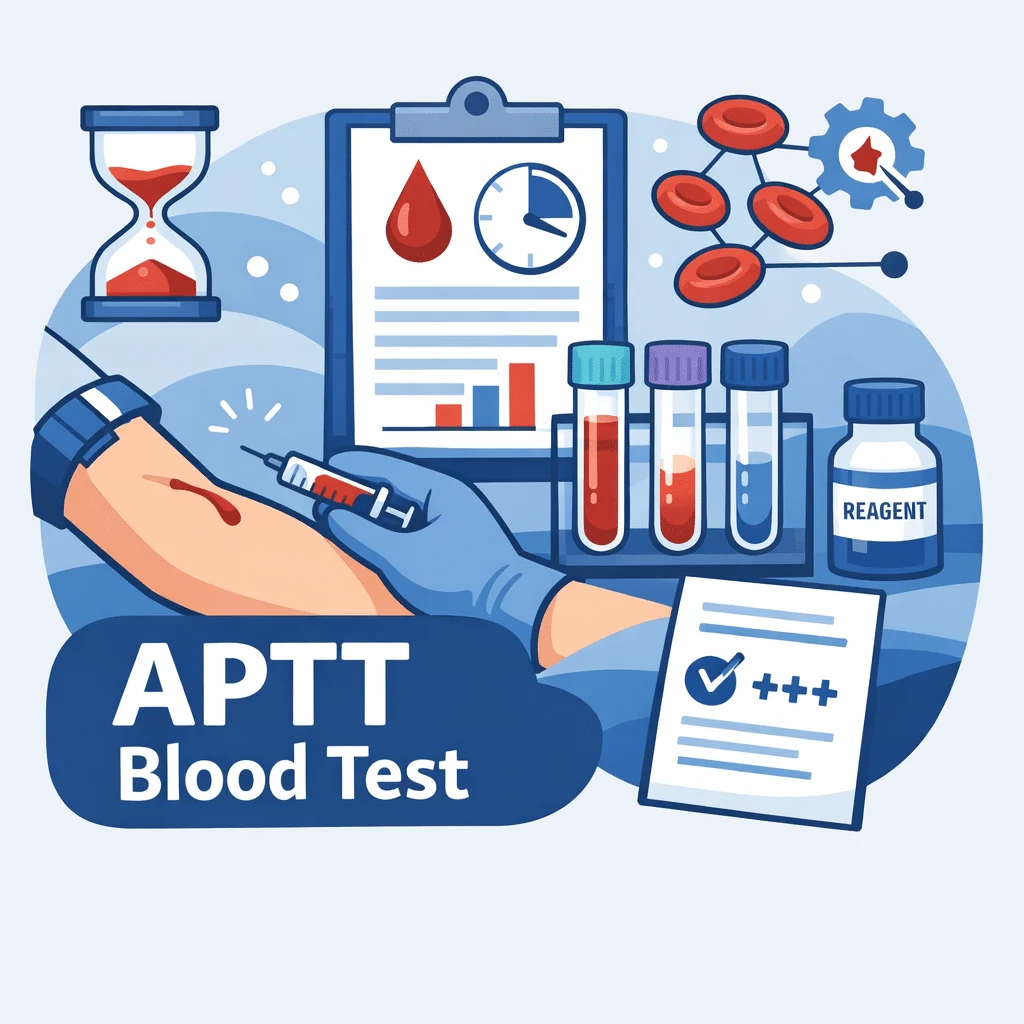
Testul de sânge aPTT măsoară cât timp îi ia unui eșantion din sângele tău să formeze un cheag prin intermediul unei părți a sistemului de coagulare numite calea intrinsecă. Medicii îl recomandă cel mai des pentru a monitoriza heparina, un anticoagulant injectabil, și pentru a investiga sângerări, vânătăi sau cheaguri de sânge fără o cauză clară. Acest ghid îți explică ce verifică testul, cum să îți citești rezultatul în raport cu intervalul de referință al laboratorului, ce poate însemna o valoare prelungită sau scurtată și când merită să discuți cu medicul tău despre un rezultat.
Ce măsoară testul de sânge aPTT
Timpul de tromboplastină parțial activat, prescurtat de obicei aPTT, este un test de laborator care măsoară în secunde cât timp îi ia plasmei să se coaguleze după ce un tehnician de laborator adaugă anumite substanțe chimice în probă. Acesta se concentrează pe calea intrinsecă, una dintre cele două căi prin care organismul tău formează un cheag, precum și pe etapele finale comune ambelor căi.
Coagularea depinde de o serie de proteine numite factori de coagulare, produse în principal de ficat și care în mod normal sunt inactive în fluxul sanguin. O leziune a unui vas de sânge declanșează o reacție în lanț care activează acești factori în succesiune, rezultând un cheag stabil. aPTT verifică dacă factorii din calea intrinsecă — inclusiv factorii VIII, IX, XI și XII — sunt prezenți în cantități normale și funcționează corect.
În laborator, un tehnician îți recoltează sângele într-un tub care conține un anticoagulant, apoi separă plasma. Adaugă o substanță de activare de suprafață și calciu pentru a declanșa reacția de coagulare, iar un aparat automat măsoară cât timp îi ia probei să formeze un cheag vizibil. Întregul proces durează de obicei doar câteva minute din momentul în care proba ajunge la laborator, deși timpul total de răspuns, inclusiv transportul și raportarea, poate fi mai lung.
Cum diferă acest test de testul PT
Un test înrudit, timpul de protrombină (PT), verifică calea extrinsecă și este raportat împreună cu indicele internațional normalizat, sau INR. PT și aPTT examinează grupuri diferite de factori de coagulare, astfel că medicii le solicită frecvent pe amândouă. Comparând care dintre ele este anormal, se poate identifica mai ușor unde în procesul de coagulare ar putea exista o problemă. Dacă raportul tău listează mai multe valori de coagulare împreună, este util să revizuiești întregul panel de coagulare.
De ce recomandă medicii testul aPTT
Testul aPTT are mai multe scopuri clinice distincte, iar motivul pentru care a fost solicitat influențează modul în care trebuie interpretat rezultatul.
Monitorizarea terapiei cu heparină
Heparina nefracționată este un anticoagulant injectabil cu acțiune rapidă, utilizat frecvent în spitale pentru afecțiuni precum tromboza venoasă profundă, embolia pulmonară sau în cadrul anumitor intervenții cardiace și vasculare. Deoarece heparina are o fereastră terapeutică îngustă, medicii verifică periodic aPTT-ul pentru a menține doza într-un interval sigur — unul care previne formarea periculoasă a cheagurilor fără a crește riscul de sângerare. În practică, echipa medicală recoltează de obicei un aPTT de bază înainte de a începe perfuzia, apoi repetă determinarea aproximativ la fiecare șase ore până când doza se stabilizează în intervalul țintă, după care testările pot fi mai rare.
Heparinele cu greutate moleculară mică și anticoagulantele orale directe, mai noi, au redus frecvența utilizării heparinei nefracționate în afara spitalului, însă aceasta rămâne opțiunea preferată în situații specifice: insuficiență renală severă, risc crescut de sângerare care poate necesita reversie rapidă și anumite contexte chirurgicale sau de terapie intensivă, unde un medicament cu acțiune scurtă și ușor de ajustat este deosebit de valoros.
Investigarea sângerărilor sau vânătăilor inexplicabile
Dacă ai epistaxis frecvent, vânătăi care apar ușor, menstre abundente sau sângerări prelungite după o tăietură minoră, medicul poate solicita un aPTT împreună cu alte teste de coagulare pentru a identifica o eventuală tulburare de sângerare.
Screening preoperator la pacienți selectați
Nu toți pacienții au nevoie de teste de coagulare înainte de o intervenție chirurgicală. Practica actuală le recomandă doar persoanelor cu antecedente personale sau familiale de sângerare, cu boală hepatică cunoscută sau celor care urmează tratament anticoagulant, nu tuturor pacienților în mod sistematic. Oricine are o procedură programată poate afla ce să se aștepte de la tipicele analize de sânge înainte de operație.
Depistarea deficiențelor de factori și a inhibitorilor
Un aPTT semnificativ prelungit poate indica o deficiență a unuia dintre factorii căii intrinseci — un tablou care produce cel mai clasic hemofilie A sau B, sau poate sugera prezența unui inhibitor dobândit care blochează activitatea unui factor de coagulare. Testul poate evidenția și anticoagulantul lupic, un anticorp care, paradoxal, crește riscul de a dezvolta o embolie pulmonară, chiar dacă prelungește rezultatul aPTT în laborator.
Cum citești rezultatul aPTT
Buletinul tău de analize va afișa rezultatul aPTT în secunde, alături de intervalul de referință stabilit de laboratorul respectiv. Aceeași secțiune de hemostază a buletinului grupează de obicei și rezultatul PT/INR, iar un buletin complet definește de regulă zeci de alți markeri uzuali din sânge. Unele rapoarte includ și un raport pacient/control, care compară rezultatul tău cu un eșantion de control normal. Dacă ești sub tratament cu heparină, raportul poate include și un interval țintă specific tratamentului tău, diferit de intervalul de referință al populației generale.
Intervalul de referință obișnuit pentru adulți este cuprins între aproximativ 25 și 35 de secunde, însă valorile exacte variază în funcție de reactivii și echipamentele folosite de laboratorul tău. Din acest motiv, compară întotdeauna rezultatul tău cu intervalul tipărit pe propriul raport, nu cu o valoare găsită online sau pe formularul altui laborator. Laboratoarele marchează de obicei valorile anormale cu „H" sau „L", cu un asterisc sau cu text colorat; o prezentare mai detaliată te poate ajuta să citirea rezultatelor analizelor de sânge cu mai multă încredere.
| Ce arată raportul tău | Semnificație generală |
|---|---|
| Rezultat în intervalul de referință al laboratorului | Calea intrinsecă pare să funcționeze la o viteză normală |
| Rezultat peste intervalul de referință (prelungit) | Coagularea este mai lentă decât era de așteptat; există mai multe cauze posibile, vezi mai jos |
| Rezultat sub intervalul de referință (scurtat) | Coagularea este mai rapidă decât era de așteptat; mai puțin frecvent, are de asemenea mai multe cauze posibile |
| Raportul pacient/control în afara intervalului 0,8–1,2 | Sugerează o abatere semnificativă față de un eșantion de control sănătos |
Cauzele unui aPTT prelungit
Un aPTT prelungit înseamnă că sângele tău a coagulat mai lent decât intervalul de referință în eprubetă. Mai multe afecțiuni distincte pot produce acest rezultat, iar medicul tău va lua în considerare simptomele, medicamentele și celelalte analize pentru a identifica cauza.
Heparina și alte anticoagulante
Heparina nefracționată este de departe cel mai frecvent motiv pentru un aPTT intenționat prelungit, deoarece medicamentul acționează prin încetinirea căii intrinseci. Dintre anticoagulantele orale directe, dabigatranul prelungește în mod constant aPTT-ul, în timp ce inhibitorii factorului Xa, precum rivaroxabanul și apixabanul, au un efect mai variabil și nu sunt monitorizați de obicei cu acest test.
Tulburări hemoragice ereditare
Hemofilia A apare din cauza unui deficit al factorului VIII, iar hemofilia B din cauza unui deficit al factorului IX; ambele pot cauza un aPTT semnificativ prelungit, însoțit de sângerări articulare și vânătăi ușoare. O afecțiune ereditară mai frecventă, care afectează o proteină ce ajută trombocitele să adere între ele, poate prelungi de asemenea testul; medicii care urmăresc pacientele gravide acordă o atenție deosebită atunci când diagnostichează boala von Willebrand.
Anticoagulantul lupic și sindromul antifosfolipidic
Acesta este unul dintre cele mai contraintuitive rezultate din testarea coagulării. Anticorpii antifosfolipidici interferează cu reactivii chimici folosiți în testul aPTT în sine, prelungind rezultatul în laborator, chiar dacă afecțiunea de bază crește riscul real de tromboze, nu de sângerare. De obicei, sunt necesare teste suplimentare specializate — adesea combinând aPTT cu o a doua metodă bazată pe reactivi diferiți — pentru a confirma acest rezultat.
Bolilor hepatice
Deoarece ficatul produce majoritatea factorilor de coagulare și proteinele anticoagulante naturale care îi echilibrează, o disfuncție hepatică semnificativă poate reduce producția acestora și poate prelungi atât aPTT, cât și PT. Boala hepatică severă poate scădea și nivelurile de antitrombină III, complicând și mai mult tabloul coagulării.
Cauzele unui aPTT scurtat
Un aPTT scurtat este mai puțin frecvent decât unul prelungit și, în general, este considerat mai puțin semnificativ clinic în sine, deși uneori poate indica o tendință crescută de formare a cheagurilor.
Inflamație acută sau pierdere recentă de sânge
În cursul unui răspuns inflamator activ sau la scurt timp după o sângerare semnificativă, organismul poate crește temporar nivelurile anumitor factori de coagulare ca parte a unui răspuns de protecție, ceea ce poate scurta aPTT. Acest tipar este de obicei incidental — apare alături de alți markeri ai inflamației sau ai unei leziuni recente — și nu conduce, de regulă, la investigații separate.
Coagularea intravasculară diseminată în stadiu incipient
Coagularea intravasculară diseminată (CID) este o afecțiune gravă care implică activitate de coagulare generalizată în tot organismul. În faza sa cea mai timpurie, această coagulare excesivă poate scurta aPTT, înainte ca afecțiunea să progreseze, să consume factorii de coagulare și să provoace sângerare.
Anumite tipuri de cancer
Unele cancere avansate, inclusiv anumite tumori ginecologice și gastrointestinale, pot elibera substanțe care activează sistemul de coagulare și scurtează aPTT, ca parte a unei stări de hipercoagulabilitate mai extinse.
Factorul V Leiden
Această mutație ereditară provoacă rezistență la proteina C activată, un anticoagulant natural, și este asociată cu un aPTT ușor scurtat, precum și cu un risc crescut de tromboze venoase, în special în timpul sarcinii sau după intervenții chirurgicale. Atunci când investighează un cheag inexplicabil, medicii solicită adesea un test D-dimer.
Cele mai recente progrese științifice
Cercetările recente continuă să rafineze modul în care medicii utilizează și interpretează testul aPTT, mai ales în situații clinice complexe. Conform PubMed, o analiză sistematică și meta-analiză din 2025 a constatat că persoanele cu preeclampsie, o complicație a sarcinii care implică tensiune arterială crescută, tind să aibă un timp de protrombină și un aPTT mai lung decât femeile însărcinate fără această afecțiune (Alemayehu et al., BMC Pregnancy and Childbirth, 2024; DOI). Ce înseamnă asta pentru tine: dacă ești însărcinată și panoul tău de coagulare arată diferit față de intervalul de referință obișnuit, medicul tău poate lua în considerare acest lucru alături de tensiunea arterială și alte rezultate; acesta este un tipar timpuriu care este încă confirmat prin studii mai mari și mai îndelungate, nu un test de diagnostic de sine stătător.
O meta-analiză separată, care a analizat adulți aflați pe ECMO veno-arterial — o formă de suport vital care oxigenează sângele în afara corpului — a comparat rezultatele pacienților gestionați cu ținte de tratament aPTT mai mici față de cele mai mari pentru dozarea heparinei. Datele cumulate au evidențiat rate în general similare ale complicațiilor hemoragice și trombotice între cele două intervale țintă (Mazzeffi et al., Perfusion, 2023; DOI). Ce înseamnă asta pentru tine: pentru grupul relativ restrâns de pacienți critici aflați pe ECMO, acest lucru sugerează că ar putea exista mai multă flexibilitate în privința țintelor aPTT decât se presupunea anterior, deși autorii subliniază că este nevoie de un studiu randomizat corespunzător înainte ca ghidurile să fie modificate.
Cercetările privind testarea anticoagulantului lupic au avansat și ele. O analiză din 2025 a practicii de laborator a menționat că ghidurile internaționale actuale recomandă testarea anticoagulantului lupic prin cel puțin două metode diferite — de obicei aPTT alături de un test separat numit timpul de venin de viperă Russell diluat — deoarece bazarea pe o singură metodă riscă rezultate fals pozitive sau fals negative, în special la persoanele care iau anticoagulante orale mai noi (Favaloro et al., Journal of Clinical Medicine, 2025). Ce înseamnă asta pentru tine: dacă medicul tău suspectează prezența anticoagulantului lupic pe baza unui aPTT prelungit, te poți aștepta la teste suplimentare, mai specifice, înainte de a se confirma un diagnostic — nu la o concluzie trasă dintr-un singur rezultat.
Separat, o meta-analiză din 2024 a examinat dacă timpul de protrombină și aPTT diferă între persoanele cu diabet și indivizii sănătoși, pe baza studiilor efectuate în Africa. În ansamblu, analiza nu a identificat o diferență semnificativă statistic pentru grup în general, deși un semnal a apărut specific la persoanele cu diabet de tip 1 (Getu et al., Frontiers in Medicine, 2024; DOI). Ce înseamnă asta pentru tine: acesta este un rezultat preliminar, la nivel de populație, și nu un motiv pentru screening de rutină al coagulării în diabet; cercetătorii îl descriu ca pe ceva ce merită monitorizat, nu ca pe ceva care necesită acțiune imediată.
Când să mergi la medic
Cele mai multe rezultate anormale ale aPTT sunt cel mai bine discutate la o consultație de rutină, nu tratate ca urgențe, deoarece o singură valoare marcată reflectă adesea o variație ușoară și inofensivă. Există totuși câteva situații care necesită atenție mai promptă.
Solicită îngrijire medicală urgentă dacă un aPTT prelungit este însoțit de oricare dintre următoarele semne de sângerare activă:
- Sângerări nazale frecvente sau greu de oprit.
- Vânătăi mari, inexplicabile, sau băşici cu sânge.
- Sânge în urină sau scaun, sau sângerări menstruale neobișnuit de abundente.
- Articulații umflate și dureroase, care pot indica o sângerare internă.
- Orice sângerare care nu se oprește cu presiune fermă după câteva minute.
Contactează medicul tău prompt, deși nu neapărat ca urgență, dacă observi umflarea bruscă a unui picior, durere sau căldură locală, sau dacă dezvolți dificultăți de respirație inexplicabile ori dureri în piept, deoarece acestea pot sugera un cheag, nu o problemă de sângerare. Dacă iei heparină sau alt anticoagulant și rezultatul aPTT revine mult în afara intervalului tău țintă, echipa medicală va ajusta de obicei doza și va reverifica nivelul, în loc să schimbe tratamentul pe baza unui singur rezultat.
Înțelege-ți rezultatele analizelor cu AI DiagMe
Analizarea unui rezultat aPTT alături de alte valori ale coagulării, cum ar fi PT/INR, D-dimeri sau numărul de trombocite, poate părea copleșitoare fără context. AI DiagMe te ajută să înțelegi ce înseamnă aceste cifre în limbaj simplu, astfel încât să mergi la următoarea consultație cu întrebări mai clare. Este conceput să te ajute să îți înțelegi analizele, nu să te diagnosticheze sau să înlocuiască sfatul medicului tău.
Obține interpretarea rezultatelor în câteva minute
Glosar
| Termen | Definiție |
|---|---|
| aPTT (timpul parțial de tromboplastină activat) | Un test de sânge care măsoară câte secunde îi ia plasmei să coaguleze prin căile de coagulare intrinsecă și comună. |
| Cascada de coagulare | Lanțul pas cu pas de activare a factorilor de coagulare care duce la formarea unui cheag de sânge stabil. |
| Factorul VIII | Un factor de coagulare din calea intrinsecă; deficiența sa cauzează hemofilia A. |
| Factorul V Leiden | O modificare genetică moștenită frecventă care face ca factorul de coagulare V să reziste unui anticoagulant natural, crescând riscul de tromboză. |
| Hemofilia | O tulburare de sângerare moștenită cauzată de deficiența unui factor de coagulare specific, cel mai adesea factorul VIII sau IX. |
| Heparină | Un medicament anticoagulant injectabil cu acțiune rapidă, monitorizat frecvent prin testul aPTT. |
| Calea intrinsecă | Una dintre cele două căi ale cascadei coagulării, evaluată prin testul aPTT. |
| Anticoagulantul lupic | Un anticorp care prelungește aPTT în laborator, dar este asociat cu un risc real mai mare de tromboză. |
| PT/INR | Un test de coagulare înrudit care verifică calea extrinsecă și este utilizat pentru monitorizarea tratamentului cu warfarină. |
| Interval de referință | Intervalul de valori considerat tipic pentru o populație sănătoasă, stabilit individual de fiecare laborator. |
Întrebări frecvente
Ce înseamnă un rezultat aPTT scăzut?
Un aPTT scăzut, adică scurtat, înseamnă că sângele tău s-a coagulat mai repede decât intervalul de referință al laboratorului în eprubetă. Acest lucru este mai puțin frecvent decât un rezultat prelungit și adesea nu are semnificație clinică în sine. Cauzele posibile includ pierderi recente de sânge, inflamație acută, anumite tipuri de cancer sau o tendință moștenită la coagulare, cum ar fi mutația Factor V Leiden. Medicul tău va interpreta de obicei un aPTT scurtat împreună cu simptomele tale și cu alte teste de coagulare, nu ca o valoare izolată.
Care este intervalul normal pentru testul aPTT?
Majoritatea laboratoarelor raportează un interval normal pentru adulți de aproximativ 25 până la 35 de secunde, deși acesta variază în funcție de reactivii și echipamentele specifice utilizate de fiecare laborator. Compară întotdeauna rezultatul tău cu intervalul de referință tipărit pe propriul raport, deoarece valorile pot diferi semnificativ între laboratoare. Dacă ești monitorizat(ă) cu heparină, intervalul țintă va fi de obicei mai larg și stabilit individual de echipa ta medicală în funcție de doza de medicament.
Ce înseamnă aPTT și cu ce diferă față de PTT?
aPTT înseamnă timpul de tromboplastină parțială activată. Termenul „activată" se referă la un activator chimic pe care laboratorul îl adaugă pentru a accelera și standardiza reacția de coagulare, ceea ce face rezultatele mai consistente între teste. PTT și aPTT sunt folosite în general pentru a desemna același test în practica modernă, deoarece aproape toate laboratoarele utilizează acum metoda activată în locul versiunii mai vechi, neactivate.
Poate fi tratat un nivel crescut al aPTT?
Tratamentul depinde în totalitate de cauză. Dacă heparina este responsabilă, echipa medicală va ajusta doza. Dacă se descoperă o deficiență de factor, cum ar fi hemofilia, tratamentul poate implica înlocuirea factorului de coagulare lipsă. Dacă se identifică anticoagulantul lupic sau o altă cauză autoimună, managementul se concentrează pe afecțiunea de bază și pe reducerea riscului de tromboză, nu pe corectarea valorii aPTT în sine. Un aPTT prelungit este un semnal care ghidează investigații suplimentare, nu o afecțiune tratată direct.
Un aPTT normal exclude o tulburare de coagulare?
Nu. Un aPTT normal confirmă că calea intrinsecă funcționează corespunzător, dar nu verifică fiecare aspect al sistemului tău de coagulare. Probleme ale căii extrinseci — evaluate separat prin testul PT/INR —, ale funcției plachetare sau deficiențe specifice de factori, cum ar fi factorul XIII, pot exista chiar și cu un aPTT normal. Dacă ai simptome ale unei tulburări de coagulare în ciuda unor rezultate normale, medicul tău poate recomanda teste suplimentare, mai specifice.
Trebuie să fiu pe stomacul gol înainte de recoltarea sângelui pentru aPTT?
De obicei, nu este necesară nicio pregătire specială, inclusiv postul, înainte de testul aPTT. Se folosește o recoltare standard de sânge dintr-o venă a brațului, colectat în general într-un tub ce conține un anticoagulant pentru a preveni coagularea probei înainte de a ajunge la laborator. Spune-i persoanei care îți recoltează sângele despre orice medicamente pe care le iei, inclusiv anticoagulante și suplimente, deoarece mai multe dintre acestea pot influența rezultatul.
Surse
- Testul timpului de tromboplastină parțială (PTT) — MedlinePlus, Biblioteca Națională de Medicină a SUA
- Timpul de tromboplastină parțială — Cleveland Clinic
- Hemofilia: simptome și cauze — Mayo Clinic
- Alemayehu et al., Asocierea nivelurilor timpului de protrombină, timpului de trombină și timpului de tromboplastină parțial activată cu preeclampsia: o revizuire sistematică și meta-analiză — BMC Pregnancy and Childbirth, 2024 (PubMed, PMC11092070)
- Mazzeffi et al., Rezultatele pacienților adulți heparinizați cu oxigenare extracorporeală prin membrană veno-arterială gestionați cu ținte scăzute și ridicate ale timpului de tromboplastină parțial activată: o revizuire sistematică și meta-analiză — Perfusion, 2023 (PubMed)
- Getu et al., Evaluarea timpului de protrombină și a timpului de tromboplastină parțial activată la pacienți diabetici și controale sănătoase din Africa: revizuire sistematică și meta-analiză — Frontiers in Medicine, 2024 (PubMed, PMC11658991)
- Favaloro et al., Testarea anticoagulantului lupic pentru diagnosticul sindromului antifosfolipidic: o perspectivă bazată pe practica locală — Journal of Clinical Medicine, 2025 (via Consensus)
Lectură suplimentară
- Panoul de coagulare: PT, PTT, INR și D-dimeri
- Testul D-dimer din sânge: ghid complet pentru înțelegerea rezultatelor tale
- Testul antitrombinei III: înțelege-ți valorile
- Testul de vitamina K din sânge și rezultatele PT/INR
- Cum să-ți citești rezultatele analizelor de sânge