































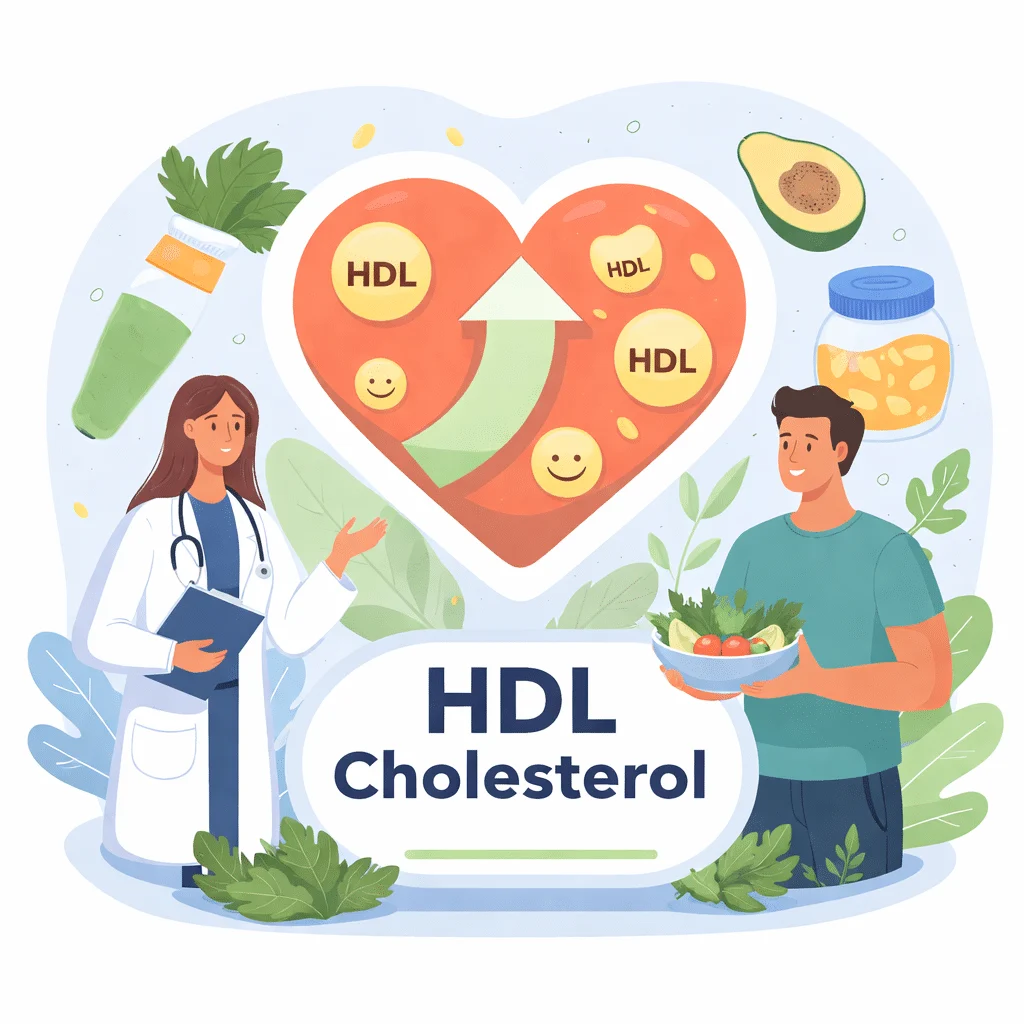
HDL-kolesterolitesti mittaa kolesterolia, jonka elimistösi kuljettaa takaisin maksaan poistettavaksi – siksi lääkärit kutsuvat HDL:ää "hyväksi kolesteroliksi". Kun lipidipaneelisi tulokset tulevat, HDL-arvo jää usein vähemmälle huomiolle kuin LDL, vaikka sillä on tärkeä oma roolinsa sydän- ja verisuoniriskisi muodostumisessa. Kun ymmärrät, mitä oma lukusi tarkoittaa, miten se sopii yhteen muiden paneeliarvojesi kanssa ja mikä todella vaikuttaa siihen, voit muuttaa yksittäisen laboratorioarvon hyödylliseksi terveyspäätökseksi.
Tämä opas käy läpi viitearvot, sen mikä nostaa tai laskee HDL:ää, sekä uusimman tutkimustiedon siitä, miksi HDL:n laatu saattaa olla yhtä tärkeää kuin tulosteeseesi merkitty määrä. Löydät myös sanaston, usein kysytyt kysymykset sekä linkit liittyviin lipidimerkkiaineisiin, joihin voit tutustua seuraavaksi.
Mitä HDL-kolesteroli tekee elimistössä
Kolesteroli itsessään ei ole haitallista. Solusi tarvitsevat sitä solukalvojen rakentamiseen, hormonien tuottamiseen ja D-vitamiinin valmistamiseen. Ongelma alkaa, kun liikaa kolesterolia kertyy valtimoiden seinämiin. HDL-hiukkaset keräävät ylimääräisen kolesterolin kudoksista ja verisuonista ja kuljettavat sen maksaan, jossa se kierrätetään tai poistetaan elimistöstä niin sanotun käänteisen kolesterolikuljetuksen kautta.
Koska tämä puhdistustoiminto auttaa rajoittamaan plakkien kertymistä, korkeampien HDL-tasojen on pitkään todettu liittyvän pienempään ateroskleroosin ja sydänsairauksien riskiin. HDL kuljettaa myös antioksidantti- ja tulehdusta ehkäiseviä yhdisteitä, jotka voivat suojata verisuonten seinämiä – siksi tutkijat kuvaavat sitä monipuoliseksi merkkiaineeksi yksinkertaisen mittarin sijaan.
Miten HDL-kolesterolitesti tehdään
HDL-testi tehdään yleensä osana tavallista lipidipaneelia yhdessä kokonaiskolesterolin, LDL-kolesterolin ja triglyseridien kanssa. Useimmissa laboratorioissa veri otetaan käsivarren laskimosta, ja monet lääkärit sallivat nykyään testin ilman paastoa, sillä HDL ja kokonaiskolesteroli muuttuvat vain vähän aterian jälkeen. Lääkärisi kertoo, tarvitaanko paastoa juuri sinun paneelisi kohdalla – erityisesti jos triglyseridejä mitataan samalla.
Tulokset ilmoitetaan milligrammoina desilitraa kohden (mg/dl) Yhdysvalloissa. Koska yksittäinen mittaustulos voi vaihdella äskettäisen sairauden, alkoholin käytön tai jopa vuorokaudenajan mukaan, monet lääkärit mieluummin tarkastelevat kattavaa verikoeopasta ja vertaavat kahden tai useamman lipidikokeen tuloksia keskenään sen sijaan, että arvioisivat sydän- ja verisuoniriskin yhden tuloksen perusteella.
HDL-kolesterolin viitearvot
Viitearvot vaihtelevat hieman laboratorion ja sukupuolen mukaan, sillä naisilla on luonnostaan korkeammat HDL-tasot kuin miehillä. Alla oleva taulukko heijastaa arvoja, joihin yhdysvaltalaiset laboratoriot ja kansalliset kolesterolisuositukset useimmiten viittaavat.
| HDL-taso (mg/dl) | Kategoria | Mitä se yleensä tarkoittaa |
|---|---|---|
| Alle 40 (miehet) / Alle 50 (naiset) | Matala | Katsotaan itsessään merkittäväksi sydänsairauden riskitekijäksi |
| 40-59 | Keskimääräinen | Hyväksyttävä, joskin korkeampi arvo tällä välillä on yleensä parempi |
| 60 ja yli | Suojaava | Yhteydessä pienempään sydän- ja verisuoniriskiin useimmilla ihmisillä |
| Yli 80–100 | Erittäin korkea | Ei enää automaattisesti suojaava; keskustele asiasta lääkärisi kanssa |
Nämä luokat ovat yleisiä ohjearvoja, eivät diagnoosi. Lääkäri, joka tulkitsee HDL-kolesteroliarvoasi, ottaa huomioon myös kokonaiskolesterolisi, ikäryhmäsi normaalit LDL-arvot, triglyseridisi, sukuhistoriasi, verenpaineesi ja elintapatekijäsi ennen kuin tekee johtopäätöksiä sydän- ja verisuoniriskistäsi.
Mikä aiheuttaa matalan HDL-kolesterolin
Useat tekijät voivat laskea HDL-tasoja. Tupakointi alentaa HDL:ää ja vahingoittaa verisuonten seinämiä, joita HDL auttaa suojaamaan. Ylipaino – erityisesti vatsan alueella – on yhteydessä matalampaan HDL:ään ja korkeampiin triglyserideihin. Istuva elämäntapa, huonosti hallittu tyypin 2 diabetes ja runsaasti puhdistettuja hiilihydraatteja sisältävä ruokavalio voivat kaikki osaltaan laskea arvoa. Myös tietyt lääkkeet, kuten anaboliset steroidit ja jotkin beetasalpaajat, voivat alentaa HDL-kolesterolia. Erillinen opas käsittelee matalan HDL-kolesterolin syitä ja riskejä tarkemmin.
Myös perimällä on merkittävä rooli. Tietyt perinnölliset tilat heikentävät HDL:n tuotantoa tai nopeuttavat sen hajoamista riippumatta ruokavaliosta tai liikuntatottumuksista – siksi kahdella samanlaisesti elävällä ihmisellä voi olla hyvin erilaiset HDL-arvot.
Mikä nostaa HDL-kolesterolia
Säännöllinen aerobinen liikunta on yksi luotettavimmista tavoista nostaa HDL-kolesterolia – vaikutus näkyy jo kohtuullisella aktiivisuudella, kuten reippaalla kävelyllä muutaman kerran viikossa. Tupakoinnin lopettaminen nostaa HDL-arvoa mitattavasti jo muutamassa viikossa. Kun tyydyttyneet rasvat ja puhdistetut hiilihydraatit korvataan tyydyttymättömillä rasvoilla – kuten oliiviöljystä, pähkinöistä ja rasvaisesta kalasta saatavilla – koko lipidiprofiili paranee HDL mukaan lukien, ja samalla on helpompi pitää triglyseridit normaalialueella.
Siemenöljyt jakavat mielipiteitä: katso mitä tutkimusnäyttö kertoo auringonkukkaöljystä.
Kohtuullisen alkoholinkäytön on perinteisesti katsottu liittyvän korkeampaan HDL-tasoon, mutta suuret terveysjärjestöt eivät suosittele juomisen aloittamista tästä syystä, sillä alkoholin muut terveysriskit ovat suuremmat kuin mahdollinen lipidihyöty. Myös laihtuminen – kun paino on terveen painoalueen yläpuolella – nostaa yleensä HDL-arvoa ja laskee samalla triglyseridejä sekä LDL-kolesterolia.
Miksi tyydyttynyt rasva ja HDL ovat monimutkaisempi yhtälö kuin miltä ensin näyttää
Runsaasti tyydyttynyttä rasvaa sisältävä ruokavalio – kuten voi, rasvainen punainen liha ja täysrasvaiset maitotuotteet – nostaa samanaikaisesti sekä LDL- että HDL-kolesterolia. Tämä aiheutti pitkään hämmennystä siitä, onko tyydyttynyt rasva haitallista, koska yksi arvo nousi samalla kun toista yritettiin laskea. Nykytutkimus osoittaa, että ratkaisevampaa on se, millä tyydyttynyt rasva korvataan, kuin mikään yksittäinen lipidiarvo yksinään. Tyydyttyneen rasvan korvaaminen tyydyttymättömillä rasvoilla tai runsaskuituisilla hiilihydraateilla on yhteydessä pienempään sydän- ja verisuonitautiriskiin, mutta korvaaminen puhdistetulla tärkkelyksellä tai lisätyllä sokerilla ei yleensä ole. Tämän vivahteen vuoksi lääkärisi tarkastelee koko lipidipaneeliasi ja ruokavaliotasi kokonaisuutena eikä reagoi HDL- tai LDL-arvoon erikseen.
Miten HDL liittyy muihin lipidiarvoihisi
HDL-kolesteroli kertoo harvoin koko totuuden yksinään. kokonaiskolesterolitesti kuvastaa HDL:n, LDL:n ja osan triglyserideistä yhteissummaa, joten yksittäinen HDL-lukema tarvitsee tämän laajemman asiayhteyden. Erillinen LDL-kolesterolitesti mittaa hiukkasia, jotka kuljettavat kolesterolia kudoksiin ja edistävät ylimäärinä suoraan plakkien muodostumista – siksi lääkärit keskittyvät usein LDL:n laskemiseen, vaikka HDL näyttäisi hyvältä. Kohonneet triglyseridiarvot ja niihin liittyvät riskit liittyvät usein matalaan HDL-tasoon, ja tämä yhdistelmä on tunnustettu aineenvaihdunnallisen riskin merkki.
Jotkut lääkärit laskevat myös kolesterolisuhdetta kokonaisriskin yhteydessä jakamalla kokonaiskolesterolin HDL:llä, mikä voi antaa hyödyllistä lisätietoa pelkkien yksittäisten arvojen tueksi. Tarkempaa hiukkastason riskiarviota varten apolipoproteiini B:tä mittaava laajennettu lipidiprofiili lisää tärkeimmän valtimotukoksia aiheuttavien hiukkasten proteiinimerkkiaineen sekä apolipoproteiini A1:n, joka on HDL-hiukkasten pääproteiini. Vertaamalla apolipoproteiini A1 -tulostasi apolipoproteiini B:hen voidaan joskus havaita riski, jonka tavallinen lipidipaneeli jättää huomaamatta.
Viimeaikaiset tieteelliset edistysaskeleet HDL-tutkimuksessa
Perinteinen käsitys piti HDL-kolesterolia tasaisesti suojaavana: mitä korkeampi arvo, sitä parempi. Uudempi tutkimus monimutkaistaa tätä kuvaa kahdella tärkeällä tavalla. Ensinnäkin suuret kohorttitutkimukset ovat tunnistaneet U-muotoisen yhteyden HDL-kolesterolin ja kuolleisuuden välillä. JAMA Cardiology -lehdessä julkaistun tutkimuksen mukaan erittäin korkeat HDL-kolesteroliarvot – noin 80 mg/dl ylittävät tasot – olivat paradoksaalisesti yhteydessä lisääntyneeseen kokonaiskuolleisuuteen ja sydän- ja verisuonikuolleisuuteen henkilöillä, joilla oli jo todettu sepelvaltimotauti, riippumatta korkean HDL:n kanssa yhdistetyistä yleisistä geneettisistä muunnoksista. Samankaltainen katsaus The Journal of Clinical Endocrinology and Metabolism -lehdessä päätteli vastaavasti, että HDL-kolesteroli ei ole yleismaailmallinen suojaava tekijä, ja totesi, että nimenomaan HDL-kolesterolia nostamaan suunnitellut lääkkeet eivät ole onnistuneet vähentämään sydän- ja verisuonitapahtumia kliinisissä tutkimuksissa.
Toiseksi tutkijat korostavat yhä enemmän HDL:n toimintaa määrän sijaan. Kolesterolieffluksikapasiteetti-niminen mittari, joka seuraa kuinka tehokkaasti HDL-hiukkaset poistavat kolesterolia soluista, on osoitettu ennustavan sydän- ja verisuonitauteja riippumatta itse HDL-kolesterolitasosta. Circulation-lehdessä julkaistu tutkimus osoitti, että pienemmät HDL-hiukkaset ovat usein tehokkaampia tässä kolesterolin poistoprosessissa kuin suuremmat, koska niiden pintaproteiinin rakenteelliset muutokset mahdollistavat tehokkaamman vuorovaikutuksen kolesterolia vievän solukuljettajan kanssa. Kaiken kaikkiaan tämä tutkimus viittaa siihen, että HDL:n toimintatehokkuus – ei pelkästään sen määrä – saattaa lopulta olla tärkeämpää sydän- ja verisuonisuojan kannalta.
Vuoden 2026 dyslipidemia-ohjeistus ja mitä muuttui
Maaliskuussa 2026 American College of Cardiology ja American Heart Association julkaisivat päivitetyn yhteisen ohjeistuksen dyslipidemian hoidosta, joka korvaa aiemmat vuoden 2018 suositukset. Päivityksen mukaan kaikkien aikuisten lipoproteiini(a) tulisi mitata vähintään kerran osana sydän- ja verisuonitautien riskinarviointia. Lisäksi ohjeistus ottaa käyttöön yleisen lipidiseulonnan 9–11-vuotiaille lapsille ja siirtää riskinlaskennan uudempiin PREVENT-yhtälöihin vanhojen Pooled Cohort Equations -yhtälöiden sijaan. LDL-kolesterolin hoitotavoitteita tiukennettiin myös: tavoitteena on yleisesti alle 100 mg/dl ja alle 70 mg/dl henkilöillä, joilla on kohonnut riski tai aiempi sydän- ja verisuonitapahtuma.
Ohjeistus ei aseta uutta numeerista HDL-tavoitearvoa, mikä heijastaa samaa kehittyvää ymmärrystä kuin edellä on kuvattu: HDL-kolesteroli on edelleen hyödyllinen kokonaisriskin arvioinnissa, mutta nykyiset suositukset eivät pidä HDL-kolesterolin nostamista itsenäisenä hoitotavoitteena. Jos tuloksesi viittaavat päivitettyyn ohjeistukseen, kysy lääkäriltäsi, miten muutokset vaikuttavat henkilökohtaiseen riskinarviointiisi – erityisesti jos lipoproteiini(a):ta ei ole aiemmin mitattu.
Milloin kannattaa ottaa yhteyttä lääkäriin
Vie tuloksesi lääkärille, jos HDL-kolesteroliarvosi on alle 40 mg/dl, jos triglyseridiarvosi ovat samanaikaisesti koholla tai jos sinulla tai lähisukulaisillasi on ollut varhainen sydänsairaus. Keskustelu on aiheellinen myös silloin, jos HDL-kolesteroliarvosi on poikkeuksellisen korkea, sillä uudempi tutkimustieto viittaa siihen, että hyvin korkeat arvot voivat olla merkityksellisiä. Jos jokin osa laboratoriovastauksestasi sisältää tuntemattomia lyhenteitä tai koodeja, laboratoriotutkimusten lyhenteiden opas voi auttaa sinua tulkitsemaan loput vastauksesta. Lääkärisi voi tarkastella HDL-kolesteroliarvoasi kokonaisuutena – yhdessä koko lipidiprofiilin, verenpaineen, verensokerin, painon ja sukuhistorian kanssa – arvioidakseen todellisen sydän- ja verisuonitautiriskisi sen sijaan, että nojattaisiin vain yhteen yksittäiseen arvoon.
Sanasto
| Termi | Määritelmä |
|---|---|
| HDL (korkeatiheyksinen lipoproteiini) | Hiukkanen, joka kuljettaa kolesterolia kudoksista takaisin maksaan poistettavaksi |
| Käänteinen kolesterolin kuljetus | Prosessi, jossa HDL kuljettaa ylimääräisen kolesterolin pois soluista ja verisuonista |
| Kolesterolinpoistotehokkuus | Toiminnallinen mittari, joka kuvaa, kuinka tehokkaasti HDL-hiukkaset poistavat kolesterolia soluista |
| Apolipoproteiini A1 | HDL-hiukkasissa pääasiassa esiintyvä rakenneproteiini |
| Ateroskleroosi | Plakin kertyminen valtimoiden seinämiin, mikä voi ahtauttaa tai tukkia verenkierron |
| Lipidipaneeli | Verikoe, jossa mitataan kokonaiskolesteroli, LDL, HDL ja triglyseridit yhdessä |
Usein kysytyt kysymykset
Onko korkeampi HDL-kolesteroli aina parempi?
Ei välttämättä. Vaikka HDL-kolesteroli välillä noin 60–80 mg/dl katsotaan yleisesti suojaavaksi, tutkimukset ovat osoittaneet U-muotoisen yhteyden: hyvin korkea HDL-kolesteroli, yli noin 80–100 mg/dl, saattaa joissakin väestöryhmissä lisätä kuolleisuusriskiä. Keskustele poikkeuksellisen korkeista arvoista lääkärisi kanssa sen sijaan, että olettaisit enemmän olevan aina parempi.
Voiko HDL-kolesterolia nostaa nopeasti?
Merkittävät muutokset HDL-kolesterolissa vaativat yleensä viikkoja tai kuukausia johdonmukaisia elintapamuutoksia, kuten säännöllistä aerobista liikuntaa, tupakoinnin lopettamista ja ruokavalion rasvanlaadun parantamista. HDL-kolesterolia ei voi nostaa yhdessä yössä, eikä nopeaan HDL:n nousuun markkinoiduilla lisäravinteilla ole yleensä vahvaa tieteellistä näyttöä.
Pitääkö HDL-kolesterolitestiin olla paastossa?
Monet lääkärit eivät enää vaadi paastoa pelkästään HDL- ja kokonaiskolesterolin mittaamiseen, sillä nämä arvot muuttuvat syömisen jälkeen vain vähän. Jos tutkimukseen kuuluu kuitenkin myös triglyseridit, lääkäri saattaa silti suositella 9–12 tunnin paastoa ennen näytteenottoa. Noudata oman lääkärisi tai hoitoyksikkösi ohjeita.
Mikä HDL-kolesterolitaso on vaarallisen matala?
HDL-kolesterolitasoa alle 40 mg/dl miehillä tai alle 50 mg/dl naisilla pidetään yleisesti matalana, ja se luokitellaan itsenäiseksi sydänsairauden riskitekijäksi – erityisesti silloin, kun siihen yhdistyy korkeat triglyseridit tai kohonnut LDL-kolesteroli.
Vaatiiko HDL-kolesterolitesti neulan?
Kyllä. HDL-kolesteroli mitataan verinäytteestä, joka otetaan yleensä käsivarren laskimosta osana tavallista lipidiprofiilia. Toimenpide on nopea, ja siihen liittyvät samat pienet riskit kuin mihin tahansa rutiininäytteenottoon.
Kuinka usein HDL-kolesteroli tulisi mitata?
Useimmat terveet aikuiset käyvät seulonnassa neljän–kuuden vuoden välein varhaisaikuisuudesta alkaen. Henkilöt, joilla on riskitekijöitä – kuten diabetes, ylipaino, tupakointi tai sydänsairauksien sukuhistoria – testataan yleensä useammin. Lääkärisi laatii sinulle yksilöllisen seurantasuunnitelman tulosten ja kokonaisriskin perusteella.
Lähteet
- Centers for Disease Control and Prevention. LDL and HDL Cholesterol and Triglycerides. https://www.cdc.gov/cholesterol/about/ldl-and-hdl-cholesterol-and-triglycerides.html
- MedlinePlus (National Library of Medicine). HDL: The Good Cholesterol. https://medlineplus.gov/hdlthegoodcholesterol.html
- Cleveland Clinic. HDL: Why It’s Good Cholesterol. https://my.clevelandclinic.org/health/articles/24395-hdl-cholesterol
- Liu C, et al. Association Between High-Density Lipoprotein Cholesterol Levels and Adverse Cardiovascular Outcomes in High-risk Populations. JAMA Cardiology, 2022. https://doi.org/10.1001/jamacardio.2022.0912
- Razavi AC, et al. Does Elevated High-Density Lipoprotein Cholesterol Protect Against Cardiovascular Disease? The Journal of Clinical Endocrinology and Metabolism, 2023. https://doi.org/10.1210/clinem/dgad406
- He Y, et al. Flipped C-Terminal Ends of APOA1 Promote ABCA1-Dependent Cholesterol Efflux by Small HDLs. Circulation, 2023. https://doi.org/10.1161/CIRCULATIONAHA.123.065959
- American Heart Association / American College of Cardiology. 2026 Guideline on the Management of Dyslipidemia. https://www.ahajournals.org/doi/10.1161/CIR.0000000000001423
Lisälukemista
- LDL-kolesteroli: Tämän verimarkkerin ymmärtäminen ja tulkinta
- Kokonaiskolesterolitesti: täydellinen opas tulosten ymmärtämiseen
- Triglyseridit: Verikokeen ymmärtäminen
- Apolipoproteiini A1: korkeat, matalat ja normaalit arvot
- Edistynyt lipidipaneeli: Sydämesi ja stressinsietokykysi suunnitelma
HDL-kolesterolisi on vain yksi osa laajempaa kokonaisuutta, johon kuuluvat koko lipidiprofiilisi, elintapasi ja henkilökohtaiset riskitekijäsi. Kaikkien laboratoriotulosten arvojen ymmärtäminen voi tuntua ylivoimaiselta, kun luet niitä yksin kotona.
Ymmärrä laboratoriotuloksiasi tekoälyn DiagMen avulla
Tulkitse tuloksesi muutamassa minuutissa