







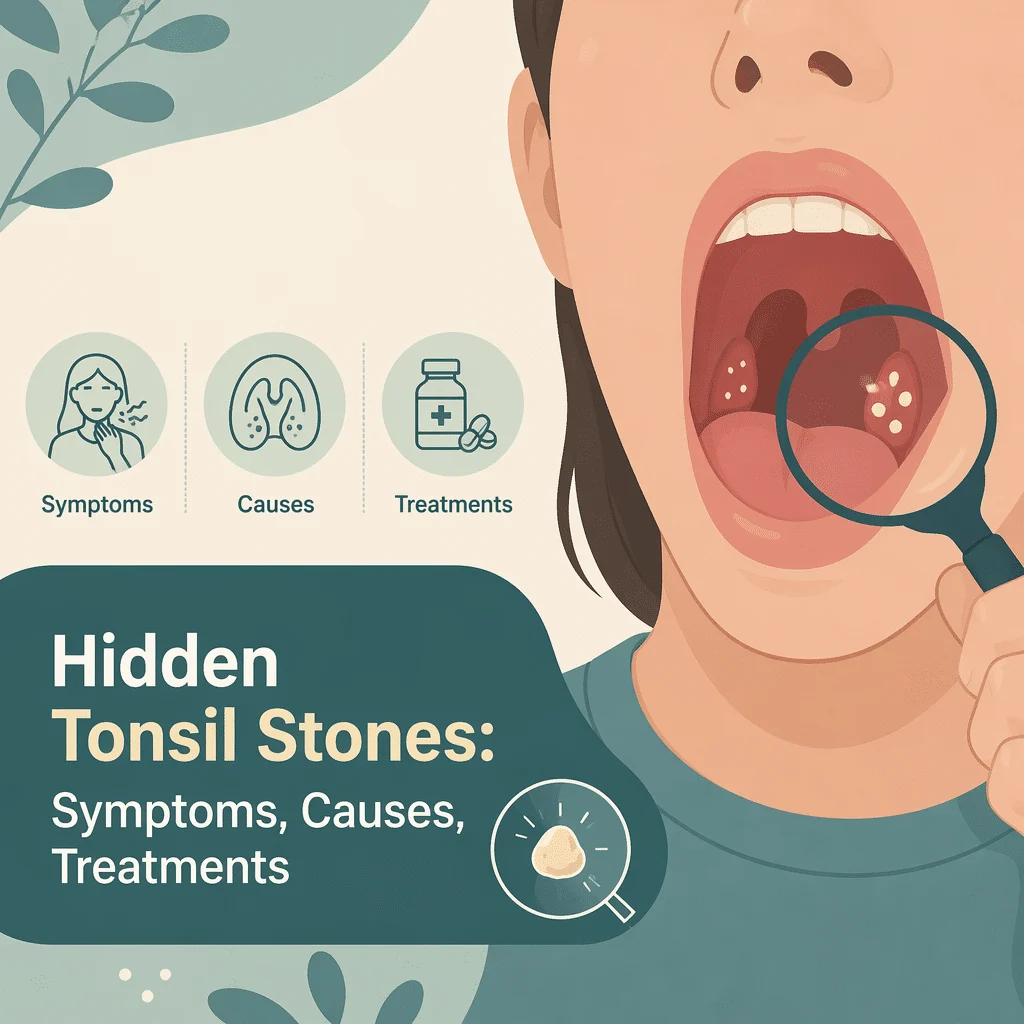
Verborgen amandelstenen zijn kleine, harde kluiterjes die diep in de plooien van uw amandelen ontstaan — zo ver naar achteren weggestopt dat u ze in de spiegel vaak niet kunt zien. Ze worden ook wel tonsilloliethen genoemd en vormen zich langzaam uit opgehoopt voedsel, afgestorven cellen, slijm en bacteriën die in de loop van de tijd verharden. Omdat ze laag in de spleetjes verscholen zitten, merken veel mensen ze nooit op, maar ze kunnen toch hardnekkige slechte adem, een krassend gevoel in de keel of een vreemde smaak veroorzaken. In vrijwel alle gevallen zijn ze onschadelijk. In dit artikel leest u wat verborgen amandelstenen veroorzaakt, hoe u de tekenen herkent, welke verwijderingsmethoden veilig zijn en wanneer u een arts moet raadplegen.
Wat zijn verborgen amandelstenen?
Uw amandelen zijn twee zachte kussentjes van lymfatisch weefsel achter in de keel. Hun oppervlak is bezaaid met kleine holtetjes, de zogenoemde amandelcrypten, die bij sommige mensen ondiep zijn en bij anderen diep en vertakt. Wanneer afvalstoffen in een diepe crypte terechtkomen en daar blijven, verkalken ze langzaam tot een tonsilloliet — de medische term voor een amandelsteen.
Een steen vlak aan de oppervlakte kan zichtbaar zijn als een wit of geel vlekje. Verborgen amandelstenen zijn anders: ze zitten diep in de crypte, vaak achter een plooi van weefsel, zodat de spiegel niets laat zien. Je merkt ze misschien alleen door slechte adem of het gevoel dat er iets in je keel vastzit. De meeste zijn zo groot als een rijstkorrel, al kunnen sommige groter worden.
Waarom sommige amandelstenen uit het zicht blijven
Twee dingen houden deze afzettingen verborgen. De diepste crypten buigen naar binnen, zodat een steen zich kan nestelen op een plek die het oog niet kan bereiken, en opgezwollen amandelweefsel kan over de openingen hangen. Mensen met zeer grote amandelen die elkaar bijna raken, kunnen meer afval ophopen — een patroon dat onze bibliotheek beschrijft in een gids over vergrote kussende amandelen. Zelfs als je geen steen kunt zien, is het meestal onschadelijk. Zoals patiëntinformatie van de Cleveland Clinic over amandelstenen legt uit dat deze afzettingen zelden een teken zijn van iets gevaarlijks.
Waaruit verborgen amandelstenen bestaan
Van binnen bestaat een amandelsteen uit oude voedseldeeltjes, afgestoten cellen en slijm, vermengd met bacteriën en soms schimmels, die samen een kleverige biofilm vormen. Na verloop van tijd slaan calcium en andere mineraalzouten neer in de massa en maken die hard — daarom voelt een gevormde steen korrelig aan in plaats van zacht.
Symptomen van verborgen amandelstenen
Buiten het zicht worden deze stenen meestal opgemerkt door hoe ze aanvoelen, niet door hoe ze eruitzien. Het meest veelzeggende teken is aanhoudende slechte adem die nauwelijks verbetert door tandenpoetsen, flossen of mondwater. Anderen beschrijven een pijnlijke plek aan één kant van de keel, een metaalachtige of vieze smaak, of het gevoel dat er iets blijft steken bij het slikken.
Sommige mensen hoesten ook kleine witte of geelachtige vlokjes op; dit zijn stenen die losgeraakt zijn uit een crypte. Een minder voor de hand liggend symptoom is oorpijn aan dezelfde kant, omdat de amandelen en het oor dezelfde zenuwbanen delen. De onderstaande tabel koppelt veelvoorkomende symptomen aan mogelijke oorzaken.
| Symptoom dat je opmerkt | Waar het op zou kunnen wijzen |
|---|---|
| Slechte adem die niet verdwijnt door tandenpoetsen | Ingesloten stenen die stinkende zwavelgassen afgeven |
| Witte of gele vlokjes die je ophoest | Kleine stenen die losraken uit de crypten |
| Krassend of pijnlijk gevoel aan één kant | Een steen in een crypte, of amandelontsteking |
| Oorpijn bij een gezond oor | Uitstralende pijn via gedeelde keelzenuwen |
| Iets dat blijft steken bij het slikken | Een grotere steen die op de amandel drukt |
| Metaalachtige of vieze smaak in de mond | Bacteriën en afval geconcentreerd in een steen |
Deze tekenen overlappen met andere keelklachten, dus het zijn aanwijzingen, geen bewijs. Een hobbelig keeloppervlak heeft zijn eigen oorzaken, die ons team uitlegt in een artikel over een keel met een kinderkopjesstructuur. Witte vlekken kunnen ook ontstaan door een virusinfectie, wat onze schrijvers beschrijven in een artikel over symptomen van keelherpes.
Wat veroorzaakt verborgen amandelstenen en wie loopt risico
De oorzaak is eenvoudig: materiaal hoopt zich sneller op in een amandelkrypt dan het lichaam het kan afvoeren. Diepe, vertakte krypten zijn de belangrijkste factor, en hun vorm is grotendeels aangeboren — daarom vormen sommige mensen steeds opnieuw amandelstenen, terwijl anderen er nooit last van hebben.
Veelvoorkomende risicofactoren
Verschillende alledaagse factoren verhogen het risico:
- Herhaalde of langdurige amandelontsteking, waardoor de krypten in de loop van de tijd littekens vormen en wijder worden.
- Slechte mondhygiëne, waardoor er meer voedselresten en bacteriën in de mond achterblijven.
- Een droge mond door uitdroging, mondademhaling, bepaalde medicijnen of alcohol, omdat speeksel normaal gesproken resten wegspoelt.
- Postneusdrip, waarbij slijm uit de neus en neusbijholten zich ophoopt bij de amandelen.
- Roken, wat de mondomgeving verandert en de weefsels uitdroogt.
Aanhoudende sinusproblemen zorgen voor een constante aanvoer van resten — een verband dat onze schrijvers uitleggen in een gids over een aanhoudende sinusinfectie. Zuur dat vanuit de maag omhoogkomt, kan ook de keel irriteren, zoals ons team uitlegt in een overzicht van een chronische hoest door zure oprispingen. Geen van deze oorzaken is op zichzelf gevaarlijk, maar samen helpen ze resten te laten bezinken op plekken waar dat niet hoort.
Hoe artsen verborgen amandelstenen diagnosticeren
Een arts of tandarts kan amandelstenen vaak al herkennen met een eenvoudige blik in de mond. Omdat verborgen stenen diep zitten, kan de zorgverlener zachtjes op de amandel drukken of vragen bepaalde klanken te maken zodat de krypten opengaan. Veel stenen worden toevallig ontdekt tijdens een routinecontrole bij de tandarts of bij een scan die om andere redenen wordt gemaakt.
Als een steen te diep zit om te zien, helpt beeldvorming; een CT-scan toont verkalkte afzettingen duidelijk, en stenen zijn soms zichtbaar op tandheelkundige röntgenfoto's. Bloedonderzoek vindt de steen zelf niet, maar als de keel ontstoken is, kan een arts een volledig bloedbeeld rapportaanvragen. Om de ontsteking te beoordelen, kan een arts ook de C-reactief proteïne ontstekingsmarker bekijken wanneer de klachten ernstig zijn.
Hoe kom je van verborgen amandelstenen af
De meeste verborgen amandelstenen verdwijnen vanzelf met wat geduld, en veel lossen los en vallen er op eigen kracht uit. Als je het proces wilt bespoedigen, doe dat dan voorzichtig. De amandelen zijn kwetsbaar, en agressief prikken met scherpe voorwerpen kan het weefsel beschadigen, bloedingen veroorzaken of een steen juist dieper duwen. Het is belangrijker om te leren hoe je amandelstenen veilig verwijdert dan om het snel te doen.
Veilige thuiszorg
Verschillende laagdrempelige stappen helpen stenen los te maken en de slechte adem die ze veroorzaken te verminderen:
- Gorgel één of twee keer per dag met warm zout water om resten los te maken en de keel te verzachten.
- Gebruik een alcoholvrij mondwater, want alcohol droogt de mond uit en kan de situatie verergeren.
- Probeer krachtig te gorgelen of zachtjes te hoesten, wat vaak genoeg is om een loshangende steen te verwijderen.
- Richt een waterflossapparaat voorzichtig op de steen, op de laagste stand, om hem eruit te duwen.
- Drink voldoende water zodat speeksel de crypten blijft spoelen.
Vermijd graven met vingernagels, tandenstokers of metalen instrumenten. Als een steen niet loskomt met voorzichtig proberen, is het veiliger om hem te laten zitten of een professional om hulp te vragen.
Wanneer professionele verwijdering of een operatie zinvol is
Een keel-, neus- en oorarts kan hardnekkige of grote stenen verwijderen met behulp van zuiging, zachte instrumenten of een procedure die lasercryptolyse wordt genoemd, waarbij de crypten worden gladgemaakt zodat er geen afval meer in verzamelt. Voor mensen die steeds opnieuw pijnlijke stenen krijgen, of die ook regelmatig last hebben van amandelontsteking, kan een arts bespreken om de amandelen volledig te verwijderen, een operatie die tonsillectomie wordt genoemd. Dit is voorbehouden aan ernstige, terugkerende gevallen, omdat een operatie eigen risico's met zich meebrengt. Een eenzijdige keelpijn die steeds terugkeert, verdient een eigen onderzoek, wat ons team beschrijft in een gids over eenzijdige amandelontsteking.
Hoe verborgen amandelstenen te voorkomen
Je kunt de vorm van je amandelcrypten niet veranderen, maar je kunt wel verminderen hoeveel afval erin terechtkomt. Consequente mondhygiëne is de basis: poets twee keer per dag, reinig je tong en gebruik flosdraad zodat er minder voedselresten 's nachts achterblijven. Een spoeling met zoutwater of een alcoholvrij mondwater na de maaltijd reinigt het amandelgebied voordat afval zich kan afzetten.
Voldoende hydratatie houdt de speekselstroom op gang, een van de ingebouwde reinigingssystemen van je lichaam. Het aanpakken van uitlokkende factoren helpt ook: het beheersen van allergieën en neusdruppeling, het verlichten van zure oprispingen en stoppen met roken verminderen allemaal de dagelijkse hoeveelheid afval. Uitstralende oorpijn kan via dezelfde zenuwbanen reizen, en ons team legt symptomen en oorzaken van oorontstekingen uit voor lezers die ze van elkaar willen onderscheiden. Samen zorgen deze gewoonten ervoor dat stenen veel minder vaak voorkomen.
Wanneer moet je een arts raadplegen?
Deze stenen zijn meestal onschadelijk, maar bepaalde tekenen zijn het waard om te laten controleren. Raadpleeg een zorgverlener als je een van de volgende dingen opmerkt:
- Slechte adem of keelongemak dat aanhoudt ondanks goede mondhygiëne en voorzichtige thuiszorg.
- Een amandelsteen die steeds terugkeert of groot genoeg wordt om het slikken moeilijk te maken.
- Ernstige of eenzijdige keelpijn, hoge koorts of zwelling die het moeilijk maakt om te ademen of te slikken.
- Bloeding, een harde knobbel die niet verdwijnt, of een zweertje op de amandel dat langer dan twee tot drie weken aanhoudt.
- Herhaalde episodes van amandelontsteking naast de stenen.
Een aanhoudende eenzijdige knobbel of zweertje is zelden ernstig, maar omdat het soms iets kan zijn dat aandacht vereist, is het beter om het te laten onderzoeken dan te negeren.
Recente wetenschappelijke ontwikkelingen
Recent onderzoek heeft ons begrip van deze afzettingen aangescherpt, en de algemene boodschap is geruststellend.
Een klinische review uit 2023 in American Family Physician concludeerde dat kleine tonsillenstenen een veelvoorkomende, alledaagse bevinding zijn die gewoon gevolgd kan worden, waarbij een operatie slechts zelden nodig is. Wat dit voor jou betekent: het vinden van een verborgen tonsillensteen is meestal geen reden voor ongerustheid of een ingreep.
Een laboratoriumstudie uit 2023 in het tijdschrift Pathogens ontdekte dat de vertakkende bacteriën die in de tonsillenkrypten leven, het best gezien kunnen worden als normale bewoners van de mond, zogenaamde saprofieten, en niet als ziekteverwekkers. Wat dit voor jou betekent: de bacteriën in een steen zijn grotendeels dezelfde als die bij iedereen onschadelijk in de mond leven, dus een steen is geen infectie die je hebt opgelopen.
Een beeldvormende pilotstudie uit 2024 in BMC Oral Health ontdekte dat stenen vaker voorkwamen bij mensen die ook meer tandvleesaandoeningen hadden, ook wel parodontitis genoemd, met name bij oudere volwassenen. Wat dit voor jou betekent: een steen kan een zachte aansporing zijn om beter voor je tandvlees te zorgen. Dit was een kleine, vroege studie, dus het wijst op een verband maar is geen bewijs.
Een review uit 2023 in Clinical Oral Investigations beschreef hoe een onbalans van mondbacteriën stinkende zwavelgassen produceert, zogenaamde vluchtige zwavelverbindingen, en dat betere mondhygiëne, en soms probiotica, kunnen helpen. Wat dit voor jou betekent: het aanpakken van de bacteriën in de hele mond, niet alleen de zichtbare steen, is vaak de sleutel tot frissere adem.
Woordenlijst met belangrijke termen
| Termijn | Definitie |
|---|---|
| Tonsilloliet | De medische naam voor een tonsillensteen, een harde afzetting die zich vormt in een tonsillenkrypte. |
| Tonsillenkrypten | Kleine holtes en plooien op het oppervlak van de amandelen waar afval zich kan ophopen. |
| Halitose | Het medische woord voor slechte adem. |
| Biofilm | Een kleverig laagje bacteriën dat zich hecht aan oppervlakken zoals tanden en amandelen. |
| Globusgevoel | Het gevoel van een brok in de keel terwijl er niets is dat de keel werkelijk blokkeert. |
| Vluchtige zwavelverbindingen | Stinkende gassen die door mondbacteriën worden geproduceerd en een belangrijke oorzaak zijn van slechte adem. |
| Neusdruppeling | Slijm uit de neus en de neusbijholten dat langs de achterkant van de keel naar beneden loopt. |
| Parodontitis | Tandvleesziekte die het weefsel en het bot aantast dat de tanden op hun plaats houdt. |
| Tonsillectomie | Een operatie om de amandelen te verwijderen, uitgevoerd bij ernstige of terugkerende klachten. |
Veelgestelde vragen
Zijn verborgen tonsillenstenen gevaarlijk?
Voor bijna iedereen niet. Keelsteentjes zijn een onschuldige ergernis, geen bedreiging en zeker geen vorm van kanker. Het grootste nadeel is slechte adem en een licht ongemak in de keel. Zeer grote steentjes kunnen het slikken soms wat bemoeilijken, en elke harde bult die aanhoudt moet worden onderzocht, maar de meeste keelsteentjes vragen alleen om voorzichtige zorg.
Hoe verwijder je keelsteentjes die je niet kunt zien?
Begin voorzichtig: gorgel met warm zout water, gebruik een alcoholvrij mondspoelmiddel en probeer een stevige hoest of een waterfloss op lage druk om het steentje los te maken. Prik nooit met scherpe voorwerpen, want dat kan de amandel beschadigen. Als een verborgen steentje niet loskomt of steeds terugkeert, kan een keel-, neus- en oorarts het veilig verwijderen.
Kan mondspoelmiddel keelsteentjes verwijderen?
Mondspoelmiddel lost een bestaand steentje niet op, maar het helpt wel. Een alcoholvrij antibacterieel spoelmiddel vermindert de bacteriën en resten die nieuwe steentjes voeden en maskeert de slechte adem die ze veroorzaken. Producten op alcoholbasis drogen de mond uit en kun je beter vermijden. Beschouw spoelen als preventie, niet als een manier om een steentje te verwijderen.
Verwijdert een waterfloss keelsteentjes?
Dat kan, als je het voorzichtig gebruikt. Zet het op de laagste drukstand, richt de straal langs het steentje in plaats van recht in de amandel, en stop als het pijn doet. De zachte straal kan een los steentje uit een ondiepe holte spoelen, maar voor diep verborgen steentjes reikt hij mogelijk niet ver genoeg.
Waarom blijf ik steeds keelsteentjes krijgen?
Terugkeer heeft meestal te maken met de vorm van je amandelen. Diepe, vertakte holtes vangen van nature meer resten op, waardoor steentjes terugkomen zelfs nadat je ze hebt verwijderd. Aanhoudende droge mond, neusdruppels, reflux, roken of herhaalde amandelontstekingen zorgen voor een constante aanvoer van resten. Een goede mondhygiëne en het aanpakken van die oorzaken helpen het meest.
Bronnen
- Cleveland Clinic — Tonsil Stones: Symptoms, Causes, Removal and Treatment, 2024 — clevelandclinic.org
- Mayo Clinic (Joel Streed, met Pao Vang, MD) — All about tonsil stones, 2024 — newsnetwork.mayoclinic.org
- Johns Hopkins Medicine — Tonsillitis — hopkinsmedicine.org
- Smith KL, Hughes R, Myrex P — Tonsillitis and Tonsilloliths: Diagnosis and Management — American Family Physician, 2023 — pubmed.ncbi.nlm.nih.gov
- Zieba N, et al. — The Clinical Significance of Actinomyces in Histopathological Samples after Tonsillectomy — Pathogens, 2023 — doi.org/10.3390/pathogens12121384
- Oda M, et al. — Correlation between tonsilloliths and bone defects from periodontitis on imaging analysis: a pilot study — BMC Oral Health, 2024 — doi.org/10.1186/s12903-023-03769-3
- Li Z, et al. — Halitosis: etiology, prevention, and the role of microbiota — Clinical Oral Investigations, 2023 — doi.org/10.1007/s00784-023-05292-9
Verder lezen
- Volledig bloedbeeld (CBC): Hoe lees je je resultaten?
- Bezinkingssnelheid van erytrocyten (BSE): uitleg over deze marker
- Amandelen die aan elkaar groeien: oorzaken, symptomen en behandelingen
- Eenzijdige tonsillitis: oorzaken, symptomen en behandelingen
- Sinusinfectie: oorzaken, risico's en of het besmettelijk is
Begrijp uw laboratoriumresultaten met AI DiagMe.
Tonsillenstenen zijn niet zichtbaar in een bloedtest, maar de keelklachten die ermee gepaard gaan, geven soms aanleiding tot nader onderzoek. Wanneer keelpijn, koorts of opgezette klieren het vermoeden van een infectie wekken, kunnen tests zoals een keeluitstrijkje of kweek, een streptokokkentest of een volledig bloedbeeld je arts helpen een duidelijker beeld te krijgen. AI DiagMe helpt je die uitslagen in begrijpelijke taal te lezen, zodat je weet wat elke waarde betekent en welke vragen je kunt stellen. Het helpt je je uitslagen te begrijpen — het stelt geen diagnose en vervangt nooit het oordeel van je arts.
Ontvang binnen enkele minuten een interpretatie van uw resultaten.