







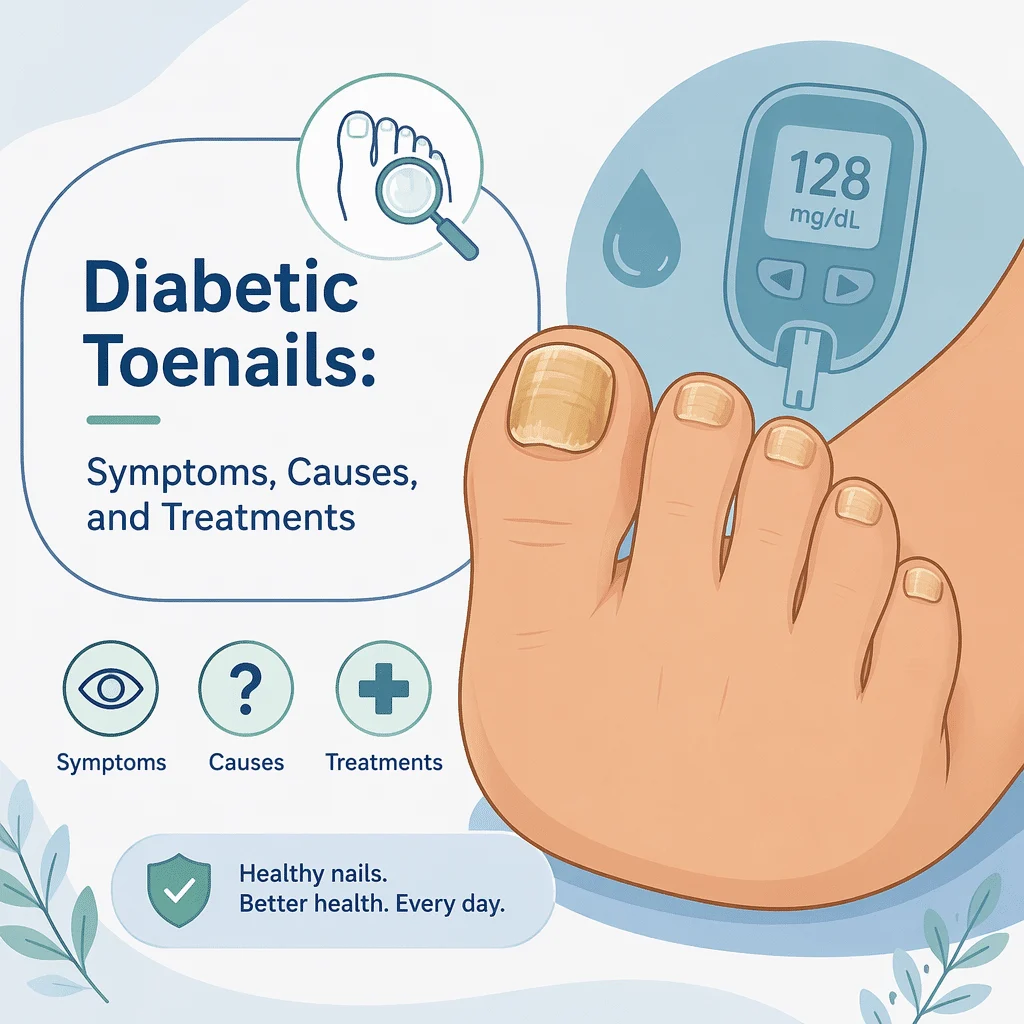
Diabetische teennagels zijn de nagelveranderingen die vaak optreden wanneer diabetes de voeten begint te beïnvloeden. Ze kunnen een vroeg signaal zijn dat uw voeten extra aandacht nodig hebben. Na verloop van tijd veranderen een hoge bloedsuiker, een verminderde doorbloeding en zenuwschade de manier waarop uw nagels groeien, eruitzien en genezen. Verdikte nagels, gele of verkleurde nagels en broze of ingegroeide nagelranden komen veel voor. Bij diabetes zijn deze problemen ernstiger dan bij de meeste mensen, omdat een klein nagelprobleem kan uitgroeien tot een ernstige voetinfectie. Het goede nieuws is dat de meeste van deze problemen te voorkomen zijn met eenvoudige dagelijkse gewoonten en de juiste professionele begeleiding. In dit artikel leest u hoe diabetische teennagels eruitzien, waarom diabetes ze veroorzaakt, hoe u uw nagels veilig thuis kunt verzorgen, hoe schimmel- en ingegroeide nagels worden behandeld en welke waarschuwingssignalen betekenen dat het tijd is om een arts te raadplegen.
Wat zijn diabetische teennagels en waarom zijn ze belangrijk?
Diabetische teennagels is een alledaagse term voor de nagelproblemen die zich vaak ontwikkelen bij mensen met diabetes. De nagels zelf zijn geen aparte aandoening; ze zijn een zichtbaar teken van wat diabetes kan doen met de huid, zenuwen en bloedvaten van de voeten. Omdat uw teennagels langzaam groeien en zich aan het uiteinde van uw bloedsomloop bevinden, geven ze vaak de vroegste aanwijzingen dat iets nauwlettender in de gaten gehouden moet worden.
Deze veranderingen zijn belangrijk omdat de diabetische voet kwetsbaarder is dan de meeste mensen beseffen. Als het gevoel verminderd is, kan een nagel die in de huid groeit of een scheur door een verdikte nagel onopgemerkt blijven. Als de doorbloeding slecht is, genezen kleine wondjes langzaam en kunnen ze ontstoken raken. Daarom behandelen podologen nagelverzorging als onderdeel van de bescherming van de hele voet, niet als een cosmetisch detail. Onze uitgebreide gids legt uit oorzaken en symptomen van diabetes als u het bredere beeld achter deze voetveranderingen wilt begrijpen.
Hoe diabetes uw teennagels verandert
Drie overlappende problemen veroorzaken de meeste veranderingen aan diabetische teennagels: zenuwschade, slechte doorbloeding en een verhoogd infectierisico. Als u elk van deze problemen begrijpt, is het dagelijkse verzorgingsadvies verderop in dit artikel veel gemakkelijker te volgen.
Zenuwschade die het gevoel vermindert
Langdurig hoge bloedsuiker kan de zenuwen in de voeten beschadigen, een aandoening die perifere neuropathie wordt genoemd. Wanneer deze zenuwen beschadigd zijn, kunt u minder pijn, druk of temperatuur voelen. Dat klinkt onschuldig, maar het betekent dat een ingegroeide nagel, een blaar door een dikke nagel of een kleine snee zich kan ontwikkelen zonder dat u het merkt. Verminderd gevoel is een van de belangrijkste redenen waarom een klein nagelprobleem bij diabetes stilletjes kan uitgroeien tot een wond.
Slechte doorbloeding die het herstel vertraagt
Diabetes kan de slagaders die bloed naar de benen en voeten vervoeren vernauwen en verstijven, een aandoening die bekend staat als perifeer arterieel vaatlijden. Nagels en huid hebben een constante bloedtoevoer nodig om te groeien en zichzelf te herstellen. Bij een verminderde doorbloeding kunnen teennagels langzaam groeien, er dof uitzien en na kleine beschadigingen niet meer normaal herstellen. Een slechte doorbloeding maakt het ook moeilijker voor het lichaam om de immuuncellen en antibiotica aan te voeren die infecties bestrijden.
Hoge bloedsuiker die infecties voedt
Een verhoogde bloedsuiker creëert een omgeving waarin schimmels en bacteriën gedijen, en kan de immuunrespons afzwakken die ze normaal gesproken zou opruimen. Dat is waarom nagelschimmel zo vaak voorkomt bij diabetes en waarom infecties zich snel kunnen verspreiden zodra ze eenmaal begonnen zijn. Door je glucosewaarden binnen een gezond bereik te houden, ondersteun je zowel je zenuwen als je afweersysteem. Het is daarom handig om je HbA1c-streefwaarden te kennen en je bloedglucosewaarden met uw zorgteam.
Veelvoorkomende veranderingen aan teennagels bij diabetes om op te letten
Niet elke nagelverandering is een noodgeval, maar elke verandering is het waard om op te letten. De onderstaande tabel koppelt veelvoorkomende veranderingen aan diabetische teennagels aan wat ze kunnen betekenen en een veilige eerste stap. Gebruik het als leidraad bij uw dagelijkse voetcontrole, niet als vervanging voor professioneel advies.
| Nagelverandering | Wat het kan betekenen | Een veilige eerste stap |
|---|---|---|
| Dikke, harde nagels | Nagelschimmel of druk van te strak schoeisel; moeilijker veilig bij te knippen | Laat een podoloog ze uitdunnen en bijknippen in plaats van zelf met een nagelknipper te forceren |
| Gele of bruine verkleuring | Nagelschimmel of een oude bloeduitstorting onder de nagel | Stel de juiste diagnose voordat je begint met behandelen; het is niet altijd alleen een cosmetisch probleem |
| Brosse, afbrokkelende randen | Langdurige nagelschimmel of trage nagelgroei | Vraag naar een schimmelbehandeling en voorzichtig professioneel vijlen |
| Witte of groene vlekken | Schimmel- of bacteriële infectie onder of rondom de nagel | Raadpleeg een professional; een groene tint wijst vaak op bacteriën |
| Ingegroeide hoeken met roodheid | Een nagel die in de huid groeit, een veelvoorkomend toegangspunt voor infectie | Probeer het niet zelf thuis te verwijderen; maak snel een afspraak bij een podoloog |
| Langzaam groeiende of niet-herstellende nagels | Verminderde doorbloeding door perifeer arterieel vaatlijden | Meld dit aan uw zorgteam, want uw doorbloeding moet mogelijk worden gecontroleerd |
| Roodheid, warmte of pusvorming | Een actieve infectie rondom de nagel | Zoek dezelfde dag nog medische hulp |
Nagelschimmel en diabetes
Nagelschimmelinfectie, medisch bekend als onychomycose, is verreweg de meest voorkomende oorzaak van veranderingen aan teennagels bij diabetes. Het begint meestal als een klein wit of geel vlekje onder de punt van de nagel en verspreidt zich langzaam, waardoor de nagel dik, verkleurd en brokkelig wordt. Bij diabetes krijgt schimmel gemakkelijker vat omdat een hogere bloedsuiker en een verminderde doorbloeding de natuurlijke afweer van de voet verzwakken.
De neiging om het te behandelen met een product uit de drogisterij is begrijpelijk, maar zelfbehandeling brengt echte risico's met zich mee als u diabetes heeft. Vrij verkrijgbare crèmes bereiken vaak de schimmel niet die diep onder de nagel leeft, en het uitstel kan de infectie verergeren. Sommige orale antischimmelmiddelen werken ook in op andere medicijnen op recept, wat belangrijk is omdat veel mensen met diabetes tegelijkertijd meerdere geneesmiddelen gebruiken. Een zorgverlener kan de diagnose bevestigen, soms met een nagelmonster, en een behandeling kiezen die past bij uw volledige medicatielijst. Als uw nagels pijnlijk zijn of de huid eromheen er ontstoken uitziet, kan uw arts een volledig bloedbeeld aanvragen om te controleren op tekenen van een zich verspreide infectie.
Ingegroeide teennagels en diabetes
Een ingegroeide teennagel ontstaat wanneer de rand van de nagel in de omliggende huid groeit, wat roodheid, zwelling en pijn veroorzaakt. Bij iemand zonder diabetes is het een vervelend ongemak. Bij diabetes kan het het begin zijn van een ernstig probleem, omdat de wond in de huid een open deur is voor bacteriën en een verminderd gevoel ervoor kan zorgen dat je het niet vroeg genoeg merkt.
De belangrijkste regel is eenvoudig: vermijd zelfbehandeling in de badkamer. Met een nagelknipper of naald in de hoek prikken kan precies het soort wond veroorzaken dat langzaam geneest en snel geïnfecteerd raakt. Houd de teen liever schoon, draag ruime schoenen en laat de nagel professioneel behandelen. Een podoloog kan een ingegroeide nagel veilig verhelpen en bij terugkerende problemen een kleine ingreep bespreken waarbij alleen de probleemrand wordt verwijderd. Ons gerelateerde artikel behandelt verzorging van ingegroeide vingernagels, en veel van dezelfde principes gelden ook voor de teennagels.
Dagelijkse voet- en nagelzorg bij diabetes
De meeste teennagelproblemen bij diabetici zijn te voorkomen, en goede dagelijkse gewoonten zijn uw krachtigste hulpmiddel. De onderstaande checklist bevat de essentiële aanbevelingen van podologen en diabetesorganisaties.
- Controleer beide voeten elke dag, inclusief de ruimtes tussen de tenen en rondom elke nagel; gebruik indien nodig een spiegel.
- Was je voeten in lauwwarm (niet heet) water en droog ze daarna goed af, vooral tussen de tenen.
- Knip nagels recht af en vijl scherpe hoekjes voorzichtig glad.
- Breng vochtigheidscrème aan op de bovenkant en de zolen van uw voeten, maar niet tussen de tenen, om kloven te voorkomen.
- Loop nooit op blote voeten en controleer de binnenkant van uw schoenen op steentjes of ruwe naden voordat u ze aantrekt.
- Kies goed passende schoenen en schone, droge sokken die de tenen niet afknellen.
- Ga regelmatig naar een podoloog en meld elke nieuwe verandering aan nagel of huid snel.
Je nagels veilig knippen
Knip teennagels recht af in plaats van de hoeken af te ronden; dit verkleint de kans op een ingegroeide nagel. Gebruik schone, scherpe nagelknippers en vijl ruwe randjes glad. Als uw nagels dik zijn, moeilijk te bereiken zijn of als u uw voeten niet goed kunt voelen, laat ze dan door een professional knippen. Er is geen beloning voor zelf doen, en het risico op een sneetje is het niet waard.
Dagelijkse voetcontrole
Een dagelijkse inspectie van uw voeten duurt minder dan een minuut en signaleert problemen terwijl ze nog klein zijn. Let op kleurveranderingen, zwelling, kloven en alles wat anders is rondom de nagels. Omdat neuropathie pijn kan maskeren, merken uw ogen vaak eerder iets op dan uw voeten zelf. De voetzorgrichtlijnen voor diabetes van het CDC biedt een eenvoudige routine die je elke ochtend kunt inbouwen bij het aankleden.
Vochtinbrengende crème en schoeisel
Droge, gebarsten huid is een andere toegangspoort voor infectie, dus dagelijks hydrateren helpt, zolang u de ruimte tussen de tenen droog houdt. Goed passende schoenen beschermen de nagels tegen de druk die verdikking en ingroeien veroorzaakt. Veel mensen met diabetes hebben baat bij breder of speciaal aangemeten schoeisel.
Professionele podologische zorg
Een podoloog is een voetspecialist, en regelmatige bezoeken zijn een van de beste investeringen in de voetgezondheid bij diabetes. Zij kunnen dikke nagels veilig dunner maken, schimmel en ingegroeide randen behandelen, eelt verwijderen en vroege tekenen van zenuw- of circulatieproblemen opsporen. Als u ooit een voetulcus heeft gehad of verminderd gevoel in uw voeten, heeft u waarschijnlijk vaker controles nodig. Om de bloedsuikerregulatie bij te houden die uw voeten beschermt, behandelt onze begeleidende gids geglycosyleerd hemoglobine en bloedsuikerregulatie, en ons overzicht beschrijft de belangrijkste bloedtesten bij diabetes.
Waarschuwingssignalen die snel medische aandacht vereisen
Sommige veranderingen aan nagels en voeten kunnen niet wachten tot je volgende routinebezoek. Neem snel contact op met een zorgverlener als je een van de volgende dingen opmerkt.
- Roodheid, warmte, zwelling of pus rondom een nagel of ergens op de voet.
- Een teennagel die los zit, omhoog komt of gedeeltelijk is afgevallen.
- Een ingegroeide nagel die pijnlijk is, vocht afscheidt of niet verbetert.
- Een nieuwe wond, blaar of ulcus die niet binnen een dag of twee begint te genezen.
- Nagels of tenen die donker, blauw of zwart worden, wat kan wijzen op een slechte doorbloeding.
- Koorts of een algemeen ziek gevoel in combinatie met een voetprobleem.
Deze symptomen kunnen wijzen op een opkomende infectie, en een zich verspreide infectie kan je C-reactief proteïne (CRP)-niveau, een bloedmarker die artsen gebruiken om ontstekingen te meten. Vroeg ingrijpen is de beste manier om te voorkomen dat een nagelprobeem uitgroeit tot een wond die de voet in gevaar brengt.
Recente wetenschappelijke ontwikkelingen
Onderzoek naar diabetische nagels en voetzorg heeft de afgelopen jaren snelle vooruitgang geboekt. Dit zijn de bevindingen van enkele van de meest relevante recente studies, vertaald naar begrijpelijke taal en wat dit voor jou kan betekenen.
Een onderzoeksreview uit 2023 waarbij gegevens van duizenden mensen met diabetes werden samengevoegd, concludeerde dat nagelschimmel, ook wel onychomycose genoemd, zeer veel voorkomt: bijna één op de drie mensen met diabetes heeft er last van. De review legde ook een verband met zenuwschade in de voeten en met een langdurig verhoogde bloedsuiker. Wat dit voor u betekent: veranderingen aan de nagels door schimmel zijn niet alleen een cosmetisch probleem; ze kunnen een signaal zijn dat uw zenuwen of bloedsuiker nader aandacht verdienen. Het is dus de moeite waard om ze aan een professional te laten zien in plaats van ze te negeren.
Een systematische review uit 2026 waarbij duizenden mensen met diabetes gedurende langere tijd werden gevolgd, meldde dat onychomycose, samen met een slechte doorbloeding en verminderd gevoel in de voeten, behoorde tot de factoren die verband hielden met het later ontwikkelen van een voetulcus, een open wond aan de voet. De auteurs benadrukten dat de bewijskracht voor veel van deze factoren laag was. Wat dit voor u betekent: gezonde nagels maken deel uit van het voorkomen van grotere problemen, en een schimmel- of ingegroeide nagel vroeg behandelen is één manier om de hele voet te beschermen — ook al is een nagelverandering een waarschuwingssignaal en geen garantie dat er problemen komen.
Een review uit 2025 keek specifiek naar de behandeling van nagelschimmel bij mensen met diabetes. De conclusie was dat standaard schimmelwerende behandelingen veilig lijken wanneer de diabetes goed onder controle is, maar de review benadrukte het belang van het controleren op wisselwerkingen met andere medicijnen die iemand gebruikt. Ook werd opgemerkt dat de meeste studies mensen met ernstige complicaties uitsloten, waardoor het bewijs voor de kwetsbaarste voeten minder sterk is. Wat dit voor u betekent: dit is een goede reden om niet zelf medicijnen voor te schrijven, maar een arts of podoloog de veiligste optie voor uw situatie te laten kiezen.
Tot slot testte een gerandomiseerde gecontroleerde studie uit 2025 — een onderzoek waarbij behandelingen willekeurig worden toegewezen om ze eerlijk te vergelijken — een combinatie van laser- en lichttherapie (fotodynamische therapie) versus een standaard schimmelwerende nagellak. De combinatie leidde tot hogere genezingspercentages en sneller herstel. Wat dit voor u betekent: als crèmes en nagellakken niet hebben geholpen, bestaan er nieuwere behandelingen in de kliniek die het waard zijn om met een specialist te bespreken — al was dit een vroeg, kleinschalig onderzoek dat nog bevestigd moet worden in grotere groepen, met name bij mensen met diabetes.
Woordenlijst met belangrijke termen
| Termijn | Definitie |
|---|---|
| Nagelschimmel (onychomycose) | Een schimmelinfectie van de nagel die verdikking, verkleuring en brokkeligheid veroorzaakt. |
| Perifere neuropathie | Zenuwschade, vaak door diabetes, die het gevoel in de voeten en handen vermindert. |
| Perifeer arterieel vaatlijden | Vernauwde slagaders die de bloedtoevoer naar de benen en voeten verminderen. |
| HbA1c | Een bloedtest die uw gemiddelde bloedsuiker over ongeveer drie maanden weergeeft. |
| Débridement | Professioneel knippen of verwijderen van verdikt, afgestorven of geïnfecteerd nagel- en huidweefsel. |
| Nagelextractie | Een ingreep waarbij een deel of de gehele teennagel wordt verwijderd, soms toegepast bij hardnekkige ingegroeide of geïnfecteerde nagels. |
| Diabetisch voetulcus | Een open wond op de voet die kan ontstaan wanneer kleine verwondingen onopgemerkt blijven of langzaam genezen. |
| Eelt | Een verdikt huidgebied dat ontstaat door herhaalde druk of wrijving. |
Veelgestelde vragen
Waarom mag je diabetische teennagels niet zelf knippen?
Je kunt je nagels vaak zelf veilig knippen als je een goed gevoel en goed zicht op je voeten hebt en je nagels normaal van dikte zijn. De voorzichtigheid geldt wanneer neuropathie het gevoel heeft verminderd, de doorbloeding slecht is of de nagels dik en moeilijk te knippen zijn, omdat een kleine snee een wond kan worden die je misschien niet voelt. In die situaties zou een podoloog of getrainde verpleegkundige ze moeten knippen. Vraag bij twijfel aan je zorgteam wat het beste voor jou is.
Kan diabetes ertoe leiden dat teennagels uitvallen?
Ja, dat kan gebeuren. Een verdikte of ernstig geïnfecteerde nagel kan loslaten en eraf vallen, en een blessure onder een gevoelloze teen kan een nagel optillen zonder veel pijn. Een losse of loslaten nagel moet door een professional worden bekeken in plaats van eraf getrokken te worden, omdat het blootliggende nagelbed geïnfecteerd kan raken. Snelle behandeling helpt de teen veilig te laten genezen.
Hoe zien vroege diabetische teennagelaandoeningen eruit?
De vroege tekenen zijn vaak subtiel: een klein wit of geel vlekje onder de nagel, lichte verdikking, een verandering in glans, of nagels die langzamer lijken te groeien. Omdat deze veranderingen gemakkelijk over het hoofd worden gezien, is een dagelijkse voetcontrole de beste manier om ze tijdig op te merken. Elke nieuwe verandering vroeg aan een professional laten zien, maakt de behandeling eenvoudiger.
Zijn vrij verkrijgbare antischimmelmiddelen veilig als ik diabetes heb?
Veel uitwendige middelen brengen weinig risico met zich mee, maar ze slagen er vaak niet in om schimmel die diep onder de nagel zit te bestrijden, en er te lang op vertrouwen kan effectieve behandeling vertragen. Omdat diabetes de gevolgen van een voetinfectie ernstiger maakt, is het verstandig om een zorgverlener de diagnose te laten bevestigen en een behandeling aan te laten bevelen, zeker voordat u orale antischimmelmiddelen gebruikt die wisselwerkingen met andere medicijnen kunnen hebben.
Hoe vaak moet iemand met diabetes een podoloog bezoeken?
Een jaarlijks voetonderzoek is een gebruikelijke basis, maar mensen met neuropathie, slechte doorbloeding of een voorgeschiedenis van ulcera hebben doorgaans vaker bezoeken nodig, soms elke paar maanden. Uw zorgteam kan een schema opstellen op basis van uw risico. Tussen de bezoeken door blijven dagelijkse zelfcontroles essentieel.
Kan een betere bloedsuikerregulatie mijn teennagels verbeteren?
Een betere regulatie herstelt een beschadigde nagel niet onmiddellijk, maar ondersteunt wel gezondere zenuwen, doorbloeding en afweer, wat nagels helpt groeien en genezen en het risico op nieuwe infecties verlaagt. Een stabiele bloedsuikerregulatie is een van de krachtigste dingen die u voor uw voeten kunt doen.
Bronnen
- National Institute of Diabetes and Digestive and Kidney Diseases (NIDDK) — Diabetes and Foot Problems — U.S. National Institutes of Health, 2023 — niddk.nih.gov
- Centers for Disease Control and Prevention (CDC) — Your Feet and Diabetes — CDC, 2024 — cdc.gov
- Mayo Clinic — Amputation and diabetes: How to protect your feet — Mayo Clinic, 2024 — mayoclinic.org
- Navarro-Pérez D, et al. — Onychomycosis associated with diabetic foot syndrome: a systematic review — Mycoses, 2023 — doi.org/10.1111/myc.13577
- Lazaris AM, et al. — Diabetic foot ulcer: a systematic review of risk factors — Journal of Wound Care, 2026 — doi.org/10.12968/jowc.2023.0017
- Navarro-Pérez D, et al. — Treatment of onychomycosis and drug-drug interactions in patients with diabetes mellitus and diabetic foot syndrome: a systematic review — Infectious Disease Reports, 2025 — doi.org/10.3390/idr17010004
- García-Oreja S, et al. — Diode laser and red-laser photodynamic therapy versus ciclopirox 8% HPCH nail lacquer for onychomycosis: a randomised controlled trial — Mycoses, 2025 — doi.org/10.1111/myc.70121
Verder lezen
- Nuchtere bloedglucosewaarden: een complete gids
- Procalcitonine: een bloedmarker voor infectie uitgelegd
- Lymfocyten en uw immuunafweer
- Beroerte (cerebrovasculair accident): signalen en oorzaken
- Hemoglobine: een belangrijke bloedwaarde uitgelegd
Begrijp uw laboratoriumresultaten met AI DiagMe.
Je teennagels en je bloedonderzoek vertellen samen een verhaal over hoe diabetes je lichaam beïnvloedt. Als je waarden zoals HbA1c, nuchtere bloedglucose en een volledig bloedbeeld begrijpt, kun je beter zien hoe goed je bloedsuiker onder controle is en of er mogelijk een infectie op komst is. AI DiagMe helpt je begrijpen wat die cijfers betekenen in gewone taal, zodat je een beter onderbouwd gesprek kunt voeren met je zorgteam. Het stelt geen diagnoses en vervangt je arts niet.
Ontvang binnen enkele minuten een interpretatie van uw resultaten.