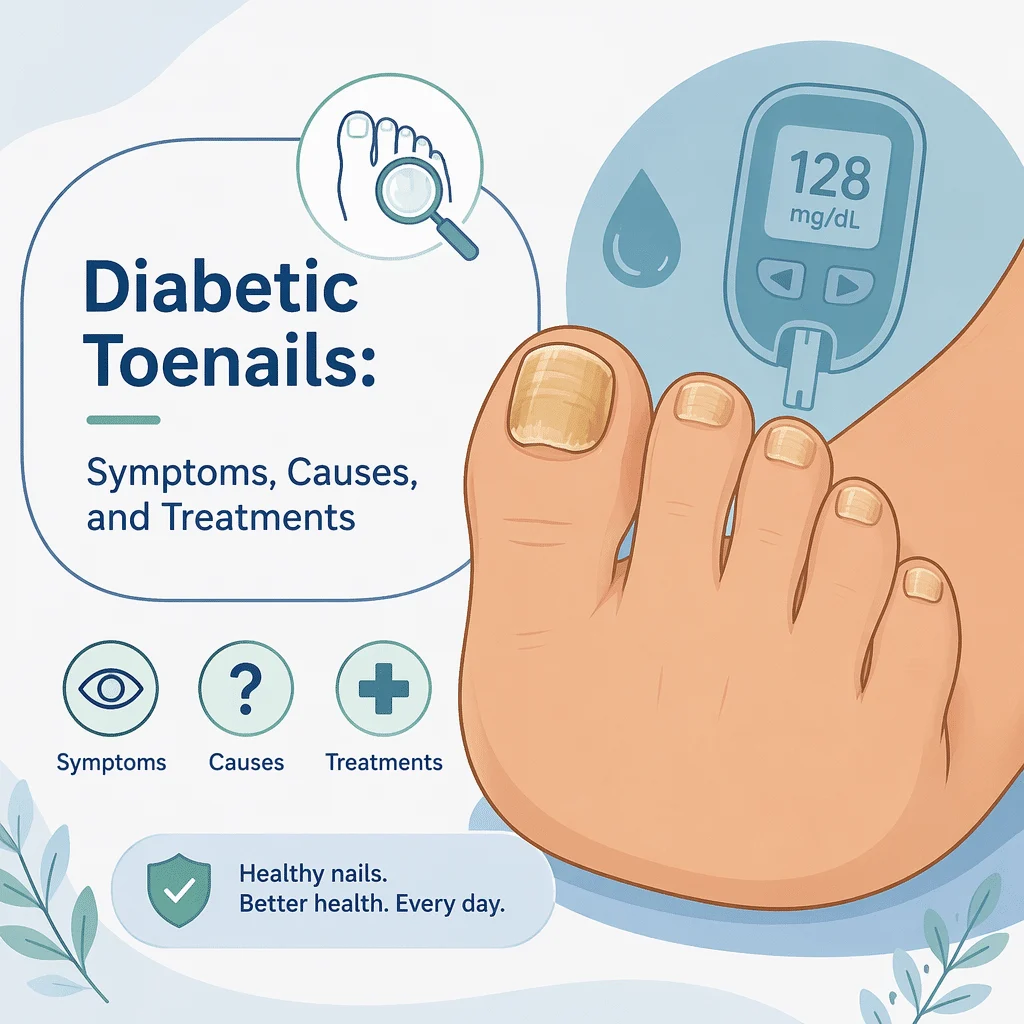
Unghiile diabetice reprezintă modificările unghiale care apar frecvent atunci când diabetul începe să afecteze picioarele și pot fi un semn timpuriu că picioarele tale au nevoie de atenție suplimentară. În timp, glicemia crescută, circulația redusă și leziunile nervoase schimbă modul în care unghiile cresc, arată și se vindecă. Unghiile îngroșate, galbene sau decolorate și marginile friabile sau incarnate sunt frecvente și contează mai mult în diabet decât la majoritatea oamenilor, deoarece o problemă mică a unghiei se poate transforma într-o infecție gravă a piciorului. Vestea îmbucurătoare este că majoritatea acestor probleme pot fi prevenite prin obiceiuri zilnice simple și sprijin profesional adecvat. În acest articol vei afla cum arată unghiile diabetice, de ce le cauzează diabetul, cum să îți îngrijești unghiile în siguranță acasă, cum se tratează infecțiile fungice și unghiile incarnate și care sunt semnele de alarmă ce indică momentul în care trebuie să suni la medic.
Ce sunt unghiile diabetice de la picioare și de ce contează?
Unghiile diabetice este un termen simplu pentru problemele de unghii care tind să apară la persoanele care trăiesc cu diabet. Unghiile în sine nu reprezintă o boală separată; ele sunt un semn vizibil al efectelor pe care diabetul le poate avea asupra pielii, nervilor și vaselor de sânge ale picioarelor. Deoarece unghiile de la picioare cresc lent și se află la capătul cel mai îndepărtat al circulației, ele arată adesea primele semne că ceva necesită o atenție mai atentă.
Aceste modificări contează deoarece piciorul diabetic este mai fragil decât își dau seama majoritatea oamenilor. Când sensibilitatea este redusă, o unghie care intră în piele sau o fisură cauzată de o unghie îngroșată poate trece neobservată. Când circulația este slabă, micile leziuni ale pielii se vindecă greu și se pot infecta. De aceea, podiatrii tratează îngrijirea unghiilor ca parte a protejării întregului picior, nu ca un detaliu estetic. Ghidul nostru detaliat explică cauzele și simptomele diabetului dacă vrei să înțelegi mai bine contextul acestor modificări ale piciorului.
Cum schimbă diabetul unghiile de la picioare
Trei probleme care se suprapun stau la baza majorității modificărilor unghiilor în diabet: leziunile nervoase, circulația deficitară și riscul crescut de infecție. Înțelegerea fiecăreia face mult mai ușor de urmat sfaturile de îngrijire zilnică prezentate mai târziu în acest articol.
Leziunile nervoase care reduc sensibilitatea
Glicemia crescută pe termen lung poate afecta nervii din picioare, o afecțiune numită neuropatie periferică. Când acești nervi sunt lezați, s-ar putea să simți mai puțin durerea, presiunea sau temperatura. Sună inofensiv, dar înseamnă că o unghie incarnată, o bătătură cauzată de o unghie groasă sau o mică tăietură se pot agrava fără să îți dai seama. Sensibilitatea redusă este unul dintre principalele motive pentru care o problemă minoră a unghiei în diabet poate deveni tăcut o rană.
Circulația deficitară care încetinește vindecarea
Diabetul poate îngusta și rigidiza arterele care transportă sângele spre picioare, o problemă cunoscută sub numele de arteriopatie periferică. Unghiile și pielea au nevoie de un flux sanguin constant pentru a crește și a se repara. Cu un flux sanguin redus, unghiile de la picioare pot crește lent, pot arăta fără strălucire și pot înceta să se vindece normal după leziuni minore. Circulația deficitară îngreunează și capacitatea organismului de a livra celulele imune și antibioticele care combat infecțiile.
Glicemia crescută care favorizează infecția
Glicemia crescută creează un mediu în care ciupercile și bacteriile prosperă și poate slăbi răspunsul imun care în mod normal le-ar elimina. De aceea infecțiile fungice ale unghiilor sunt atât de frecvente în diabet și de aceea infecțiile se pot răspândi mai repede odată ce încep. Menținerea glicemiei într-un interval sănătos îți protejează atât nervii, cât și sistemul imunitar, așa că este util să cunoști valorile țintă ale HbA1c și pentru a înțelege valorile normale ale glicemiei împreună cu echipa ta medicală.
Modificări frecvente ale unghiilor diabetice la care să fii atent
Nu orice modificare a unghiei este o urgență, dar fiecare merită să fie observată. Tabelul de mai jos asociază modificările frecvente ale unghiilor de la picioare în diabet cu posibilele lor semnificații și cu un prim pas sigur de urmat. Folosește-l ca ghid pentru verificarea zilnică a picioarelor, nu ca înlocuitor al sfatului unui specialist.
| Modificarea unghiei | Ce poate semnala | Un prim pas sigur |
|---|---|---|
| Unghii groase și dure | Infecție fungică sau presiune din cauza încălțămintei strâmte; mai greu de tăiat în siguranță | Apelează la un podiatru pentru subțierea și tăierea lor, în loc să forțezi cu foarfeca sau clestele |
| Culoare galbenă sau maro | Ciupercă a unghiei sau vânătaie veche sub unghie | Obține un diagnostic corect înainte de tratament; nu este întotdeauna doar o problemă estetică |
| Margini fragile, care se sfărâmă | Infecție fungică de lungă durată sau creștere lentă a unghiei | Întreabă despre tratamentul antifungic și pilirea profesională delicată |
| Pete albe sau verzi | Infecție fungică sau bacteriană sub sau în jurul unghiei | Consultă un specialist; o nuanță verzuie indică adesea o infecție bacteriană |
| Colțuri incarnate cu roșeață | O unghie care crește în piele, un punct de intrare frecvent pentru infecții | Nu încerca să o scoți singur acasă; programează-te urgent la un podiatru |
| Unghii cu creștere lentă sau care nu se vindecă | Circulație redusă din cauza bolii arteriale periferice | Semnalează-o echipei tale medicale, deoarece circulația poate necesita investigații |
| Roșeață, căldură locală sau puroi | O infecție activă în jurul unghiei | Solicită îngrijire medicală în aceeași zi |
Ciuperca unghiilor și diabetul
Infecția fungică a unghiilor, cunoscută medical sub numele de onicomicoza, este cea mai frecventă cauză a modificărilor unghiilor de la picioare în diabet. De obicei începe ca o mică pată albă sau galbenă sub vârful unghiei și se extinde treptat, lăsând unghia groasă, decolorată și sfărâmicioasă. În diabet, ciuperca prinde mai ușor rădăcini deoarece glicemia crescută și circulația redusă slăbesc apărarea naturală a piciorului.
Instinctul de a o trata cu un produs din farmacie este de înțeles, dar automedicația implică riscuri reale când ai diabet. Cremele fără prescripție medicală nu reușesc adesea să ajungă la ciuperca aflată adânc sub unghie, iar întârzierea poate permite agravarea infecției. Unele medicamente antifungice orale interacționează și cu alte tratamente, ceea ce contează deoarece multe persoane cu diabet iau mai multe medicamente simultan. Un medic poate confirma diagnosticul, uneori printr-o probă din unghie, și poate alege un tratament potrivit întregii tale liste de medicamente. Dacă unghiile te dor sau pielea din jurul lor pare infectată, medicul tău poate recomanda un hemoleucogramă completă pentru a verifica semnele unei infecții în extindere.
Unghiile incarnate și diabetul
O unghie incarnată apare atunci când marginea unghiei se curbează în pielea din jur, provocând roșeață, umflătură și durere. La o persoană fără diabet este o neplăcere. În diabet poate fi începutul unei probleme serioase, deoarece ruptura pielii este o poartă deschisă pentru bacterii, iar sensibilitatea redusă te poate împiedica să o simți din timp.
Cea mai importantă regulă este simplă: evită „chirurgia de baie". Să sapi în colțul unghiei cu foarfeca sau cu un ac poate crea exact tipul de rană care se vindecă greu și se infectează ușor. În schimb, ține degetul curat, poartă pantofi largi și tratează unghia la un specialist. Un podolog poate rezolva o unghie încarnată în siguranță și, în cazul problemelor recurente, poate discuta despre o intervenție minoră care îndepărtează doar marginea problematică. Articolul nostru conex acoperă îngrijirea unghiei încarnate de la degetele mâiniiși multe dintre aceleași principii se aplică și degetelor de la picioare.
Îngrijirea zilnică a picioarelor și unghiilor în diabet
Majoritatea problemelor cu unghiile de la picioare în diabet pot fi prevenite, iar obiceiurile zilnice bune sunt cel mai puternic instrument al tău. Lista de mai jos cuprinde elementele esențiale recomandate de podologi și organizațiile pentru diabet.
- Verifică ambele picioare în fiecare zi, inclusiv între degete și în jurul fiecărei unghii, folosind o oglindă dacă este necesar.
- Spală-ți picioarele în apă caldă (nu fierbinte), apoi usucă-le bine, mai ales între degete.
- Taie unghiile drept și netezește ușor colțurile ascuțite cu o pilă.
- Hidratează partea de sus și talpa picioarelor, dar nu și spațiul dintre degete, pentru a preveni crăpăturile.
- Nu umbla niciodată desculț și verifică interiorul pantofilor pentru pietricele sau cusături aspre înainte de a-i pune.
- Alege pantofi bine ajustați și șosete curate, uscate, care să nu strângă degetele.
- Mergi regulat la podolog și semnalează rapid orice modificare nouă a unghiei sau a pielii.
Tăierea în siguranță a unghiilor
Taie unghiile de la picioare drept, fără a rotunji colțurile, ceea ce reduce riscul de unghie incarnată. Folosește clești curați și ascuțiți și pilește marginile aspre. Dacă unghiile tale sunt groase, greu de ajuns sau nu simți bine picioarele, lasă un specialist să le taie. Nu există niciun merit în a o face singur, iar riscul unei tăieturi nu merită.
Verificarea zilnică a picioarelor
O privire zilnică asupra picioarelor durează mai puțin de un minut și depistează problemele cât timp sunt încă mici. Caută modificări de culoare, umflături, crăpături și orice aspect diferit în jurul unghiilor. Deoarece neuropatia poate masca durerea, ochii tăi observă adesea problemele înainte ca picioarele tale să le simtă. Ghidul CDC’s recomandări pentru îngrijirea picioarelor în diabet îți oferă o rutină simplă pe care o poți integra în pregătirea de dimineață.
Hidratarea și încălțămintea
Pielea uscată și crăpată reprezintă un alt punct de intrare pentru infecții, așa că hidratarea zilnică ajută, cu condiția să menții spațiul dintre degete uscat. Pantofii care se potrivesc bine protejează unghiile de presiunea care provoacă îngroșarea și încarnarea lor. Multe persoane cu diabet beneficiază de încălțăminte mai largă sau special adaptată.
Îngrijirea podologică profesională
Un podiatru este un specialist în îngrijirea picioarelor, iar vizitele regulate reprezintă una dintre cele mai bune investiții în sănătatea picioarelor diabetice. Acesta poate subția în siguranță unghiile îngroșate, trata ciuperca și marginile incarnate, îndepărta bătăturile și depista primele semne de afectare nervoasă sau circulatorie. Dacă ai avut vreodată o ulcerație la picior sau sensibilitate redusă, probabil ai nevoie de controale mai frecvente. Pentru a monitoriza controlul glicemic care îți protejează picioarele, ghidul nostru complementar acoperă hemoglobina glicată și controlul glicemiei, iar prezentarea noastră generală descrie principalele analize de sânge pentru diabet.
Semne de alarmă care necesită atenție medicală urgentă
Unele modificări ale unghiilor și picioarelor nu pot aștepta până la următoarea vizită de rutină. Contactează un cadru medical prompt dacă observi oricare dintre următoarele.
- Roșeață, căldură locală, umflătură sau puroi în jurul unei unghii sau oriunde pe picior.
- O unghie de la picior care este slăbită, se ridică sau a căzut parțial.
- O unghie incarnată care este dureroasă, secretă lichid sau nu se ameliorează.
- O rană nouă, o băşică sau o ulcerație care nu începe să se vindece în una-două zile.
- Unghii sau degete care se înnegresc, devin albastre sau negre, ceea ce poate semnala o circulație deficitară.
- Febră sau stare generală de rău însoțită de o problemă la picior.
Aceste simptome pot indica instalarea unei infecții, iar o infecție care se extinde îți poate crește Nivelul proteinei C-reactive, un marker sanguin pe care medicii îl folosesc pentru a evalua inflamația. Acționând din timp, poți preveni cel mai bine transformarea unei probleme de unghie într-o rană care pune în pericol piciorul.
Cele mai recente progrese științifice
Cercetările privind unghiile și îngrijirea picioarelor în diabet au avansat rapid în ultimii ani. Iată ce au descoperit unele dintre cele mai relevante studii recente, explicate pe înțelesul tuturor, și ce ar putea însemna asta pentru tine.
O analiză de cercetare din 2023, care a adunat date de la mii de persoane cu diabet, a constatat că ciuperca unghiilor, sau onicomicoza, este foarte frecventă, afectând aproape unul din trei pacienți. Analiza a mai asociat-o cu afectarea nervilor de la picioare și cu valori crescute ale glicemiei pe termen lung. Ce înseamnă asta pentru tine: modificările unghiale cauzate de ciupercă nu sunt doar o problemă estetică; ele pot fi un semnal că nervii sau glicemia ta merită o atenție mai atentă, deci merită să le arăți unui specialist în loc să le ignori.
O analiză sistematică din 2026, care a urmărit mii de persoane cu diabet de-a lungul timpului, a raportat că onicomicoza, împreună cu circulația deficitară și sensibilitatea redusă a piciorului, s-a numărat printre factorii asociați cu apariția ulterioară a unei ulcerații la picior, adică a unei răni deschise. Autorii au subliniat că nivelul de certitudine al dovezilor era scăzut pentru mulți dintre acești factori. Ce înseamnă asta pentru tine: unghiile sănătoase fac parte din prevenirea problemelor mai grave, iar tratarea timpurie a unei unghii cu ciupercă sau incarnate este o modalitate de a proteja întregul picior, chiar dacă o modificare a unghiei este un semnal de avertizare, nu o garanție că vor apărea complicații.
O analiză din 2025 s-a concentrat specific pe tratamentul ciupercii unghiilor la persoanele cu diabet. Concluzia a fost că tratamentele antifungice standard par sigure atunci când diabetul este bine controlat, dar s-a subliniat importanța verificării interacțiunilor cu celelalte medicamente ale pacientului. S-a menționat, de asemenea, că majoritatea studiilor au exclus persoanele cu complicații severe, astfel că dovezile sunt mai puține pentru picioarele cele mai fragile. Ce înseamnă asta pentru tine: acesta este un motiv solid să nu te automedicamentezi și să lași un medic sau un podiatru să aleagă cea mai sigură opțiune pentru situația ta.
În cele din urmă, un studiu clinic randomizat din 2025 – un studiu în care tratamentele sunt repartizate aleatoriu pentru a fi comparate în mod corect – a testat o combinație de terapie cu laser și lumină (fotodinamică) față de un lac antifungic standard pentru unghii. Studiul a raportat rate de vindecare mai mari și o recuperare mai rapidă cu combinația respectivă. Ce înseamnă asta pentru tine: dacă cremele și lacurile nu au dat rezultate, există opțiuni mai noi disponibile în clinici și merită să le discuți cu un specialist, deși acesta a fost un studiu mic, preliminar, care trebuie confirmat pe grupuri mai mari, în special în rândul persoanelor cu diabet.
Glosar de termeni cheie
| Termen | Definiție |
|---|---|
| Onicomicoza | O infecție fungică a unghiei care provoacă îngroșare, decolorare și sfărâmare. |
| Neuropatie periferică | Leziuni ale nervilor, adesea cauzate de diabet, care reduc sensibilitatea la nivelul picioarelor și mâinilor. |
| Boala arterială periferică | Artere îngustate care reduc fluxul de sânge către picioare. |
| HbA1c | Un test de sânge care reflectă nivelul mediu al glicemiei din ultimele trei luni. |
| Debridare | Tăierea sau îndepărtarea profesională a țesutului unghial și cutanat îngroșat, mort sau infectat. |
| Avulsia unghiei | O procedură prin care se îndepărtează o parte sau întreaga unghie de la picior, folosită uneori pentru unghii incarnate persistente sau infectate. |
| Ulcer diabetic al piciorului | O rană deschisă la picior care se poate forma atunci când micile leziuni trec neobservate sau se vindecă lent. |
| Bătătură | O zonă de piele îngroșată cauzată de presiune sau frecare repetată. |
Întrebări frecvente
De ce nu ar trebui să-ți tai singur unghiile de la picioare dacă ai diabet?
Poți tăia adesea singur unghiile în siguranță dacă ai sensibilitate și vedere bune la nivelul picioarelor și dacă unghiile au o grosime normală. Precauția se aplică atunci când neuropatia a redus senzațiile, circulația este deficitară sau unghiile sunt groase și greu de tăiat, deoarece o mică tăietură poate deveni o rană pe care s-ar putea să nu o simți. În aceste situații, un podiatru sau o asistentă medicală specializată ar trebui să le taie. Dacă nu ești sigur, întreabă echipa ta medicală ce este potrivit pentru tine.
Poate diabetul să ducă la căderea unghiilor de la picioare?
Da, se poate întâmpla. O unghie îngroșată sau puternic infectată se poate slăbi și desprinde, iar o leziune sub un deget amorțit poate ridica o unghie fără prea multă durere. O unghie slăbită sau care se ridică ar trebui examinată de un specialist, nu smulsă, deoarece patul unghial expus se poate infecta. Îngrijirea promptă ajută degetul să se vindece în siguranță.
Cum arată primele modificări ale unghiilor de la picioare în diabet?
Primele semne sunt adesea subtile: o mică pată albă sau galbenă sub unghie, o ușoară îngroșare, o schimbare a luciului sau unghii care par să crească mai lent. Deoarece aceste modificări sunt ușor de trecut cu vederea, o verificare zilnică a picioarelor este cel mai bun mod de a le depista. Arătând orice schimbare nouă unui specialist din timp, tratamentul devine mai simplu.
Sunt sigure tratamentele antifungice fără prescripție medicală dacă am diabet?
Multe produse topice prezintă un risc scăzut, dar de cele mai multe ori nu reușesc să elimine ciuperca care trăiește adânc sub unghie, iar bazarea pe ele poate întârzia un tratament eficient. Deoarece diabetul crește riscurile oricărei infecții la picior, este cel mai bine ca un medic să confirme diagnosticul și să recomande un tratament, mai ales înainte de a folosi antifungice orale care pot interacționa cu alte medicamente.
Cât de des ar trebui să meargă la podiatru o persoană cu diabet?
Un examen anual al picioarelor este o frecvență de bază obișnuită, dar persoanele cu neuropatie, circulație deficitară sau antecedente de ulcere au de obicei nevoie de vizite mai frecvente, uneori la câteva luni. Echipa ta medicală poate stabili un program în funcție de riscul tău. Între vizite, autoexaminarea zilnică rămâne esențială.
Poate un control mai bun al glicemiei să îmbunătățească starea unghiilor?
Un control mai bun nu va repara imediat o unghie deteriorată, dar susține sănătatea nervilor, a circulației și a apărării imunitare, ajutând unghiile să crească și să se vindece în timp și reducând riscul de noi infecții. Menținerea constantă a glicemiei este unul dintre cele mai eficiente lucruri pe care le poți face pentru picioarele tale.
Surse
- National Institute of Diabetes and Digestive and Kidney Diseases (NIDDK) — Diabetes and Foot Problems — U.S. National Institutes of Health, 2023 — niddk.nih.gov
- Centers for Disease Control and Prevention (CDC) — Your Feet and Diabetes — CDC, 2024 — cdc.gov
- Mayo Clinic — Amputarea și diabetul: cum să-ți protejezi picioarele — Mayo Clinic, 2024 — mayoclinic.org
- Navarro-Pérez D, et al. — Onicomicoza asociată cu sindromul piciorului diabetic: o revizuire sistematică — Mycoses, 2023 — doi.org/10.1111/myc.13577
- Lazaris AM, et al. — Ulcerul piciorului diabetic: o revizuire sistematică a factorilor de risc — Journal of Wound Care, 2026 — doi.org/10.12968/jowc.2023.0017
- Navarro-Pérez D, et al. — Tratamentul onicomicozei și interacțiunile medicamentoase la pacienții cu diabet zaharat și sindromul piciorului diabetic: o revizuire sistematică — Infectious Disease Reports, 2025 — doi.org/10.3390/idr17010004
- García-Oreja S, et al. — Laserul diodă și terapia fotodinamică cu laser roșu față de lacul de unghii ciclopirox 8% HPCH pentru onicomicoza: un studiu randomizat controlat — Mycoses, 2025 — doi.org/10.1111/myc.70121
Lectură suplimentară
- Glicemia à jeun: un ghid complet
- Procalcitonina: un marker sanguin al infecției explicat
- Limfocitele și apărarea imunitară
- Accidentul vascular cerebral (AVC): semne și cauze
- Hemoglobina: un marker sanguin esențial explicat
Înțelege-ți rezultatele analizelor cu AI DiagMe
Unghiile de la picioare și analizele tale de sânge spun împreună o poveste despre modul în care diabetul îți afectează organismul. Înțelegând rezultate precum HbA1c, glicemia à jeun și hemoleucograma completă, poți vedea cât de bine este controlat zahărul din sânge și dacă există semne ale unei infecții în curs de dezvoltare. AI DiagMe te ajută să înțelegi ce înseamnă acele valori în limbaj simplu, astfel încât să poți purta o discuție mai informată cu echipa ta medicală. Nu stabilește diagnostice și nu înlocuiește medicul tău.
Obține interpretarea rezultatelor în câteva minute