




















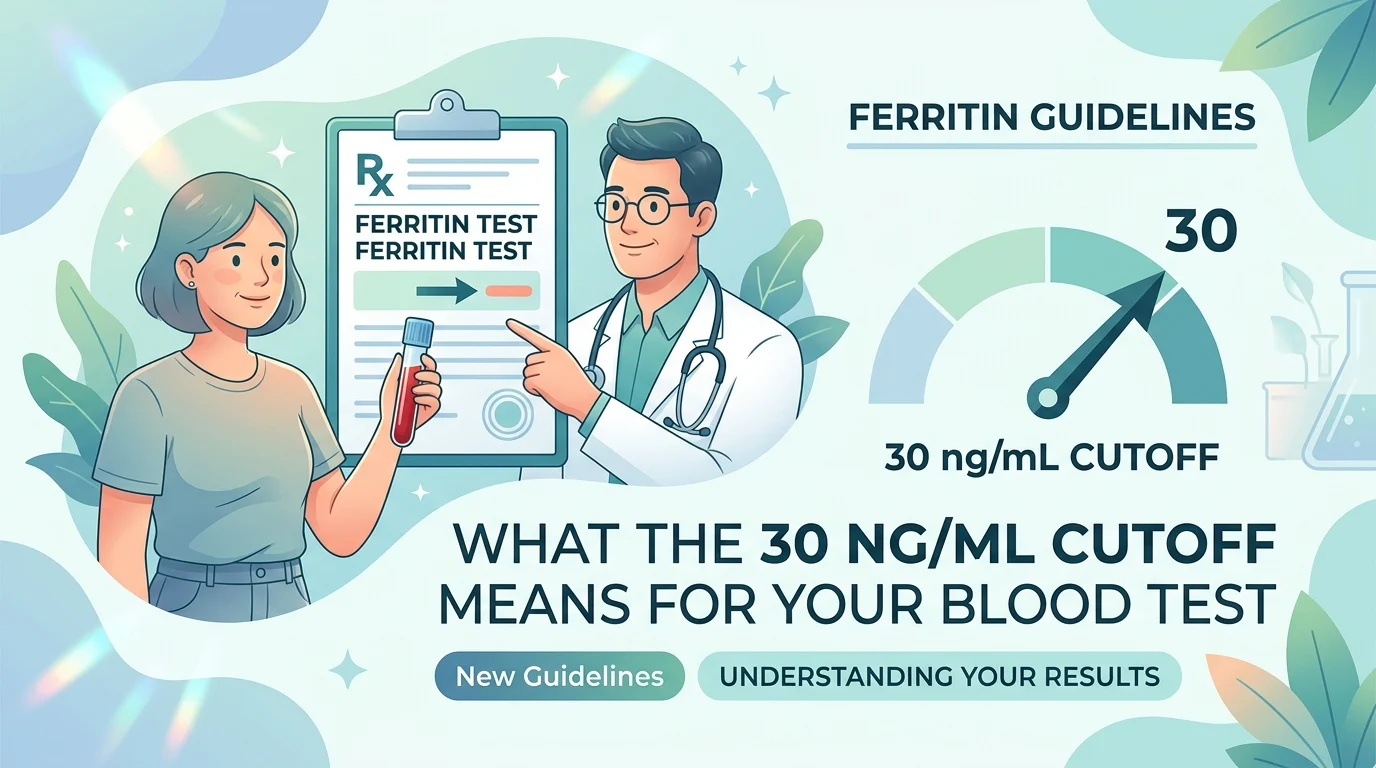
The new ferritin guidelines from the American Society of Hematology (ASH) change a number that millions of people see on their lab reports. For adults, the panel now suggests treating a ferritin of 30 ng/mL or lower as a sign of iron deficiency, roughly double the 15 ng/mL cutoff many labs have used for years. The shift matters because it can flag low iron stores in people whose hemoglobin still looks normal.
Below, we explain what changed, who is affected, why inflammation complicates the picture, and what these guidelines do not tell you. They are diagnostic thresholds for clinicians, not a reason to start iron on your own.
What the American Society of Hematology changed
In 2026 the society published its first evidence-based guidelines on how to diagnose iron deficiency, in the journal Blood Advances. The panel proposed higher ferritin cutoffs for several groups and stressed that iron deficiency can be present even when there is no anemia. Ferritin is the protein that stores iron, so a low value usually means the reserves are running down.
According to press coverage of the guidelines, the main suggested cutoffs are shown below.
| Group | Suggested ferritin cutoff | When a higher cutoff may apply |
|---|---|---|
| Children 9 months to 4 years | 20 ng/mL or lower | Not specified |
| Adults | 30 ng/mL or lower | Up to 50 ng/mL with symptoms or ongoing risk factors |
| Menstruating adults | 30 ng/mL or lower | Up to 50 ng/mL with heavy bleeding, other risk factors or pregnancy plans |
| Pregnancy | 30 ng/mL or lower | Up to 50 ng/mL if anemic |
| Adults with inflammation | Ferritin under 100 ng/mL or transferrin saturation under 20% | Either result can be enough |
Why the new ferritin guidelines matter when hemoglobin is normal
Hemoglobin falls late. Your body first spends its stored iron, and only when the reserves are nearly empty does hemoglobin drop and anemia appear. Someone can therefore feel tired, foggy or short of breath while a routine blood count looks fine.
A higher ferritin cutoff is meant to catch that earlier stage. If your result sits between the old and new cutoffs, a clinician may now take it more seriously, especially if you have heavy periods, a restrictive diet or symptoms. For a walkthrough of the basics, read our ferritin blood test guide.
Ferritin and inflammation: why a normal result can mislead
Ferritin is also an inflammation marker. Infection, liver disease, autoimmune conditions and other inflammatory states can push it up, even when iron stores are actually low. The Mayo Clinic notes that high ferritin most often reflects inflammation.
That is why the panel treats people with inflammation separately. For adults with anemia of inflammation, the suggestion is to consider iron deficiency when ferritin is under 100 ng/mL or transferrin saturation is under 20%. Transferrin saturation shows how much of the iron transport protein is loaded with iron. The guidelines advise fasting for about 5 to 9 hours before that test and avoiding iron-containing supplements, since both can shift the result.
To see how the markers fit together, read our iron studies panel explainer.
What these guidelines do not mean
Press coverage of the guidelines notes that the recommendations rest on low or very low certainty evidence, and that the panel itself called for more research. Raising a threshold can also lead to overdiagnosis, with extra testing or unneeded treatment, particularly in children.
The cutoffs guide a clinician’s assessment. They are not automatic triggers for iron pills, and too much iron can be harmful. The NIH Office of Dietary Supplements lists a daily upper limit of 45 mg of iron for ages 14 and up, from all sources, unless a doctor prescribes more for a limited time. Your lab report will also keep printing its own reference range, which may differ from the new cutoffs.
If your result is low and you want to know what usually happens next, see our guide to low ferritin causes and treatment.
Latest scientific advances
According to PubMed, the ASH guidelines come from a multidisciplinary panel that included a patient representative. The team ran systematic evidence reviews covering studies up to July 2025 and graded the evidence with the GRADE method, a standard way to rate how confident we can be in a recommendation. The panel agreed on five recommendations, focused on ferritin cutoffs for specific groups, other diagnostic thresholds, and how to diagnose iron deficiency when inflammation is present.
What this changes for you: the evidence is now written down in one place, which may make doctors more consistent about when they look for iron deficiency. What it does not change is that a single number is never a diagnosis. Your symptoms, history and other tests still decide the next step. The authors also point out gaps in the research, which means these thresholds may be refined.
When to talk to your doctor
Book an appointment if you have lasting fatigue, hair shedding, restless legs, breathlessness on effort or heavy periods, even if your hemoglobin was reported as normal. Ask whether ferritin and transferrin saturation were checked. See a doctor promptly for chest pain, fainting, black stools or very heavy bleeding, and do not wait for a routine visit.
If your hemoglobin sits just under the normal line, our article on borderline low hemoglobin explains why that can still matter.
Glossary
- Ferritin: the protein that stores iron; a low level usually reflects low iron reserves.
- Transferrin saturation: the share of the iron transport protein that is carrying iron.
- Anemia: a low hemoglobin level, which reduces oxygen delivery to tissues.
- Iron deficiency without anemia: low iron stores while hemoglobin is still in the normal range.
- GRADE: a method for rating the quality of evidence behind a recommendation.
FAQ
What is the new ferritin cutoff for iron deficiency?
For most adults, the American Society of Hematology suggests 30 ng/mL or lower, and up to 50 ng/mL when symptoms or risk factors are present.
Is a ferritin of 25 now considered low?
Under the new guidelines it falls below the suggested adult cutoff, but whether it matters for you depends on your symptoms, history and other test results. Discuss it with your doctor.
Should I take iron if my ferritin is under 30?
Not automatically. The cutoffs support diagnosis, and treatment is a separate decision. Taking iron without guidance can cause side effects and mask other causes.
Why can ferritin look normal when I am iron deficient?
Inflammation raises ferritin. That is why transferrin saturation is added in people with inflammatory conditions.
Do the new ferritin guidelines apply to my lab report?
They are guidance for clinicians, not a rule your lab must follow. Your report will still show the lab’s own reference range.
Sources
- American Society of Hematology 2026 guidelines for diagnosis of iron deficiency — Blood Advances, 2026 (PubMed)
- DOI: 10.1182/bloodadvances.2025015950
- HCPLive — ASH issues new ferritin thresholds for iron deficiency diagnosis
- Patient Care Online — ASH raises ferritin thresholds for diagnosing iron deficiency
- News-Medical — New iron deficiency guidelines raise key blood test cutoffs
- Mayo Clinic — Ferritin test
- MedlinePlus — Ferritin blood test
- NIH Office of Dietary Supplements — Iron fact sheet for consumers
Other articles
- Ferritin Blood Test: What Your Results Mean
- Low Ferritin: What It Means and What Happens Next
- Iron Studies Panel: Ferritin, Serum Iron, TIBC and Transferrin Saturation Explained
- Borderline Low Hemoglobin: Why a Normal Result May Still Matter
Understand your own blood test results with AI DiagMe
Not sure how your ferritin compares with these cutoffs? Understand your lab results with AI DiagMe.