










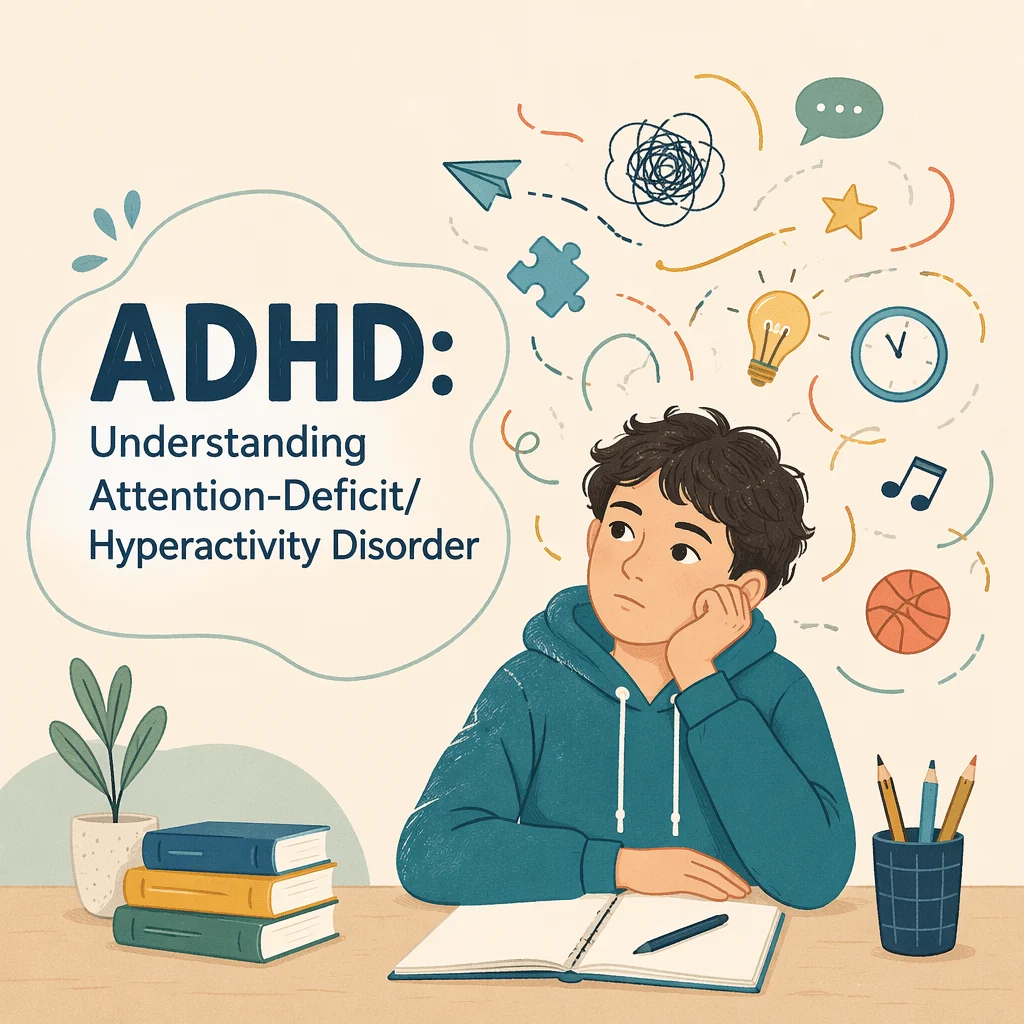
ADHD, or attention-deficit/hyperactivity disorder, is a common neurodevelopmental condition that affects how the brain manages attention, activity, and impulse control. It is not a matter of willpower, laziness, or intelligence, and it affects both children and adults from every background. Many people live with ADHD for years before it is recognised, especially when the signs look like ordinary forgetfulness or restlessness. This article explains what ADHD is, what causes it, how its symptoms appear at different ages, and how professionals diagnose and treat it. You will also learn an important point about laboratory testing: no blood test can diagnose ADHD, but certain blood tests help doctors rule out other conditions, such as thyroid problems or iron deficiency, that can mimic or worsen attention difficulties.
What is ADHD?
ADHD is a neurodevelopmental condition, which means it involves differences in how the brain develops and works from early in life. These differences affect the brain networks that handle attention, planning, organisation, working memory, and self-control. As a result, a person with ADHD may struggle to stay focused on tasks that do not interest them, act on impulse, or feel a constant need to move. A major 2024 medical review confirmed that ADHD usually begins in childhood and often continues across the lifespan.
The condition is real and measurable in its effects, even though it cannot be seen on a routine scan or blood test. Symptoms exist on a spectrum, so two people with the same diagnosis can look quite different from each other. ADHD is also common, affecting a meaningful share of both children and adults worldwide.
ADHD in children
In children, ADHD often becomes noticeable during the school years, when the demands for sitting still, following instructions, and finishing work increase. A child may lose belongings, forget homework, interrupt others, or seem to be driven by a motor. Because young children are naturally energetic, a diagnosis depends on whether these behaviours are more intense and more persistent than expected for the child’s age, and whether they cause real difficulty at home and at school.
ADHD in adults
ADHD does not always fade with age. Many adults were never assessed as children and only recognise the pattern later, often when a family member is evaluated. In adults, visible hyperactivity may soften into inner restlessness, while problems with focus, time management, procrastination, and organisation tend to remain. Recent research highlights that ADHD in adults, and particularly in women, has been under-recognised for years, partly because inattentive symptoms are quieter and easier to miss.
What causes ADHD? Risk factors
ADHD does not have a single cause. Instead, it develops from a combination of genetic and environmental factors that shape brain development. Understanding these factors can help reduce blame and stigma, because ADHD is not caused by poor parenting, screen time alone, or a lack of discipline.
Genetics and brain chemistry
Genetics play the largest role. ADHD runs strongly in families, and a child with a parent or sibling who has ADHD is more likely to have it too. On a biological level, ADHD is linked to how the brain uses two chemical messengers, dopamine and norepinephrine, which help regulate attention and motivation. Differences in these signalling systems are one reason that certain medications, which fine-tune these messengers, can improve focus.
Pregnancy-related and environmental factors
Several factors around pregnancy and early life are associated with a higher chance of ADHD. These include premature birth, very low birth weight, exposure to tobacco or alcohol during pregnancy, and early exposure to environmental lead. These factors raise risk on average across large groups of people; they do not mean that any single exposure directly caused one person’s ADHD.
ADHD symptoms and the three presentations
ADHD symptoms fall into two broad groups: inattention, and hyperactivity-impulsivity. The balance between these groups defines three recognised presentations. Knowing which pattern fits helps a clinician tailor support, although the presentation can change over a person’s life.
| Presentation | Core pattern | Common everyday signs |
|---|---|---|
| Predominantly inattentive | Mainly attention and organisation difficulties | Easily distracted, loses items, forgets tasks, avoids sustained mental effort, appears to daydream |
| Predominantly hyperactive-impulsive | Mainly restlessness and impulsivity | Fidgets, cannot stay seated, talks a lot, interrupts, acts before thinking |
| Combined | Both patterns together | A mix of inattentive and hyperactive-impulsive signs; the most common presentation |
Inattention
Inattention is more than occasional distraction. It can look like difficulty following long instructions, frequent careless mistakes, trouble finishing projects, and losing track of time. Many people describe starting many tasks but struggling to complete them, or feeling easily pulled away by anything more interesting.
Hyperactivity and impulsivity
Hyperactivity is a feeling of being constantly on the go, fidgeting, or needing to move. Impulsivity shows up as interrupting, blurting out answers, difficulty waiting, or making quick decisions without weighing the consequences. In adults, these signs are often internal, felt as restlessness or impatience rather than visible movement.
How is ADHD diagnosed?
ADHD is diagnosed through a careful clinical evaluation, not a single test. A qualified professional, such as a paediatrician, psychiatrist, psychologist, or trained primary-care doctor, gathers information from several sources. This usually includes a detailed history, standardised rating scales, and reports from people who know the person well, such as parents, teachers, or partners. To meet the criteria, symptoms must appear early in life, occur in more than one setting, and cause meaningful difficulty in daily life.
Why there is no blood test for ADHD
There is no blood test, brain scan, or genetic test that can diagnose ADHD on its own. The diagnosis rests on behaviour and history, interpreted by a clinician. This matters, because online quizzes and self-scoring ADHD tests can raise useful questions but cannot replace a professional assessment.
How blood tests help rule out other causes
Blood tests still have a role, not to confirm ADHD, but to rule out other conditions that can look like it or make attention worse. Thyroid disorders, iron deficiency, low vitamin D, sleep problems, anxiety, and depression can all affect concentration and energy. Checking for them helps make sure the real problem is not missed. The table below shows common tests a clinician may consider and what each one helps exclude.
| Blood test | What it measures | What it helps rule out |
|---|---|---|
| Thyroid function (TSH) | Thyroid-stimulating hormone and thyroid activity | An overactive or underactive thyroid, which can cause restlessness or poor focus |
| Ferritin and full blood count | Iron stores and red blood cells | Iron deficiency and anaemia, which can cause fatigue and trouble concentrating |
| Vitamin D (25-OH) | Vitamin D reserves in the body | Low vitamin D, linked in some people to low energy and mood changes |
For example, an overactive or underactive thyroid can cause restlessness and concentration problems, so a clinician may order a thyroid-stimulating hormone blood test. It also helps to know the standard thyroid hormone reference ranges when reading a report. Low iron is another common culprit behind fatigue and brain fog: a simple test can reveal low ferritin and depleted iron stores. To see the full picture, laboratories often run a complete iron studies panel. Doctors also order a complete blood count to check for anaemia.
Ongoing stress can scatter attention and drain energy, so when stress is a concern a clinician may order a cortisol blood test. None of these results confirm or exclude ADHD by themselves, but together they help a clinician build an accurate picture. If you want to make sense of a lab report before your appointment, our guide helps you understand your blood test results.
When to seek an evaluation
Consider asking a professional for an assessment when attention or activity difficulties are ongoing and interfere with daily life. Signs that it may be time to seek help include:
- Symptoms that have lasted at least six months and appear in more than one setting, such as home, school, or work
- Difficulties that started in childhood, even if they were only noticed later
- Problems that affect relationships, grades, job performance, or self-esteem
- Struggles with focus or restlessness alongside anxiety, low mood, or sleep problems
A clinician can sort out whether ADHD, another condition, or a combination best explains what you are experiencing.
How is ADHD treated?
ADHD is highly treatable. Most people do best with a combination of approaches tailored to their age, symptoms, and goals. Treatment does not cure ADHD, but it can substantially reduce symptoms and improve daily life.
Behavioural and psychological support
For children, behaviour therapy and parent training are often the first steps, especially for younger kids. For teenagers and adults, cognitive behavioural therapy, coaching, and practical skills training can help with organisation, time management, and emotional regulation. Support at school or work, such as extra time or a quieter environment, also makes a meaningful difference.
Medication
Medication is a common and well-studied option. Stimulant medicines, which adjust dopamine and norepinephrine signalling, are the most frequently prescribed and help many people focus. Non-stimulant medicines, such as atomoxetine and viloxazine, are alternatives when stimulants are not suitable or not well tolerated. Medication choices are made with a clinician, who monitors the benefits and side effects over time.
A combined approach
For many people, the best results come from combining therapy, education, healthy routines, and, when appropriate, medication. The right mix is personal and is often adjusted as a person’s needs change through childhood, adolescence, and adulthood.
Latest scientific advances
Research on ADHD has moved quickly in the last few years. Here are several developments from 2023 to 2026, explained in plain language, along with what each one may mean for you.
- Recognising ADHD across the lifespan. A major 2024 review confirmed that ADHD is a lifelong neurodevelopmental condition for many people, not just a childhood problem. What this means for you: if you have had unexplained focus or organisation struggles since childhood, an adult assessment is reasonable and worthwhile.
- Groups that were often missed. A 2023 systematic review, a study that carefully pools earlier research, found that ADHD in women is frequently diagnosed late or overlooked, partly because their symptoms are often quieter and more inattentive. What this means for you: not fitting the stereotype of a restless child does not rule out ADHD.
- Clearer evidence on adult treatments. A 2025 analysis in a leading psychiatry journal compared treatments for adults with ADHD. It found that stimulant medicines were the most consistent at reducing core symptoms in the short term, judged by both patients and clinicians, whilst a non-stimulant option also helped but was less well tolerated by some people. What this means for you: effective options exist for adults, and the choice should be personalised with a clinician.
- Better quality of life, not just lower symptom scores. A 2024 review found that medication for ADHD modestly improved day-to-day quality of life, not only checklist symptoms. What this means for you: treatment goals can include how you feel and function, not only a score on a rating scale.
- Weighing benefits and downsides together. A 2025 umbrella review, which is a review of many other reviews, brought together evidence across ADHD treatments to help patients and doctors make shared decisions about what is worth trying. What this means for you: there is no single best treatment for everyone, and your preferences matter in the plan.
These findings are encouraging, but individual results vary, and any treatment decision should be made with a qualified professional who knows your history.
Living well with ADHD
With the right support, people with ADHD lead full and successful lives. Many describe genuine strengths, such as creativity, energy, and the ability to focus intensely on things they care about.
Everyday strategies
Practical habits can reduce daily friction: breaking tasks into small steps, using reminders and timers, keeping consistent routines, and building in regular physical activity, which supports attention and mood. Good sleep and balanced nutrition help too, because tiredness and blood-sugar swings can worsen focus for anyone.
Support and understanding
Support groups, education for family members, and open conversations at school or work all help. Reducing stigma matters: understanding ADHD as a brain-based condition, rather than a character flaw, makes it easier to ask for help and put useful tools in place. ADHD also frequently occurs alongside other conditions, so caring for sleep, mood, and stress is part of managing it well.
Glossary
| Term | Definition |
|---|---|
| ADHD | Attention-deficit/hyperactivity disorder, a neurodevelopmental condition affecting attention, activity, and impulse control. |
| Neurodevelopmental condition | A condition involving differences in how the brain develops and functions from early life. |
| Inattention | Difficulty sustaining focus, following through on tasks, and staying organised. |
| Hyperactivity | Excessive movement or restlessness that is greater than expected for a person’s age or situation. |
| Impulsivity | Acting quickly without fully considering the consequences. |
| Dopamine | A brain chemical messenger involved in attention, motivation, and reward. |
| Norepinephrine | A brain chemical messenger that helps regulate alertness and attention. |
| Stimulant medication | A common class of ADHD medicines that adjust dopamine and norepinephrine signalling to improve focus. |
| Ferritin | A protein that reflects the body’s iron stores, sometimes checked to rule out iron deficiency. |
| Comorbidity | A second condition that occurs alongside another, such as anxiety together with ADHD. |
Frequently asked questions
Is there a single test for ADHD?
No. There is no single blood test, scan, or quiz that diagnoses ADHD. A diagnosis comes from a clinical evaluation that reviews your history, current symptoms, and how those symptoms affect different parts of your life. Rating scales and questionnaires are helpful tools within that process, but a trained professional interprets them alongside everything else. Online self-tests can be a useful starting point for a conversation, yet they cannot confirm or exclude ADHD on their own.
Can a blood test diagnose ADHD?
A blood test cannot diagnose ADHD. What blood work can do is rule out other conditions that mimic or worsen attention problems, such as thyroid disorders, iron deficiency, or low vitamin D. If your focus and energy have changed, a clinician may check these markers to make sure something treatable is not being overlooked. Think of lab tests as a way to complete the picture, not as a shortcut to an ADHD diagnosis.
How is ADHD in adults different from ADHD in children?
The core condition is the same, but it often looks different. In children, hyperactivity may be visible as constant movement. In adults, that energy frequently turns inward and feels like restlessness or impatience, whilst trouble with focus, planning, deadlines, and organisation tends to persist. Many adults were never assessed as children and only recognise the pattern once they understand what to look for.
Does ADHD go away with age?
For some people, symptoms ease over time, particularly visible hyperactivity. For many others, ADHD continues into adulthood in a quieter form, mainly as inattention and difficulty with organisation. Rather than disappearing, it often changes shape. The good news is that support, strategies, and treatment can be effective at any age.
Do ADHD medications work the same for everyone?
No. Responses to medication vary from person to person. Some people respond well to a first choice, whilst others need a different medicine or dose, and some prefer non-medication approaches. Both stimulant and non-stimulant options exist, and finding the right fit is a process guided by a clinician who tracks benefits and side effects. Medication is one tool among several, and it is often combined with therapy and practical strategies.
Can diet and lifestyle affect ADHD symptoms?
Diet and lifestyle do not cause or cure ADHD, but healthy habits can support attention and mood. Regular physical activity, consistent sleep, and balanced meals help many people feel steadier and more focused. These habits work best alongside, not instead of, evidence-based care. If focus problems come with fatigue, it is also worth ruling out issues such as iron deficiency or thyroid trouble.
Sources
- National Institute of Mental Health (NIMH) — Attention-Deficit/Hyperactivity Disorder (ADHD) — nimh.nih.gov
- Centers for Disease Control and Prevention (CDC) — About ADHD — cdc.gov
- Mayo Clinic — Attention-deficit/hyperactivity disorder (ADHD) in children: Symptoms and causes — mayoclinic.org
- Attention-deficit/hyperactivity disorder — Nature Reviews Disease Primers, 2024 — doi.org/10.1038/s41572-024-00495-0
- Miss. Diagnosis: A Systematic Review of ADHD in Adult Women — Journal of Attention Disorders, 2023 — doi.org/10.1177/10870547231161533
- Comparative efficacy and acceptability of pharmacological, psychological, and neurostimulatory interventions for ADHD in adults: a systematic review and component network meta-analysis — The Lancet Psychiatry, 2025 — doi.org/10.1016/S2215-0366(24)00360-2
- Effects of Pharmacological Treatment for ADHD on Quality of Life: A Systematic Review and Meta-Analysis — Journal of the American Academy of Child and Adolescent Psychiatry, 2024 — doi.org/10.1016/j.jaac.2024.05.023
- Benefits and harms of ADHD interventions: umbrella review and platform for shared decision making — BMJ, 2025 — doi.org/10.1136/bmj-2025-085875
Further reading
- Anxiety: understanding and managing it
- Depression: symptoms, causes, and treatments
- Narcolepsy: symptoms, diagnosis, and treatment
- Anaemia: symptoms, causes, and blood tests
- Vitamin D blood test (25-OH): how to read your results
Understand your lab results with AI DiagMe
No blood test can diagnose ADHD, but lab work still matters. Thyroid, iron and ferritin, and vitamin D tests help rule out conditions that quietly affect focus and energy, so nothing treatable is missed. AI DiagMe helps you understand what these numbers mean in plain language. It is designed to help you understand your results, not to diagnose ADHD or replace your clinician.
Get your results interpreted in minutes