








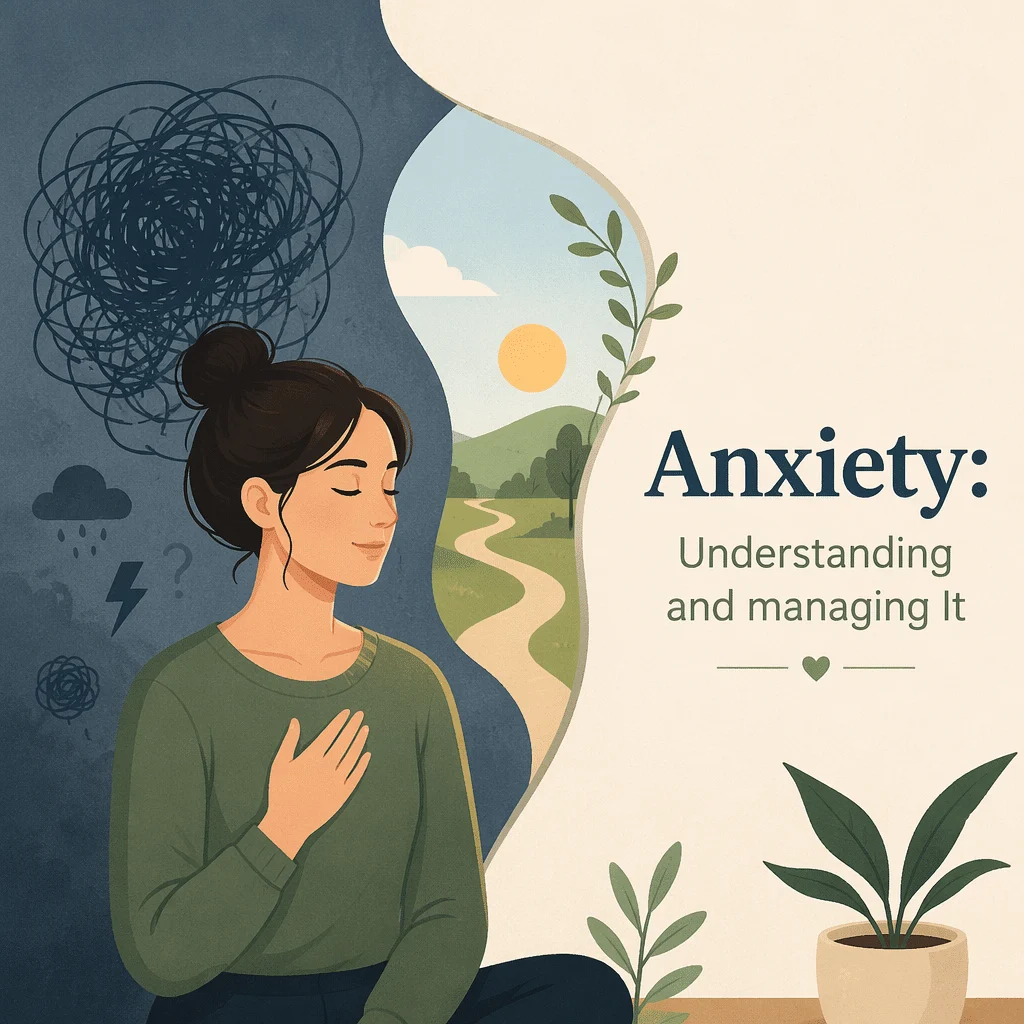
Anxiety is one of the most common human experiences, and feeling anxious before an exam, a big decision, or a difficult conversation is completely normal. For some people, though, worry becomes frequent, intense, and hard to switch off, and that is when anxiety may point to a treatable health condition rather than an ordinary reaction to stress. The reassuring news is that anxiety is well understood and highly treatable, and most people feel better with the right support. In this article you’ll learn what anxiety is, why it happens, how to recognise its emotional and physical signs, and when to reach out for help. You’ll also see how blood tests fit in: no lab test can diagnose anxiety, but a few simple tests can rule out physical conditions that cause similar symptoms.
What anxiety really is
Anxiety is the body’s natural response to a perceived threat, the feeling of apprehension that helps you prepare, focus, and stay safe. In small doses it is useful, and everyone feels it from time to time. It becomes a health concern only when it is out of proportion to the situation, lingers for weeks or months, and starts to get in the way of work, relationships, or daily routines. Anxiety disorders are among the most common mental health conditions, affecting many millions of adults in the United Kingdom, according to the National Institute for Health and Care Excellence, so if you are struggling, you are far from alone.
Normal worry versus an anxiety disorder
Ordinary worry is temporary and tied to a specific event, and it fades once the situation passes. An anxiety disorder is different: the worry is more constant, feels hard to control, and often shows up in the body as tension, restlessness, or a racing heart. When these feelings last for six months or more and interfere with everyday life, a health professional may describe them as an anxiety disorder rather than everyday stress.
Common types of anxiety
Anxiety is not a single condition but a family of related ones. Recognising the pattern can make it feel less overwhelming and easier to talk about.
- Generalised anxiety disorder: ongoing, hard-to-control worry about many everyday things.
- Panic disorder: sudden, repeated waves of intense fear known as panic attacks.
- Social anxiety: strong fear of being judged or embarrassed in social situations.
- Specific phobias: intense fear of a particular object or situation, such as heights or flying.
- Separation anxiety: distress about being apart from people you feel attached to.
What causes anxiety
There is rarely a single cause. Anxiety usually grows from a mix of factors that build up over time, which is why two people can face similar situations and respond very differently. Understanding these influences helps remove any sense of blame, because anxiety is not a personal weakness.
Biological and genetic factors
Anxiety can run in families, and differences in brain chemistry, particularly in messengers such as serotonin, play a role. The body’s stress response is also involved. When stress becomes long term, it keeps the alarm system switched on, and a blood test can sometimes reveal high cortisol levels, the main stress hormone. Nutrition matters too, and some people develop magnesium deficiency, a mineral shortfall that has been linked to tension and low mood.
Psychological and life factors
Stressful or traumatic experiences, ongoing pressure at work or home, major life changes, and certain thinking styles can all raise the likelihood of anxiety. Alcohol, too much caffeine, poor sleep, and some medications can make symptoms worse. Anxiety also overlaps with other conditions, and at some point in their lives, many people who feel anxious also experience depression.
Recognising the symptoms
Anxiety shows up in the mind and the body, and the signs vary from person to person. Seeing them written down can be validating, because it confirms that these experiences are real and shared by millions of people.
Emotional and mental signs
Common emotional signs include persistent worry, a sense of dread, feeling on edge, irritability, trouble concentrating, and difficulty relaxing. Many people describe a mind that will not slow down, especially at night.
Physical signs
Because anxiety activates the body, it often produces physical sensations: a faster heartbeat, muscle tension, tiredness, restlessness, sweating, an upset stomach, or disturbed sleep. These sensations are uncomfortable but not dangerous in themselves. A panic attack is a sudden, brief surge of these feelings that peaks within minutes and then eases. It can feel frightening, yet it is not harmful, and learning what it is often makes it less scary.
How anxiety can look different from person to person
Anxiety does not look the same for everyone. Some people notice it mostly in their thoughts, as constant worry or a racing mind, while others feel it mainly in the body, through tension, an upset stomach, or a pounding heart. It can be quiet and inward, or restless and visible. Age matters too: children may show anxiety as clinginess or stomach aches, while adults may describe pressure, irritability, or exhaustion. None of these versions is more valid than another, and recognising your own pattern is a useful first step towards managing it.
How anxiety is diagnosed and when to seek help
There is no single test for anxiety. A doctor or mental health professional makes an assessment by talking with you about your feelings, your physical symptoms, how long they have lasted, and how much they affect your life, sometimes with short, validated questionnaires. This conversation is confidential and supportive, not a judgement. Brief screening questionnaires are increasingly used in primary care to open the discussion, and they are a starting point rather than a diagnosis on their own.
Reaching out is a sign of strength, not failure. It is worth speaking to a professional if worry is persistent, if it interferes with sleep, work, or relationships, or if you are using alcohol or other substances to cope. Anxiety is common and treatable, and early support often makes recovery faster and easier.
When to seek help now
- Your anxiety is overwhelming, lasts most days, or keeps getting worse.
- Panic attacks, sleeplessness, or physical symptoms are disrupting daily life.
- You are relying on alcohol or drugs to manage how you feel.
- If you are in crisis or have any thoughts of harming yourself, help is available right now. In the UK you can call Samaritans free on 116 123, any time of day or night. If you or someone else is in immediate danger, call 999.
The role of blood tests: ruling out physical causes
Here is the honest picture: no blood test can diagnose anxiety, which is identified through a clinical conversation, not a lab value. Blood tests still matter, because several physical conditions produce symptoms that feel exactly like anxiety, such as a pounding heart, restlessness, sweating, or fatigue. Checking for these conditions makes sure nothing physical is being missed, and it can bring real peace of mind.
For example, to check whether an overactive thyroid is driving the symptoms, a clinician may order a TSH thyroid function test. If shakiness and sudden panic are a concern, a doctor may measure your blood glucose levels, because low blood sugar can mimic anxiety. To look for anaemia, a clinician may request a complete blood count, and a fuller work-up can reveal the causes of anaemia. Blood work can also detect low vitamin B12, a deficiency that affects energy and mood. The table below shows what these common tests can help rule out.
| Blood test | What it can help rule out |
|---|---|
| Thyroid-stimulating hormone (TSH) | An overactive thyroid, which can cause a racing heart, restlessness, sweating, and trouble sleeping |
| Blood glucose | Low blood sugar, which can bring on shakiness, sweating, and a sudden sense of panic |
| Complete blood count (CBC) | Anaemia, which can lead to fatigue, a fast heartbeat, and shortness of breath |
| Electrolyte and calcium panel | Imbalances in calcium or other electrolytes that can affect mood, muscles, and heart rhythm |
| Cortisol and adrenal hormones | Uncommon hormonal conditions that can imitate constant stress or panic |
| Vitamin B12 | A deficiency that can cause fatigue, irritability, and difficulty concentrating |
If these tests come back normal, that itself is useful: it points the focus towards anxiety and away from a physical cause, so you and your clinician can concentrate on the support that will help most.
How anxiety is treated
Anxiety responds well to treatment, and there is no single right path. Many people do best with a combination of approaches, adjusted over time. The goal is not to erase all worry, which is a normal part of life, but to bring it back to a manageable level so you can live fully.
Talk therapy
Psychological therapy is often the first recommendation. Cognitive behavioural therapy, a structured approach that helps you notice and reshape anxious thought patterns and gradually face feared situations, has the strongest evidence. Supportive counselling and relaxation techniques can help too. Therapy gives you practical skills you can keep using long after the sessions end, and many people begin to feel some relief within a few weeks, though the timeline varies.
Medication
For some people, medication is a helpful part of the plan, especially when symptoms are moderate or severe. Antidepressants known as SSRIs and SNRIs are commonly prescribed first because they are effective and generally well tolerated. Any medication should be discussed with a doctor, who will weigh the benefits, review side effects, and follow up regularly.
Lifestyle and self-care
Everyday habits make a real difference alongside professional care. Regular physical activity, steady sleep, limiting caffeine and alcohol, breathing and relaxation exercises, and staying connected to supportive people all help calm the nervous system. These steps do not replace treatment when anxiety is severe, but they strengthen whatever else you are doing. Even small, repeatable changes, like a short daily walk or a calming wind-down routine before bed, can build a sense of control over time.
Latest scientific advances in understanding anxiety
Research over the past few years has been encouraging. Here are four developments that matter for everyday life, in plain terms.
First, talk therapy has been firmly confirmed as a leading treatment. A 2024 review that pooled 65 clinical trials found that cognitive behavioural therapy is one of the most effective options for generalised anxiety disorder, with benefits still measurable months after treatment finished. What this means for you: talking therapy is a proven, first-line choice, and its effects can last.
Second, therapy delivered online works too. A 2024 analysis that brought together 154 trials involving more than 45,000 people found that CBT provided through guided internet programmes reduced anxiety, with improvements that generally held up a year or more later, especially when a therapist offered some support along the way. What this means for you: if seeing someone in person is difficult, a well-designed online programme is a credible way to get help at home.
Third, movement helps. A 2024 review of 75 trials found that something as simple as regular walking was linked to meaningfully lower anxiety. What this means for you: you do not need intense workouts to benefit, because a steady walking habit can be a genuine part of feeling calmer.
Fourth, scientists are mapping how physical and mental health connect. A large 2024 study that followed hundreds of thousands of people found that certain markers of inflammation in routine blood tests, including white blood cell counts and C-reactive protein, a general marker of inflammation, were modestly linked to a higher chance of later developing anxiety, depression, or stress-related conditions. What this means for you: this is early, group-level research, not a test that can diagnose anxiety in one person, but it reinforces a practical idea, that caring for your body is part of caring for your mind.
Living well with anxiety
Anxiety is manageable, and many people go on to feel calmer and more in control than they expected. Progress is often gradual, with good days and harder days, and that is normal. Small, consistent steps, patience with yourself, and support from professionals and people you trust all add up. Treating anxiety is not about becoming someone who never worries; it is about building the tools and confidence to keep worry in proportion, so it no longer runs the show.
Glossary
| Term | Definition |
|---|---|
| Anxiety disorder | A mental health condition in which worry or fear is frequent, intense, hard to control, and interferes with daily life. |
| Generalised anxiety disorder (GAD) | A common type of anxiety marked by excessive worry about many everyday things, most days, for six months or more. |
| Panic attack | A sudden wave of intense fear with physical signs such as a pounding heart and shortness of breath, which peaks within minutes. |
| Cognitive behavioural therapy (CBT) | A structured talking therapy that helps you notice and change unhelpful thought patterns and behaviours. |
| SSRI | Selective serotonin reuptake inhibitor, a common antidepressant also used as a first-line medication for anxiety. |
| Trigger | A situation, thought, or bodily sensation that sets off anxious feelings. |
| Thyroid-stimulating hormone (TSH) | A blood marker used to check how well the thyroid gland is working. |
| Biomarker | A measurable sign in the body, such as a substance in the blood, that can reflect health or disease. |
Frequently asked questions
What are the first signs of anxiety?
Early signs are often subtle. Many people first notice persistent worry, feeling on edge or irritable, trouble concentrating, and difficulty relaxing. Physical clues are common too, such as a faster heartbeat, muscle tension, tiredness, and disturbed sleep. Because these signs build up slowly, they are easy to dismiss as ordinary stress. If they last for several weeks and start to affect your daily life, it is worth talking with a health professional.
What is the difference between an anxiety attack and a panic attack?
People use these terms in different ways. Panic attack is the medical term for a sudden, intense surge of fear with strong physical symptoms, such as a racing heart and shortness of breath, that peaks within minutes. An anxiety attack is a more everyday phrase for a build-up of worry and tension that can last longer and feel less abrupt. Both are distressing but not dangerous, and both can improve with support and practice.
Can anxiety cause physical symptoms?
Yes, and this is very common. Because anxiety activates the body’s stress response, it can produce a fast or pounding heartbeat, muscle tension, tiredness, sweating, dizziness, an upset stomach, and disturbed sleep. These sensations are real, but they are not a sign that something is physically wrong with your heart or other organs. Understanding that the body is simply on high alert often makes the symptoms feel less frightening.
Can a blood test diagnose anxiety?
No. There is no blood test that can diagnose anxiety, which is identified through a conversation with a health professional about your feelings and experiences. Blood tests are still useful because they can rule out physical conditions that cause similar symptoms, such as an overactive thyroid, low blood sugar, or anaemia. Normal results help point the focus towards anxiety, so the right support can begin.
What is the most effective treatment for anxiety?
For many people, cognitive behavioural therapy has the strongest evidence and is considered a first-line treatment. Medication, most often an SSRI or SNRI antidepressant, can help when symptoms are moderate or severe. Lifestyle steps such as regular activity, good sleep, and limiting caffeine support recovery. The best plan is personal, and a doctor or therapist can help you combine these options in the way that suits you.
Can anxiety be managed or cured?
Anxiety is highly treatable, and most people improve significantly with the right support. Some find their symptoms resolve completely, whilst others learn to keep anxiety at a low, manageable level that no longer controls their life. Because some anxiety is a normal and even useful part of being human, the realistic goal is balance rather than the total absence of worry. With treatment and time, feeling calmer and more in control is a genuine expectation.
Sources
- National Institute of Mental Health (NIMH) — Anxiety Disorders — nimh.nih.gov
- MedlinePlus, U.S. National Library of Medicine — Anxiety — medlineplus.gov
- Mayo Clinic — Anxiety disorders: Symptoms and causes — mayoclinic.org
- Papola D, et al. — Psychotherapies for Generalized Anxiety Disorder in Adults: A Systematic Review and Network Meta-Analysis — JAMA Psychiatry, 2024 — doi.org/10.1001/jamapsychiatry.2023.3971
- Zainal NH, et al. — Do the effects of internet-delivered cognitive-behavioural therapy last after a year and beyond? A meta-analysis of 154 randomised controlled trials — Clinical Psychology Review, 2024 — doi.org/10.1016/j.cpr.2024.102518
- Xu Z, et al. — The Effect of Walking on Depressive and Anxiety Symptoms: Systematic Review and Meta-Analysis — JMIR Public Health and Surveillance, 2024 — doi.org/10.2196/48355
- Zeng Y, et al. — Inflammatory Biomarkers and Risk of Psychiatric Disorders — JAMA Psychiatry, 2024 — doi.org/10.1001/jamapsychiatry.2024.2185
Further reading
- Normal Thyroid Levels: Understanding Ranges
- Adrenal Panel Explained: Cortisol, ACTH, Aldosterone, and DHEA
- Cardiac Markers Panel: Troponin, BNP, and CK
- Vitamin B12 Guide: Benefits, Sources, and Levels
- Cortisol Rhythms and Burnout
Understand your lab results with AI DiagMe
No blood test can diagnose anxiety, but lab work still has a place. Simple tests such as a thyroid panel, blood sugar, and a full blood count can help rule out physical causes of anxiety-like symptoms, from an overactive thyroid to low blood sugar or anaemia. AI DiagMe helps you understand what your results mean in plain language, so you can have a more informed conversation with your doctor. It is a tool to help you understand your results, not a way to diagnose anxiety, and it does not replace a mental health professional.
Get your results interpreted in minutes