








A TSH blood test is one of the most common ways to check how well your thyroid is working, and it is often the first result a doctor looks at when a thyroid problem is suspected. TSH stands for thyroid-stimulating hormone, a chemical messenger made by your pituitary gland that tells the thyroid how much hormone to produce. Reading this single number can suggest whether your thyroid is underactive, overactive, or nicely balanced. In this article you will learn what a TSH blood test measures, how to interpret a high, low, normal, or subclinical result, how TSH works together with free T4 and free T3, what can shift your levels, and when a result is worth a conversation with your doctor.
If a scan has found a lump on your thyroid, here is what TSH decides about a thyroid nodule.
What a TSH blood test measures
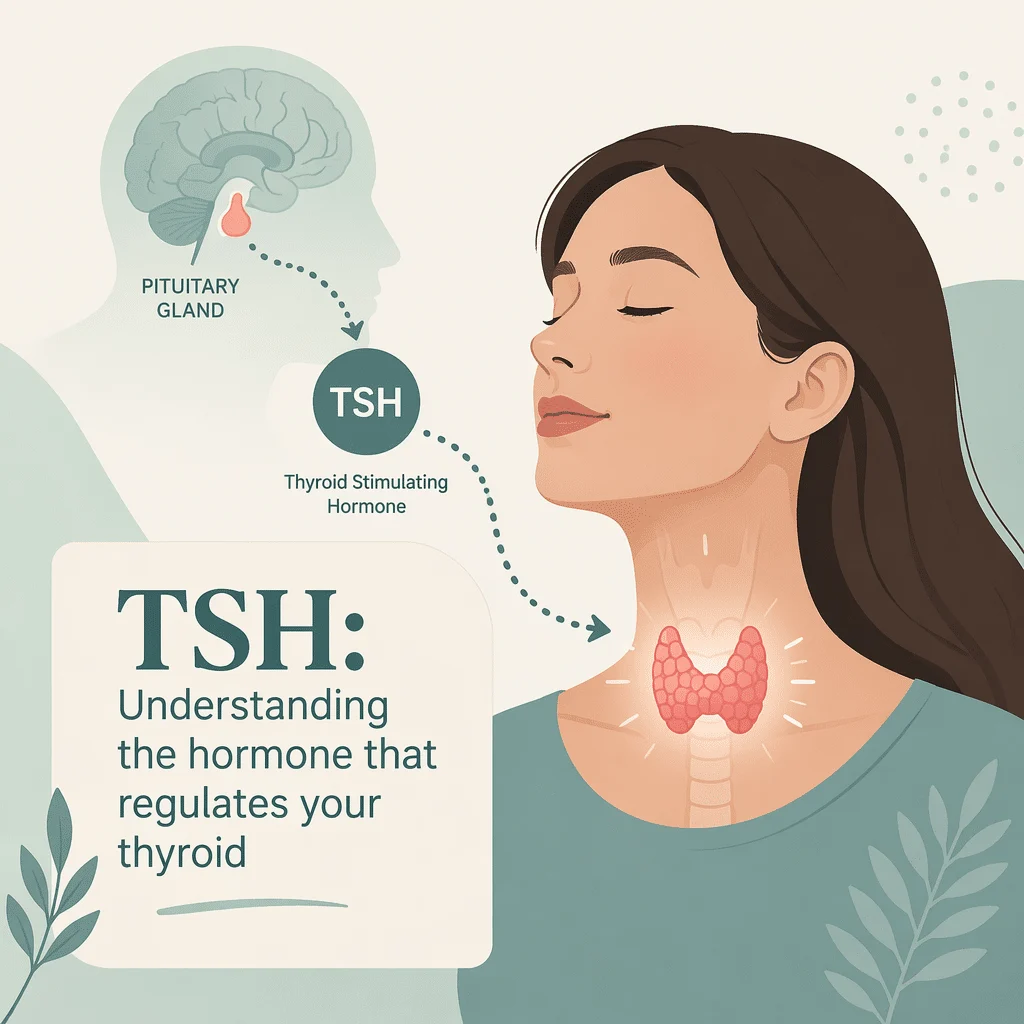
A TSH blood test measures the amount of thyroid-stimulating hormone circulating in your blood. Despite its name, TSH is not made by the thyroid itself. It is produced by the pituitary gland, a pea-sized gland at the base of the brain that acts as a control centre for many hormones.
TSH is the signal the pituitary sends to the thyroid, a butterfly-shaped gland in the neck, telling it how much thyroid hormone to release. Those thyroid hormones, mainly thyroxine (T4) and triiodothyronine (T3), influence nearly every organ, from your heart rate and body temperature to your weight, mood, and energy.
The pituitary-thyroid feedback loop
The system works like a thermostat that keeps your metabolism steady. When thyroid hormone levels in the blood dip, the pituitary releases more TSH to push the thyroid to work harder. When thyroid hormone levels climb, the pituitary eases off and TSH falls.
This constant back-and-forth is called the hypothalamic-pituitary-thyroid axis. Because TSH moves in the opposite direction to thyroid hormones, a high TSH usually points to an underactive thyroid, whilst a low TSH usually points to an overactive one. That inverse relationship is the key to reading your result.
Why a TSH blood test is usually the first check
Doctors often order a TSH blood test before any other thyroid measurement because it is the most sensitive early marker of thyroid trouble. The pituitary reacts to even small changes in thyroid hormone, so TSH can drift out of range before T4 and T3 do, and often before you notice clear symptoms.
A single TSH result can reassure you that your thyroid is balanced or flag an imbalance worth investigating. If the number is off, your doctor can then add more targeted tests to find the cause. To see how the main thyroid markers fit together, you can review our overview of normal thyroid level ranges.
How to read your TSH blood test results
A TSH result is usually written as a number followed by a reference range, for example: TSH 2.4 mIU/L (reference range 0.4 to 4.0 mIU/L). Here is how to make sense of it.
- The value is your measured TSH concentration.
- The unit mIU/L means milli-international units per litre, a standard laboratory unit.
- The reference range shows the values seen in most healthy adults. It can vary slightly between laboratories and testing methods.
Many lab reports flag an out-of-range value with an arrow, a letter, or red text, so that is the first thing to look for. A result near the middle of the range is generally reassuring. Where possible, compare your current TSH with previous results, because a clear trend over time often tells you more than a single snapshot. The American Thyroid Association describes TSH as an early-warning system that shifts before thyroid hormone levels do.
High TSH: what it may mean for your thyroid
A TSH above the reference range, generally over about 4.0 mIU/L, most often suggests primary hypothyroidism, meaning an underactive thyroid. The thyroid is not making enough hormone, so the pituitary raises TSH to try to stimulate it.
Common signs include tiredness, unexplained weight gain, feeling cold, dry skin, constipation, and slowed thinking, although many people have few or no symptoms at first. To confirm the picture, a doctor usually adds a free T4 blood test, which tends to be low in hypothyroidism, and may order the anti-TPO antibody test to look for Hashimoto’s disease, the most common autoimmune cause. For more detail, you can review the symptoms of high TSH.
Low TSH: what it may mean for your thyroid
A TSH below the reference range, generally under about 0.4 mIU/L, usually points towards hyperthyroidism, meaning an overactive thyroid that produces too much hormone. The pituitary responds by cutting back TSH.
Typical signs include a racing or pounding heartbeat, anxiety, weight loss despite a normal appetite, heat intolerance, tremor, and trouble sleeping. The workup often includes free T4 and free T3, which tend to be high, along with antibody tests such as those seen in Graves’ disease, and sometimes thyroid imaging. To understand what may be behind the result, you can read more about the causes of low TSH.
Subclinical thyroid patterns
Sometimes TSH is mildly out of range whilst thyroid hormones stay normal. These early patterns are called subclinical.
- Subclinical hypothyroidism: TSH is mildly high, but free T4 is still normal.
- Subclinical hyperthyroidism: TSH is mildly low, but free T4 and free T3 are still normal.
Subclinical results are not a diagnosis on their own. They are early signals that the thyroid may be starting to drift, and they usually call for a repeat test in a few weeks or months rather than immediate treatment. Whether they need action depends on how far TSH sits outside the range, your age, your symptoms, your thyroid antibodies, and any plans for pregnancy.
Reading TSH with free T4 and free T3
TSH is powerful on its own, but it becomes far more informative when paired with free T4 and, when needed, free T3. Free T4 and free T3 are the active thyroid hormones available to your tissues. Combining TSH with free T4 helps separate a thyroid problem from the rarer pituitary problem, and confirms whether an imbalance is mild or established. The grid below shows the patterns doctors look for.
| TSH | Free T4 / Free T3 | Common interpretation |
|---|---|---|
| High | Low free T4 | Primary hypothyroidism (underactive thyroid) |
| High | Normal free T4 | Subclinical hypothyroidism (early, mild underactivity) |
| Low | High free T4 or free T3 | Hyperthyroidism (overactive thyroid) |
| Low | Normal free T4 and free T3 | Subclinical hyperthyroidism (early, mild overactivity) |
| Normal | Normal free T4 | Thyroid usually working normally |
| Low or normal | Low free T4 | Less common pattern that may point to a pituitary cause |
Reading two or three markers together explains why your doctor may not act on a single borderline TSH. If you want to go deeper, you can explore our guide to the free T4 blood test and check the free T3 thyroid marker.
Factors that can change your TSH blood test
Several everyday factors can nudge TSH up or down without meaning thyroid disease.
- Time of day: TSH naturally peaks overnight and in the early morning, so sampling time can shift the number. Booking blood tests at a similar time helps comparisons.
- Medications: thyroid hormone tablets, corticosteroids, and some heart or psychiatric drugs such as amiodarone or lithium can raise or lower TSH.
- Supplements: high-dose biotin can interfere with the laboratory measurement, so many labs advise pausing it before testing.
- Recent illness: a serious short-term illness or hospital stay can temporarily distort thyroid readings.
- Pregnancy: normal TSH ranges shift lower, especially in the first trimester.
- Stress and sleep: chronic stress and poor sleep can disturb the hormonal axis.
If ongoing stress is a concern, you can also check the cortisol blood test. Nutrition matters too: the thyroid needs iodine to build hormones, and selenium helps convert T4 into active T3, so a balanced diet supports thyroid function, and the selenium blood test can help if a deficiency is suspected. Because low iron can share symptoms such as fatigue with an underactive thyroid, your doctor may also review the ferritin blood test. Untreated hypothyroidism can raise cholesterol, so a full lipid panel is sometimes checked alongside thyroid results.
Latest scientific advances in TSH testing
Research from 2023 to 2026 has refined how experts interpret and act on TSH results. Here are a few practical takeaways, with the technical terms explained as we go.
Normal ranges can depend on your age
What researchers found: a 2026 cohort study in BMC Endocrine Disorders measured TSH in healthy postmenopausal women and found that the upper limit of normal shifted with age and sat lower than some international figures, supporting a threshold around 4.5 mIU/L for diagnosing mild underactivity in this group. A cohort study follows a defined group of people over time to see what happens.
What this means for you: a single reference range does not fit everyone equally. Your age and life stage can change what counts as a normal TSH, which is one reason doctors interpret your result in context rather than by the number alone.
A mildly high TSH does not always need medication
What researchers found: a 2024 review in the Avicenna Journal of Medicine examined whether people with TSH between 4.5 and 10 mIU/L benefit from thyroid hormone treatment. It concluded that the decision is individual, with treatment more often considered in younger people, those with symptoms, and those planning pregnancy, while watchful monitoring suits many others.
What this means for you: a mildly raised TSH does not automatically mean you need medication. A repeat test and a look at your full picture usually come first.
Subclinical thyroid results and pregnancy
What researchers found: a 2024 systematic review and meta-analysis in the journal Thyroid pooled results from randomised controlled trials on levothyroxine, a synthetic thyroid hormone, in subclinical hypothyroidism around pregnancy. A meta-analysis combines several studies to reach a stronger overall answer. The benefit was clearest when TSH was above about 4.0 mIU/L rather than only mildly raised.
What this means for you: if you are pregnant or planning to conceive, thyroid targets are stricter, but treatment decisions still depend on how high TSH actually is, so personalised monitoring matters.
Lifestyle can support medical care
What researchers found: a 2023 review in Cureus compared thyroid hormone treatment with lifestyle steps in women with subclinical hypothyroidism. It reported that measures such as adequate sleep, sensible iodine and selenium intake, regular exercise, and not smoking are safe and can complement medical care.
What this means for you: while only a doctor can decide about medication, everyday habits can support your thyroid and your overall health at the same time.
When to see a doctor
A TSH result is a starting point, not a verdict. Consider speaking with a healthcare professional in the situations below.
| Situation | Why it is worth a conversation |
|---|---|
| Your TSH is outside the reference range | It may signal an under- or overactive thyroid that benefits from confirmation and follow-up. |
| You have ongoing symptoms with a normal TSH | Persistent fatigue, weight changes, or mood shifts still deserve review, as rarer causes exist. |
| You are pregnant or planning pregnancy | Thyroid balance affects both mother and baby, and the targets are different. |
| Your TSH is very high or very low | Marked changes may need prompt input from an endocrinologist. |
| You take medication that affects the thyroid | Dose or timing may need adjusting, so share your full medication list. |
Glossary
| Term | Definition |
|---|---|
| TSH | Thyroid-stimulating hormone, made by the pituitary gland to tell the thyroid how much hormone to produce. |
| Thyroid gland | A butterfly-shaped gland in the neck that produces hormones controlling metabolism. |
| Pituitary gland | A small gland at the base of the brain that regulates several hormone systems, including the thyroid. |
| Free T4 (thyroxine) | The main thyroid hormone in the blood; the free portion is available to act on the body. |
| Free T3 (triiodothyronine) | The more active thyroid hormone, mostly converted from T4 in the tissues. |
| Hypothyroidism | An underactive thyroid that makes too little hormone, often linked to a high TSH. |
| Hyperthyroidism | An overactive thyroid that makes too much hormone, often linked to a low TSH. |
| Subclinical | An early pattern where TSH is mildly abnormal but thyroid hormones remain normal. |
| Anti-TPO antibodies | Immune proteins that suggest autoimmune thyroid disease such as Hashimoto’s. |
| mIU/L | Milli-international units per litre, the standard unit used to report TSH. |
Frequently asked questions
What is a TSH blood test used for?
A TSH blood test is used to check how well your thyroid gland is working. Because the pituitary gland adjusts TSH in response to thyroid hormone, this single measurement can show whether your thyroid is underactive, overactive, or balanced. Doctors use it to screen for thyroid disorders, to investigate symptoms such as fatigue or weight changes, and to monitor people already being treated for a thyroid condition. It is usually the first thyroid test ordered, and any abnormal result is followed up with more specific tests such as free T4.
Do you need to fast for a TSH blood test?
You do not usually need to fast for a TSH blood test. It can be taken at any time of day, with or without food. That said, TSH is naturally higher in the morning and dips later in the day, so if you are monitoring your thyroid over time, taking the sample at a similar hour each time makes results easier to compare. If your blood draw is part of a wider panel that also includes glucose or cholesterol, your doctor may still ask you to fast for those other tests.
What is a normal TSH level by age?
For most adults, a normal TSH falls roughly between 0.4 and 4.0 mIU/L, though the exact range varies by laboratory. The upper limit tends to rise gradually with age, so a slightly higher TSH can be normal in older adults, whilst children and pregnant women often have lower ranges. Recent research also suggests reference limits should be tailored to age and population. For this reason, your result is best interpreted against your lab’s stated range and your personal circumstances rather than a single universal number.
Can medications or supplements affect a TSH blood test?
Yes. Several medications can raise or lower TSH, including thyroid hormone replacement, corticosteroids, lithium, and the heart drug amiodarone. Oestrogen in birth control pills or during pregnancy can also influence thyroid readings. Among supplements, high-dose biotin is a common culprit because it can interfere with the laboratory method and produce misleading results, which is why many labs suggest pausing it for a couple of days before testing. Always tell your doctor about every medicine and supplement you take so your TSH blood test can be interpreted correctly.
Can your TSH be normal and you still have a thyroid problem?
In the vast majority of cases, a normal TSH means your thyroid is working properly. However, it is not completely foolproof. Rarely, a problem in the pituitary gland can produce a normal or misleading TSH even when thyroid hormones are off, and some people have symptoms that require broader testing. This is why doctors sometimes add a free T4 test or repeat the check if symptoms persist. If you feel unwell despite a normal TSH blood test, it is reasonable to discuss further evaluation with your doctor.
How is a TSH blood test interpreted during pregnancy?
Pregnancy changes thyroid demand, and TSH reference ranges are lower than usual, particularly in the first trimester. Many guidelines aim for a TSH below about 2.5 mIU/L early in pregnancy, though exact targets vary. Maintaining thyroid balance is important because it supports both the mother’s health and the baby’s development. Women with a known thyroid condition often need closer monitoring and sometimes a dose adjustment. If you are pregnant or planning to conceive, ask your doctor how often your TSH blood test should be repeated.
Sources
- MedlinePlus, U.S. National Library of Medicine — TSH (Thyroid-Stimulating Hormone) Test — medlineplus.gov
- American Thyroid Association — Thyroid Function Tests — thyroid.org
- National Institute of Diabetes and Digestive and Kidney Diseases (NIH) — Hypothyroidism (Underactive Thyroid) — niddk.nih.gov
- Sankoda A, et al. — Effects of Levothyroxine Treatment on Fertility and Pregnancy Outcomes in Subclinical Hypothyroidism: A Systematic Review and Meta-Analysis of Randomised Controlled Trials — Thyroid, 2024 — doi.org/10.1089/thy.2023.0546
- Bushra H, Rashid M — Clearing the Scepticism about Subclinical Hypothyroidism: Is It Beneficial to Treat Patients with Thyroid-Stimulating Hormone Above 4.5 and Below 10 mIU/L? — Avicenna Journal of Medicine, 2024 — doi.org/10.1055/s-0044-1788040
- Matlock CL, et al. — Comparison Between Levothyroxine and Lifestyle Intervention on Subclinical Hypothyroidism in Women: A Review — Cureus, 2023 — doi.org/10.7759/cureus.38309
- Nguyen H, et al. — Age-specific TSH reference limits and early levothyroxine effects in postmenopausal women with subclinical hypothyroidism: a prospective cohort study — BMC Endocrine Disorders, 2026 — consensus.app
Further reading
- Learn how to interpret the free T4 blood test.
- Understand the free T3 thyroid marker.
- See our guide to normal thyroid level ranges.
- Explore the anti-TPO antibody test.
- Read our full guide to hypothyroidism.
Your thyroid rarely tells its whole story through one number. Reading your TSH blood test alongside related results such as free T4, free T3, and thyroid antibodies helps you see the fuller picture and prepare better questions for your appointment. AI DiagMe can turn these values into plain language you can act on. It is built to support understanding, and it does not diagnose or replace your doctor.
Understand your lab results with AI DiagMe
Get your results interpreted in minutes