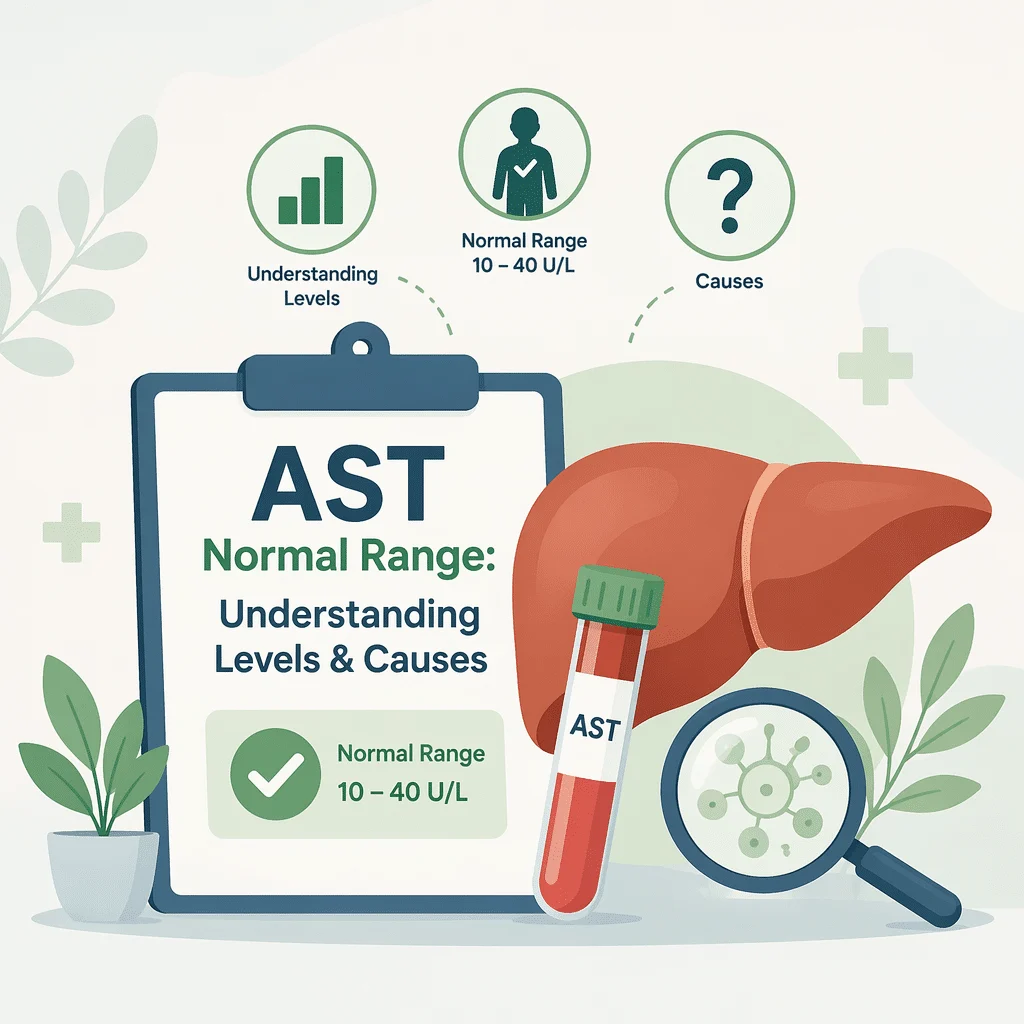
ارتفاع AST في فحص الدم هو أحد أكثر الأسباب شيوعًا التي تدفع الناس للبحث عن طمأنينة، وفي معظم الأحيان تنتهي القصة عند هذا الحد. النطاق الطبيعي لـ AST أضيق مما يتوقعه كثيرون، وقد تكون النتيجة التي تتجاوزه بقليل ناتجة عن شيء عادي كجلسة رياضة مكثفة قبل يومين. غير أنها قد تكون أحيانًا أول إشارة هادئة لمرض في الكبد، ولهذا فإن الارتفاع المستمر يستحق المتابعة الطبية المناسبة بدلًا من القلق. في هذا المقال ستتعرف على ما يقيسه AST فعلًا، ولماذا يختلف النطاق الطبيعي من مختبر لآخر، وما الذي يرفع هذه القيمة، وكيف يُقرأ AST و ALT معًا، وأي الأعراض تستوجب مراجعة الطبيب بسرعة.
ما هو AST ومن أين يأتي
AST اختصار لـ aspartate aminotransferase (ناقلة أمين الأسبارتات). قد تجد في التقارير القديمة أو لدى بعض الأطباء تسمية SGOT (serum glutamic-oxaloacetic transaminase)؛ وهو الإنزيم نفسه لكن باسمه القديم. وظيفته داخل الخلية هي نقل مجموعة أمينية بين الجزيئات، وهي خطوة اعتيادية في الطريقة التي يتعامل بها جسمك مع الأحماض الأمينية والطاقة.
نظرًا لأن AST يوجد داخل الخلايا، فإن كميةً ضئيلةً منه تنتقل إلى الدم طالما هذه الخلايا سليمة. وعندما تتضرر الخلايا أو تتعرض للإجهاد أو تتجدد بوتيرة أسرع من المعتاد، يتسرب AST إلى الدم ويرتفع مستواه. هذا هو المنطق الكامل للتحليل: فهو كاشف للتسرب، وليس مقياسًا لمدى كفاءة عمل الكبد.
ليس إنزيمًا خاصًا بالكبد فقط
يتوفر AST بكثرة في خلايا الكبد، ولهذا يظهر ضمن تحاليل وظائف الكبد. غير أنه موجود أيضًا في عضلة القلب، والعضلات الهيكلية، والكليتين، والدماغ، والبنكرياس، وكريات الدم الحمراء. وأيٌّ من هذه الأنسجة يمكن أن يُسهم في الرقم الذي يظهر في تقريرك.
هذه هي المعلومة الأهم التي ينبغي فهمها بشأن AST، وهي السبب في أنه لا يُفسَّر منفردًا أبدًا. إنزيم ALT (ناقلة أمين الألانين) أكثر تركيزًا في الكبد مقارنةً بأي نسيج آخر، لذا فهو الأكثر تخصصًا للكبد من بين الاثنين. حين يرى الطبيب ارتفاعًا في AST، يطرح فورًا سؤالًا ثانيًا: هل ALT مرتفع أيضًا، وبأي مقدار؟ يمكنك قراءة المزيد عن هذا الإنزيم الشريك في دليلنا حول مستويات ALT وما تعنيه.
لماذا يُقرأ AST وALT معًا
نادراً ما تحكي إنزيمٌ واحد قصةً كاملة؛ فالنمط هو الذي يكشف الحقيقة في الغالب. إذا ارتفع كلٌّ من AST وALT ارتفاعاً طفيفاً في آنٍ واحد، فالكبد هو المصدر المرجَّح عادةً، وتصبح المسألة: أيُّ عملية كبدية هي المسؤولة؟ أما إذا ارتفع AST بينما يبقى ALT ضمن المعدل الطبيعي، فينصبُّ الاهتمام على العضلات، أو على مشكلة في العينة ذاتها. وإذا كان ALT أعلى بوضوح من AST، فهذا النمط شائع في مرض الكبد الدهني وفي كثير من حالات التهاب الكبد المزمن.
ثم يوسّع الأطباء نطاق النظر. جي جي تي و الفوسفاتاز القلوي تشير إلى القنوات الصفراوية لا إلى خلايا الكبد نفسها. البيليروبين (Bilirubin)، والألبومين واختبارات التخثر تُخبرنا عن الوظيفة لا عن الضرر. وإذا كانت العضلات مشتبهاً بها، كرياتين فوسفوكيناز (CPK) و LDH تحسم السؤال بسرعة. أما انخفاض AST فهو موضوع مختلف له تفسيراته الخاصة، نتناوله بالتفصيل في مقالتنا حول ما يعنيه انخفاض AST.
المعدل الطبيعي لـ AST، ولماذا تتباين نتائج المختبرات
تُفيد معظم مختبرات البالغين في الولايات المتحدة بأن النطاق المرجعي لـ AST يتراوح عمومًا بين 10 و40 وحدة لكل لتر (U/L)، وكثيرًا ما يكون الحد الأعلى للرجال أعلى قليلًا منه للنساء. وتُشير بعض المختبرات إلى حد أعلى يبلغ 48 U/L، فيما تقف أخرى عند 33. ولا يُعدّ أيٌّ منها خاطئًا.
النطاقات المرجعية ليست حقائق بيولوجية مطلقة. فكل مختبر يُنشئ نطاقه الخاص أو يعتمد نطاقاً محدداً وفقاً للجهاز والكواشف التي يستخدمها، وتُنتج طرق الفحص المختلفة أرقاماً مختلفة فعلاً من العينة ذاتها. فمختبران يقيسان الدم نفسه قد يُسجّلان قيماً تتفاوت بعدة وحدات، لذا فإن مقارنة نتيجتك بنطاق مطبوع من عيادة أخرى طريقة مضمونة لإثارة قلقك دون مبرر. احرص دائماً على قراءة نتيجتك في مقابل النطاق المدوّن بجانبها في تقريرك الخاص.
الجنس والعمر والتحفظ الصريح بشأن الحدود العليا
تميل قيم الرجال إلى أن تكون أعلى قليلاً من قيم النساء، ويعود ذلك جزئياً إلى كتلة العضلات الأكبر. أما حديثو الولادة والرضّع فتكون قيمهم أعلى بكثير من قيم البالغين، وتستخدم مختبرات طب الأطفال نطاقاتها الخاصة. فضلاً عن ذلك، يشعر أطباء أمراض الكبد منذ سنوات بعدم الارتياح تجاه الحدود العليا المتعارف عليها. فكثير من النطاقات المستخدمة في الفحوصات الروتينية استُقّت منذ عقود من متبرعين بالدم كان يُفترض أنهم بصحة جيدة، غير أنهم وفق المعايير الحديثة كانوا يشملون أشخاصاً مصابين بتليّن الكبد الدهني غير المشخَّص. وتستمر الدراسات التي تُجرى على مجموعات مُنتقاة بعناية من الأصحاء استقلابياً في إنتاج حدود عليا أدنى مما هو مطبوع على نتائج المختبرات.
النتيجة العملية لذلك ليست أن تُصاب بالذعر من نتيجة تقع ضمن النطاق الطبيعي، بل إن القيمة التي تتكرر عند الحد الأعلى من النطاق تستحق الإشارة إلى طبيبك بدلاً من تصنيفها ببساطة على أنها “طبيعية”. للاطلاع على صورة أشمل حول كيفية تكامل اللوحة الكاملة للفحوصات، راجع نظرتنا العامة على اختبارات وظائف الكبد.
الأسباب الشائعة لارتفاع AST
القائمة أدناه طويلة، وهذا بالضبط ما يُثبت النقطة: فارتفاع AST يُضيّق نطاق الاحتمالات بدرجة أقل بكثير مما يظن الناس.
الكحول
يُعدُّ الكحول من أكثر الأسباب شيوعاً لارتفاع AST المستمر، ولا يستلزم ذلك شُرباً يومياً أو مفرطاً حتى يظهر في تحليل الدم. نذكر هذا كحقيقة لا كتوبيخ، ولسببٍ عملي: صراحتك مع طبيبك بشأن كمية ما تشربه فعلاً تُغيِّر مسار الفحوصات، إذ تحدد الاختبارات التالية وطريقة تفسير نمط الإنزيمات. الأطباء لا يحكمون عليك؛ بل يسعون إلى تجنُّب إجراء الفحوصات الخاطئة.
مرض الكبد الدهني المرتبط بالخلل الأيضي (MASLD)
تراكم الدهون في الكبد هو الآن أكثر أمراض الكبد المزمنة شيوعاً على مستوى العالم. تغيّر اسم هذا المرض مؤخراً: فما كان يُعرف بمرض الكبد الدهني غير الكحولي (NAFLD) أصبح يُسمى الآن مرض الكبد الدهني المرتبط بالخلل الاستقلابي (MASLD)، والشكل الالتهابي الذي كان يُعرف بـ NASH أصبح يُسمى الآن MASH. جاء تغيير الاسم مقصوداً، إذ استُبدل تعريف قائم على ما ليس عليه المرض بتعريف يستند إلى السمات الاستقلابية المصاحبة له فعلاً. إذا استخدم تقريرك أو طبيبك أياً من هذين المصطلحين، فهما يصفان الحالة ذاتها.
التهاب الكبد الفيروسي وأمراض الكبد الأخرى
مزمن التهاب الكبد ب و التهاب الكبد الوبائي سي كثيرًا ما ترفع مستوى الإنزيمات الناقلة للأمين، وقد لا تُسبّب أي أعراض على الإطلاق لسنوات، وهذا هو السبب في أن الفحص المبكر لها يُعدّ خطوةً معيارية أساسية. تشمل الأسباب المحتملة أيضًا: التهاب الكبد المناعي الذاتي، ومرض الاضطرابات الهضمية (السيلياك)، وأمراض الغدة الدرقية، والحالات الوراثية كداء ترسّب الأصبغة الدموية (فرط تراكم الحديد)، ومرض ويلسون، وعوز ألفا-1 أنتيتريبسين. كما يمكن لحصوات المرارة، والتهاب البنكرياس، وقصور القلب، وانخفاض ضغط الدم لفترة وجيزة أدّت إلى نقص الأكسجين عن الكبد، أن يرفع كلٌّ منها مستوى إنزيم AST أيضًا.
انحلال الدم في العيّنة
تحتوي كريات الدم الحمراء على إنزيم AST، فإذا تفتّتت أثناء سحب الدم أو بعده، انسكب الإنزيم في المصل وأظهر الجهاز نتيجةً مرتفعة لا علاقة لها بحالتك الصحية الفعلية. تُشير المختبرات عادةً إلى العيّنات المنحلّة، لكن ليس دائمًا. إذا جاءت نتيجة AST مرتفعة فجأةً دون أي تشوّه آخر في الفحوصات، فإن إعادة سحب الدم تكون في الغالب أول استجابة وأكثرها منطقية.
العضلات والتمرين الرياضي: أكثر أسباب الإنذار الكاذب شيوعًا
تحتوي العضلات الهيكلية على كميات وفيرة من إنزيم AST، وتتعرّض العضلات للتلف بسهولة في الحياة اليومية العادية.
جلسة تمارين رفع أثقال مكثفة، أو ماراثون أول، أو رحلة مشي غير معتادة، أو سباق دراجات طويل، أو مجرد العودة إلى الصالة الرياضية بعد انقطاع — كل ذلك قد يرفع مستوى AST لعدة أيام. وينطبق الأمر ذاته على السقوط، أو إصابة الضغط، أو النوبة التشنجية، أو الجراحة، أو الحقن العضلي بما فيه التطعيم في الذراع. كما تُبقي أمراض العضلات المزمنة كالحثل العضلي على ارتفاع AST بصورة مستمرة دون أي تورط للكبد.
انحلال الربيدات (Rhabdomyolysis)، وهو تفتّت العضلات على نطاق أوسع، يقع في الطرف الشديد من هذا الطيف، ويصاحبه عادةً ألم عضلي وضعف وبول داكن يشبه لون الشاي. هذه المجموعة من الأعراض تستدعي تقييمًا عاجلًا لا الانتظار والمراقبة.
إذا كنت قد مارست تمرينًا رياضيًا مكثفًا في الأيام القليلة التي سبقت فحص الدم، فأخبر طبيبك بذلك. إعادة الفحص بعد أسبوع هادئ فعلًا، مع قياس إنزيم CPK في الوقت ذاته، تُحسم السؤال في الغالب دون الحاجة إلى أي فحوصات إضافية.
الأدوية والمكمّلات الغذائية، وقاعدة مهمة ينبغي معرفتها
كثير من الأدوية قادر على رفع مستوى الإنزيمات الناقلة للأمين. يُعدّ الباراسيتامول (أسيتامينوفين) المثال الكلاسيكي على ذلك؛ إذ يكون خطيرًا عند الجرعات الزائدة، لكنه قد يرفع مستوى الإنزيمات قليلًا عند بعض الأشخاص حتى عند الجرعات القصوى الموصى بها. كما ترفع الستاتينات مستوى AST أو ALT بشكل طفيف لدى نسبة من مستخدميها. يضاف إلى القائمة: الميثوتريكسات، وبعض المضادات الحيوية، ومضادات الفطريات، ومضادات الصرع، والأيزونيازيد، والأميودارون، وعدد من علاجات السرطان.
المكملات الغذائية تنتمي إلى تلك القائمة ذاتها، وليست في فئة منفصلة أو أكثر أماناً. فمستخلص الشاي الأخضر بتركيزات عالية والمنشطات الأندروجينية الابتنائية كلاهما من الأسباب الموثقة جيداً لتلف الكبد. كما ثبت تورط الكراتوم، وغارسينيا كامبوجيا، ومستحضرات الكركم عالية الجرعة، والأشواغاندا، والمنتجات المركبة المخصصة لبناء الجسم أو إنقاص الوزن في إحداث هذا الضرر. أما المنتجات التي تُسوَّق باسم “إزالة سموم الكبد” أو “تنظيف الكبد” فتستحق قدراً خاصاً من الشك: إذ لا يوجد دليل على أنها تخفض مستوى AST، بل إن بعض مكوناتها هي بالضبط تلك المرتبطة بتلف الكبد.
إليك القاعدة الأهم، وهي غير قابلة للتفاوض: لا تتوقف عن تناول أي دواء موصوف، ولا تخفض جرعته أو تغيره بناءً على نتيجة تحليل دم. يشمل ذلك الستاتينات، التي يتوقف عنها الناس من تلقاء أنفسهم أكثر من أي دواء آخر حين يرون ارتفاعاً في إنزيمات الكبد. تحديد ما إذا كان الدواء هو السبب، وما إذا كان ينبغي إيقافه مؤقتاً، وما إذا كانت الجرعة تحتاج إلى تعديل، وما إذا كان إعادة التحليل كافياً — كل هذه قرارات تعود إلى الطبيب المعالج الذي يعرف تاريخك الطبي كاملاً. أحضر له النتيجة مع قائمة شاملة بكل ما تتناوله، بما في ذلك المكملات التي اشتريتها دون وصفة طبية.
قراءة النمط: النسبة وحجم الارتفاع
نسبة AST:ALT وقراءتها بموضوعية
حين تقسم AST على ALT تحصل على نسبة يستخدمها الأطباء منذ عقود. فالنسبة التي تتجاوز 2 ارتبطت تاريخياً بأمراض الكبد المرتبطة بالكحول، كما تميل هذه النسبة المرتفعة إلى الظهور مع تقدم التليف الكبدي، لأن ALT تنخفض بشكل أسرع من AST في الكبد المتليف.
كلا الارتباطين حقيقيان، لكن لا أيٌّ منهما دليل قاطع. فكثير من المصابين بأمراض الكبد المرتبطة بالكحول تكون نسبتهم أقل من 2، وكثير ممن تتجاوز نسبتهم 2 لا يعانون من شيء من هذا القبيل. كذلك تكاد هذه النسبة تفقد معناها حين يكون كلا الإنزيمين ضمن النطاق الطبيعي، إذ تؤدي التقلبات الطفيفة إلى تأرجح حسابي كبير، ويسهل تشويهها إذا كان مصدر عضلي قد رفع AST وحده. تعامل معها باعتبارها إشارة واحدة ضمن إشارات عدة لا حكماً نهائياً؛ ودليلنا حول نسبة AST:ALT وتفسيرها يتناول هذا الموضوع بمزيد من التفصيل.
ما يوحي به حجم الارتفاع
تحمل القيمة العددية معلومات مهمة، وإن كانت وحدها لا تكفي لتشخيص أي حالة. الارتفاعات الطفيفة، التي تبلغ نحو ضعفين أو ثلاثة أضعاف الحد الأعلى للمعدل الطبيعي، شائعة جداً وقد تعود إلى أسباب حميدة كثيرة. أما الارتفاعات الكبيرة جداً، التي تصل إلى المئات أو الآلاف من الوحدات، فتشير إلى قائمة أقصر بكثير من الأسباب: التهاب الكبد الفيروسي الحاد، أو التعرض لدواء أو سُمّ بجرعة كبيرة، أو انقطاع مفاجئ لإمداد الدم عن الكبد، أو تحلّل واسع في أنسجة العضلات. الجدول أدناه وسيلة لتوجيه نفسك قبل الحديث مع طبيبك، وليس نظاماً لتقييم نتيجتك بنفسك.
| نمط | ما الذي يشير إليه عادةً | الخطوة التالية المعتادة |
|---|---|---|
| ارتفاع طفيف في AST بعد تمرين مجهد مع AST طبيعي | مصدر عضلي لا كبدي | إعادة الفحص بعد أسبوع من الراحة، وغالباً مع فحص CPK |
| ارتفاع طفيف في كلٍّ من AST وALT | عملية كبدية كـ MASLD، أو الكحول، أو دواء معين، أو التهاب الكبد الفيروسي | مراجعة الأدوية والكحول، وفحوصات التهاب الكبد، وتحاليل الدم الاستقلابية، وعادةً الموجات فوق الصوتية |
| نسبة AST:ALT تتجاوز 2 | نمط يُشاهَد في مرض الكبد الكحولي وفي التليُّف المتقدم، لكنه ليس تشخيصاً قاطعاً | تقييم شامل، وتقدير درجة التليف، ونقاش صريح بشأن الكحول |
| ارتفاع ملحوظ في AST يصل إلى المئات أو أكثر | التهاب كبد حاد، أو ضرر ناجم عن دواء أو سُمٍّ، أو نقص تدفق الدم إلى الكبد، أو تحلُّل عضلي واسع | مراجعة طبية عاجلة، عادةً في نفس اليوم |
| ارتفاع AST مع اليرقان أو البول الداكن | إصابة كبدية نشطة أو انسداد في القناة الصفراوية | تقييم طبي عاجل |
علامات التحذير ومتى تزور الطبيب
معظم نتائج AST المرتفعة تُتابَع بهدوء، بإعادة الفحص بعد بضعة أسابيع. وبعضها لا يحتمل الانتظار، ومن المفيد أن تعرف الفرق.
اطلب تقييماً طبياً عاجلاً إذا كنت تعاني من أيٍّ مما يلي:
- اصفرار الجلد أو بياض العينين (اليرقان)
- بول داكن اللون مع براز شاحب
- انتفاخ في البطن
- تشوش في التفكير، أو نعاس غير معتاد، أو صعوبة في البقاء مستيقظاً
- التقيؤ بالدم، أو البراز الأسود القطراني
- ألم شديد في الجانب الأيمن العلوي من البطن
يستدعي الارتفاع الشديد في AST مراجعةً طبية سريعة، حتى لو كنت تشعر بحالٍ جيدة.
احجز موعداً اعتيادياً إذا ظل AST مرتفعاً عن المعدل الطبيعي عند إعادة الفحص، أو إذا كان يرتفع تدريجياً في الفحوصات المتتالية، أو إذا كنت تعاني من تعب غير مبرر، أو فقدان في الوزن، أو حكة، أو إزعاج في البطن. قد يكون مرض الكبد الخطير صامتاً لفترة طويلة، والهدف من متابعة الارتفاع المستمر هو اكتشاف الحالات التي تستدعي التدخل مبكراً، قبل أن يفوت الأوان.
أحدث التطورات العلمية في فحص AST
قد تكون الحدود العليا المعتمدة في المختبرات أعلى مما يبرره الكبد السليم
أعادت دراسة نُشرت عام 2024 في مجلة Clinical Gastroenterology and Hepatology تحديدَ الحد الأعلى للمرجع الطبيعي لـ ALT — الإنزيم الشريك لـ AST — لدى عدة آلاف من المتبرعين المحتملين بالكبد الحي، ممن لا تظهر لديهم دهون في نسيج الكبد ولا اضطرابات أيضية. وكانت القيمة التي خلصت إليها الدراسة أدنى بشكل ملحوظ من القيم التقليدية المعتمدة، وأدنى بوضوح لدى النساء مقارنةً بالرجال. ما يعنيه ذلك بالنسبة لك: نتيجة تقع قرب الحد الأعلى للمدى المطبوع في تقرير مختبرك لا تعني بالضرورة أنك بخير، ومن المنطقي أن تسأل طبيبك عما إذا كان الاتجاه العام للنتائج عبر الزمن أهم من رقم واحد معزول.
مرض الكبد الدهني له اسم جديد ومعايير جديدة
نشر توافق دلفي متعدد الجمعيات في مجلة Journal of Hepatology عام 2023 استبدل فيه مصطلح مرض الكبد الدهني غير الكحولي (NAFLD) بمصطلح مرض الكبد الدهني المرتبط بالخلل الأيضي (MASLD)، تحت المصطلح الشامل "مرض الكبد الدهني". كما أُنشئت فئة جديدة تُسمى MetALD لمن يعانون من عوامل خطر أيضية ويتناولون الكحول بما يتجاوز الحد المحدد لـ MASLD. ما يعنيه هذا بالنسبة لك: قد يستخدم تقريرك المصطلح القديم أو الجديد، وتغيير التسمية لا يعني أن حالتك قد تغيرت.
أصبح AST أحد المكونات المستخدمة في مؤشرات تقدير التليف
حددت مراجعة نُشرت في مجلة JAMA عام 2026 حول MASLD لدى البالغين كيفية تصنيف تليف الكبد في الممارسة الفعلية: مؤشر FIB-4 الذي يجمع بين العمر ومستوى AST وALT وعدد الصفائح الدموية، إلى جانب قياس مرونة الكبد بالموجات الاهتزازية العابرة (VCTE)، وهو جهاز يقيس صلابة الكبد. ما يعنيه هذا بالنسبة لك: بات مستوى AST يُقرأ بشكل متزايد كعنصر واحد ضمن تقدير مخاطر محسوب، لا كحكم مستقل بذاته.
تهدف المؤشرات الأحدث إلى الكشف المبكر عن خطر التليف في مرحلة الرعاية الأولية
قدّمت دراسة تحقق نُشرت في مجلة Gastroenterology عام 2024 مؤشر MAF-5، الذي يجمع بين محيط الخصر ومؤشر كتلة الجسم وحالة السكري ومستوى AST وعدد الصفائح الدموية، واختبرته على مجموعات سكانية وإكلينيكية في عدة دول. وقد أثبت فاعلية جيدة في تحديد الأشخاص الذين يستدعون تقييمًا أعمق للكبد، بما في ذلك الفئات العمرية التي تُخفق فيها المؤشرات الأقدم. ما يعنيه هذا بالنسبة لك: يُسهم مستوى AST بمعلومات مفيدة، لكن لا يوجد إنزيم واحد يحسم الأمر بمفرده.
المكملات الغذائية سبب متزايد لتلف الكبد الناجم عن الأدوية
أفادت مراجعة نُشرت في مجلة Liver International عام 2024 بأن الأعشاب والمكملات الغذائية باتت تمثل نسبة كبيرة ومتزايدة من حالات تلف الكبد الناجم عن الأدوية المسجلة في الشبكة الأمريكية المعنية برصدها، وأشارت إلى المنشطات الابتنائية ومستخلص الشاي الأخضر وغارسينيا كامبوجيا والكراتوم والأشواغاندا والكركم والمكملات الغذائية متعددة المكونات بوصفها من أبرز المسببات. ما يعنيه هذا بالنسبة لك: أذكر كل ما تتناوله، بما في ذلك المنتجات المتاحة دون وصفة طبية، عند التحقيق في ارتفاع مستوى AST.
مسرد المصطلحات الرئيسية
| شرط | تعريف |
|---|---|
| AST (ناقلة أمين الأسبارتات) | إنزيم يوجد في الكبد والقلب والعضلات الهيكلية والكلى وخلايا الدم الحمراء، يتسرب إلى الدم عند تلف تلك الخلايا. |
| SGOT | ناقلة أمين الغلوتاميك والأوكسالوأسيتيك في المصل، وهو الاسم القديم لنفس الإنزيم المعروف بـ AST تماماً. |
| ALT (ألانين أمينوترانسفيراز) | الإنزيم المرافق، الأكثر تركيزاً في الكبد مقارنةً بسائر أعضاء الجسم، مما يجعله الأكثر تخصصاً للكبد من بين الاثنين. |
| U/L | وحدة في اللتر، وهي مقياس نشاط الإنزيم المستخدم في معظم تقارير المختبرات. |
| النطاق المرجعي | نطاق القيم الذي يعتبره مختبر معين طبيعياً لجهازه وطريقته الخاصة، ويُطبع بجانب نتيجتك. |
| الحد الأعلى للمعدل الطبيعي | أعلى قيمة في هذا النطاق؛ وكثيراً ما تُوصف النتائج بوصفها مضاعفات لهذه القيمة بدلاً من الأرقام الخام. |
| نسبة AST إلى ALT | قيمة AST مقسومةً على ALT، تُستخدم كمؤشر نمطي للاسترشاد به لا كاختبار تشخيصي قاطع. |
| MASLD | مرض الكبد الدهني المرتبط بالخلل الأيضي، وهو الاسم الحالي لما كان يُعرف سابقاً بـ NAFLD. |
| انحلال الدم | تكسّر كريات الدم الحمراء داخل أنبوب العينة، مما يُطلق إنزيم AST ويؤدي إلى ارتفاع كاذب في نتيجته. |
| انحلال الربيدات | تحلّل واسع النطاق لعضلات الهيكل العظمي، يُطلق AST وCPK وغيرها من محتويات الخلايا في الدم. |
الأسئلة الشائعة
هل يمكن للتمرين الرياضي أن يرفع مستوى AST؟
نعم، وهو أحد أكثر الأسباب الشائعة والبسيطة التي تفسر ارتفاعاً طفيفاً في النتيجة. تحتوي العضلات الهيكلية على كميات وفيرة من إنزيم AST، لذا فإن جلسة رفع أثقال مكثفة، أو جري لمسافة طويلة، أو نزهة غير معتادة، أو العودة إلى التدريب بعد انقطاع، قد ترفع الرقم لعدة أيام. يبلغ الارتفاع ذروته عادةً بعد يوم أو يومين من المجهود، ثم يعود إلى طبيعته في غضون أسبوع تقريباً. إذا ظل ALT طبيعياً في حين ارتفع AST، فإن مصدراً عضلياً يكون مرجحاً بشكل خاص. أخبر الطبيب الذي طلب الفحص بما قمت به قبله، وتوقع إعادة أخذ العينة بعد أسبوع هادئ فعلاً بدلاً من إجراء تصوير.
هل يجب أن أتوقف عن تناول الستاتين لأن مستوى AST لديّ مرتفع؟
لا. لا تتوقف عن تناول الستاتين أو أي دواء موصوف آخر أو تُعدّل جرعته بناءً على نتيجة تحليل دم. يرفع الستاتين إنزيمات الكبد ارتفاعاً طفيفاً لدى عدد محدود من الأشخاص، وفي معظم هذه الحالات يُستمر في تناول الدواء لأن الفائدة القلبية الوعائية تفوق هذا التغيّر البسيط في الإنزيمات. وأحياناً يتبيّن أن الستاتين ليس له أي علاقة بالأمر. طبيبك هو الشخص القادر على الموازنة بين نتيجتك الخاصة ومخاطرك الفردية، وتحديد ما إذا كان يجب إعادة التحليل أو تعديل الجرعة أو إبقاء الأمور كما هي. أحضر له النتيجة ودعه يتخذ القرار المناسب.
ما هو المستوى الخطير لارتفاع AST؟
لا توجد قيمة حدّية واحدة تفصل بين الآمن والخطير، وتطبيق ذلك على نفسك لن يفيدك. ما يقيّمه الأطباء فعلياً هو مجموعة من العوامل: مدى ارتفاع القيمة مقارنةً بالحد الأعلى لمختبرك، وسرعة تغيّرها، وما يصاحبها من نتائج ALT والبيليروبين واختبارات التخثر، وقبل كل شيء كيف تشعر. الارتفاع الشديد جداً المصحوب باليرقان أو الارتباك أو التقيؤ بالدم أو ألم شديد في البطن يُعدّ حالة طارئة بصرف النظر عن الرقم الدقيق. أما الارتفاع الشديد جداً لدى شخص يشعر بصحة جيدة تماماً، فلا يزال يستدعي مراجعة سريعة، لكن عادةً على شكل موعد عاجل لا سيارة إسعاف.
هل يمكن للجفاف أن يسبب ارتفاع مستوى AST؟
الجفاف وحده ليس سببًا معترفًا به لارتفاع ملحوظ في AST. قد يُركّز الدم قليلًا ويرفع بعض النتائج بشكل طفيف، لكنه لا يُنتج النوع من الارتفاع الذي يستدعي التحقيق. ما يُوهم أحيانًا بوجود علاقة بينهما هو أن الحالات المسببة للجفاف، كالتمرين الشديد في الحر، أو المرض المصحوب بالقيء، أو الإفراط في تناول الكحول، هي نفسها مرتبطة بارتفاع الإنزيمات. إذا كنت مريضًا وارتفع مستوى AST لديك، فالمرض هو التفسير الأرجح لا اختلال توازن السوائل.
هل يمكن أن تعود مستويات AST وALT المرتفعة إلى طبيعتها؟
في الغالب، نعم. عندما يكون السبب قابلًا للإزالة أو العلاج، تعود الإنزيمات عادةً إلى مستوياتها الطبيعية. الارتفاعات الناجمة عن التمرين تتراجع في غضون أيام. أما تلك الناجمة عن دواء أو مكمل غذائي، فتنخفض عادةً بعد تحديد المنتج المسبب وإيقافه بإشراف طبي. الإنزيمات المرتبطة بالكحول أو بتراكم الدهون في الكبد كثيرًا ما تتحسن خلال أسابيع إلى أشهر عند معالجة السبب الجذري. بعض الأسباب، كالتهاب الكبد الفيروسي المزمن أو التليف المستقر، تحتاج إلى علاج محدد لا مجرد انتظار. ولهذا السبب بالذات، تحديد السبب أهم من مجرد متابعة الرقم.
ماذا يعني ارتفاع AST أثناء الحمل؟
الحمل لا يرفع AST في الأحوال الطبيعية، لذا تُحقَّق في أي قيمة تتجاوز النطاق الطبيعي بدلًا من إسنادها إلى الحمل ذاته. معظم الأسباب المعتادة لا تزال واردة. بعض الحالات الخاصة بالحمل، منها تسمم الحمل والمتلازمات المرتبطة به، وركود الصفراء داخل الكبد أثناء الحمل، وحالات الغثيان الشديد في الحمل، يمكن أن ترفع إنزيمات الكبد وتُبحث بنشاط. إذا كنتِ حاملًا وارتفع مستوى AST لديكِ، تواصلي مع فريق رعاية الأمومة فورًا، لا سيما إذا كنتِ تعانين أيضًا من صداع، أو ألم في الجزء العلوي من البطن، أو حكة، أو تغيرات في الرؤية، أو تورم.
مصادر
- MedlinePlus (المكتبة الوطنية للطب الأمريكية) — اختبار AST
- المعهد الوطني للسكري وأمراض الجهاز الهضمي والكلى (NIDDK) — تعريف وحقائق حول NAFLD وNASH
- LiverTox: معلومات سريرية وبحثية حول إصابة الكبد الناجمة عن الأدوية (NIDDK، NCBI Bookshelf)
- مراكز السيطرة على الأمراض والوقاية منها (CDC) — التهاب الكبد الفيروسي
- Choi J, Jo C, Kim S, et al. Updated Reference Intervals for Alanine Aminotransferase in a Metabolically and Histologically Normal Population. Clinical Gastroenterology and Hepatology, 2024.
- Rinella ME, Lazarus JV, Ratziu V, et al. A multisociety Delphi consensus statement on new fatty liver disease nomenclature. Journal of Hepatology, 2023.
- Tilg H, Petta S, Stefan N, Targher G. Metabolic Dysfunction-Associated Steatotic Liver Disease in Adults: A Review. JAMA, 2026.
- van Kleef LA, Francque SM, Prieto-Ortiz JE, et al. Metabolic Dysfunction-Associated Fibrosis 5 (MAF-5) Score Predicts Liver Fibrosis Risk and Outcome in the General Population With Metabolic Dysfunction. Gastroenterology, 2024.
- Halegoua-DeMarzio D, Navarro V. Challenges in herbal-induced liver injury identification and prevention. Liver International, 2024.
للمزيد من القراءة
- فحص AST (SGOT): فهم نتائج إنزيمات الكبد
- فحص الألبومين في الدم: فهم معنى مستوياته
- شرح تشبع الحديد: مستوياته وأسبابه
- ارتفاع مستوى الفيريتين: الأسباب والأعراض والمخاطر
- كريات الدم الحمراء (RBCs): دليلك لفهم مؤشرات صحتك الأساسية
افهم نتائج مختبرك باستخدام AI DiagMe
نادرًا ما تأتي نتائج فحوصات الكبد كرقم واحد مستقل. تُقرأ مستويات AST وALT وGGT والبيليروبين معًا كنمط متكامل، وهو نمط يصعب فهمه من ورقة النتائج وحدها. يحوّل AI DiagMe هذه القيم إلى لغة واضحة ومبسطة، ويقترح الأسئلة الجديرة بطرحها في موعدك القادم مع الطبيب. يساعدك على فهم نتائجك؛ لكنه لا يشخّص أي حالة ولا يُغني عن طبيبك.
احصل على تفسير نتائجك في دقائق