


A cortisol blood test measures the stress hormone that reflects how your HPA‑axis responds to daily challenges. It is one piece of the picture that also includes DHEA‑S and rhythm patterns. This helps differentiate normal stress adaptation from concerning dysregulation and guides targeted lifestyle and tracking strategies you can discuss with your clinician.
What Is a Cortisol Blood Test and Why You Might Be Asking
When you feel constantly tired or overwhelmed, a cortisol blood test may come up in search results. It measures the level of cortisol, a hormone your adrenal glands make, primarily to help respond to stress and regulate metabolism.
This test is different from checking thyroid hormones or blood glucose and must be interpreted in context because cortisol changes a lot during the day.
What People Also Ask
- “How accurate is a cortisol blood test for stress?”
- “What does low or high cortisol mean?”
- “Can I tell if I have adrenal fatigue from blood work?”
- “Do I need a cortisol rhythm test?”
These questions reflect common concerns about stress resilience and burnout.
Why Cortisol Matters in Burnout and Stress Resilience
Your stress response system (the HPA axis) links your brain and adrenal glands. Stress starts in your nervous system, signals through your brain, and ends up regulating hormones like cortisol.
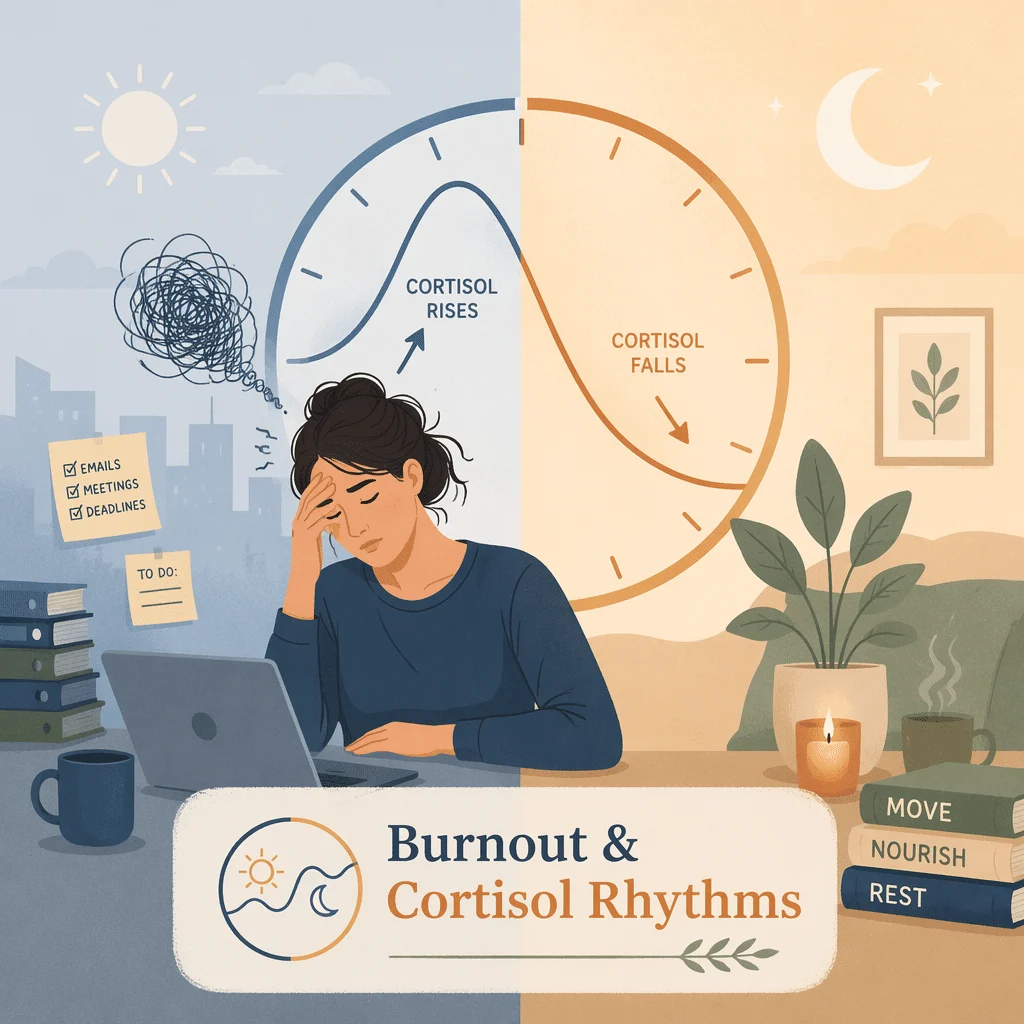
In a healthy rhythm, cortisol typically:
- Peaks in the morning shortly after waking
- Gradually falls throughout the day
- Is low at night to support restful sleep
But chronic stress can flatten or distort this rhythm, contributing to:
- Persistent fatigue
- Sleep disturbance
- Mood swings or anxiety
- Poor stress tolerance and recovery
This isn’t labeled “fatigue” by modern endocrinology but is better described as HPA‑axis dysfunction. Many patients search for “adrenal fatigue” when what they really want to understand is how stress is affecting their hormonal balance.
Blood Cortisol vs DHEA‑S and What They Tell You
Cortisol and DHEA‑S are both adrenal hormones that can be measured in blood. Together they reflect different aspects of stress biology:
| Marker | What It Reflects | Typical Interpretation |
| Cortisol (blood) | Stress hormone with daily rhythm | High or low values may suggest HPA signaling issues if symptoms present |
| DHEA‑S | A hormone linked to resilience and buffer to stress | Low levels may indicate reduced resilience reserve |
| Cortisol:DHEA‑S ratio | Balance between stress response and resilience | A shifted ratio may correlate with chronic stress effects |
Why ratios matter: Higher cortisol relative to DHEA‑S has been linked with cognitive and immune shifts in chronic stress.
Chronic stress does more than just drain your energy. It actively reshapes your cardiovascular health. See how your lipid profile and stress resilience are connected in our [Advanced Lipid Panel: Your Heart and Stress Resilience Blueprint].
Functional vs Conventional Reference Ranges
Healthcare systems use different reference ranges than some integrative and functional medicine approaches:
Standard clinical range (example)
- Morning cortisol: 6‑23 mcg/dL (varies by lab)
- Measured once or twice during the day
Functional perspectives
- Look at patterns over the whole day, not single values
- Emphasize personalized context over strict cutoffs
A single blood cortisol value can miss rhythm issues, which is why multi‑point saliva or urine cortisol profiles are sometimes preferred in functional testing.
Red Flag vs Normal Variation
Normal daily variation
- Higher in morning
- Slightly lower by evening
- Happens naturally with stress, sleep changes, meals
When to seek care
- Very high or very low values with significant symptoms
- Cortisol levels that do not follow a daily rhythm
- Severe fatigue that disrupts daily functioning
Important: If a cortisol test shows extreme results, it may prompt evaluation for medical conditions like adrenal insufficiency or Cushing syndrome, which your clinician must rule out.
Why Supplementation Often Fails
Many people try supplements hoping to “fix adrenal fatigue.” The issue is usually system regulation, not simple deficiency.
Problems with standalone supplements:
- They do not correct underlying rhythm disruptions
- Some can interfere with normal hormone feedback
- They may give temporary relief without improving stress resilience
Instead, tracking your patterns and updating your lifestyle and clinical plan is far more impactful.
Patient Scenario
Maria’s experience:
Maria felt exhausted by midday despite sleeping enough and eating well. She had trouble winding down at night and felt anxious before work. Her clinician ordered a morning cortisol blood test and DHEA‑S. The test came back “normal” on paper, but her symptoms persisted. Her clinician then ordered a four‑point rhythm profile that revealed a flattened cortisol curve. With that insight, her care team adjusted her lifestyle, sleep timing, and examined stress contributors. After 8 weeks of guided optimization, Maria reported improved energy and reduced anxiety.
This scenario highlights that one snapshot test may not fully explain what you feel.
Practical Steps to Optimize Cortisol Rhythms
You cannot diagnose yourself with blood work alone but you can take steps to support balance:
Track your daily rhythm
- Consistent sleep schedule
- Morning light exposure
- Regular meals to support metabolic signals
Lifestyle anchors
- Movement every day
- Mindful breathing or meditation
- Supportive social and work boundaries
Partner with your clinician
Ask about:
- Multi‑point cortisol rhythm testing
- DHEA‑S + other hormone panels
- Nutrient assessments linked to stress biology
FAQ
- Can a cortisol blood test tell if I have adrenal fatigue?
A single cortisol level cannot confirm that. It shows a moment in time. Patterns matter. - What does low cortisol mean?
It may be seen in adrenal insufficiency, pituitary dysfunction, or other endocrine issues that require medical evaluation. - Does high cortisol always mean stress?
Not always. It can be influenced by medications, illness, or lab timing. Interpretation requires context. - Should I get a saliva cortisol test instead?
Saliva tests map cortisol rhythm, which can be more useful for stress patterns. - Is adrenal fatigue a real diagnosis?
The term is not widely accepted medically. The focus is on HPA‑axis dysfunction. - Can lifestyle changes really reset my rhythm?
Yes, consistent sleep, stress management, and activity help strengthen resilience.
Glossary
HPA‑axis: Communication loop between brain and adrenal glands that regulates stress hormones.
Cortisol: A hormone that helps your body manage stress and energy.
DHEA‑S: A hormone associated with stress resilience.
Stop Guessing. Start Mapping.
You know your body better than a standard lab range does. If you are ready to move past “normal” and finally address the root of your fatigue, upload your results to Aidiagme. Our AI interprets the subclinical trends in your stress hormones so you can have a smarter conversation with your doctor and start a real recovery. Take the first step toward resetting your rhythm today.
[Analyze Your Stress Rhythm with Aidiagme]