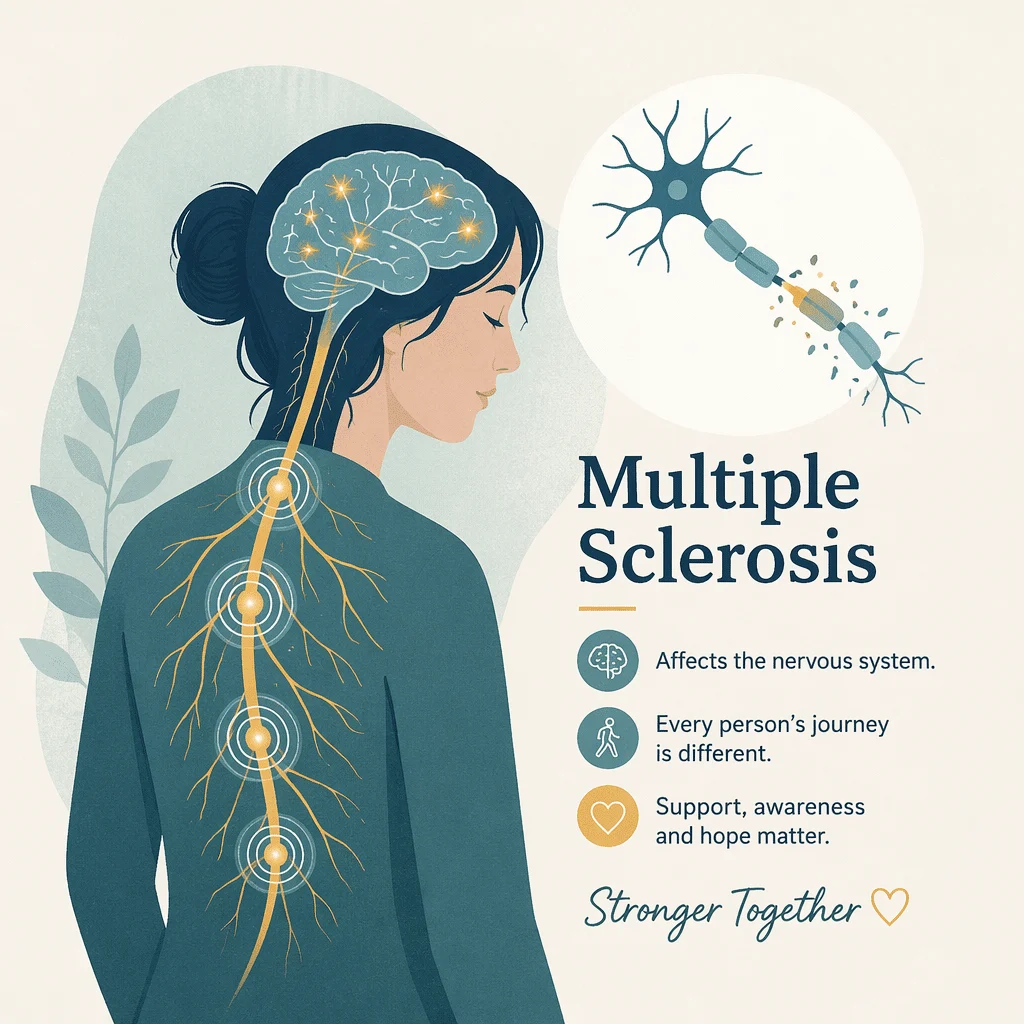
Scleroza multiplă este o boală cronică în care sistemul imunitar atacă din greșeală învelișul protector al nervilor din creier și măduva spinării. Această deteriorare perturbă semnalele care circulă între creier și restul corpului, motiv pentru care simptomele pot varia de la vedere încețoșată la amorțeală, oboseală și dificultăți de mers. Acest ghid explică ce este scleroza multiplă, simptomele și primele semne de urmărit, principalele cauze și factori de risc, tipurile existente și cum ajung medicii la un diagnostic. Vei afla, de asemenea, ce pot și ce nu pot arăta analizele de sânge despre SM, semnele de alarmă care necesită atenție medicală urgentă și cum trăiesc bine oamenii cu această afecțiune în ziua de azi.
Monitorizarea se schimbă și ea: descoperă ce adaugă GFAP la un test de sânge pentru scleroza multiplă.
Ce este scleroza multiplă?
Scleroza multiplă (SM) este o afecțiune cronică a sistemului nervos central, alcătuit din creier și măduva spinării. În SM, sistemul imunitar atacă mielina, teaca grasă care învelește fibrele nervoase și ajută semnalele electrice să se transmită rapid. Când mielina este deteriorată, mesajele dintre creier și corp se încetinesc, se perturbă sau se întrerup complet.
Această deteriorare se numește demielinizare. Zonele afectate lasă în urmă mici zone de țesut cicatricial, cunoscute sub numele de leziuni sau plăci. Cuvântul “scleroză” înseamnă cicatrizare, iar “multiplă” se referă la faptul că aceste zone apar în mai multe locuri și la momente diferite.
SM este o boală autoimună, ceea ce înseamnă că apărarea organismului se întoarce din greșeală împotriva propriilor țesuturi. Este, de asemenea, o afecțiune imprevizibilă: afectează fiecare persoană în mod diferit, iar evoluția sa poate fi greu de anticipat în primii ani. Potrivit Organizației Mondiale a Sănătății, aproximativ 2,8 milioane de persoane trăiesc cu SM la nivel mondial, iar aceasta este una dintre cele mai frecvente cauze de dizabilitate neurologică netraumatică la adulții tineri. Este diagnosticată de obicei între 20 și 40 de ani și afectează de două până la trei ori mai multe femei decât bărbați.
Principalele simptome ale sclerozei multiple
Simptomele sclerozei multiple sunt foarte variate, deoarece depind de căile nervoase afectate. Nu există două persoane care să trăiască boala exact la fel, iar aceeași persoană poate prezenta simptome diferite în momente diferite. Semnele frecvente includ oboseală intensă, probleme de vedere precum vederea încețoșată sau dublă, și amorțeală sau furnicături la nivelul brațelor, picioarelor sau feței.
Mulți oameni observă, de asemenea, probleme de echilibru și coordonare, slăbiciune musculară, rigiditate sau spasme și dificultăți de mers. Modificările vezicii urinare și ale tranzitului intestinal, amețelile și durerea cronică sunt, de asemenea, frecvente. Cele mai des raportate simptome includ:
- Oboseală severă și persistentă, disproporționată față de efortul depus
- Vedere încețoșată sau dublă, uneori însoțită de durere oculară
- Amorțeală, furnicături sau senzație de „ace și bolduri"
- Slăbiciune musculară, rigiditate sau spasme dureroase
- Probleme de echilibru și coordonare sau mers nesigur
- Dificultăți la nivelul vezicii urinare, tranzitului intestinal și, uneori, al vieții sexuale
- Modificări ale memoriei, concentrării și dispoziției
O caracteristică aparte a SM este sensibilitatea la căldură. Mulți oameni observă că simptomele se agravează temporar atunci când le este cald, au febră sau fac efort fizic intens. Acest efect este de obicei trecător și dispare odată ce corpul se răcorește, fără a însemna că boala în sine se agravează.
Primele semne de urmărit
Scleroza multiplă în stadiu incipient debutează adesea cu un singur episod neurologic care se instalează treptat în câteva zile, apoi se ameliorează în decurs de câteva săptămâni. Primele semne frecvente includ o vedere încețoșată bruscă sau pierderea vederii la un ochi, adesea însoțită de durere la mișcarea ochiului, amorțeală sau furnicături într-o parte a corpului, precum și slăbiciune sau stângăcie inexplicabilă la o mână sau la un picior. Deoarece aceste simptome pot apărea și în alte afecțiuni neurologice, cum ar fi migrena, ele nu confirmă prin ele însele diagnosticul de SM, dar merită să fie investigate de un medic.
Simptome mai puțin vizibile
Unele dintre cele mai invalidante efecte ale SM sunt cele pe care ceilalți nu le pot vedea. Modificările cognitive, precum dificultățile de concentrare, lacunele de memorie sau gândirea mai lentă, afectează multe persoane. Schimbările de dispoziție, inclusiv depresia și anxietatea, sunt și ele frecvente. Oboseala merită o mențiune specială: este unul dintre cele mai raportate simptome și este adesea descrisă ca mult mai apăsătoare decât oboseala obișnuită. Aceste simptome ascunse se suprapun cu afecțiuni precum fibromialgia, ceea ce explică parțial de ce SM poate fi dificil de identificat.
Ce cauzează scleroza multiplă? Factorii de risc explicați
Cauza exactă a sclerozei multiple nu este încă pe deplin înțeleasă. Majoritatea experților sunt de acord că boala se dezvoltă dintr-o combinație de factori genetici și de mediu care, împreună, determină sistemul imunitar să atace mielina. SM nu este moștenită direct, dar a avea o rudă apropiată cu această boală îți crește ușor propriul risc.
Mai mulți factori de mediu sunt asociați cu un risc mai mare de a dezvolta SM:
- Virusul Epstein-Barr (EBV): Acest virus foarte răspândit, care provoacă mononucleoza infecțioasă (febra glandulară), este considerat acum unul dintre principalii factori de risc, deși majoritatea persoanelor care îl poartă nu dezvoltă niciodată SM.
- Scăzut vitamina D și expunerea redusă la soare: SM este mai frecventă în regiunile îndepărtate de ecuator, ceea ce sugerează că vitamina D joacă un rol în echilibrul imunitar.
- Fumatul: Fumatul crește riscul de a dezvolta SM și este asociat cu o progresie mai rapidă a bolii.
- Obezitatea în copilărie și adolescență: Excesul de greutate în primii ani de viață, în special la fete, pare să crească riscul de SM.
- Sexul feminin: Din motive care sunt încă studiate, femeile sunt afectate de două până la trei ori mai des decât bărbații.
Tipurile de scleroză multiplă
Scleroza multiplă nu este o boală unică și uniformă. Medicii descriu mai multe „forme" sau tipare care determină modul în care simptomele apar și evoluează în timp. Cunoașterea tipului de SM ajută la ghidarea tratamentului și oferă o imagine mai clară a evoluției bolii. Tabelul de mai jos rezumă cele patru tipare principale.
| Tipul de SM | Ce se întâmplă | Frecvență |
|---|---|---|
| Sindromul clinic izolat (CIS) | Un prim episod unic de simptome neurologice cu durata de cel puțin 24 de ore. Poate evolua sau nu spre SM. | Adesea cel mai timpuriu stadiu |
| SM recurent-remisivă (SMRR) | Pusee clare (recăderi) urmate de perioade de recuperare parțială sau completă (remisiune). | Cea mai frecventă formă la diagnostic, în aproximativ 85% din cazuri |
| SM secundar progresivă (SMSP) | Debutează ca SMRR, apoi devine treptat progresivă în decursul anilor. | Se dezvoltă la mulți pacienți cu SMRR în timp |
| SM primar progresivă (SMPP) | Simptomele se agravează treptat de la început, fără pusee și remisiuni distincte. | Aproximativ 1 din 10 până la 1 din 6 cazuri |
O recădere, numită uneori puseu sau atac, reprezintă apariția unor simptome noi sau agravarea clară a celor existente, cu o durată de peste 24 de ore și care nu este cauzată de o infecție sau febră. Recuperarea după o recădere poate fi completă sau parțială.
Cum se diagnostichează scleroza multiplă
Nu există un singur test care să confirme scleroza multiplă. În schimb, un neurolog pune diagnosticul combinând istoricul tău medical, examenul fizic și mai multe investigații, eliminând în același timp alte afecțiuni. Un cadru de diagnostic larg utilizat, criteriile McDonald, caută dovezi că leziunile au apărut în zone diferite ale sistemului nervos central și la momente diferite în timp.
Rolul RMN-ului și al puncției lombare
Imagistica prin rezonanță magnetică (IRM) a creierului și a măduvei spinării este investigația principală. Aceasta poate evidenția leziunile de demielinizare caracteristice SM. În unele cazuri, se recoltează o probă de lichid cefalorahidian (lichidul din jurul creierului și al măduvei spinării) prin puncție lombară. Aceasta este analizată pentru detectarea benzilor oligoclonale, proteine care indică inflamație la nivelul sistemului nervos. Testele de potențiale evocate, care măsoară viteza de transmitere a semnalelor nervoase, pot fi utilizate și atunci când tabloul clinic nu este clar.
Ce pot și ce nu pot arăta analizele de sânge
O întrebare frecventă este dacă o analiză de sânge poate detecta SM. Singură, nu poate. Nu există nicio analiză de sânge de rutină care să confirme scleroza multiplă. Totuși, analizele de sânge sunt extrem de utile pentru a exclude alte afecțiuni care pot imita SM — un pas esențial înainte de orice diagnostic.
Medicii recomandă adesea analize de sânge pentru a verifica probleme care produc simptome similare, cum ar fi o deficiența de vitamina B12, care poate cauza amorțeală și furnicături, o tiroidă hipoactivă sau hiperactivă ( nivelurile tiroidiene poate afecta oboseala și starea de spirit), boala Lyme, sau afecțiuni autoimune precum lupusul, depistate cu un de anticorpi antinucleari (ANA). Cercetătorii studiază, de asemenea, noi markeri sanguini legați de sănătatea creierului și a nervilor care ar putea sprijini într-o zi diagnosticul și monitorizarea bolii. Deocamdată, analizele de sânge contribuie în principal la excluderea altor cauze, deschizând calea spre un diagnostic sigur de SM, mai degrabă decât îl confirmă direct.
Obținerea unui diagnostic poate dura, iar această incertitudine este una dintre cele mai dificile etape pentru mulți oameni. Simptomele pot apărea și dispărea, iar un singur episod nu este suficient pentru a confirma SM. Dacă ții o evidență simplă a simptomelor tale — când au apărut, cât au durat și cum te-au afectat — îi oferi neurologului informații valoroase și poți contribui la accelerarea procesului de diagnostic.
Tratamentul și managementul sclerozei multiple
Nu există încă un tratament curativ pentru scleroza multiplă, dar tratamentele disponibile s-au îmbunătățit considerabil și pot schimba evoluția bolii. Pilonul principal al îngrijirii este un grup de medicamente numite terapii imunomodulatoare (disease-modifying therapies – DMT). Administrate sub formă de comprimate, injecții sau perfuzii, acestea calmează sistemul imunitar pentru a reduce frecvența puseelor și a încetini instalarea dizabilității pe termen lung.
În timpul unui puseu acut, un tratament scurt cu corticosteroizi poate reduce inflamația și accelera recuperarea. Alături de medicație, gestionarea simptomelor este la fel de importantă. Kinetoterapia ajută la mobilitate, forță și echilibru; terapia ocupațională adaptează activitățile zilnice; iar logopedia îi sprijină pe cei cu dificultăți de vorbire sau înghițire. Suportul psihologic ajută la gestionarea poverii emoționale a unei afecțiuni cronice.
Alegerea unei terapii care modifică evoluția bolii este o decizie luată împreună de tine și neurologul tău. Se iau în considerare tipul și activitatea SM-ului tău, starea generală de sănătate, stilul de viață și preferințele personale, deoarece opțiunile variază de la tratamente mai blânde la unele mai puternice. Odată ce tratamentul începe, vei avea de obicei consultații periodice și RMN-uri repetate pentru a verifica dacă funcționează și este bine tolerat. Începerea tratamentului devreme, înainte ca leziunile să se acumuleze, este considerată din ce în ce mai mult una dintre cele mai eficiente modalități de a proteja funcția pe termen lung.
Cele mai bune rezultate vin de obicei dintr-o echipă multidisciplinară, în care neurologi, asistente specializate, terapeuți și specialiști în sănătate mintală lucrează împreună. Cercetarea avansează și ea rapid. Studiile recente s-au concentrat pe terapii pentru formele progresive de SM și pe primii pași spre repararea mielinei deteriorate, alături de un interes tot mai mare pentru tratamentele personalizate.
Când să mergi la medic: semne de alarmă
Majoritatea simptomelor SM se dezvoltă treptat, dar unele semne necesită atenție medicală promptă. Consultă un medic dacă observi pierdere bruscă sau inexplicabilă a vederii, amorțeală sau slăbiciune persistentă, ori probleme de echilibru care nu se remit. Este important să te verifici din timp, deoarece începerea tratamentului mai devreme poate proteja funcția pe termen lung.
Unele simptome necesită îngrijire urgentă, deoarece pot semnala o problemă diferită, critică din punct de vedere al timpului. Solicită ajutor de urgență imediat dacă experimentezi:
- Slăbiciune bruscă sau căderea unei părți a feței sau corpului
- Dificultate bruscă în a vorbi sau a înțelege vorbirea
- O durere de cap bruscă și severă, diferită de orice ai mai simțit
- Pierdere bruscă a vederii însoțită de confuzie sau dificultăți de mers
Acestea pot fi semne ale unui accident vascular cerebral și nu ale unei recăderi de SM, iar un accident vascular cerebral este o urgență medicală. Când ai dubii, este întotdeauna mai sigur să fii evaluat rapid.
Viața cu scleroză multiplă
A trăi bine cu scleroză multiplă este posibil pentru majoritatea oamenilor, mai ales cu tratamentele moderne și suportul adecvat. Speranța medie de viață este doar ușor mai scurtă decât în populația generală, iar această diferență continuă să se reducă pe măsură ce terapiile se îmbunătățesc.
Zi de zi, câteva obiceiuri fac o diferență reală. Gestionarea oboselii prin dozarea activităților, prioritizarea sarcinilor importante și odihna înainte de a te epuiza complet ajută la păstrarea energiei. Exercițiile fizice regulate și blânde, precum mersul pe jos, înotul sau yoga, susțin forța și echilibrul. O alimentație echilibrată și renunțarea la fumat sunt benefice pentru sănătatea generală și pot ajuta sistemul imunitar. La fel de importantă este și susținerea: menținerea legăturii cu echipa medicală, sprijinul familiei și al prietenilor, precum și participarea la un grup de pacienți pot ușura latura emoțională a bolii. Să înveți să-ți asculți corpul și să-ți ajustezi rutina este una dintre cele mai utile abilități pe care le poți dezvolta.
Glosar
- Boală autoimună: O afecțiune în care sistemul imunitar atacă din greșeală țesuturile sănătoase ale propriului organism. SM este un exemplu.
- Sistemul nervos central (SNC): Creierul și măduva spinării, care controlează gândirea, mișcarea și senzațiile.
- Lichidul cefalorahidian (LCR): Lichidul clar care înconjoară creierul și măduva spinării. Poate fi testat în cadrul unei puncții lombare.
- Demielinizarea: Pierderea sau deteriorarea mielinei, învelișul protector al fibrelor nervoase, care încetinește sau blochează semnalele nervoase.
- Terapia modificatoare de boală (TMB): Medicamente care reduc frecvența recăderilor și încetinesc progresia pe termen lung a SM.
- Leziune (placă): O zonă de cicatrizare în creier sau măduva spinării cauzată de demielinizare, adesea vizibilă la RMN.
- Teaca de mielină: Stratul gras care învelește fibrele nervoase și permite semnalelor electrice să călătorească rapid și fără întreruperi.
- Benzi oligoclonale: Proteine găsite în lichidul cefalorahidian care sugerează inflamație la nivelul sistemului nervos central.
- Recădere (puseu): Apariția unor simptome noi sau agravarea clară a celor existente, cu o durată de peste 24 de ore.
Întrebări frecvente
Scleroza multiplă este ereditară?
SM nu se moștenește direct și nu există o singură genă care să o cauzeze. Genetica joacă totuși un rol: dacă ai un părinte sau un frate/soră cu SM, riscul tău personal este ușor mai mare decât media. Chiar și așa, șansa ca un copil sau un frate/soră al unei persoane cu SM să dezvolte și el boala este de doar aproximativ 2 până la 3 procente. Majoritatea persoanelor diagnosticate cu SM nu au niciun antecedent familial. Cercetătorii consideră că boala apare dintr-o combinație de mai mulți factori genetici și factori externi declanșatori, nu doar din moștenire.
Scleroza multiplă este fatală?
Pentru marea majoritate a persoanelor, SM nu este o boală fatală, iar majoritatea trăiesc o viață aproape normală. Speranța medie de viață este ușor redusă față de populația generală, dar această diferență s-a micșorat considerabil datorită tratamentelor mai bune. În cazuri rare, complicațiile unei SM severe și avansate pot deveni grave. Cu îngrijire medicală continuă, un management bun al simptomelor și un stil de viață sănătos, perspectivele pentru majoritatea oamenilor de astăzi sunt mult mai pozitive decât erau acum câteva decenii.
Există un tratament curativ pentru scleroza multiplă?
În prezent, nu există un tratament curativ pentru scleroza multiplă. Cu toate acestea, acest lucru nu înseamnă că boala nu poate fi ținută sub control. Terapiile imunomodulatoare pot reduce semnificativ frecvența recăderilor și pot încetini acumularea dizabilității, mai ales atunci când sunt începute devreme. Tratamentele pentru recăderi și pentru simptomele individuale pot îmbunătăți considerabil calitatea vieții. Cercetările privind repararea mielinei deteriorate și terapiile mai țintite sunt active și promițătoare, astfel că perspectivele de tratament se îmbunătățesc an de an.
Simptomele sclerozei multiple sunt diferite la femei?
Simptomele principale ale SM sunt similare la femei și bărbați, dar există câteva diferențe notabile. SM este de două până la trei ori mai frecventă la femei și apare adesea în anii fertili. Unele femei observă că simptomele se modifică odată cu schimbările hormonale, cum ar fi în timpul ciclului menstrual sau după sarcină, când riscul de recădere poate crește temporar. Bărbații, în schimb, au o probabilitate ușor mai mare de a dezvolta forme progresive. Aceste tipare sunt încă studiate și nu schimbă abordarea generală a diagnosticului sau a îngrijirii.
Cât durează o recădere în scleroza multiplă?
O recădere, sau puseu, se dezvoltă de obicei în câteva zile, atinge un vârf și apoi se ameliorează treptat. Majoritatea recăderilor durează de la câteva zile până la câteva săptămâni, iar recuperarea poate continua săptămâni sau chiar luni după aceea. Recuperarea poate fi completă sau parțială, iar unele simptome pot persista. O recădere adevărată durează mai mult de 24 de ore și nu este declanșată de febră sau infecție. Dacă crezi că ai o recădere, contactează echipa ta medicală, deoarece tratamentul poate ajuta la accelerarea recuperării.
Poate o analiză de sânge să detecteze scleroza multiplă?
Nicio analiză de sânge singură nu poate diagnostica scleroza multiplă. Diagnosticul se bazează în principal pe imagistică prin rezonanță magnetică (IRM), examen neurologic și, uneori, puncție lombară. Analizele de sânge joacă totuși un rol important de susținere: medicii le folosesc pentru a exclude alte afecțiuni care provoacă simptome similare, cum ar fi deficiențele de vitamine, problemele tiroidiene, infecțiile și alte boli autoimune. Eliminarea acestor afecțiuni cu simptome asemănătoare este o etapă esențială pentru a ajunge la un diagnostic corect de SM.
Surse
- Scleroza multiplă (SM) — Institutul Național pentru Tulburări Neurologice și Accident Vascular Cerebral (NIH)
- Scleroza multiplă — NHS
- Scleroza multiplă — Organizația Mondială a Sănătății
Lectură suplimentară
- Boli autoimune: simptome, cauze și tratamente
- Boala Lyme: cauze, simptome și tratamente
- Ceața mentală: markerii din sânge pe care s-ar putea să îi ratezi
- Vitamina D (25-OH): înțelege-ți analizele de sânge
- Vitamina B12 scăzută: simptome, cauze, tratamente
Înțelege-ți rezultatele analizelor cu AI DiagMe
Dacă ai făcut recent analize de sânge în cadrul unui control neurologic, rezultatele pot fi greu de înțeles pe cont propriu. Teste precum vitamina B12, profilul tiroidian, vitamina D, markerii de inflamație (cum ar fi proteina C reactivă) sau anticorpii autoimuni sunt adesea folosiți pentru a exclude afecțiuni care imită scleroza multiplă. AI DiagMe îți explică ce înseamnă fiecare valoare într-un limbaj clar și accesibil, astfel încât să poți merge la consultație mai bine pregătit(ă). Nu diagnostichează SM și nu înlocuiește niciodată neurologul tău, dar te poate ajuta să îți înțelegi valorile și să pui întrebări mai bune.
➡️ Obține interpretarea rezultatelor în câteva minute