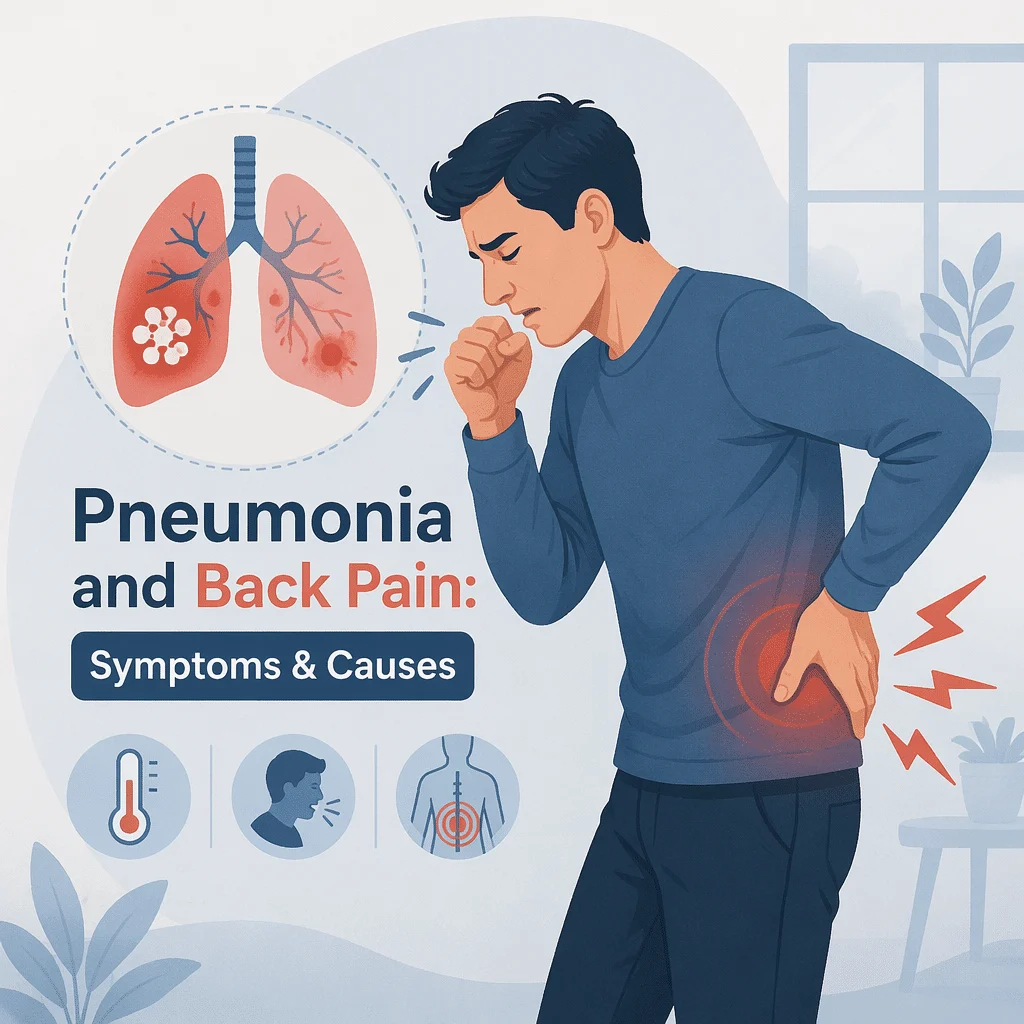
Pneumonia și durerea de spate apar împreună mult mai des decât se crede, iar combinația este neliniștitoare: o infecție pulmonară ar trebui să doară în piept. Explicația este anatomică. Țesutul pulmonar în sine are aproape nicio terminație nervoasă pentru durere, astfel că o infecție se simte abia când inflamația ajunge la membrana care învelește exteriorul plămânului. Când zona afectată a plămânului se află în partea de jos sau spre spatele cutiei toracice, durerea este resimțită în spate, nu în față. În acest articol vei afla de ce sunt legate cele două, cum se simte durerea, ce afecțiuni pot arăta similar, care sunt semnele de alarmă ce necesită atenție urgentă și ce analize de sânge îi ajută pe medici să deosebească o infecție de alte cauze.
De ce apar împreună pneumonia și durerea de spate
Plămânii în sine nu pot simți durerea
Țesutul profund al plămânului, inclusiv alveolele unde oxigenul trece în sânge, conține practic nicio fibră nervoasă pentru durere. Acești saci de aer se pot umple cu lichid infectat fără să provoace nicio durere. Ceea ce are fibre nervoase este pleura – membrana dublă subțire care învelește fiecare plămân. Stratul ei interior este în mare parte insensibil; stratul exterior, pleura parietală, căptușește interiorul peretelui toracic și este bogat inervat. Durerea apare atunci când inflamația ajunge la acest strat exterior și cele două suprafețe iritate se freacă una de alta la fiecare respirație. Medicii numesc aceasta durere pleuritică, și ea explică aproape tot ce urmează.
Locul unde apare durerea depinde de zona plămânului afectată
Pleura parietală transmite durerea spre porțiunea peretelui toracic situată direct deasupra ei, astfel că senzația urmărește infecția. O pneumonie a lobului superior tinde să fie resimțită în față, în piept. Un lob inferior sau un segment posterior aflat spre spatele cutiei toracice este resimțit între omoplați sau sub ei, de-a lungul flancului ori în mijlocul spatelui. De aceea durerea în partea superioară a spatelui, nu durerea în piept, este adesea primul lucru pe care oamenii îl observă.
Mai există un tipar important de știut. Diafragma centrală transmite senzațiile prin nervul frenic, care intră în măduva spinării sus, la nivelul gâtului, în dreptul vertebrelor C3–C5. Când inflamația irită această zonă, creierul interpretează greșit semnalul și durerea este resimțită la vârful umărului. Johns Hopkins Medicine descrie aceeași iradiere a durerii pleuritice spre umăr sau spate.
Cum se simte durerea în realitate
Durerea pleuritică are un caracter recognoscibil. De obicei este ascuțită sau înțepătoare, nu surdă, se agravează clar la o respirație adâncă, la tuse sau la strănut și adesea se ameliorează când respiri superficial sau te culci pe partea dureroasă. Oamenii descriu că se țin nemișcați pentru a evita o respirație completă.
O a doua sursă de durere de spate, mai mecanică, apare în paralel. Zilele de tuse puternică solicită mușchii intercostali dintre coaste și mușchii lungi de o parte și de alta a coloanei vertebrale. Această durere este mai surdă, mai difuză, sensibilă la apăsare și se agravează mai mult la răsucire decât la respirație. Ambele pot fi prezente în același timp, ceea ce explică în parte de ce simptomul pare atât de confuz. Biblioteca noastră explică și cauzele crampelor intercostale.
Infecțiile mai ușoare, numite adesea pneumonie ambulatorie, pot provoca dureri difuze în spate și piept, însoțite doar de o tuse uscată și oboseală neobișnuită. De aceea unii oameni raportează dureri de spate cu aproape nicio tuse, și de aceea un tablou clinic ușor nu trebuie ignorat.
Simptomele care însoțesc pneumonia și durerea de spate
Cel mai important lucru de reținut din acest articol: în pneumonie, durerea de spate nu apare aproape niciodată singură. Ea face parte dintr-un grup de simptome care indică o infecție respiratorie.
- Febră și frisoane, uneori cu tremurături puternice
- Tuse, adesea cu expectorație groasă, galbenă, verde sau ruginie
- Dificultăți de respirație sau respirație vizibil mai rapidă decât de obicei
- Oboseală marcată, slăbiciune și pierderea poftei de mâncare
- Bătăi rapide ale inimii, uneori însoțite de transpirație
MedlinePlus menționează durerea în piept la respirație sau tuse printre simptomele standard ale pneumoniei, alături de febră, frisoane și dificultăți de respirație. Durerea de spate izolată, cu respirație normală, fără febră și fără tuse, are mult mai probabil o altă cauză. Deoarece debutul bolilor virale se suprapune frecvent, un ghid separat prezintă simptomele gripei.
O excepție este importantă. Institutul Național pentru Inimă, Plămâni și Sânge notează că adulții în vârstă și persoanele cu boli grave sau imunitate slăbită pot să nu prezinte tabloul clinic tipic: în loc de febră, pot avea o temperatură mai scăzută decât normalul și pot simți doar slăbiciune sau confuzie bruscă. Confuzia bruscă la un adult în vârstă care prezintă orice simptom respirator necesită o evaluare în aceeași zi.
Pneumonia și durerile de spate față de principalele afecțiuni similare
Mai multe afecțiuni provoacă dureri de spate care seamănă cu o infecție pulmonară.
| Afecțiune | Unde se simte durerea | Cum se simte | Simptome însoțitoare frecvente |
|---|---|---|---|
| Pneumonie cu iritație pleurală | Mijlocul sau partea inferioară a spatelui, flanc sau între omoplați, pe partea afectată | Ascuțită sau înțepătoare, clar mai intensă la o respirație adâncă sau la tuse | Febră, frisoane, tuse productivă, dificultăți de respirație, oboseală |
| Contractură musculară sau entorsă costală | Zonă largă a spatelui, dureroasă la apăsare | Surdă și persistentă, mai intensă la răsucire sau apăsare | Episod recent de tuse intensă, efort fizic sau traumatism; fără febră |
| Infecție renală sau calculi renali | Flanc sub coaste, pe o singură parte, uneori cu iradiere spre zona inghinală | Profundă, crampe sau în valuri; fără legătură cu respirația | Senzație de arsură la urinare, urgență urinară, sânge în urină, febră în caz de infecție |
| Herpes zoster | O bandă pe o parte a trunchiului, urmând un singur nerv | Arsură, furnicături sau senzație de șoc electric; piele sensibilă înainte de apariția oricărei erupții | Erupție cutanată care apare câteva zile mai târziu; fără tuse sau dificultăți de respirație |
| Embolie pulmonară | Torace sau spate, pe o parte | Ascuțită și pleuritică, dar cu debut brusc | Dificultăți bruște de respirație, ritm cardiac accelerat, tuse cu sânge, umflarea picioarelor |
| Urgență aortică | Între omoplați sau în mijlocul spatelui | Sfâșietoare sau rupătoare, maximă în câteva secunde | Transpirații, leșin, aspect de bolnav grav |
Trei rânduri merită atenție. Biblioteca noastră prezintă semnele de alarmă ale emboliei pulmonare, care poate imita aproape exact durerea din pneumonia pleuritică, dar apare brusc și reprezintă o urgență. Articole separate descriu semnele tipice ale calculilor renali și simptomele unei infecții urinare. Herpesul zoster poate provoca durere cu câteva zile înainte ca ceva să fie vizibil pe piele, iar un ghid acoperă primele simptome ale zonei zoster.
Semnale de alarmă care necesită îngrijire urgentă
Sună la serviciile de urgență sau mergi la camera de gardă dacă durerea de spate sau de piept este însoțită de oricare dintre următoarele.
- Dificultăți de respirație în repaus sau incapacitatea de a termina o propoziție dintr-o singură respirație
- Confuzie bruscă, somnolență sau dificultate la trezire, mai ales la un adult în vârstă
- Buze, față sau vârfurile degetelor albastre sau cenușii
- Durere în piept cu debut brusc, însoțită de dificultăți bruște de respirație
- Tuse cu sânge
- Febră mare cu frisoane violente
- Durere sfâșietoare între omoplați care atinge intensitatea maximă în câteva secunde
O precauție traversează întreaga listă: absența febrei nu este un semn liniștitor. Persoanele în vârstă, cele care iau medicamente imunosupresoare și cele care urmează chimioterapie pot dezvolta o pneumonie gravă cu o temperatură normală sau chiar scăzută. O temperatură scăzută la o persoană care arată rău este, în sine, un semnal de alarmă.
Analizele de laborator care îi ajută pe medici să deosebească infecția de alte afecțiuni
Analize de sânge care indică o infecție
Nicio analiză de sânge nu diagnostichează pneumonia prin ea însăși; rezultatele de laborator modifică probabilitățile, iar înțelegerea a ceea ce poate și nu poate clarifica fiecare rezultat face ca un raport să fie mai puțin înfricoșător. Prima analiză solicitată este de obicei o hemogramă completă, iar echipa noastră explică cum să citești o hemogramă completă. O creștere a globulelor albe, în special a neutrofilelor, sugerează că sistemul imunitar luptă împotriva unei infecții bacteriene, deși același tipar apare și în alte situații de stres; un articol dedicat acoperă ce înseamnă un număr crescut de neutrofile. Un număr normal de globule albe nu exclude pneumonia, iar valorile foarte scăzute la o persoană bolnavă reprezintă în sine un motiv de îngrijorare.
Proteina C reactivă crește în câteva ore de la apariția unei inflamații semnificative și scade pe măsură ce aceasta se remite, ceea ce o face mai utilă pentru urmărirea evoluției decât pentru identificarea cauzei. Biblioteca noastră detaliază cauzele unui nivel crescut de CRP. Procalcitonina crește mai selectiv în infecțiile bacteriene, iar un ghid explică markrul de infecție procalcitonină. Hemoculturile, care cultivă bacterii dintr-o probă de sânge, sunt rezervate persoanelor suficient de bolnave pentru a fi internate în spital și sunt adesea negative chiar și în cazul unei pneumonii reale.
Rolul imagisticii și al altor investigații
O radiografie toracică, nu o analiză de sânge, este cea care confirmă pneumonia, arătând umbra lichidului și a inflamației dintr-un segment pulmonar. Arată, de asemenea, ce lob este afectat, explicând unde se simte durerea. O tomografie computerizată (CT) este utilizată atunci când radiografia nu este concludentă, iar pulsoximetria, clema aplicată pe vârful degetului, măsoară cât de bine ajunge oxigenul în sânge. Când există o suspiciune serioasă de cheag de sânge la nivelul plămânului, medicii pot adăuga testul de sânge D-dimer.
Cele mai recente progrese științifice
Cercetările din ultimii trei ani au rafinat modul în care clinicienii evaluează severitatea, decid cu privire la antibiotice și gândesc recuperarea. Nimic din acestea nu schimbă ce ar trebui să faci în legătură cu propriile simptome.
Scorurile de severitate au fost comparate direct. O meta-analiză din 2023, un studiu care reunește mai multe studii anterioare, a examinat două instrumente clinice — Indicele de Severitate al Pneumoniei și CURB-65 — și a constatat că ambele identifică bine pacienții cu risc crescut, CURB-65 fiind ușor mai bun la identificarea celor care au nevoie de terapie intensivă. Ce înseamnă asta pentru tine: întrebările despre confuzie, frecvența respiratorie, tensiunea arterială și vârstă fac parte dintr-un calcul validat, nu dintr-o estimare.
Adulții în vârstă rămân cel mai greu grup de evaluat. O analiză din 2026 privind pneumonia la adulții în vârstă fragili a constatat că boala se manifestă adesea prin semne vagi și atipice și că scorurile standard de severitate funcționează mai puțin bine în acest caz, deoarece evoluția depinde la fel de mult de fragilitate și de starea generală de sănătate ca și de infecție. Ce înseamnă asta pentru tine: un rudă în vârstă care este pur și simplu confuză, slăbită sau fără poftă de mâncare poate avea nevoie să fie consultată chiar și în absența febrei.
Deciziile privind antibioticele ghidate de biomarkeri există, dar nu sunt automate. O analiză din 2023 privind procalcitonina a concluzionat că nu ar trebui folosită ca test diagnostic de sine stătător: un rezultat scăzut ajută la excluderea infecției bacteriene doar la persoanele deja cu risc scăzut, iar oricine este grav bolnav are nevoie de antibiotice indiferent de valoarea numerică. Un studiu amplu de terapie intensivă din 2025, care combina testarea rapidă multi-patogen cu procalcitonina, nu a redus expunerea globală la antibiotice față de îngrijirea obișnuită, deși numărul total de zile de tratament antibiotic a fost mai mic. Ce înseamnă asta pentru tine: valorile de laborator susțin judecata clinică, fără să o înlocuiască.
Recuperarea este în sfârșit studiată corespunzător. O analiză din 2026 privind suportul non-antibiotic după pneumonia comunitară a constatat că kinetoterapia respiratorie, mobilizarea precoce și nutriția adecvată pot scurta durata spitalizării și reduce reinternările, deși dovezile sunt inegale. Ce înseamnă asta pentru tine: oboseala persistentă și durerile de spate care durează săptămâni după pneumonie reprezintă o parte recunoscută a procesului de recuperare.
Glosar
| Termen | Definiție |
|---|---|
| Alveole | Sacii microscopici de aer prin care oxigenul trece în sânge. Pneumonia îi umple cu lichid și celule imunitare. |
| Pleura | Membrana dublă subțire care învelește fiecare plămân și căptușește peretele toracic, cu un film lubrifiant între straturi. |
| Pleura parietală | Stratul exterior, atașat de peretele toracic. Este bogat inervat și reprezintă sursa reală a durerii. |
| Durere pleuritică | Durere ascuțită în piept, flanc sau spate care se agravează la o respirație profundă, la tuse sau la strănut. |
| Nervul frenic | Nervul care inervează diafragma. Deoarece își are originea sus, în gât, iritarea sa poate fi simțită la nivelul umărului. |
| Lob | Una dintre marile diviziuni ale unui plămân — trei pe dreapta și două pe stânga. Lobul infectat influențează locul unde este simțită durerea. |
| proteina C reactivă (PCR) | O proteină din sânge care crește rapid în orice inflamație și scade pe măsură ce aceasta se remite. |
| Procalcitonină | Un marker sanguin care crește mai selectiv în infecțiile bacteriene și este folosit pentru a susține, nu pentru a înlocui, deciziile privind antibioticele. |
| CURB-65 | Un scor clinic care folosește confuzia, frecvența respiratorie, tensiunea arterială, un rezultat renal și vârsta de 65 de ani sau peste pentru a estima severitatea. |
Întrebări frecvente
Poate pneumonia cauza dureri de spate fără tuse?
Se poate, deși este rar. Infecțiile mai ușoare încep uneori cu o durere pleuritică în spate sau în flanc, oboseală și febră ușoară, înainte să apară tusea. Important este tabloul de ansamblu: durerea de spate însoțită de dificultăți de respirație, febră sau oboseală neobișnuită trebuie evaluată chiar și în absența tusei. Durerea de spate izolată indică mai degrabă o cauză musculară, spinală sau renală.
Unde în spate se simte de obicei durerea din pneumonie?
Cel mai adesea pe o parte, în zona mijlocie sau inferioară a spatelui, de-a lungul flancului sau între omoplați, corespunzând zonei inflamate din plămân. Infecțiile lobilor inferiori sunt situate în apropierea peretelui posterior al cutiei toracice, astfel că durerea iradiază acolo, nu în față. Durerea se intensifică la o respirație profundă; durerea centrală, care nu se modifică cu respirația, este mai puțin tipică.
Poate pneumonia ambulatorie cauza dureri de spate?
Da. Pneumonia ambulatorie este un termen informal pentru o infecție mai ușoară care nu ține persoana la pat, cauzată adesea de bacterii precum Mycoplasma pneumoniae. Aceasta poate irita în continuare suprafața pleurală, producând dureri surde sau ascuțite în spate și piept, însoțite de tuse seacă, dureri de cap și oboseală prelungită. Deoarece persoana continuă să funcționeze normal, durerea este adesea pusă pe seama unei contracturi musculare, nu a plămânilor.
Cât durează durerea de spate după pneumonie?
Durerea pleuritică se ameliorează de obicei în una până la două săptămâni, pe măsură ce inflamația se reduce, adesea mai devreme decât tusea. Durerile musculare cauzate de tuse pot persista mai mult, iar oboseala generală poate dura câteva săptămâni până dispare. Durerea care continuă să se agraveze după două săptămâni, care reapare după ameliorare sau care este însoțită de febră nouă trebuie reevaluată, nu ignorată.
Este durerea de spate singură suficientă pentru a suspecta pneumonia?
În general, nu. Pneumonia este o boală care afectează întregul organism, iar durerea de spate este doar unul dintre simptome, nu manifestarea principală. Combinația care ar trebui să ridice suspiciunea este durerea de spate sau de flanc care se agravează la respirație, însoțită de febră, tuse, dificultăți de respirație sau oboseală neobișnuită. La adulții în vârstă, pragul de suspiciune este mai scăzut, deoarece febra poate lipsi. Doar un examen clinic și o radiografie toracică pot confirma diagnosticul.
Surse
- National Heart, Lung, and Blood Institute — Simptomele pneumoniei — National Institutes of Health — nhlbi.nih.gov
- MedlinePlus — Pneumonie — U.S. National Library of Medicine — medlineplus.gov
- Johns Hopkins Medicine — Pleurezie — hopkinsmedicine.org
- Zaki HA, et al. — Bătălia predictorilor pneumoniei: o meta-analiză cuprinzătoare care compară Indicele de Severitate a Pneumoniei (PSI) și scorul CURB-65 în predicția mortalității și a necesității suportului în ATI — Cureus, 2023 — pubmed.ncbi.nlm.nih.gov
- Komiya K, et al. — Pneumonia la vârstnicii fragili: de la diagnostic la managementul optimizat — Journal of Infection and Chemotherapy, 2026 — pubmed.ncbi.nlm.nih.gov
- Schuetz P — Cum să folosești cel mai bine procalcitonina pentru diagnosticul infecțiilor și gestionarea tratamentului antibiotic — Clinical Chemistry and Laboratory Medicine, 2023 — pubmed.ncbi.nlm.nih.gov
- Voiriot G, et al. — Utilizarea combinată a unui PCR multiplex și a procalcitoninei serice pentru reducerea expunerii la antibiotice la pacienții critici cu pneumonie comunitară: studiul randomizat controlat MULTI-CAP — Intensive Care Medicine, 2025 — pubmed.ncbi.nlm.nih.gov
- Lansbury L, et al. — Intervenții non-antimicrobiene în recuperarea după pneumonia comunitară la adulți — Current Opinion in Infectious Diseases, 2026 — pubmed.ncbi.nlm.nih.gov
Lectură suplimentară
- Cum să-ți citești rezultatele analizelor de sânge
- Valorile normale ale analizelor de sânge explicate
- Analiza VSH și ce arată viteza de sedimentare a hematiilor
- Furnicăturile în piept și cauzele lor
- Simptomele astmului, factorii declanșatori și testele de diagnostic
Înțelege-ți rezultatele analizelor cu AI DiagMe
Durerea de spate în timpul unei boli respiratorii ridică o întrebare la care o listă de simptome nu poate răspunde: există cu adevărat o infecție și cât de gravă este? Tocmai aici te ajută un buletin de analize și tocmai aici intervine AI DiagMe. Încarcă o hemogramă și platforma îți explică, pe înțelesul tău, ce indică numărul de leucocite și neutrofile, nivelul PCR și markerii de inflamație. Este concepută să te ajute să îți înțelegi rezultatele, nu să te diagnosticheze, și nu înlocuiește niciodată medicul care te examinează.
Obține interpretarea rezultatelor în câteva minute