




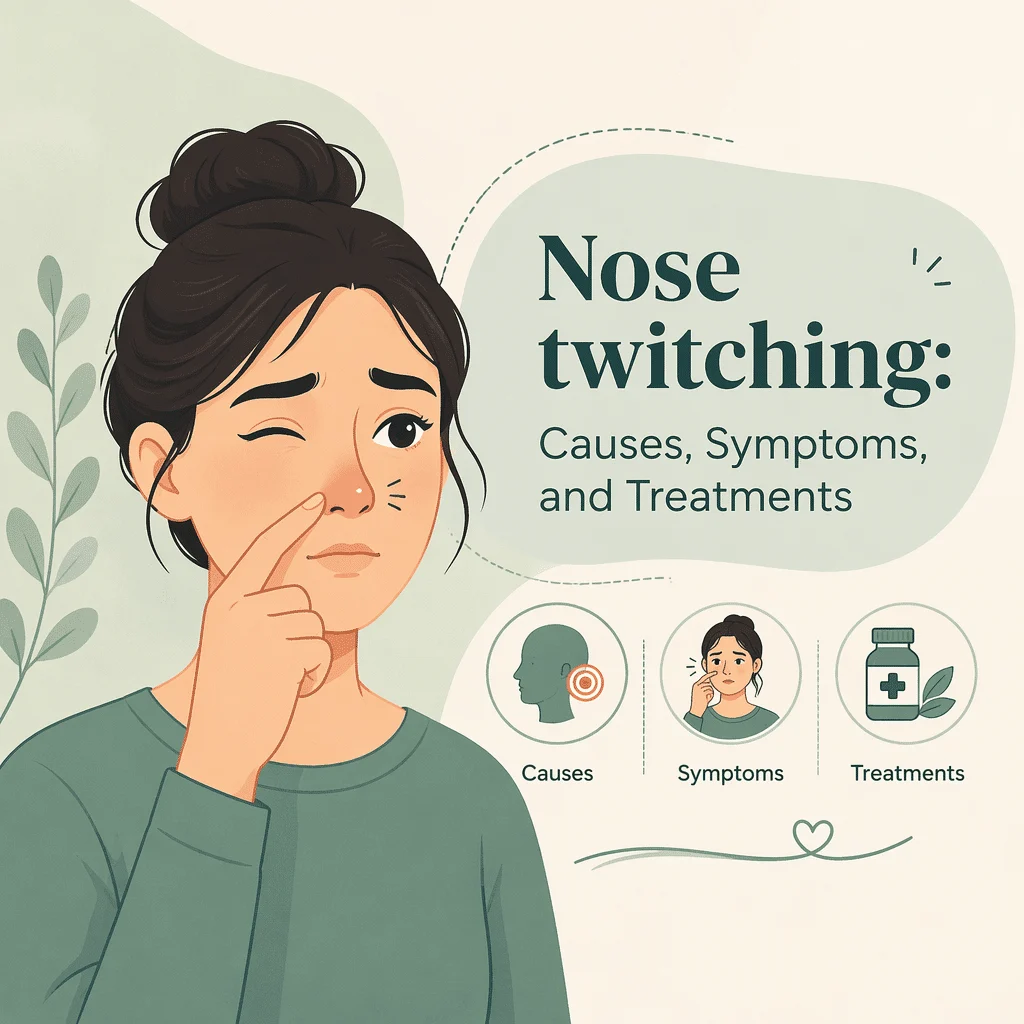
Neustrillen is het fladderende, onwillekeurige beweginkje dat je voelt wanneer een klein spiertje naast het neusgat of langs de neusbrug vanzelf samentrekt. Meestal is het onschuldig, van korte duur en geen reden tot bezorgdheid — ook al kan het van binnenuit opvallend aanvoelen. Deze kleine spiertrekkingen zijn doorgaans terug te voeren op alledaagse oorzaken zoals stress, vermoeidheid, cafeïne of een tekort aan vocht, en niet op iets ernstigs. In dit artikel lees je wat neustrillen precies is, wat de veelvoorkomende en minder gebruikelijke oorzaken zijn, hoe je het eenvoudig kunt kalmeren, en welke specifieke waarschuwingssignalen aangeven dat een bezoek aan de dokter verstandig is.
Wat neustrillen eigenlijk is
Een tril is een korte, onwillekeurige samentrekking van spiervezels. Rondom de neus zijn daarbij de kleine gezichtsspieren betrokken die de neusvleugels verwijden, de neusbrug fronsen of de bovenlip optillen. Artsen noemen deze kleine, spontane flikkerbewegingen fasciculaties. Ze ontstaan wanneer een zenuw die de spier aanstuurt iets te veel prikkels afgeeft, waardoor een klein deel van de spier even rilt of opspringt. Omdat het gezicht een dunne huid heeft en een dicht netwerk van zenuwen, kan zelfs een lichte tril voor jou heel opvallend aanvoelen, terwijl anderen er nauwelijks iets van merken. Kortom: neustrillen is meestal een kortstondig communicatiestoring tussen een zenuw en de spier die hij aanstuurt.
Deze spiertrekkingen zijn heel gewoon. Bijna iedereen heeft wel eens een trilling in het gezicht of het ooglid, en voor de meeste mensen is het een voorbijgaand ongemak in plaats van een symptoom van ziekte. Weten dat de beweging een normale eigenaardigheid is van de manier waarop zenuwen en spieren met elkaar communiceren, kan het een stuk minder verontrustend maken wanneer het gebeurt.
De spieren rondom de neus, waaronder de neusrugspier die over de neusbrug ligt en de heffende spieren die de lip optrekken, worden allemaal aangestuurd door de aangezichtszenuw. Een onschuldige trilling in dit gebied is doorgaans vluchtig, komt en gaat binnen minuten of uren, treft een klein stukje spier en verdwijnt vanzelf. Het verzwakt het gezicht niet, verspreidt zich niet gestaag over de wang en verdwijnt meestal zodra de oorzaak voorbij is, zoals een stressvolle week of te veel koffie.
Waarom een kleine trilling zo groot aanvoelt
Gezichtsspieren hechten direct aan de huid, zodat ze uitdrukkingen kunnen maken. Daardoor trekken hun bewegingen sterker aan het huidoppervlak dan spieren die diep in een arm of been zitten. Die directe verbinding is de reden waarom een neustrillingen als een zichtbare flikkering kan aanvoelen, terwijl een spiegel bijna niets laat zien. Dit beseffen kan een deel van de angst wegnemen, want het gevoel komt zelden overeen met de werkelijke omvang van de beweging.
Veelvoorkomende en meestal onschuldige oorzaken van een trillende neus
De grote meerderheid van de neustrillingen wordt veroorzaakt door gewone, omkeerbare factoren. Wanneer een zenuw overgestimuleerd wordt of een spier vermoeid is, is de kans groter dat deze verkeerd vuurt. De gebruikelijke boosdoeners overlappen met de dingen die ook een ooglid of lip doen trillen.
- Stress en angst, die het niveau van stimulerende stoffen in het lichaam verhogen en spieren in een staat van paraatheid brengen om te trillen.
- Vermoeidheid en slechte slaap, waardoor het zenuwstelsel minder goed in staat is om spiersignalen stabiel te houden.
- Te veel cafeïne uit koffie, thee, energiedranken of frisdrank, wat zenuwen en spieren overprikkelt.
- Uitdroging en een tekort aan mineralen, met name onevenwichtigheden in magnesium, kalium, calcium of natrium, die de manier waarop zenuwen signalen geleiden beïnvloeden.
- Oog- en gezichtsvermoeidheid door schermen, turen of fel licht, waardoor nabijgelegen gezichtsspieren overbelast raken.
- Nicotine uit sigaretten of vapen, een stimulerend middel dat trillingen kan veroorzaken.
- Overbelaste gezichtsspieren na een dag vol intense uitdrukkingen, lachen of snuffen tijdens een verkoudheid of allergie.
Deze oorzaken hebben één ding gemeen: ze drijven een toch al druk zenuw-en-spiersysteem voorbij zijn comfortzone. Het goede nieuws is dat u bij elk van deze oorzaken doorgaans iets kunt aanpassen. Onze gids legt uit magnesiumtekort en de symptomen ervan, en een eenvoudige bloedtest kan controleren je elektrolytenwaarden als je vermoedt dat een mineralentekort de oorzaak is van herhaaldelijke spiertrekkingen.
Veelvoorkomende oorzaken en wat vaak helpt
| Veelvoorkomende oorzaak | Wat vaak helpt |
|---|---|
| Stress of angst | Rustig ademhalen, pauzes nemen en ontspannende activiteiten |
| Vermoeidheid of slechte slaap | Regelmatig en voldoende slapen |
| Te veel cafeïne | Minder koffie, thee en energiedranken |
| Uitdroging of te weinig mineralen | Water drinken en gevarieerd eten; laat je waarden controleren als het terugkeert |
| Vermoeidheid van ogen en gezicht | Schermpauzess en een warm kompres |
| Nicotine | Minderen of stoppen |
Wanneer het oog en de neus tegelijk trekken
Het is heel gewoon om een trekkend gevoel te hebben dat tussen het oog en de neus lijkt te zitten, of om te merken dat het ooglid en de neus tegelijkertijd trillen. Dit gebeurt meestal omdat dezelfde gezichtszenuw en dezelfde oorzaken, zoals vermoeidheid of cafeïne, naburige spieren tegelijk beïnvloeden. Verkoudheid en allergieën kunnen dit verergeren, omdat herhaaldelijk snuffen en het optrekken van de neus de spieren over de neusbrug overbelasten. Spiertrekkingen die op deze manier samenkomen en die komen en gaan, zijn vrijwel altijd onschuldig.
Minder voorkomende oorzaken om te kennen
Soms wijst trekken rondom de neus of het gezicht op iets meer dan alledaagse oorzaken. Deze aandoeningen zijn veel minder gebruikelijk, maar het is goed ze te herkennen omdat een aantal ervan goed reageert op medische behandeling.
Hemifaciale spasme
Hemifaciale spasme is een neurologische aandoening waarbij de spieren aan één kant van het gezicht onwillekeurig samentrekken, vaak beginnend bij het oog en zich in de loop van maanden uitbreidend naar de wang, neus en mond. De oorzaak is meestal een bloedvat dat drukt op de aangezichtszenuw waar deze de hersenstam verlaat. In tegenstelling tot een onschuldige spiertrekking is het doorgaans aanhoudend, beperkt tot één kant, en kan het zelfs tijdens de slaap doorgaan. Een uitgebreid overzicht van de Cleveland Clinic behandelt hemifaciale spasme en de behandeling ervan.
Gezichtstics en dystonie
Tics zijn snelle, herhaalde bewegingen die iemand kort kan onderdrukken maar toch gedwongen voelt uit te voeren; ze komen veel voor bij kinderen en verdwijnen vaak met de tijd. Dystonie is een aandoening waarbij spieren zich langdurig samentrekken en het gezicht in abnormale standen kunnen trekken. Beide verschillen van een gewone spiertrekking in hun patroon en aanhoudendheid, en beide zijn herkenbaar voor een arts.
Zenuwirritatie en zeldzamere neurologische oorzaken
Irritatie of beknelling van een aangezichtszenuw kan aanhoudende spiertrekkingen veroorzaken, en onze bibliotheek behandelt zenuwbeknellingsyndroom. In zeer zeldzame gevallen gaat aanhoudend gezichtstrillen gepaard met neurologische aandoeningen die zenuwen en spieren op grotere schaal aantasten. Dit is ongewoon, gaat doorgaans samen met andere duidelijke symptomen zoals spierzwakte, en is niet iets wat een korte, op zichzelf staande neustrillen doet vermoeden.
Onschuldig trillen of iets ernstiger?
De meeste mensen kunnen een onschuldig trillen onderscheiden van een waarschuwingssignaal door op een paar kenmerken te letten: hoe lang het duurt, of het zich verspreidt, of het aan één kant blijft, en of er verder iets verandert in het gezicht. De onderstaande tabel vergelijkt een typisch onschuldig neustrillen met het patroon dat voorkomt bij aandoeningen die medische aandacht verdienen.
| Functie | Onschuldig trillen | Patroon dat het controleren waard is |
|---|---|---|
| Hoe lang het aanhoudt | Seconden tot een paar dagen, met tussenpozen | Weken tot maanden, constant aanwezig |
| Of het zich verspreidt | Blijft op één kleine plek | Trekt door wang, neus en mond |
| Welke kant | Beide kanten, wisselt van plek | Vast aan één kant van het gezicht |
| Tijdens de slaap | Stopt | Kan doorgaan |
| Overige symptomen | Geen | Zwakte, hangende spieren, veranderingen in zicht of gehoor |
| Duidelijke aanleiding | Vaak wel | Meestal geen |
Dit is een leidraad, geen diagnose. Als jouw trillen overeenkomt met de rechterkolom, betekent dat niet dat er zeker iets mis is, maar het is wel een goede reden om een afspraak te maken.
Maakt het uit aan welke kant van je neus het trilt?
Veel mensen zoeken naar de betekenis van trillen aan de linker- of rechterkant van de neus, en in sommige culturen worden er bijgeloven aan gekoppeld. Medisch gezien heeft de kant geen verborgen betekenis. Een onschuldig trillen kan links, rechts, aan de neuspunt of op de neusbrug optreden, en het wisselt vaak van plek van het ene moment op het andere, simpelweg omdat het weerspiegelt welke kleine spier op dat moment prikkelbaar is.
De kant wordt medisch pas interessant in één situatie: wanneer het trillen wekenlang aan één kant van het gezicht blijft en geleidelijk uitbreidt. Dat vaste, eenzijdige patroon is het kenmerk van hemifaciale spasmen in plaats van een gewone rilling. Het gaat er dus niet om of het links of rechts is, maar of het trillen vluchtig en wisselend is — wat geruststellend is — of aanhoudend en vastgelegd, wat de moeite waard is om te laten controleren.
Hoe neustrillen verlichten en stoppen
Omdat de meeste neustrillen worden veroorzaakt door leefstijlfactoren, zijn de meest effectieve oplossingen eenvoudig en gratis. Geef het volgende een paar dagen de tijd om te werken, want spieren en zenuwen hebben tijd nodig om tot rust te komen.
- Rust en slaap: zorg voor regelmatige, voldoende slaap zodat het zenuwstelsel kan herstellen.
- Voldoende drinken: drink gedurende de dag genoeg water, zeker bij warmte of na het sporten; ons overzicht legt uit hoe het lichaam omgaat met vochtverlies en uitdroging.
- Beperk cafeïne: drink minder koffie, thee en energiedrankjes en kijk of het trillen afneemt.
- Vul mineralen aan: een gevarieerd voedingspatroon helpt om magnesium, kalium en calcium op peil te houden; begin niet met supplementen zonder advies van een arts.
- Beheer stress: ademhalingsoefeningen, beweging en korte pauzes kunnen de spanning verminderen die trillingen veroorzaakt; ons artikel legt uit angst en de lichamelijke klachten die daarbij horen.
- Ontspan de gezichtsspieren: geef je ogen rust van schermen en leg een warm kompres op om de spier te ontspannen.
- Beperk nicotine: minder roken of vapen verwijdert een veelvoorkomende prikkel die trillingen uitlokt.
Wanneer stress langdurig aanhoudt, blijft het lichaam het stresshormoon cortisolaanmaken, waardoor spieren voortdurend gespannen blijven; de oorzaak aanpakken helpt vaak meer dan het trillen zelf behandelen.
Hoe lang zelfzorg proberen
Geef deze aanpassingen één tot twee weken de tijd. De meeste onschuldige neustrillingen verdwijnen binnen een paar dagen zodra de oorzaak is weggenomen, en zelfs hardnekkige gevallen nemen doorgaans af binnen een paar weken. Houd een eenvoudig dagboekje bij van wanneer het trillen optreedt en wat je die dag hebt gedaan of gegeten, zoals koffie, late avonden of stressvolle momenten, want het patroon wijst vaak direct naar de oorzaak. Als er na twee weken niets verbetert, of als de bovengenoemde waarschuwingssignalen optreden, is het tijd om een arts te raadplegen.
Wanneer naar de dokter gaan bij neustrillingen
Een korte, af en toe optredende neustwitch heeft vrijwel nooit medische aandacht nodig. Bepaalde patronen zijn echter de moeite waard om te laten controleren — niet omdat ze doorgaans ernstig zijn, maar omdat een arts de oorzaak kan bevestigen en indien nodig een behandeling kan aanbieden.
Overweeg een arts te raadplegen als het trillen:
- Geleidelijk uitbreidt van de neus naar de wang, het oog of de mond.
- Meer dan een paar weken aanhoudend aanwezig is.
- Altijd aan één kant van het gezicht zit en niet van kant wisselt.
- Gepaard gaat met spierkracht verlies, hangende gelaatsuitdrukking of een asymmetrisch gezicht.
- Samengaat met veranderingen in het zicht, gehoor, evenwicht of spraak.
- Optreedt na een hoofdletsel, of niet afneemt met rust en voldoende vochtinname.
Wat het onderzoek kan inhouden
Een arts begint doorgaans met je voorgeschiedenis en een lichamelijk onderzoek. Afhankelijk van het beeld kan hij of zij bloedonderzoek aanvragen om mineralen, schildklierfunctie of vitaminewaarden te controleren, omdat een overactieve schildklier of een tekort trillingen kan veroorzaken; onze gidsen behandelen een lage TSH-waarde en de mogelijke oorzaken En lage vitamine B12-waarden. Soms wordt ook het calciumgehalte gecontroleerd, en beeldvorming zoals een MRI of een spier- en zenuwonderzoek (elektromyografie) wordt ingezet wanneer een zenuwgerelateerde oorzaak wordt vermoed. Voor de meeste mensen zijn de uitslagen geruststellend en bevestigen ze dat het trillen onschuldig is.
Recente wetenschappelijke ontwikkelingen
Onderzoek richt zich zelden specifiek op de neus, omdat de spieren eromheen deel uitmaken van een grotere groep die wordt aangestuurd door de aangezichtszenuw. De meest nuttige recente wetenschap komt dan ook uit studies naar gezichtsspiertrekkingen en hemifaciale spasmen — de aandoening achter aanhoudende eenzijdige spasmen. Op basis van medische overzichten geïndexeerd in PubMed volgt hier wat opvalt, in begrijpelijke taal.
Een overzichtsstudie uit 2025 in het Journal of Neurology beschreef hoe hemifaciale spasmen ontstaan en hoe ze worden behandeld. De belangrijkste bevinding is dat de meeste gevallen worden veroorzaakt door een bloedvat dat zachtjes op de aangezichtszenuw drukt, en dat hoge-resolutie MRI-scans dit contact nu betrouwbaarder kunnen aantonen. Wat dit voor u betekent: als een trilling aanhoudt en eenzijdig is, hebben artsen een duidelijke manier om naar een behandelbare oorzaak te zoeken in plaats van te gissen.
Een klinische review uit 2024 beschreef het kenmerkende verschil tussen deze aandoening en een alledaagse spiertrekking. Een onschuldige trilling stopt wanneer u rust of slaapt, terwijl een hemifaciale spasme zelfs tijdens de slaap kan aanhouden en niet bewust te onderdrukken is. Wat dit voor u betekent: een eenvoudige vraag — stopt het als ik slaap? — is een van de nuttigste aanwijzingen om te bepalen of een trilling onschadelijk is.
Tot slot bekeek een chirurgische review uit 2025 microvasculaire decompressie, een operatie waarbij het betrokken bloedvat van de zenuw wordt weggeplaatst. Hieruit bleek dat de ingreep bij ongeveer acht of negen op de tien mensen klachten verlicht, hoewel bij een klein aantal de trilling terugkeert en er chirurgische risico's zijn. Wat dit voor u betekent: zelfs de minder voorkomende oorzaken van gezichtsspiertrekkingen hebben doorgaans effectieve behandelingen, dus een aanhoudende spasme is het waard om te laten onderzoeken in plaats van te verdragen. Deze bevindingen hebben specifiek betrekking op hemifaciale spasmen en zijn niet van toepassing op de korte, onschuldige trekkingen die de meeste mensen ervaren.
Woordenlijst met belangrijke termen
| Termijn | Definitie |
|---|---|
| Fasciculatie | Een kleine, onwillekeurige trilling van spiervezels, veroorzaakt doordat een zenuw spontaan een signaal afgeeft. |
| Myokymie | Een fijne, golvende spiertrekking, die het vaakst wordt gevoeld in het ooglid of het gezicht. |
| Musculus nasalis | De spier over de neusbrug die de neusvleugels spreidt en samentrekt. |
| Aangezichtszenuw | De zenuw die de spieren van de gezichtsuitdrukking aanstuurt, inclusief die rondom de neus. |
| Hemifaciale spasme | Een neurologische aandoening die onwillekeurige spiertrekkingen aan één kant van het gezicht veroorzaakt. |
| Dystonie | Een aandoening waarbij sprake is van aanhoudende, onwillekeurige spiersamentrekkingen die lichaamsdelen kunnen verdraaien of trekken. |
| Elektrolyten | Mineralen zoals natrium, kalium en magnesium die helpen bij het goed functioneren van zenuwen en spieren. |
| Elektromyografie (EMG) | Een test die de elektrische activiteit van spieren registreert om zenuw- of spierproblemen op te sporen. |
Veelgestelde vragen
Is neustrillen normaal?
Ja. Af en toe trillen van de neus is heel gewoon en vrijwel altijd onschuldig. Het wordt meestal veroorzaakt door een tijdelijke trigger zoals stress, vermoeidheid, cafeïne of lichte uitdroging, en verdwijnt doorgaans vanzelf binnen enkele seconden tot een paar dagen. Het verdient pas aandacht als het aanhoudend wordt, zich uitbreidt over één kant van het gezicht, of gepaard gaat met zwakte of hangende spieren.
Hoe kan ik snel van neustrillen afkomen?
Probeer het gebied te ontspannen met een warm kompres, adem een paar keer rustig in en uit en drink wat water. Op korte termijn helpt het vaak om minder cafeïne te drinken en een goede nachtrust te nemen. Er is geen directe oplossing, maar als je de oorzaak wegneemt, verdwijnt het trillen meestal binnen enkele uren tot een paar dagen.
Kan een vitaminen- of mineralentekort neustrillen veroorzaken?
Dat kan. Lage niveaus van magnesium, kalium of calcium beïnvloeden de manier waarop zenuwen signalen doorgeven en kunnen spiertrillingen veroorzaken. Ook een tekort aan vitamine B12 kan de zenuwen aantasten. Bij de meeste mensen is het tekort mild en voedingsgerelateerd. Als het trillen vaak voorkomt, kan een arts deze waarden controleren met een eenvoudig bloedonderzoek voordat je een supplement overweegt.
Waarom trilt slechts één kant van mijn neus?
Een eenmalig trillen aan de linker- of rechterkant is normaal en heeft geen bijzondere betekenis; het geeft alleen aan welke spier op dat moment prikkelbaar is. De kant is medisch gezien alleen relevant als het trillen wekenlang aan één kant van het gezicht blijft en geleidelijk uitbreidt — dat is een reden om een arts te raadplegen.
Heeft neustrillen een spirituele betekenis?
Sommige tradities verbinden bijgeloof aan een trillende neus, maar daar is geen medische of wetenschappelijke basis voor. Een neustril is een lichamelijk verschijnsel: een kleine spier die samentrekt doordat een zenuw iets te sterk prikkelde. Kijken naar je slaap, stress en cafeïnegebruik is veel nuttiger dan zoeken naar een voorteken.
Hoe lang duurt neustrillen gewoonlijk?
De meeste trillingen duren van een paar seconden tot een paar minuten en kunnen gedurende een dag of twee af en aan terugkomen voordat ze verdwijnen. Een onschuldig trillen verdwijnt doorgaans binnen maximaal een paar weken. Trillen dat langer aanhoudt of nooit helemaal stopt, is de moeite waard om met een arts te bespreken.
Bronnen
- Cleveland Clinic — Hemifaciale spasmen (gezichtstrillen): symptomen en behandeling, 2023 — clevelandclinic.org
- MedlinePlus, National Library of Medicine (NIH) — Spiertrillingen: medische encyclopedie — medlineplus.gov
- Mayo Clinic — Ooglid trillen: symptomen — mayoclinic.org
- Jesuthasan A, et al. — Hemifacial spasm: an update on pathophysiology, investigations and management — Journal of Neurology, 2025 — doi.org/10.1007/s00415-025-13220-y
- Walker C. — Unilateral periocular spasm — JAAPA, 2024 — doi.org/10.1097/01.JAA.0000995640.85221.b0
- Okon II, et al. — Microvascular decompression: a contemporary update — BMC Surgery, 2025 — doi.org/10.1186/s12893-025-02762-7
Verder lezen
- Spierspasmen in de knie: oorzaken, symptomen, behandelingen
- Hamstringkrampen: oorzaken, symptomen en behandelingen
- Bloedtest calcium: bot- en mineralenpanel
- Slaapapneu: begrijpen, diagnosticeren en behandelen
- TSH: het hormoon dat uw schildklier reguleert
Begrijp uw laboratoriumresultaten met AI DiagMe.
Als uw neustrillen gepaard gaan met vermoeidheid, krampen of een gevoel dat er iets niet klopt, kunnen uw gewone bloedwaarden aanwijzingen bevatten. De niveaus van mineralen en hormonen kunnen zenuwen en spieren aanzetten tot trillen, en onderzoeken zoals een elektrolytenpanel, magnesium, schildklierfunctie of een volledig bloedbeeld kunnen helpen het totaalplaatje te vormen. AI DiagMe helpt u begrijpen wat deze uitslagen betekenen in begrijpelijke taal; het stelt geen diagnose en vervangt uw arts niet.
Ontvang binnen enkele minuten een interpretatie van uw resultaten.