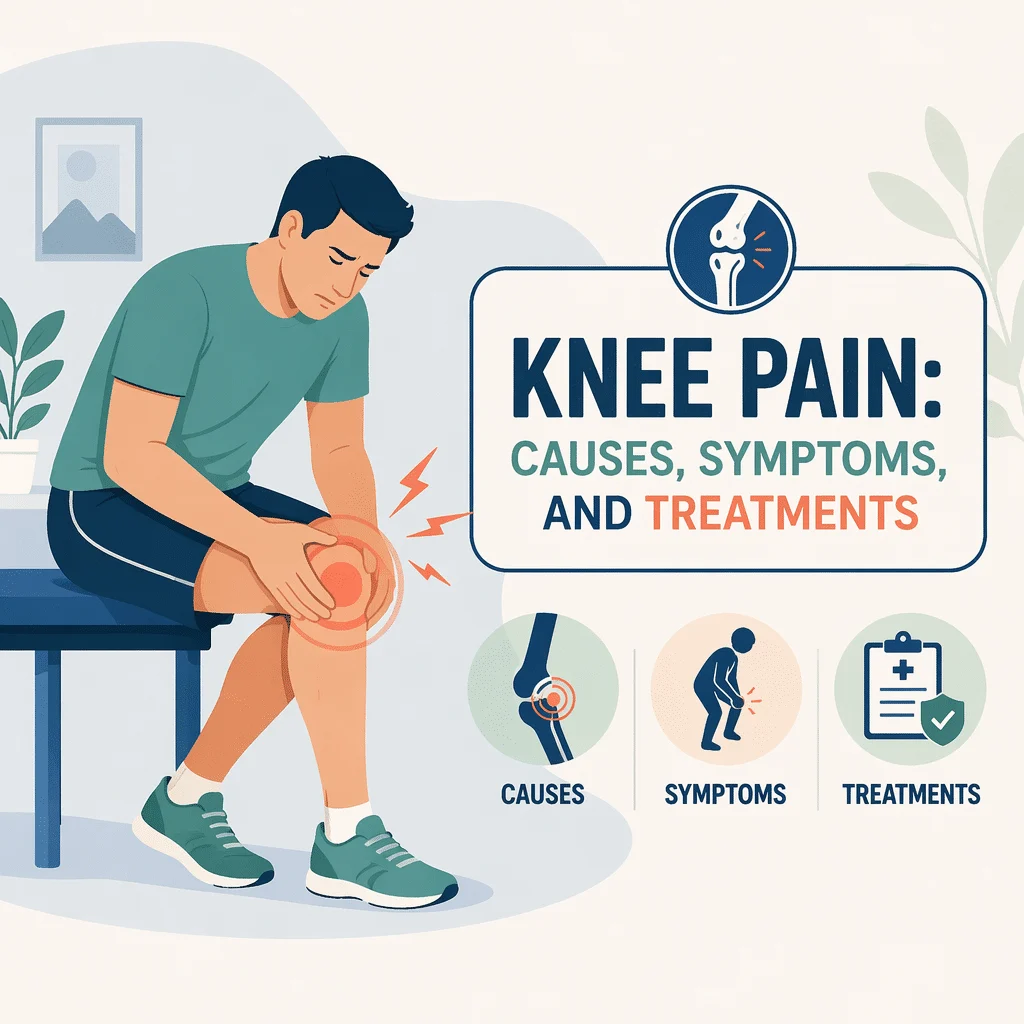
Durerea de genunchi este unul dintre cele mai frecvente motive pentru care adulții merg la medic: reprezintă aproximativ una din douăzeci de consultații la medicul de familie. Totuși, această expresie acoperă zeci de probleme diferite, de la o rotulă care se deplasează greșit la un alergător de 25 de ani, până la cartilaj uzat la un grădinar de 70 de ani. Trei lucruri restrâng rapid lista: unde se află durerea, ce o declanșează și cum evoluează pe parcursul zilei. În acest articol vei învăța cum să îți citești propriile simptome după localizare și după tipar, care cauze sunt cele mai probabile la vârsta ta, care semne de alarmă necesită îngrijire în aceeași zi, ce pot și ce nu pot arăta analizele de sânge și care tratamente au dovezi reale în spate.
Locul în care te doare genunchiul îți spune multe
Genunchiul este o articulație tip balama menținută de ligamente, amortizată de două perne de cartilaj în formă de C numite meniscuri și acoperită în față de rotulă. Fiecare structură se află într-un loc diferit, astfel că zona care doare este cu adevărat informativă. Arată mai întâi cu un deget zona cea mai dureroasă: o durere precisă se comportă diferit față de o durere surdă, profundă.
| Unde doare | Ce sugerează de obicei | Ce ajută de obicei în primă fază | Când să mergi la medic |
|---|---|---|---|
| În față, în jurul sau sub rotulă | Durere femuropatelară la persoanele tinere active, suprasolicitarea tendonului rotulian sau uzura compartimentului rotulian după 50 de ani. Se agravează la urcat/coborât scări, după stat prelungit pe scaun și la genuflexiuni. | Câteva săptămâni fără îndoituri profunde și scări, întărirea șoldului și a coapsei, apoi reîncărcare treptată. | Durerea persistă după șase săptămâni de îngrijire la domiciliu sau genunchiul cedează. |
| Partea interioară a genunchiului (medial) | Cea mai frecventă localizare. Osteoartrită medială după 45 de ani, iritarea meniscului intern sau tendoanele care se inseră imediat sub linia articulației. | Gestionarea efortului în loc de repaus complet, întărirea mușchilor coapsei, controlul greutății. | Blocaj la extensie, blocare adevărată sau umflătură care reapare de fiecare dată când mergi. |
| Partea exterioară a genunchiului (lateral) | Iritarea benzii iliotibiale la alergători și cicliști, probleme ale meniscului lateral sau uzura compartimentului extern. | Reducerea distanței parcurse în loc de oprire completă, întărirea mușchilor șoldului și verificarea încălțămintei sau a poziției pe bicicletă. | Durere care apare la aceeași distanță la fiecare sesiune și nu s-a schimbat de o lună. |
| În spatele genunchiului (posterior) | Cel mai adesea, o senzație de plenitudine cauzată de lichidul articular împins înapoi de o problemă din interiorul articulației. Mai rar, poate fi vorba de un mușchi al gambei sau de o venă. | Tratarea cauzei din interiorul articulației care produce lichidul, nu a umflăturii în sine. | Un gambă umflată, caldă sau sensibilă necesită evaluare în aceeași zi. Orice nodul ferm și fix trebuie examinat. |
| Profundă, difuză, greu de localizat | Artrită inflamatorie, infecție articulară sau durere iradiată din șold sau din zona lombară. | Evaluare clinică în loc de îngrijire la domiciliu: răspunsul este rareori mecanic. | Febră, durere care te trezește noaptea sau un genunchi fierbinte și vizibil umflat: prezintă-te urgent. |
O umflătură moale, plină cu lichid în spatele genunchiului este o problemă diferită față de un nodul ferm care nu se modifică în funcție de activitate, iar biblioteca noastră analizează un nodul sau o umflătură în spatele genunchiului. Durerea care coboară pe picior din zona lombară reprezintă un al treilea tipar, iar echipa noastră descrie simptomele și semnele de alarmă ale sciaticii.
Mecanic sau inflamator: un ghid simplu de orientare
După localizare, întreabă-te dacă genunchiul se comportă mecanic sau inflamator. Problemele mecanice țin de efort: ceva este uzat, rupt sau suprasolicitat, iar folosirea lui doare. Problemele inflamatorii provin din sistemul imunitar sau dintr-o infecție: mucoasa articulară este iritată, astfel că repausul o înțepenește, iar mișcarea o dezmorțește. Această distincție decide dacă analizele de sânge merită făcute sau nu.
| Indiciu | Indică o problemă mecanică | Indică o problemă inflamatorie |
|---|---|---|
| Rigiditate matinală | Scurtă, sub 30 de minute, dispare după câțiva pași | Prelungită, 30 până la 60 de minute sau mai mult, reapare după ce stai jos |
| Ce agravează durerea | Activitate fizică, scări, îngenuncheat, mers lung | Odihna și inactivitatea; articulația se dezmorțește odată ce începi să te miști |
| Durere nocturnă | Mai ales după o zi solicitantă sau când stai într-o poziție incomodă | Poate să te trezească în a doua jumătate a nopții |
| Alte articulații | De obicei un singur genunchi, uneori ambii dacă ambii sunt uzați | Adesea mai multe articulații, simetric, uneori mâinile și picioarele |
| Umflătură | Apare și dispare în funcție de activitate | Mai persistentă, adesea însoțită de căldură la nivelul articulației |
| Semne generale (la nivelul întregului organism) | Niciuna | Oboseală, febră ușoară, erupție cutanată, scădere în greutate neintenționată |
Genunchii reali nu se încadrează întotdeauna perfect într-o singură coloană: o articulație cu artroză poate trece printr-o perioadă de acutizare de o săptămână, iar o articulație inflamatorie poate fi și ea uzată mecanic. Privește acest ghid ca pe un instrument pentru a structura discuția cu medicul tău, nu ca pe un verdict. Dacă răspunsurile tale se grupează în coloana din dreapta, biblioteca noastră de sănătate explică diferitele forme de artrită, iar echipa noastră acoperă diagnosticul și tratamentul artritei reumatoide.
Cele mai frecvente cauze ale durerii de genunchi, în funcție de vârstă
Vârsta nu este un destin, dar schimbă suficient probabilitățile încât să merite luată în considerare. O analiză a durerii de genunchi publicată în JAMA în 2023 a arătat cât de mult se modifică diagnosticul probabil de-a lungul deceniilor.
Sub 40 de ani: durerea de rotulă și accidentările sportive
Principala cauză în această categorie este durerea patelofemurală, un termen general pentru durerea apărută în zona în care rotula alunecă pe osul coapsei. Are o prevalență de-a lungul vieții de aproximativ unul din patru, iar durerea în fața genunchiului la ghemuit este unul dintre cele mai sigure semne. Aceasta nu înseamnă că se degradează cartilajul. Cealaltă categorie importantă este accidentarea acută: o răsucire cu piciorul fixat pe sol poate rupe un menisc sau un ligament încrucișat, de obicei însoțită de un pocnet imediat, umflare rapidă și un genunchi care pare nesigur ulterior.
40–60 de ani: rupturi degenerative și uzură incipientă
Aceasta este vârsta la care rupturile de menisc încetează să mai fie accidentări și devin uzură. Afectează aproximativ unul din opt adulți, iar după 40 de ani multe apar fără niciun incident dramatic, uneori descoperite la o investigație imagistică făcută pentru altceva. Artroza incipientă se suprapune adesea. Problemele musculare din jurul articulației devin și ele mai frecvente, iar biblioteca noastră explică spasmele musculare ale genunchiului și factorii care le declanșează.
Peste 60 de ani: artroza și afecțiunile care îi seamănă
Osteoartrita este cea mai probabilă explicație pentru durerea de genunchi legată de activitate după 45 de ani, mai ales când rigiditatea matinală durează mai puțin de jumătate de oră. Dar i se pune în cârcă și altceva, și aici e capcana. Artrita prin cristale se poate instala la genunchi, nu doar la deget, și descriem tratamentele care ameliorează durerea din gută. Bolile autoimune pot debuta târziu, iar biblioteca noastră acoperă simptomele articulare ale lupusului. Compresia unui nerv poate provoca durere de genunchi care nu corespunde deloc articulației, iar un alt ghid acoperă un nerv ciupit la genunchi.
Semne de alarmă: durerea de genunchi care necesită atenție urgentă
Cele mai multe dureri de genunchi pot aștepta o programare de rutină. Patru situații nu pot. Mayo Clinic publică o listă de simptome la genunchi care necesită un apel în aceeași zi.
- Un genunchi fierbinte, vizibil umflat, foarte dureros, însoțit de febră sau stare generală alterată. Aceasta poate fi artrită septică, o infecție în interiorul articulației, și reprezintă o urgență: o articulație infectată poate fi deteriorată în câteva zile și necesită extragerea și testarea urgentă a lichidului.
- Imposibilitatea de a pune greutate pe picior după o cădere, o răsucire sau o lovitură directă, sau un genunchi evident deformat. Mergi la urgențe sau la camera de gardă în aceeași zi.
- Un genunchi care se blochează brusc și nu poate fi complet îndreptat după o răsucire. Un fragment deplasat de menisc poate bloca fizic articulația și necesită o evaluare ortopedică promptă. Blocajele intermitente la un genunchi mai uzat, cu evoluție îndelungată, sunt mult mai puțin urgente.
- Umflarea gambei, căldură locală sau sensibilitate la atingere alături de durerea de genunchi, mai ales după o intervenție chirurgicală, un zbor lung sau o perioadă de imobilitate. Aceasta ridică suspiciunea unui cheag de sânge într-o venă profundă și necesită evaluare în aceeași zi.
În afara acestor patru situații, un genunchi dureros de mai mult de șase săptămâni în ciuda unui autoîngrijiri rezonabile, sau unul care cedează repetat, merită totuși o consultație. Durerea în mai multe articulații simultan, însoțită de oboseală sau febră, trebuie și ea evaluată de un medic.
Cum stabilesc medicii cauza durerii de genunchi
Istoricul și examinarea fac cea mai mare parte din muncă
Marea majoritate a diagnosticelor de genunchi se stabilesc înainte de orice analiză. Medicul tău vrea să știe când a apărut durerea, dacă a existat un incident specific, ce o ameliorează și ce o agravează, dacă articulația se umflă sau se blochează și cât durează rigiditatea matinală. Apoi o examinează: palpează de-a lungul interliniei articulare, verifică cât de mult se îndoaie și se întinde, testează ligamentele și te urmărește cum mergi și cum te ghemuiești. Sensibilitatea la nivelul interliniei articulare este unul dintre semnele mai fiabile.
Când ajută imagistica și când nu
Investigațiile imagistice sunt mai puțin necesare decât cred majoritatea oamenilor. Analiza JAMA din 2023 afirmă clar că nu se recomandă radiografierea fiecărui pacient cu suspiciune de osteoartrită de genunchi: diagnosticul poate fi stabilit clinic, iar imaginea nu corespunde adesea cu durerea. Mulți oameni au uzură importantă pe radiografie, dar niciun simptom. Imagistica își justifică locul atunci când rezultatul ar schimba ce urmează: după un traumatism semnificativ, când se ia în calcul intervenția chirurgicală sau când ceva din tabloul clinic nu se potrivește.
Ce pot și ce nu pot arăta analizele de sânge
Acesta este aspectul pe care pacienții îl înțeleg greșit cel mai des, așa că merită spus direct: nicio analiză de sânge nu diagnostichează o problemă mecanică de genunchi. Nu există niciun marker pentru un menisc rupt, un ligament întins sau o rotulă care alunecă prost. Acestea se depistează prin examinare și, când e nevoie, prin imagistică. Analizele de sânge răspund la o altă întrebare: dacă ceva sistemic este cauza problemei articulare.
Când tabloul clinic sugerează o afecțiune inflamatorie, se solicită de obicei câteva analize. Markerii inflamatori, precum proteina C reactivă și viteza de sedimentare a hematiilor, arată dacă există inflamație undeva în organism, fără a preciza unde; ghidul nostru explică nivelurile crescute de CRP și ce le determină, și acoperim de asemenea viteza de sedimentare a hematiilor. Echipa noastră acoperă ce arată analiza de sânge pentru acid uric, și susține diagnosticul de gută, deși nivelul poate fi normal în timpul unui atac și crescut la persoane care nu au avut niciodată un episod. Factorul reumatoid și anticorpii anti-CCP sunt utili când sunt implicate mai multe articulații. Serologia pentru boala Lyme are un rol după o mușcătură de căpușă într-o zonă endemică, iar biblioteca noastră descrie stadiile bolii Lyme.
Un singur test le depășește pe toate celelalte când o articulație este fierbinte și umflată: extragerea unui eșantion de lichid articular cu un ac. Acesta diferențiază infecția de cristale și de inflamație într-un mod în care niciun test de sânge nu poate.
Ce ajută cu adevărat la durerea de genunchi
Exercițiul fizic este tratamentul cu cele mai solide dovezi
Fiecare ghid major plasează exercițiul fizic pe primul loc, înaintea medicamentelor și cu mult înaintea intervenției chirurgicale, atât pentru durerea artrozică, cât și pentru cea femuro-patelară. Paradoxul este că solicitarea moderată a unui genunchi dureros îl ameliorează, în loc să îl agraveze: mușchii puternici ai coapsei și șoldului modifică modul în care forța se transmite prin articulație, iar țesuturile antrenate tolerează mai mult. Institutul Național pentru Artrită și Boli Musculo-Scheletice și ale Pielii subliniază același lucru: mișcarea reduce durerea și rigiditatea articulară și îmbunătățește flexibilitatea.
Cel mai important este consecvența, nu programul perfect. Așteaptă-te la câteva săptămâni înainte să observi vreo schimbare, acceptă o ușoară durere musculară care dispare în decurs de o zi și progresează treptat, în pași mici.
Greutatea, efortul fizic și obiceiurile zilnice
Fiecare pas transmite prin genunchi de câteva ori greutatea corpului, astfel că și o scădere modestă în greutate modifică semnificativ încărcarea zilnică pentru persoanele cu kilograme în plus. Dincolo de greutate, detaliile cotidiene contează: înlocuirea genuflexiunilor adânci cu un genunchier, împărțirea unei plimbări lungi în două mai scurte, schimbarea pantofilor uzați și folosirea unui baston pe partea opusă în perioadele de acutizare. Niciuna nu face minuni singură. Împreună, ele decid adesea dacă un genunchi se ameliorează sau nu.
Medicamente, injecții și intervenții chirurgicale
Calmarea durerii are un rol de susținere, iar alegerea potrivită depinde de celelalte afecțiuni și medicamente ale tale: o discuție pentru medicul sau farmacistul tău, nu pentru un articol. Antiinflamatoarele topice sunt adesea prima opțiune pentru o articulație superficială precum genunchiul. Injecțiile cu corticosteroizi pot calma o articulație puternic inflamată timp de săptămâni sau luni și sunt cel mai bine privite ca o fereastră în care să reconstruiești forța musculară, nu ca o reparație. Înlocuirea articulației este rezervată bolii în stadiu final, după ce opțiunile conservatoare au fost cu adevărat epuizate.
Unde dovezile sunt mai slabe decât marketingul
Două avertismente sincere. În primul rând, niciun supliment nu s-a dovedit că regenerează sau repară cartilajul la oameni, indiferent ce sugerează ambalajul; unii oameni raportează ameliorarea simptomelor, dar aceasta este o afirmație diferită de repararea structurală. În al doilea rând, chirurgia artroscopică pentru o ruptură degenerativă de menisc nu este recomandată, chiar și atunci când genunchiul „prinde", deoarece studiile clinice au arătat în mod repetat că nu este mai eficientă decât un program bun de exerciții. Iar odihna prelungită slăbește mușchii care protejează articulația, motiv pentru care recomandările moderne vizează odihna relativă, nu imobilizarea.
Cele mai recente progrese științifice
Cercetările privind durerea de genunchi au fost active în ultimii trei ani, iar majoritatea au consolidat, mai degrabă decât au răsturnat, principiile de bază. Iată ce s-a schimbat.
Exercițiul aerobic s-a dovedit cel mai eficient în cea mai amplă comparație de până acum
O meta-analiză de rețea din 2025, publicată în BMJ, a adunat date din 217 studii randomizate care au inclus peste 15.000 de persoane cu osteoartrită de genunchi și a comparat tipurile de exerciții între ele. O meta-analiză de rețea clasifică tratamentele chiar și atunci când acestea nu au fost testate direct unul față de celălalt. Exercițiul aerobic — adică mersul pe jos, ciclismul sau înotul — a adus probabil cele mai mari îmbunătățiri ale durerii pe parcursul a trei luni, în timp ce programele de întărire musculară și cele mixte au fost cele mai eficiente pentru funcționalitate. Ce înseamnă asta pentru tine: mersul pe jos sau ciclismul, activități pe care le poți menține cu adevărat, reprezintă un tratament de primă linie legitim. Autorii au evaluat nivelul de încredere ca moderat, deci clasamentul s-ar putea schimba.
O amplă analiză Cochrane este sinceră cu privire la mărimea beneficiului
Analiza Cochrane privind exercițiile fizice terestre pentru osteoartrita genunchiului a fost actualizată în 2024, incluzând 139 de studii și aproximativ 12.500 de participanți. Exercițiile fizice îmbunătățesc probabil durerea, funcția și calitatea vieții pe termen scurt. Autorii au comparat apoi aceste îmbunătățiri cu cea mai mică schimbare pe care un pacient ar observa-o și au constatat că beneficiul se situează aproape de acel prag, nu confortabil deasupra lui. Ce înseamnă asta pentru tine: exercițiile funcționează și rămân primul lucru de încercat, dar așteaptă-te la o îmbunătățire semnificativă, nu la o transformare.
Ghidurile europene pun autoîngrijirea în centrul tratamentului
EULAR, societatea europeană de reumatologie, și-a actualizat în 2023 recomandările pentru gestionarea osteoartritei de șold și genunchi fără medicamente. Cele opt recomandări pornesc de la un plan individualizat bazat pe educație și autoîngrijire, apoi acoperă dozajul și progresia exercițiilor, greutatea sănătoasă, încălțămintea și dispozitivele de mers, precum și sfaturile legate de muncă. Acordul dintre cei 25 de experți a fost aproape unanim. Ce înseamnă asta pentru tine: să îți înțelegi propria articulație și să ai un plan pe care îl poți gestiona singur nu este o opțiune secundară înainte de tratamentul „adevărat". Este parte din el.
Yoga s-a menținut la același nivel cu un program de întărire musculară
Un studiu randomizat publicat în JAMA Network Open în 2025 a repartizat 117 adulți cu vârsta de 40 de ani și peste, cu osteoartrită dureroasă de genunchi, fie la yoga, fie la un program convențional de întărire musculară, timp de 12 săptămâni. Yoga nu a depășit programul de întărire la principala măsură a durerii, dar a obținut rezultate la fel de bune și a fost ușor mai eficientă la unele măsuri secundare pe parcursul a 24 de săptămâni. Efectele secundare au fost ușoare în ambele grupuri. Ce înseamnă asta pentru tine: acesta este un singur studiu, nu o dovadă definitivă, dar cel mai bun exercițiu pentru un genunchi dureros este, în mare parte, cel pe care îl vei face în continuare și peste șase luni.
Glosar de termeni cheie
| Termen | Ce înseamnă |
|---|---|
| Durerea patelofemurală | Durere apărută acolo unde rotula alunecă peste osul coapsei. De obicei resimțită în partea din față a genunchiului la urcat/coborât scări, la genuflexiuni sau după perioade lungi de stat jos. |
| Meniscul | Unul dintre cele două tampoane de cartilaj în formă de C care se află între osul coapsei și osul tibiei și distribuie sarcina la nivelul articulației. Pluralul este menisci. |
| Osteoartrita | Uzura treptată a cartilajului articular și a osului de dedesubt, care produce durere legată de activitate și redoare matinală de scurtă durată. Nu este pur și simplu îmbătrânire și nu este inevitabilă. |
| Revărsat articular | Un exces de lichid în interiorul articulației, ceea ce oamenii numesc „apă la genunchi". Semnalează o iritație în interiorul articulației, nu un diagnostic în sine. |
| Artrită septică | Infecție în interiorul unei articulații. Produce o articulație fierbinte, umflată și foarte dureroasă, adesea însoțită de febră, și reprezintă o urgență medicală. |
| proteina C reactivă (PCR) | O proteină din sânge care crește atunci când există inflamație undeva în organism. Confirmă prezența inflamației, dar nu indică unde sau de ce. |
| Viteza de sedimentare a hematiilor (VSH) | Un test de sânge care măsoară cât de repede se depun globulele roșii într-un tub. La fel ca PCR, este un marker general al inflamației, dar evoluează mai lent. |
| Anticorpii anti-CCP | Anticorpi împotriva peptidelor ciclice citrulinate, folosiți alături de factorul reumatoid atunci când sunt afectate mai multe articulații. Sunt destul de specifici pentru artrita reumatoidă. |
| Puncția articulară | Extragerea lichidului dintr-o articulație cu ajutorul unui ac, urmată de analizarea acestuia. Este singura metodă sigură de a diferenția rapid o infecție, cristalele și inflamația. |
Întrebări frecvente
De ce mă doare genunchiul când îl îndoi și îl întind?
Durerea pe tot arcul de mișcare înseamnă de obicei că ceva este comprimat sau prins în timp ce articulația se mișcă. Dacă durerea este în față și se agravează la coborâtul scărilor sau la ridicarea de pe un scaun jos, cauza obișnuită este articulația rotulei. Dacă apare de-a lungul liniei articulare interne sau externe și este însoțită de un clic sau o senzație de blocare, mai probabil este implicat un menisc. Dacă genunchiul nu poate fi întins complet, situația este diferită și mai urgentă. Durerea care rămâne la un nivel ușor și dispare rapid după efort este, în general, sigur de gestionat; durerea care se intensifică pe parcursul zilei și lasă genunchiul umflat a doua dimineață înseamnă că sarcina este prea mare pentru moment.
Ce poate cauza durerea de genunchi fără nicio accidentare?
Majoritatea durerilor de genunchi apar fără un incident memorabil. Osteoartrita se dezvoltă de-a lungul anilor. Rupturile degenerative de menisc după 40 de ani apar adesea fără niciun traumatism. Durerea femuropatelară urmează de obicei o schimbare a volumului de antrenament, a încălțămintei sau a locului de muncă, nu un eveniment singular. Artrita inflamatorie, guta și infecția articulară nu au nicio legătură cu mecanica. Durerea poate fi, de asemenea, iradiată spre genunchi din șold sau din zona lombară, motiv pentru care un genunchi care doare, dar la examinare pare complet normal, determină căutarea cauzei în altă parte. Absența unei accidentări nu este în sine un semn liniștitor sau îngrijorător; tiparul durerii contează mult mai mult.
De ce durerea de genunchi este mai frecventă la femei?
Atât osteoartrita genunchiului, cât și durerea femuropatelară sunt mai frecvente la femei, iar motivele sunt parțial anatomice și parțial hormonale. Un bazin mai larg modifică unghiul în care mușchii coapsei trag de rotulă, ceea ce încarcă diferit articulația rotulei. Laxitatea ligamentară variază pe parcursul ciclului menstrual. Rata osteoartritei crește vizibil după menopauză. Nimic din toate acestea nu face ca durerea de genunchi să fie inevitabilă și nimic nu schimbă tratamentul: întărirea musculară, gestionarea efortului și controlul greutății funcționează la fel, indiferent de sex.
De ce mă doare genunchiul mai tare noaptea?
Două explicații diferite, iar distincția dintre ele este utilă. Genunchii cu probleme mecanice dor adesea seara, după o zi solicitantă, sau când te întinzi pe partea dureroasă, și se liniștesc odată ce găsești o poziție confortabilă, uneori cu o pernă între genunchi. Articulațiile inflamate se comportă diferit: te pot trezi în a doua jumătate a nopții și sunt rigide o perioadă lungă dimineața. Durerea nocturnă care te trezește regulat, mai ales însoțită de febră, scădere inexplicabilă în greutate sau dureri în mai multe articulații, trebuie raportată medicului, nu gestionată acasă.
Cât timp ar trebui să aștept înainte de a consulta un medic pentru durerea de genunchi?
Chiar în aceeași zi dacă nu poți pune greutate pe picior după o accidentare, dacă genunchiul este fierbinte și umflat cu febră, dacă s-a blocat și nu se poate îndrepta, sau dacă gamba este umflată și caldă. În decurs de una-două săptămâni dacă genunchiul cedează frecvent, dacă se umflă de fiecare dată când îl folosești, sau dacă mai multe articulații te dor în același timp, însoțite de oboseală. Altfel, șase săptămâni de îngrijire sensibilă la domiciliu reprezintă o perioadă rezonabilă de probă: odihnă relativă, nu imobilizare totală, gestionarea efortului și exerciții zilnice de întărire. Dacă nimic nu s-a îmbunătățit în acest timp, programează-te la medic în loc să repeți aceleași șase săptămâni.
Pot continua să fac sport dacă am dureri de genunchi?
În majoritatea cazurilor da, iar oprirea completă a activității tinde să înrăutățească lucrurile, slăbind mușchii care protejează articulația. Regula practică este că un disconfort ușor în timpul activității este acceptabil dacă dispare în aproximativ 24 de ore și nu lasă genunchiul mai umflat. Dacă se întâmplă altfel, efortul a fost prea mare, deci reduce volumul în loc să renunți la activitate. Schimbarea tipului de efort rezolvă adesea problema: ciclismul și înotul îți permit să continui antrenamentele în timp ce genunchiul tolerează mai puțin impact. Dacă te recuperezi după o accidentare specifică sau o intervenție chirurgicală, urmează planul care ți-a fost indicat.
Surse
- Mayo Clinic — Durerea de genunchi: simptome și cauze, 2025 — mayoclinic.org
- Institutul Național pentru Artrită și Boli Musculo-Scheletice și ale Pielii (NIAMS), Institutele Naționale de Sănătate — Osteoartrita: cauze, simptome și tratament — niams.nih.gov
- MedlinePlus, Biblioteca Națională de Medicină — Leziuni și afecțiuni ale genunchiului — medlineplus.gov
- Duong V, Oo WM, Ding C, Culvenor AG, Hunter DJ — Evaluation and Treatment of Knee Pain: A Review — JAMA, 2023 — doi.org/10.1001/jama.2023.19675
- Yan L, Li D, Xing D, et al. — Eficacitatea comparativă și siguranța modalităților de exercițiu în osteoartrita genunchiului: revizuire sistematică și meta-analiză în rețea — BMJ, 2025 — doi.org/10.1136/bmj-2025-085242
- Lawford BJ, Hall M, Hinman RS, et al. — Exercițiul fizic în osteoartrita genunchiului — Cochrane Database of Systematic Reviews, 2024 — doi.org/10.1002/14651858.CD004376.pub4
- Moseng T, Vliet Vlieland TPM, Battista S, et al. — Recomandările EULAR pentru managementul non-farmacologic de bază al osteoartritei șoldului și genunchiului: actualizare 2023 — Annals of the Rheumatic Diseases, 2024 — doi.org/10.1136/ard-2023-225041
- Abafita BJ, Singh A, Aitken D, et al. — Yoga or Strengthening Exercise for Knee Osteoarthritis: A Randomized Clinical Trial — JAMA Network Open, 2025 — doi.org/10.1001/jamanetworkopen.2025.3698
Lectură suplimentară
- Spasmul muscular al genunchiului: cauze, simptome și tratamente
- Crampe la ischiogambieri: cauze, simptome și tratamente
- Valori crescute ale CRP: cauze, simptome și tratamente
- Analizele de vitamina D din sânge și cum să-ți citești rezultatele
- Analiza calciului din sânge și panoul osos și mineral
Înțelege-ți rezultatele analizelor cu AI DiagMe
Niciun test de sânge nu poate diagnostica un menisc uzat sau o rotulă care se mișcă incorect, dar atunci când durerea de genunchi apare împreună cu febră, mai multe articulații dureroase sau redoare matinală prelungită, analizele devin parte din răspuns. Markerii inflamatori precum CRP și viteza de sedimentare a hematiilor, acidul uric și testele de anticorpi pentru artrita reumatoidă sunt valorile cel mai des solicitate, și pot fi ușor interpretate greșit pe cont propriu. AI DiagMe îți explică ce înseamnă rezultatele tale pe înțelesul tău, cu o interpretare verificată de un comitet de medici. Te ajută să înțelegi analizele și să pregătești întrebări mai bune pentru consultație; nu pune diagnostice și nu înlocuiește medicul tău.
Obține interpretarea rezultatelor în câteva minute