







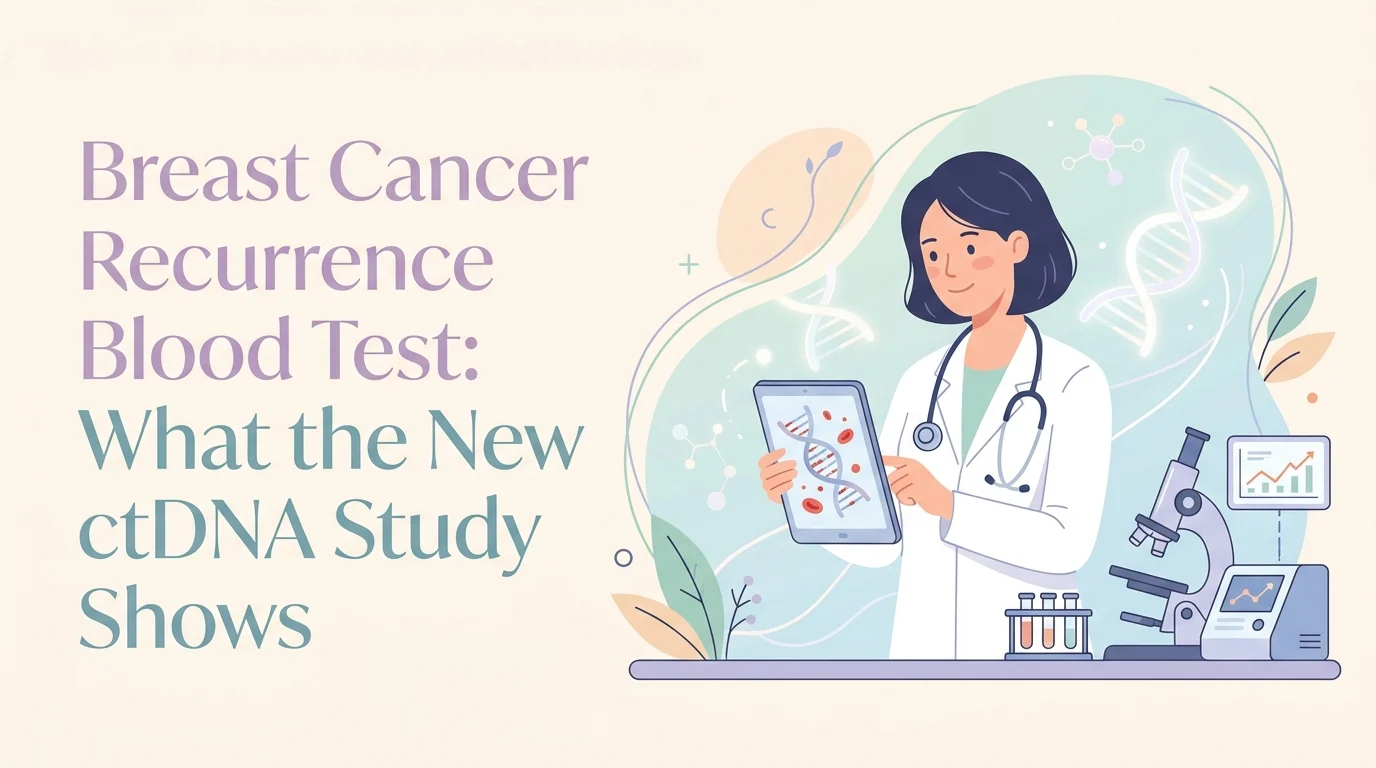
31 अगस्त 2026 को KERA और Texas Public Radio ने ऑस्टिन के ऑन्कोलॉजिस्ट डॉ. डेब्रा पैट के साथ एक ऐसे रक्त परीक्षण पर साक्षात्कार प्रसारित किया, जो स्कैन से महीनों पहले स्तन कैंसर की वापसी का संकेत दे सकता है। इस खबर के पीछे की रिसर्च कुछ हफ्ते पहले JAMA Oncology में प्रकाशित हुई थी, और उसके साथ एक आंकड़ा चर्चा में आया: 7.9 महीने — यानी सामान्य फॉलो-अप की तुलना में इस परीक्षण ने औसतन इतने महीने पहले चेतावनी दी।
यह लेख इस बीमारी का परिचय नहीं है — इसके लिए हमारी स्तन कैंसर पहले से उपलब्ध है। यह लेख उस सवाल का जवाब देता है जो यह खबर उन लोगों के मन में उठाती है जिनका इलाज पूरा हो चुका है और जो अब फॉलो-अप में हैं: क्या कोई रक्त परीक्षण बता सकता है कि कैंसर वापस आ रहा है, और क्या आप इसके लिए अनुरोध कर सकते हैं?
स्टडी में वास्तव में क्या जांचा गया
लंदन के Institute of Cancer Research के शोधकर्ताओं ने c-TRAK TN ट्रायल के दौरान एकत्र किए गए रक्त नमूनों का फिर से विश्लेषण किया। इस ट्रायल में 159 ऐसी महिलाओं को शामिल किया गया था जिन्हें अर्ली ट्रिपल नेगेटिव ब्रेस्ट कैंसर था और जिनमें पुनरावृत्ति का मध्यम से उच्च जोखिम था। सहायक उपचार (adjuvant treatment) समाप्त होने के बाद दो साल तक हर तीन महीने में रक्त नमूने लिए गए — कुल 1,026 प्लाज़्मा सैंपल।
यह परीक्षण सर्कुलेटिंग ट्यूमर डीएनए (circulating tumour DNA), यानी ctDNA की तलाश करता है: ये कैंसर कोशिकाओं द्वारा रक्तप्रवाह में छोड़े गए बेहद छोटे डीएनए के टुकड़े होते हैं। उपचार के बाद इनका मिलना 'मॉलिक्यूलर रेसिडुअल डिज़ीज़' (molecular residual disease) कहलाता है — यानी ऐसा कैंसर जो किसी स्कैन में नज़र नहीं आता, क्योंकि वह इतना कम होता है कि कोई छाया नहीं बनाता।
दो निष्कर्ष महत्वपूर्ण रहे। पहला, निगरानी के दौरान ctDNA का पाया जाना कैंसर की वापसी से बहुत मज़बूती से जुड़ा था; इस समूह में पॉज़िटिव परिणाम वाली और बिना परिणाम वाली महिलाओं के बीच जोखिम का अंतर किसी भी रक्त मार्कर (blood marker) के लिए अब तक रिपोर्ट किए गए सबसे बड़े अंतरों में से एक था। दूसरा, परीक्षण का नया “टिशू-फ्री” (tissue-free) संस्करण पुराने, व्यक्तिगत (personalised) संस्करण जितना ही प्रभावी साबित हुआ।
दूसरा बिंदु व्यावहारिक दृष्टि से सबसे महत्वपूर्ण है। अब तक ये परीक्षण (Tests) व्यक्तिगत रूप से तैयार किए जाते थे: प्रयोगशाला (Laboratory) मूल ट्यूमर (Tumour) की जीन-अनुक्रमण (Sequencing) करती थी, फिर उस व्यक्ति के म्यूटेशन (Mutations) के अनुसार एक रक्त परीक्षण (Blood Test) बनाती थी। यह तरीका काम करता है, लेकिन इसके लिए पर्याप्त संग्रहीत ट्यूमर ऊतक (Tumour Tissue) की जरूरत होती है — और कभी-कभी पहले दौर की नैदानिक जांच (Diagnostic Testing) के बाद कुछ भी नहीं बचता। टिशू-मुक्त (Tissue-Free) संस्करण व्यक्तिगत म्यूटेशन सूची की बजाय डीएनए (DNA) पर मौजूद रासायनिक निशानों को पढ़ता है, इसलिए इसे किसी भी व्यक्ति पर किया जा सकता है।
आपका सामान्य रक्त परीक्षण (Blood Panel) यह क्यों नहीं कर सकता
यह वह हिस्सा है जो तब मायने रखता है जब आप अपने खुद के परिणाम (Results) देख रहे हों। एक सामान्य रक्त रिपोर्ट (Blood Report) में कुछ भी वापस आने वाले कैंसर (Cancer) का पता नहीं लगाता। जो पंक्तियाँ आप पढ़ सकते हैं, वे आपको एनीमिया (Anaemia), लिवर (Liver), किडनी (Kidneys) और सूजन (Inflammation) के बारे में बताती हैं — ट्यूमर डीएनए (Tumour DNA) के बारे में नहीं।
| परीक्षा | यह क्या मापता है | स्तन कैंसर (Breast Cancer) की अनुवर्ती देखभाल में भूमिका |
|---|---|---|
| संपूर्ण रक्त गणना | लाल रक्त कोशिकाएं, श्वेत रक्त कोशिकाएं, प्लेटलेट्स | उपचार के प्रभावों की निगरानी करता है, पुनरावृत्ति (Recurrence) की नहीं |
| लिवर फंक्शन टेस्ट (Liver Function Tests) | ALT, AST, ALP, बिलीरुबिन (Bilirubin) | केवल तब आदेश दिया जाता है जब लक्षण किसी समस्या का संकेत दें, नियमित रूप से नहीं |
| CA 15-3, CEA | कुछ स्तन ट्यूमर (Breast Tumours) द्वारा उत्सर्जित प्रोटीन (Proteins) | प्रारंभिक स्तन कैंसर (Early Breast Cancer) के बाद नियमित निगरानी के लिए अनुशंसित नहीं |
| ctDNA / आणविक अवशिष्ट रोग (Molecular Residual Disease) | प्लाज्मा (Plasma) में ट्यूमर डीएनए (Tumour DNA) के टुकड़े | शोध और विशेषज्ञ उपयोग; दिशानिर्देश-आधारित परीक्षण (Guideline-Based Test) नहीं |
CA 15-3 वह मार्कर (Marker) है जिसके बारे में लोग सबसे अधिक पूछते हैं, क्योंकि यह क्लासिक स्तन ट्यूमर मार्कर (Breast Tumour Marker) है और इसे आसानी से मंगवाया जा सकता है। मेटास्टेटिक रोग (Metastatic Disease) में उपचार की प्रतिक्रिया (Treatment Response) को ट्रैक करने के लिए यह वास्तव में उपयोगी है। लेकिन यह उस महिला की निगरानी के लिए उपयोगी नहीं है जो बिना किसी लक्षण के रिमिशन (Remission) में है, क्योंकि हर किसी में स्तर नहीं बढ़ता, और यह कभी नहीं दिखाया गया कि इस परीक्षण से लोग अधिक समय तक जीते हैं। इस पर हमारा पेज ट्यूमर मार्कर (Tumour Markers) यह बताता है कि प्रत्येक मार्कर (Marker) कहाँ उपयुक्त है और कहाँ नहीं, और यदि आपकी रिपोर्ट की शब्दावली समझने में बाधा है, तो हमारी गाइड रक्त परीक्षण के परिणामों को पढ़ना बिल्कुल शुरुआत से समझाती है।
पहले पता लगाना और बेहतर इलाज होना — ये एक जैसा नहीं है
डॉ. पैट (Dr Patt) ने KERA इंटरव्यू में यह बात स्पष्ट रूप से कही थी, और यह पूरी कहानी का सबसे महत्वपूर्ण वाक्य है। ये परीक्षण पुनरावृत्ति (Recurrence) का पहले पता लगाते हैं। लेकिन अभी तक यह नहीं दिखाया गया है कि इससे किसी को अधिक समय तक जीने में मदद मिली हो।
यह अंतर कोई तकनीकी बारीकी नहीं है। कैंसर का जल्दी पता लगाना तभी फायदेमंद होता है जब उस जानकारी के साथ उस समय कुछ उपयोगी किया जा सके — और आणविक अवशिष्ट रोग (Molecular Residual Disease) के लिए यह सवाल अभी भी खुला है। अभी परीक्षण (Trials) चल रहे हैं यह जांचने के लिए कि क्या ctDNA के सकारात्मक परिणाम पर उपचार बदलने से परिणाम बेहतर होते हैं।
चूँकि यह परीक्षण (Test) किसी स्थापित दिशा-निर्देश (Guideline) पर आधारित नहीं है, इसलिए इसके दो व्यावहारिक परिणाम सामने आते हैं। पहला, बीमा (Insurance) अक्सर इसे कवर नहीं करता। दूसरा, यह परीक्षण करवाना है या नहीं — यह निर्णय आपको अपने ऑन्कोलॉजिस्ट (Oncologist) से पहले नमूना (Sample) लेने से पहले ही बात करके लेना चाहिए, न कि परिणाम (Result) आने के बाद — इसमें यह भी शामिल है कि यदि परिणाम पॉज़िटिव (Positive) आए तो आप दोनों क्या करेंगे। यही सावधानी इससे जुड़े व्यापक परीक्षणों के समूह पर भी लागू की जा रही है, मल्टी-कैंसर अर्ली डिटेक्शन टेस्ट (Multi-Cancer Early Detection Tests) जिनका अभी मूल्यांकन (Evaluation) किया जा रहा है।
नवीनतम वैज्ञानिक प्रगति, सरल भाषा में
पिछले तीन वर्षों में PubMed और Consensus डेटाबेस में अनुक्रमित (Indexed) साहित्य की खोज करने पर अगस्त की वह सुर्खी चार दृष्टिकोणों से स्पष्ट होती है।
पहला, पूर्वानुमान संकेत (Prognostic Signal) वास्तविक है और महत्वपूर्ण भी। 57 अध्ययनों और 5,700 से अधिक ऑपरेबल (Operable) स्तन कैंसर (Breast Cancer) से पीड़ित महिलाओं को मिलाकर किए गए एक मेटा-विश्लेषण (Meta-Analysis) में पाया गया कि फॉलो-अप (Follow-up) के दौरान ctDNA का पता चलना पुनरावृत्ति (Relapse) तक के समय को काफी कम कर देता है। 2026 के एक मेटा-विश्लेषण में, जिसमें अठारह संभावित (Prospective) अध्ययन शामिल थे, भी यही निष्कर्ष निकला। आपके लिए इसका अर्थ यह है: एक पॉज़िटिव (Positive) परिणाम कोई अस्पष्ट चिंता नहीं, बल्कि एक मज़बूत संकेत है। इसका यह भी अर्थ है कि इतने महत्वपूर्ण परीक्षण को लापरवाही से नहीं करवाना चाहिए।
दूसरा, लीड टाइम (Lead Time) एक समान है। अध्ययनों में पॉज़िटिव (Positive) रक्त परीक्षण (Blood Test) और दिखाई देने वाली पुनरावृत्ति (Recurrence) के बीच का औसत अंतर लगभग आठ से तेरह महीनों के बीच रहता है, हालाँकि इसमें काफी विविधता भी देखी गई है। कुछ महिलाओं को कुछ हफ्ते पहले संकेत मिला, तो कुछ को चार साल से भी अधिक पहले।
तीसरा, और यह एक ईमानदार सीमा है — Dana-Farber टीम द्वारा JAMA Oncology में प्रकाशित 2026 की एक समीक्षा (Review) में निष्कर्ष निकाला गया कि हालाँकि ये परीक्षण (Assays) विश्लेषणात्मक रूप से (Analytically) सटीक और स्पष्ट रूप से पूर्वानुमानात्मक (Prognostic) हैं, फिर भी उनकी नैदानिक उपयोगिता (Clinical Utility) अभी तक सिद्ध नहीं हुई है। अभी तक कोई नहीं जानता कि परीक्षण कितनी बार करना है, कब शुरू करना है, या कौन-सा परीक्षण बेहतर है। 2026 की एक अलग समीक्षा ने इसके कारण संख्याओं में स्पष्ट किए: ट्यूमर (Tumour) अलग-अलग दर से DNA छोड़ते हैं, और कुछ महिलाओं के रक्त में इतना कम DNA होता है कि कोई भी परीक्षण उसे पकड़ नहीं पाता।
चौथा, यह क्षेत्र अब ऐसे परीक्षणों की ओर बढ़ रहा है जिनके लिए ट्यूमर टिशू (Tumour Tissue) की ज़रूरत नहीं होती। लंदन का अध्ययन इसका एक उदाहरण है; ट्रिपल नेगेटिव (Triple Negative) रोग में टिशू-फ्री (Tissue-Free) परीक्षण पर किए गए 2025 के एक अमेरिकी ट्रायल (Trial) में भी इसी तरह के परिणाम सामने आए, जिसमें झूठे पॉज़िटिव (False Positives) बहुत कम थे। आपके लिए इसका अर्थ सटीकता से अधिक पहुँच (Access) है — वही जानकारी, उन लोगों के लिए भी उपलब्ध, जिनकी मूल बायोप्सी (Biopsy) बहुत पहले हो चुकी है।
अभी आपके लिए इससे क्या बदलता है
यदि आप प्रारंभिक स्तन कैंसर (Early Breast Cancer) के बाद फॉलो-अप (Follow-up) में हैं, तो आज आपके शेड्यूल (Schedule) में कोई बदलाव नहीं होता। फॉलो-अप नैदानिक जाँच (Clinical Examination) और वार्षिक इमेजिंग (Annual Imaging) पर आधारित होता है, और रक्त परीक्षण (Blood Tests) तब करवाए जाते हैं जब कोई लक्षण (Symptom) या जाँच में कोई असामान्यता सामने आए — न कि किसी निर्धारित कैलेंडर (Calendar) के अनुसार।
यदि आप निजी तौर पर ctDNA परीक्षण करवाने पर विचार कर रहे हैं, तो सहमति देने से पहले तीन प्रश्न अवश्य पूछें: यदि परिणाम सकारात्मक आए तो क्या होगा, यदि नकारात्मक आए तो क्या होगा, और इसका खर्च कौन उठाएगा। नकारात्मक परिणाम का यह अर्थ नहीं है कि कैंसर समाप्त हो गया है — कुछ ट्यूमर इतना कम DNA छोड़ते हैं कि वे पकड़ में नहीं आते। सकारात्मक परिणाम, अभी के लिए, अधिकतर पहले जानकारी देता है — पहले कार्रवाई का अवसर नहीं।
और यदि आप ऐसी रिपोर्ट पढ़ रहे हैं जिसमें अप्रत्याशित संख्याएँ हैं, तो याद रखें कि ये संख्याएँ किस उद्देश्य के लिए हैं। आपके लिवर फ़ंक्शन परीक्षण में लिवर एंजाइम (Liver Enzyme) का बढ़ा हुआ स्तर, या आपके संपूर्ण रक्त गणना पर कोई अप्रत्याशित रेखा — यह एक प्रश्न पूछने का कारण है, आपके कैंसर पर कोई अंतिम निर्णय नहीं। यही तर्क ऑन्कोलॉजी (Oncology) के हर क्षेत्र में लागू होता है, चाहे विषय हो कोलन कैंसर के लिए रक्त परीक्षण, , फेफड़ों के कैंसर के लिए रक्त परीक्षण, , नवीन स्वीकृत अग्नाशय कैंसर परीक्षण, , कोलोरेक्टल स्क्रीनिंग के लिए स्टूल परीक्षण, या GLP-1 दवाओं और स्तन कैंसर पर 2026 के आँकड़े.
अक्सर पूछे जाने वाले प्रश्नों
क्या मैं स्तन कैंसर के बाद अपने डॉक्टर से ctDNA परीक्षण के लिए कह सकती हूँ?
आप पूछ सकती हैं, और कुछ केंद्रों में यह परीक्षण हो भी सकता है, लेकिन यह कहीं भी मानक फॉलो-अप का हिस्सा नहीं है। चूँकि यह दिशानिर्देशों पर आधारित नहीं है, इसलिए बीमा कंपनियाँ अक्सर इसे कवर करने से मना कर देती हैं, और आपके ऑन्कोलॉजिस्ट (Oncologist) पहले से यह तय करना चाहेंगे कि सकारात्मक परिणाम आने पर क्या कदम उठाए जाएँगे।
क्या CA 15-3 पुनरावृत्ति (Recurrence) का पता लगाने में उपयोगी है?
बिना लक्षण वाले व्यक्ति की नियमित निगरानी के लिए नहीं। हर महिला में जिसे रोग दोबारा हुआ हो, CA 15-3 का स्तर नहीं बढ़ता, और यह परीक्षण जीवित रहने की संभावना बेहतर करता है — यह सिद्ध नहीं हुआ है। CA 15-3 की भूमिका तब अधिक स्पष्ट होती है जब मेटास्टेटिक रोग (Metastatic Disease) स्थापित हो जाए और उपचार की प्रतिक्रिया को ट्रैक करना हो।
ctDNA परीक्षण पुनरावृत्ति को कितने पहले पकड़ लेता है?
लंदन के एक अध्ययन में औसत समय मानक स्कैन से 7.9 महीने पहले था। कई अध्ययनों के संयुक्त आँकड़े दस से तेरह महीने के आसपास हैं, लेकिन यह सीमा बहुत व्यापक है और औसत व्यक्तिगत भिन्नता को छुपा देते हैं।
क्या ctDNA का नकारात्मक परिणाम यह दर्शाता है कि मैं पूरी तरह ठीक हो गई हूँ?
नहीं। कुछ ट्यूमर रक्त में बहुत कम DNA छोड़ते हैं, इसलिए रोग मौजूद होने पर भी नकारात्मक परिणाम आ सकता है। यह पुनरावृत्ति की संभावना को कम करता है, लेकिन इसे पूरी तरह नकारता नहीं।
सामान्य स्तन कैंसर फॉलो-अप में कौन से रक्त परीक्षण शामिल होते हैं?
प्रारंभिक स्तन कैंसर का उपचार करा चुके अधिकांश लोगों के लिए नियमित शेड्यूल पर कोई रक्त परीक्षण नहीं होता। रक्त परीक्षण और स्कैन तब किए जाते हैं जब लक्षण या जाँच में कोई कारण दिखे, क्योंकि नियमित परीक्षण से जीवन लंबा होता है — यह सिद्ध नहीं हुआ है।
शब्दकोष
- सर्कुलेटिंग ट्यूमर DNA (ctDNA): कैंसर कोशिकाओं द्वारा रक्तप्रवाह में छोड़े गए DNA के टुकड़े।
- लिक्विड बायोप्सी (Liquid Biopsy): कोई भी परीक्षण जो ऊतक के नमूने की बजाय रक्त में कैंसर सामग्री की तलाश करता है।
- आणविक अवशिष्ट रोग (Molecular Residual Disease / MRD): कैंसर जो केवल आणविक स्तर पर पहचाना जा सके, इमेजिंग की सीमा से नीचे।
- ट्यूमर-सूचित परीक्षण (Tumour-informed assay): एक रक्त परीक्षण जो उसी व्यक्ति के ट्यूमर ऊतक में पाए गए उत्परिवर्तनों (mutations) के आधार पर तैयार किया जाता है।
- ऊतक-मुक्त परीक्षण (Tissue-free assay): एक रक्त परीक्षण जो DNA पर रासायनिक चिह्नों को पढ़ता है और इसके लिए किसी ट्यूमर के नमूने की आवश्यकता नहीं होती।
- ट्रिपल नेगेटिव ब्रेस्ट कैंसर (Triple negative breast cancer): स्तन कैंसर का एक उपप्रकार जिसमें एस्ट्रोजन, प्रोजेस्टेरोन और HER2 रिसेप्टर्स नहीं होते; इसके जल्दी वापस आने की संभावना अधिक होती है।
- सहायक चिकित्सा (Adjuvant therapy): सर्जरी के बाद कैंसर के दोबारा आने की संभावना को कम करने के लिए दिया जाने वाला उपचार।
- लीड टाइम (Lead time): परीक्षण के पॉजिटिव आने और बीमारी के सामान्य तरीकों से पहचाने जाने योग्य बनने के बीच का समय अंतराल।
- CA 15-3: एक प्रोटीन जिसे स्तन ट्यूमर मार्कर (tumour marker) के रूप में उपयोग किया जाता है, मुख्यतः मेटास्टेटिक रोग में।
- पुनरावृत्ति-मुक्त जीवित रहना (Recurrence-free survival): उपचार से लेकर कैंसर के वापस आने या व्यक्ति की मृत्यु तक का समय।
अपने परिणामों को खुद समझें
कैंसर के उपचार के बाद किए जाने वाले अधिकांश रक्त परीक्षण कैंसर की जाँच के लिए नहीं होते — वे यह देखने के लिए होते हैं कि आपका लीवर, किडनी, ब्लड काउंट और थायरॉइड उपचार के बाद ठीक हैं या नहीं। ये परिणाम संक्षिप्त नामों और संदर्भ सीमाओं की एक लंबी सूची के रूप में आते हैं जो आपकी अपनी स्थिति के बारे में कुछ नहीं बताते। AI DiagMe आपकी पूरी लैब रिपोर्ट पढ़ता है और आपको लाइन दर लाइन बताता है कि हर परिणाम आपके लिए क्या मायने रखता है। अपनी रिपोर्ट यहाँ अपलोड करें aidiagme.com अपनी अगली अपॉइंटमेंट से पहले स्पष्ट जानकारी के लिए।
अग्रिम पठन
- स्तन कैंसर (Breast Cancer): लक्षण, निदान और उपचार
- ट्यूमर मार्कर (Tumor Markers) समझाए गए: वे क्या बता सकते हैं और क्या नहीं
- मल्टी-कैंसर अर्ली डिटेक्शन टेस्ट (Multi-Cancer Early Detection Tests): साक्ष्य कहाँ तक पहुँचे हैं
- अपने रक्त परीक्षण के परिणामों को कैसे पढ़ें
- कोलन कैंसर ब्लड टेस्ट (Colon Cancer Blood Test): यह क्या पहचानता है
सूत्रों का कहना है
- Texas Public Radio / KERA News. नए अध्ययन में पाया गया कि एक रक्त परीक्षण स्कैन से पहले स्तन कैंसर की पुनरावृत्ति का पता लगा सकता है। 31 अगस्त 2026। tpr.org
- The Institute of Cancer Research, London. नया, सस्ता रक्त परीक्षण स्तन कैंसर की पुनरावृत्ति को पहले पहचानने में मदद कर सकता है। अगस्त 2026। icr.ac.uk
- Oncology Central. नया ऊतक-मुक्त रक्त परीक्षण स्कैन से महीनों पहले स्तन कैंसर की पुनरावृत्ति का पता लगा सकता है। 25 अगस्त 2026। oncology-central.com
- Cunningham N, Cutts RJ, Swift C, et al. Tissue-Free vs Tumor-Informed ctDNA Assays for Molecular Residual Disease Detection in Early Triple Negative Breast Cancer. JAMA Oncology। 13 अगस्त 2026। doi.org (PubMed)
- Schlam I, Tolaney SM, Lin NU, Parsons H, Morganti S. Circulating Tumor DNA in Early Breast Cancer: A Review. JAMA Oncology. 2026;12(7):773-784. doi.org (PubMed)
- Di Cosimo S, Appierto V, Reduzzi C, et al. Circulating tumor DNA in early breast cancer: evidence, challenges, next steps. Cancer। 2026;132(14):e70521। doi.org (PubMed)
- Ademuyiwa FO, Ma CX, Weilbaecher K, et al. Detection of Circulating Tumor DNA Using a Tissue-Free Epigenomic Assay Is a Highly Prognostic Biomarker in Early-Stage Triple-Negative Breast Cancer. क्लिनिकल कैंसर रिसर्च (Clinical Cancer Research). 2025;31(11):2173-2182. doi.org (PubMed)
- Mouabbi JA, Lipsyc-Sharf MD, Yan F. मॉलिक्यूलर रेजिडुअल डिजीज टेस्टिंग: स्तन कैंसर में क्लिनिकल निर्णय-प्रक्रिया को आगे बढ़ाना। क्लिनिकल एडवांसेज इन हेमेटोलॉजी एंड ऑन्कोलॉजी (Clinical Advances in Hematology and Oncology). 2026;24(4 Suppl 4):1-16. pubmed.ncbi.nlm.nih.gov (PubMed)
- Nader-Marta G, et al. ऑपरेबल स्तन कैंसर के रोगियों में पुनरावृत्ति की भविष्यवाणी के लिए सर्कुलेटिंग ट्यूमर डीएनए: एक व्यवस्थित समीक्षा और मेटा-विश्लेषण। ESMO Open. 2024. संदर्भ (सहमति/Consensus)
- Sisca L, et al. अर्ली ब्रेस्ट कैंसर में सर्कुलेटिंग ट्यूमर डीएनए का पूर्वानुमानात्मक महत्व: एक व्यवस्थित समीक्षा और मेटा-विश्लेषण। ब्रेस्ट कैंसर रिसर्च एंड ट्रीटमेंट (Breast Cancer Research and Treatment). 2026. संदर्भ (सहमति/Consensus)
- Nguyen ST, et al. सर्कुलेटिंग ट्यूमर डीएनए में व्यक्तिगत म्यूटेशन ट्रैकिंग उच्च-जोखिम वाले अर्ली ब्रेस्ट कैंसर के रोगियों में पुनरावृत्ति की भविष्यवाणी करती है। npj Breast Cancer. 2025. संदर्भ (सहमति/Consensus)
- अमेरिकन कैंसर सोसायटी। स्तन कैंसर उपचार के बाद फॉलो-अप देखभाल। cancer.org
- नेशनल कैंसर इंस्टीट्यूट। ट्यूमर मार्कर (Tumor Markers)। cancer.gov
- मेडलाइनप्लस, नेशनल लाइब्रेरी ऑफ मेडिसिन। ट्यूमर मार्कर टेस्ट (Tumor Marker Tests)। medlineplus.gov