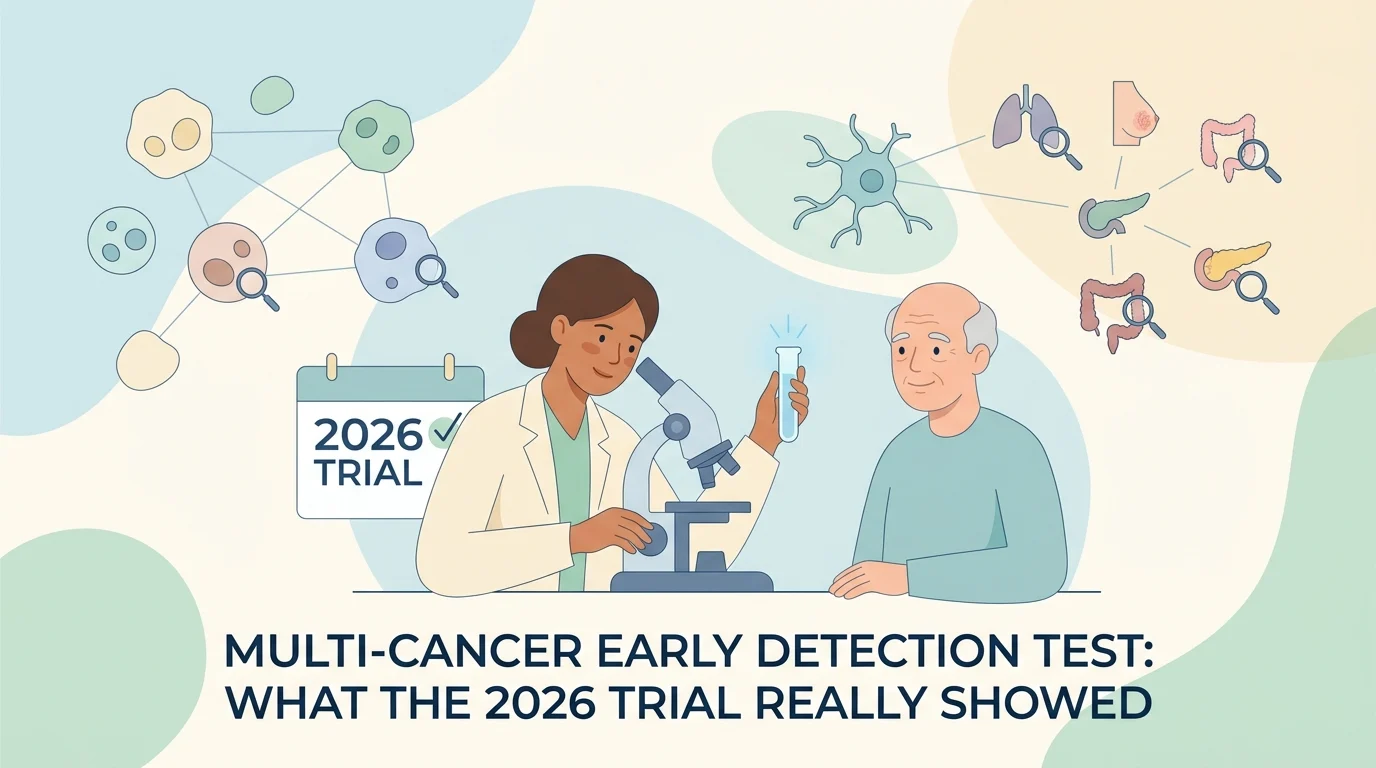
मल्टी-कैंसर अर्ली डिटेक्शन टेस्ट सिर्फ एक बार खून की जांच (ब्लड ड्रा) के ज़रिए एक साथ कई तरह के कैंसर का पता लगाने की तकनीक है, कई बार तो किसी भी लक्षण के दिखने से पहले ही। साल 2026 में यह विचार एक महत्वपूर्ण मोड़ पर पहुंच गया: इनमें से किसी एक परीक्षण पर किए गए अब तक के सबसे बड़े ट्रायल, NHS-Galleri ट्रायल ने अपने पूरे परिणाम घोषित किए। इसके परिणाम मिले-जुले रहे हैं, इसे न तो पूरी तरह से सफल कहा जा सकता है और न ही असफल। यह लेख समझाता है कि वास्तव में मल्टी-कैंसर अर्ली डिटेक्शन टेस्ट क्या है, ट्रायल में क्या सामने आया और क्या नहीं, सबसे हालिया शोध क्या कहते हैं, और इससे आज आपके लिए क्या बदलता है या क्या नहीं बदलता है। हमारा उद्देश्य इस तकनीक के बारे में, जिसका अभी भी मूल्यांकन किया जा रहा है, बिना किसी बढ़ा-चढ़ाकर की गई बात या घबराहट के एक स्पष्ट और शांत मार्गदर्शन प्रदान करना है।
मल्टी-कैंसर अर्ली डिटेक्शन टेस्ट क्या है?
एक विश्वसनीय मल्टी-कैंसर अर्ली डिटेक्शन टेस्ट (आमतौर पर इसे MCED कहा जाता है) रक्त में सर्कुलेटिंग ट्यूमर डीएनए (circulating tumor DNA) के छोटे टुकड़ों की जांच करता है, जो कि संभावित कैंसर कोशिकाओं द्वारा छोड़े गए डीएनए होते हैं। किसी एक पदार्थ को मापने के बजाय, यह “कैंसर सिग्नल” की पहचान करने के लिए उस डीएनए के मिथाइलेशन पैटर्न (छोटे रासायनिक टैग) का विश्लेषण करता है, और कई मामलों में, उस अंग का भी सुझाव देता है जहां से यह उत्पन्न हुआ है।
यह तरीका, जिसे लिक्विड बायोप्सी के रूप में जाना जाता है, सामान्य ब्लड टेस्ट से अलग है: यह आपके ब्लड सेल्स या कोलेस्ट्रॉल को नहीं मापता है (इसके लिए, हमारी गाइड देखें रक्त परीक्षण के परिणामों को पढ़ना)। यह पहले से परिचित ट्यूमर मार्कर्स जैसे कि सीईए, CA 125, या पीएसए, जो केवल एक ही कैंसर की जांच करते हैं। वहीं एक मल्टी-कैंसर टेस्ट का उद्देश्य एक साथ दर्जनों तरह के कैंसर का पता लगाना होता है, जिनमें से कुछ ऐसे भी हैं जिनके लिए आज कोई व्यवस्थित स्क्रीनिंग टेस्ट उपलब्ध नहीं है।
NHS-Galleri ट्रायल: एक अधूरा लक्ष्य, लेकिन कैंसर का जल्द पता चला
2026 ASCO वार्षिक बैठक में प्रस्तुत किए गए NHS-Galleri परीक्षण में इंग्लैंड में 50 से 77 वर्ष की आयु के 140,000 से अधिक लोगों पर तीन वर्षों तक नज़र रखी गई। आधे लोगों को सामान्य स्क्रीनिंग के अलावा हर साल Galleri टेस्ट दिया गया; जबकि बाकी आधे लोगों की केवल सामान्य स्क्रीनिंग की गई।
इसका मुख्य लक्ष्य, जो कि बारह गंभीर कैंसरों में देर के चरणों (स्टेज III और IV मिलाकर) में पाए जाने वाले कैंसर के मामलों में सांख्यिकीय रूप से महत्वपूर्ण गिरावट लाना था, पूरा नहीं हो सका। सुर्खियों के पीछे यही वह “चूक” है। लेकिन तस्वीर इससे कहीं अधिक बारीक है: प्रस्तुत आंकड़ों के अनुसार, तीन दौरों में स्टेज IV के मामलों में लगभग 14% की गिरावट आई, शुरुआती चरण (I-II) के कैंसर में 16% की वृद्धि हुई, पहचान की दर चार गुना बढ़ गई, और आपातकालीन स्थिति में सामने आने वाले कैंसर के मामलों में 25% की कमी आई।
इन उत्साहजनक संकेतों के बावजूद मुख्य लक्ष्य क्यों पूरा नहीं हो सका? क्योंकि स्टेज III कैंसर उम्मीद से अधिक आम निकले: स्टेज IV में आई गिरावट की भरपाई आंशिक रूप से स्टेज III में हुई वृद्धि से हो गई, इसलिए संयुक्त III और IV का कुल आंकड़ा सांख्यिकीय रूप से स्पष्ट रूप से नहीं बदला। इस प्रवृत्ति को स्पष्ट करने के लिए आगे की निगरानी (फॉलो-अप) की अवधि बढ़ाई जाएगी।
| NHS-Galleri परीक्षण ने क्या दिखाया | इसका क्या मतलब है | प्रमाण की मजबूती |
|---|---|---|
| मुख्य लक्ष्य (स्टेज III + IV) पूरा नहीं हुआ | अब तक, उन्नत (एडवांस्ड) कैंसर के मामलों में स्पष्ट गिरावट का कोई सबूत नहीं है | उच्च (रैंडमाइज्ड परीक्षण, 3 वर्ष) |
| स्टेज IV में लगभग 14% की गिरावट | सबसे गंभीर चरण में कैंसर के कम मामले मिलना | मध्यम (द्वितीयक उपाय) |
| शुरुआती चरण (I-II) में 16% की वृद्धि | अधिक कैंसरों का शुरुआती चरणों में पता चलना | मध्यम (द्वितीयक उपाय) |
| आपातकालीन निदान में 25% की कमी | देर से और अचानक पता चलने वाले मामलों में कमी | मध्यम |
ASCO ने इसे सावधानी के साथ संक्षेप में प्रस्तुत किया: शुरुआती निदान की ओर उत्साहजनक रुझान, लेकिन एक प्राथमिक लक्ष्य जो पूरा नहीं हुआ, और उन कैंसरों के लिए एक वास्तविक उम्मीद जिनकी वर्तमान में कोई स्क्रीनिंग उपलब्ध नहीं है, जैसे कि अंडाशय (ओवेरियन) और अग्न्याशय का कैंसर। किसी भी ठोस निष्कर्ष पर पहुंचने से पहले अमेरिकी REACH परीक्षण सहित अन्य अध्ययनों की प्रतीक्षा है।
कैंसर का जल्द पता चलना ही पूरी कहानी क्यों नहीं है
एक बात बेहद ज़रूरी है: पॉजिटिव टेस्ट आना कोई अंतिम डायग्नोसिस (रोग का निदान) नहीं है। यह सिर्फ एक संकेत है जिसके लिए कैंसर की पुष्टि करने या उसे खारिज करने के लिए और अधिक जांच (इमेजिंग और कभी-कभी बायोप्सी) की आवश्यकता होती है। यूएस नेशनल कैंसर इंस्टीट्यूट (NCI) भी इस तरह के किसी भी टेस्ट के लिए बिल्कुल इसी बात पर ज़ोर देता है।
ये टेस्ट अत्यधिक विशिष्ट (यानी बहुत कम गलत संकेत या फॉल्स अलार्म, लगभग 99%) होते हैं, लेकिन कोई भी टेस्ट पूरी तरह सटीक नहीं होता। फॉल्स पॉजिटिव (कैंसर न होने पर भी रिपोर्ट पॉजिटिव आना) होने से चिंता बढ़ती है और कभी-कभी अनावश्यक जांच करानी पड़ती है; वहीं फॉल्स नेगेटिव (कैंसर होने पर भी रिपोर्ट नेगेटिव आना) झूठी राहत दे सकता है, क्योंकि धीमे बढ़ने वाले ट्यूमर से बहुत कम मात्रा में डीएनए निकलता है। इन सबसे ऊपर, मुख्य सवाल अभी भी बना हुआ है: क्या बीमारी का जल्दी पता लगाने से वाकई लोगों की जान बचती है? डायग्नोसिस की तारीख को पहले ले आने से कोई फायदा नहीं होता अगर इससे मौतों को रोका न जा सके। यह एक जाना-माना सांख्यिकीय भ्रम (स्टैटिस्टिकल ट्रैप) है जिसमें कैंसर बस अधिक समय तक “देखा” जाता है, लेकिन मरीज का जीवनकाल नहीं बढ़ता। आज तक, कोई भी ब्लड टेस्ट सार्वभौमिक स्क्रीनिंग (यूनिवर्सल स्क्रीनिंग) टूल के रूप में इस्तेमाल किए जाने जितना विश्वसनीय साबित नहीं हुआ है।
नवीनतम वैज्ञानिक प्रगति
पबमेड (PubMed) में दर्ज रिसर्च के अनुसार, मल्टी-कैंसर अर्ली डिटेक्शन टेस्ट (कैंसर का जल्दी पता लगाने वाले टेस्ट) तेज़ी से आगे बढ़ रहे हैं, लेकिन इलाज में उनकी सटीक भूमिका अभी भी तय की जा रही है।
1,00,000 से अधिक टेस्ट के वास्तविक विश्लेषण (Nature Communications, 2025) में जांच किए गए लोगों में से 0.91% में कैंसर का संकेत मिला, 87% मामलों में कैंसर के शुरुआती अंग का सही अनुमान लगाया गया, और औसतन 39.5 दिनों में डायग्नोसिस तक पहुंचा गया (डीओआई)। बिना लक्षणों वाले 9,000 से अधिक वयस्कों पर किए गए एक अध्ययन (BMC Medicine, 2025) हालांकि, फॉल्स-पॉजिटिव की सीमा को दर्शाता है: लगभग 40% की पॉजिटिव प्रेडिक्टिव वैल्यू, जिसका अर्थ है कि कई पॉजिटिव टेस्ट वास्तव में कैंसर से संबंधित नहीं थे (डीओआई).
एक समीक्षा लेख (Digestive Diseases and Sciences, 2025) इस उत्साह को थोड़ा कम करता है: शुरुआती चरण के अधिकांश कैंसर के लिए, संवेदनशीलता (सेंसिटिविटी) मामूली बनी हुई है और अक्सर पहले से अनुशंसित स्क्रीनिंग टेस्ट से कम है, और इसकी चिकित्सीय उपयोगिता अभी तक सिद्ध नहीं हुई है (डीओआई)। व्यावहारिक रूप से, प्रमुख अमेरिकी कैंसर केंद्रों के एक सर्वेक्षण (Cureus, 2025) दर्शाता है कि इसे अपनाना अभी भी सीमित है: 74 प्रमुख केंद्रों में से केवल 15 ने ही सार्वजनिक रूप से इन परीक्षणों का उल्लेख किया है, बहुत कम ने इन्हें नियमित देखभाल में उपयोग किया, और कुछ ने स्पष्ट रूप से अपने मरीजों को चेतावनी दी (डीओआई).
क्या आपको अभी मल्टी-कैंसर टेस्ट करवाना चाहिए?
आज की तारीख तक, स्वास्थ्य अधिकारियों द्वारा सामान्य स्क्रीनिंग टूल के रूप में किसी भी मल्टी-कैंसर टेस्ट को मंजूरी नहीं दी गई है। संयुक्त राज्य अमेरिका में, किसी भी टेस्ट को FDA की मंजूरी नहीं मिली है (इन्हें लैबोरेट्री-डेवलप्ड टेस्ट के रूप में पेश किया जाता है), कोई भी प्रोफेशनल सोसाइटी या यूएस प्रिवेंटिव सर्विसेज टास्क फोर्स इनकी सिफारिश नहीं करती है, और उनके लिए कोई रिइम्बर्समेंट (खर्च की वापसी) भी नहीं मिलती है (लगभग $900 का भुगतान खुद अपनी जेब से करना पड़ता है)। ये किसी भी व्यवस्थित स्क्रीनिंग प्रोग्राम का हिस्सा नहीं हैं।
विशेषज्ञों का संदेश स्पष्ट है: ये टेस्ट भविष्य में किसी दिन प्रमाणित स्क्रीनिंग के पूरक बन सकते हैं, उसका विकल्प नहीं। इसलिए अपनी उम्र और जोखिम कारकों के लिए अनुशंसित स्क्रीनिंग जारी रखें, जिसमें कोलोरेक्टल कैंसर, फेफड़े का कैंसर, और स्तन कैंसर। और यदि आपको कोई मल्टी-कैंसर टेस्ट कराने का सुझाव दिया जाता है, तो पहले अपने डॉक्टर से बात करें: वे आपको इसके फायदों, सीमाओं और परिणाम के प्रभावों को समझने में मदद कर सकते हैं।
शब्दकोष
| अवधि | अर्थ |
|---|---|
| मल्टी-कैंसर अर्ली डिटेक्शन (MCED) टेस्ट | एक ब्लड टेस्ट जो लक्षण दिखने से पहले, एक साथ कई कैंसरों द्वारा साझा किए जाने वाले संकेतों की पहचान करता है |
| सर्कुलेटिंग ट्यूमर डीएनए (Circulating tumor DNA) | संभावित कैंसर कोशिकाओं द्वारा ब्लड में छोड़े गए डीएनए (DNA) के अंश |
| लिक्विड बायोप्सी (Liquid biopsy) | ब्लड या शरीर के किसी अन्य तरल पदार्थ से लिए गए ट्यूमर के अंशों का विश्लेषण |
| डीएनए मेथाइलेशन | डीएनए पर मौजूद छोटे रासायनिक टैग जिनके पैटर्न से कैंसर का पता चल सकता है |
| सेंसिटिविटी (संवेदनशीलता) | किसी टेस्ट की उन लोगों को पहचानने की क्षमता जो वास्तव में बीमारी से पीड़ित हैं (बहुत कम फॉल्स नेगेटिव) |
| स्पेसिफिसिटी (विशिष्टता) | स्वस्थ लोगों को अनावश्यक रूप से डराने या चिंतित करने से बचने की टेस्ट की क्षमता (बहुत कम फॉल्स पॉजिटिव) |
| पॉजिटिव प्रेडिक्टिव वैल्यू (Positive predictive value) | पॉजिटिव टेस्ट परिणामों में से, वो हिस्सा जो वास्तव में कैंसर से संबंधित है |
| यादृच्छिक संगृहीत परीक्षण | एक अध्ययन जो रैंडम असाइनमेंट (यादृच्छिक आवंटन) द्वारा दो समूहों की तुलना करता है, जो स्क्रीनिंग का मूल्यांकन करने का सबसे विश्वसनीय तरीका है |
अक्सर पूछे जाने वाले प्रश्नों
क्या वाकई ब्लड टेस्ट से कैंसर का पता चल सकता है?
कभी-कभी, लेकिन महत्वपूर्ण सीमाओं के साथ। कोई भी ब्लड टेस्ट हर तरह के कैंसर का पता नहीं लगा सकता है, और एक सामान्य परिणाम कभी भी बीमारी की संभावना को पूरी तरह से खारिज नहीं करता है। पारंपरिक ट्यूमर मार्कर्स का उपयोग मुख्य रूप से निगरानी के लिए किया जाता है, स्क्रीनिंग के लिए नहीं, जबकि मल्टी-कैंसर परीक्षणों का अभी भी मूल्यांकन किया जा रहा है। यह समझने के लिए कि आपका पैनल पहले से क्या मापता है, हमारी गाइड देखें रक्त परीक्षण के परिणामों को पढ़ना.
क्या अमेरिका में मल्टी-कैंसर अर्ली डिटेक्शन टेस्ट उपलब्ध है?
कुछ कंपनियां इसे प्रयोगशाला द्वारा विकसित टेस्ट (laboratory-developed test) के रूप में प्रदान करती हैं, लेकिन यह स्क्रीनिंग टूल के रूप में FDA द्वारा अधिकृत नहीं है, कोई भी प्रमुख दिशानिर्देश इसकी सिफारिश नहीं करता है, और बीमा (insurance) आमतौर पर इसे कवर नहीं करता है। अधिकांश लोग अपनी जेब से भुगतान करते हैं, जो अक्सर लगभग $900 होता है, और पुष्टि करने वाले टेस्ट इस खर्च को और बढ़ा सकते हैं। इसे ऑर्डर करने से पहले डॉक्टर से चर्चा करना सबसे अच्छा है।
क्या यह मैमोग्राम, कोलोनोस्कोपी या अन्य स्क्रीनिंग की जगह ले सकता है?
नहीं। विशेषज्ञों का स्पष्ट मानना है कि ये टेस्ट केवल प्रमाणित स्क्रीनिंग के पूरक (complement) हो सकते हैं, कभी भी उसकी जगह नहीं ले सकते। मैमोग्राफी, कोलोनोस्कोपी और सर्वाइकल स्क्रीनिंग उन कैंसर के लिए मानक बनी हुई हैं जिन्हें वे कवर करती हैं। किसी अप्रमाणित मल्टी-कैंसर टेस्ट के चक्कर में सुझाई गई स्क्रीनिंग को छोड़ देने से उन कैंसरों के छूटने का जोखिम बढ़ जाएगा जिन्हें खोजने के लिए वे जांचें डिज़ाइन की गई हैं।
यदि मेरी टेस्ट रिपोर्ट पॉजिटिव आती है तो क्या होगा?
पॉजिटिव परिणाम कोई अंतिम निदान (diagnosis) नहीं है; यह एक संकेत है जिसके पुष्टिकरण की आवश्यकता होती है। आपके डॉक्टर आगे के टेस्ट लिख सकते हैं, जैसे इमेजिंग और कभी-कभी बायोप्सी, जो अक्सर उस अंग पर केंद्रित होते हैं जिसका टेस्ट में संकेत मिला है। इस पूरी प्रक्रिया में कई सप्ताह लग सकते हैं, और कुछ मामलों में कोई कैंसर नहीं मिलता है, जिसे फॉल्स पॉजिटिव (गलत संकेत) कहा जाता है।
क्या 2026 के परिणाम अभी मेरे इलाज या देखभाल को बदलते हैं?
अभी नहीं। NHS-Galleri परीक्षण उत्साहजनक संकेत देता है, लेकिन इसका मुख्य लक्ष्य पूरा नहीं हुआ था, और यह अभी भी अज्ञात है कि क्या ये टेस्ट वास्तव में मौतों को कम करते हैं। जब तक ऐसा कोई सबूत सामने नहीं आता और कोई प्राधिकारी (authority) इसकी सिफारिश नहीं करता, तब तक वे वर्तमान दिशानिर्देशों को नहीं बदलते हैं। सबसे उपयोगी कदम प्रमाणित स्क्रीनिंग को जारी रखना है।
मल्टी-कैंसर टेस्ट की कीमत कितनी होती है?
संयुक्त राज्य अमेरिका (US) में, इसकी लागत लगभग $900 है, जिसका भुगतान व्यक्ति को स्वयं करना पड़ता है, क्योंकि इन टेस्टों की प्रतिपूर्ति (reimbursement) नहीं की जाती है; पुष्टि करने वाले किसी भी टेस्ट से यह खर्च और बढ़ सकता है। वे किसी संगठित स्क्रीनिंग कार्यक्रम के हिस्से के रूप में कवर नहीं होते हैं।
सूत्रों का कहना है
- अमेरिकन सोसाइटी ऑफ क्लिनिकल ऑन्कोलॉजी (ASCO) – NHS-Galleri ट्रायल के परिणाम
- यूएस नेशनल कैंसर इंस्टीट्यूट (NCI) – मल्टी-कैंसर डिटेक्शन टेस्ट के बारे में प्रश्न और उत्तर
- क्लीवलैंड क्लिनिक – एक सिंगल ब्लड टेस्ट कैंसर के 50 से अधिक प्रकारों का पता लगा सकता है
- PubMed अध्ययन: Matrana et al., Nature Communications, 2025 (डीओआई); Grady, Digestive Diseases and Sciences, 2025 (डीओआई); Powers et al., Cureus, 2025 (डीओआई); Nguyen et al., BMC Medicine, 2025 (डीओआई).
अग्रिम पठन
- रक्त परीक्षण के परिणाम कैसे पढ़ें: एक सरल मार्गदर्शिका
- ट्यूमर मार्कर: अर्थ, उपयोग और सीमाएँ
- कोलोरेक्टल कैंसर: कारण, लक्षण और स्क्रीनिंग
- फेफड़ों का कैंसर: लक्षण, निदान और उपचार
- अग्नाशय (पैनक्रिएटिक) कैंसर: निदान और उपचार
AI DiagMe की मदद से अपने लैब परिणामों को समझें
ट्यूमर मार्कर, रूटीन ब्लड पैनल और नए टेस्ट के बीच, लैब के नतीजों को समझना हमेशा आसान नहीं होता है। AI DiagMe सरल भाषा में आपके खून या यूरिन टेस्ट को समझने में आपकी मदद करता है: हर लाइन का क्या मतलब है, सामान्य सीमा (रेंज) से बाहर की वैल्यू क्या संकेत दे सकती है, और डॉक्टर से इस बारे में कब बात करनी चाहिए। यह टूल आपको समझने में मदद करता है, न कि बीमारी का निदान (डायग्नोसिस) करता है, और यह कभी भी किसी डॉक्टर की सलाह की जगह नहीं ले सकता है।
➡️ कुछ ही मिनटों में सरल भाषा में अपनी रिपोर्ट समझें