





Vitamin C benefits are among the most heavily advertised claims in the supplement aisle, and separating the real biology from the sales pitch is harder than it should be. The honest summary is short: vitamin C is genuinely essential, most people in the United States already get enough of it from ordinary food, and taking more than you need rarely adds anything. This article is about nutrition rather than testing. If you are trying to make sense of a plasma measurement on a lab report, read our guide to the vitamin C blood test.
In this article you’ll learn what vitamin C does in the body, which foods supply it and whether diet alone is enough, how much you need according to the National Institutes of Health Office of Dietary Supplements, what trials really show for colds, cancer and heart disease, why oral and intravenous vitamin C are not the same thing, and when too much causes harm.
What vitamin C actually does in the body
Vitamin C, also called ascorbic acid, is a water-soluble vitamin. Unlike most mammals, humans cannot manufacture it, and the body keeps only a small reserve, so intake has to be regular. Four jobs account for most of what it does.
It makes collagen possible
Collagen is the structural protein that holds skin, gums, blood vessels, tendons and bone together. Vitamin C acts as a cofactor for the enzymes that stabilize collagen fibers, which is why a severe shortage shows up as bleeding gums, fragile skin and wounds that will not close. That is well-established biochemistry. It does not mean extra vitamin C builds extra collagen once your supply is adequate.
It works as an antioxidant
Vitamin C neutralizes free radicals, the unstable molecules produced during normal metabolism and by tobacco smoke or pollution. It also regenerates other antioxidants, which is why they are often discussed together. For the fat-soluble counterparts, see our guide to the vitamin E blood test and our guide to the vitamin A blood test.
It helps you absorb iron from plants
This is the most useful and least advertised of the vitamin C benefits. It converts non-heme iron, the form found in beans, lentils, grains and leafy greens, into a form the gut absorbs far more readily. Squeezing lemon over spinach or drinking orange juice with a fortified cereal genuinely changes how much iron you take up. If iron is on your mind, consult our guide to the serum iron blood test and our guide to the ferritin blood marker.
It supports normal immune cell function
White blood cells concentrate vitamin C, and it contributes to the barrier function of skin and mucous membranes. Supporting normal function, though, is not the same as boosting immunity. Zinc plays a comparable role, and you can read our guide to the zinc blood test.
How much vitamin C you need, and who needs more
The figures below come from the National Institutes of Health Office of Dietary Supplements, which publishes the values set by the Food and Nutrition Board. They are population reference points, not personal prescriptions.
The Office of Dietary Supplements gives a recommended dietary allowance of 90 mg per day for adult men and 75 mg per day for adult women aged 19 and over, rising to 85 mg per day in pregnancy and 120 mg per day while breastfeeding. Adolescents are set at 75 mg for boys and 65 mg for girls, and children need less again.
People who smoke are the notable exception. The same source states that smokers need an additional 35 mg per day, because tobacco smoke raises oxidative stress and depletes the vitamin faster. It gives the same advice to people regularly exposed to secondhand smoke.
At the other end, the Office of Dietary Supplements sets a tolerable upper intake level of 2,000 mg per day for adults. That is a ceiling above which unwanted effects become more likely, not a target. If you are considering a supplement at any dose, that decision belongs with your doctor or pharmacist rather than with a label.
Food sources of vitamin C, and whether diet is enough
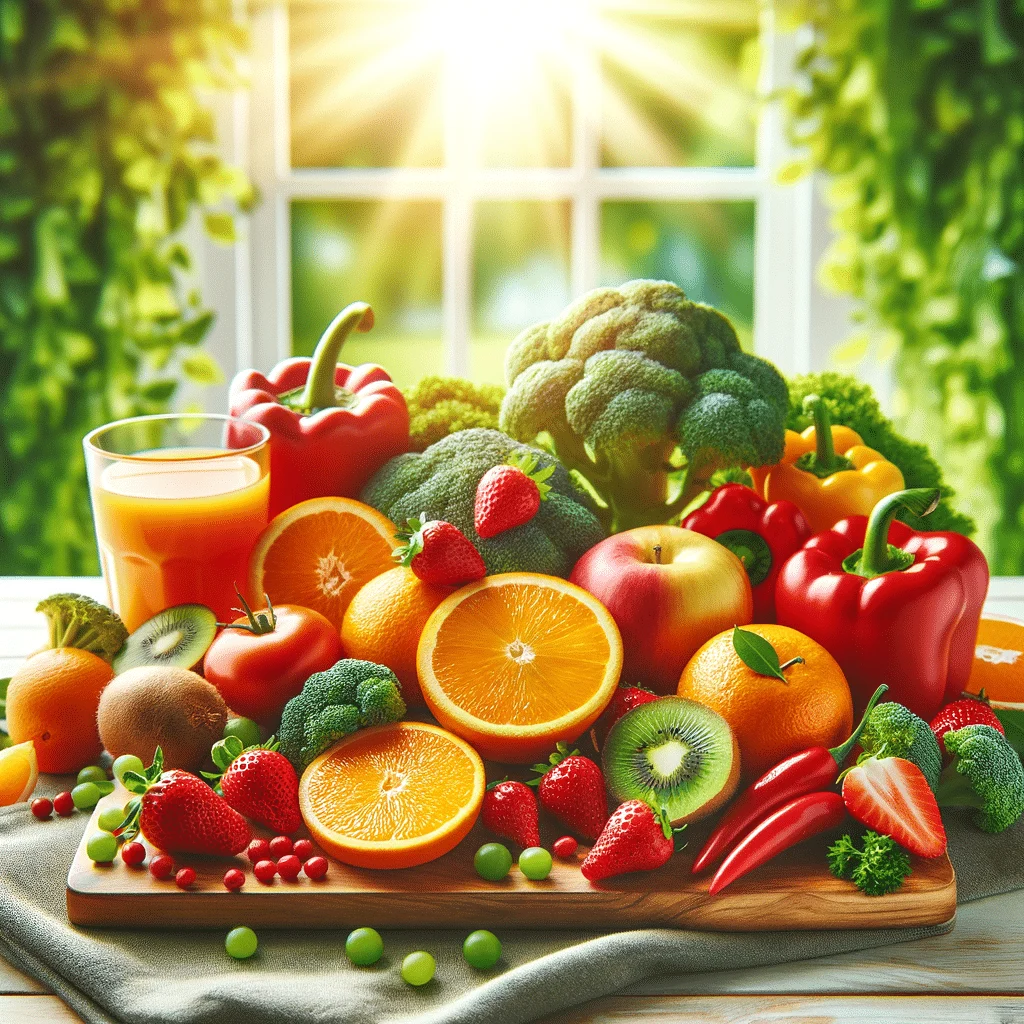
Fruit and vegetables supply nearly all of it. According to the Office of Dietary Supplements, half a cup of raw red pepper contains about 95 mg, three-quarters of a cup of orange juice about 93 mg, a medium orange about 70 mg and a medium kiwifruit about 64 mg. Half a cup of cooked broccoli gives roughly 51 mg and sliced strawberries about 49 mg. Brussels sprouts, tomatoes, potatoes and cantaloupe all contribute.
The arithmetic is unforgiving to the supplement pitch. A single orange plus half a red pepper already exceeds the adult recommended intake for the day. The same source notes that five varied servings of fruit and vegetables can provide more than 200 mg, and that most people in the United States have sufficient intakes according to national nutrition survey data.
Two practical points matter more than brand choice. Vitamin C is destroyed by heat and leaches into cooking water, so raw or lightly steamed produce retains considerably more than boiled produce. And prolonged storage reduces the content, which is why fresh matters. For an everyday example of combining vitamin C with iron at breakfast, see our guide to iron-rich breakfast options.
Fortified drinks promise a shortcut: see what vitamin water actually delivers.
What the evidence really says about the popular claims
Vitamin C is one of the most studied supplements in existence, and the results are far less exciting than the marketing. The table below summarizes where the evidence stands.
| Claim | What the evidence actually shows | Bottom line |
|---|---|---|
| Prevents colds | Regular supplementation does not reduce how often people in the general population catch colds; a possible exception is marathon runners, skiers and soldiers under extreme physical or cold stress | Not supported for most people |
| Shortens colds | Taken every day in advance, it modestly shortens duration, by roughly 8% in adults and 14% in children, and may ease symptom severity | Small effect, and only with continuous use |
| Works if you start it when symptoms begin | Starting vitamin C after cold symptoms appear has not been shown to change duration or severity | Not supported |
| Prevents cancer | Diets rich in fruit and vegetables track with lower cancer rates, but most trials of vitamin C supplements, alone or combined, show no preventive benefit | Eat the food, not the pill |
| Treats cancer | Oral supplements have no established role; high-dose intravenous vitamin C is a separate investigational treatment that the FDA has not approved for cancer | Do not conflate the two |
| Protects the heart | Large trials including the Women’s Antioxidant Cardiovascular Study and Physicians’ Health Study II found no effect of vitamin C supplements on cardiovascular events | No clear benefit from supplements |
| Boosts immunity | Vitamin C is required for normal immune function, but there is no evidence that exceeding an adequate intake improves immune defense in people who are already replete | Adequacy matters, excess does not |
| Improves skin and collagen | Collagen synthesis genuinely depends on vitamin C, and wound healing is impaired when it is lacking; supplements above adequacy have not been shown to improve skin in well-nourished people | Real biology, oversold as a product |
None of this means vitamin C is unimportant. The benefit lives at the point where you go from lacking it to having enough, then flattens out. That is true of most nutrients, and it is why correcting a real shortfall matters while topping up an adequate one does not.
Oral supplements versus high-dose intravenous vitamin C
These two are routinely presented as the same treatment. They are not, and the confusion is used to sell things.
When you swallow vitamin C, the gut limits how much it takes up. Absorption efficiency falls as the dose rises, the kidneys clear the surplus into urine, and blood levels plateau. There is a ceiling you cannot push past with tablets, however many you take.
Intravenous infusion bypasses the gut entirely and reaches blood concentrations orders of magnitude higher than any oral dose. At that level vitamin C stops behaving like a vitamin and behaves like a drug, generating hydrogen peroxide inside tissues. That is a genuinely different pharmacology, and it is why laboratory findings about high concentrations killing tumor cells say nothing about a supplement bought online.
The National Cancer Institute is explicit on the status of the intravenous route: some studies have reported better quality of life and fewer treatment side effects, results across trials are mixed, and the Food and Drug Administration has not approved intravenous vitamin C as a cancer treatment. The same source notes it can be harmful in people with kidney disease, a tendency to form kidney stones, G6PD deficiency or hemochromatosis. It is given under medical supervision, usually within a clinical trial, and it is not something to seek out privately on the strength of a marketing claim.
The risks of taking too much vitamin C
Vitamin C has low toxicity, which is why it is often called harmless. For healthy people at ordinary intakes that is fair. Several specific problems are worth naming.
Digestive upset
This is by far the most common issue. High doses draw water into the gut, causing diarrhea, nausea and cramps. It settles when the dose comes down.
Oxalate and kidney stones
The body converts surplus vitamin C into oxalate, which the kidneys excrete. In people who already form calcium oxalate stones, or who have reduced kidney function, higher supplemental intakes have been linked to more stones. This is the risk most worth taking seriously, and it is the one supplement marketing never mentions. If stones are part of your history, read our guide to kidney stones and raise any supplement with your doctor first.
Iron absorption and iron overload
The same property that makes vitamin C useful alongside plant iron becomes a problem in people who already store too much iron. In hereditary hemochromatosis and other iron-loading conditions, sustained high doses of vitamin C could worsen iron accumulation and tissue damage. For that context, see our guide to lowering high iron levels safely.
Interference with laboratory tests
High vitamin C intake can distort everyday tests. It skews readings on some blood glucose meters and can cause false results on fecal occult blood tests used in bowel screening. Tell whoever runs the test what you take and when, rather than stopping anything yourself.
Medicines worth mentioning to your pharmacist
The Office of Dietary Supplements notes that vitamin C supplements may interact with radiation therapy and chemotherapy agents, and advises anyone receiving those treatments to speak to their oncologist before taking vitamin C or other antioxidants, especially at high doses. It also flags that vitamin C with other antioxidants may blunt the rise in HDL cholesterol produced by niacin and simvastatin, and that lipid levels should be monitored in people taking both.
When to see a doctor
Book an appointment if you notice gums that bleed without a dental cause, bruises from minor knocks, tiny red spots around hair follicles on your legs, or a wound that is not healing.
Speak to your doctor before starting any vitamin C supplement if you have had kidney stones, have kidney disease or hemochromatosis, are receiving chemotherapy or radiotherapy, or take medicines regularly.
Raise it too if your diet has held very little fruit or vegetable for weeks, or if a condition limits absorption. Your doctor may look at iron studies or a nutritional panel, and can judge whether measuring the vitamin itself adds anything, a question covered in our guide to the vitamin C blood test.
Latest scientific advances in vitamin C research
Research published since 2023 has sharpened rather than overturned the picture. Here is what the recent work found, and what it means.
Colds get milder, not rarer
Hemilä and Chalker published a 2023 meta-analysis in BMC Public Health pooling fifteen comparisons from ten randomized, double-blind trials. A meta-analysis combines the results of separate studies to produce a single estimate; double-blind means neither participants nor researchers knew who received vitamin C and who received a dummy tablet. Taken regularly at a gram a day or more, vitamin C reduced how severe colds felt by about 15%, and the effect concentrated on the more severe days rather than the mild ones.
What this means for you: daily vitamin C may take some of the edge off a cold, but it does not stop you catching one, and this signal came from continuous supplementation rather than a dose started once symptoms appear. Most of the underlying trials are decades old, and the authors call for new studies designed to measure severity properly.
The sepsis story is a cautionary one
Liang and colleagues published a 2023 meta-analysis in Critical Care covering eighteen randomized controlled trials and 3,364 adults with sepsis or septic shock. Organ-failure scores improved slightly and patients spent less time on blood-pressure-supporting drugs, but intravenous vitamin C did not reduce short-term deaths, and side effects were more common in the vitamin C groups.
What this means for you: this is the clearest recent example of an early promising signal that larger trials did not confirm. It also concerns critically ill patients receiving infusions in intensive care, so nothing here transfers to a supplement taken at home.
Intravenous vitamin C in cancer remains genuinely unsettled
Paller and colleagues reported a 2024 randomized placebo-controlled trial in Cancer Research Communications, the first of its kind, adding high-dose intravenous vitamin C to docetaxel chemotherapy in 47 men with advanced prostate cancer. It showed no improvement in tumor markers, imaging progression or survival, and was stopped early for futility. The authors concluded that routine use is not supported outside clinical trials.
By contrast, Bodeker and colleagues published a 2024 randomized trial in Redox Biology in which 36 people with metastatic pancreatic cancer received chemotherapy with or without intravenous ascorbate. Those who received it lived longer on average, without extra toxicity or worse quality of life. The trial was small and conducted at a limited number of centers, so the result needs confirmation.
What this means for you: intravenous vitamin C is an active research question with contradictory answers depending on the cancer, not an established therapy. Anyone offering it as a treatment outside a trial is going beyond the evidence, and it must never be confused with a supplement.
The stone risk is real and rarely mentioned
Kemble and colleagues published a 2025 analysis in Cureus of online search behavior during the COVID-19 pandemic. Interest in vitamin C rose fourfold and stayed elevated; among the most popular search results for vitamin C as a COVID-19 treatment, 30% incorrectly suggested a benefit, and none mentioned the increased risk of kidney stones from high supplemental intake.
What this means for you: this studied what people read rather than what happens to their kidneys, so it cannot quantify risk. Its value is as a warning about the information environment. If you form stones, the counseling you need is the part most sources leave out.
Glossary
| Term | Definition |
|---|---|
| Ascorbic acid | The chemical name for vitamin C, and the name usually printed on supplement labels and lab reports |
| Water-soluble | Dissolves in water rather than fat, so the body stores little and the surplus leaves in urine |
| Antioxidant | A substance that neutralizes free radicals, the unstable molecules that can damage cells |
| Collagen | The structural protein of skin, gums, blood vessels and bone, which the body cannot build properly without vitamin C |
| Non-heme iron | The form of iron found in plant foods, absorbed far less efficiently than the iron in meat unless vitamin C is present |
| Recommended dietary allowance | The daily intake judged sufficient to meet the needs of nearly all healthy people in a given age and sex group |
| Tolerable upper intake level | The maximum daily intake unlikely to cause unwanted effects; a ceiling rather than a goal |
| Oxalate | A compound the body makes from surplus vitamin C, excreted by the kidneys and involved in the commonest kind of kidney stone |
| Pharmacological ascorbate | High-dose vitamin C given intravenously to reach blood levels no oral dose can produce; an investigational treatment, not a supplement |
| Hemochromatosis | An inherited condition in which the body absorbs and stores more iron than it needs |
Frequently asked questions
Does vitamin C prevent colds?
Not in the general population. Trials of regular supplementation have consistently failed to show a reduction in how often ordinary adults and children catch colds. Taken every day in advance, vitamin C does modestly shorten a cold, by roughly 8% in adults and 14% in children according to the Office of Dietary Supplements, and may make symptoms somewhat milder. Starting it once you already feel unwell has not been shown to help. The one group where prevention may apply is people under extreme physical or cold stress, such as marathon runners, skiers and soldiers.
Can you take too much vitamin C?
Yes, although serious harm is uncommon. The Office of Dietary Supplements sets a tolerable upper intake level of 2,000 mg per day for adults. Above that, digestive upset becomes likely: diarrhea, nausea and cramping, which resolve when the dose falls. The more consequential risk is oxalate kidney stones in people who already form them or who have kidney disease. High intakes can also worsen iron overload in hemochromatosis and interfere with some laboratory tests. Anyone in those groups should talk to a doctor before taking a supplement at all.
Is intravenous vitamin C better than tablets?
It is not a stronger version of the same thing, it is a different intervention. Infusion bypasses the gut and reaches blood concentrations no oral dose can achieve, at which vitamin C behaves more like a drug than a nutrient. The National Cancer Institute states plainly that the Food and Drug Administration has not approved intravenous vitamin C as a cancer treatment, that trial results are mixed, and that it can be harmful in people with kidney disease, kidney stones, G6PD deficiency or hemochromatosis. It belongs in supervised medical settings, generally within research.
Can I get enough vitamin C from food alone?
For most people, yes, and comfortably. A medium orange supplies about 70 mg and half a cup of raw red pepper about 95 mg, so a single serving of either brings an adult close to or past the daily recommended intake. The Office of Dietary Supplements reports that most people in the United States have sufficient intakes based on national survey data. Diets that consistently exclude fruit and vegetables are the exception, and that is a conversation for your doctor rather than a reason to reach for a bottle.
Does cooking destroy vitamin C?
It reduces it substantially. Vitamin C is broken down by heat and dissolves into cooking water, so boiled vegetables lose considerably more than raw, steamed or microwaved ones. Long storage and exposure to light also lower the content, which is why juice sold in a carton keeps better than juice in a clear bottle. The practical fix is simple: eat some produce raw, cook the rest briefly, and buy fresh rather than stockpiling.
Do smokers really need more vitamin C?
The Office of Dietary Supplements states that people who smoke require 35 mg per day more than people who do not, because tobacco smoke increases oxidative stress and depletes the vitamin more quickly. It gives the same advice to people regularly exposed to secondhand smoke. That increment is small in food terms, roughly half an orange, and it is not a reason to take high-dose supplements.
Sources
- National Institutes of Health, Office of Dietary Supplements — Vitamin C: Fact Sheet for Health Professionals — https://ods.od.nih.gov/factsheets/VitaminC-HealthProfessional/
- MedlinePlus, U.S. National Library of Medicine — Vitamin C: Medical Encyclopedia — https://medlineplus.gov/ency/article/002404.htm
- National Cancer Institute — Intravenous Vitamin C (PDQ), Patient Version — https://www.cancer.gov/about-cancer/treatment/cam/patient/vitamin-c-pdq
- Hemilä H, Chalker E — Vitamin C reduces the severity of common colds: a meta-analysis — BMC Public Health, 2023 — https://doi.org/10.1186/s12889-023-17229-8
- Liang B, Su J, Shao H, Chen H, Xie B — The outcome of IV vitamin C therapy in patients with sepsis or septic shock: a meta-analysis of randomized controlled trials — Critical Care, 2023 — https://doi.org/10.1186/s13054-023-04392-y
- Paller CJ, Zahurak ML, Mandl A, Metri NA, Lalji A, Heath E, et al. — High-Dose Intravenous Vitamin C Combined with Docetaxel in Men with Metastatic Castration-Resistant Prostate Cancer: A Randomized Placebo-Controlled Phase II Trial — Cancer Research Communications, 2024 — https://doi.org/10.1158/2767-9764.CRC-24-0225
- Bodeker KL, Smith BJ, Berg DJ, Chandrasekharan C, Sharif S, Fei N, et al. — A randomized trial of pharmacological ascorbate, gemcitabine, and nab-paclitaxel for metastatic pancreatic cancer — Redox Biology, 2024 — https://doi.org/10.1016/j.redox.2024.103375
- Kemble JP, Liaw CW, Alamiri JM, Ungerer GN, Potretzke AM, Koo K — Public Interest in Vitamin C Supplementation During the COVID-19 Pandemic as a Potential Risk for Oxalate Nephrolithiasis — Cureus, 2025 — https://doi.org/10.7759/cureus.79452
Further reading
- To see how several vitamins are assessed together, read our guide to the vitamin and nutritional panel.
- For the protein that carries iron around the body, consult our guide to the transferrin blood test.
- To understand the tests behind stone and oxalate risk, see our guide to the kidney function panel.
- For the fat-soluble vitamin most often discussed alongside this one, browse our guide to the vitamin D blood test.
- To continue with another antioxidant micronutrient, read our guide to the selenium blood test.
Understand your lab results with AI DiagMe
Nutrition questions rarely stay in one lane. A vitamin C question often sits next to iron studies, ferritin or a full blood count, and that is exactly where a lab report starts to look opaque. AI DiagMe turns those numbers into plain language so you arrive at your appointment with better questions rather than more worry. It helps you understand your results; it does not diagnose you, and it does not replace your doctor.
Get your results interpreted in minutes