





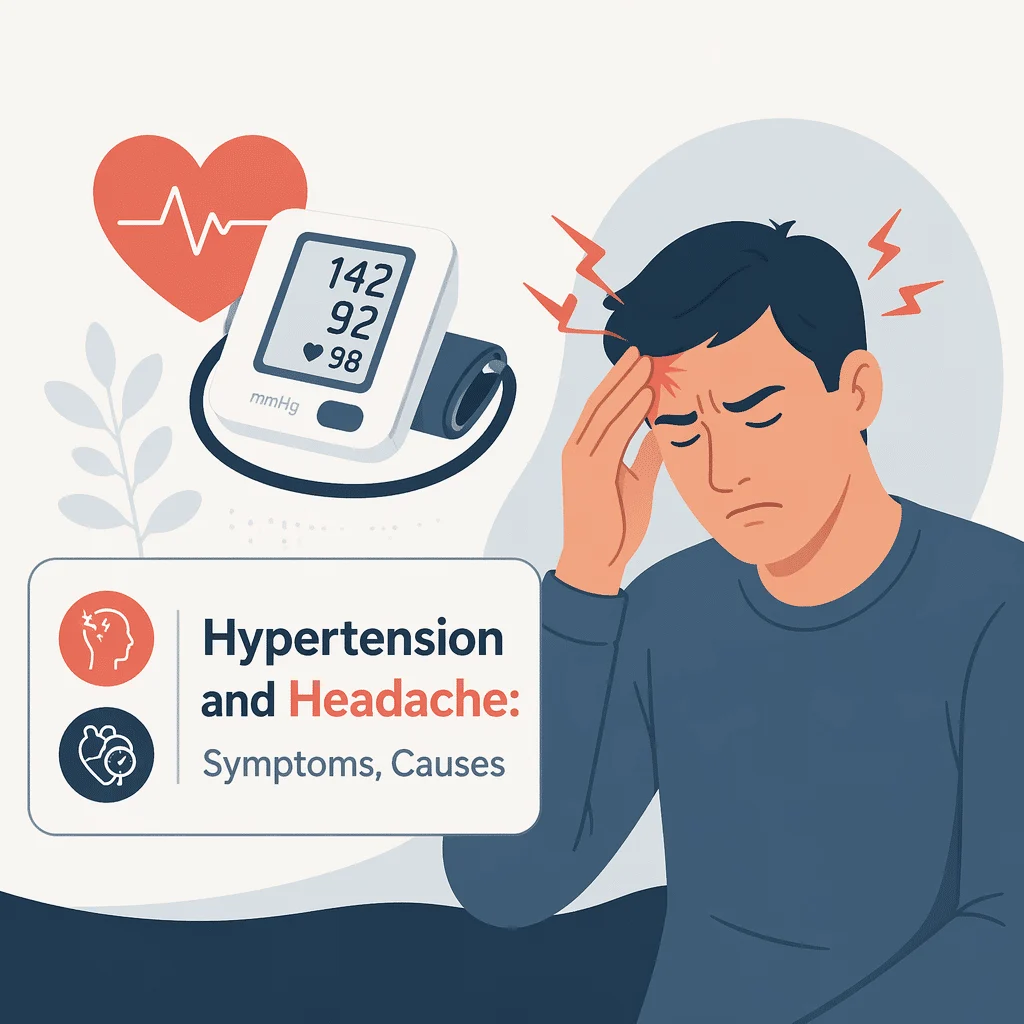
Hypertension and headache get bundled together in everyday conversation far more often than the medical evidence supports. Most people whose blood pressure is high feel absolutely nothing. The U.S. Centers for Disease Control and Prevention states plainly that high blood pressure usually has no warning signs or symptoms, which is exactly why it is so often missed. And yet head pain does appear when pressure climbs to extreme levels, and in that narrow situation it can be a signal that needs same-day attention. In this article you’ll learn when hypertension and headache are genuinely connected, what a pressure-driven headache actually feels like, which red flags mean you should call for emergency help, and which blood and urine tests doctors order to find a treatable cause behind stubborn readings.
Does high blood pressure really cause headaches?
For the vast majority of people, the honest answer is no. Mild and moderate elevations in blood pressure produce no head pain at all. Large population studies have looked for a relationship between everyday readings and headache frequency, and the link is weak to absent. This is the single most important thing to understand about hypertension and headache: an ordinary headache is a poor test for your blood pressure, and a normal head is a poor test for a healthy heart.
Where the numbers actually matter
The picture changes at the extreme end of the scale. Cleveland Clinic notes that a headache attributed to blood pressure usually appears only when readings reach 180/120 mmHg or higher. Below that threshold, a headache almost always has another explanation: poor sleep, dehydration, caffeine withdrawal, eye strain, a viral illness, tense neck muscles, or a primary headache disorder such as migraine. Our medical team explains the full picture of migraine causes, symptoms and treatments in a dedicated guide.
Why the myth is so persistent
Two things keep the belief alive. First, pain itself raises blood pressure. When someone arrives at a clinic with a pounding head, the cuff often reads high, and the sequence gets remembered backwards. Second, hypertension is extremely common, so plenty of people have both conditions purely by coincidence. Believing that you would feel high blood pressure is risky, because it encourages people to skip the one thing that actually detects it. Anyone who wants the broader clinical context can consult our complete guide to high blood pressure.
What a blood-pressure-related headache feels like
When a headache truly does track with severely elevated pressure, patients tend to describe a strong, throbbing pain felt on both sides of the head, often worst at the back of the skull and worst first thing in the morning. It may pulse in time with the heartbeat. It tends to ease as the pressure comes down rather than responding neatly to an ordinary painkiller.
Telling common headache patterns apart
The table below compares three patterns people frequently confuse. It is a rough orientation guide, not a diagnostic tool, and any new or unusually severe headache deserves a professional opinion.
| Feature | Tension-type headache | Migraine | Headache in a hypertensive emergency |
|---|---|---|---|
| Quality of pain | Dull, tight, band-like pressure | Pulsating, often one-sided | Strong and throbbing, usually both sides |
| Usual location | Forehead, temples, base of skull | One temple, around an eye | Back of the head, spreading forward |
| Typical companions | Neck and shoulder tightness | Nausea, light and sound sensitivity, aura | Chest pain, breathlessness, blurred vision, confusion, weakness |
| Blood pressure reading | Usually normal or mildly raised by the pain | Usually normal between attacks | 180/120 mmHg or above |
| What to do | Rest, hydration, routine review | Discuss a treatment plan with a clinician | Seek emergency care immediately |
When hypertension and headache become an emergency
This is the part worth memorizing. A headache combined with a reading of 180/120 mmHg or higher, together with any sign that an organ is under strain, is a medical emergency and warrants a call to 911 rather than a wait-and-see approach.
Red flags that mean immediate care
- Chest pain, pressure or tightness
- Shortness of breath
- Blurred vision, double vision or sudden vision loss
- Confusion, difficulty speaking, or unusual drowsiness
- Weakness or numbness on one side of the body or face
- A seizure, or the worst headache of your life arriving in seconds
- Nosebleed that will not stop, or severe back or abdominal pain
Several of these overlap with the signs of a brain event, and time matters enormously in that scenario. Everyone should know the warning signs of a stroke and the FAST method.
High numbers without symptoms are handled differently
Doctors draw a firm line between a hypertensive emergency, where very high pressure comes with evidence of organ injury, and severe hypertension where the numbers alone are elevated and the person feels well. A 2024 clinical review in The BMJ underlines that people in the second group generally do better with an unhurried outpatient plan than with aggressive intravenous treatment, because dropping pressure too fast can starve the brain and kidneys of blood flow. In practice this means a single alarming reading on a home monitor, with no symptoms at all, calls for a repeat measurement and a prompt appointment rather than panic.
What can drive both conditions at once
Secondary hypertension worth ruling out
Most high blood pressure has no single identifiable cause. In a minority of people, though, an underlying condition drives the readings, and headaches can be part of that picture. Doctors think about this when pressure appears suddenly, arrives young, resists three or more medicines, or comes with unusual symptoms. Common culprits include obstructive sleep apnea, kidney disease, an overactive adrenal gland producing too much aldosterone or cortisol, and thyroid disorders. Patients often find it useful to review our guide to sleep apnea diagnosis and treatment, since untreated apnea is one of the most common reversible contributors.
Medications, rebound pain and lifestyle triggers
Some blood pressure medicines cause headaches themselves, particularly certain calcium channel blockers and vasodilators, and this usually settles within a few weeks. More often the culprit is the opposite: taking painkillers for headaches more than about ten to fifteen days a month can produce medication overuse headache, a rebound cycle in which the treatment sustains the pain. Alcohol, high salt intake, decongestants containing pseudoephedrine, some herbal stimulants and stopping a blood pressure medicine abruptly can all push pressure and head pain up together. Fluid balance matters too, as explained in our article on dehydration and blood pressure.
How doctors investigate the combination
Measuring the pressure properly
A diagnosis is never made on one reading in a busy clinic. Sit quietly for five minutes, feet flat, back supported, arm at heart level, cuff on bare skin, and take two readings a minute apart. Record morning and evening values for a week. Many people are then sent home with a 24-hour ambulatory monitor, a small device that measures pressure automatically through the day and night, which separates true hypertension from the anxiety spike that a clinic visit produces.
Blood and urine tests your doctor may order
Laboratory testing has two goals: to look for damage the pressure may already have caused, and to hunt for a treatable underlying cause. Typical requests include a comprehensive metabolic panel and its 14 measurements, a kidney function panel with creatinine and eGFR, and an electrolyte panel covering sodium, potassium, chloride and bicarbonate. A stubbornly low potassium level, for instance, can be the first clue to an aldosterone-producing adrenal problem, which is why doctors sometimes add an adrenal panel measuring cortisol, ACTH and aldosterone.
Urine testing matters just as much. Small amounts of protein leaking into the urine are among the earliest signs that pressure is affecting the kidneys, a topic covered in our explainer on protein in urine. Thyroid hormones are frequently checked as well, since both an underactive and an overactive gland can disturb blood pressure and provoke headaches; readers can compare their own values against the normal thyroid reference ranges. Cortisol is measured when the clinical picture suggests an adrenal excess, and the symptoms and causes of high cortisol levels are worth reading in that situation.
What actually helps
Bringing the pressure down
Sustained blood pressure control is the goal, and it is achieved gradually rather than in an afternoon. Reducing sodium, following a diet rich in vegetables, fruit and low-fat dairy, losing excess weight, moving for about 150 minutes a week, limiting alcohol, stopping tobacco and protecting sleep all move the numbers meaningfully. Most people also need medication, and the class chosen depends on age, kidney function, other conditions and side-effect tolerance. Never adjust a dose on your own.
Treating the headache itself
If your pressure is controlled and headaches persist, the headache almost certainly has its own cause and deserves its own treatment plan. Keeping a simple diary of dates, duration, likely triggers, painkillers taken and the blood pressure reading at the time gives a clinician far more to work with than memory alone. That diary is also the fastest way to spot a rebound pattern from frequent painkiller use.
When to see a doctor
- Same day, by emergency services: headache with a reading at or above 180/120 mmHg plus any red flag listed earlier
- Within days: repeated home readings above 140/90 mmHg, or headaches that are new, changing or waking you at night
- Within weeks: headaches on more than ten days a month, or pressure that stays high on treatment
- At your next routine visit: mild occasional headaches with consistently normal readings
Latest scientific advances
Research over the past three years has shifted the conversation from “does pressure cause pain” toward something more useful: how the two conditions influence each other’s treatment. Here is what recent work shows, and what it means in practice.
Blood pressure medicines can reduce headache days
A 2023 meta-analysis in Cephalalgia (a meta-analysis pools the results of many earlier trials into one bigger picture) gathered 50 randomized trials of blood pressure-lowering drugs in people with episodic migraine. Across every drug class examined, participants had fewer headache days per month than those on a dummy pill. What this means for you: if you live with both raised blood pressure and frequent migraines, the medicine chosen for your pressure may be able to do two jobs at once, and that is a reasonable conversation to have with your doctor. The nuance to keep in mind is that these participants had migraine, not headaches caused by high pressure, so the finding is about smart drug selection rather than proof of a shared cause.
A blood pressure drug tested directly as a migraine preventive
In 2025, The Lancet Neurology published a trial of candesartan, an angiotensin receptor blocker normally prescribed for hypertension, given specifically to prevent episodic migraine. The trial was triple-blind, meaning neither the participants, the site staff nor the statistician knew who received the real drug, which makes the result harder to bias. What this means for you: there is now direct trial evidence, not just repurposed observation, that a blood pressure medicine can be used deliberately for migraine prevention. This was an early-phase study, so it still needs confirmation in larger trials before it changes routine practice.
Very high readings without symptoms are being treated more calmly
A 2024 review in The BMJ set out how specialists now separate two situations that used to be lumped together: severely raised pressure with evidence of organ injury, and severely raised pressure in someone who feels well. What this means for you: a frightening number on a home monitor, with no chest pain, no vision change and no weakness, usually calls for a repeat reading and a prompt appointment rather than an emergency room dash and an intravenous drip. Lowering pressure too abruptly carries its own risks, which is why the measured approach won out.
Recurring severe headaches belong in your heart-risk picture
A 2023 cohort study in Headache followed more than 10,000 American adults for around 17 years (a cohort is simply a group of people tracked over time). Those who reported severe headache or migraine had a higher rate of death from cardiovascular disease, by roughly a third, than those who did not. What this means for you: frequent severe headaches are worth mentioning to your doctor as part of your overall heart and vessel risk assessment, not dismissed as a nuisance. Because this was an observational study, it shows an association rather than proving that headaches cause heart disease, and the practical response is straightforward: get your pressure, cholesterol and glucose checked rather than worry.
Glossary of key terms
| Term | Definition |
|---|---|
| Hypertension | The medical name for persistently high blood pressure. It is defined by repeated readings over time, not by how you feel. |
| Systolic pressure | The upper number in a reading. It is the pressure inside your arteries at the moment the heart squeezes. |
| Diastolic pressure | The lower number. It is the pressure remaining while the heart relaxes and refills between beats. |
| mmHg | Millimeters of mercury, the unit used for blood pressure. It comes from the mercury column used in the original instruments. |
| Hypertensive emergency | Very high blood pressure together with signs that an organ is being damaged, such as the heart, brain, kidneys or eyes. It needs immediate hospital care. |
| Hypertensive urgency | Very high blood pressure without signs of organ damage. It is managed urgently but usually as an outpatient, with gradual lowering. |
| Target organ damage | Injury to organs caused by sustained high pressure, detected through blood tests, urine tests, an electrocardiogram or an eye examination. |
| Secondary hypertension | High blood pressure driven by an identifiable underlying condition, such as kidney disease, sleep apnea or a hormone-producing gland problem. |
| Aldosterone | A hormone from the adrenal glands that controls salt and water balance. Producing too much of it raises blood pressure and can lower potassium. |
| Medication overuse headache | Also called rebound headache. It develops when pain relievers are taken too frequently, so the treatment itself keeps the headache cycle going. |
| Ambulatory blood pressure monitoring | Wearing a small automatic monitor for 24 hours so pressure is recorded during normal daily life and during sleep. |
Frequently asked questions
Where is a hypertension headache usually felt?
When head pain genuinely accompanies severely elevated pressure, people most often describe it at the back of the head, sometimes spreading forward, and typically on both sides rather than one. It is frequently worst on waking and may throb in rhythm with the pulse. That said, location alone cannot tell you what is happening. Plenty of tension-type headaches sit at the base of the skull too, and plenty of pressure-related headaches feel diffuse. The only way to know your blood pressure is to measure it with a cuff, ideally twice, a minute apart, after sitting quietly.
How long does a headache linked to high blood pressure last?
There is no fixed duration, because the headache tends to follow the pressure rather than run its own course. When pressure is brought down safely under medical supervision, the pain usually eases within hours. If a headache persists for days while your readings are normal or only mildly raised, blood pressure is unlikely to be the explanation and another cause should be looked for. Headaches that last longer than 72 hours, keep returning, or change in character deserve a medical assessment regardless of what the cuff shows.
Do hypertension headaches go away on their own?
A headache occurring alongside extremely high pressure should never simply be waited out. If your reading is 180/120 mmHg or above and you have any chest pain, breathlessness, vision change, confusion or one-sided weakness, that is an emergency and needs immediate care. If the reading is that high but you feel otherwise well, sit quietly and repeat the measurement after five minutes, then contact your doctor promptly the same day. Headaches at ordinary blood pressure levels often do settle on their own, but recurring ones still deserve a proper diagnosis.
Can I relieve a high blood pressure headache quickly at home?
There is no safe way to force blood pressure down rapidly at home, and attempting it can be harmful, because a sudden drop reduces blood flow to the brain and kidneys. Sensible immediate steps are to sit down somewhere quiet, breathe slowly, drink water, avoid caffeine and nicotine, and recheck the reading after five minutes. If the number stays extremely high or any warning sign appears, call emergency services. Taking an extra dose of your blood pressure medicine without medical advice is not recommended.
Can stress raise blood pressure and cause headaches at the same time?
Yes, and this is one of the most common reasons the two appear together. Stress triggers a surge of hormones that temporarily tightens blood vessels and raises pressure, while also tensing the muscles of the scalp, neck and jaw, which produces tension-type head pain. The overlap is real but usually short-lived. Persistent stress matters more indirectly, through poor sleep, less exercise, more alcohol and comfort eating. Managing it helps both problems, though it rarely replaces treatment when hypertension is established.
Should I stop my blood pressure medicine if it gives me headaches?
No, not without speaking to your prescriber first. Stopping suddenly can cause a rebound surge in pressure that is more dangerous than the side effect you are trying to avoid. Headaches from certain classes of blood pressure medicine are common in the first weeks and often fade as your body adjusts. If they do not, your doctor has many alternatives available and can switch you to a different class. Bring your headache diary and your home readings to that appointment so the decision is based on data.
Sources
- Centers for Disease Control and Prevention – About High Blood Pressure – CDC, 2024 – cdc.gov
- National Library of Medicine – High Blood Pressure (Hypertension) – MedlinePlus, 2024 – medlineplus.gov
- Cleveland Clinic – Hypertension Headache: Causes and Treatment – Cleveland Clinic, 2023 – my.clevelandclinic.org
- Carcel C, Haghdoost F, Shen J, et al. – The effect of blood pressure lowering medications on the prevention of episodic migraine: A systematic review and meta-analysis – Cephalalgia, 2023 – doi.org/10.1177/03331024231183166
- Oie LR, Kristoffersen ES, Tronvik E, et al. – Candesartan versus placebo for migraine prevention in patients with episodic migraine: a randomised, triple-blind, placebo-controlled, phase 2 trial – The Lancet Neurology, 2025 – doi.org/10.1016/S1474-4422(25)00269-8
- Miller JB, Hrabec D, Krishnamoorthy V, et al. – Evaluation and management of hypertensive emergency – The BMJ, 2024 – doi.org/10.1136/bmj-2023-077205
- Jolly H, Freel EM, Isles C – Management of hypertensive emergencies and urgencies: narrative review – Postgraduate Medical Journal, 2023 – doi.org/10.1136/postgradmedj-2021-140899
- Liu H, Zhang S, Gong Z, et al. – Association between migraine and cardiovascular disease mortality: A prospective population-based cohort study – Headache, 2023 – doi.org/10.1111/head.14616
Further reading
- How to read your blood test results
- Lipid panel explained: cholesterol, LDL, HDL and triglycerides
- Cardiac markers panel: troponin, BNP and CK
- Heart failure: understanding and managing it
- Magnesium deficiency: symptoms, causes and treatments
Understand your lab results with AI DiagMe
Sorting out hypertension and headache almost always comes down to two things: reliable blood pressure readings and a clear view of what your laboratory tests are saying. AI DiagMe reads your results back to you in plain language, whether that is a kidney panel with creatinine and eGFR, an electrolyte panel showing your potassium, a thyroid check or a cortisol measurement ordered to look for a hidden cause. Understanding those numbers makes your next appointment far more productive. AI DiagMe helps you understand your results; it does not diagnose you and it does not replace your doctor.
Get your results interpreted in minutes