








Cuando las alfa-1 globulinas aparecen marcadas como fuera de rango en un análisis de sangre, es normal preguntarse qué significa ese valor para tu salud. Las alfa-1 globulinas son uno de los grupos de proteínas que se separan mediante una técnica de laboratorio llamada electroforesis de proteínas séricas, y están formadas principalmente por una proteína protectora que produce el hígado. Un resultado por encima o por debajo del rango de referencia no es un diagnóstico por sí solo; es una pista que tu médico interpreta junto con tus síntomas y otros estudios. Este artículo explica qué son las alfa-1 globulinas, qué mide realmente una electroforesis de proteínas séricas, por qué los niveles suben o bajan, qué puede indicar una banda alta o baja, y cuándo un resultado marcadamente bajo vale la pena confirmar con un estudio específico de seguimiento.
¿Qué son las alfa-1 globulinas?
Las alfa-1 globulinas son un pequeño grupo de proteínas que circulan en la parte líquida de tu sangre, llamada suero. En un reporte de laboratorio aparecen como uno de varios grupos de proteínas, o bandas, que el laboratorio separa y mide en conjunto. La mayor parte de las alfa-1 globulinas en tu sangre las produce el hígado, y su función es principalmente protectora: ayudan a controlar la inflamación y protegen tejidos delicados, especialmente en los pulmones. Como varias de estas proteínas reaccionan rápidamente ante el estrés en el organismo, el tamaño de la banda de alfa-1 puede subir o bajar dependiendo de lo que esté ocurriendo en el momento en que se toma la muestra de sangre.
Qué mide la electroforesis de proteínas séricas
El análisis que reporta las alfa-1 globulinas se llama electroforesis de proteínas séricas, conocida frecuentemente como SPE por sus siglas en inglés. Funciona colocando una muestra de suero en un campo eléctrico, que separa las numerosas proteínas de la sangre en grupos distintos según su tamaño y carga eléctrica. El resultado es una gráfica con picos que representan cinco fracciones principales: albúmina, alfa-1, alfa-2, beta y gamma. En lugar de nombrar cada proteína individualmente, la SPE muestra qué cantidad hay de cada grupo y si el patrón general es el esperado. Es tanto una prueba de patrones como de valores numéricos, y un pequeño cambio en una banda se interpreta en el contexto de las demás. Para entender cómo encaja todo el panorama, es útil revisar una prueba completa de electroforesis de proteínas séricas.
Las principales proteínas de la banda alfa-1
La fracción alfa-1 no es una sola sustancia. Está dominada por la alfa-1 antitripsina, una proteína que protege los pulmones de una enzima que de otro modo destruiría tejido sano. Junto a ella se encuentra la alfa-1 glicoproteína ácida, también llamada orosomucoide, que aumenta durante la inflamación, y una pequeña cantidad de alfa-1 lipoproteína, más conocida como HDL o colesterol “bueno”. Dado que el HDL lleva una proteína característica, algunos especialistas también monitorean el marcador de apolipoproteína A1 HDL. Cuando las alfa-1 globulinas se salen del rango habitual, la alfa-1 antitripsina es casi siempre la proteína que impulsa el cambio, razón por la cual la fracción y esa proteína están tan estrechamente relacionadas.
La banda alfa-1 dentro del panorama general de la electroforesis
Las alfa-1 globulinas rara vez se interpretan de forma aislada. Su valor cobra sentido cuando tu médico analiza el patrón completo de la electroforesis y compara cada banda con sus vecinas. Un aumento o descenso en una fracción puede reflejar cambios en otra, por lo que la forma de toda la curva importa tanto como cualquier valor individual. La tabla a continuación resume qué contiene cada fracción y qué puede indicar.
| Fracción de electroforesis | Principales proteínas que contiene | Lo que puede reflejar |
|---|---|---|
| Albúmina | Albúmina | Nutrición, función hepática, equilibrio de líquidos |
| Alfa-1 | Alfa-1 antitripsina, alfa-1 glicoproteína ácida, un poco de HDL | Inflamación aguda cuando está elevada; deficiencia hereditaria de alfa-1 antitripsina cuando está baja |
| Alfa-2 | Haptoglobina, alfa-2 macroglobulina, ceruloplasmina | Inflamación, pérdida de proteínas por el riñón, destrucción de glóbulos rojos |
| Beta | Transferrina, proteínas del complemento, algunas lipoproteínas | Transporte de hierro, inflamación, manejo del colesterol |
| Gamma | Inmunoglobulinas (anticuerpos) | Infección, actividad inmunitaria, proteínas monoclonales |
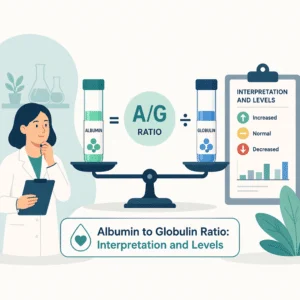
Leer las bandas una al lado de la otra explica por qué un resultado anormal de alfa-1 rara vez cuenta toda la historia. Los médicos suelen comparar las globulinas alfa-1 con las proteínas sanguíneas globulinas alfa-2, y evalúan la banda rica en anticuerpos revisando las proteínas inmunes globulinas gamma. Tu reporte generalmente también muestra el relación albúmina/globulina, un cálculo sencillo que compara la albúmina con todas las globulinas en conjunto y da una idea rápida del equilibrio.
Qué significa el rango de referencia de las globulinas alfa-1
Los rangos de referencia para las globulinas alfa-1 no son iguales en todos lados. Dependen del método, el equipo y la población que cada laboratorio utiliza para definir lo que es normal, por lo que el valor que importa es el que aparece junto a tu propio resultado. Las globulinas alfa-1 normalmente representan solo una pequeña fracción de la proteína sérica total — suelen ser la banda de globulinas más pequeña — lo que significa que incluso un cambio moderado puede verse llamativo en una gráfica. Toma el intervalo de referencia de tu reporte como el punto de comparación, y lee tu valor de alfa-1 frente a esa columna, no frente a un número universal fijo que encontraste en otro lugar.
Un punto más ayuda a poner el número en contexto: una sola lectura es una fotografía del momento. Como la alfa-1 antitripsina sube durante la inflamación, un valor medido mientras tienes una infección puede verse diferente al de cuando te sientes bien. Ese efecto del momento es normal y esperado, y es una razón común por la que los médicos repiten el estudio o lo interpretan junto con tus otros resultados, en lugar de reaccionar ante una sola cifra de forma aislada.
Por qué suben o bajan las globulinas alfa-1
Los cambios en la banda alfa-1 generalmente se deben a dos situaciones principales: el organismo aumentando las proteínas protectoras durante la inflamación, o una deficiencia causada por genética o por una pérdida importante de proteínas. La tabla a continuación agrupa las razones más comunes por las que un resultado queda por encima o por debajo del rango de referencia.
| Resultado de globulinas alfa-1 | Razones comunes | Lo que puede reflejar |
|---|---|---|
| Por encima del rango de referencia | Inflamación aguda o crónica, infección, lesión tisular o cirugía; embarazo o terapia con estrógenos | La alfa-1 antitripsina actuando como proteína de fase aguda que sube con la inflamación |
| Por debajo del rango de referencia | Deficiencia hereditaria de alfa-1 antitripsina; pérdida importante de proteínas por síndrome nefrótico, enfermedad hepática grave o desnutrición | Una deficiencia genética de alfa-1 antitripsina, o proteínas que se pierden o se producen en cantidad insuficiente |
Causas de globulinas alfa-1 elevadas
La razón más frecuente de alfa-1 globulinas elevadas es la inflamación. La alfa-1 antitripsina y la alfa-1 glicoproteína ácida son proteínas de fase aguda, lo que significa que el hígado libera más de ellas en cuestión de horas o días tras una infección, una lesión, una cirugía o un brote de una enfermedad inflamatoria crónica. En estos casos, una banda alfa-1 elevada es una señal general de un proceso inflamatorio activo, más que un indicador de una enfermedad específica. El embarazo y los tratamientos con estrógenos también pueden elevar el nivel, ya que el estrógeno estimula al hígado a producir más proteínas transportadoras. Para evaluar el grado de inflamación presente, tu médico puede agregar una prueba de proteína C reactiva para medir inflamación u ordenar un examen de velocidad de sedimentación globular (VSG).
Causas de alfa-1 globulinas bajas
Una banda alfa-1 baja es menos común y tiene un significado diferente. La causa más importante a considerar es la deficiencia de alfa-1 antitripsina, una condición hereditaria en la que el cuerpo produce muy poca alfa-1 antitripsina funcional. Como esta proteína normalmente protege los pulmones, y porque la versión defectuosa puede acumularse en el hígado, la deficiencia está relacionada con enfisema temprano y con enfermedad hepática. Una banda baja también puede aparecer cuando el cuerpo pierde o produce proteínas en menor cantidad a gran escala — por ejemplo, en el síndrome nefrótico, donde los riñones filtran proteína hacia la orina, en enfermedad hepática grave o en desnutrición significativa. Como una banda alfa-1 reducida es solo una parte de un patrón proteico más amplio, puede ser útil revisar los niveles bajos de globulinas.
Qué puede significar tu resultado de alfa-1 globulinas
Por sí solo, un valor fuera de rango es una señal para buscar contexto, no un diagnóstico definitivo. Una banda alfa-1 levemente elevada en alguien que tuvo un resfriado reciente o que tiene una enfermedad inflamatoria conocida generalmente refleja la respuesta de fase aguda esperada, y suele normalizarse cuando se resuelve la causa subyacente. Tu médico evaluará el resultado junto con tu historial clínico, tu exploración física y el resto del patrón de electroforesis. Las alfa-1 globulinas también se miden con frecuencia como parte de un estudio más amplio, y una revisión de rutina suele incluir una panel completo de análisis de sangre para interpretar el hallazgo con mayor claridad.
La situación que merece atención especial es una banda alfa-1 marcadamente baja. Como la alfa-1 antitripsina constituye la mayor parte de esta fracción, un resultado claramente reducido puede ser la primera señal de una deficiencia de alfa-1 antitripsina, una condición hereditaria que con frecuencia no se diagnostica. Esto no significa que una banda baja confirme la condición; significa que el hallazgo vale la pena investigar en lugar de ignorar. Una fracción baja puede confirmarse o descartarse con un estudio de alfa-1 antitripsina, al que generalmente le siguen pruebas genéticas o de fenotipo cuando el nivel resulta bajo.
Cuándo consultar a tu médico
La interpretación de los resultados corresponde a un profesional de la salud que conozca tu historial, pero hay situaciones en las que esa conversación se vuelve más urgente. Considera hacer una cita si alguna de las siguientes situaciones aplica en tu caso:
- Tus alfa-1 globulinas están claramente por debajo del rango de referencia, especialmente si tú o un familiar cercano ha tenido problemas pulmonares o hepáticos sin explicación.
- Tienes síntomas respiratorios que no corresponden a tu historial, como falta de aire, sibilancias o tos persistente, sobre todo si tienes menos de 45 años o no tienes antecedentes de tabaquismo intenso.
- Notas señales de sobrecarga hepática, como coloración amarillenta en la piel o los ojos, orina oscura o hinchazón en las piernas o el abdomen.
- Una banda alfa-1 elevada se acompaña de fiebre, dolor u otros signos de infección o inflamación que no mejoran.
- Tu resultado sigue fuera del rango en estudios repetidos, aunque te sientas bien.
Ninguno de estos puntos es un diagnóstico. Son simplemente señales de que tus alfa-1 globulinas merecen ser evaluadas en persona, junto con tus síntomas y cualquier estudio de seguimiento que tu médico recomiende.
Avances científicos recientes
La investigación sobre la banda alfa-1 se ha enfocado menos en la fracción en sí y más en su proteína principal, la alfa-1 antitripsina, y en la deficiencia hereditaria detrás de muchos resultados bajos. Los hallazgos que se presentan a continuación son recientes y aún están en evolución, por lo que describen la dirección hacia la que apunta la ciencia más que una práctica clínica establecida.
La detección temprana es el tema recurrente. Revisiones recientes sobre la deficiencia de alfa-1 antitripsina destacan que esta condición sigue siendo ampliamente subdiagnosticada, y que el camino hacia un diagnóstico es directo: un nivel bajo de la proteína en sangre, confirmado por una prueba genética o de fenotipo que identifique la variante específica. Lo que esto significa para ti es práctico: si tus alfa-1 globulinas resultan bajas, un estudio confirmatorio sencillo puede resolver la duda en lugar de dejarla abierta.
Para el pequeño número de personas con deficiencia grave, un gran estudio de registro multinacional —un registro es una base de datos organizada que hace seguimiento a muchos pacientes a lo largo del tiempo— reportó que quienes recibieron terapia de aumento, es decir, infusiones regulares de la proteína alfa-1 antitripsina que les falta, tendieron a vivir más tiempo que quienes no la recibieron. El mensaje es alentador para ese grupo específico, aunque los investigadores siguen destacando que evitar el humo del tabaco sigue siendo la medida más poderosa para proteger los pulmones.
La dirección más nueva apunta al lado hepático de la enfermedad, que actualmente no tiene un medicamento específico. Un enfoque, una terapia inyectable llamada fazirsiran, funciona "silenciando" la instrucción genética defectuosa para que el hígado produzca mucho menos de la proteína anormal que puede acumularse dentro de las células hepáticas. En un ensayo temprano controlado con placebo, redujo esa proteína anormal tanto en sangre como en hígado y disminuyó la acumulación; ahora se están llevando a cabo estudios más grandes de fase 3 para evaluar si esto se traduce en un beneficio real para el hígado con el tiempo. Es prometedor, pero aún no es un tratamiento aprobado.
Más adelante en la investigación, los científicos han comenzado a probar la terapia génica —un enfoque de una sola vez diseñado para darle al organismo una copia funcional del gen para que pueda producir alfa-1 antitripsina normal por sí solo—. Estos estudios están en una etapa temprana, enfocada en la seguridad, y pasarán años antes de que se sepa qué tan bien funciona esta estrategia. Por ahora, es mejor verlos como un vistazo esperanzador hacia dónde podría dirigirse el tratamiento, no como algo disponible en la clínica hoy en día.
Glosario
| Término | Definición |
|---|---|
| Alfa-1 globulinas | Un grupo de proteínas en sangre, encabezado por la alfa-1 antitripsina, que se mide como una banda en la electroforesis de proteínas séricas. |
| Electroforesis de proteínas séricas (EPS) | Un método de laboratorio que separa las proteínas del suero en bandas distintas según su tamaño y carga eléctrica. |
| Alfa-1 antitripsina (AAT) | La principal proteína de la banda alfa-1; protege los pulmones de una enzima que destruye el tejido. |
| Proteína de fase aguda | Una proteína cuyos niveles en sangre aumentan rápidamente durante inflamación, infección o lesión. |
| Deficiencia de alfa-1 antitripsina (DAAT) | Una enfermedad hereditaria con niveles bajos de AAT funcional que puede afectar los pulmones y el hígado. |
| Alfa-1 glicoproteína ácida (orosomucoide) | Otra proteína de la banda alfa-1 que aumenta durante la inflamación. |
| Síndrome nefrótico | Un trastorno renal que deja escapar grandes cantidades de proteína hacia la orina. |
| Gen SERPINA1 | El gen que contiene las instrucciones para producir alfa-1 antitripsina. |
| Terapia de aumento | Infusiones regulares de la proteína alfa-1 antitripsina utilizadas para elevar sus niveles en casos de deficiencia grave. |
| Banda de electroforesis (fracción) | Uno de los picos o zonas que se observan cuando las proteínas del suero se separan en la gráfica. |
Preguntas frecuentes
¿Las globulinas alfa-1 son lo mismo que la proteína total?
No. La proteína total mide todas las proteínas de tu suero a la vez, principalmente la albúmina más todas las globulinas sumadas. Las globulinas alfa-1 son solo una parte de ese total, separada mediante la electroforesis de proteínas séricas. Puedes tener una proteína total normal mientras que la fracción alfa-1 esté alta o baja, y precisamente por eso es útil el desglose de la electroforesis: revela cambios que un solo valor de proteína total no mostraría.
¿Los medicamentos antiinflamatorios pueden alterar el resultado?
Pueden hacerlo, de manera indirecta. La alfa-1 antitripsina y otras proteínas alfa-1 aumentan con la inflamación, así que si un medicamento controla la inflamación de fondo, la banda alfa-1 puede ir regresando poco a poco a su nivel habitual con el tiempo. El cambio refleja que la inflamación está cediendo, no que el medicamento actúe directamente sobre la proteína. Si tomas medicamentos antiinflamatorios o hormonales, mencionalo cuando te expliquen tus resultados, ya que ayuda a entender el patrón que observa tu médico.
¿Un resultado bajo de alfa-1 siempre es hereditario?
No siempre. La causa hereditaria más importante es la deficiencia de alfa-1 antitripsina, y una banda claramente baja es una buena razón para investigarla. Sin embargo, los niveles también pueden bajar cuando el cuerpo pierde mucha proteína, como ocurre en el síndrome nefrótico, o cuando produce menos, como en una enfermedad hepática grave o desnutrición. Tu médico distingue entre estas posibilidades revisando tu historial clínico y solicitando un estudio específico de alfa-1 antitripsina cuando sea necesario.
¿Necesito estar en ayuno antes de este estudio?
Por lo general, la electroforesis de proteínas séricas no requiere ayuno especial, pero los laboratorios varían y tu muestra puede ir junto con otros estudios que sí lo requieren. Lo más seguro es seguir las indicaciones de tu orden de laboratorio o preguntar al equipo que te lo solicitó. Si tienes dudas, una llamada rápida al laboratorio antes de ir puede ahorrarte una visita innecesaria.
¿Un valor alto de alfa-1 en un solo resultado puede indicar algo grave?
Una banda alfa-1 alta en un resultado aislado casi siempre refleja una inflamación común: una infección reciente, una lesión o un brote, y suele normalizarse cuando desaparece esa causa. Es una señal general, no un diagnóstico específico. Lo que importa más es la tendencia y el contexto: un valor que se mantiene alto, o que aparece junto con otros resultados anormales o síntomas, es la situación que tu médico querrá investigar con más detalle.
¿Cómo se confirma la deficiencia de alfa-1 antitripsina?
Todo comienza midiendo el nivel de alfa-1 antitripsina en la sangre. Si el nivel es bajo, una prueba genética o de fenotipo identifica la variante específica del gen responsable, lo que confirma el diagnóstico e indica si la persona es portadora o tiene la deficiencia completa. Este enfoque de dos pasos es rápido y está ampliamente disponible, por eso vale la pena dar seguimiento a una banda alfa-1 baja en la electroforesis en lugar de preocuparse por ello.
Fuentes
- MedlinePlus, Biblioteca Nacional de Medicina de EE. UU. — Prueba de alfa-1 antitripsina, 2024 — medlineplus.gov
- Instituto Nacional del Corazón, los Pulmones y la Sangre (NIH) — Deficiencia de alfa-1 antitripsina, 2024 — nhlbi.nih.gov
- Cleveland Clinic — Deficiencia de alfa-1 antitripsina: causas, síntomas y tratamiento — my.clevelandclinic.org
- Mayo Clinic — Deficiencia de alfa-1 antitripsina: síntomas y causas — mayoclinic.org
- Dasi F — Deficiencia de alfa-1 antitripsina — Medicina Clínica, 2023 — doi.org/10.1016/j.medcli.2023.10.014
- Mornex JF y colaboradores — Deficiencia de alfa-1 antitripsina: una revisión actualizada — La Presse Medicale, 2023 — doi.org/10.1016/j.lpm.2023.104170
- Fraughen DD y colaboradores — La terapia de aumento para la deficiencia grave de alfa-1 antitripsina mejora la supervivencia — American Journal of Respiratory and Critical Care Medicine, 2023 — doi.org/10.1164/rccm.202305-0863OC
- Clark VC y colaboradores — Fazirsiran para adultos con enfermedad hepática por deficiencia de alfa-1 antitripsina (SEQUOIA) — Gastroenterology, 2024 — doi.org/10.1053/j.gastro.2024.06.028
- ClinicalTrials.gov — Estudio de fase 3 de fazirsiran en la enfermedad hepática asociada a la deficiencia de alfa-1 antitripsina (NCT05677971), 2023 — clinicaltrials.gov/study/NCT05677971
- ClinicalTrials.gov — Terapia génica para la deficiencia de alfa-1 antitripsina (NCT06996756), 2025 — clinicaltrials.gov/study/NCT06996756
Lecturas recomendadas
- Análisis de sangre de amiloide A sérico
- Marcador sanguíneo de globulinas beta-1
- Análisis de sangre de globulinas beta-2
- Causas y tratamientos del nivel alto de globulinas
- Análisis de sangre de transferrina y transporte de hierro
Entiende tus resultados de laboratorio con AI DiagMe
Una sola línea como las globulinas alfa-1 rara vez tiene sentido por sí sola, pero puede dar señales útiles sobre inflamación o una condición hereditaria. AI DiagMe te ayuda a entender qué significan los resultados de tus análisis de sangre en un lenguaje claro y sencillo, conectando valores como la alfa-1 antitripsina, la proteína C reactiva y la relación albúmina/globulinas en una imagen completa. Está diseñado para ayudarte a comprender tus resultados y preparar preguntas más precisas para tu médico — no diagnostica ni reemplaza la atención médica.
Obtén la lectura de tus resultados en minutos