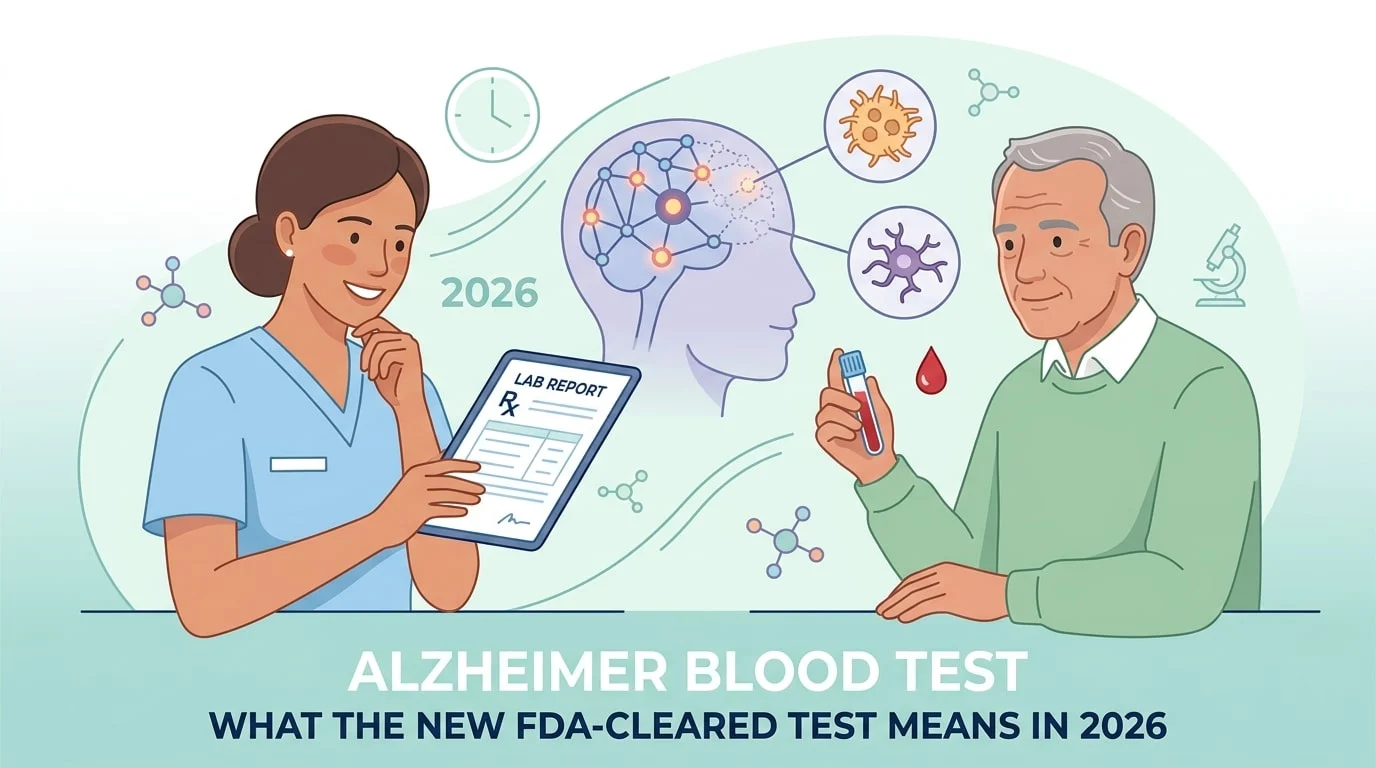
Ein Alzheimer-Bluttest, der im Mai 2025 von der US-amerikanischen Arzneimittelbehörde FDA zugelassen wurde, hat verändert, wie Ärzte nach der Erkrankung suchen können. Zum ersten Mal kann eine einfache Blutentnahme dabei helfen, die mit Alzheimer verbundenen Amyloid-Plaques nachzuweisen – ohne dass dafür ausschließlich ein Gehirnscan oder eine Lumbalpunktion erforderlich ist. Dieser Artikel erklärt, was der Alzheimer-Bluttest misst, warum er wichtig ist, wie zuverlässig er ist, für wen er gedacht ist und was die neuesten Forschungsergebnisse zeigen. Der Ton ist sachlich und nüchtern: Dies ist ein echter Fortschritt, aber keine Wunderlösung – und er stellt allein keine Alzheimer-Diagnose.
Was der Alzheimer-Bluttest tatsächlich misst
Der von der FDA zugelassene Test heißt Lumipulse G pTau217/beta-Amyloid 1-42 Plasma Ratio. Er misst zwei Proteine im Blutplasma, dem flüssigen Bestandteil des Blutes: eine Form des Tau-Proteins namens pTau217 sowie ein Amyloid-Fragment namens Beta-Amyloid 1-42. Das Gerät berechnet anschließend das Verhältnis zwischen diesen beiden Werten. Dieses Verhältnis korreliert eng mit der Menge an Amyloid-Plaques im Gehirn – einem charakteristischen Merkmal der Alzheimer-Erkrankung. Vereinfacht gesagt: Ein Stoff in Ihrem Blut gibt Aufschluss über einen Prozess, der im Gehirn stattfindet.
Bisher konnten diese Plaques nur mithilfe eines PET-Gehirnscans sichtbar gemacht oder durch eine Lumbalpunktion – auch Liquorpunktion genannt – im Nervenwasser nachgewiesen werden. Beide Methoden sind zuverlässig, aber kostspielig, invasiv oder schwer zugänglich. Der neue Ansatz liest dieselbe zugrunde liegende Biologie aus einer gewöhnlichen Blutprobe ab. Einen Überblick darüber, wie diese Proteine die Erkrankung vorantreiben, bietet unser Team in der Erklärung zur Biologie von Alzheimer-Krankheit.
Warum der Alzheimer-Bluttest ein Wendepunkt ist
Der eigentliche Fortschritt liegt in der Zugänglichkeit. Eine Blutentnahme kann in einer normalen Arztpraxis durchgeführt werden, kostet deutlich weniger als bildgebende Verfahren und vermeidet sowohl Strahlenbelastung als auch eine Rückenmarkspunktion. Die Johns Hopkins University, deren Forscher an der Validierung des Tests beteiligt waren, weist darauf hin, dass der Test schrittweise eingeführt wird, damit Hausärzte und Fachärzte ihn über die üblichen elektronischen Patientenaktensysteme anordnen können.
Auch der Zeitpunkt spielt eine wichtige Rolle. Neuere Alzheimer-Medikamente wirken am besten in einem frühen Stadium, und vor Behandlungsbeginn muss das Vorhandensein von Amyloid bestätigt werden. Ein schnellerer, einfacherer Test bedeutet, dass weniger Menschen monatelang auf einen Scan warten müssen und mehr Betroffene eine Antwort erhalten, solange ihre Optionen noch vielfältig sind. Die Ergebnisse liegen in der Regel innerhalb weniger Tage vor. Für die praktischen Aspekte der Probenentnahme erklärt ein separater Leitfaden den Standard Bluttestverfahren.
Wie zuverlässig ist der Alzheimer-Bluttest?
In der Studie, die die FDA geprüft hat, wurde der Test bei 499 Personen mit Gedächtnis- oder Denkproblemen mit PET-Scans oder Liquorbefunden verglichen. Von denjenigen, die ein positives Ergebnis hatten, wiesen 91,7 % tatsächlich Amyloid-Plaques auf; von denjenigen mit einem negativen Ergebnis hatten 97,3 % tatsächlich keine. Weniger als jedes fünfte Ergebnis fiel in einen unklaren, nicht eindeutigen Bereich.
Das ist eine starke Leistung, aber kein eindeutiges Ja-oder-Nein-Ergebnis. Das Resultat ist am besten als Spektrum zu verstehen, wie die folgende Tabelle zeigt.
| Ergebnis | Was es nahelegt | Was in der Regel als Nächstes passiert |
|---|---|---|
| Positiv | Amyloid-Plaques sind wahrscheinlich vorhanden (ca. 92 % stimmten mit einem PET-Scan oder Liquortest überein) | Der Arzt bestätigt dies anhand des gesamten klinischen Bildes und bespricht die nächsten Schritte |
| Nicht eindeutig | Unklar; dies trat bei weniger als jedem fünften Betroffenen auf | In der Regel wird ein PET-Scan oder ein Liquortest ergänzend durchgeführt |
| Negativ | Amyloid-Plaques sind unwahrscheinlich (ca. 97 % stimmten mit einem negativen Scan oder Test überein) | Der Arzt sucht nach einer anderen Ursache für die Symptome |
Da kein Test perfekt ist, kann ein falsch positives Ergebnis unnötige Sorgen und zusätzliche Untersuchungen verursachen, während ein falsch negatives Ergebnis eine trügerische Sicherheit vermitteln kann. Die FDA stellt ausdrücklich klar, dass es sich dabei weder um ein Screening-Instrument noch um eine eigenständige Diagnose handelt und dass die Ergebnisse stets im Zusammenhang mit der gesamten Untersuchung einer Person bewertet werden müssen. Dieselbe Vorsicht gilt für jeden auffälligen Wert; ein begleitender Leitfaden erläutert auffällige Blutbefunde.
Für wen der Test geeignet ist – und für wen nicht
Die FDA hat den Test für Erwachsene ab 55 Jahren zugelassen, die bereits Anzeichen eines kognitiven Abbaus zeigen – etwa Gedächtnisprobleme – und die in einer spezialisierten Einrichtung untersucht werden. Er ist nicht für das Screening gesunder Personen ohne Symptome zugelassen.
Diese Einschränkung ist keine bloße Formalität. Französische Forschungsteams des Inserm haben gezeigt, dass derselbe pTau217-Marker bei fast der Hälfte der beschwerdefreien Personen falsch positiv ausfallen kann, da Amyloid Jahre vor der Erkrankung – oder sogar ohne diese jemals auszulösen – auftreten kann. Der Marker ist am zuverlässigsten, wenn er einen klinischen Verdacht bestätigt, und nicht, wenn er als allgemeiner Test für alle eingesetzt wird.
Wann man mit einem Arzt sprechen sollte
Wenn Sie oder ein Angehöriger anhaltende Gedächtnisveränderungen bemerken, die den Alltag beeinträchtigen, ist das der richtige Moment, um mit einem Arzt über eine Untersuchung zu sprechen – er kann entscheiden, ob dieser Bluttest in Frage kommt. Gelegentliche Vergesslichkeit allein, ohne weitere Veränderungen, ist in der Regel ein normaler Teil des Alterungsprozesses. Als weiteres Beispiel für eine Früherkennung aus einer einzigen Blutabnahme berichtet unsere Rubrik auch über den Bluttest zur Früherkennung mehrerer Krebsarten. Amyloid taucht auch anderswo in der Labormedizin auf; ein verwandter Artikel erklärt den Serum-Amyloid-A-Bluttest, einen anderen Marker, der mit Entzündungen in Verbindung steht.
Neueste wissenschaftliche Fortschritte
Laut in PubMed indexierten Studien haben sich Bluttests auf Alzheimer rasch von der Forschung in Richtung klinischer Praxis entwickelt, wobei Experten einen sorgfältigen Einsatz betonen.
Eine große Meta-Analyse im The Lancet Neurology (2025) fasste 113 Studien mit knapp 29.625 Personen zusammen. Sie ergab, dass pTau217 der leistungsstärkste Blutmarker für Alzheimer-Pathologie ist, mit einer Sensitivität von etwa 88 % und einer Spezifität von 89 % (DOI).
Eine Studie in Nature Medicine (2025) testete einen automatisierten pTau217-Assay im klinischen Alltag der Primär- und Sekundärversorgung bei mehr als 2.300 Personen. In Fachkliniken wurde eine Genauigkeit von etwa 0,93 bis 0,96 erreicht, in der Primärversorgung 85 %; ein Zwei-Schwellenwert-Ansatz steigerte die Genauigkeit weiter, indem die unsichersten Ergebnisse ausgeklammert wurden (DOI).
Im Jahr 2025 veröffentlichte die Alzheimer's Association eine klinische Praxisleitlinie für diese Bluttests. Sie empfiehlt deren Einsatz ausschließlich bei Personen mit bereits bestehenden kognitiven Symptomen, legt Mindestanforderungen an die Testleistung fest und betont ausdrücklich, dass ein Blut-Biomarker keine vollständige klinische Untersuchung ersetzt (DOI).
Die Forschung schreitet weiter voran. Neuere Marker wie MTBR-tau243 zielen darauf ab, Tau-Fibrillen und das Krankheitsstadium zu erfassen – nicht nur Amyloid –, was künftig zeigen könnte, wie weit die Erkrankung fortgeschritten ist (DOI).
Glossar
| Begriff | Definition |
|---|---|
| Alzheimer-Bluttest | Ein Bluttest, der nach Proteinen sucht, die mit den Amyloid-Plaques der Alzheimer-Erkrankung in Verbindung stehen. |
| pTau217 | Eine Form des Tau-Proteins, dessen Blutspiegel bei Alzheimer-typischen Veränderungen ansteigt. |
| Beta-Amyloid 1-42 | Ein Amyloid-Proteinfragment, das im Blut gemessen und im Verhältnis zu pTau217 als Quotient ausgewertet wird. |
| Amyloid-Plaques | Proteinansammlungen, die sich zwischen den Gehirnzellen ablagern und ein charakteristisches Merkmal der Alzheimer-Erkrankung sind. |
| Lumipulse | Der Markenname des ersten Bluttests, den die FDA zur Unterstützung der Alzheimer-Diagnose zugelassen hat. |
| PET-Scan | Eine bildgebende Untersuchung des Gehirns, die Amyloid-Plaques sichtbar machen kann und als Referenz für den Bluttest dient. |
| Lumbalpunktion | Ein Eingriff, bei dem Rückenmarksflüssigkeit durch eine Nadel im Rücken entnommen wird; auch als Spinalpunktion bezeichnet. |
| Biomarker | Ein messbarer Stoff im Körper, der auf einen normalen Prozess oder eine Erkrankung hinweist. |
| Sensitivität | Die Fähigkeit eines Tests, Personen, die tatsächlich an der Erkrankung leiden, korrekt zu identifizieren. |
| Spezifität | Die Fähigkeit eines Tests, Personen, die nicht an der Erkrankung leiden, korrekt zu identifizieren. |
Häufig gestellte Fragen
Kann ein Bluttest Alzheimer diagnostizieren?
Nicht allein. Der Alzheimer-Bluttest weist die mit der Erkrankung verbundenen Amyloid-Plaques nach – ein wichtiger Hinweis –, doch eine Diagnose stützt sich stets auf das Gesamtbild: Ihre Symptome, eine klinische Untersuchung und Gedächtnisbeurteilung sowie manchmal eine Bildgebung des Gehirns. Ein positives Ergebnis erhöht die Wahrscheinlichkeit einer Alzheimer-Erkrankung; es bestätigt sie jedoch nicht für sich allein. Ihr Arzt bewertet den Test zusammen mit allen anderen Befunden, bevor er zu einem Schluss kommt.
Ist der Alzheimer-Bluttest bereits verfügbar?
Ja, in begrenztem und wachsendem Umfang. Der Test wurde im Mai 2025 zugelassen und wird schrittweise in Labore eingeführt, sodass Ärzte ihn anordnen können. Die Verfügbarkeit variiert noch je nach Region und Klinik, und nicht jeder Arzt bietet ihn bereits an. Falls Ihr Arzt noch nicht damit vertraut ist, können Sie um eine Überweisung zu einem Gedächtnisspezialisten oder Neurologen bitten, der ihn kennt.
Für wen könnte dieser Test sinnvoll sein?
Der Test ist für Erwachsene ab 55 Jahren gedacht, die bereits Gedächtnis- oder Denkprobleme bemerken und deswegen untersucht werden. Er ist nicht für Personen ohne Symptome geeignet, die lediglich ihr Risiko überprüfen möchten, da das Ergebnis in dieser Situation deutlich schwerer zu interpretieren ist. Die Entscheidung für den Test sollte gemeinsam mit einem Arzt im Rahmen einer Untersuchung getroffen werden.
Was bedeutet ein positives Ergebnis konkret?
Ein positives Ergebnis bedeutet, dass Amyloid-Plaques im Gehirn wahrscheinlich vorhanden sind. Es bedeutet nicht zwangsläufig, dass Sie an Alzheimer erkrankt sind, da Amyloid auch bei Menschen nachweisbar sein kann, die (noch) nicht erkrankt sind oder es nie werden. Es ist ein Signal, das den Arzt veranlasst, den Befund zusammen mit Ihren Symptomen und – falls nötig – weiteren Untersuchungen zu bewerten, bevor er entscheidet, was dies für Sie bedeutet.
Was kostet der Test, und wird er von der Krankenkasse übernommen?
Kosten und Kostenübernahme variieren je nach Region, Labor und Versicherungsplan. Laut Mayo Clinic wird der Preis voraussichtlich niedriger sein als bei aktuellen Alternativen wie der Amyloid-PET-Bildgebung oder einer Liquorpunktion. Da die Kostenübernahme unterschiedlich ist, lohnt es sich, vor der Testanordnung bei Ihrer Klinik und Ihrer Krankenkasse nachzufragen, was auf Sie zukommt.
Schließt ein unauffälliges Ergebnis Alzheimer dauerhaft aus?
Ein negatives Ergebnis macht eine amyloidbedingte Alzheimer-Erkrankung zum Zeitpunkt der Untersuchung deutlich unwahrscheinlicher, was beruhigend ist – es ist jedoch keine lebenslange Garantie. Gedächtnis- und Denkprobleme können auch andere Ursachen haben, von Schilddrüsenproblemen bis hin zu Vitaminmangel, die dieser Test nicht erfasst. Wenn die Symptome anhalten oder sich verschlechtern, wird Ihr Arzt unabhängig vom Blutbefund möglicherweise weitere Untersuchungen veranlassen.
Quellen
- FDA gibt ersten Bluttest zur Diagnose der Alzheimer-Krankheit frei — U.S. Food and Drug Administration
- Neue von der FDA zugelassene Bluttests zur Diagnose der Alzheimer-Krankheit — Mayo Clinic
- Von der FDA zugelassener Bluttest erkennt frühe Marker der Alzheimer-Krankheit — Johns Hopkins Medicine
Weiterführende Literatur
- Was ist Alzheimer? Ursachen, Anzeichen und Diagnose
- Der Ablauf eines Bluttests: von der Blutabnahme bis zum Ergebnis
- Wie Sie Ihre Bluttestergebnisse lesen
- Abnormale Blutwerte: Was bedeuten sie?
- Bluttest zur Früherkennung mehrerer Krebsarten: das Update 2026
Verstehen Sie Ihre Laborergebnisse mit AI DiagMe
Ein neuer Alzheimer-Bluttest ist eine Erinnerung daran, dass Laborbefunde immer aussagekräftiger – und allein immer schwerer zu verstehen – werden. AI DiagMe hilft Ihnen, gängige Blut- und Urinbefunde in klarer, verständlicher Sprache zu verstehen: was jede Zeile bedeutet, was ein Wert außerhalb des Normbereichs hinweisen könnte und welche Fragen Sie Ihrem Arzt stellen sollten. Die Plattform ist darauf ausgelegt, Ihnen zu helfen, Ihre Ergebnisse zu verstehen – nicht, eine Diagnose zu stellen – und ersetzt niemals das Urteil einer medizinischen Fachkraft.
➡️ Erhalten Sie Ihre Ergebnisse innerhalb weniger Minuten.