











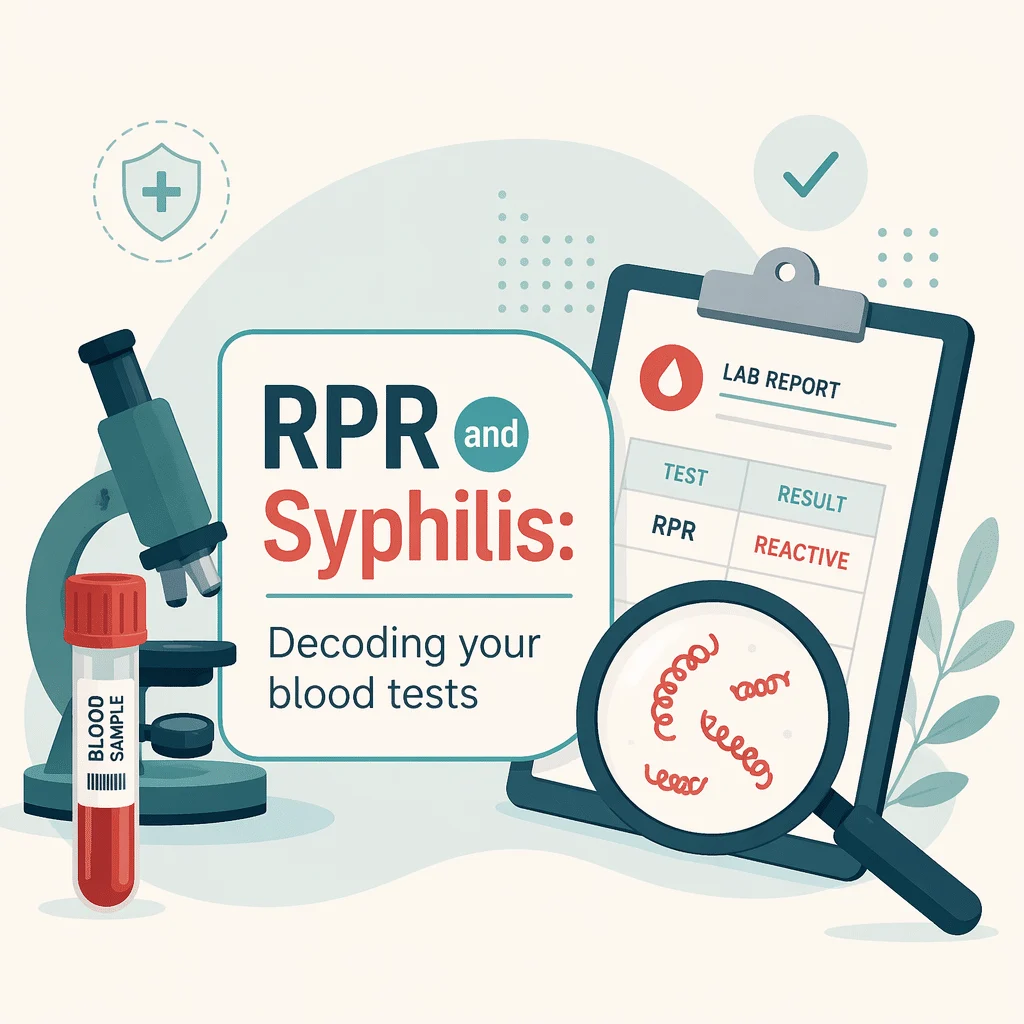
Если в вашем анализе крови RPR-тест оказался реактивным, прежде всего важно понять следующее: положительный результат RPR — это не диагноз «сифилис». RPR — это скрининговый тест. Он создан для высокой чувствительности, а не для точности, и его результат всегда должен подтверждаться вторым, более специфичным тестом, прежде чем делать какие-либо выводы. Биологические ложноположительные результаты встречаются часто и хорошо изучены. А если сифилис подтверждён, он поддаётся лечению антибиотиками, которые назначает врач.
Из этой статьи вы узнаете, что именно определяет RPR, почему лаборатории никогда не оценивают его результат отдельно, как работают два алгоритма тестирования, что означает число титра, почему очень высокий уровень антител может давать отрицательный результат и когда следует обратиться к врачу.
Что измеряет тест RPR — и чего он не измеряет
RPR расшифровывается как «реакция быстрых плазменных реагинов», и ключевое слово здесь — «реагины». Тест не выявляет Treponema pallidum, бактерию, вызывающую сифилис. Он вообще не взаимодействует с самим возбудителем.
Вместо этого RPR обнаруживает антитела, которые иммунная система вырабатывает против липидного материала, высвобождающегося при повреждении клеток. Сифилис вызывает именно такое повреждение, поэтому антитела нередко появляются во время инфекции. Однако другие состояния также повреждают клетки схожим образом и провоцируют выработку тех же антител. Именно поэтому RPR называют нетрепонемным тестом: он измеряет косвенное следствие, а не причину.
Это особенность метода, а не его недостаток. Нетрепонемный тест выполняется быстро, стоит недорого и легко применяется в массовом скрининге — именно это делает его отличным инструментом для обследования большого числа людей. Компромисс — точность. Лаборатории относят RPR к другим серологических тестов которые выявляют антитела, а не сами возбудители.
Трепонемные тесты: вторая половина картины
Трепонемный тест выполняет противоположную задачу: он выявляет антитела, направленные непосредственно против Treponema pallidum самой бактерии. К распространённым примерам относятся TP-PA (T. pallidum реакция пассивной гемагглютинации), FTA-ABS (реакция иммунофлюоресценции с абсорбцией), а также автоматизированные трепонемные иммуноанализы — ИФА (EIA) или ХЛИА (CLIA).
Ни один из тестов не является исчерпывающим сам по себе. RPR позволяет предположить, активен ли процесс; трепонемный тест указывает на то, имел ли человек Treponema pallidum вообще был причастен. Только вместе эти тесты дают полную картину — именно поэтому в StatPearls указано, что реактивный нетрепонемный результат всегда требует подтверждения трепонемным методом.
Почему RPR никогда не оценивается отдельно: два алгоритма тестирования
Лаборатории США используют одну из двух последовательностей, и то, какую именно применяет ваша лаборатория, объясняет, почему ваш бланк выглядит именно так.
Традиционный алгоритм
В традиционной последовательности сначала выполняется RPR. Если результат нереактивный, тестирование, как правило, на этом заканчивается. Если реактивный — лаборатория проводит трепонемный тест для подтверждения или исключения сифилиса: сначала недорогой скрининг, затем специфическое подтверждение.
Обратный алгоритм
Многие лаборатории в США изменили порядок тестирования, поскольку современные трепонемные иммуноанализы поддаются автоматизации и могут выполняться в больших объёмах. Обратный алгоритм начинается с трепонемного теста — как правило, ИФА или ХЛИА. Если он отрицательный, тестирование прекращается. Если положительный, лаборатория дополнительно проводит RPR. Если результаты расходятся — трепонемный тест положительный, а RPR отрицательный — вопрос решается с помощью второго трепонемного теста другого типа, например TP-PA.
Именно здесь чаще всего возникает путаница. При обратной последовательности совершенно нормально увидеть в бланке рядом «трепонемные антитела: положительно» и «RPR: нереактивно». Такое сочетание выглядит противоречивым, но, как правило, таковым не является. Чаще всего это означает перенесённую в прошлом инфекцию сифилиса, при которой трепонемные антитела сохраняются, а RPR вернулся к норме. Иногда это может указывать на очень раннюю стадию инфекции, а в редких случаях первый трепонемный тест сам по себе оказался ложноположительным. Именно для этого и существует третий тест.
Почему трепонемные тесты остаются положительными пожизненно
Как только иммунная система встретилась с Treponema pallidum, она запоминает это. Трепонемные антитела, как правило, сохраняются в организме неопределённо долго — независимо от того, было ли вылечено заболевание, — поэтому у большинства людей, перенёсших сифилис, трепонемный тест остаётся положительным пожизненно.
Из этого следуют два важных вывода. Трепонемный тест не может отличить текущую инфекцию от успешно пролеченной двадцать лет назад, а также не позволяет контролировать эффективность лечения, поскольку его результат не снижается. Та же иммунологическая память проявляется в иммуноглобулин G (IgG) результаты в целом, тогда как иммуноглобулин М (IgM) свидетельствует о более недавнем событии. Читатели, которые разбирались в результатах IgG и IgM на токсоплазмоз узнают ту же логику.
Расшифровка результатов: что означает каждая комбинация
Поскольку ни один из тестов сам по себе ничего не значит, интерпретация строится на их сочетании. В таблице представлены наиболее распространённые паттерны, которые встречаются в результатах анализов.
| РПР (нетрепонемный тест) | Трепонемный тест | Стандартная интерпретация | Обычный следующий шаг |
|---|---|---|---|
| Отрицательный | Отрицательный или не проводился | Серологических признаков сифилиса нет | Дальнейшее обследование не требуется, если только не было возможного контакта в последние несколько недель |
| Положительный, как правило, с низким титром | Отрицательный | Биологически ложноположительный результат — РПР реагирует на что-то иное, не связанное с сифилисом | Врач выясняет основную причину; лечение от сифилиса не показано |
| Реактивный | Реактивный | Сифилис — либо текущая инфекция, либо уже пролеченная в прошлом | Врач оценивает титр, симптомы и предыдущие результаты, чтобы отличить активную инфекцию от перенесённой |
| Отрицательный | Реактивный | Чаще всего — перенесённая и пролеченная инфекция; иногда — очень ранний сифилис; в редких случаях — ложноположительный трепонемный тест | Второй, другой трепонемный тест (обычно ТП-ПА) позволяет устранить расхождение |
| Отрицательный | Тест не проводился, однако есть симптомы или недавний возможный контакт | Возможно, слишком рано — антитела появляются через несколько недель | Повторите анализ через несколько недель по рекомендации врача |
В четырёх из пяти случаев честный ответ — это проведение второго теста, а не окончательный вывод. Необходимость подтверждения не означает, что что-то пошло не так — именно так и устроена эта система.
Биологически ложноположительные результаты: почему реактивный РПР нередко не связан с сифилисом
Поскольку РПР выявляет антитела к повреждению клеток, а не к самой бактерии, реактивным его может сделать любой процесс, вызывающий аналогичное повреждение. Врачи знают об этом уже несколько десятилетий и дали этому явлению название — биологически ложноположительная реакция. По данным StatPearls, в США она встречается примерно у 1–2% обследованных — а с учётом миллионов скрининговых тестов это очень большое число людей.
К хорошо известным причинам относятся:
- Беременность — одна из наиболее частых причин
- Аутоиммунные заболевания, особенно волчанка и антифосфолипидный синдром
- Внутривенное употребление наркотиков
- Пожилой возраст
- Недавняя вакцинация
- Другие инфекции, в том числе инфекционный мононуклеоз, гепатит, ВИЧ, малярия и болезнь Лайма
Все эти состояния сопровождаются активацией иммунной системы или усиленным обновлением клеток. РПР работает именно так, как задумано; он просто не способен определить, какой именно вид повреждения клеток обнаруживает.
Классическая картина — реактивный РПР при низком титре (нередко 1:8 и ниже) в сочетании с нереактивным трепонемным тестом. Если в вашем результате именно такое сочетание, решающее значение имеет трепонемный тест, поскольку он является специфическим. Задействованные антитела перекрываются с теми, что определяются такими маркерами, как антинуклеарные антитела (АНА), а повышенный С-реактивный белок (СРБ) нередко сопровождает то же воспаление.
Что означает титр РПР и как он отражает эффективность лечения
Если РПР реактивен, лаборатория указывает титр: 1:1, 1:8, 1:32, 1:64 и так далее. Титр — это просто максимальное разведение образца, при котором реакция ещё определяется. Чем больше второе число, тем больше антител. Это не показатель тяжести состояния и не оценка чего-либо, связанного с вами лично.
Титры важны по двум причинам. Более высокие титры соответствуют более активной инфекции — при нелечёном вторичном сифилисе они нередко составляют 1:32 и выше. Что ещё важнее, именно по динамике титров врачи судят об эффективности лечения.
Правило четырёхкратного снижения
Поскольку титры меняются в два раза на каждом шаге, врачи ориентируются на четырёхкратное изменение — два шага по шкале разведений. Четырёхкратное снижение, например с 1:32 до 1:8, свидетельствует о том, что лечение действует. Четырёхкратный рост у ранее пролеченного пациента указывает на повторное заражение или на то, что лечение не дало полного эффекта, и требует повторного обследования. Именно поэтому РПР незаменим: только он из этой пары способен отслеживать динамику.
Серорезистентное состояние
Есть один факт, который избавляет от лишних тревог. Примерно у каждого пятого человека, прошедшего лечение от раннего сифилиса, титр так и не снижается до нуля. Он падает, а затем стабилизируется на низком уровне — 1:4 или 1:8 — и остаётся там, иногда навсегда, без каких-либо симптомов и признаков активной инфекции. Это называется серорезистентным состоянием.
Это не неудача лечения. Согласно современным представлениям, такой результат отражает сохраняющийся иммунный паттерн, а не выжившие бактерии. Титр, который установился на низком уровне и перестал меняться, — это признанный и хорошо описанный исход.
Ложноотрицательные результаты и феномен прозоны
РПР может также не выявить сифилис. Наиболее частая причина — слишком раннее тестирование, до того как успели выработаться антитела. Кроме того, тест менее чувствителен при очень раннем первичном сифилисе и на поздних стадиях заболевания, чем при вторичном и латентном сифилисе.
Существует и неочевидная ловушка. РПР основан на том, что антитела склеиваются с тестовым антигеном, образуя видимые агрегаты, и для этого необходим примерный баланс между ними. При вторичном сифилисе уровень антител может быть настолько высоким, что они «перегружают» антиген и полностью блокируют агглютинацию. В результате неразведённый образец выглядит совершенно чистым — ложноотрицательный результат, вызванный избытком антител, а не их недостатком.
Это явление называется прозоной. Оно встречается нечасто, но реально существует и возникает именно там, где пропущенный диагноз наиболее опасен: при выраженном, высококонтагиозном вторичном сифилисе. Решение простое, и лаборатории хорошо его знают — образец разводят и повторяют анализ, после чего реакция проявляется. Если у вас есть симптомы, характерные для вторичного сифилиса, например сыпь на ладонях или подошвах, сообщите об этом врачу: клиническое подозрение побудит лабораторию выполнить разведение.
Кому проводят скрининг на сифилис и почему это стандартная медицинская практика
Скрининг на сифилис — это обычная медицинская процедура, а не обвинение и не осуждение. Он нередко входит в стандартные панели обследований, и многие люди сдают РПР, даже не запрашивая его специально.
Уровень заболеваемости сифилисом в США, включая врождённый сифилис, существенно вырос за последние два десятилетия — именно поэтому национальные организации расширили рекомендации по скринингу. Рабочая группа по профилактическим услугам США (USPSTF) присваивает скринингу бессимптомных подростков и взрослых с повышенным риском заражения сифилисом оценку A — наивысшую. CDC дополнительно рекомендует регулярный скрининг для ряда групп, в том числе для людей, живущих с ВИЧ, и принимающих ДКП (PrEP). Если вам рекомендован скрининг на сифилис, это отражает политику тестирования, а не какие-либо предположения о вашей жизни.
Скрининг во время беременности
Скрининг во время беременности является всеобщим, а не избирательным. CDC рекомендует проводить тестирование каждой беременной при первом дородовом визите, а в ряде случаев — повторно на 28-й неделе и при родах; USPSTF также рекомендует ранний всеобщий скрининг. Поскольку он распространяется на всех, наличие RPR в дородовой панели анализов не говорит ровным счётом ничего об отдельном человеке.
Причина проста: врождённый сифилис можно предотвратить, если сифилис во время беременности выявлен и пролечен своевременно. Лечение в период беременности защищает ребёнка. Именно в этой ситуации биологические ложноположительные результаты встречаются наиболее часто, поскольку сама беременность является общепризнанной причиной — это ещё один повод для того, чтобы реактивный результат RPR при беременности требовал подтверждающего теста, а не окончательного вывода. Как правило, RPR входит в панель вместе с другими анализы крови во время беременности, в том числе анализ на поверхностный антиген вируса гепатита B (HBsAg) и ан Тест на ВИЧ для скрининга.
Когда следует обратиться к врачу
Результат РПР — каким бы он ни был — это повод для разговора с врачом, а не основание для самостоятельных выводов. Врач оценивает ваш титр, историю болезни, предыдущие результаты и симптомы в совокупности — только так всё это приобретает смысл.
Обратитесь к врачу, если:
- Ваш RPR реактивен — независимо от титра и от того, что показывает трепонемный тест
- В вашем результате трепонемный тест и RPR расходятся между собой
- У вас есть безболезненная язва или сыпь на ладонях или подошвах стоп
- Вы беременны, и любой тест на сифилис в вашей панели дал реактивный результат
- Вы проходили лечение от сифилиса, и ваш титр вырос или снизился не так, как ожидалось
- У вас необъяснимые головные боли, нарушения зрения или слуха в сочетании с реактивным результатом
Сифилис поддаётся лечению. Лечение проводится пенициллином, который назначает и дозирует врач, и оно эффективно. Именно подтверждающее тестирование делает это возможным.
Он анализ на антитела к гепатиту C (анти-ВГС) следует той же логике «скрининг — подтверждение», что и РПР, и наш материал подробно рассматривает как читать результаты анализов крови в целом.
Последние научные достижения в диагностике сифилиса
Исследования, опубликованные в 2025 и 2026 годах, уточнили ряд из приведённых выше положений.
Обратная последовательность алгоритма выявляет несколько больше случаев, но и приводит к большему числу избыточных назначений лечения
Группа исследователей, включавшая специалистов CDC, смоделировала оба алгоритма в системе дородового наблюдения, симулировав 10 000 беременностей. Обратная последовательность выявила четыре дополнительных случая и предотвратила долю случая врождённого сифилиса, однако привела к тому, что 185 человек, не нуждавшихся в лечении, всё же получили его, а стоимость одной единицы улучшения здоровья оказалась значительно выше. Авторы пришли к выводу, что в типичных условиях дородового наблюдения в США обратная последовательность примерно столь же эффективна, но не является экономически целесообразной.
Что это означает для вас: ничего в вашем лечении не меняется, однако это объясняет, почему лаборатории вправе выбирать разные последовательности тестирования — и подтверждает, что избыточное лечение после скрининга по обратной последовательности является признанным компромиссом, а не ошибкой в отношении вас.
Расхождение результатов частично зависит от того, какой алгоритм использует ваша лаборатория
В исследовании 2026 года сравнивались версии обратной последовательности CDC и европейская (ECDC) на 82 образцах с реактивным результатом первичного автоматизированного трепонемного теста. В 96,3% случаев результаты совпали, а расхождения сосредоточились именно там, где и следовало ожидать, — в образцах с реактивным РПР, но нереактивным вторым трепонемным тестом. В двух случаях последующее наблюдение указало на подлинный ранний активный сифилис.
Что это означает для вас: если ваши результаты кажутся противоречивыми, вы столкнулись с известным ограничением серологической диагностики сифилиса, а не с ошибкой теста. Это также объясняет, почему врачи иногда повторяют анализы через некоторое время, а не принимают решение сразу — на ранних стадиях инфекции картина действительно меняется в течение нескольких недель.
Ложноположительные результаты не всегда соответствуют низкому титру
Японское исследование охватило восемь лет тестирования и выявило 154 подтверждённых биологических ложноположительных результата. Большинство из них были низкоуровневыми, а наиболее часто связанными состояниями оказались онкологические заболевания, болезни органов пищеварения и инфекции. Однако случаи, связанные с инфекционным мононуклеозом, вызванным вирусом Эпштейна–Барр, выделялись особенно резко: у подростков и молодых взрослых они давали заметно высокие уровни РПР, имитирующие активный сифилис.
Что это означает для вас: распространённое правило о том, что ложноположительные результаты всегда соответствуют низкому титру, — полезный ориентир, но не абсолютный закон. Высокий RPR у молодого человека с болью в горле, температурой и увеличенными лимфоузлами может указывать на мононуклеоз, а не на сифилис — что лишний раз подчёркивает главный вывод: именно трепонемный тест, а не титр, позволяет их различить.
Серорезистентное состояние напоминает иммунную память, а не сохраняющуюся инфекцию
Два исследования 2026 года изучали людей, у которых титры оставались повышенными после лечения. В одном наблюдали за 33 взрослыми, пролечёнными по поводу раннего сифилиса, и обнаружили, что у восьми серорезистентных пациентов выявлялась особая иммунная картина — стойкая активация B-клеток и изменённые показатели свёртываемости крови — без признаков сохранения бактерий. Авторы расценили это как иммунный фенотип, спровоцированный инфекцией, а не как продолжающуюся инфекцию.
В более крупной когорте наблюдали за 184 людьми, живущими с ВИЧ, в период первого эпизода сифилиса. Большинство ответили на лечение: у 84% титр снизился в четыре раза к 12 месяцам и у 89% — к 24 месяцам. Около половины ответивших впоследствии оставались серорезистентными, и почти половина из них в итоге полностью серонегативировалась — у некоторых это заняло более двух лет. Более медленный ответ был связан со стадией сифилиса и иммунным статусом, а не с неэффективностью лечения.
Что это означает для вас: если вы прошли лечение и ваш титр остановился на низком уровне, современные данные подтверждают обнадёживающую интерпретацию — и, возможно, это просто медленная динамика. Титр, который не меняется на протяжении нескольких месяцев, сам по себе не является свидетельством того, что что-то не так. Эти результаты получены в небольших исследованиях и наблюдательных когортах, поэтому они описывают закономерности, а не доказывают причины. Именно ваш врач должен интерпретировать ваши конкретные показатели.
Глоссарий
| Срок | Определение |
|---|---|
| РПР (реакция быстрых плазменных реагинов) | Скрининговый анализ крови, выявляющий антитела к повреждению клеток, а не к самой бактерии сифилиса |
| Нетрепонемный тест | Тест, такой как РПР или VDRL, измеряющий общую иммунную реакцию, а не направленный против возбудителя; чувствительный, но неспецифичный |
| Трепонемный тест | Тест, такой как TP-PA, FTA-ABS или трепонемный ИФА, выявляющий антитела, направленные непосредственно против Treponema pallidum |
| Титр | Степень разведения образца, при которой реакция ещё сохраняется; записывается как 1:8 или 1:32; чем больше второе число, тем выше уровень антител |
| Четырёхкратное изменение | Сдвиг на два шага по шкале разведений, например с 1:32 до 1:8; четырёхкратное снижение титра свидетельствует об успешном лечении |
| Алгоритм обратной последовательности | Порядок тестирования, широко применяемый в лабораториях США: сначала выполняется автоматизированный трепонемный тест, затем — РПР |
| Биологический ложноположительный результат | Реактивный РПР, вызванный причиной, не связанной с сифилисом, подтверждённый нереактивным трепонемным тестом |
| Феномен прозоны | Ложноотрицательный РПР, обусловленный чрезвычайно высоким уровнем антител, блокирующих реакцию; разведение образца позволяет его выявить |
| Серорезистентное состояние | Титр, снижающийся после лечения, но стабилизирующийся на низком уровне вместо полного исчезновения; не является признаком неэффективности лечения |
| Врождённый сифилис | Сифилис, передающийся ребёнку во время беременности; предотвратим при своевременном выявлении и лечении сифилиса |
Часто задаваемые вопросы
Означает ли положительный РПР, что у меня сифилис?
Нет. Реактивный РПР означает, что скрининговый тест обнаружил антитела, которые могут быть связаны с сифилисом — а могут и не быть. Примерно 1–2% результатов РПР в Соединённых Штатах являются биологически ложноположительными: их вызывают беременность, аутоиммунные состояния, другие инфекции, недавняя вакцинация или пожилой возраст. Только трепонемный тест, который целенаправленно выявляет бактерию сифилиса, позволяет провести различие. Реактивный РПР в сочетании с нереактивным трепонемным тестом является ложноположительным результатом и не требует лечения от сифилиса. Ожидание второго результата — это нормальная, ожидаемая часть процесса, а не задержка.
Что означает мой титр РПР?
Титр — это коэффициент разведения, показывающий количество антител в образце. Титр 1:32 означает, что реакция оставалась видимой даже после 32-кратного разведения образца, то есть антител больше, чем при титре 1:4. В целом, более высокие титры указывают на более активную инфекцию: при нелечёном вторичном сифилисе они нередко составляют 1:32 и выше. Главная ценность титра — отслеживание эффективности лечения: четырёхкратное снижение, например с 1:32 до 1:8, свидетельствует о том, что лечение подействовало. Однако сам по себе единственный результат титра не может служить основанием для диагноза — он должен рассматриваться вместе с трепонемным тестом и вашей клинической историей.
Трепонемный тест положительный, а РПР отрицательный. Что это означает?
Такое сочетание часто встречается при использовании алгоритма обратной последовательности и, как правило, не является плохой новостью. Чаще всего оно отражает сифилис, перенесённый и пролеченный в прошлом: трепонемные антитела сохраняются пожизненно, тогда как РПР возвращается к отрицательному значению. Это также может означать самую раннюю стадию инфекции, когда РПР ещё не повысился, или, в редких случаях, ложноположительный результат трепонемного теста. Для уточнения лаборатории проводят второй трепонемный тест другого типа, например TP-PA. Ваш врач оценит этот результат вместе с вашим анамнезом и данными предыдущих обследований.
Может ли РПР быть отрицательным, если у меня всё же есть сифилис?
Да, в нескольких ситуациях. Чаще всего это происходит при слишком раннем тестировании — до того, как иммунная система выработала достаточно антител, а на это уходит несколько недель после контакта с инфекцией. RPR также менее чувствителен на самых ранних стадиях первичного сифилиса и при поздней форме заболевания. Реже встречается так называемый прозонный феномен: ложноотрицательный результат возникает, когда уровень антител настолько высок, что блокирует реакцию теста — это характерно для вторичного сифилиса. Лаборатории устраняют эту проблему путём разведения образца. Чтобы врач назначил правильное дальнейшее обследование, обязательно сообщите ему о симптомах или возможном контакте с инфекцией.
Почему RPR сдают все беременные?
Потому что скрининг во время беременности является всеобщим, а не избирательным. CDC рекомендует обследование на сифилис каждой беременной при первом дородовом визите, а в ряде случаев — повторное тестирование на 28-й неделе и при родах; USPSTF также рекомендует ранний всеобщий скрининг. Этот анализ входит в вашу панель просто потому, что вы беременны — и это единственная причина. Врождённый сифилис можно предотвратить, если выявить и пролечить заболевание во время беременности. Кроме того, беременность — одна из наиболее частых причин биологически ложноположительного результата, поэтому реактивный результат требует подтверждающего теста, а не сразу ставит диагноз.
Я прошёл(а) лечение, но титр так и не снизился до нуля. Значит ли это, что инфекция ещё есть?
Скорее всего, нет. Примерно у каждого пятого пациента, пролечённого по поводу раннего сифилиса, развивается так называемое серорезистентное состояние: титр снижается, а затем стабилизируется на низком уровне — например, 1:4 или 1:8 — и остаётся таким, иногда навсегда. Последние исследования свидетельствуют о том, что это отражает устойчивый иммунный ответ, а не сохранение бактерий. Иногда процесс просто идёт медленно: на нормализацию титра может уйти от одного до двух лет, а у некоторых людей он снижается ещё позже. Главное — что титр снизился в четыре раза и не растёт. Ваш врач поможет разобраться в вашей конкретной ситуации.
Источники
- Центры по контролю и профилактике заболеваний (CDC) — о сифилисе
- MedlinePlus, Национальная медицинская библиотека — анализы на сифилис
- Целевая группа профилактических служб США (USPSTF) — сифилис во время беременности: скрининг
- Zubair M, Launico MV. Rapid Plasma Reagin. StatPearls, NCBI Bookshelf, обновлено январь 2026
- Saldarriaga EM, Pollock ED, Jackson DA, Gift TL, Barbee LA, Bachmann LH, Spicknall IH. Cost Effectiveness of the Reverse Sequence Algorithm Compared With the Traditional Algorithm for Syphilis Screening Among Pregnant Women. Obstetrics and Gynecology, 2025. https://doi.org/10.1097/AOG.0000000000006019
- Karpuz T, Ongut G, Ozyurt OK, Yazisiz H, Turkoglu MA, Felek R, Ogunc D, Mutlu D, Donmez L, Inan D, Colak D. Comparison of CDC and ECDC reverse sequence algorithms for syphilis diagnosis: clinical implications of discordant serological results. BMC Infectious Diseases, 2026. https://doi.org/10.1186/s12879-026-13814-5
- Matsuura N, Matono T, Kuroki M, Saitou K. Epstein-Barr virus-associated infectious mononucleosis exhibits substantially higher non-treponemal test titers in biological false-positive reactions. Journal of Infection and Chemotherapy, 2025. https://doi.org/10.1016/j.jiac.2025.102738
- Kiolbasa M, Kaminiow K, Kadylak D, Pastuszczak M. Serofast Syphilis Is Associated with Phospholipid-Dependent Coagulation Abnormalities and B-Cell Activation Following Treatment. International Journal of Molecular Sciences, 2026. https://doi.org/10.3390/ijms27114954
- Casado JL, Vizcarra P, Izuzquiza I, Rodriguez-Dominguez MJ, Romero-Hernandez B, Moreno A, Vallejo A. Long-Term Serologic Outcomes Following Treatment of Syphilis in People With HIV: A Prospective Cohort Study. Clinical Infectious Diseases, 2026. https://doi.org/10.1093/cid/ciag193
Дополнительная информация
- Результаты скринингового теста на ВИЧ
- Антиген HBs и гепатит B
- Анти-HCV и гепатит C
- Результаты анализа крови на токсоплазмоз IgG и IgM
- Серологические тесты: что они означают
Анализируйте результаты лабораторных исследований с помощью AI DiagMe.
RPR, трепонемный антительный тест и скрининговый тест на ВИЧ нередко оказываются в одном бланке — написанном так, будто вы уже знаете, как работает скрининг. AI DiagMe читает ваш лабораторный результат и объясняет простым языком, что измеряет каждая строка и как показатели связаны между собой. Это поможет вам разобраться в результатах и подготовить более точные вопросы для врача — сервис не ставит диагноз и не заменяет вашего доктора.
Получите результаты анализа за считанные минуты.