Raportul albumină-globulină compară cea mai abundentă proteină din sângele tău cu toate celelalte proteine pe care organismul tău le menține dizolvate alături de ea. Laboratoarele o măsoară rareori direct. Îl calculează din două valori deja prezente în panelul metabolic complet, motiv pentru care apare adesea pe un buletin de analize pe care nu l-ai solicitat în mod special. Singur, raportul nu diagnostichează nimic, dar are un rol util: semnalează dacă echilibrul dintre cele două grupe principale de proteine s-a modificat și în ce direcție. În acest articol vei afla cum se calculează raportul, ce indică un rezultat scăzut și ce indică unul crescut, care fracțiuni de globuline se află în spatele acestei valori și de ce electroforeza proteinelor serice este de obicei testul care urmează unei valori inexplicabile.
Ce măsoară de fapt raportul albumină-globulină
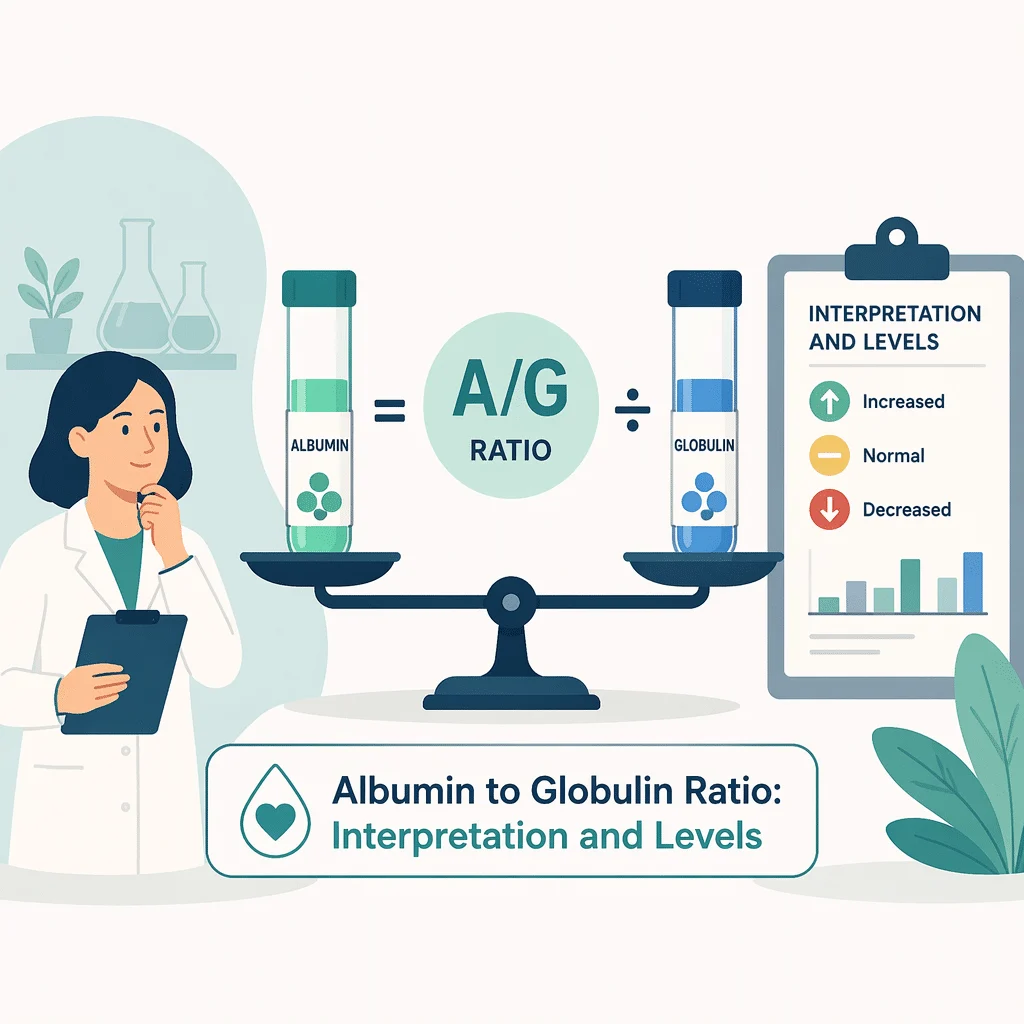
Sângele tău conține aproximativ 6 până la 8 grame de proteine pe decilitru. Această cantitate totală se împarte în două categorii. Albumina este o singură moleculă specifică, produsă de ficat. Globulinele reprezintă o colecție mixtă de sute de proteine diferite, inclusiv toți anticorpii pe care i-ai produs vreodată. Raportul albumină-globulină exprimă relația dintre aceste două categorii printr-un singur număr.
Deoarece cele două grupe sunt produse de țesuturi diferite, din motive diferite, raportul funcționează ca un indicator brut al echilibrului. Când una dintre cele două părți ale balanței se modifică, iar cealaltă nu, raportul se modifică în consecință. Aceasta este întreaga logică a testului și explică atât utilitatea, cât și limitele sale.
Albumina, proteina de bază
Ficatul produce albumină în mod continuu, sintetizând între 10 și 18 grame pe zi la un adult sănătos. Albumina menține fluidele în interiorul vaselor de sânge prin presiune osmotică și transportă hormoni, calciu, bilirubină, acizi grași și multe medicamente în tot organismul. Orice afecțiune care deteriorează producția hepatică, elimină albumina prin rinichi sau intestin sau redirecționează ficatul spre producerea de proteine de urgență va scădea valoarea albuminei.
Globulinele, patru fracțiuni și nu o singură substanță
Globulina este o categorie, nu o moleculă. Specialiștii de laborator o separă în patru fracțiuni, denumite după distanța parcursă pe un gel de electroforeză: alfa-1, alfa-2, beta și gamma. Fracțiunile alfa și beta conțin proteine de transport și de coagulare, precum și mai multe proteine ale răspunsului inflamator. Fracțiunea gamma este alcătuită aproape în totalitate din imunoglobuline, adică anticorpii produși de sistemul tău imunitar. Biblioteca noastră explică rolul imunoglobulinei G în analizele tale de sânge, cea mai abundentă clasă de anticorpi și cea care deplasează cel mai mult fracția gamma.
Acest lucru contează pentru interpretare. Un rezultat al globulinei care crește din cauza unei infecții cronice înseamnă ceva complet diferit față de unul care crește pentru că o singură clonă de plasmocite a început să supraproducă un anticorp. Raportul nu poate face această distincție. Electroforeza poate.
Cum se calculează raportul albumină/globulină
Laboratorul tău măsoară două lucruri și deduce restul. Măsoară proteinele totale printr-o reacție chimică și măsoară albumina separat, folosind un colorant care se leagă specific de albumină. Globulina nu este niciodată măsurată direct într-un panel de rutină. Se obține prin scădere:
- Globulina = proteine totale minus albumina
- Raportul albumină/globulină = albumina împărțită la globulină
Ambele proteine apar în același panel care raportează glicemia, electroliții, valorile renale și enzimele hepatice. Ghidul nostru parcurge fiecare măsurătoare dintr-o hemogramă metabolică completă, inclusiv unde se situează proteinele totale și albumina pe buletin.
Un exemplu calculat dintr-un panou standard
Să presupunem că analizele tale arată o proteină totală de 7,2 g/dL și o albumină de 4,2 g/dL. Scazi albumina din proteina totală și obții o globulină de 3,0 g/dL. Împarți 4,2 la 3,0 și raportul albumină/globulină iese 1,4. Această valoare se încadrează confortabil în intervalul de referință obișnuit.
Acum schimbă un singur număr. Păstrează proteina totală la 7,2 g/dL, dar scade albumina la 3,2 g/dL. Globulina devine 4,0 g/dL, iar raportul scade la 0,8. Proteina totală nu s-a modificat deloc, totuși echilibrul dintre cele două componente s-a schimbat semnificativ. Un medic care se uită doar la proteina totală nu ar observa nimic neobișnuit. Exact aceasta este situația pe care raportul a fost conceput să o evidențieze.
De ce se modifică raportul când niciuna dintre valori nu pare îngrijorătoare
Deoarece raportul este un câț, micile variații în ambele direcții se amplifică reciproc. Albumina care scade ușor în timp ce globulina crește ușor produce o scădere disproporționată a raportului, chiar și atunci când fiecare valoare în parte rămâne în intervalul său de referință. Această sensibilitate reprezintă un avantaj real pentru screening. Tot de aceea, un raport ușor anormal, luat singur și la o persoană care se simte bine, este rareori un motiv de îngrijorare.
Ce înseamnă un raport albumină/globulină normal
Majoritatea laboratoarelor din Statele Unite raportează un raport albumină/globulină normal cuprins aproximativ între 1,0 și 2,5, multe folosind un interval mai restrâns, cum ar fi 1,1–2,2. Nu există o valoare-limită universală, deoarece acest număr preia intervalele de referință ale celor două analize care îl compun, iar acestea diferă în funcție de aparat și de laborator. Citește întotdeauna rezultatul tău în raport cu intervalul tipărit pe propriul buletin de analize, nu cu un interval găsit în altă parte.
Un aspect al metodei prin scădere merită atenție. Deoarece globulina este calculată, nu măsurată direct, orice imprecizie în determinarea albuminei se transferă direct în raport. Laboratoarele diferite folosesc metode diferite pentru albumină, iar rezultatele nu sunt întotdeauna comparabile între ele. Echipa noastră detaliază nivelurile normale ale albuminei raportate într-o analiză de sânge standard, împreună cu ce le modifică, astfel încât să poți verifica jumătatea de albumină a calculului tău față de propriul interval de referință.
Ce înseamnă un raport albumină/globulină scăzut
Un raport scăzut este anomalia mai frecventă și mai semnificativă din punct de vedere clinic. Apare pe două căi independente, iar distingerea dintre ele este primul pas după obținerea unui rezultat anormal.
Când globulinele cresc
Creșterea globulinelor scade raportul, în timp ce proteina totală crește adesea. Explicațiile obișnuite sunt un răspuns imun prelungit sau o afecțiune a celulelor plasmatice:
- Infecții cronice precum tuberculoza, HIV sau hepatita de lungă durată, care mențin producția de anticorpi crescută timp de luni de zile
- Afecțiuni autoimune, inclusiv lupus și artrită reumatoidă, în care sistemul imunitar produce anticorpi împotriva propriilor țesuturi ale organismului
- Boli hepatice cronice, în care țesutul hepatic cicatrizat produce mai puțină albumină, în timp ce stimularea imunitară crește gamma-globulinele, scăzând astfel raportul din ambele direcții
- Gamapatii monoclonale, în care o singură clonă de plasmocite produce în exces un singur anticorp identic. Ghidul nostru acoperă diagnosticul și stadializarea mielomului multiplu, cea mai cunoscută afecțiune din acest grup
Un tipar util de recunoscut este creșterea proteinelor totale în timp ce albumina rămâne constantă sau scade. Această combinație indică mai degrabă un exces de globuline decât o concentrare a sângelui și reprezintă un motiv clasic pentru investigații suplimentare ale proteinelor. Articolul nostru explică cauzele unui nivel crescut de globuline mai detaliat.
Când albumina scade
Scăderea albuminei reduce raportul, în timp ce proteinele totale scad de obicei și ele. Mecanismele se împart clar în producție redusă, pierdere activă și redistribuție:
- Producție redusă în ciroză și boli hepatice avansate. Ghidul nostru explică cum să citești un panou de funcție hepatică, testul complementar firesc în acest context
- Pierdere urinară în sindromul nefrotic, în care filtrele renale deteriorate permit albuminei să treacă în urină. Echipa noastră acoperă markerii dintr-un panou de funcție renală care ajută la confirmarea acestei căi
- Pierdere gastrointestinală în enteropatia cu pierdere de proteine, boala inflamatorie intestinală severă sau arsuri extinse
- Inflamație sistemică, în care ficatul redirecționează deliberat producția de la albumină spre proteinele de fază acută. Articolul nostru explică cum să interpretezi proteina C reactivă ca marker al inflamației, testul asociat cel mai frecvent cu albumina în această situație
- Malnutriție prelungită sau malabsorbție, deși aceasta este o cauză mai puțin frecventă decât cred mulți oameni
Biblioteca noastră prezintă mecanismele și riscurile hipoalbuminemiei pentru cititorii la care albumina este valoarea care le scade raportul.
Ce înseamnă un raport albumină/globuline crescut
Un raport crescut este mai puțin frecvent și, în marea majoritate a cazurilor, mai puțin îngrijorător. Reflectă aproape întotdeauna un nivel scăzut de globuline, nu o albumină cu adevărat ridicată, deoarece organismul nu are un mecanism de supraproducție a albuminei.
- Imunodeficiență, fie moștenită, fie dobândită, în care producția de anticorpi este redusă. Aceasta este posibilitatea pe care medicii vor cel mai mult să o excludă, în special la o persoană cu infecții recurente
- Un deficit moștenit al unei fracțiuni specifice de globuline, cum ar fi deficitul de alfa-1 antitripsină
- Deshidratarea, care concentrează sângele și crește albumina. Aceasta produce o albumină cu adevărat crescută și proteine totale ridicate, iar situația se rezolvă prin rehidratare
- Anumite cancere hematologice, inclusiv unele leucemii, în care producția normală de anticorpi este suprimată
Articolul nostru explică cauzele și simptomele nivelului scăzut de globuline, care este valoarea determinantă în majoritatea rapoartelor crescute.
Interpretarea tiparului: mecanismul probabil și testul următor obișnuit
Raportul devine informativ doar când este citit alături de cele două valori care l-au generat. Tabelul de mai jos prezintă tiparele frecvente, mecanismul lor obișnuit și testul pe care medicul îl recomandă de obicei în continuare. Este un ghid despre ce să aștepți de la o consultație, nu un substitut pentru aceasta.
| Tiparul din analizele tale | Mecanism probabil | Test recomandat de obicei în continuare |
|---|---|---|
| Raport scăzut, globuline crescute, proteine totale crescute | Producție excesivă de anticorpi în infecții cronice, boli autoimune sau tulburări ale celulelor plasmatice | Electroforeză proteică serică, cu imunofixare adăugată dacă apare un vârf îngust |
| Raport scăzut, albumină scăzută, proteine totale scăzute | Producție redusă de albumină sau pierdere continuă de albumină | Enzime hepatice (ALT, AST, ALP) și o nouă măsurare a albuminei |
| Raport scăzut, albumină scăzută, proteine detectate în urină | Albumina care se pierde prin filtrele renale deteriorate | Proteine în urină sau raportul albumină/creatinină urinar, plus un panel renal |
| Raport scăzut în timpul sau imediat după o boală acută | Un răspuns inflamator care suprimă temporar producția de albumină | Proteina C reactivă, apoi un panel repetat după ce boala s-a remis |
| Raport crescut, globuline scăzute | Producție redusă de anticorpi sau deficit ereditar al unei fracțiuni de globuline | Niveluri de imunoglobuline (IgG, IgA, IgM) |
| Raport crescut, albumină crescută, proteine totale crescute | Sânge concentrat din cauza deshidratării | Rehidratare și repetarea probei, adesea fără investigații suplimentare |
Electroforeza proteică serică, testul care explică raportul
Atunci când un raport albumină/globuline scăzut nu are o explicație evidentă, electroforeza proteică serică este următorul pas standard. Laboratorul aplică un câmp electric asupra serului tău, iar proteinele se separă în funcție de dimensiune și sarcină electrică, generând o curbă cu vârfuri distincte pentru albumină și pentru fiecare fracțiune de globuline. În loc de o valoare globulară unică, medicul poate vedea care fracțiune este responsabilă.
O curbă largă față de un vârf îngust
Forma regiunii gamma are cea mai mare valoare diagnostică. O creștere largă și rotunjită pe întreaga regiune gamma reprezintă un tipar policlonal: multe celule plasmatice diferite produc mulți anticorpi diferiți, ceea ce este caracteristic infecțiilor cronice și bolilor autoimune. Un vârf îngust și ascuțit reprezintă un tipar monoclonal, adică o singură clonă care produce un singur anticorp identic. Acest vârf îngust este cel care determină investigarea pentru mielom și afecțiuni înrudite. Ghidul nostru explică cum să citești un raport de electroforeză proteică, inclusiv distincția dintre aceste două forme ale curbei.
Când se adaugă imunofixarea
Imunofixarea este etapa de confirmare. Dacă electroforeza arată un vârf suspect, imunofixarea identifică exact ce clasă de anticorpi și ce tip de lanț ușor îi corespunde. Electroforeza spune că există un vârf; imunofixarea îl denumește. Cele două teste sunt adesea efectuate împreună atunci când se suspectează cu adevărat o tulburare a celulelor plasmatice.
Când să mergi la medic
Un raport ușor anormal, izolat, la o persoană care se simte bine nu necesită de obicei altceva decât repetarea analizei. Consultă un medic atunci când un raport albumină/globulină anormal este însoțit de oricare dintre următoarele:
- Umflarea gleznelor, picioarelor sau a zonei din jurul ochilor, sau un abdomen vizibil balonat
- Dureri osoase persistente, în special la nivelul spatelui sau coastelor, ori fracturi fără o cauză clară
- Infecții repetate, neobișnuit de severe sau care se vindecă greu
- Scădere în greutate neintenționată, transpirații nocturne abundente sau febră persistentă
- Îngălbenirea pielii sau a ochilor, ori urină de culoare închisă
- Urină spumoasă, care poate indica scurgerea proteinelor prin rinichi
- Un raport care continuă să scadă în teste succesive, chiar dacă fiecare valoare individuală depășește doar ușor limitele normale
Mergi de urgență la medic, nu la o consultație de rutină, dacă apare brusc o umflătură severă, dacă ai dificultăți de respirație sau dacă durerea osoasă este intensă și nouă.
Cele mai recente progrese științifice
Cercetările din ultimii trei ani au reconfigurat treptat utilitatea acestui calcul vechi și ieftin. Direcția este clară: raportul este studiat tot mai puțin ca instrument de diagnostic de sine stătător și tot mai mult ca un indicator accesibil al nivelului de inflamație din organism. Rezultatele de mai jos sunt concluzii din cercetare, nu reguli clinice, și niciunul dintre ele nu schimbă modul în care trebuie interpretat rezultatul tău personal astăzi.
Cele mai puternice dovezi recente provin din chirurgia oncologică. O analiză sistematică din 2026, care a combinat șase studii cu puțin peste 2.100 de pacienți supuși unei intervenții chirurgicale pentru cancer hepatic, a constatat că persoanele cu un raport mai scăzut înainte de operație au avut tendința de a supraviețui mai puțin după aceasta. O analiză sistematică reunește mai multe studii pentru a verifica dacă un rezultat se confirmă în toate, ceea ce o face mai fiabilă decât un singur studiu. Autorii au subliniat cu atenție că toate studiile incluse proveneau din Asia și că rezultatul trebuie confirmat prin cercetări prospective, planificate în avans. Tendințe similare au apărut în 2025 și 2026 în cancerul pulmonar și în cancerul colorectal în stadiu incipient, unde combinarea raportului cu un indice separat de inflamație a clasificat pacienții în grupuri de risc mai precis decât oricare dintre cele două măsurători luate separat. Ce înseamnă asta pentru tine: dacă raportul tău este scăzut și ești sub îngrijire oncologică, echipa medicală îl poate interpreta ca pe o informație suplimentară despre inflamație și nutriție, nu ca pe o predicție a evoluției tale individuale.
Semnalul nu se limitează la cancer. Un studiu din 2026 realizat pe 109 pacienți cu fasciită necrozantă, o infecție rară și gravă a țesuturilor moi, a constatat că, dintre toate valorile de laborator de rutină măsurate în prima zi de la internare, raportul albumină/globulină a fost cel mai util pentru a identifica pacienții cu risc de evoluție nefavorabilă. Acesta a fost un studiu mic, realizat într-un singur spital, bazat pe analiza retrospectivă a unor date existente, deci reprezintă un rezultat preliminar, nu o regulă bine stabilită.
Poate cel mai relevant rezultat pentru cititorii obișnuiți privește albumina în sine. O analiză din 2025 realizată pe aproape 3.000 de pacienți din 34 de spitale a urmărit evoluția albuminei pe parcursul spitalizării și a concluzionat că scăderea albuminei reflectă inflamația și severitatea bolii mult mai mult decât reflectă alimentația. Autorii au susținut în mod direct că interpretarea albuminei ca marker pur nutrițional trebuie revizuită. Ce înseamnă asta pentru tine: o albumină scăzută, și prin urmare un raport scăzut, este de obicei un semn că se petrece ceva de natură inflamatorie, nu un semn că trebuie să mănânci mai multe proteine. Consumul crescut de proteine nu ridică în mod fiabil o albumină scăzută atunci când inflamația este cauza.
În final, două studii din 2025 și 2026 au analizat depistarea mai timpurie a tulburărilor cu celule plasmatice. Un studiu multicentric a dezvoltat un model computerizat folosind zece valori de laborator de rutină, printre care și raportul albumină/globulină, și a constatat că acesta identifica pacienții cu anticorpi monoclonali anormali mai sensibil decât electroforeza convențională aplicată aceluiași grup. Un raport de caz separat a descris un cancer rar al sângelui descoperit deoarece un tipar proteic neobișnuit, inclusiv un raport anormal, a determinat efectuarea unui test reflex de electroforeză. Ambele sugerează utilizarea valorilor obișnuite pe care le ai deja pentru a decide cine are nevoie de teste specializate. Niciunul nu este aplicat în practica de rutină, iar modelul computerizat nu a fost încă testat în timp real pe pacienți noi.
Glosar
| Termen | Definiție |
|---|---|
| Albumina | Cea mai abundentă proteină din sânge, produsă de ficat. Menține lichidul în interiorul vaselor de sânge și transportă hormoni, calciu și multe medicamente. |
| Globulinele | Un grup larg de proteine din sânge care include anticorpi, proteine de transport și factori de coagulare. Este o categorie, nu o singură moleculă. |
| Proteine totale | Concentrația combinată a albuminei și a tuturor globulinelor din serul tău, raportată de obicei în grame pe decilitru. |
| Raportul A/G | Abrevierea standard pentru raportul albumină/globulină, calculat prin împărțirea albuminei la globulină. |
| Fracțiunile globulinelor | Cele patru grupe în care se separă globulinele în timpul electroforezei: alfa-1, alfa-2, beta și gamma. Fracțiunea gamma conține anticorpii. |
| Electroforeza proteinelor serice (SPEP) | Un test de laborator care separă proteinele din sânge după dimensiune și sarcină electrică, arătând care fracțiune specifică este crescută sau scăzută. |
| Imunofixare | Un test de urmărire care identifică exact din ce tip de anticorp este alcătuit un vârf anormal, confirmând ceea ce a sugerat electroforeza. |
| Gamapatia monoclonală | O afecțiune în care o clonă de plasmocite supraproduce un singur anticorp identic, generând un vârf îngust pe electroforeză. |
| Creștere policlonală | O creștere difuză a multor anticorpi diferiți în același timp, tipică pentru infecții cronice sau boli autoimune, nu pentru cancer. |
| Hipoalbuminemia | Termenul medical pentru un nivel de albumină mai scăzut decât cel așteptat în sânge. |
| Sindrom nefrotic | O afecțiune renală în care filtrele deteriorate permit pierderea unor cantități mari de proteine, în principal albumină, în urină, provocând edeme. |
| Test reflex | Un test suplimentar pe care laboratorul îl efectuează automat atunci când un prim rezultat îndeplinește anumite criterii, fără a mai fi necesară o nouă solicitare. |
Întrebări frecvente
Ce înseamnă un raport albumină/globulină scăzut?
Înseamnă că echilibrul s-a înclinat în defavoarea albuminei, fie pentru că albumina a scăzut, fie pentru că globulinele au crescut. Scăderea albuminei indică o posibilă boală hepatică, pierdere de proteine prin rinichi, pierdere de proteine prin intestin sau inflamație activă. Creșterea globulinelor indică un răspuns imun prelungit, cum ar fi o infecție cronică sau o boală autoimună, sau, mai rar, o tulburare cu celule plasmatice. Raportul singur nu poate face distincția între aceste cauze, motiv pentru care medicul tău va analiza valorile albuminei și ale proteinelor totale din spatele lui și va solicita adesea o electroforeză a proteinelor serice.
Un raport albumină/globulină de 1 este normal?
Un raport de 1,0 înseamnă că albumina și globulina sunt prezente în cantități egale. Această valoare se situează la limita inferioară sau chiar puțin sub aceasta față de intervalele de referință ale majorității laboratoarelor, astfel că de obicei este raportată ca valoare la limită, nu ca clar anormală. Dacă este sau nu îngrijorătoare depinde în totalitate de context: aceeași valoare poate însemna lucruri foarte diferite la o persoană sănătoasă după o infecție recentă față de cineva cu dureri osoase inexplicabile sau umflarea gleznelor. Compară-o cu intervalul de referință tipărit pe propriul tău buletin de analize și cu rezultatele tale anterioare, dacă le ai.
Cum calculez raportul albumină/globulină din propriul meu buletin de analize?
Găsește proteina totală și albumina în analizele tale, scade albumina din proteina totală pentru a obține globulina, apoi împarte albumina la valoarea globulinei. Dacă raportul tău arată proteina totală 6,8 g/dL și albumina 4,1 g/dL, globulina este 2,7 g/dL, iar raportul este aproximativ 1,5. Folosește aceleași unități pentru ambele valori, care în rapoartele din Statele Unite sunt aproape întotdeauna grame pe decilitru. Multe laboratoare calculează și tipăresc raportul pentru tine, deci verifică buletinul de analize înainte să faci calculul singur.
Poate deshidratarea să modifice raportul albumină/globulină?
Da, și este unul dintre cele mai frecvente motive pentru un rezultat fals crescut. Deshidratarea reduce conținutul de apă din sânge, concentrând tot ceea ce este dizolvat în el. Albumina tinde să crească mai vizibil decât globulinele în această situație, împingând raportul în sus alături de o proteină totală crescută. Un eșantion recoltat după vărsături, transpirație abundentă sau o perioadă lungă fără lichide poate produce astfel un rezultat înșelător. Rehidratarea și repetarea testului lămuresc de obicei situația fără nicio investigație suplimentară.
Un raport albumină/globulină anormal necesită tratament?
Raportul în sine nu se tratează niciodată, deoarece este un calcul, nu o afecțiune. Tratamentul vizează cauza din spatele lui. Dacă inflamația este cea care scade albumina, controlul inflamației este ceea ce readuce valoarea la normal. Dacă o problemă renală permite scurgerea albuminei în urină, tratarea afecțiunii renale este soluția. Proteinele din alimentație singure corectează rareori o albumină scăzută atunci când inflamația sau boala de organ este cauza, motiv pentru care suplimentele comercializate pentru creșterea albuminei nu sunt, în general, soluția potrivită.
Cât de des trebuie repetat testul?
Depinde de motivul pentru care a fost anormal. Un rezultat la limită, fără simptome, este adesea pur și simplu reverificat la următorul set de analize de rutină sau după câteva săptămâni, dacă o boală recentă sau deshidratarea ar fi putut influența rezultatul. Un rezultat care a declanșat electroforeza va fi urmărit conform programului impus de constatarea de bază. Când raportul este folosit pentru monitorizarea unei afecțiuni cronice cunoscute, testarea urmează de obicei ritmul controalelor periodice ale acelei afecțiuni, nu un interval fix.
Surse
- National Library of Medicine — Total Protein and Albumin/Globulin (A/G) Ratio — MedlinePlus Medical Test, 2024 — medlineplus.gov
- Busher JT — Serum Albumin and Globulin — Clinical Methods: The History, Physical, and Laboratory Examinations, NCBI Bookshelf — ncbi.nlm.nih.gov
- Mayo Clinic — Mielom multiplu: simptome și cauze — Mayo Foundation for Medical Education and Research — mayoclinic.org
- National Institute of Diabetes and Digestive and Kidney Diseases — Sindromul nefrotic la adulți — NIDDK — niddk.nih.gov
- Utsumi M, Inagaki M, Omoto K, et al. — Raportul albumină/globulină preoperator ca factor prognostic la pacienții supuși hepatectomiei curative pentru carcinom hepatocelular: o revizuire sistematică și meta-analiză — Medicine (Baltimore), 2026 — doi.org/10.1097/MD.0000000000049830
- Xu Q, Deng Y, Cai Y, et al. — Valoarea predictivă a indicelui de răspuns inflamator sistemic și a raportului albumină/globulină pentru prognosticul cancerului pulmonar fără celule mici — Scientific Reports, 2026 — doi.org/10.1038/s41598-026-55879-x
- Li K, Zhang R, Zhang J, et al. — Rolul prognostic al markerilor hematologici bazați pe inflamație în cancerul colorectal în stadiile I-III: o analiză retrospectivă — BMC Cancer, 2025 — doi.org/10.1186/s12885-025-15165-x
- Fan Y, Chai Z, Li X, et al. — Raportul albumină/globulină și procentul de neutrofile ca markeri predictivi pentru prognosticul fasciitei necrozante — Burns, 2026 — doi.org/10.1016/j.burns.2026.107876
- Li Y, Chen L, Yang X, et al. — Asocierea dinamică a modificărilor albuminei serice cu inflamația, statusul nutrițional și rezultatele clinice: o analiză secundară a unui studiu observațional prospectiv de amploare — European Journal of Medical Research, 2025 — doi.org/10.1186/s40001-025-02925-5
- Hu Y, Hao X, Li X, et al. — Validarea multicentrică a unui model de învățare automată pentru detectarea precoce a tulburărilor legate de imunoglobulinele monoclonale folosind date de laborator de rutină — Frontiers in Immunology, 2026 — doi.org/10.3389/fimmu.2026.1856505
- Wang D, Li P, Su W, et al. — De la interferență la diagnostic: pseudo-lipidemia care a condus la diagnosticul macroglobulinemiei Waldenström — BMC Cardiovascular Disorders, 2025 — doi.org/10.1186/s12872-025-04588-w
Lectură suplimentară
- Echipa noastră explică cum să-ți citești analizele de sânge de la început până la sfârșit
- Ghidul nostru acoperă semnificația raportului AST/ALT
- Biblioteca noastră explică interpretarea rezultatelor sumarului de urină
- Articolul nostru descrie testele de anticorpi care alcătuiesc un panel autoimun
- Ghidul nostru detaliază viteza de sedimentare a eritrocitelor ca test al inflamației
Înțelege-ți rezultatele analizelor cu AI DiagMe
Raportul albumină/globulină are sens doar alături de valorile care l-au generat și de restul analizelor tale. AI DiagMe îți citește întregul buletin de analize, corelând proteinele totale, albumina, enzimele hepatice, valorile renale și markerii inflamatori precum proteina C reactivă, și îți explică pe înțeles ce sugerează acest tablou și ce întrebări merită ridicate. Te ajută să îți înțelegi rezultatele și să te pregătești pentru consultație. Nu pune diagnostice și nu înlocuiește medicul tău.
Obține interpretarea rezultatelor în câteva minute