

























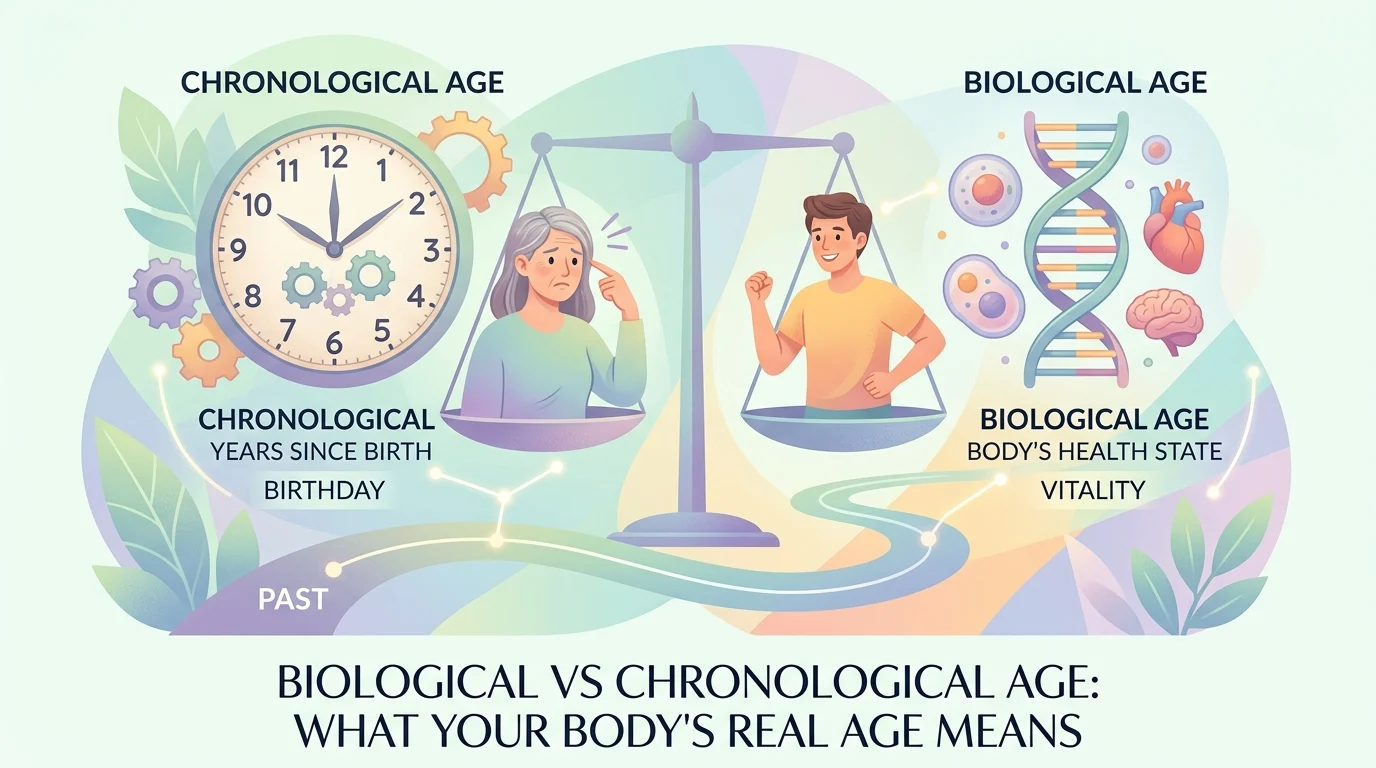
Înțelegerea vârstei tale biologice față de cea cronologică îți poate spune mai multe despre sănătatea ta decât data nașterii singură. Vârsta cronologică numără pur și simplu anii de când te-ai născut, în timp ce vârsta biologică reflectă cât de uzate sunt cu adevărat celulele, vasele de sânge și organele tale. Două persoane născute în același an pot îmbătrâni în ritmuri foarte diferite. În acest articol vei afla ce înseamnă fiecare termen, cum estimează oamenii de știință vârsta biologică, ce analize de sânge sunt legate de îmbătrânirea accelerată și ce arată studiile clinice recente despre încetinirea acestui proces — totul explicat pe înțelesul tuturor, fără exagerări.
Vârsta biologică vs. vârsta cronologică: diferența esențială
Vârsta cronologică este simplă: reprezintă numărul de ani de când te-ai născut și crește cu un an în fiecare an, pentru toată lumea. Vârsta biologică este diferită. Ea încearcă să descrie starea reală a celulelor, țesuturilor și organelor tale la un moment dat.
Această distincție contează, deoarece corpurile nu îmbătrânesc în același ritm. La 50 de ani, o persoană poate avea o vârstă biologică de 44 de ani, iar alta de 58 de ani. Aceste diferențe reflectă acumularea de deteriorări celulare în timp, influențată de gene, obiceiuri zilnice și mediul înconjurător.
| Caracteristică | Vârsta cronologică | Vârsta biologică |
|---|---|---|
| Definiție | Ani de la naștere | Cât de uzate sunt cu adevărat celulele și organele tale |
| Cum se determină | Data nașterii | Markeri biologici (metilarea ADN-ului, analize de sânge, telomeri) |
| Cum se modifică | Fixă: +1 an pe an | Variabilă: poate accelera sau încetini |
| Poți să o schimbi? | Nu | Parțial, prin stilul de viață |
| Valoare pentru sănătate | Număr administrativ | Posibil indicator al riscului de boli legate de vârstă |
În scopuri medicale, vârsta biologică este adesea considerată un semnal mai relevant decât vârsta reală, deoarece reflectă mai fidel riscul tău individual de boli cronice. Totuși, este și o măsură mai complexă și mai puțin stabilită, după cum explică restul acestui ghid.
Ce măsoară de fapt vârsta biologică
Îmbătrânirea nu este un singur ceas care ticăie undeva în corp. Este suma mai multor procese care se acumulează în timp: ADN-ul acumulează modificări chimice, celulele se regenerează mai puțin eficient, inflamația de grad scăzut crește, iar sistemele de reparare încetinesc.
Oamenii de știință descriu aceste schimbări prin biomarkeri ai îmbătrânirii: valori măsurabile menite să reflecte această uzură. Vârsta biologică reprezintă o încercare de a rezuma mai multe dintre aceste semnale într-un singur număr, exprimat în ani — mai ușor de înțeles decât o listă lungă de măsurători.
Un aspect important de reținut: vârsta biologică este o estimare statistică. Descrie o tendință medie observată la grupuri mari de oameni, nu un verdict precis despre o persoană anume. Două laboratoare sau două metode pot da rezultate diferite pentru aceeași persoană.
Cum estimează oamenii de știință vârsta biologică
Există mai multe abordări, cu niveluri foarte diferite de fiabilitate. Niciuna dintre ele nu este astăzi un test medical de rutină, iar majoritatea sunt folosite în principal în cercetare sau vândute direct consumatorilor.
Ceasurile epigenetice (metilarea ADN-ului)
Aceasta este metoda cel mai bine studiată. Epigenetica se referă la marcajele chimice de pe ADN care controlează modul în care genele sunt activate sau dezactivate, fără a modifica secvența de bază. Cel mai important este metilarea ADN-ului, adică adăugarea unor grupuri chimice mici în locuri specifice din genom. Deoarece aceste marcaje se modifică odată cu vârsta, algoritmii numiți ceasuri epigenetice estimează o vârstă epigenetică pe baza tiparului lor. Ceasurile recente poartă denumiri precum PhenoAge, GrimAge și DunedinPACE.
Scoruri de vârstă bazate pe analize de sânge
Alte modele estimează vârsta biologică combinând rezultate uzuale din analizele de sânge, cum ar fi glucoza, markerii inflamatori, funcția renală și albumina. Scorul PhenoAge, de exemplu, se bazează pe câteva teste standard. Aceste abordări au avantajul că folosesc date pe care le poți avea deja după o recoltare de sânge de rutină, motiv pentru care este util să știi cum să citește-ți rezultatele analizelor de sânge.
Lungimea telomerilor
Telomerii sunt capacele protectoare de la capetele cromozomilor tăi și se scurtează de fiecare dată când o celulă se divide. Lungimea lor a fost mult timp promovată ca marker al îmbătrânirii, însă măsurarea este imprecisă și slab reproductibilă de la un test la altul.
Teste disponibile direct pentru consumatori
Multe servicii online oferă estimarea vârstei tale biologice dintr-un kit de salivă sau sânge, uneori chiar dintr-un simplu chestionar sau un selfie. Valoarea lor științifică variază și este adesea limitată, așa că rezultatele trebuie citite cu multă prudență. Pentru o privire mai detaliată asupra modului în care funcționează testarea și interpretarea în practică, consultă ghidul nostru despre testarea vârstei biologice prin analize de sânge.
| Metodă | Ce măsoară | Disponibilitate | Principalele limitări |
|---|---|---|---|
| Ceas epigenetic | Marcaje chimice legate de vârstă pe ADN | Predominant în cercetare; kituri plătite pentru acasă | Rezultatele variază în funcție de ceasul utilizat |
| Scor bazat pe analize de sânge (ex. PhenoAge) | O combinație de analize de laborator de rutină | Poate fi calculat dintr-o recoltare de sânge | Validat la nivel de populație, nu pentru diagnosticul individual |
| Lungimea telomerilor | Uzura capetelor cromozomilor | Teste specializate | Imprecis, reproductibilitate scăzută |
| Chestionare sau instrumente tip “selfie” | Aspect fizic sau obiceiuri autodeclarate | Aplicații pentru consumatori | Estimare aproximativă, valoare științifică limitată |
Markerii din sânge legați de îmbătrânirea accelerată
Nu vei vedea o linie de „vârstă biologică" pe un analize de sânge standard. Dar mai multe rezultate pe care poate le cunoști deja reflectă mecanisme legate de îmbătrânire. Urmărirea lor, și mai ales interpretarea lor de către un medic, oferă o imagine concretă a stării tale de sănătate.
Printre cele mai informative se numără HbA1c și glicemia à jeun, care arată cum procesează organismul tău zahărul. Un nivel persistent ridicat al glicemiei accelerează mai multe procese de îmbătrânire, așa că valori normale HbA1c merită înțeles.
Grăsimile din sânge contează și ele. Un profilul lipidic măsoară colesterolul și trigliceridele, care contribuie la riscul cardiovascular, una dintre principalele familii de boli legate de vârstă. Inflamația cronică de grad scăzut este un alt factor urmărit adesea prin proteina C reactivă (PCR).
Funcția renală, monitorizată prin panel de funcție renală și eGFR, scade în mod natural odată cu vârsta, iar o scădere mai rapidă decât media merită atenție. Homocisteină, un aminoacid legat de sănătatea inimii și a creierului, și vitamina D apar în mod repetat în cercetările despre îmbătrânire, după cum arată secțiunea următoare.
Pentru a vedea aceste valori împreună, un panel complet de analize de sânge este cel mai util punct de plecare, iar un tabel cu valori normale ale analizelor de sânge te ajută să le înțelegi. Niciun marker singur nu îți definește vârsta biologică. Contează tiparul de ansamblu, plasat în contextul istoricului tău personal.
Poți reduce vârsta ta biologică?
Parțial, da, și tocmai asta face subiectul interesant. Spre deosebire de vârsta cronologică, vârsta biologică pare să fie parțial modificabilă. Pârghiile nu sunt spectaculoase, dar se aliniază cu ceea ce este deja recomandat pentru sănătate în general.
Factorii cel mai constant asociați cu o îmbătrânire mai lentă sunt activitatea fizică regulată, o dietă de tip mediteranean, un somn suficient și de calitate, nefumatul, consumul moderat de alcool și gestionarea stresului cronic. Pe de altă parte, fumatul, obezitatea și inflamația prelungită tind să accelereze mai mulți markeri ai îmbătrânirii.
Un cuvânt de precauție se impune. Multe dintre efectele raportate sunt modeste și măsurate pe parcursul câțiva ani. Afirmațiile foarte precise pe care le vezi uneori online, precum „întoarce ceasul cu 10 ani," depășesc cu mult ceea ce arată studiile serioase. Obiectivul realist este să încetinești o tendință, nu să dai timpul înapoi.
Cele mai recente progrese științifice
Cercetările recente evaluate de specialiști ajută la separarea a ceea ce este demonstrat de ceea ce ține de marketing. Conform studiilor indexate în PubMed, iată ce s-a conturat în ultimii câțiva ani.
Un studiu clinic randomizat controlat (un studiu în care participanții sunt repartizați aleatoriu, reprezentând cel mai înalt nivel de dovezi clinice obișnuite) din proiectul DO-HEALTH a testat vitamina D, omega-3 și un program de exerciții la domiciliu la 777 de adulți cu vârsta peste 70 de ani, urmărind patru ceasuri epigenetice timp de trei ani. Omega-3 singur a încetinit ușor câteva dintre aceste ceasuri, iar combinarea tuturor trei măsuri a arătat un beneficiu aditiv pentru unul dintre ele. Efectele au fost mici, de ordinul câtorva luni pe parcursul a trei ani (Bischoff-Ferrari et al., Nature Aging, 2025 — DOI).
Un alt studiu randomizat de amploare, VITAL, a analizat telomerii la peste 1.000 de participanți. Vitamina D a redus scurtarea telomerilor pe parcursul a patru ani, în timp ce omega-3 nu a avut niciun efect semnificativ asupra acestui marker specific (Zhu, Manson et al., American Journal of Clinical Nutrition, 2025 — DOI).
Împreună, aceste studii evidențiază un aspect esențial: în funcție de markerul ales, aceeași substanță nu produce același rezultat. Vârsta biologică nu este o măsură unică și fixă, ci o familie de indicatori care nu sunt întotdeauna în acord unii cu alții.
Pe latura recenziilor, un articol important publicat în Cell descrie ascensiunea medicinei de longevitate de precizie, în care biomarkerii îmbătrânirii ar putea ghida într-o zi prevenția personalizată, în așteptarea unor viitoare studii clinice și a aprobărilor de reglementare (Kroemer et al., 2025 — DOI). În același timp, un efort de consens subliniază că utilizarea clinică a acestor markeri este încă limitată și că aceștia necesită validări suplimentare pentru a fi fiabili la nivel individual (Moqri et al., Nature Aging, 2024 — DOI). O recenzie metodologică adaugă că ceasurile epigenetice, deși promițătoare, ridică în continuare provocări reale de interpretare (Teschendorff și Horvath, Nature Reviews Genetics, 2025 — DOI).
Concluzia: cercetarea avansează rapid, dar o descoperire recentă nu înseamnă un consens consolidat. Niciunul dintre aceste studii nu transformă vârsta biologică într-un instrument de diagnostic și niciunul nu justifică modificarea tratamentului medical pe cont propriu.
Ar trebui să faci un test de vârstă biologică? Când să mergi la medic
Pentru majoritatea oamenilor, un test de vârstă biologică cumpărat online nu aduce informații care să schimbe cu adevărat îngrijirea medicală. Aceste teste nu fac încă parte din medicina de rutină, iar un rezultat îngrijorător poate crea stres inutil sau poate împinge pe cineva spre decizii pripite, cum ar fi suplimente nevalidate sau diete extreme.
O cale mai utilă este să urmărești markerii standard în cadrul unui control medical periodic cu medicul tău, deoarece aceștia sunt validați și pot ghida acțiuni concrete. Unele semne merită o vizită la medic indiferent de orice scor de vârstă biologică:
- oboseală neobișnuită, scădere inexplicabilă în greutate sau simptome persistente;
- antecedente familiale semnificative de boli de inimă, diabet sau anumite tipuri de cancer;
- rezultate ale analizelor care sunt în mod repetat în afara valorilor de referință;
- simptome noi apărute după o schimbare a stilului de viață sau a medicației.
În orice situație, interpretarea finală a unui rezultat aparține medicului, care plasează valorile în contextul tău general. Afecțiuni precum tensiune arterială mare și boala Alzheimer devin mai frecvente odată cu vârsta, ceea ce explică în parte interesul tot mai mare față de îmbătrânirea biologică.
Glosar
| Termen | Definiție |
|---|---|
| Vârsta cronologică | Numărul de ani scurși de la naștere; crește într-un ritm constant. |
| Vârsta epigenetică | O vârstă estimată de un ceas epigenetic pe baza marcajelor chimice de pe ADN-ul tău. |
| Ceas epigenetic | Un algoritm care prezice vârsta biologică pe baza tiparelor de metilare a ADN-ului. |
| Metilarea ADN-ului | Adăugarea unor grupări chimice pe ADN, care modifică activitatea genelor fără a schimba secvența acestora. |
| Telomeri | Capace protectoare la capetele cromozomilor, care se scurtează pe măsură ce celulele se divid. |
| Senescența celulară | O stare în care o celulă încetează să se dividă, dar rămâne activă, contribuind la procesul de îmbătrânire. |
| DunedinPACE | Un ceas epigenetic recent care estimează ritmul îmbătrânirii, nu o vârstă fixă. |
| Studiu clinic randomizat controlat | Un studiu în care participanții sunt repartizați aleatoriu în grupuri, oferind un nivel ridicat de dovezi. |
Întrebări frecvente
Care este diferența normală dintre vârsta biologică și cea cronologică?
Nu există un prag oficial, deoarece totul depinde de metoda folosită. În studii, vârsta biologică se situează în jurul celei cronologice, cu diferențe de câțiva ani în plus sau în minus. O diferență de cinci până la zece ani este descrisă frecvent la persoane cu stiluri de viață foarte diferite. Ceea ce contează cel mai mult nu este cifra exactă dintr-un singur test, ci tendința generală a stării tale de sănătate, urmărită în timp și confirmată cu markeri validați și de medicul tău.
Testele de vârstă biologică realizate acasă sunt precise?
Precizia lor este inegală. Ceasurile epigenetice folosite în cercetare sunt instrumente serioase, dar odată transformate în kituri pentru consumatori, rezultatele pot varia de la un test la altul și sunt greu de interpretat la nivel individual. Aceste teste nu fac parte din îngrijirea medicală de rutină. Pot fi interesante, dar un rezultat nu ar trebui să ducă, prin el însuși, la o schimbare a tratamentului sau la o dietă extremă. Dacă ai îndoieli, discută cu un specialist în sănătate.
Apare vârsta biologică într-o analiză de sânge standard?
Nu. Un test de sânge standard nu raportează o vârstă biologică. Totuși, mai multe dintre rezultatele sale, cum ar fi glicemia, HbA1c, profilul lipidic și funcția renală, reflectă mecanisme legate de îmbătrânire. Tocmai tiparul lor general, interpretat de un medic, îți spune ceva despre starea ta de sănătate. Scoruri precum PhenoAge sunt de fapt calculate pe baza acestor tipuri de analize de rutină.
Pot suplimentele să reducă cu adevărat vârsta biologică?
Dovezile sunt limitate, iar efectele sunt modeste. Studii recente sugerează că vitamina D sau omega-3 pot încetini unii markeri ai îmbătrânirii, dar nu pe toți, iar beneficiile observate se măsoară în câteva luni pe parcursul mai multor ani. Niciun supliment nu este în prezent dovedit că te face mai tânăr. Menținerea unui nivel sănătos de vitamina D este în continuare recomandată pentru sănătatea generală, ideal după verificarea nivelului tău și o discuție cu un medic.
De la ce vârstă ar trebui să începi să acorzi atenție vârstei biologice?
Obiceiurile care influențează îmbătrânirea contează la orice vârstă, iar cu cât le adopți mai devreme, cu atât mai bine. Asta nu înseamnă că ai nevoie de un test de vârstă biologică. Pentru majoritatea adulților, cel mai util pas este un control medical periodic adaptat vârstei și factorilor de risc, nu un scor cumpărat online. Valoarea screening-ului crește odată cu vârsta și cu un istoric familial de boli.
O vârstă biologică mai mare este un motiv de îngrijorare?
Nu este nevoie să intri în panică: un singur număr, mai ales dintr-un test comercial, nu este suficient pentru a trage concluzii. O vârstă biologică mai mare decât vârsta ta reală sugerează, în principal, că ar putea merita să revizuiești unele obiceiuri și să le discuți cu un medic. Mulți factori pot fi modificați. Un rezultat liniștitor, pe de altă parte, nu înlocuiește urmărirea medicală periodică. Esențial este să acționezi pe baza a ceea ce este dovedit: activitate fizică, alimentație, somn, nefumat și monitorizarea markerilor validați.
Surse
- National Institute on Aging – Vârsta estimată prin modificări ale ADN-ului poate ajuta la predicția stării de sănătate
- Cleveland Clinic – Vârsta biologică: ce este și cum o poți măsura
- NBC News – Care este vârsta ta biologică? Experții explică beneficiile și riscurile testelor efectuate acasă
- Studii PubMed citate: Bischoff-Ferrari et al., Nature Aging 2025 (DOI); Zhu, Manson et al., Am J Clin Nutr 2025 (DOI); Kroemer et al., Cell 2025 (DOI); Moqri et al., Nature Aging 2024 (DOI); Teschendorff and Horvath, Nature Reviews Genetics 2025 (DOI).
Lectură suplimentară
- Cum să-ți citești rezultatele analizelor de sânge: un ghid simplu
- Analize complete de sânge: ce includ și de ce sunt importante
- Testarea vârstei biologice prin analize de sânge: un ghid practic
- Profilul lipidic explicat: colesterol, LDL și HDL
- Panelul funcției renale: cum să-l citești
Înțelege-ți rezultatele analizelor cu AI DiagMe
Vârsta ta biologică nu apare pe un buletin de analize, dar rezultatele tale spun deja multe despre cum îmbătrânește corpul tău. AI DiagMe te ajută să înțelegi analizele de sânge, cum ar fi HbA1c, profilul lipidic, funcția renală, proteina C reactivă și vitamina D, în termeni simpli și clari. Instrumentul nu pune diagnostice și nu înlocuiește medicul tău; te ajută să mergi la consultație mai bine informat. Pentru a înțelege rezultatele tale, încearcă AI DiagMe.
➡️ Obține interpretarea rezultatelor în câteva minute