
































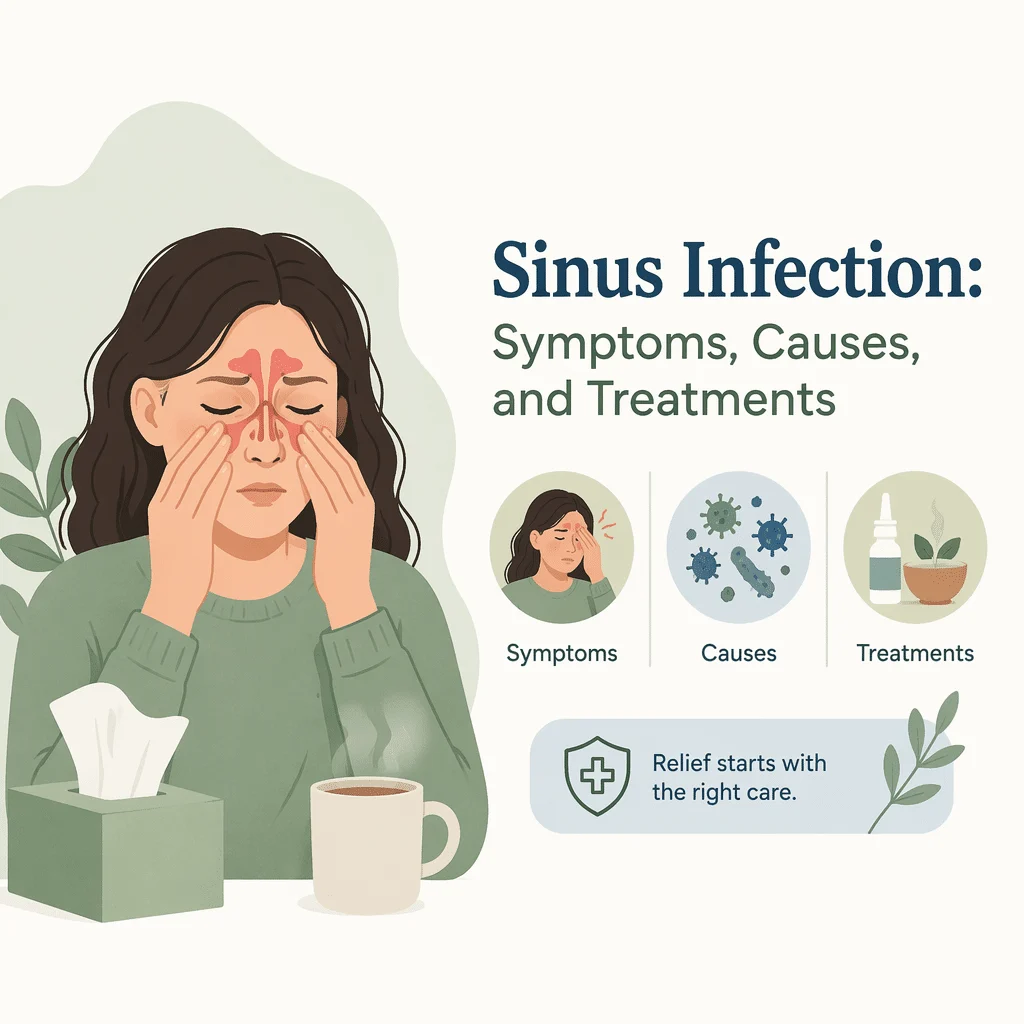
A sinus infection, known medically as sinusitis, is one of the most common reasons adults see a doctor for facial pain, a blocked nose, and thick nasal discharge. Most cases follow an ordinary cold, clear up on their own within a couple of weeks, and never need antibiotics. Even so, the symptoms can be miserable while they last, and it is not always obvious when self-care is enough and when a lingering sinus infection needs medical attention. This guide explains what a sinus infection is, how the acute and chronic forms differ, why most are viral, which treatments genuinely help, and the warning signs that mean you should see a clinician. Along the way you will learn how modern antibiotic-stewardship guidance keeps care both safe and effective.
What is a sinus infection?
Your sinuses are hollow, air-filled spaces inside the bones around your nose, cheeks, and forehead. They are lined with a thin layer of mucus that traps dust and germs and drains into the nose. Sinusitis happens when these linings become swollen and inflamed, the drainage channels narrow, and mucus builds up instead of flowing out. Because inflammation almost always involves the nasal passages too, doctors often use the more precise term rhinosinusitis.
Trapped mucus creates pressure and a warm, moist pocket where viruses or bacteria can thrive. That is why a common cold, which is itself a viral infection of the nose and sinuses, can slide into what most people simply call a sinus infection. The good news is that the same swelling usually settles as the cold resolves.
Acute, subacute, and chronic sinusitis
Doctors group sinusitis by how long it lasts. Acute sinusitis comes on quickly and lasts up to four weeks, most often triggered by a cold. Subacute sinusitis describes symptoms that hang on for four to twelve weeks. Chronic sinusitis means inflammation that persists for twelve weeks or longer despite treatment, and it behaves differently, driven more by ongoing inflammation, allergies, or structural problems than by a single germ. Some people also have recurrent acute sinusitis, meaning several separate episodes within a year.
Viral versus bacterial infection
The vast majority of sudden sinus infections are viral, part and parcel of a cold. Only a small share turn bacterial, usually when symptoms drag on without improving or briefly get better and then clearly worsen. This distinction matters enormously for treatment, because antibiotics work against bacteria and do nothing against viruses. Telling the two apart guides whether you simply wait and manage symptoms or whether a prescription might help.
What causes a sinus infection?
Sinusitis develops whenever something blocks normal sinus drainage or inflames the lining. The most frequent trigger by far is a viral upper-respiratory infection, but several other factors raise the risk or keep symptoms going.
- Viral colds, which cause swelling that blocks the sinus openings.
- Allergies such as hay fever, which keep the nasal lining inflamed and reactive.
- Nasal polyps, soft noncancerous growths that physically obstruct drainage.
- A deviated septum or other structural narrowing inside the nose.
- Bacterial infection layered on top of a cold that has not resolved.
- Irritants like tobacco smoke, dry air, and air pollution.
- Dental infections in the upper teeth, which sit close to the cheek sinuses.
When allergies keep the sinuses inflamed, targeted testing can help pinpoint the triggers explained in our guide to allergy blood testing. Identifying and controlling those triggers is one of the most effective ways to prevent a sinus infection from returning.
Symptoms of a sinus infection and how they change
The hallmark of sinusitis is a combination of facial pressure and nasal congestion rather than any single symptom. Discomfort often worsens when you bend forward and can shift depending on which sinuses are affected. Common features include:
- Facial pain, pressure, or fullness around the nose, eyes, cheeks, or forehead.
- A blocked or stuffy nose that makes breathing through it difficult.
- Thick nasal discharge that may be yellow or green.
- Postnasal drip, the sensation of mucus running down the back of the throat.
- A reduced or absent sense of smell and taste.
- Headache, tooth pain, or an aching upper jaw.
- Cough, often worse at night, and sometimes a mild fever or fatigue.
Constant postnasal drip can leave the back of the throat feeling bumpy and irritated, an appearance described in our article on cobblestone throat. The timing of symptoms is a useful clue: a viral infection tends to peak around days three to five and then improve, while symptoms that persist beyond ten days without any improvement, or that worsen after an initial recovery, point more toward a bacterial cause.
Viral or bacterial: a quick comparison
No single sign proves whether sinusitis is viral or bacterial, but the overall pattern helps. The table below summarizes the differences clinicians weigh when they decide whether antibiotics are worth considering.
| Feature | More likely viral | More likely bacterial |
|---|---|---|
| Duration | Improves within about 10 days | Lasts more than 10 days without improving |
| Symptom pattern | Steady improvement after a few days | Gets better, then clearly worsens again |
| Fever | Absent or mild | Higher or persistent, with severe facial pain |
| Usual first step | Rest, fluids, and symptom relief | Medical review; antibiotics only if criteria are met |
The flu can begin with similar aches, fever, and congestion, so it helps to compare the timelines and features described in our guide to influenza symptoms and prevention.
How doctors diagnose a sinus infection
Most of the time, a clinician diagnoses sinusitis from your history and a simple examination, without any tests. They ask how long symptoms have lasted, whether they improved and then relapsed, and how severe the facial pain and fever are. They may look inside your nose and press gently over the cheeks and forehead to check for tenderness.
Imaging such as a sinus CT scan is reserved for chronic, recurrent, or complicated cases, or when surgery is being considered. For stubborn or unusual disease, an ear-nose-throat specialist may perform nasal endoscopy, using a thin camera to view the sinus openings directly. Blood tests are not needed to diagnose a routine sinus infection, but a doctor may check inflammation or immune markers when infections keep coming back. You can make sense of one such result using our guide to high CRP levels, and another nonspecific inflammation test is sometimes added, which you can learn to read in our explainer on the erythrocyte sedimentation rate.
Facial pain is blamed on the sinuses far more often than it should be, so when scans are clear and congestion is absent, it is worth reading our guide to migraine causes and symptoms to consider a headache disorder instead.
Treatment: what actually helps a sinus infection
Because most cases are viral, the cornerstone of treatment is comfort and time rather than antibiotics. The aims are to ease congestion, thin mucus, relieve pain, and support your body while the infection resolves. Matching the treatment to the cause is what keeps sinusitis from being overtreated.
Self-care and home remedies
For a typical acute sinus infection, simple measures do most of the work:
- Saline nasal rinses or sprays to flush mucus and moisturize the lining.
- Steam inhalation and a warm compress over the face to loosen congestion.
- Extra fluids and rest to help your immune system do its job.
- Over-the-counter pain relievers such as acetaminophen or ibuprofen for pain and fever.
- Short-term decongestants, used for only a few days to avoid rebound congestion.
- A humidifier to keep indoor air from drying out your nasal passages.
Saline irrigation deserves special mention because it is inexpensive, has few downsides, and is one of the few home treatments consistently supported by research. Always prepare rinses with distilled, sterile, or previously boiled and cooled water.
When antibiotics are and are not appropriate
Antibiotics only help the minority of cases that are truly bacterial. Prescribing them for a viral infection does not speed recovery and exposes you to side effects and antibiotic resistance. Clinicians generally reserve antibiotics for symptoms that last more than about ten days without improvement, that are severe from the outset with high fever and facial pain, or that improve and then clearly worsen. Even then, watchful waiting for a couple of days is often reasonable. You can read the reasoning behind this cautious approach in the CDC guidance on antibiotics for sinus infections.
Treating chronic sinusitis
Chronic sinusitis is managed as an inflammatory condition, not a single infection. Treatment often centers on daily saline irrigation and intranasal corticosteroid sprays to reduce swelling, along with finding and controlling triggers such as allergies. When nasal polyps or structural blockages are present, an ear-nose-throat specialist may recommend endoscopic sinus surgery or, for severe polyp disease, newer targeted medicines. Because the lower and upper airways are connected, chronic sinus inflammation frequently travels with lung disease covered in our article on asthma as a chronic respiratory disease.
Prevention and everyday self-care
You cannot prevent every sinus infection, but you can lower how often they strike and how badly. Wash your hands regularly and stay up to date on recommended vaccines to reduce the colds and flu that set off most episodes. Manage allergies with the help of your clinician, since uncontrolled allergic inflammation is a major driver of repeat infections.
Keep indoor air humid but not damp, avoid tobacco smoke, and use saline sprays during dry weather or air travel to keep the nasal lining healthy. Staying well hydrated keeps mucus thin and flowing. If congestion from your sinuses spreads to your ears and causes pressure or pain, our overview of ear infection symptoms and treatment explains what to watch for. A common worry is whether the illness can be passed on, which we answer in our guide to sinus infection contagiousness.
When to see a doctor and warning signs of complications
Most people can manage sinusitis at home, but some situations call for medical care. Contact a clinician if symptoms last more than ten days without improving, keep returning, or are severe. Also seek advice if you have a weakened immune system or a high fever that will not settle.
Rarely, an infection spreads beyond the sinuses to the eye or brain, which is a medical emergency. Seek urgent care right away if you notice any of these red flags:
- Swelling, redness, or bulging around one or both eyes.
- Vision changes such as double or blurred vision.
- A severe headache with a stiff neck or confusion.
- High fever that does not come down.
- Swelling or redness spreading across the forehead or face.
These complications are uncommon, but recognizing them early makes them far easier to treat. When in doubt about severe or fast-changing symptoms, it is always safer to be assessed.
Latest scientific advances
Research over the past few years has reinforced a careful, less-is-more approach to sinusitis while opening new options for the toughest chronic cases. Here is what recent high-quality studies add, in plain terms.
In 2025, US ear-nose-throat specialists updated their national adult sinusitis guideline and again stressed that most adults with sudden sinus symptoms do not need antibiotics straight away. They endorsed a short period of watchful waiting, meaning you simply monitor symptoms for a few days before deciding on treatment. What this means for you: if a doctor suggests waiting rather than prescribing right away, that is modern, evidence-based care rather than neglect.
A large 2024 umbrella review, which is a study that pools together many earlier reviews, looked at how long antibiotics should be taken for respiratory infections including sinusitis. It found that shorter courses generally work as well as longer ones. What this means for you: when antibiotics genuinely are needed, expect a shorter course than in the past, and take it exactly as directed.
A 2024 meta-analysis, which is a study that statistically combines the results of several trials, examined antibiotics for acute sinus infection in children compared with a dummy treatment. It found only a modest benefit, with many children recovering without them. What this means for you: even in children, the advantage of antibiotics is smaller than many families expect, which is why doctors weigh them carefully.
For chronic sinusitis with nasal polyps that resists standard care, a 2025 real-world analysis reviewed biologics, which are lab-made antibody medicines that calm a specific part of the immune system. In everyday practice, they shrank polyps and improved congestion and sense of smell. What this means for you: if you have severe, long-standing sinus disease, targeted treatments now exist that a specialist can discuss with you. These results are averages across many patients and continue to be studied, so the right choice always depends on your individual situation.
Glossary of key terms
| Term | Definition |
|---|---|
| Sinuses | Air-filled spaces in the bones around the nose, cheeks, and forehead, lined with mucus. |
| Rhinosinusitis | The medical name for inflammation of the nose and sinuses together, used because the two nearly always occur at once. |
| Acute sinusitis | A sinus infection that lasts up to four weeks, usually triggered by a cold. |
| Chronic sinusitis | Sinus inflammation lasting twelve weeks or longer despite treatment. |
| Postnasal drip | The feeling of mucus trickling down the back of the throat. |
| Nasal polyps | Soft, noncancerous growths in the nose or sinuses that can block drainage. |
| Deviated septum | A crooked wall between the nostrils that can narrow one side of the nose. |
| Saline irrigation | Rinsing the nasal passages with saltwater to flush mucus and reduce congestion. |
| Nasal endoscopy | An exam in which a thin camera is passed into the nose to view the sinus openings. |
Frequently asked questions
How long does a sinus infection last?
A typical viral sinus infection improves within about seven to ten days, though a lingering cough or mild congestion can trail on a little longer. Symptoms usually peak in the first few days and then ease. If they last beyond ten days without any improvement, or clearly worsen after starting to get better, the cause may be bacterial and it is worth checking in with a clinician.
Are sinus infections contagious?
A sinus infection itself is not passed from person to person, but the viruses that trigger most cases, such as cold and flu viruses, certainly are. When someone with a cold coughs, sneezes, or shares surfaces, they can spread that virus, which may then lead to a sinus infection in another person. Handwashing and covering coughs lower the risk. Bacterial sinusitis is generally not considered contagious.
How can I tell if my sinus infection is bacterial or viral?
No home test can prove it, but timing is the best clue. Viral infections usually improve within about ten days. A bacterial infection is more likely when symptoms last longer than ten days without improving, are severe from the start with high fever and intense facial pain, or improve and then clearly worsen again. A clinician uses this pattern, not the color of your mucus, to decide whether antibiotics might help.
Can you really get rid of a sinus infection in 24 hours?
Despite popular searches, there is no reliable way to cure a sinus infection in a single day. Most are viral and resolve on their own over one to two weeks. What you can do quickly is ease symptoms with saline rinses, steam, fluids, rest, and pain relief. These measures make you more comfortable while your body clears the infection at its own pace.
Which over-the-counter medicines help a sinus infection?
Several nonprescription options ease symptoms. Saline sprays and rinses clear mucus, pain relievers like acetaminophen or ibuprofen address pain and fever, and short courses of decongestants reduce stuffiness. Intranasal steroid sprays can calm inflammation, especially when allergies play a role. Use decongestant sprays for no more than a few days to avoid rebound congestion, and ask a pharmacist if you take other medicines or have high blood pressure.
Can allergies cause a sinus infection?
Allergies do not cause infection directly, but they keep the nasal and sinus lining swollen, which blocks drainage and sets the stage for a sinus infection. People with hay fever or year-round allergies get sinus infections more often. Controlling allergies with avoidance, saline rinses, and clinician-guided treatment is one of the most effective ways to prevent repeated episodes.
Sources
- Centers for Disease Control and Prevention — Sinus Infection Basics, 2024 — cdc.gov
- Mayo Clinic — Acute sinusitis: Symptoms and causes, 2023 — mayoclinic.org
- Cleveland Clinic — Sinus Infection (Sinusitis): Causes, Symptoms and Treatment, 2023 — clevelandclinic.org
- MedlinePlus, US National Library of Medicine — Sinusitis, 2025 — medlineplus.gov
- Payne SC, et al. — Clinical Practice Guideline: Adult Sinusitis Update — Otolaryngology–Head and Neck Surgery, 2025 — doi.org/10.1002/ohn.1344
- Kuijpers SME, et al. — The evidence base for the optimal antibiotic treatment duration of upper and lower respiratory tract infections: an umbrella review — The Lancet Infectious Diseases, 2024 — doi.org/10.1016/S1473-3099(24)00456-0
- Conway SJ, et al. — Antibiotics for Acute Sinusitis in Children: A Meta-Analysis — Pediatrics, 2024 — doi.org/10.1542/peds.2023-064244
- Cai S, et al. — Efficacy and Safety of Biologics for Chronic Rhinosinusitis With Nasal Polyps: A Meta-Analysis of Real-World Evidence — Allergy, 2025 — doi.org/10.1111/all.16499
Further reading
- Find out how the underlying viruses spread in our guide to sinus infection contagiousness
- Tell the flu apart from sinus trouble with our guide to influenza symptoms and prevention
- See how congestion can affect the ears in our overview of ear infection symptoms and treatment
- Rule out other causes of head pain with our guide to migraine causes and symptoms
- Understand throat changes from postnasal drip in our article on cobblestone throat
Understand your lab results with AI DiagMe
A sinus infection is usually diagnosed from your symptoms, but when infections keep returning or a doctor wants to gauge inflammation, blood work can add useful context. AI DiagMe helps you read those results in plain language, whether it is a complete blood count that shows how your body is fighting infection, a C-reactive protein test that flags inflammation, or an allergy panel that hunts for triggers behind repeated flare-ups. It is built to help you understand your numbers and ask better questions, not to diagnose you or replace your doctor.
Get your results interpreted in minutes