









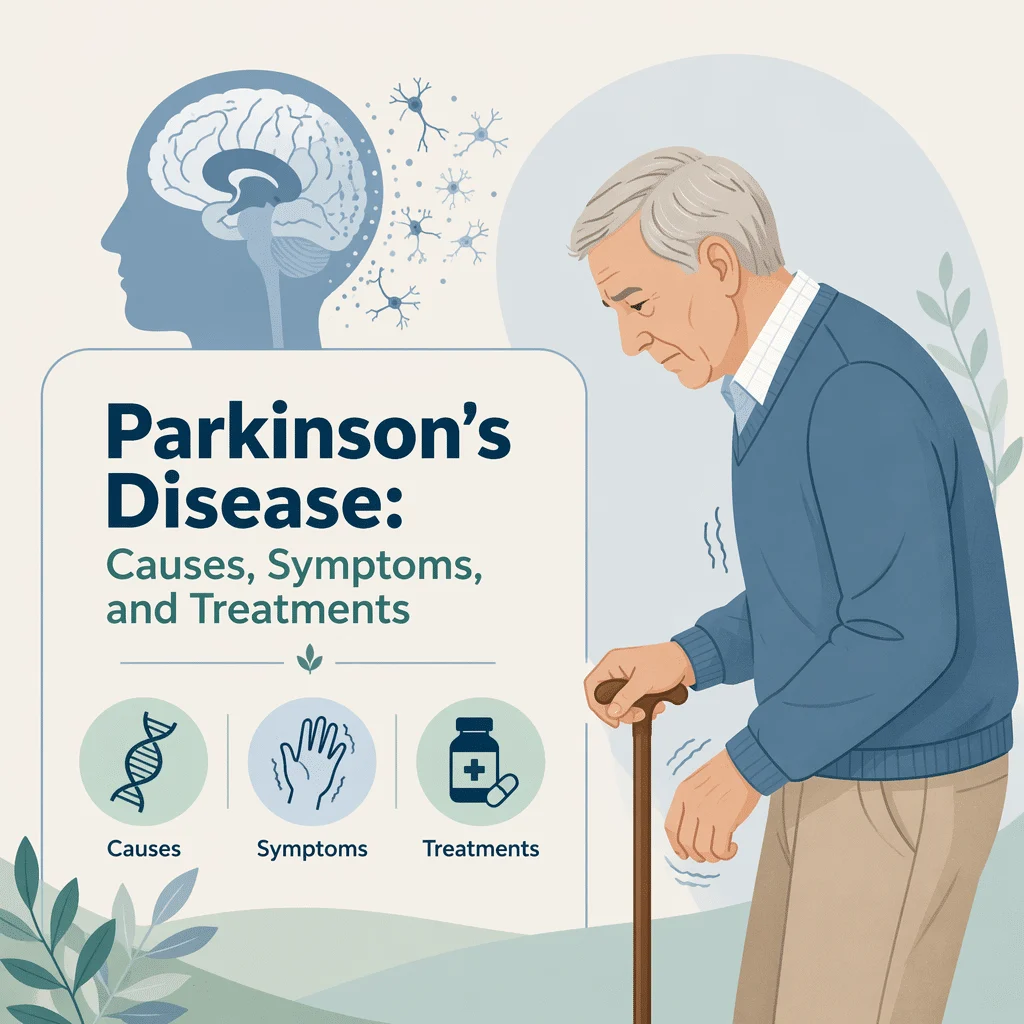
De ziekte van Parkinson is een progressieve aandoening van het zenuwstelsel die geleidelijk verandert hoe het lichaam beweegt. Ze ontstaat wanneer bepaalde zenuwcellen diep in de hersenen, die een chemische boodschapper genaamd dopamine aanmaken, langzaam ophouden te werken. Veel mensen merken eerst een lichte tremor, stijfheid of traagheid, en vragen zich dan begrijpelijkerwijs af of een eenvoudige bloedtest de oorzaak kan bevestigen. Het eerlijke antwoord is geruststellend maar genuanceerd: er bestaat geen standaard bloedtest die de ziekte van Parkinson vaststelt, en de klinische beoordeling door een arts blijft de basis van de diagnose. In dit artikel leest u wat de aandoening inhoudt, hoe u vroege en latere symptomen herkent, hoe artsen tot een diagnose komen, welke laboratoriumtests andere oorzaken kunnen uitsluiten, en hoe behandeling u kan helpen actief te blijven.
Wat is de ziekte van Parkinson?
De ziekte van Parkinson is een langdurige, progressieve aandoening van de hersenen en het zenuwstelsel. Ze treft voornamelijk de beweging, maar heeft ook invloed op veel functies die niets met lopen of reiken te maken hebben, zoals slaap, stemming, spijsvertering en reukzin. Symptomen beginnen meestal aan één kant van het lichaam en breiden zich langzaam uit over de jaren. Het verloop verschilt sterk van persoon tot persoon, en veel mensen leiden met de juiste zorg lange tijd een actief en vervullend leven.
De rol van dopamine
Diep in de hersenen bevindt zich een klein gebied dat de substantia nigra wordt genoemd. De cellen daarvan maken dopamine aan, een boodschapper die ervoor zorgt dat bewegingen soepel en gecoördineerd verlopen. Bij de ziekte van Parkinson gaan deze dopamine-producerende cellen geleidelijk verloren, en een eiwit genaamd alfa-synucleïne klontert samen in neuronen tot afzettingen die Lewy-lichaampjes worden genoemd. Naarmate het dopaminegehalte daalt, worden bewegingen trager en minder gecontroleerd. De meeste symptomen verschijnen pas wanneer al een groot deel van deze cellen is aangetast, wat mede verklaart waarom de ziekte al jaren aanwezig kan zijn voordat ze wordt herkend.
Wie het krijgt en wanneer
De ziekte van Parkinson ontstaat doorgaans na het zestigste levensjaar, hoewel een kleiner aantal mensen vóór het vijftigste jaar een vroegoptredende vorm ontwikkelt. Ze komt iets vaker voor bij mannen dan bij vrouwen. Leeftijd is de sterkst bekende risicofactor, gevolgd door familiegeschiedenis en bepaalde genetische varianten. De aandoening is niet besmettelijk, en één symptoom hebben — zoals een af en toe optredende tremor — betekent niet dat iemand de ziekte heeft.
Vroege tekenen en symptomen van de ziekte van Parkinson
De symptomen van de ziekte van Parkinson vallen uiteen in twee brede groepen: motorische symptomen, die de beweging beïnvloeden, en niet-motorische symptomen, die andere lichaamssystemen beïnvloeden. Vroege tekenen zijn vaak subtiel en worden gemakkelijk toegeschreven aan normale veroudering, stress of vermoeidheid. Ze herkennen is belangrijk, omdat vroeg beginnen met zorg een echte verbetering kan betekenen voor het dagelijks comfort en functioneren.
Motorische symptomen
Bewegingsgerelateerde veranderingen zijn de meest herkenbare kenmerken van de ziekte. Ze omvatten doorgaans:
- Een rusttremor, die vaak begint in één hand of de vingers, en afneemt bij beweging.
- Bradykinesie, ofwel traagheid van beweging, waardoor alledaagse taken moeizaam kunnen aanvoelen.
- Spierstijfheid en rigiditeit die oncomfortabel kunnen zijn en de bewegingsvrijheid beperken.
- Evenwichts- en houdingsproblemen die het valrisico verhogen naarmate de ziekte vordert.
- Kleiner handschrift, een zachtere stem, minder armzwaai en verminderde gezichtsuitdrukking.
Niet-motorische symptomen
Niet-motorische symptomen kunnen net zo belangrijk zijn, en sommige ervan kunnen jaren vóór een tremor optreden. Veelvoorkomende voorbeelden zijn een verminderd of verloren reukvermogen, constipatie, het uitspelen van dromen tijdens de slaap (een aandoening die REM-slaapgedragsstoornis wordt genoemd), depressie, angst, vermoeidheid en duizeligheid bij het opstaan. Omdat deze tekenen ook in de algemene bevolking voorkomen, zijn ze op zichzelf geen bewijs van de ziekte van Parkinson. Samen genomen en gecombineerd met motorische veranderingen helpen ze echter het totaalbeeld te vormen waar een neuroloog naar zoekt.
| Symptoomgroep | Veelvoorkomende voorbeelden | Wanneer het vaak verschijnt |
|---|---|---|
| Vroeg motorisch | Lichte rusttremor aan één kant, kleiner handschrift, verminderde armzwaai | Vaak de eerste verandering die mensen opmerken |
| Vastgesteld motorisch | Traagheid van beweging, spierstijfheid, evenwichtsproblemen | Centraal in de klinische diagnose |
| Niet-motorisch (kan voorafgaan) | Verminderd reukvermogen, constipatie, het uitspelen van dromen tijdens de slaap | Kan jaren vóór bewegingsveranderingen optreden |
| Niet-motorisch (aanhoudend) | Vermoeidheid, stemmingswisselingen, duizeligheid bij het opstaan, slaapproblemen | Beïnvloeden de kwaliteit van leven gedurende het hele ziekteproces |
Wanneer moet je een arts raadplegen?
Het is verstandig een afspraak te maken met een arts als u of iemand in uw omgeving een of meer van de volgende dingen opmerkt, vooral wanneer er meerdere tegelijk voorkomen:
- Een tremor in rust, met name aan één kant van het lichaam, die weken aanhoudt.
- Toenemende stijfheid, traagheid of moeite met taken zoals het dichtknopen van een overhemd.
- Veranderingen in handschrift, looppatroon, evenwicht of gezichtsuitdrukking.
- Nieuwe constipatie, verlies van reuk of het uitspelen van dromen in combinatie met bewegingsveranderingen.
Eén enkel symptoom is zelden een reden tot ongerustheid, en veel van deze tekenen hebben gewone, behandelbare verklaringen. Een medische evaluatie is simpelweg de snelste manier om te begrijpen wat er aan de hand is.
Wat veroorzaakt de ziekte van Parkinson?
De directe oorzaak van de symptomen is het verlies van dopamineproducerende cellen in de substantia nigra, samen met de ophoping van alfa-synucleïne. Waarom dit proces begint, is niet volledig begrepen, en bij de meeste mensen kan geen enkele oorzaak worden aangewezen. Onderzoekers zijn van mening dat de ziekte het gevolg is van een combinatie van genetische aanleg en omgevingsfactoren die over vele jaren inwerken.
Bekende risicofactoren zijn onder meer een hogere leeftijd, een familiegeschiedenis van de ziekte en specifieke genvarianten zoals LRRK2, GBA en SNCA. Langdurige blootstelling aan bepaalde pesticiden en industriële chemicaliën is ook in verband gebracht met een verhoogd risico. De meeste gevallen zijn echter sporadisch, wat betekent dat ze optreden zonder een duidelijk erfelijk patroon. Het is ook belangrijk om de ziekte van Parkinson te onderscheiden van parkinsonisme, een bredere term voor vergelijkbare bewegingsproblemen die kunnen optreden na een beroerte, door bepaalde medicijnen of door andere neurologische aandoeningen. Omdat aandoeningen die op Parkinson lijken soms behandelbaar zijn, moeten artsen de ziekte onderscheiden van andere neurologische aandoeningen; u kunt ook onze gids over multiple sclerose.
Hoe wordt de ziekte van Parkinson vastgesteld?
De ziekte van Parkinson wordt klinisch vastgesteld. Dat betekent dat een arts, meestal een neuroloog, de diagnose stelt op basis van uw medische voorgeschiedenis, uw symptomen en een zorgvuldig neurologisch onderzoek, en niet op basis van één enkel laboratoriumresultaat. Internationaal erkende criteria richten zich op de aanwezigheid van bradykinesie in combinatie met tremor of rigiditeit, samen met ondersteunende kenmerken zoals een duidelijke reactie op dopaminegebaseerde medicatie. Beeldvorming zoals een DaTscan kan helpen om de ziekte van Parkinson te onderscheiden van andere oorzaken van tremor, en artsen volgen de symptomen soms gedurende meerdere bezoeken voordat de diagnose wordt bevestigd.
Waarom er geen eenvoudige bloedtest bestaat voor de ziekte van Parkinson
Omdat de schade plaatsvindt in specifieke hersencellen, kan geen enkele standaard bloedwaarde de ziekte momenteel op zichzelf bevestigen. Er bestaat geen equivalent van een cholesteroltest of een bloedsuikertest die 'ja' of 'nee' zegt voor de ziekte van Parkinson. Nieuwere gespecialiseerde tests kunnen het verkeerd gevouwen alfa-synucleine-eiwit opsporen, maar deze zijn doorgaans afhankelijk van hersenvocht of huidmonsters en worden uitgevoerd in gespecialiseerde omgevingen, niet via een standaard bloedafname bij een routinecontrole. Bloedgebaseerd onderzoek vordert snel, maar voorlopig berust de diagnose op klinische expertise, ondersteund door gerichte tests.
Hoe bloed- en laboratoriumtests helpen om vergelijkbare aandoeningen uit te sluiten
Hoewel bloedonderzoek de ziekte van Parkinson niet kan bevestigen, speelt het een waardevolle rol door aandoeningen uit te sluiten die erop kunnen lijken. Een trage schildklier kan bijvoorbeeld traagheid en vermoeidheid nabootsen, en daarom controleren artsen vaak schildklierstimulerend hormoon (TSH). Een vitaminegebrek kan overlappende neurologische klachten veroorzaken, dus het is ook nuttig om onze uitgebreide gids over vitamine B12te raadplegen. Bij jongere patiënten screenen artsen ook op de ziekte van Wilson, een behandelbare koperaandoening, door ceruloplasmine te meten, en kunnen ze een specifieke bloedtest voor koperwaardenaanvragen. Brede panels zoals een volledig bloedbeeld en metabole tests kunnen ook worden gebruikt. Om de cijfers op een laboratoriumrapport te begrijpen, kunt u onze gids voor het begrijpen van je bloedonderzoekresultaten.
De alfa-synucleine zaadamplificatietest
Een van de belangrijkste recente ontwikkelingen is de alfa-synucleine zaadamplificatietest, vaak afgekort tot SAA. In eenvoudige bewoordingen: deze laboratoriumtest neemt een kleine hoeveelheid hersenvocht (en steeds vaker huid) van een persoon en controleert of dit het verkeerd gevouwen alfa-synucleine bevat dat kenmerkend is voor de ziekte. De test maakt gebruik van de eigen neiging van het eiwit om samen te klonteren, waarbij kleine hoeveelheden worden vermenigvuldigd totdat ze meetbaar zijn. Het is een echte stap vooruit voor een nauwkeurige, biologisch onderbouwde diagnose, maar het blijft een gespecialiseerde test die door neurologen wordt aangevraagd — geen routinebloedtest die u bij een jaarlijkse controle zou laten doen.
Behandeling en beheer van de ziekte van Parkinson
Er is momenteel geen genezing voor de ziekte van Parkinson, maar behandeling kan de symptomen effectief onder controle houden, vaak gedurende vele jaren. De zorg wordt doorgaans afgestemd op het individu en aangepast naarmate de behoeften veranderen. Het doel is om u zo lang mogelijk mobiel, comfortabel en zelfstandig te houden.
Medicijnen
De meeste behandelplannen zijn opgebouwd rond het herstellen of nabootsen van dopamine. De belangrijkste opties zijn:
- Carbidopa-levodopa, het meest effectieve medicijn, dat de hersenen omzetten in dopamine.
- Dopamine-agonisten zoals ropinirol, die inwerken op dezelfde receptoren als dopamine.
- MAO-B-remmers zoals rasagiline, die de afbraak van dopamine in de hersenen vertragen.
- COMT-remmers zoals entacapon, die helpen om levodopa langer werkzaam te houden tussen de doses.
Na verloop van tijd kan de reactie op levodopa minder gelijkmatig worden, wat leidt tot zogenaamde motorische schommelingen: symptomen keren terug vóór de volgende dosis, of er ontstaan onwillekeurige bewegingen. Een recent internationaal onderzoek bevestigde dat verschillende medicijnen en ingrepen deze schommelingen kunnen verminderen, waardoor artsen over een breed scala aan middelen beschikken om de behandeling nauwkeurig af te stemmen.
Ingrepen en ondersteunende therapieën
Wanneer medicatie alleen niet voldoende is, kan diepe hersenstimulatie uitkomst bieden. Bij deze ingreep plaatsen neurochirurgen dunne elektroden in specifieke hersengebieden om tremor en onwillekeurige bewegingen te verminderen; het behandelt de symptomen, maar geneest de ziekte niet. Naast medicamenteuze behandeling spelen fysiotherapie, regelmatige lichaamsbeweging, logopedie en aandacht voor voeding en geestelijke gezondheid een belangrijke rol. Een multidisciplinaire aanpak levert doorgaans de beste resultaten en helpt mensen zich aan te passen naarmate de aandoening zich ontwikkelt.
De ervaring met de ziekte van Parkinson verschilt van persoon tot persoon, en de veranderingen verlopen doorgaans langzaam. Dankzij moderne medicatie, therapie en begeleiding kunnen veel mensen nog jarenlang na de diagnose blijven werken, reizen en genieten van hun hobby's. Een zorgteam vroeg samenstellen, lichamelijk actief blijven en niet-motorische klachten zoals slaap- en stemmingsproblemen aanpakken, dragen allemaal bij aan een goede kwaliteit van leven op de lange termijn. Regelmatige controles stellen artsen bovendien in staat de behandeling aan te passen naarmate de behoeften veranderen.
Recente wetenschappelijke ontwikkelingen
Het onderzoek naar de ziekte van Parkinson gaat snel vooruit, met name op het gebied van vroegere en nauwkeurigere diagnose. De onderstaande bevindingen zijn veelbelovend, maar de meeste zijn vooralsnog bedoeld als onderzoeksinstrument of voor gespecialiseerde zorg, en niet als alledaagse tests. Hier is wat ze in gewone taal betekenen.
- Een groot onderzoek uit 2023 met meer dan 1.100 deelnemers testte de alpha-synuclein seed amplification assay op hersenvocht. De test herkende ongeveer 88 van de 100 mensen met de ziekte van Parkinson correct en was negatief bij ongeveer 96 van de 100 mensen zonder de ziekte. Opvallend genoeg signaleerde de test het ziekteproces bij sommige mensen al vóórdat hun bewegingsproblemen begonnen. Wat dit voor u betekent: een betrouwbaardere, biologisch onderbouwde diagnose wordt mogelijk haalbaar, maar de test is nog steeds gespecialiseerd en is geen thuistest of standaard bloedtest.
- In 2024 stelde een groep experts voor om de ziekte van Parkinson biologisch te definiëren, op basis van de aanwezigheid van alpha-synuclein, in plaats van uitsluitend op symptomen. De auteurs benadrukten dat dit kader alleen bedoeld is voor onderzoek en nog niet voor gebruik in de klinische praktijk. Wat dit voor u betekent: het legt de basis voor toekomstige studies en vroegere behandeling, maar uw diagnose vandaag berust nog steeds op de beoordeling van een arts.
- Bloedgebaseerde markers worden intensief onderzocht. Een review uit 2024 die tientallen studies samenvoegde, ontdekte dat alpha-synuclein in kleine bloedvesikels verschilt tussen mensen met en zonder de ziekte van Parkinson. Afzonderlijk suggereerde een grote analyse van bloedeiwitten uit 2025 veranderingen al jaren vóór de diagnose. Wat dit voor u betekent: een eenvoudige bloedtest kan uiteindelijk zijn intrede doen in de klinische praktijk, maar is nog niet gevalideerd voor diagnose, dus elk resultaat moet worden beoordeeld door een arts. Hetzelfde principe van seeddetectie wordt nu toegepast in verwante methoden, en onderzoekers valideerden onlangs een p-tau217 bloedtest voor het risico op de ziekte van Alzheimer.
De ziekte van Parkinson vertoont overeenkomsten met verschillende andere hersenaandoeningen. Om te zien hoe de twee meest besproken aandoeningen van elkaar verschillen, kunt u onze uitgebreide gids over de ziekte van Alzheimerraadplegen, en wanneer geheugenproblemen vroeg optreden, kunt u ook onze gids over dementiesymptomen en -typen.
Glossarium
| Termijn | Definitie |
|---|---|
| Dopamine | Een chemische boodschapper in de hersenen die bewegingen soepel en gecoördineerd maakt. |
| Substantia nigra | Een klein gebied diep in de hersenen waar de meeste dopamineproducerende cellen zich bevinden. |
| Alpha-synuclein | Een eiwit dat bij de ziekte van Parkinson verkeerd vouwt en samenklontert in zenuwcellen. |
| Lewy-lichaampjes | Abnormale ophopingen van alpha-synuclein in aangetaste neuronen. |
| Bradykinesie | Traagheid van beweging, een van de kernsymptomen waar artsen op letten. |
| Seed amplification assay | Een gespecialiseerde laboratoriumtest die verkeerd gevouwen alpha-synuclein detecteert in hersenvocht of huid. |
| DaTscan | Een hersenbeeldvormingsscan die dopamine-activiteit toont en helpt om soorten tremor van elkaar te onderscheiden. |
| Parkinsonisme | Een bredere term voor Parkinson-achtige bewegingsproblemen die verschillende oorzaken kunnen hebben. |
| Ceruloplasmine | Een koperdragerend eiwit dat wordt gemeten om de ziekte van Wilson uit te sluiten. |
Veelgestelde vragen
Wat is meestal het eerste teken van de ziekte van Parkinson?
Voor veel mensen is het eerste merkbare teken een lichte tremor in rust, vaak in één hand of een paar vingers. De allereerste veranderingen zijn echter niet altijd zichtbaar in de beweging. Een verminderd reukvermogen, constipatie of het uitageren van dromen tijdens de slaap kunnen jaren eerder optreden. Omdat deze signalen veel voorkomen en vele oorzaken kunnen hebben, zijn ze op zichzelf geen bewijs van de ziekte. Wat telt is het totaalplaatje, dat een arts kan beoordelen.
Is er een bloedtest die de ziekte van Parkinson kan aantonen?
Er bestaat momenteel geen standaard bloedtest die de ziekte van Parkinson bevestigt. Bloedonderzoek wordt voornamelijk gebruikt om andere aandoeningen uit te sluiten die er vergelijkbaar uit kunnen zien, zoals schildklierproblemen, vitamine B12-tekort of een koperaandoening bij jongere patiënten. Er bestaan gespecialiseerde tests die verkeerd gevouwen alfa-synucleïne opsporen, maar die maken doorgaans gebruik van ruggenmergvloeistof of huid en worden aangevraagd door specialisten. Bloedgebaseerde markers zijn een actief onderzoeksgebied en kunnen in de toekomst beschikbaar komen in de klinische praktijk.
Kan de ziekte van Parkinson genezen worden?
Er is momenteel geen genezing voor de ziekte van Parkinson. Behandeling kan de symptomen echter effectief onder controle houden, vaak gedurende vele jaren, en mensen helpen actief en zelfstandig te blijven. Medicijnen die dopamine aanvullen of nabootsen, ingrepen zoals diepe hersenstimulatie, en ondersteunende therapieën zoals beweging en fysiotherapie dragen allemaal bij. Onderzoek naar behandelingen die de ziekte kunnen vertragen is gaande, en de zorg blijft verbeteren.
Wat is het verschil tussen de ziekte van Parkinson en de ziekte van Alzheimer?
De ziekte van Parkinson treft voornamelijk de beweging en veroorzaakt tremor, stijfheid en traagheid, terwijl de ziekte van Alzheimer voornamelijk het geheugen en het denkvermogen aantast. De twee aandoeningen betreffen verschillende hersengebieden en verschillende eiwitten, hoewel ze bepaalde kenmerken kunnen delen en cognitieve veranderingen kunnen optreden in een later stadium van de ziekte van Parkinson. Een arts kan ze van elkaar onderscheiden aan de hand van de voorgeschiedenis, lichamelijk onderzoek en, indien nodig, beeldvorming of andere tests.
Op welke leeftijd begint de ziekte van Parkinson gewoonlijk?
De ziekte van Parkinson begint het vaakst na het zestigste levensjaar, en het risico neemt toe met de leeftijd. Een kleiner aantal mensen ontwikkelt de ziekte van Parkinson met vroeg begin vóór het vijftigste levensjaar, wat soms een sterkere genetische component heeft. Leeftijd alleen veroorzaakt de ziekte niet, en de meeste oudere volwassenen krijgen haar nooit. Nieuwe of aanhoudende bewegingssymptomen zijn altijd de moeite waard om met een arts te bespreken, ongeacht de leeftijd.
Komt de ziekte van Parkinson voor in families?
De meeste gevallen van de ziekte van Parkinson zijn sporadisch, wat betekent dat ze optreden zonder een duidelijk familiepatroon. Een minderheid is gekoppeld aan specifieke genvarianten, zoals LRRK2 en GBA, die het risico kunnen verhogen. Een naast familielid met de ziekte verhoogt uw eigen risico enigszins, maar is zeker geen garantie. Genetische counseling en testen kunnen worden aangeboden bij vroeg begin of een sterke familiegeschiedenis.
Bronnen
- National Institute of Neurological Disorders and Stroke — Parkinson’s Disease — ninds.nih.gov
- Mayo Clinic — Parkinson’s disease: Diagnosis and treatment, 2024 — mayoclinic.org
- Johns Hopkins Medicine — Parkinson’s Disease — hopkinsmedicine.org
- Siderowf A, et al. — Assessment of heterogeneity among participants in the Parkinson’s Progression Markers Initiative cohort using alpha-synuclein seed amplification: a cross-sectional study — Lancet Neurology, 2023 — doi.org/10.1016/S1474-4422(23)00109-6
- Simuni T, et al. — A biological definition of neuronal alpha-synuclein disease: towards an integrated staging system for research — Lancet Neurology, 2024 — doi.org/10.1016/S1474-4422(23)00405-2
- Kim KY, et al. — Potential Exosome Biomarkers for Parkinson’s Disease Diagnosis: A Systematic Review and Meta-Analysis — International Journal of Molecular Sciences, 2024 — doi.org/10.3390/ijms25105307
- Gan YH, et al. — Large-scale proteomic analyses of incident Parkinson’s disease reveal new pathophysiological insights and potential biomarkers — Nature Aging, 2025 — doi.org/10.1038/s43587-025-00818-0
- de Bie RMA, et al. — Update on Treatments for Parkinson’s Disease Motor Fluctuations: An International Parkinson and Movement Disorder Society Evidence-Based Medicine Review — Movement Disorders, 2025 — doi.org/10.1002/mds.30162
Verder lezen
- Volledig bloedbeeld (CBC): Hoe lees je je resultaten?
- Uitgebreid metabolisch panel (CMP): Hoe u uw resultaten moet interpreteren
- Leverfunctietests: hoe u uw leverpanel leest
- Hypothyreoïdie: symptomen, diagnose en behandeling
- Beroerte (cerebrovasculair accident): Inzicht en handelen
Begrijp uw laboratoriumresultaten met AI DiagMe.
De ziekte van Parkinson kan niet worden bevestigd met één bloedtest, maar laboratoriumonderzoek is toch belangrijk, omdat het aandoeningen kan uitsluiten die er vergelijkbaar uitzien. Tests zoals schildklierstimulerend hormoon (TSH), vitamine B12 en koper of ceruloplasmïne maken vaak deel uit van dat onderzoek, en de uitslagen kunnen moeilijk zelf te interpreteren zijn. AI DiagMe helpt u begrijpen wat uw resultaten betekenen in duidelijke taal; het stelt geen diagnoses en vervangt uw arts niet.
Ontvang binnen enkele minuten een interpretatie van uw resultaten.