




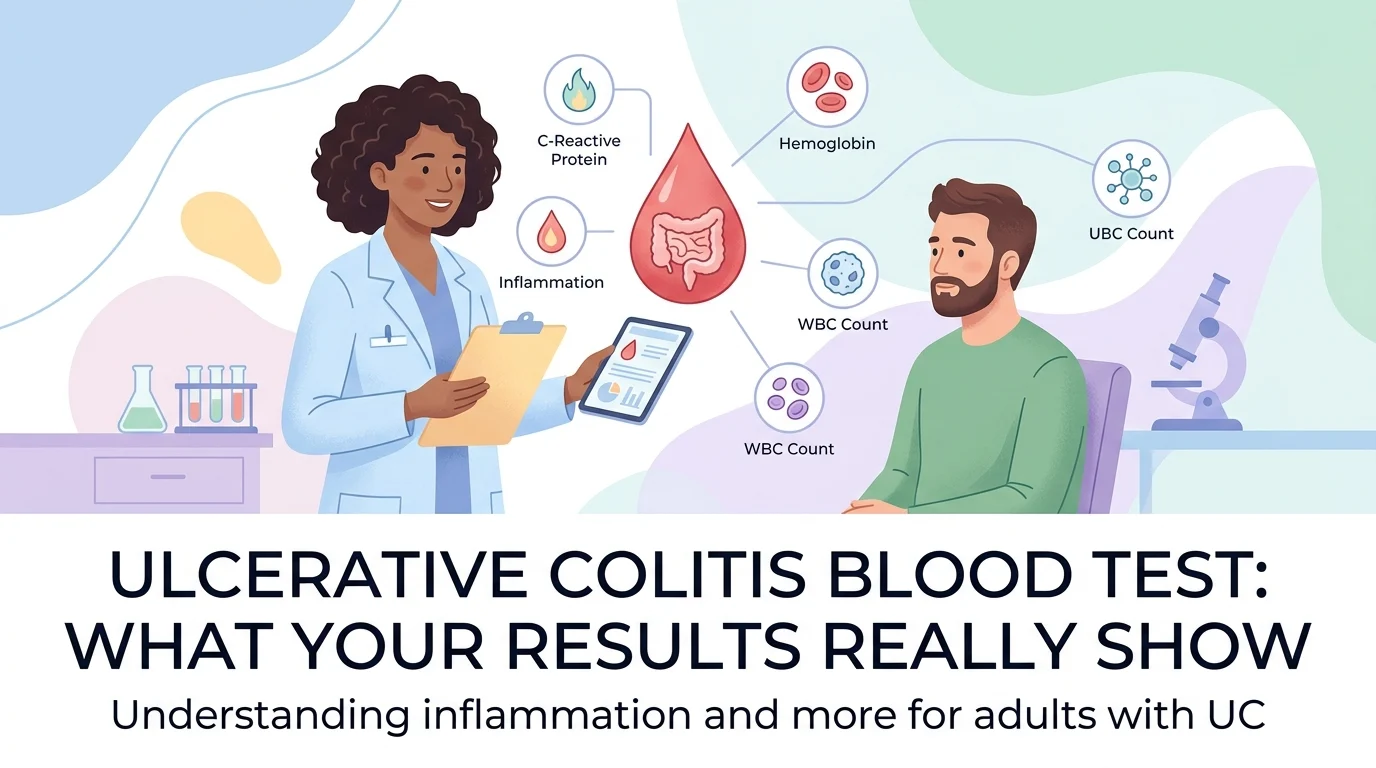
अल्सरेटिव कोलाइटिस (Ulcerative Colitis) ब्लड टेस्ट अक्सर वह पहली चीज़ होती है जो लोग हफ्तों तक खूनी दस्त, बार-बार शौच की तीव्र इच्छा और पेट में ऐंठन के बाद करवाना चाहते हैं — और सच यह है कि कोई भी एक ब्लड रिपोर्ट इस बीमारी की पुष्टि नहीं कर सकती। फिर भी ब्लड टेस्ट महत्वपूर्ण है: यह बताता है कि शरीर में कितनी सूजन (Inflammation) है, आयरन (Iron) की कमी हो रही है या नहीं, और कोलोनोस्कोपी (Colonoscopy) कितनी जल्दी ज़रूरी है। 2026 में प्रस्तुत शोध ने एक नई बात सामने रखी है। ब्लड सेल्स (Blood Cells) में मौजूद डीएनए (DNA) में सूक्ष्म रासायनिक बदलाव अल्सरेटिव कोलाइटिस के निदान से कई साल पहले ही दिखने लगते हैं। इस लेख में आप जानेंगे कि आज ब्लड और स्टूल मार्कर (Stool Markers) वास्तव में क्या दर्शाते हैं, स्टूल सैंपल (Stool Sample) अक्सर ब्लड टेस्ट से ज़्यादा महत्वपूर्ण क्यों होता है, और नए निष्कर्ष आपके लिए क्या बदलते हैं और क्या नहीं।
अल्सरेटिव कोलाइटिस ब्लड टेस्ट क्या दिखा सकता है और क्या नहीं
अल्सरेटिव कोलाइटिस (Ulcerative Colitis) एक दीर्घकालिक इन्फ्लेमेटरी बाउल डिज़ीज़ (Inflammatory Bowel Disease) है जिसमें प्रतिरक्षा प्रणाली (Immune System) बड़ी आंत की भीतरी परत पर हमला करती है, जिससे सूजन और अल्सर (Ulcers) बन जाते हैं। नेशनल इंस्टीट्यूट ऑफ डायबिटीज़ एंड डाइजेस्टिव एंड किडनी डिज़ीज़ेज़ (National Institute of Diabetes and Digestive and Kidney Diseases) के अनुसार, डॉक्टर इस बीमारी का निदान आपके लक्षणों, आपके चिकित्सा और पारिवारिक इतिहास, शारीरिक जांच, ब्लड टेस्ट, स्टूल टेस्ट और बड़ी आंत की एंडोस्कोपी (Endoscopy) को मिलाकर करते हैं। इस सूची में से कोई भी एक जांच अकेले काम नहीं करती।
ब्लड सैंपल इसलिए उपयोगी है क्योंकि यह आंत की सूजन के परिणामों को मापता है, न कि सूजन को सीधे। हल्की बीमारी में जो केवल मलाशय (Rectum) तक सीमित हो, सभी मान सामान्य सीमा के भीतर आ सकते हैं। यही कारण है कि एक सामान्य रिपोर्ट इस बीमारी को कभी भी पूरी तरह नकार नहीं सकती, और इसीलिए जब डॉक्टर को अल्सरेटिव कोलाइटिस का संदेह हो, तो वे जांच जारी रखते हैं — भले ही आपके नंबर सामान्य दिखें।
वे मार्कर (Markers) जो आपके डॉक्टर वास्तव में देखते हैं
इनमें से अधिकांश सामान्य पैनल (Panel) में आते हैं, इसलिए हो सकता है कि इनमें से कई आपकी घर पर रखी लैब रिपोर्ट में पहले से मौजूद हों।
| निशान | नमूना | बदलाव क्या संकेत दे सकता है | यह क्या नहीं कर सकती |
|---|---|---|---|
| सी-रिएक्टिव प्रोटीन (सीआरपी) | रक्त (Blood) | शरीर में कहीं सक्रिय सूजन (Active Inflammation) | आंत की ओर इशारा करते हैं, या तब भी विश्वसनीय रहते हैं जब बीमारी केवल मलाशय (Rectum) तक सीमित हो |
| संपूर्ण रक्त गणना | रक्त (Blood) | बार-बार रक्तस्राव से एनीमिया (Anemia), या फ्लेयर (Flare) के दौरान प्लेटलेट काउंट (Platelet Count) का बढ़ना | अल्सरेटिव कोलाइटिस को रक्त हानि के अन्य कारणों से अलग करना |
| फेरिटिन और आयरन स्टडीज़ (Ferritin and Iron Studies) | रक्त (Blood) | लंबे समय से मलाशय में रक्तस्राव के कारण आयरन (Iron) की कमी | यह पुष्टि करना कि रक्तस्राव कहाँ से हो रहा है |
| एल्बुमिन | रक्त (Blood) | अधिक गंभीर बीमारी में सूजी हुई आंत की दीवार से प्रोटीन का रिसाव | सीमित या प्रारंभिक बीमारी का पता लगाना |
| फेकल कैलप्रोटेक्टिन (Fecal Calprotectin) | मल (Stool) | आंत की परत से सीधे आने वाली सूजन | इन्फ्लेमेटरी बाउल डिज़ीज़ (Inflammatory Bowel Disease) को संक्रमण या कैंसर से अलग पहचानना |
| मल संवर्धन (Stool Culture) और परजीवी परीक्षण | मल (Stool) | एक संक्रमण जो भड़कने जैसा दिखता है | अल्सरेटिव कोलाइटिस (Ulcerative Colitis) का स्वयं निदान करना |
हमारी टीम बताती है उच्च CRP स्तर (High CRP Levels), और एक अलग गाइड में बताया गया है संपूर्ण रक्त गणना (Complete Blood Count)। दो अन्य पृष्ठों में विस्तार से बताया गया है फेरिटिन कम होने के कारण और लक्षण and एल्बुमिन (Albumin) के कम परिणाम.
रक्त परीक्षण की तुलना में मल का नमूना अक्सर बेहतर क्यों होता है
फेकल कैलप्रोटेक्टिन (Fecal Calprotectin) एक प्रोटीन है जो न्यूट्रोफिल (Neutrophils) — एक प्रकार की श्वेत रक्त कोशिका — द्वारा तब छोड़ा जाता है जब आंत की दीवार में सूजन होती है। चूँकि इसे सीधे मल में मापा जाता है, यह पूरे शरीर की बजाय आंत के अंदर की स्थिति को दर्शाता है। Clinical and Translational Gastroenterology में प्रकाशित 2023 की एक समीक्षा इसे इन्फ्लेमेटरी बाउल डिज़ीज़ को इरिटेबल बाउल सिंड्रोम (Irritable Bowel Syndrome) से अलग करने का एक व्यावहारिक तरीका बताती है, जिसकी नेगेटिव प्रेडिक्टिव वैल्यू (Negative Predictive Value) उच्च होती है। सरल शब्दों में, स्पष्ट रूप से कम परिणाम आंत में सूजन की संभावना को कम करता है और अनावश्यक कोलोनोस्कोपी (Colonoscopy) से बचाया जा सकता है। उसी वर्ष प्रकाशित एक व्यवस्थित समीक्षा, जिसमें बीस अध्ययनों को शामिल किया गया था, भी इसी निष्कर्ष पर पहुँची।
हमारी गाइड बताती है फेकल कैलप्रोटेक्टिन परीक्षण (fecal calprotectin test), जिसमें यह भी शामिल है कि नमूना कैसे एकत्र किया जाता है और विभिन्न प्रयोगशालाओं में सीमा-मान (Threshold) अलग-अलग क्यों होते हैं। एक महत्वपूर्ण सावधानी यह है: कैलप्रोटेक्टिन किसी भी आंत की सूजन में बढ़ सकता है, जिसमें संक्रमण, कुछ दर्दनिवारक दवाएँ और कोलोरेक्टल कैंसर (Colorectal Cancer) शामिल हैं। इसलिए डॉक्टर इस संख्या को आपके लक्षणों के साथ मिलाकर देखते हैं, न कि अकेले — यही कारण है कि आमतौर पर साथ में संक्रमण की जाँच भी की जाती है। हमारा लेख इस विषय को विस्तार से कवर करता है स्टूल कल्चर टेस्ट (Stool Culture Test).
नवीनतम वैज्ञानिक प्रगति: निदान से वर्षों पहले रक्त में बदलाव
Journal of Crohn’s and Colitis में 2026 में प्रस्तुत एक अध्ययन में स्कॉटलैंड के एक बड़े जनसंख्या अध्ययन का विश्लेषण किया गया, जिसमें 24,000 से अधिक वयस्कों ने 2006 से 2011 के बीच रक्त का नमूना दिया था और फिर उन्हें वर्षों तक फॉलो किया गया। शोधकर्ताओं ने उन लोगों की तुलना की जिन्हें बाद में अल्सरेटिव कोलाइटिस का निदान हुआ, उन लोगों से जो स्वस्थ रहे।
उन्होंने जो पाया: रक्त कोशिकाओं के अंदर DNA में पहले से ही एक विशिष्ट रासायनिक चिह्नांकन पैटर्न मौजूद था। इस प्रक्रिया को मेथिलेशन (Methylation) कहते हैं, और यह एक डिमर स्विच की तरह काम करती है जो जीन को बदले बिना उन्हें चालू या बंद करती है। अल्सरेटिव कोलाइटिस समूह में, रक्त का नमूना आमतौर पर निदान से लगभग आठ साल पहले लिया गया था। इन चिह्नांकनों पर आधारित एक पूर्वानुमान मॉडल ने उत्साहजनक सटीकता के साथ यह पहचाना कि कौन आगे चलकर यह बीमारी विकसित करेगा, और इसने अल्सरेटिव कोलाइटिस को इरिटेबल बाउल सिंड्रोम या रूमेटॉइड आर्थराइटिस (Rheumatoid Arthritis) से भ्रमित नहीं किया।
आपके लिए इसका क्या मतलब है: आज क्लिनिक में कुछ भी नहीं बदलता। यह एक ही समूह (cohort) पर किया गया अध्ययन है, भविष्य के मामलों की संख्या कम थी, और लेखकों ने खुद कहा है कि इसे किसी परीक्षण (test) का रूप देने से पहले अन्य आबादी में इसकी पुष्टि जरूरी है। फिलहाल कोई भी प्रयोगशाला ऐसा रक्त परीक्षण (blood test) नहीं देती जो अल्सरेटिव कोलाइटिस (Ulcerative Colitis) की भविष्यवाणी कर सके, और निकट भविष्य में ऐसी उम्मीद भी नहीं है। इस खोज का महत्व कहीं और है। यह इस विचार को बल देती है कि बीमारी के पीछे की प्रतिरक्षा प्रणाली (immune system) में बदलाव पहले खूनी मल आने से बहुत पहले ही शुरू हो जाता है — इसीलिए शोधकर्ता अब यह जानने की कोशिश कर रहे हैं कि क्या जल्दी कदम उठाने से बीमारी का रुख बदला जा सकता है।
Human Genetics में प्रकाशित एक अलग 2025 विश्लेषण भी इसी दिशा में इशारा करता है। इसमें बताया गया कि जो लोग पहले से इन्फ्लेमेटरी बाउल डिजीज (Inflammatory Bowel Disease) के साथ जी रहे हैं, उनके रक्त में DNA के पैटर्न अगले कुछ वर्षों में बीमारी के बढ़ने के तरीके से मेल खाते हैं। यह भी एक शोध है, न कि कोई ऐसा परीक्षण जिसे आप अभी करवा सकते हैं।
अभी आपके अपने परिणामों का क्या अर्थ है
अगर आपके हाथ में कोई लैब रिपोर्ट है और आप सोच रहे हैं कि क्या यह अल्सरेटिव कोलाइटिस (Ulcerative Colitis) की ओर इशारा करती है, तो तीन बातें ध्यान में रखें। पहली, रक्त और मल के परिणामों को अलग-अलग नहीं, बल्कि एक साथ पढ़ें: सामान्य CRP के साथ स्पष्ट रूप से बढ़ा हुआ कैल्प्रोटेक्टिन (Calprotectin) एक सामान्य और महत्वपूर्ण पैटर्न है। दूसरी, किसी एक रिपोर्ट की बजाय समय के साथ बदलाव देखें, क्योंकि सूजन के मार्कर (Inflammatory Markers) भड़कने और शांत होने के साथ बदलते रहते हैं। तीसरी, याद रखें कि निदान (diagnosis) आंत की परत को देखकर ही पक्का होता है। Mayo Clinic के अनुसार, ऊतक के नमूनों (tissue samples) के साथ कोलोनोस्कोपी (Colonoscopy) ही वह कदम है जो अल्सरेटिव कोलाइटिस की पुष्टि करता है, जबकि रक्त, मल और इमेजिंग परीक्षण मुख्य रूप से अन्य स्थितियों और जटिलताओं को खारिज करने में मदद करते हैं।
दो निकटवर्ती स्थितियों को समझना उपयोगी है, क्योंकि ये उन कई परीक्षणों की व्याख्या करती हैं जो आपको कराने की सलाह दी जा सकती है। हमारी गाइड में शामिल है क्रोहन रोग (Crohn’s Disease) के लक्षण और उपचार, और एक अन्य पेज पर समझाया गया है इरिटेबल बाउल सिंड्रोम (Irritable Bowel Syndrome)। लंबे समय से चली आ रही आंत की सूजन नियमित निगरानी की जरूरत भी बढ़ा देती है, और हमारा लेख इसका वर्णन करता है कोलोरेक्टल कैंसर स्क्रीनिंग (Colorectal Cancer Screening).
डॉक्टर से कब मिलें
यदि आप मल में दिखाई देने वाला खून, दो सप्ताह से अधिक समय तक दस्त, रात में ऐसी तीव्र इच्छा जो नींद खुलवा दे, बिना किसी कारण वजन कम होना, या थकान और पीलापन का संयोजन देखें — तो लैब रिपोर्ट का इंतजार किए बिना डॉक्टर से अपॉइंटमेंट लें। यदि एक दिन में छह से अधिक बार खूनी दस्त हों और साथ में बुखार या तेजी से वजन घटे, तो तुरंत आपातकालीन देखभाल लें — यह गंभीर भड़काव (Flare) का संकेत हो सकता है। रोग नियंत्रण और रोकथाम केंद्र (Centers for Disease Control and Prevention) के अनुसार, संयुक्त राज्य अमेरिका में अनुमानित 2.4 से 3.1 मिलियन लोग इन्फ्लेमेटरी बाउल डिजीज (Inflammatory Bowel Disease) से प्रभावित हैं — इसलिए ये लक्षण न तो असामान्य हैं और न ही मामूली। इन्हें केवल देखते रहने की बजाय उचित जांच की जरूरत है। हमारी गाइड यह भी बताती है एनीमिया के लक्षण और जांच (Anemia Symptoms and Tests), क्योंकि आयरन की कमी अक्सर पहला संकेत होती है।
शब्दकोष
| अवधि | परिभाषा |
|---|---|
| अल्सरेटिव कोलाइटिस (Ulcerative Colitis) | एक दीर्घकालिक बीमारी जिसमें प्रतिरक्षा प्रणाली (Immune System) बड़ी आंत (Large Intestine) की परत में सूजन और अल्सर पैदा करती है, जो मलाशय (Rectum) से शुरू होती है। |
| इन्फ्लेमेटरी बाउल डिज़ीज़ (Inflammatory Bowel Disease, IBD) | यह शब्द अल्सरेटिव कोलाइटिस (Ulcerative Colitis) और क्रोहन रोग (Crohn's Disease) दोनों को एक साथ दर्शाता है। यह इरिटेबल बाउल सिंड्रोम (Irritable Bowel Syndrome) से अलग है। |
| फेकल कैलप्रोटेक्टिन (Fecal Calprotectin) | एक प्रोटीन जो श्वेत रक्त कोशिकाओं (White Blood Cells) द्वारा आंत में छोड़ा जाता है। मल में इसकी जांच से आंत की परत में सूजन का पता चलता है। |
| सी-रिएक्टिव प्रोटीन (सीआरपी) | एक रक्त प्रोटीन जो शरीर में कहीं भी सूजन होने पर बढ़ जाता है। यह सूजन के प्रति संवेदनशील है, लेकिन यह केवल आंत की समस्या का संकेत नहीं देता। |
| नकारात्मक पूर्वानुमान मूल्य (Negative Predictive Value) | कम परिणाम किसी स्थिति को कितनी निश्चितता से नकार सकता है। जिस जांच का यह मान अधिक हो, वह 'नहीं' कहने में अधिक विश्वसनीय होती है। |
| डीएनए मेथाइलेशन | DNA पर एक रासायनिक चिह्न जो जीन को सक्रिय या निष्क्रिय करता है, बिना आनुवंशिक कोड (Genetic Code) को बदले। |
| प्रॉस्पेक्टिव कोहोर्ट (Prospective Cohort) | स्वस्थ अवस्था में नामांकित लोगों का एक समूह जिन्हें समय के साथ फॉलो किया जाता है, ताकि शुरुआत में लिए गए नमूनों की तुलना बाद में होने वाले निदान से की जा सके। |
| कोलोनोस्कोपी (Colonoscopy) | एक लचीले कैमरे से बड़ी आंत (Colon) की जांच, जिसके दौरान विश्लेषण के लिए छोटे ऊतक के नमूने (Tissue Samples) लिए जा सकते हैं। |
| चमक | वह समय जब लक्षण कम या न के बराबर होने के बाद फिर से लौट आते हैं या बिगड़ जाते हैं। |
अक्सर पूछे जाने वाले प्रश्नों
क्या केवल रक्त जांच (Blood Test) से अल्सरेटिव कोलाइटिस का निदान हो सकता है?
नहीं। रक्त जांच के परिणाम तस्वीर को स्पष्ट करने में मदद करते हैं, लेकिन इनसे अकेले निदान नहीं होता। ये बताते हैं कि सूजन सक्रिय है या नहीं, एनीमिया है या नहीं, और लिवर व किडनी कैसे काम कर रहे हैं — फिर भी यही पैटर्न संक्रमण और अन्य आंत की स्थितियों में भी दिख सकता है। निदान तब होता है जब डॉक्टर एंडोस्कोपी (Endoscopy) के दौरान बड़ी आंत की परत को देखते हैं और माइक्रोस्कोप के नीचे ऊतक के नमूनों की जांच करते हैं।
यदि मुझे अभी भी लक्षण हैं तो सामान्य रक्त जांच का क्या मतलब है?
इसका मतलब यह है कि सूजन (Inflammation) आपके रक्तप्रवाह (Bloodstream) में नहीं फैली है, न कि यह कि कुछ भी गलत नहीं है। मलाशय (Rectum) तक सीमित बीमारी अक्सर CRP और रक्त गणना (Blood Count) को प्रभावित नहीं करती। यदि मल में खून आना या तत्कालता (Urgency) जारी रहे, तो आमतौर पर मल मार्कर (Stool Marker) जैसे कैल्प्रोटेक्टिन (Calprotectin) अगला अधिक जानकारीपूर्ण कदम होता है, और सामान्य रिपोर्ट के बावजूद लगातार लक्षण होने पर विशेषज्ञ के पास भेजना उचित है।
अल्सरेटिव कोलाइटिस (Ulcerative Colitis) में कौन से मान सबसे अधिक असामान्य होते हैं?
सक्रिय भड़काव (Active Flare) के दौरान CRP और प्लेटलेट्स (Platelets) बढ़ते हैं, जबकि हीमोग्लोबिन (Hemoglobin), फेरिटिन (Ferritin) और एल्बुमिन (Albumin) घटते हैं। इनमें से कोई भी विशिष्ट नहीं है। इनकी उपयोगिता इनके संयोजन और समय के साथ इनमें होने वाले बदलाव में है, इसीलिए डॉक्टर किसी एक रिपोर्ट की एक पंक्ति को अलग से पढ़ने की बजाय नई रिपोर्ट की तुलना आपकी पिछली रिपोर्टों से करते हैं।
क्या अल्सरेटिव कोलाइटिस (Ulcerative Colitis) के लिए मल परीक्षण (Stool Test) रक्त परीक्षण (Blood Test) से बेहतर है?
आंत में सूजन का पता लगाने के लिए, हाँ — कैल्प्रोटेक्टिन (Calprotectin) आमतौर पर रक्त मार्करों (Blood Markers) से अधिक जानकारीपूर्ण होता है, क्योंकि यह समस्या वाली जगह पर ही बनता है। रक्त परीक्षण (Blood Tests) एक अलग काम के लिए जरूरी रहते हैं: एनीमिया (Anemia), पोषण स्थिति (Nutritional Status) और बीमारी के समग्र प्रभाव को मापने के लिए। ये दोनों एक-दूसरे के पूरक हैं, न कि प्रतिस्पर्धी।
क्या रक्त परीक्षण (Blood Test) अल्सरेटिव कोलाइटिस (Ulcerative Colitis) को क्रोहन रोग (Crohn's Disease) से अलग कर सकता है?
पूरी तरह विश्वसनीय रूप से नहीं। कुछ एंटीबॉडी पैनल (Antibody Panels) कभी-कभी तब उपयोग किए जाते हैं जब एंडोस्कोपी (Endoscopy) और बायोप्सी (Biopsies) से स्थिति स्पष्ट नहीं होती, लेकिन ये सहायक होते हैं, निर्णायक नहीं। अंतर आमतौर पर इस बात पर निर्भर करता है कि सूजन कहाँ है और वह कैसी दिखती है: अल्सरेटिव कोलाइटिस (Ulcerative Colitis) मलाशय (Rectum) से ऊपर की ओर बृहदान्त्र (Colon) को लगातार प्रभावित करता है, जबकि क्रोहन रोग (Crohn's Disease) पाचन तंत्र (Digestive Tract) में कहीं भी पैच के रूप में प्रकट हो सकता है।
क्या मुझे अल्सरेटिव कोलाइटिस (Ulcerative Colitis) की भविष्यवाणी करने वाला परीक्षण करवाना चाहिए?
आज ऐसा कोई परीक्षण उपलब्ध नहीं है। 2026 में रक्त DNA मार्किंग (Blood DNA Markings) पर हुए निष्कर्ष एक समूह (Cohort) का प्रारंभिक शोध है और किसी भी नैदानिक उपयोग से पहले इसे अन्य जगहों पर भी प्रमाणित किए जाने की जरूरत है। यदि आपके किसी करीबी रिश्तेदार को इन्फ्लेमेटरी बाउल डिजीज (Inflammatory Bowel Disease) है और आपको चिंताजनक लक्षण हैं, तो उपयोगी बातचीत भविष्यवाणी पैनल के बारे में नहीं, बल्कि मौजूदा परीक्षणों और समय के बारे में होनी चाहिए।
सूत्रों का कहना है
- नेशनल इंस्टीट्यूट ऑफ डायबिटीज एंड डाइजेस्टिव एंड किडनी डिजीज (NIDDK) – अल्सरेटिव कोलाइटिस (Ulcerative Colitis): परिभाषा, लक्षण, निदान और उपचार – नेशनल इंस्टीट्यूट्स ऑफ हेल्थ – niddk.nih.gov
- सेंटर्स फॉर डिजीज कंट्रोल एंड प्रिवेंशन (Centers for Disease Control and Prevention) – IBD तथ्य और आँकड़े: संयुक्त राज्य अमेरिका में इन्फ्लेमेटरी बाउल डिजीज (Inflammatory Bowel Disease) का प्रसार और बोझ, 2024 – cdc.gov
- मेयो क्लिनिक (Mayo Clinic) – अल्सरेटिव कोलाइटिस (Ulcerative Colitis): निदान और उपचार, 2026 – mayoclinic.org
- Noble A., Li X., Generation Scotland, Theodoratou E., Satsangi J. – Specific epigenetic alterations precede the diagnosis of ulcerative colitis and Crohn’s disease in adults in Northern Europe: analysis of the Generation Scotland nationwide prospective cohort – Journal of Crohn’s and Colitis, 2026 – consensus.app
- Kapel N. et al. – Fecal calprotectin for the diagnosis and management of inflammatory bowel diseases – Clinical and Translational Gastroenterology, 2023 – consensus.app
- Asiri A. S. et al. – Fecal calprotectin and organic gastrointestinal disease: a systematic review – Cureus, 2023 – consensus.app
- Doherty T. et al. – Analysis of blood-based DNA methylation signatures of aging and disease progression in inflammatory bowel disease – Human Genetics, 2025 – consensus.app
अग्रिम पठन
- मल की स्थिरता: सामान्य और असामान्य बदलाव
- मल में काले धब्बे: कारण और अर्थ
- लगातार दस्त: कौन से मल परीक्षण (Stool Tests) करवाएं
- मल में अंडों और परजीवियों की जांच: परिणामों को समझना
- मल परीक्षण (Stool Testing) और कोलन कैंसर से होने वाली मृत्यु दर
AI DiagMe की मदद से अपने लैब परिणामों को समझें
CRP, पूर्ण रक्त गणना (Complete Blood Count), फेरिटिन (Ferritin) और एक मल मार्कर (Stool Marker) को मिलाकर बनी रिपोर्ट को लाइन दर लाइन पढ़ना मुश्किल हो सकता है — लेकिन इन सभी मानों का एक साथ देखा गया पैटर्न ही वह आधार है जिससे डॉक्टर यह तय करते हैं कि आपके पेट की और जांच की जरूरत है या नहीं। AI DiagMe आपके खून, पेशाब और मल के परिणामों को पढ़कर उन्हें सरल भाषा में समझाता है, ताकि आप अपनी अपॉइंटमेंट पर यह जानते हुए पहुंचें कि कौन से नंबर बदले हैं और डॉक्टर से कौन से सवाल पूछने हैं। यह आपको अपने परिणाम समझने में मदद करता है — यह कोई निदान (Diagnosis) नहीं करता और आपके डॉक्टर की जगह नहीं लेता।
कुछ ही मिनटों में अपने परिणामों का विश्लेषण प्राप्त करें