




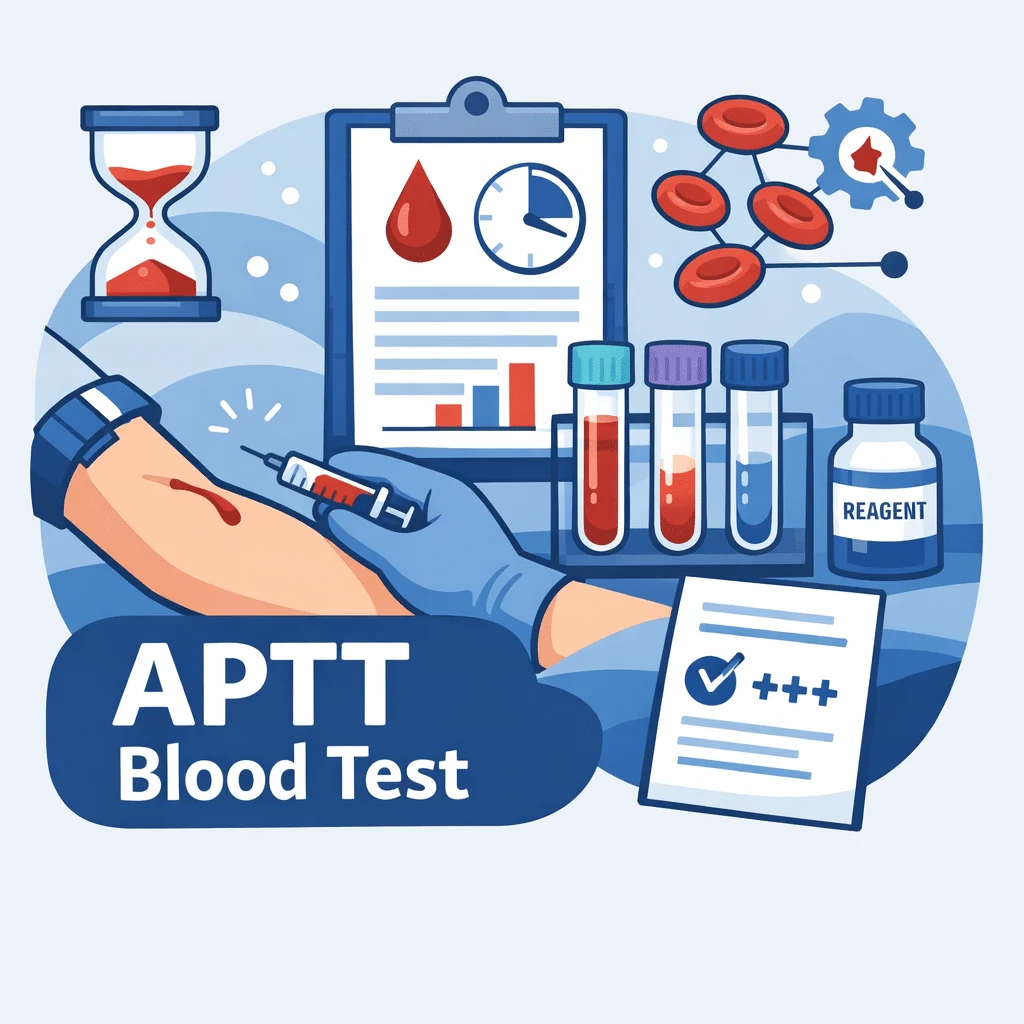
aPTT-verikoe mittaa, kuinka kauan verinäytteeltäsi kestää muodostaa hyytymä niin sanotun sisäisen hyytymisreitin kautta. Lääkärit määräävät sen useimmiten seuraamaan hepariinihoitoa – pistettävää verenohennuslääkettä – sekä selvittämään selittämätöntä verenvuotoa, mustelmia tai veritulppia. Tässä oppaassa kerrotaan, mitä testi mittaa, miten tulostasi verrataan laboratorion viitearvoihin, mitä pidentynyt tai lyhentynyt arvo voi tarkoittaa ja milloin tulos kannattaa käydä läpi lääkärisi kanssa.
Mitä aPTT-verikoe mittaa
Aktivoitu partiaalinen tromboplastiiniaika, yleisesti lyhennettynä aPTT, on laboratoriotesti, joka mittaa sekunteina, kuinka kauan plasmalta kestää hyytyä, kun laboratorioteknikko lisää näytteeseen tiettyjä kemikaaleja. Se kohdistuu sisäiseen hyytymisreittiin – toiseen kahdesta reitistä, joita elimistösi käyttää hyytymän muodostamiseen – sekä molempien reittien yhteisiin loppuvaiheisiin.
Hyytyminen perustuu sarjaan proteiineja, joita kutsutaan hyytymistekijöiksi. Maksa tuottaa ne pääasiassa, ja normaalisti ne ovat verenkierrossa inaktiivisessa muodossa. Verisuonivaurio käynnistää ketjureaktion, joka aktivoi nämä tekijät järjestyksessä ja johtaa lopulta vakaan hyytymän muodostumiseen. aPTT tarkistaa, ovatko sisäisen reitin hyytymistekijät – kuten tekijät VIII, IX, XI ja XII – normaalissa määrässä ja toimivatko ne oikein.
Laboratoriossa teknikko ottaa verinäytteen antikoagulanttia sisältävään putkeen ja erottaa siitä plasman. Hyytymisreaktion käynnistämiseksi lisätään pintaa aktivoiva aine ja kalsiumia, minkä jälkeen automaattinen laite mittaa, kuinka kauan näytteeltä kestää muodostaa näkyvä hyytymä. Koko prosessi kestää yleensä vain muutaman minuutin näytteen saavuttua laboratorioon, vaikka kokonaisläpimenoaika kuljetuksineen ja vastauksineen voi olla pidempi.
Miten testi eroaa PT-testistä
Siihen liittyvä testi, protrombiiniaika (PT), tutkii ulkoista hyytymisreittiä ja ilmoitetaan yhdessä kansainvälisen normalisoidun suhteen eli INR:n kanssa. PT ja aPTT tutkivat eri hyytymistekijäryhmiä, joten lääkärit määräävät ne usein yhdessä. Vertaamalla, kumpi on poikkeava, voidaan rajata, missä hyytymisprosessin vaiheessa ongelma saattaa olla. Jos raportissasi on useita hyytymisarvoja yhdessä, on hyödyllistä tarkastella koko koagulaatiopaneeli.
Miksi lääkärit määräävät aPTT-testin
aPTT-testillä on useita eri kliinisiä käyttötarkoituksia, ja se, miksi se on määrätty, vaikuttaa siihen, miten tulosta tulisi tulkita.
Hepariinihoidon seuranta
Fraktioimaton hepariini on nopeasti vaikuttava, injektiona annettava antikoagulantti, jota käytetään yleisesti sairaaloissa esimerkiksi syvän laskimotukoksen, keuhkoembolian tai tiettyjen sydän- ja verisuonitoimenpiteiden yhteydessä. Koska hepariinilla on kapea terapeuttinen ikkuna, hoitohenkilökunta tarkistaa aPTT-arvon säännöllisesti pitääkseen annoksen turvallisella alueella – sellaisella, joka estää vaarallisen hyytymisen lisäämättä verenvuotoriskiä. Käytännössä hoitotiimi mittaa usein lähtötason aPTT-arvon ennen infuusion aloittamista, minkä jälkeen arvo tarkistetaan noin kuuden tunnin välein, kunnes annos vakiintuu tavoitealueelle – sen jälkeen mittausväliä voidaan harventaa.
Uudemmat pienimolekyyliset hepariinit ja suorat oraaliset antikoagulantit ovat vähentäneet fraktioimattoman hepariinin käyttöä sairaalan ulkopuolella, mutta se on edelleen ensisijainen valinta tietyissä tilanteissa: vaikeassa munuaisten vajaatoiminnassa, korkeassa verenvuotoriskissä, joka saattaa vaatia nopeaa kumoamista, sekä tietyissä kirurgisissa tai tehohoitotilanteissa, joissa lyhytvaikutteinen ja helposti säädettävä lääke on arvokas.
Selittämättömän verenvuodon tai mustelmien tutkiminen
Jos sinulla on toistuvia nenäverenvuotoja, helposti syntyviä mustelmia, runsaita kuukautisvuotoja tai pitkittynyttä verenvuotoa pienen haavan jälkeen, lääkäri saattaa määrätä aPTT-testin muiden hyytymistutkimusten ohella mahdollisen verenvuotohäiriön selvittämiseksi.
Seulonta ennen leikkausta tietyillä potilailla
Kaikki eivät tarvitse hyytymistutkimuksia ennen leikkausta. Nykyinen käytäntö rajaa ne henkilöille, joilla on oma tai suvun verenvuotohistoria, todettu maksasairaus tai antikoagulanttihoito – ei siis rutiinisti kaikille potilaille. Kuka tahansa tulevaan toimenpiteeseen valmistautuva voi tutustua siihen, mitä tyypilliset verikoe ennen leikkausta.
Tekijäpuutosten ja inhibiittoreiden tunnistaminen
Selvästi pidentynyt aPTT voi viitata puutokseen jossakin sisäisen reitin tekijässä – kaikkein tyypillisimmin tämä kuvio tuottaa hemofilia A:n tai B:n, tai hankittuun inhibiittoriin, joka estää hyytymistekijän toiminnan. Testi voi myös paljastaa lupusantikoagulantin, vasta-aineen, joka paradoksaalisesti lisää henkilön riskiä saada keuhkoembolia, vaikka se pidentää aPTT-tulosta laboratoriossa.
aPTT-tuloksesi lukeminen
Laboratorioraporttisi näyttää aPTT-tuloksesi sekunteina kyseisen laboratorion asettaman viitearvon vieressä. Raporttisi hemostaasiosio ryhmittelee yleensä samaan kohtaan myös PT/INR-tuloksen, ja täydellinen tuloste määrittelee tavallisesti kymmeniä muita yleisiä verikoearvoja. Joissakin laboratorioraporteissa ilmoitetaan myös potilas-kontrolli-suhde, joka vertaa tulostasi normaaliin kontrolliin. Jos käytät hepariinia, raportissasi saattaa olla myös erillinen tavoitealue, joka on määritetty nimenomaan hoitoasi varten eikä vastaa yleisväestön viitearvoja.
Tyypillinen aikuisten viitearvo on noin 25–35 sekuntia, mutta tarkat luvut vaihtelevat laboratorion käyttämien reagenssien ja laitteiden mukaan. Vertaa siksi aina omaa tulostasi oman raporttisi viitearvoihin – älä luota verkosta tai toisen laboratorion lomakkeelta löytyviin lukuihin. Laboratoriot merkitsevät poikkeavat arvot yleensä kirjaimella “H” tai “L”, tähdellä tai värillisellä tekstillä; kattava opas voi auttaa sinua lue verikokeiden tulokset luottavaisemmin.
| Mitä raporttisi kertoo | Yleinen merkitys |
|---|---|
| Tulos laboratorion viitealueella | Sisäinen hyytymisreitti näyttää toimivan normaalilla nopeudella |
| Tulos viitealueen yläpuolella (pidentynyt) | Hyytyminen on odotettua hitaampaa; mahdollisia syitä on useita, katso alla |
| Tulos viitealueen alapuolella (lyhentynyt) | Hyytyminen on odotettua nopeampaa; harvinaisempaa, myös useita mahdollisia syitä |
| Potilas/kontrolli-suhde viitealueen 0,8–1,2 ulkopuolella | Viittaa merkittävään poikkeamaan terveestä kontrollista |
Pidentyneen aPTT:n syyt
Pidentynyt aPTT tarkoittaa, että veresi hyytyi koeputkessa viitearvoa hitaammin. Useampi eri tila voi aiheuttaa tämän löydöksen, ja lääkärisi arvioi oireesi, lääkityksesi ja muut tutkimustulokset syyn selvittämiseksi.
Hepariini ja muut antikoagulantit
Fraktoimaton hepariini on ylivoimaisesti yleisin syy tarkoituksellisesti pidennettyyn aPTT:hen, sillä lääke hidastaa sisäistä hyytymisreittiä. Suorista oraalisista antikoagulanteista dabigatraani pidentää aPTT:tä luotettavasti, kun taas tekijä Xa:n estäjillä, kuten rivaroksabaanilla ja apiksabaanilla, vaikutus on vaihtelevampi, eikä niiden seurantaan tätä testiä yleensä käytetä.
Perinnölliset verenvuotohäiriöt
Hemofilia A johtuu tekijä VIII:n puutoksesta ja hemofilia B tekijä IX:n puutoksesta; molemmat voivat aiheuttaa merkittävästi pidentyneen aPTT:n sekä nivelverenvuotoja ja mustelmataipumusta. Yleisempi perinnöllinen tila, joka vaikuttaa verihiutaleiden tarttumista edistävään proteiiniin, voi myös pidentää testiä; raskaana olevien potilaiden hoidosta vastaavat lääkärit kiinnittävät erityistä huomiota, kun he diagnosoivat von Willebrandin tauti.
Lupusantikoagulantti ja antifosfolipidioireyhtymä
Tämä on yksi hyytymistutkimusten vastaisintuiivisimmista löydöksistä. Antifosfolipidivasta-aineet häiritsevät aPTT-testissä käytettäviä kemiallisia reagensseja, mikä pidentää laboratoriotulosta – vaikka taustalla oleva tila lisää henkilön todellista veritulppien riskiä eikä suinkaan verenvuotoriskiä. Löydöksen varmistamiseksi tarvitaan yleensä erikoistuneita jatkotutkimuksia, joissa aPTT yhdistetään usein toiseen menetelmään, joka perustuu eri reagensseihin.
Maksasairaus
Koska maksa tuottaa suurimman osan hyytymistekijöistä sekä niitä tasapainottavista luonnollisista antikoagulanttivalkuaisaineista, merkittävä maksan vajaatoiminta voi heikentää niiden tuotantoa ja pidentää sekä aPTT:tä että PT:tä. Vaikea maksasairaus voi myös alentaa antitrombiini III:n tasoja, mikä vaikeuttaa hyytymiskuvaa entisestään.
Lyhentyneen aPTT:n syyt
Lyhentynyt aPTT on harvinaisempi kuin pidentynyt, eikä sitä yksinään pidetä yleensä yhtä merkittävänä kliinisenä löydöksenä – joskin se voi toisinaan viitata lisääntyneeseen veritulppariskiin.
Akuutti tulehdus tai äskettäinen verenvuoto
Aktiivisen tulehdusvasteen aikana tai pian merkittävän verenvuodon jälkeen elimistö voi tilapäisesti nostaa tiettyjen hyytymistekijöiden tasoja osana suojareaktiota, mikä voi lyhentää aPTT:tä. Tämä löydös on yleensä satunnainen – se ilmenee muiden tulehdus- tai äskettäisen vamman merkkien yhteydessä eikä johda omaan erilliseen selvittelyyn.
Disseminoituneen intravaskulaarisen koagulaation varhainen vaihe
Disseminoitunut intravaskulaarinen koagulaatio eli DIC on vakava tila, johon liittyy laajalle levinnyttä hyytymisaktiviteettia kaikkialla elimistössä. Taudin varhaisimmassa vaiheessa tämä liiallinen hyytyminen voi lyhentää aPTT:tä, ennen kuin tila etenee kuluttamaan hyytymistekijöitä ja aiheuttamaan verenvuotoa.
Tietyt syövät
Jotkin pitkälle edenneet syövät – mukaan lukien tietyt gynekologiset ja ruoansulatuskanavan kasvaimet – voivat vapauttaa aineita, jotka aktivoivat hyytymisjärjestelmän ja lyhentävät aPTT:tä osana laajempaa hyperkoagulaatiotilaa.
Faktori V Leiden
Tämä perinnöllinen mutaatio aiheuttaa resistenssin aktivoitua proteiini C:tä kohtaan, joka on luonnollinen antikoagulantti, ja siihen liittyy lievästi lyhentynyt aPTT sekä kohonnut laskimotukosriski – erityisesti raskauden aikana tai leikkauksen jälkeen. Selvittäessään selittämätöntä veritulppaa lääkärit tilaavat usein D-dimeeri-testin.
Uusimmat tieteelliset edistysaskeleet
Viimeaikaiset tutkimukset täsmentävät jatkuvasti sitä, miten lääkärit käyttävät ja tulkitsevat aPTT-testiä erityisesti monimutkaisissa kliinisissä tilanteissa. PubMedin mukaan vuoden 2025 systemaattinen katsaus ja meta-analyysi havaitsivat, että raskausmyrkytyksestä – raskauskomplikaatiosta, johon liittyy korkea verenpaine – kärsivillä henkilöillä protrombiiniaika ja aPTT ovat pidempiä kuin terveillä raskaana olevilla naisilla (Alemayehu et al., BMC Pregnancy and Childbirth, 2024; DOI-koodi). Mitä tämä tarkoittaa sinulle: jos olet raskaana ja hyytymistutkimustesi tulokset poikkeavat tyypillisistä viitearvoista, lääkärisi saattaa arvioida niitä yhdessä verenpaineen ja muiden löydösten kanssa. Kyseessä on varhainen malli, jonka vahvistaminen vaatii vielä laajempia ja pidempiä tutkimuksia – se ei ole itsenäinen diagnostinen testi.
Erillinen meta-analyysi tarkasteli venoarteriaalista ECMO-hoitoa – kehon ulkopuolella verta hapettavaa elintukihoitoa – saavia aikuisia ja vertaili tuloksia potilaiden välillä, joita hoidettiin matalammilla tai korkeammilla aPTT-tavoitearvoilla hepariiniannoksen säätämiseksi. Yhdistetty aineisto osoitti, että verenvuoto- ja veritulppakomplikaatioiden esiintyvyys oli molemmissa tavoitearvojen ryhmissä suurin piirtein samankaltainen (Mazzeffi et al., Perfusion, 2023; DOI-koodi). Mitä tämä tarkoittaa sinulle: suhteellisen pienen ECMO-hoitoa saavan kriittisesti sairaiden potilaiden ryhmän osalta tämä viittaa siihen, että aPTT-tavoitearvoissa saattaa olla enemmän joustoa kuin aiemmin on oletettu – vaikka kirjoittajat huomauttavat, että asianmukainen satunnaistettu tutkimus on edelleen tarpeen ennen kuin hoitosuosituksia muutetaan.
Myös lupusantikoagulantin testaamista koskeva tutkimus on edistynyt. Vuoden 2025 laboratoriotutkimuskatsaus totesi, että nykyiset kansainväliset suositukset ohjeistavat testaamaan lupusantikoagulantin vähintään kahdella eri menetelmällä – tyypillisesti aPTT:llä yhdistettynä erilliseen laimennettuun Russell-kyykäärmeenmyrkkyaikaan (dRVVT) – koska yhteen menetelmään tukeutuminen altistaa virheellisille tuloksille erityisesti uusia suun kautta otettavia antikoagulantteja käyttävillä henkilöillä (Favaloro et al., Journal of Clinical Medicine, 2025). Mitä tämä tarkoittaa sinulle: jos lääkärisi epäilee lupusantikoagulanttia pitkittyneen aPTT:n perusteella, odota lisää tarkempia testejä ennen diagnoosin vahvistamista – yksittäinen tulos ei yksin riitä johtopäätökseen.
Lisäksi vuoden 2024 meta-analyysi tutki, eroavatko protrombiiniaika ja aPTT diabeetikoiden ja terveiden henkilöiden välillä Afrikassa tehdyissä tutkimuksissa. Kokonaisuudessaan analyysi ei löytänyt tilastollisesti merkitsevää eroa koko ryhmässä, vaikka signaali nousi esiin erityisesti tyypin 1 diabetesta sairastavilla henkilöillä (Getu et al., Frontiers in Medicine, 2024; DOI-koodi). Mitä tämä tarkoittaa sinulle: kyseessä on alustava, väestötason havainto eikä syy rutiininomaiseen hyytymistutkimukseen diabeteksen yhteydessä – tutkijat pitävät sitä seuraamisen arvoisena asiana, ei suoraan toimenpiteitä vaativana löydöksenä.
Milloin mennä lääkäriin
Useimmat poikkeavat aPTT-tulokset kannattaa käydä läpi seuraavalla rutiinikäynnillä lääkärillä sen sijaan, että niitä pidettäisiin hätätilanteena, sillä yksittäinen poikkeava arvo heijastaa usein lievää ja vaaratonta vaihtelua. Joissakin tilanteissa on kuitenkin syytä hakeutua hoitoon nopeammin.
Hakeudu kiireelliseen hoitoon, jos pitkittyneen aPTT:n yhteydessä ilmenee jokin seuraavista aktiivisen verenvuodon merkeistä:
- Toistuvat tai vaikeastikin tyrehtyvät nenäverenvuodot.
- Suuret, selittämättömät mustelmat tai verirakkulat.
- Verta virtsassa tai ulosteessa tai tavallista runsaampi kuukautisvuoto.
- Turvonneet, kivuliaat nivelet, jotka voivat viitata sisäiseen verenvuotoon.
- Mikä tahansa verenvuoto, joka ei lakkaa muutaman minuutin voimakkaan painamisen jälkeen.
Ota yhteyttä lääkäriin pian – ei välttämättä hätätilanteena – jos huomaat äkillistä jalan turvotusta, kipua tai lämmöntunnetta, tai jos sinulle kehittyy selittämätöntä hengenahdistusta tai rintakipua, sillä nämä voivat viitata veritulppaan verenvuoto-ongelman sijaan. Jos käytät hepariinia tai muuta verenohennuslääkettä ja aPTT-tuloksesi on selvästi tavoitealueen ulkopuolella, hoitotiimisi säätää yleensä annosta ja tarkistaa arvon uudelleen sen sijaan, että muuttaisi hoitoasi yhden yksittäisen tuloksen perusteella.
Ymmärrä laboratoriotuloksiasi tekoälyn DiagMen avulla
aPTT-tuloksen tarkastelu muiden hyytymisarvojen, kuten PT/INR:n, D-dimeerin tai verihiutalemäärän, rinnalla voi tuntua ylivoimaiselta ilman asianmukaista taustatietoa. AI DiagMe auttaa sinua ymmärtämään, mitä nämä luvut tarkoittavat selkokielellä, jotta voit mennä seuraavalle vastaanottokäynnillesi selkeämpien kysymysten kanssa. Se on suunniteltu auttamaan sinua ymmärtämään laboratoriotuloksesi – ei diagnosoimaan sinua tai korvaamaan lääkärisi neuvoja.
Tulkitse tuloksesi muutamassa minuutissa
Sanasto
| Termi | Määritelmä |
|---|---|
| aPTT (aktivoitu osittainen tromboplastiiniaika) | Verikoe, joka mittaa sekuntteina, kuinka kauan plasmalta kestää hyytyä sisäisen ja yhteisen hyytymisreitin kautta. |
| Hyytymiskaskadi | Hyytymistekijöiden aktivoitumisen vaiheittainen ketju, joka johtaa vakaan verihyytymän muodostumiseen. |
| Tekijä VIII | Sisäisen hyytymisreitin hyytymistekijä; sen puutos aiheuttaa hemofilia A:n. |
| Faktori V Leiden | Yleinen perinnöllinen geenimuutos, joka saa hyytymistekijä V:n vastustamaan luonnollista antikoagulanttia ja suurentaa siten veritulppariskiä. |
| Hemofilia | Perinnöllinen verenvuototauti, jonka aiheuttaa tietyn hyytymistekijän – useimmiten tekijä VIII:n tai IX:n – puutos. |
| Hepariini | Nopeasti vaikuttava, pistoksena annettava antikoagulanttiläke, jonka seurantaan käytetään usein aPTT-testiä. |
| Sisäinen reitti | Yksi kahdesta hyytymiskaskadin reitistä, jota aPTT-testi arvioi. |
| Lupusantikoagulantti | Vasta-aine, joka pidentää aPTT-arvoa laboratoriossa mutta liittyy todellisuudessa kohonneeseen veritulppien riskiin. |
| PT/INR | Siihen liittyvä hyytymistesti, joka tutkii ulkoista hyytymisreittiä ja jota käytetään varfariinihoidon seurannassa. |
| Viitealue | Terveelle väestölle tyypillisenä pidetty tulosväli, jonka kukin laboratorio määrittää erikseen. |
Usein kysytyt kysymykset
Mitä alhainen aPTT-tulos tarkoittaa?
Alhainen eli lyhentynyt aPTT tarkoittaa, että veresi hyytyi koeputkessa nopeammin kuin laboratorion viitearvo edellyttää. Tämä on harvinaisempaa kuin pidentynyt tulos, eikä se yksinään ole yleensä kliinisesti merkittävä. Mahdollisia syitä ovat äskettäinen verenvuoto, akuutti tulehdus, tietyt syövät tai perinnöllinen hyytymisalttius, kuten Faktori V Leiden. Lääkärisi tulkitsee lyhentynyttä aPTT-arvoa yleensä yhdessä oireidesi ja muiden hyytymistestien tulosten kanssa eikä arvioi lukua yksinään.
Mikä on aPTT-testin normaali viitearvo?
Useimmat laboratoriot ilmoittavat aikuisten normaaliksi viitealueeksi noin 25–35 sekuntia, mutta tämä vaihtelee laboratorion käyttämien reagenssien ja laitteiden mukaan. Vertaa aina omaa tulostasi juuri sinun laboratorioraporttisi viitearvoihin, sillä arvot voivat erota merkittävästi eri laboratorioiden välillä. Jos sinua seurataan hepariinihoidon aikana, tavoitealue on yleensä laajempi ja hoitotiimisi määrittää sen yksilöllisesti lääkeannoksen perusteella.
Mitä aPTT tarkoittaa, ja miten se eroaa PTT:stä?
aPTT tulee sanoista activated partial thromboplastin time eli aktivoitu partiaalinen tromboplastiiniaika. Sana "aktivoitu" viittaa kemialliseen aktivaattoriin, jonka laboratorio lisää näytteeseen nopeuttaakseen ja yhdenmukaistakseen hyytymisreaktiota – tämä tekee tuloksista vertailukelpoisempia eri testauskertojen välillä. PTT ja aPTT tarkoittavat nykyisessä käytännössä käytännössä samaa testiä, sillä lähes kaikki laboratoriot käyttävät nykyään aktivoitua menetelmää vanhan, aktivoimattoman version sijaan.
Voidaanko korkeaa aPTT-arvoa hoitaa?
Hoito riippuu täysin syystä. Jos hepariini on syynä, hoitotiimisi säätää annosta. Jos todetaan tekijäpuutos, kuten hemofilia, hoitona voi olla puuttuvan hyytymistekijän korvaaminen. Jos syyksi tunnistetaan lupusantikoagulantti tai muu autoimmuunisyy, hoito kohdistuu perussairauteen ja veritulppien riskin vähentämiseen eikä aPTT-arvon korjaamiseen sinänsä. Pidentynyt aPTT on merkki, joka ohjaa lisätutkimuksiin – se ei ole suoraan hoidettava tila.
Sulkeeko normaali aPTT-arvo pois verenvuotohäiriön?
Ei. Normaali aPTT vahvistaa, että sisäinen hyytymisreitti toimii odotetusti, mutta se ei tarkista kaikkia veren hyytymiseen liittyviä tekijöitä. Ulkoisessa hyytymisreitissä voi olla ongelmia – joita arvioidaan erikseen PT/INR-testillä – samoin kuin verihiutaleiden toiminnassa tai tiettyjen hyytymistekijöiden, kuten tekijä XIII:n, puutoksissa, vaikka aPTT olisi normaali. Jos sinulla on verenvuotohäiriön oireita normaalista tuloksesta huolimatta, lääkärisi voi määrätä lisää tarkempia tutkimuksia.
Pitääkö aPTT-verikokeeseen tulla paastoamalla?
aPTT-kokeeseen ei yleensä tarvita erityistä valmistautumista eikä paastoa. Näyte otetaan tavallisena laskimoverinäytteenä käsivarresta, ja se kerätään yleensä putkeen, joka sisältää antikoagulanttia estämään näytteen hyytymisen ennen laboratorioon pääsyä. Kerro verinäytteen ottajalle kaikista käyttämistäsi lääkkeistä, mukaan lukien verenohennuslääkkeet ja ravintolisät, sillä useat niistä voivat vaikuttaa tulokseen.
Lähteet
- Osittaisen tromboplastiiniajan (PTT) testi — MedlinePlus, Yhdysvaltain lääketieteellinen kansalliskirjasto
- Osittainen tromboplastiiniaika — Clevelandin klinikka
- Hemofilia: oireet ja syyt — Mayo Clinic
- Alemayehu ym., Protrombiiiniajan, trombiiniajan ja aktivoidun partiaalisen tromboplastiiniajan yhteys pre-eklampsiaan: systemaattinen katsaus ja meta-analyysi — BMC Pregnancy and Childbirth, 2024 (PubMed, PMC11092070)
- Mazzeffi ym., Heparinoitujen aikuispotilaiden veno-arteriaalisen ECMO-hoidon tulokset matalilla ja korkeilla aktivoidun partiaalisen tromboplastiiniajan tavoitearvoilla: systemaattinen katsaus ja meta-analyysi — Perfusion, 2023 (PubMed)
- Getu ym., Protrombiiiniajan ja aktivoidun partiaalisen tromboplastiiniajan arviointi diabeetikoilla ja terveillä verrokeilla Afrikassa: systemaattinen katsaus ja meta-analyysi — Frontiers in Medicine, 2024 (PubMed, PMC11658991)
- Favaloro ym., Lupusantikoagulantin testaus antifosfolipidioireyhtymän diagnosoinnissa: paikalliseen käytäntöön perustuva näkökulma — Journal of Clinical Medicine, 2025 (via Consensus)
Lisälukemista
- Hyytymistutkimukset: PT, PTT, INR ja D-dimeeri
- D-dimeerin verikoe: kattava opas tuloksiin
- Antitrombiini III -testi: mitä arvosi tarkoittavat
- K-vitamiiniverikoe ja PT/INR-tulokset
- Verikokeen tulosten lukeminen