




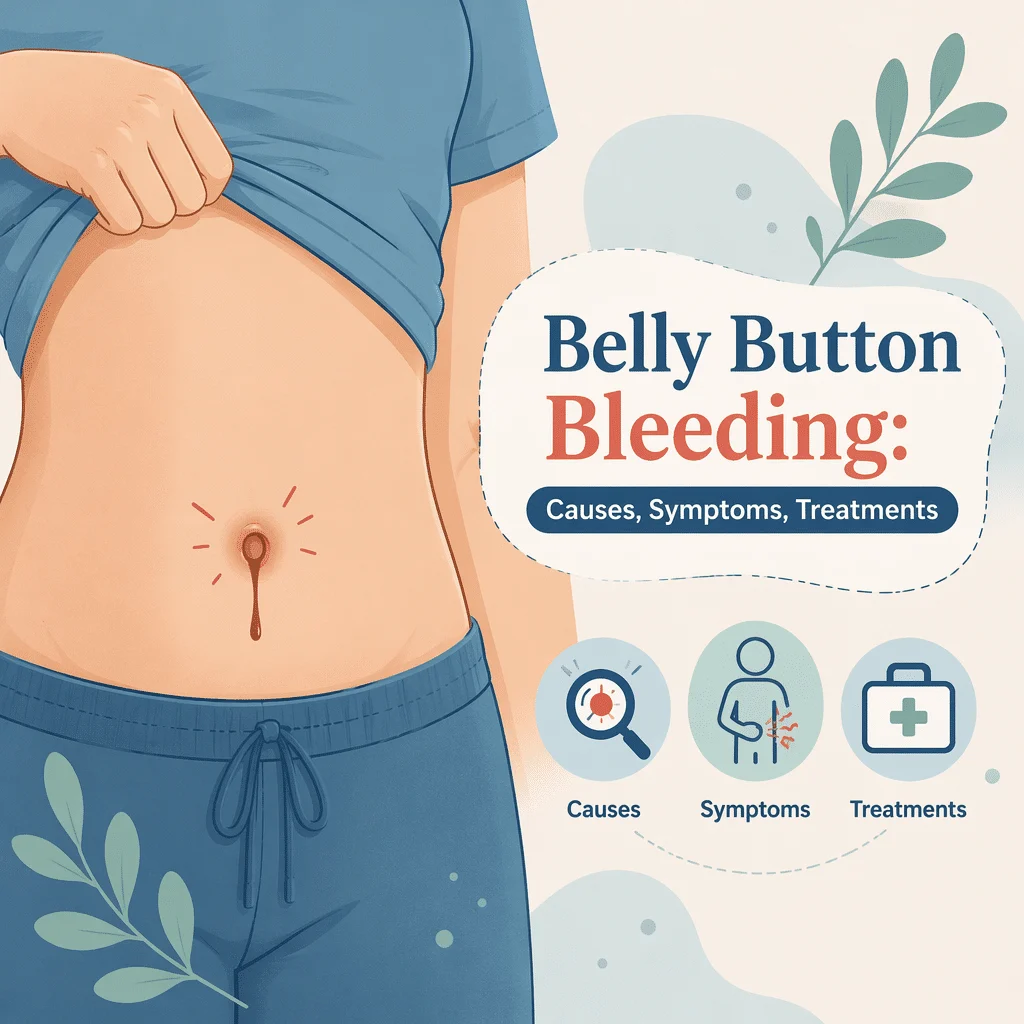
Belly button bleeding can be unsettling, but in most cases it comes from a minor, treatable problem rather than anything dangerous. The navel is a deep, warm fold of skin that easily traps sweat, fluff, and bacteria, which makes it prone to irritation and low-grade infection. Bleeding from the belly button may appear as a few pink spots on your clothing, a smear of blood when you clean the area, or blood mixed with cloudy discharge. Some causes settle with simple hygiene at home, while others need a clinician to step in, and a small number point to a condition that deserves prompt attention. In this article you will learn what causes belly button bleeding, the symptoms that tend to come with it, how doctors find the reason, how it is treated, and the clear red flags that mean you should see a doctor.
What causes belly button bleeding?
Most belly button bleeding starts in the thin, delicate skin that lines the navel. When that skin is irritated, infected, or injured, tiny blood vessels near the surface can break and ooze. The causes below range from very common and harmless to rare and serious. Knowing which group you may be dealing with helps you decide whether home care is enough or a medical visit is wise.
Bacterial or fungal infection
Infection is one of the most frequent reasons for a bleeding, oozing navel. The belly button holds warmth and moisture, an ideal setting for bacteria such as staphylococcus or for yeast to multiply. An infected navel often turns red and tender, weeps yellow, green, or foul-smelling fluid, and may bleed when touched. When the infection settles in and around the umbilical area it is called omphalitis, the same word used for the serious newborn cord infection described by the Cleveland Clinic omphalitis guide.
Adults can develop navel infections too, especially when the skin is broken. People who manage type 2 diabetes are more prone to skin infections, so a clinician may ask about it. For a broader look at how germs invade the skin, the MedlinePlus overview of skin infections is a reliable starting point, and many navel infections involve the common bacteria explained in this Mayo Clinic guide to staph infections. Inflamed hair follicles nearby behave much like folliculitis, and you can read our guide to type 2 diabetes and to folliculitis.
Poor hygiene and trapped debris
Skin cells, sweat, soap, and lint constantly collect inside the navel, especially in a deep belly button. Left alone, this debris can harden, feed bacteria, and irritate the lining until it bleeds. Cleaning too hard causes the opposite problem: scrubbing with a cotton bud, fingernail, or rough flannel can scratch the fragile skin and is a common cause of belly button bleeding after cleaning. The goal is gentle, regular hygiene rather than aggressive digging.
Piercing trauma and irritation
A navel piercing is an open wound that can take six months to a year to heal fully. During that time it may bleed if it is bumped, snagged on clothing, cleaned roughly, or reacts to nickel in the jewellery. Belly button bleeding, crusting, redness, and clear or yellow oozing are common in the early weeks. Bleeding that keeps returning, spreads, or comes with pus suggests infection rather than normal healing, and is worth having checked.
Umbilical granuloma
An umbilical granuloma is a small, moist, reddish lump of extra tissue that can form in the navel, most often in newborns during the weeks after the cord stump falls off. It is a frequent cause of belly button bleeding in babies, weeping clear or blood-tinged fluid and bleeding easily because it is rich in tiny blood vessels. It is not an infection and usually responds to simple treatment, as the Cleveland Clinic umbilical granuloma guide explains. Similar lumps of extra tissue can occasionally appear at a healing piercing or scar.
Friction, dryness, and dermatitis
Everyday rubbing from waistbands, belts, and tight clothing can chafe the navel until the skin splits and bleeds. Dry, inflamed, or itchy skin conditions make this worse. An itch-scratch cycle can crack the skin so that it weeps and bleeds. If a dry or scaly patch keeps flaring, you can review our guide to eczema and to spongiotic dermatitis. Contact with harsh soaps, detergents, or fragrances can trigger the same reaction.
Cysts and urachal remnants
Sometimes belly button bleeding comes from a structure beneath the navel rather than the skin on top. A sebaceous or epidermoid cyst can form under the belly button, fill with material, and bleed if it becomes inflamed. Other people are born with a urachal remnant, a leftover channel from before birth that once linked the bladder to the navel. If it does not close completely, it can form a cyst or sinus that leaks fluid, becomes infected, and occasionally produces navel symptoms that overlap with a urinary tract infection.
Rarer causes worth knowing about
Two uncommon causes deserve a calm, clear mention. In some women, tissue like the lining of the uterus grows in or just under the navel and bleeds in rhythm with the menstrual cycle. This is a skin form of endometriosis, and it typically shows up as a tender lump that bleeds or darkens around each period. It is benign but should be evaluated, and you can read our full guide to endometriosis. The second is a Sister Mary Joseph nodule: a firm, growing lump in the navel that can bleed and is sometimes the first outward sign of a cancer inside the abdomen or pelvis. It is rare, but a new, hard, enlarging navel lump, especially alongside weight loss or belly symptoms, is a reason to see a doctor promptly rather than to panic.
| Possible cause | Typical signs to look for |
|---|---|
| Bacterial or fungal infection (omphalitis) | Redness, warmth, swelling, foul-smelling yellow or green discharge, pain, sometimes fever |
| Poor hygiene or trapped debris | Dark buildup, mild odour, spots of blood after cleaning, itching |
| Piercing trauma or irritation | Bleeding, crusting, or oozing near a new or snagged navel piercing |
| Umbilical granuloma | Small moist red lump, clear or blood-tinged fluid, most common in newborns |
| Friction or dermatitis | Dry, cracked, itchy, or scaly skin that bleeds when scratched |
| Cyst or urachal remnant | Recurrent discharge, a lump, or fluid leakage, sometimes linked to the bladder |
| Umbilical endometriosis | Bleeding or a tender lump that flares around monthly periods, in women |
| Sister Mary Joseph nodule (rare) | A firm, growing navel lump with bleeding, plus weight loss or abdominal symptoms |
Symptoms that often come with belly button bleeding
Belly button bleeding rarely happens on its own. The symptoms around it are useful clues to the cause and to how urgent it is. Watch for and note the following:
- Discharge that is yellow, green, grey, or foul-smelling, which points towards infection
- Redness, warmth, swelling, or tenderness in and around the navel
- Itching, flaking, or dry cracked skin, which suggests irritation or dermatitis
- A visible lump, bump, or moist red nodule
- Crusting or scabbing that keeps reopening and bleeding
- Pain that worsens, or fever, chills, and feeling generally unwell
- Bleeding or a tender lump that flares with your monthly cycle
Mild, one-off bleeding with no other symptoms is usually nothing to worry about. Bleeding that returns, spreads, smells bad, or comes with pain or fever is your body asking for a closer look.
When to see a doctor about belly button bleeding
Most belly button bleeding can be managed at home, but some situations call for professional care. Contact a clinician if you notice any of the following:
- Bleeding that does not stop, keeps coming back, or is heavy
- Thick, coloured, or foul-smelling discharge, or visible pus
- Increasing redness, warmth, swelling, or pain around the navel
- Fever, chills, nausea, or a general feeling of being unwell
- A new, firm, or growing lump in the belly button
- Bleeding that returns with every menstrual period
- Navel problems in a newborn, or in anyone with diabetes or a weakened immune system
Seek urgent care if the skin around the navel is rapidly spreading red, extremely painful, or paired with a high fever, since these can signal a deeper infection that needs prompt treatment. When in doubt, a quick check is always safer than waiting.
How doctors find the cause of belly button bleeding
A clinician usually starts by looking at the navel and asking about your symptoms, hygiene habits, piercings, past surgery, and menstrual pattern. From there, a few simple tests can narrow things down. A swab of any discharge sent for culture can identify the exact bacteria or yeast, so treatment is matched to the real cause.
If infection may be spreading, blood work helps. Your clinician may order a complete blood count. A rising number of white cells can point to infection, and your clinician may also measure a blood marker called C-reactive protein, which tends to climb when inflammation is active. When a lump, cyst, or urachal remnant is suspected, imaging such as ultrasound, CT, or MRI can show what lies beneath the skin and separate harmless causes from ones that need surgery. In the uncommon case of a firm or changing nodule, a small tissue sample, called a biopsy, may be taken to confirm the diagnosis.
Treatment and home care for belly button bleeding
What you can do at home
For minor belly button bleeding without signs of infection, gentle care usually does the job:
- Clean the navel gently with mild soap and warm water, then rinse
- Pat it completely dry, since trapped moisture feeds bacteria and yeast
- Avoid digging with cotton buds, fingernails, or sharp objects
- Wear loose, breathable cotton clothing to reduce rubbing
- Leave new piercings alone except for the aftercare your piercer advised
- Apply light pressure with clean gauze if a small spot is actively bleeding
Avoid packing the navel with ointments or home remedies you are unsure about, since this can trap moisture and make matters worse.
Medical treatments
Once a cause is identified, treatment is usually straightforward. A bacterial infection is treated with antibiotics, either as a cream or by mouth, whilst a yeast infection responds to antifungal creams or powders. An umbilical granuloma is often treated by touching it with silver nitrate to shrink the tissue, a quick clinic procedure called cauterisation. Cysts, urachal remnants, and umbilical endometriosis are usually removed with a minor surgical procedure when they cause repeated bleeding, discharge, or infection. If a Sister Mary Joseph nodule is found, care focuses on diagnosing and treating the underlying condition. The right treatment depends entirely on the cause, which is why a clear diagnosis matters more than any single remedy.
How to prevent belly button bleeding
You cannot prevent every cause, but simple habits lower the odds of a bleeding, irritated navel:
- Wash and dry the belly button regularly, but gently
- Keep the area dry after showering, exercise, and sweating
- Choose loose clothing that does not rub or dig into the navel
- Follow careful aftercare for any navel piercing and choose quality jewellery
- Manage conditions such as diabetes that raise infection risk
- Resist the urge to over-clean or scratch an itchy navel
Latest scientific advances
Belly button bleeding is a well-understood symptom, and recent medical research has mostly sharpened how doctors recognise its less common causes. Two areas stand out.
A clearer picture of endometriosis in the navel
According to research indexed in PubMed, doctors are documenting umbilical endometriosis more carefully. A 2025 review in Skin Health and Disease describes it as the most common skin form of endometriosis, appearing as a navel lump that can bleed or darken, sometimes without any previous surgery. What this means for you: if bleeding or a tender navel lump keeps returning in step with your monthly periods, it is worth mentioning this pattern to your doctor, because it points to a specific, treatable diagnosis. A 2026 narrative review, which is a structured summary of many earlier reports, found that these cases are still often mistaken for other lumps, and that delay can be reduced by describing the timing clearly. You can read that narrative review of umbilical endometriosis for the wider picture.
Adult navel infections can point to an old anatomical leftover
A large 2025 study in Surgery Today looked at adults diagnosed with omphalitis, the medical term for a belly button infection. It found that a meaningful share of these adults, particularly young men, had a urachal remnant, a small leftover channel from before birth that can trap infection near the navel. What this means for you: a belly button infection in an adult that keeps coming back may have an underlying anatomical cause, and the researchers suggest that imaging early can find it sooner. A 2025 imaging review in Radiographics similarly maps how ultrasound, CT, and MRI tell harmless urachal cysts apart from problems that need treatment. These findings do not change day-to-day home care, but they help explain why a doctor may look deeper when navel infections keep returning.
Glossary of key terms
| Term | Definition |
|---|---|
| Umbilicus | The medical name for the navel or belly button, the scar left where the umbilical cord attached at birth. |
| Omphalitis | An infection of the belly button and the tissue around it, classically seen in newborns but also possible in adults. |
| Umbilical granuloma | A small, moist lump of extra tissue in the navel that bleeds easily and is common in newborns. |
| Urachus (urachal remnant) | A cord-like channel present before birth that links the bladder to the navel; leftover pieces can form cysts or leak fluid. |
| Cauterisation | A quick treatment, often with silver nitrate, that seals or shrinks tissue such as a granuloma. |
| Culture (swab) | A lab test that grows bacteria or yeast from a sample of discharge to identify the exact germ. |
| Endometriosis | A condition where tissue similar to the uterine lining grows outside the uterus; in the navel it can bleed with periods. |
| Sister Mary Joseph nodule | A rare firm navel lump that can be an outward sign of a cancer inside the abdomen or pelvis and needs prompt evaluation. |
Frequently asked questions
Should I be worried if my belly button is bleeding?
Usually not. A single episode of light belly button bleeding with no pain, discharge, or fever is often caused by minor irritation or over-cleaning, and it tends to settle with gentle care. It becomes a reason to see a doctor when the bleeding keeps returning, smells bad, produces pus, comes with pain or fever, or appears alongside a new lump.
Why is my belly button bleeding and smelly?
A bad smell together with bleeding usually signals infection or trapped debris. Warmth and moisture let bacteria or yeast build up inside the navel, producing odour, discharge, and irritated skin that bleeds. Gentle cleaning and thorough drying help mild cases, but foul-smelling discharge, redness, or pain should be checked by a clinician, who may swab the area to find the exact germ.
Can belly button bleeding be a sign of cancer?
It rarely is. The vast majority of cases come from infection, irritation, or a granuloma. Very occasionally, a firm, growing lump in the navel called a Sister Mary Joseph nodule can be an early sign of a cancer inside the abdomen or pelvis. That is why a new, hard, or enlarging navel lump, especially with weight loss or abdominal symptoms, should be evaluated promptly rather than ignored.
Why does my belly button bleed after I clean it?
The skin lining the navel is thin and delicate. Scrubbing with a cotton bud, fingernail, or rough cloth can scratch it and cause small spots of blood. Try cleaning more gently, with mild soap and warm water, then patting the area dry. If bleeding continues after gentle cleaning or is joined by redness and discharge, have it looked at.
Can the belly button bleed without any pain?
Yes. Painless bleeding is common and is often due to a fragile granuloma, mild irritation, or a small area of broken skin. Lack of pain is reassuring but does not rule everything out. Bleeding that recurs, changes, or comes with a lump still deserves a look, even when it does not hurt.
Why does my belly button bleed around my period?
Bleeding or a tender navel lump that appears in time with your monthly period can be a sign of umbilical endometriosis, where tissue like the uterine lining grows in the navel and responds to the same hormones. It is uncommon and not dangerous, but it should be evaluated, because targeted treatment can resolve the cyclical bleeding.
Sources
- Cleveland Clinic. Omphalitis (Infected Umbilical Cord): Symptoms and Treatment, 2024. clevelandclinic.org
- Cleveland Clinic. Umbilical Granuloma: Causes and Treatment, 2023. clevelandclinic.org
- MedlinePlus, U.S. National Library of Medicine. Skin Infections, 2024. medlineplus.gov
- Mayo Clinic. Staph infections: Symptoms and causes, 2024. mayoclinic.org
- Tokunaga R, Yamauchi T, Den H, et al. Epidemiology and treatment patterns of urachal remnants in adult patients with omphalitis: a nationwide claims-based study in Japan. Surgery Today, 2025. doi.org/10.1007/s00595-025-03151-6
- Tambovskaya V, Escalante L, Maldonado A, et al. Spontaneous umbilical endometriosis. Skin Health and Disease, 2025. doi.org/10.1093/skinhd/vzaf044
- Sadlecki P, Dejewska K, Walentowicz-Sadlecka M. Umbilical port-site endometriosis: a case presentation and narrative review of the literature. Open Medicine, 2026. doi.org/10.1515/med-2026-1411
- Zulfiqar M, Brown PJ, Chughtai K, et al. Imaging of the Urachus. Radiographics, 2025. doi.org/10.1148/rg.240122
Further reading
- High CRP levels: causes, symptoms, and treatments — what a raised inflammation marker can mean.
- CBC vs CMP: understanding the tests — how two common blood panels differ.
- Skin rash: causes, symptoms, and treatments — when irritated skin needs attention.
- Urinary tract infection: symptoms and causes — useful when a urachal remnant is involved.
- Leukocytes in urine: reading your results — what white cells in urine can signal.
Understand your lab results with AI DiagMe
Belly button bleeding often comes down to a question your body cannot answer on its own: is this simple irritation, or an infection that needs treatment? When your doctor orders tests such as a full blood count, a C-reactive protein level, or a swab culture of the discharge, AI DiagMe helps you read those lab results in plain language, so you understand what each value means and which ones deserve follow-up. It is a tool to help you understand your results, not a way to diagnose disease, and it never replaces the judgement of your own doctor.
Get your results interpreted in minutes