











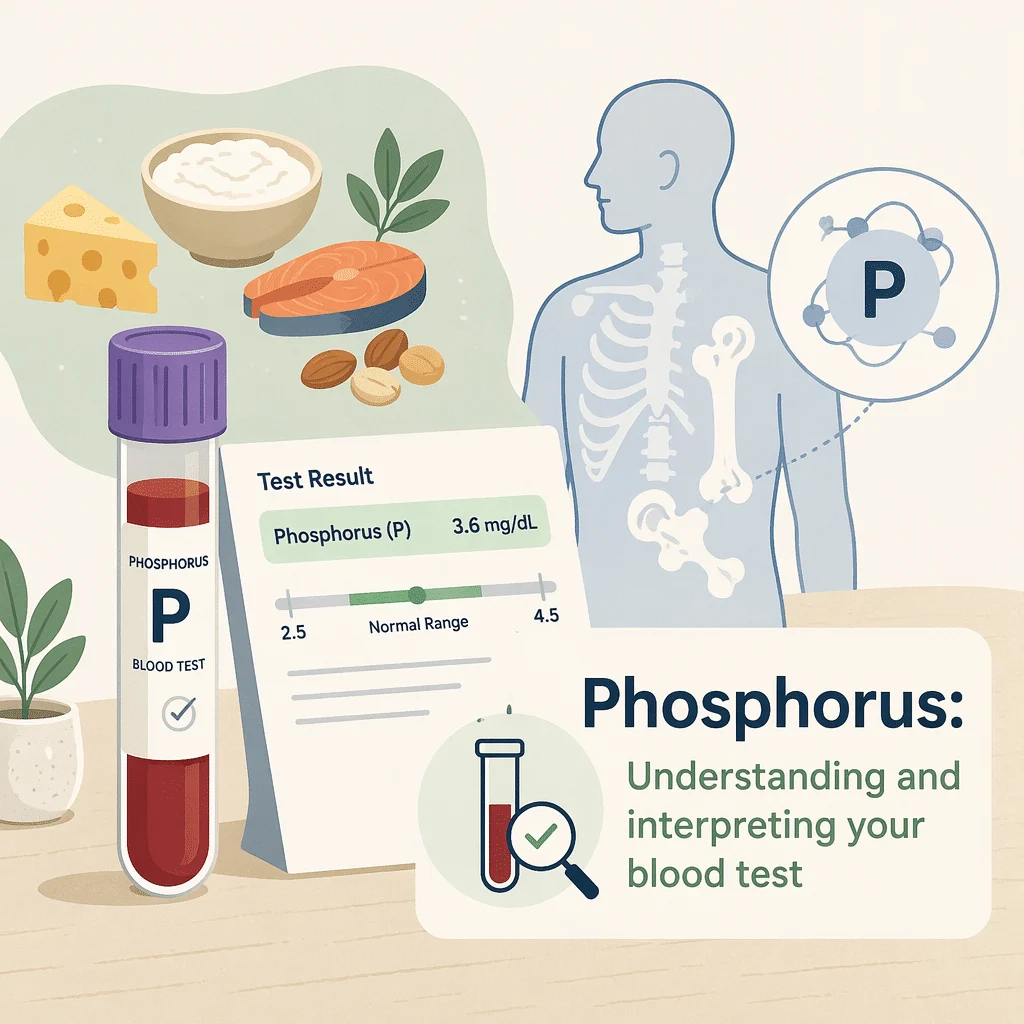
Phosphorus levels in your blood reveal how well your body manages one of its most essential minerals, one that works quietly alongside calcium to build bone, fuel every cell, and keep your kidneys, nerves, and muscles running smoothly. If your recent lab report flagged a value above or below the reference range, that single number is rarely the whole story on its own. In this article, you’ll learn what a phosphorus blood test actually measures, what counts as a normal range, what high and low results (hyperphosphatemia and hypophosphatemia) can mean, and how phosphorus connects to calcium, parathyroid hormone (PTH), and vitamin D. The goal is to help you read your results with more confidence before you discuss them with your doctor.
What a phosphorus blood test measures
A phosphorus blood test measures your phosphorus levels by capturing the amount of phosphate circulating in your blood serum. Phosphorus is the second most abundant mineral in the body after calcium, and roughly 85% of it sits in your bones and teeth, bound tightly to calcium as calcium phosphate crystals. The remaining share circulates in blood and soft tissue, where it takes an active role in almost every cell. Doctors sometimes order this test on its own, but it more often appears as one line within a broader metabolic panel alongside kidney and electrolyte markers.
Inside cells, phosphorus forms the backbone of ATP (adenosine triphosphate), the molecule your body burns for energy every time a muscle contracts or a nerve fires. It also makes up part of DNA, RNA, and cell membranes, and it helps regulate the acid-base balance of your blood. Because phosphorus does so much behind the scenes, doctors order this test to check mineral balance, evaluate kidney function, and investigate symptoms linked to bone or hormone problems.
Normal phosphorus levels and how the test is read
On a lab report, phosphorus is usually grouped with electrolytes or listed within a comprehensive metabolic panel, similar to how sodium, potassium, and chloride appear together on a standard electrolyte panel. Results are reported in milligrams per decilitre (mg/dL) or millimoles per litre (mmol/L), alongside the laboratory’s own reference interval. Because each lab calibrates its equipment slightly differently, small variations between reference ranges are normal and expected, which is one reason it helps to review the broader context of how to read blood test results before focusing on a single number.
For most healthy adults, a normal phosphorus level falls between 2.5 and 4.5 mg/dL (0.81 to 1.45 mmol/L). Children and adolescents typically run higher, since growing bones demand more phosphorus, and levels gradually settle into the adult range after puberty. The table below summarises typical adult reference ranges and what results outside them are called.
| Result | Typical adult range | Clinical term |
|---|---|---|
| Normal | 2.5 – 4.5 mg/dL (0.81 – 1.45 mmol/L) | Within reference range |
| Above range | Greater than 4.5 mg/dL | Hyperphosphatemia |
| Below range | Less than 2.5 mg/dL | Hypophosphatemia |
| Severely low | Less than 1.0 mg/dL | Severe hypophosphatemia (may need urgent care) |
To interpret your own result, compare your value against the lab’s printed reference interval rather than a number you found online, since the exact cutoffs can shift slightly. It also helps to look at related markers on the same panel, particularly calcium, creatinine, and albumin, because phosphorus rarely moves in isolation. A total calcium blood test drawn at the same time is one of the most useful companion values, since calcium and phosphorus are regulated as a linked pair.
High phosphorus levels (hyperphosphatemia)
Hyperphosphatemia means your phosphorus levels sit above the normal reference range. Mild elevations often cause no symptoms at all and turn up only on routine blood tests. More pronounced or long-standing elevated phosphorus levels can eventually cause itching, muscle cramps, bone or joint pain, and, over years, a build-up of calcium-phosphate deposits in blood vessels and soft tissue.
Chronic kidney disease
Chronic kidney disease is by far the most common cause of hyperphosphataemia. Healthy kidneys filter out excess phosphorus continuously; as kidney function declines, that filtering capacity drops, and phosphorus builds up in the blood. This is why doctors monitoring chronic kidney disease routinely track phosphorus alongside a creatinine blood marker and eGFR filtration rate, and why kidney specialists refer to the resulting cluster of related problems, high phosphorus, low vitamin D, and elevated PTH, as CKD-MBD (chronic kidney disease-mineral and bone disorder). Because diabetes is a leading driver of chronic kidney disease, people managing diabetes and its long-term complications are often screened for phosphorus changes as part of routine kidney monitoring.
Hypoparathyroidism
Hypoparathyroidism occurs when the parathyroid glands produce too little parathyroid hormone (PTH), the hormone that normally helps the kidneys clear phosphorus and release calcium from bone. Without enough PTH, phosphorus accumulates whilst calcium tends to drop, often producing tingling in the fingers or around the mouth and, in some cases, muscle cramps. Confirming this pattern usually involves checking a corrected calcium blood test alongside PTH, since low albumin can otherwise make calcium appear falsely low.
Rhabdomyolysis and other causes
Rhabdomyolysis, a sudden breakdown of muscle tissue from severe injury, extreme exertion, or certain medications, releases large amounts of phosphorus into the bloodstream over a short period. It typically presents with intense muscle pain, weakness, and dark urine, and is confirmed with a creatine kinase (CPK) blood test. Other, less common contributors to hyperphosphatemia include excessive vitamin D supplementation, certain phosphate-containing laxatives or enemas, and tumour lysis syndrome following some cancer treatments.
Low phosphorus levels (hypophosphatemia)
Hypophosphatemia describes phosphorus levels that fall below the normal range. Mild cases are often silent, whilst more significant drops can cause fatigue, muscle weakness, bone pain, and, if severe, breathing or heart rhythm problems that require prompt medical attention.
Vitamin D deficiency
Vitamin D deficiency is a leading cause of low phosphorus because active vitamin D is required for the intestine to absorb phosphorus efficiently from food. When vitamin D is low, less phosphorus gets absorbed no matter how much you eat, which can gradually produce fatigue, bone discomfort, and, in children, softened or poorly mineralised bones. Because of this link, a doctor investigating unexplained hypophosphatemia will usually order a vitamin D (25-OH) blood test to check whether deficiency is contributing to the low reading.
Refeeding syndrome and malnutrition
Refeeding syndrome can occur when someone who has been malnourished, from prolonged illness, an eating disorder, or extended fasting, starts eating again, especially with carbohydrate-heavy meals. The sudden return of insulin activity drives phosphorus rapidly into cells, sometimes causing a dangerous drop in blood levels within the first days of refeeding. This is why hospitals reintroduce nutrition slowly and monitor phosphorus closely in at-risk patients.
Renal Fanconi syndrome and genetic causes
Renal Fanconi syndrome is a disorder of the kidney tubules that prevents normal reabsorption of phosphorus, so it is lost in excess through urine even though blood levels are already low. Rarer genetic conditions, such as X-linked hypophosphataemia, cause lifelong renal phosphate wasting driven by an overactive hormone called FGF23 (fibroblast growth factor 23), and typically surface in childhood with bone pain, bowed legs, or short stature.
How phosphorus, calcium, PTH, and vitamin D work together
Your body treats phosphorus and calcium as a linked pair rather than two separate minerals. Three hormonal signals coordinate this balance continuously: parathyroid hormone, active vitamin D (calcitriol), and FGF23, a bone-derived hormone that tells the kidneys to release more phosphorus into urine when levels run high. This interconnected system is one reason many labs offer a combined calcium and bone mineral panel rather than testing each marker separately.
When calcium drops, the parathyroid glands release more PTH, which pulls calcium out of bone, increases calcium absorption in the gut, and pushes the kidneys to excrete more phosphorus. You can read more about this feedback loop in our dedicated guide to parathyroid hormone (PTH) analysis. When phosphorus rises, particularly in chronic kidney disease, FGF23 increases to try to force more phosphorus out through urine, at the cost of lowering active vitamin D production. This is why a doctor investigating an abnormal phosphorus result will frequently also order a calcium blood test, a PTH panel, and a vitamin D check, since the four values together tell a more complete story than phosphorus alone.
What can affect your phosphorus levels
- Diet: phosphate additives in fizzy drinks, processed meats, and packaged foods are absorbed more efficiently than the phosphorus naturally found in plants or whole foods.
- Medications: certain antacids, laxatives, and phosphate-containing supplements can raise or lower absorption depending on their ingredients.
- Time of day: phosphorus levels follow a mild daily rhythm, often peaking at night and dipping in the early morning, so repeat tests are best taken at a consistent time.
- Recent intense exercise: strenuous activity can temporarily raise blood phosphorus levels as muscles release it, usually normalising within a day or two.
- Kidney and parathyroid function: as described above, these are the two systems most responsible for keeping phosphorus levels within range day to day.
- Sample handling: blood cells can continue to release phosphorus into the sample after a draw if processing is delayed, which is one reason labs follow strict protocols during the blood test process from collection to analysis.
Practical steps for managing your phosphorus level
If your result is mildly out of range, your doctor may simply recommend a repeat test in a few weeks alongside related markers. More significant deviations usually prompt additional bloodwork, such as creatinine, PTH, or vitamin D, and closer follow-up. Reviewing the pattern of your results against general normal blood test ranges can also help you understand how far a value sits from the expected interval before your appointment.
For elevated phosphorus
- Limit fizzy drinks, processed meats, and packaged foods containing additives like E338-E452, which list phosphate compounds on the ingredient label.
- Choose fresh, home-cooked foods over heavily processed alternatives where possible.
- If you have chronic kidney disease, ask your care team about a kidney dietitian, since dietary phosphorus targets can vary by CKD stage.
- Take any prescribed phosphate binder exactly as directed, typically with meals, since these medications work by limiting absorption in the gut rather than removing phosphorus already in the blood.
For low phosphorus
- Include phosphorus-rich foods such as fish, poultry, eggs, seeds, nuts, and dairy products.
- Pair these with vitamin D sources, including oily fish or safe, moderate sun exposure, since vitamin D supports phosphorus absorption.
- Avoid starting or stopping antacids, laxatives, or supplements without medical guidance, since several common over-the-counter products interact with phosphorus absorption.
When to see a doctor
Most mildly abnormal phosphorus levels are followed up at a routine visit rather than urgently. However, you should contact a doctor promptly if you notice muscle weakness, unusual confusion, irregular heartbeat, difficulty breathing, or dark urine, especially if you have known kidney disease, are recovering from malnutrition, or have recently started refeeding after a period of not eating. These combinations can signal a more significant imbalance that benefits from same-day evaluation rather than waiting for a scheduled follow-up.
Recent scientific advances
A 2025 Cochrane systematic review pooled data from 134 clinical trials involving nearly 21,000 adults with chronic kidney disease to compare different phosphate-binder medications, drugs that reduce how much phosphorus the gut absorbs from food. What this means for you: if you or a family member takes a phosphate binder for CKD, the review found that sevelamer and lanthanum (two non-calcium-based binders) were associated with less hypercalcaemia (calcium levels rising too high) than older calcium-based binders, and sevelamer specifically was linked to somewhat lower rates of death from any cause compared with calcium-based options in people on dialysis. The review’s authors rated this evidence as low-certainty overall, meaning the true effect could differ from what these studies suggest, so it does not replace an individual conversation with your nephrologist about which binder fits your situation (Natale et al., 2025, Cochrane Database of Systematic Reviews).
A 2024 review in the journal Nephrology examined how phosphorus metabolism drives the cluster of complications seen in chronic kidney disease-mineral and bone disorder (CKD-MBD), focusing on the hormone FGF23 (fibroblast growth factor 23), which rises early in CKD to help the kidneys excrete more phosphorus. What this means for you: elevated FGF23 can show up on specialised testing before phosphorus itself climbs out of range, which helps explain why nephrologists sometimes start monitoring and dietary counselling earlier in CKD than the phosphorus number alone would suggest (Marando et al., 2024, Nephrology).
A 2025 review in Calcified Tissue International summarised progress in diagnosing and treating X-linked hypophosphataemia (XLH), a rare inherited condition causing lifelong low phosphorus due to excess FGF23 production. What this means for you: newer FGF23-targeted treatment has measurably improved outcomes for children and adults with this specific genetic condition, offering a more targeted option than the phosphate and vitamin D supplementation used previously, though XLH remains uncommon and is usually identified through genetic and specialist bone-disease evaluation rather than a routine phosphorus test alone (Böckmann and Haffner, 2025, Calcified Tissue International).
Glossary
| Term | Definition |
|---|---|
| Hyperphosphatemia | A blood phosphorus level above the normal reference range, most often linked to reduced kidney function. |
| Hypophosphatemia | A blood phosphorus level below the normal reference range, which can arise from poor absorption, malnutrition, or excess urinary loss. |
| Parathyroid hormone (PTH) | A hormone made by the parathyroid glands that raises blood calcium and lowers blood phosphorus by acting on bone, kidneys, and the gut. |
| Chronic kidney disease-mineral and bone disorder (CKD-MBD) | A group of related mineral, hormone, and bone problems, including high phosphorus, low vitamin D, and elevated PTH, that develops as chronic kidney disease progresses. |
| Fibroblast growth factor 23 (FGF23) | A hormone produced by bone cells that signals the kidneys to release more phosphorus into urine; it rises early in chronic kidney disease and is overactive in some rare genetic conditions. |
| Phosphate binder | A medication taken with meals that reduces how much phosphorus the intestine absorbs from food, commonly prescribed in chronic kidney disease. |
| Refeeding syndrome | A drop in phosphorus and other minerals that can occur when nutrition is reintroduced too quickly after a period of malnutrition or fasting. |
| Renal Fanconi syndrome | A rare kidney tubule disorder that causes excess loss of phosphorus, glucose, and other substances into the urine. |
| Estimated glomerular filtration rate (eGFR) | A calculated estimate of how well the kidneys filter blood, used alongside phosphorus and creatinine to assess kidney function. |
| X-linked hypophosphataemia (XLH) | A rare inherited condition causing lifelong low phosphorus levels due to excess FGF23 production, usually identified in childhood. |
Frequently asked questions
Is dietary phosphorus fully absorbed?
No. Absorption varies by source: phosphorus from animal products is absorbed at roughly 60–70%, phosphorus added to processed foods as an additive is absorbed at over 90%, and phosphorus from plant foods is absorbed least efficiently, around 20–50%, because much of it is bound to phytates that the human gut cannot easily break down.
Can antacids affect my phosphorus level?
Yes. Some antacids containing aluminium, calcium, or magnesium can bind to phosphorus in the intestine and block its absorption. Occasional use is unlikely to cause problems, but prolonged, frequent use has been linked to low phosphorus levels, so it is worth mentioning regular antacid use to your doctor when discussing lab results.
Does blood phosphorus change during the day?
Yes. Phosphorus follows a mild daily pattern, typically running lower in the morning and higher at night. For this reason, if your doctor is tracking your phosphorus over time, having blood drawn at roughly the same time of day each visit makes the results easier to compare.
Does exercise affect phosphorus results?
Yes, particularly intense or prolonged exercise. Muscle activity releases some phosphorus into the bloodstream, which can cause a temporary rise. Levels generally return to baseline within 24 to 48 hours, so recent heavy exercise is a useful detail to share if a result comes back unexpectedly high.
How does osteoporosis treatment relate to phosphorus?
Certain osteoporosis medications, including bisphosphonates, can modestly influence mineral levels as they act on bone. Doctors typically arrange follow-up blood tests, including calcium and phosphorus, when starting these treatments to confirm mineral balance remains stable.
What does the calcium-to-phosphorus ratio tell you?
This ratio offers additional context on mineral balance beyond either value alone, but its interpretation depends heavily on the clinical picture, including kidney function, PTH, and vitamin D status. Because of this complexity, the ratio is best interpreted by a doctor rather than compared to a fixed number found online.
Further reading
- Review the kidney function panel to see how phosphorus relates to other kidney health markers.
- Read our guide to abnormal blood test results for general guidance on interpreting out-of-range values.
- Explore the magnesium blood test to learn about another mineral closely tied to calcium and phosphorus balance.
- Check the alkaline phosphatase (ALP) test to understand a related marker of bone activity.
- See the comprehensive metabolic panel guide for a broader view of the panel phosphorus often appears in.
Sources
- MedlinePlus (National Library of Medicine) — Phosphate in Blood: Medical Test — MedlinePlus, 2024 — medlineplus.gov/lab-tests/phosphate-in-blood
- Cleveland Clinic — Hyperphosphatemia: Causes, Symptoms and Treatment — Cleveland Clinic Health Library, 2024 — my.clevelandclinic.org/health/diseases/24293-hyperphosphatemia
- National Kidney Foundation — High Phosphorus (Hyperphosphatemia): Causes, Symptoms, and Treatment — National Kidney Foundation, 2024 — kidney.org/kidney-topics/high-phosphorus-hyperphosphatemia
- Natale P, Green SC, Ruospo M, et al. — Phosphate binders for preventing and treating chronic kidney disease-mineral and bone disorder (CKD-MBD) — Cochrane Database of Systematic Reviews, 2025 — pmc.ncbi.nlm.nih.gov/articles/PMC12203645
- Marando M, Tamburello A, Salera D, Di Lullo L, Bellasi A — Phosphorous metabolism and manipulation in chronic kidney disease — Nephrology (Carlton), 2024 — pmc.ncbi.nlm.nih.gov/articles/PMC11579558
- Böckmann I, Haffner D — The Diagnosis and Therapy of XLH — Calcified Tissue International, 2025 — pmc.ncbi.nlm.nih.gov/articles/PMC12037658
Understand your lab results with AI DiagMe
Phosphorus is just one piece of the mineral and kidney puzzle that shows up on routine bloodwork, and its meaning often only becomes clear once you look at it alongside calcium, PTH, vitamin D, and kidney function tests. Interpreting several results together can help you understand the overall pattern behind your numbers and prepare more focused questions for your next appointment. This kind of review supports your understanding of your labs but does not diagnose conditions or replace guidance from your doctor.
Get your results interpreted in minutes